Tensile Capacity
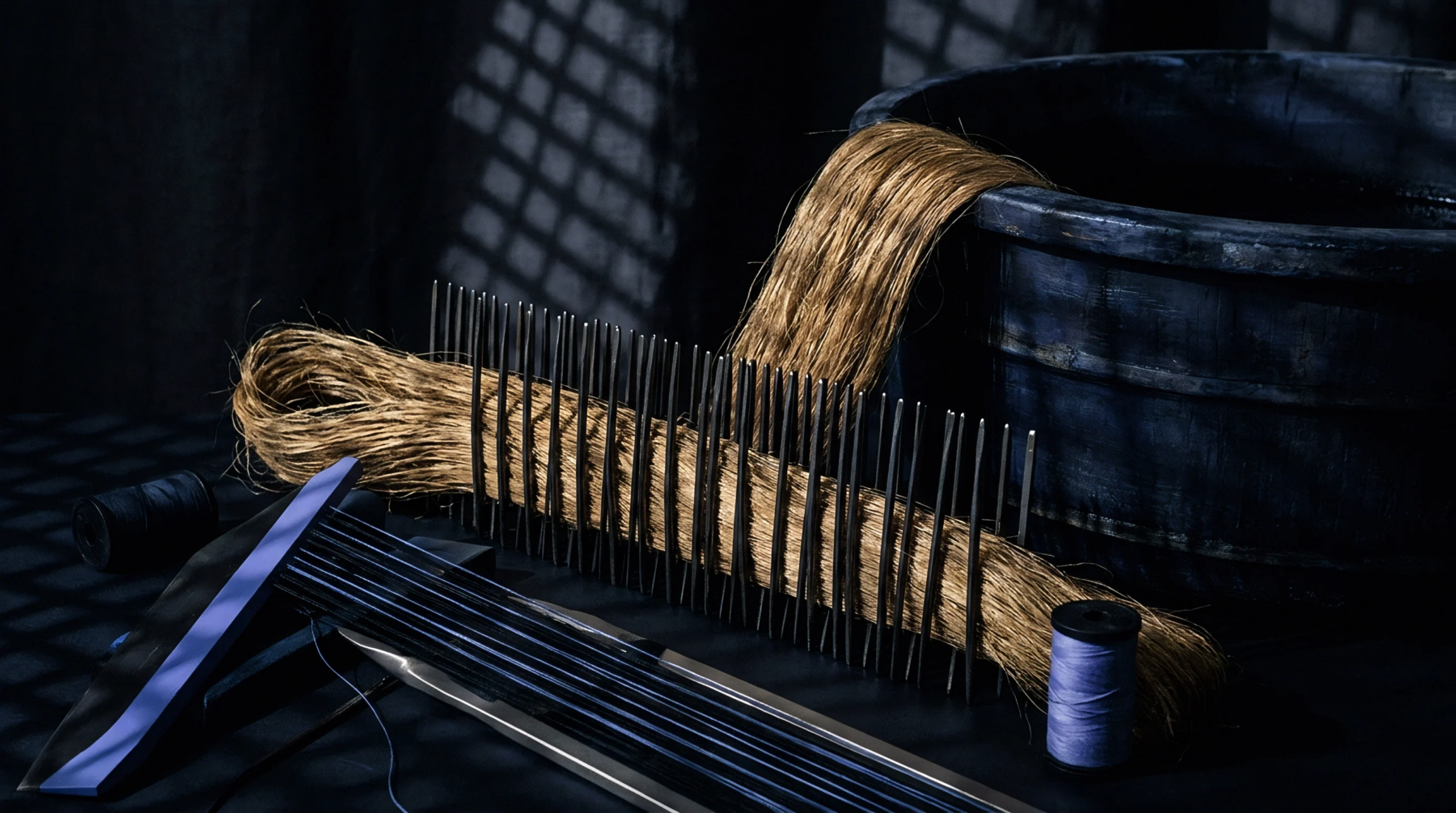
Gramforce per tex represents the physical resistance of a flax strand before failure during mechanical traction. Fibre tenacity determines the structural limit of bast materials throughout the wet spinning process within Chinese linen production. Higher values indicate an ability to withstand the extreme mechanical load applied by draw frames without snapping.
This metric appears on the mill lab report after automated testing of raw flax bundles to confirm suitability for high-speed line production.
Load Threshold
Processing managers inspect these figures to prevent breakage during the alignment of flax reeds. A fibre grade that demonstrates high resistance allows for finer yarn counts because the machine tension settings adjust upward without excessive downtime. Mills establish a baseline through sampling the incoming flax harvest while buyers define their own acceptance criteria within the supply agreement.
When the test result falls below the established mill baseline, the output suffers from irregular slubs.
Evaluation Protocol
Technicians utilize a constant rate of extension apparatus to secure the specimen between two clamps for a standard pull. Data recording software captures the force at the exact moment of separation to derive the final rating. Each measurement cycle follows strict environmental controls for humidity to keep the moisture content consistent across every tested lot.
Accurate data provides the basis for segregating raw materials into specific spinning channels to ensure the finished fabric meets strength requirements for apparel export. Final yarn durability relies upon the consistency of these values across the entire supply chain.