Mass Balance Verification Protocols for Organic Flax Wet Spinning Troughs
Verify dry-matter pectin loss and normalize roving moisture to ensure mass balance integrity across organic flax wet spinning troughs.


Liquor

Trough Temperatures and Fibre Dissolution Losses
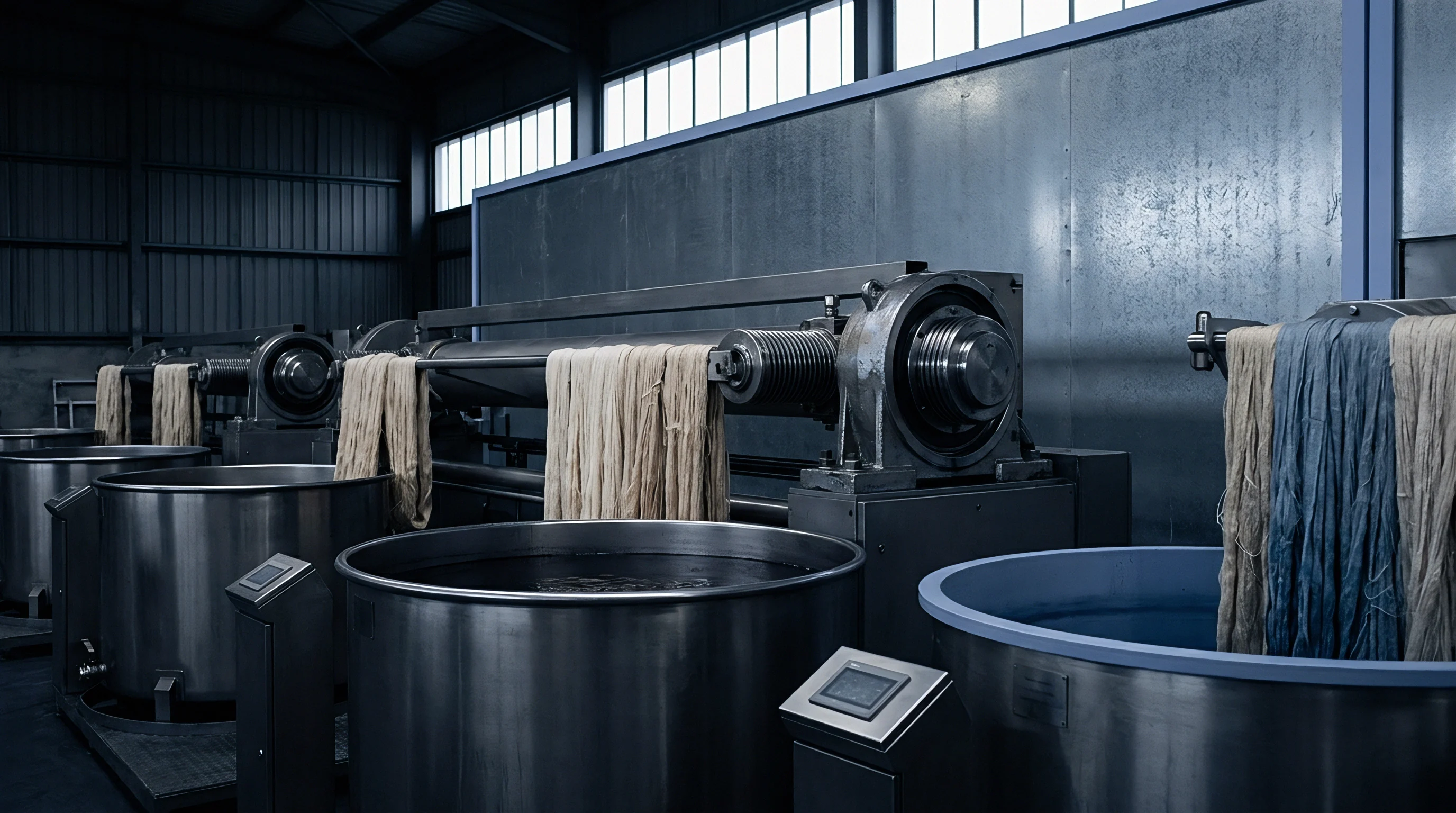
Flax wet spinning submerges roving in heated water to soften the inter-cellular pectin binding technical fibre bundles together. Industrial troughs operate between 50 and 70 degrees Celsius. Hot water dissolves water-soluble pectins, hemicelluloses, and residual processing oils.
The roving loses between 1.5 and 4.0 percent of its dry matter to the hot immersion bath before the drafting rollers apply mechanical attenuation.
Mass balance calculations for organic line flax often assume zero mass lost to liquid extraction. Wet-spinning mills running continuous throughput discharge pectin-laden liquor through floor drains into municipal effluent channels. The bath strips organic material into solution while operator logbooks record roving input weights directly against dry yarn package output weights.
Dissolved pectin constitutes invisible shrinkage. Without logging liquor discard solids, a certified organic batch registers an artificial dry-yarn deficit that auditors mistake for physical diversion.
Dissolved flax pectins account for up to four percent of dry matter disappearance inside heated immersion tanks without entering the physical yarn package.

Where Do Losses Evaporate Unrecorded?
Water meters tracking trough replenishment provide indirect accounting for liquid-phase mass loss. Solids concentration in stagnant trough water reaches equilibrium around 0.8 degrees Brix within six operating hours. Subsequent freshwater additions dilute the solution and flush organic solids into wastewater sumps.
- Refractometric monitoring tracks dissolved pectin content across production shifts through hand-held optical refractometers calibrated between zero and ten degrees Brix.
- Effluent volume logging combines drain flow meter data with periodic total organic carbon assays of trough outflow.
- Evaporation compensation records separate purely thermal water vapor losses from actual continuous liquor bleed-and-feed cycles.
Spinners frequently explain the discrepancy by stating that hot water wash-out affects all flax equally and balances out across standard billing cycles.


Creel

Package Loading and Fiber Lot Segregation
Wet spinning frames feature multi-tiered creels holding hundreds of bobbins. Running organic flax roving alongside conventional stock on the same frame introduces cross-contamination through shared immersion compartments. Pectin and loose fibrils float freely across common troughs feeding adjacent spindle banks.
Physical segregation prevents fluid mingling. Mills install stainless steel weir plates to partition long water troughs into isolated sections. Dedicated water feed pipes deliver clean water directly to each compartmentalized frame sector.
Spindle allocation demands geometric grouping. Spinners assign entire frame faces to certified organic production rather than mixing individual spindle assignments along a continuous rail.
A physical bulkhead separating wet spinning troughs preserves batch identity across shared frame structures.

Roving Tracking across Wet Ring Spindles
Creel changes produce discontinuous mass inputs. Roving bobbins do not run out simultaneously. Floor operators replace exhausted packages individually, splicing incoming sliver tails into lingering strands.
| Component Stage | Measurement Metric | Standard Tolerance | Mass Loss Potential |
|---|---|---|---|
| Roving Bobbin Delivery | Gross weighbridge tag | Plus or minus 0.2 percent | Zero percent |
| Creel Stripping Waste | Tare core deduction | Plus or minus 0.5 percent | 0.8 to 1.4 percent |
| Splicer Splice Cut-Offs | Floor sweep bin weight | Plus or minus 1.0 percent | 0.3 to 0.6 percent |
| Submerged Drafting Breakage | Roller lap collection | Plus or minus 0.5 percent | 1.2 to 2.8 percent |
Operators discard bobbin bottoms during changeovers. The remaining five to ten meters of flax roving wound on the bobbin core cannot clear the automatic tension guides. Workers peel this waste by hand, dropping raw sliver into accumulation carts.
The mass balance model tracks these tare cores by weight rather than count. Unrecorded roving core discards distort input-to-output ratios by over one percent.
Wet flax clings to fluted steel drafting rollers following yarn breakages. Roller laps pull wet sliver out of the trough before twist insertion occurs. Operatives slash these laps off with brass hooks, dumping saturated waste into wet-waste bins.
Saturated waste weighs three times more than equivalent dry roving, creating false mass spikes if weighed wet without moisture correction.
Clean separation on the creel guarantees clean numbers in the final ledger.


Balance

Reconciliation Arithmetic across Wet Operations
Dry matter preservation governs wet spinning verification. Flax roving arrives with a commercial moisture regain value of twelve percent. Submerged drafting increases water content to over one hundred percent before spinning ring friction and bobbin take-up package winding.
The auditor isolates bone-dry input against bone-dry output. Moisture variation obscures physical material theft or batch dilution. Standard ISO 6741 defines oven-dry mass determination for linen yarns after scouring commercial allowances.
A wet spinning ledger that computes mass balance using green roving weights and wet-spun yarn weights is mathematically void.
Consider a typical industrial lot. Assume a spinning order of 10,000 kilograms of certified organic flax roving at 12.0 percent commercial moisture regain. The oven-dry base mass equals 8,928.6 kilograms.
During passage through 65-degree Celsius troughs, hot water dissolution leaches out 2.8 percent of dry matter, leaving 8,678.6 kilograms of structural bast fibre. Creel tare sliver waste accounts for 90 kilograms dry mass. Roller lap clearance adds 140 kilograms of dry processing waste.
The remaining dry fibre entering the flyer and ring spindles equals 8,448.6 kilograms.
Ring twisting and package winding introduce yarn break piecing waste and flyer fly shedding. Take typical flyer shedding at 1.1 percent and twisting waste at 0.5 percent. The resulting yarn dry mass equals 8,313.4 kilograms.
Reconditioned wet-spun yarn conditioned back to the official commercial moisture regain of 12.0 percent delivers a final yield of 9,311.0 kilograms of certified yarn.
Oven-dry mass reconciliation eliminates commercial moisture anomalies from wet spinning yield equations.

What Margin of Yield Failure Triggers Rejection?
Spinning mills operate within defined yield bandwidths. Deviations outside historical tolerances expose undocumented stock replacement.
- The auditor verifies tare calculations on inbound roving bobbin cartons against raw dispatch manifests.
- Floor sweepings are dried in conditioning ovens to normalize water content before logging total waste mass.
- Trough purge intervals are matched against production run start and finish times.
- Finished yarn package lots undergo gravimetric conditioning at twenty degrees Celsius and sixty-five percent relative humidity.
| Processing Phase | Gross Mass Influx (kg) | Moisture Content (%) | Oven-Dry Equivalent (kg) | Cumulative Loss (%) |
|---|---|---|---|---|
| Roving Creel Entry | 10,000.0 | 12.0 | 8,928.6 | 0.00 |
| Trough Pectin Extraction | 0.0 | 0.0 | -250.0 | 2.80 |
| Dry Creel Splice Strippings | -102.3 | 12.0 | -90.0 | 3.81 |
| Saturated Roller Lap Extraction | -420.0 | 66.7 | -140.0 | 5.37 |
| Spinning Spindle Shedding | -104.7 | 10.0 | -94.2 | 6.43 |
| Twisting Package Breakage | -46.7 | 10.0 | -42.0 | 6.90 |
| Conditioned Package Yarn | 9,311.0 | 12.0 | 8,312.4 | 6.90 |
| Yield calculated against official 12.0 percent moisture regain basis under ISO 6741 test conditions. | ||||
A mass balance deficit exceeding 8.5 percent indicates either excessive fibre degradation in the wet troughs or undocumented physical losses. A deficit lower than 5.0 percent indicates conventional fibre dilution. Spinning long line flax produces structural waste.
Reporting zero waste demonstrates fraudulent record-keeping.
Overlooking waste moisture adjustments triggers instantaneous audit failure and invalidates transaction documents across destination customs borders.


Scope
Whose Certification Governs Wet Ring Spindles?
Chain of custody schemes split jurisdiction at the spinning mill entrance. European Flax verifies field origin and scutching geography across Western Europe. Global Organic Textile Standard monitors chemical processing inputs and wet spinning segregation.
Organic Content Standard tracks volumetric mass balance across mechanical transformations without demanding environmental chemical restrictions.
Scope certificates identify allowed processing steps. An auditor scrutinizes the facility operations schedule attached to the mill certificate. Spinning line entries must specify wet ring spinning methods rather than generic dry spinning or open-end carded yarn manufacturing.
Dry spinning excludes water troughs entirely. Mills presenting dry spinning scope certificates for wet-spun yarn lots commit immediate regulatory non-compliance.
Transaction certificates link raw fibre deliveries to spun yarn consignments. Every transaction document lists net weight, commercial dry weight, and seller certificate validity codes. The buyer cross-references the processing dates on the transaction certificate against mill maintenance logs.
If the trough water heating system was under overhaul on the dates of declared wet spinning, the transaction document falsifies operational reality.
A processing certificate stating dry spinning authorization cannot validate yarn drawn through heated water troughs.
The Global Organic Textile Standard policy for the carriage of wet processing materials permits mass balance tracking only when mechanical segregation prevents fluid mingling between certified and uncertified lots. Section 4.2 of the standard mandates immediate isolation of machinery sections during split production runs. Failure to isolate fluid troughs revokes transaction certificate issuance for the entire operating quarter.


Liability
Commercial Downstream Risk and Label Claims
Customs authorities review mass balance reconciliations when examining preferential origin and organic agricultural declarations. Importers face tariff adjustments and civil asset seizures when yarn documentation displays unverified yields.
The price spread between certified organic flax roving and conventional scutched tow roving exceeds thirty percent per metric ton. This arbitrage tempts unscrupulous wet spinners to blend conventional carded tow into organic line flax troughs. Tow fibres break rapidly under submerged drafting, washing down drains as pectin-bound sludge.
The mill replaces the lost volume by running undocumented conventional sliver through unmonitored creel sectors.
Destination markets penalize unverified composition claims. The United States Federal Trade Commission enforces the Textile Fiber Products Identification Act, levying fines against brands marketing linen products supported by broken documentation ladders. Retailers unable to show verified oven-dry trough balance figures must re-label finished stock as conventional linen or withdraw goods from sale entirely.
Supply agreements protect buyers by assigning provenance risk directly to spinning executives. Contracts specify independent verification access to shift-level weighbridge receipts, trough maintenance logs, and wastewater solids analytical data. Spinners rejecting unscheduled floor audits forfeit advance deposits and absorb downstream recall expenses.
Whether downstream buyers will continue relying on volumetric mass balance records or mandate DNA-marker verification inside the wet spinning trough remains disputed across the European spinning sector.