Optimizing Wet Spinning Bath Temperature and Chemical Softening Parameters
Maintain wet spinning bath at 62-66°C with 2.5 g/L pyrophosphate chelator to cleave middle lamella pectins, cut ends down, and maximize yarn tenacity.

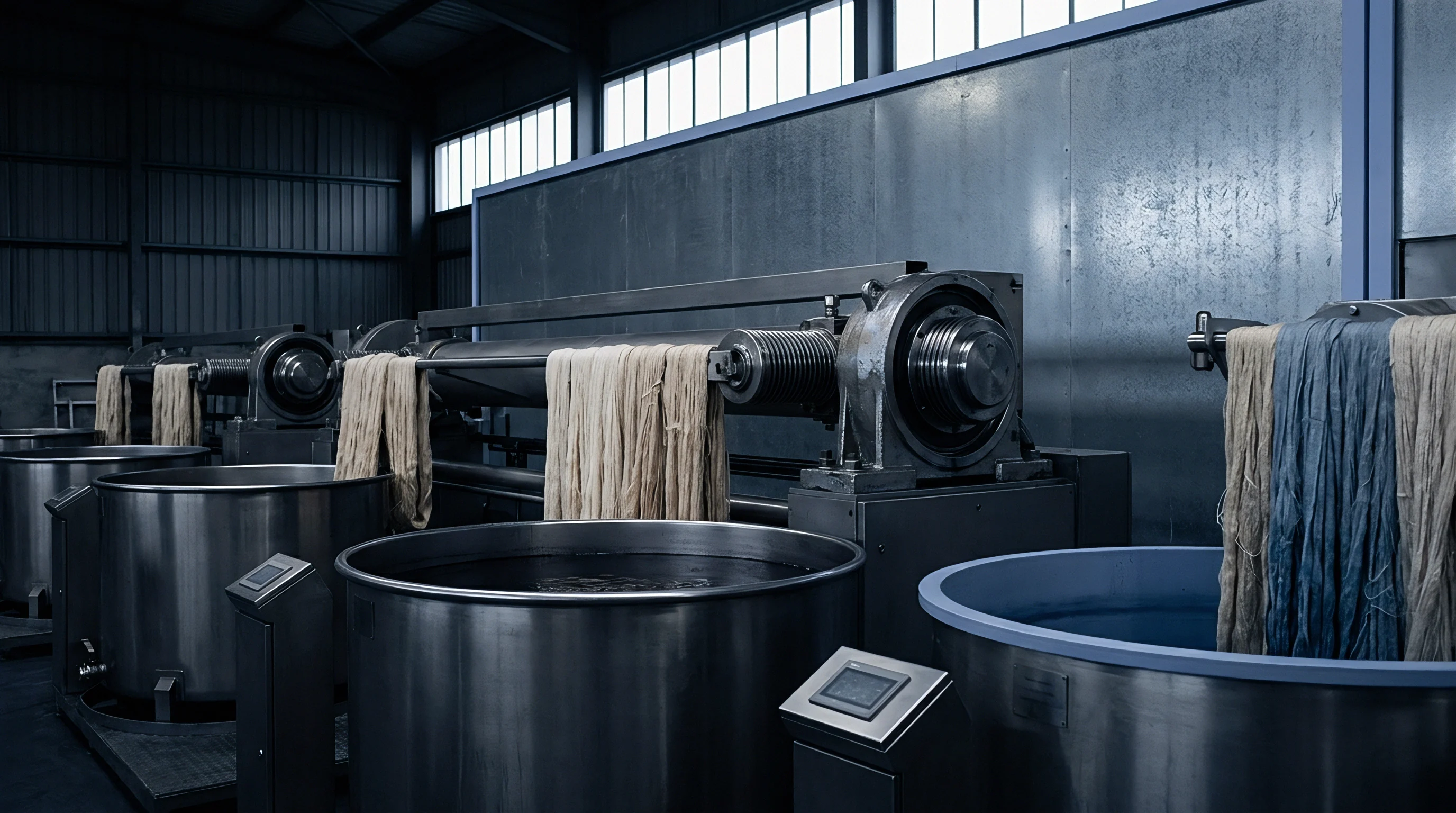
Heat
Submerging bleached or grey flax roving into an aqueous bath initiates rapid plastification of the non-cellulosic inter-cellular cement. Water at 60 degrees Celsius penetrates the technical bundle within 1.8 seconds, loosening the galactan and polygalacturonan chains that bind single bast ultimates together. Drafting resistance drops past sixty.
Cold water fails to plasticize these pectic gums, producing severe roller lap, clumped fibre sliver and coarse, uneven yarn counts. Excessive trough temperatures stripped of control boil off volatile spinning lubricants, dissolve protective waxes prematurely, and generate thermal degradation that manifests as spindle-point sloughing.
Thermal Softening in the Wet Trough
The wet spinning trough serves as an inline thermal conditioner positioned immediately behind the retaining rollers of the spinning frame. Industrial flax wet spinning runs roving through this liquid bath at transit velocities between 8 and 24 metres per minute, depending on spindle speed and yarn linear density. The immersion distance varies between 300 millimetres and 650 millimetres inside stainless steel channels.
Water serves as a plasticizer by lowering the glass transition temperature of hydrated flax pectins from approximately 85 degrees Celsius down to a range between 55 and 65 degrees Celsius. Flax bundles resist cold separation.
Operating below 50 degrees Celsius keeps middle lamella pectins in a rigid, semi-crystalline state. Retaining rollers force these unsoftened bundles into the drafting zone, where high shearing stress fractures ultimate fibres rather than sliding them apart. Operating above 75 degrees Celsius accelerates hydrothermal extraction of calcium pectinate, softening the bundle excessively before fibres reach the front drafting nip.
The drafting zone collapses when inter-fibre cohesion falls below the tension threshold dictated by spindle balloon rotation.
Bundle cohesion falls steeply when trough fluid temperatures exceed seventy degrees Celsius during drawing operations.
Pectin Transition Thresholds and Liquid Residence
Residence time inside the heated fluid governs the gradient of heat transfer from the outer bundle sheath to the core ultimates. A 600-tex bleached roving traversing a 450-millimetre immersion path at 15 metres per minute experiences 1.8 seconds of direct contact. Heavy unbleached grey rovings at 1000 tex demand longer residence or elevated bath temperatures to achieve equivalent thermal penetration, because natural hydrophobic waxes impede water imbibition.
Pectin acts as adhesive.
Thermal stability inside the trough requires continuous liquid circulation and PID-controlled electrical heating elements or low-pressure steam jackets. Temperature differentials across the length of a 200-spindle frame create wide variation in drafting force. A drift of 6 degrees Celsius between spindle 1 and spindle 100 alters fibre separation mechanics, increasing the coefficient of variation in yarn mass (CVm) by up to 2.8 percentage points.
The laboratory verifies this thermal sensitivity by measuring bundle pull-out force on a drafting dynamometer mounted directly to the frame bedplate.
- Thermal under-penetration yields coarse drafting ribbons, excessive end breakage at the flyer or ring, and harsh yarn handle caused by bundled, unseparated ultimates.
- Thermal over-extraction strips intercellular gums completely, leading to fibre washing on bottom fluted rollers and high nep counts in the wound yarn.
- Bath stagnation creates localized cold spots near freshwater replenishment valves, producing periodic count surges across consecutive bobbin cycles.
When bath temperatures deviate from the qualified processing window, the spinning frame generates excessive roller waste, elevated pneumatic clear-waste volumes, and high spindle downtime that inflates conversion costs while degrading yarn linear density uniformity.

Reagent
Chemical softening additions directly alter the divalent crosslinks that stabilize polygalacturonic acid backbones within the bast middle lamella. Calcium crosslinks stabilize the galacturonan backbone. Plain hot water softens pectin by thermal expansion and hydration, whereas targeted chemical solutes disrupt ionic bridges, allowing fibre ultimates to slide past each other smoothly under low mechanical drafting tension.
Applying chemical reagents directly to the spinning trough or during preceding roving package preparation determines ultimate yarn fineness, hairiness, and tensile yield.
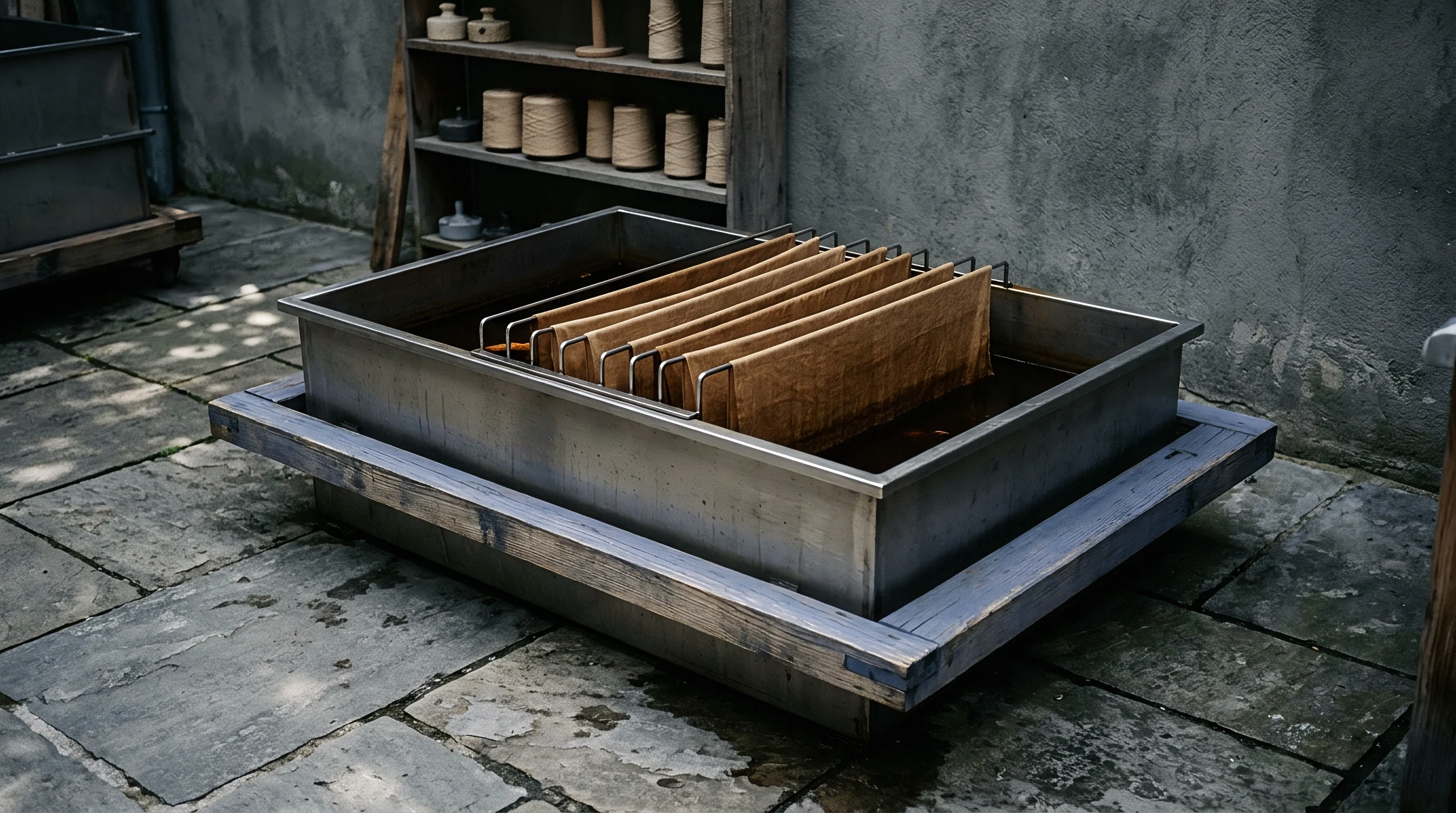
Chelation Chemistry in Polygalacturonan Demethylation
Natural flax pectin contains unesterified carboxyl groups crosslinked by calcium and magnesium ions, forming the classic egg-box structural model. Sodium hexametaphosphate, tetrasodium pyrophosphate, and ethylenediaminetetraacetic acid salts sequester these divalent cations through coordination complexing. Calcium exchange replaces divalent bonds with monovalent sodium ions, transforming water-insoluble pectate networks into soluble sodium pectate.
The bundle shears cleanly. Wetting time governs production speed.
| Chemical Solute System | Concentration (g/L) | Bath pH Range | Pectin Extraction (%) | Bundle Cleavage Force (cN/tex) |
|---|---|---|---|---|
| Demineralized Water Blank | 0.0 | 6.8 to 7.2 | 12.4 | 18.6 |
| Sodium Hexametaphosphate | 2.5 | 6.2 to 6.6 | 28.1 | 11.2 |
| Tetrasodium Pyrophosphate | 3.0 | 7.8 to 8.4 | 34.6 | 9.4 |
| Citric Acid / Sodium Citrate | 4.0 | 5.0 to 5.4 | 19.8 | 14.1 |
| Ethoxylated Fatty Alcohol Surfactant | 1.5 | 6.5 to 7.0 | 16.2 | 13.8 |
| Pyrophosphate Plus Nonionic Wetting | 2.0 + 1.0 | 7.5 to 8.0 | 41.5 | 7.6 |
| Pectin extraction measured gravimetrically after 30-minute extraction on water-retted Courtrai line flax roving under ISO 6741 conditioning standards. | ||||
How Do Chelators Shift Middle Lamella Dissolution?
Chelating molecules strip bridging ions from the outer lamella layers without depolymerizing structural cellulose fibril bundles. Pyrophosphate concentrations between 2.0 and 3.5 grams per litre accelerate calcium extraction while maintaining alkaline conditions that saponify lingering waxes. The classer notes this transition instantly: fibre strands pull apart with velvety softness rather than brittle snapping resistance.
Magnesium concentrations in natural retting water typically range from 15 to 45 milligrams per litre, meaning unsoftened process water exhausts chelating capacity prematurely if process lines omit water softening units.
Controlling solution pH prevents cellulose degradation. Alkaline conditions above pH 9.5 induce cellulose chain scission via beta-alkoxy elimination reactions when elevated temperatures persist. Acidic troughs below pH 4.5 hydrolyze hemicelluloses, embrittling the primary cell wall and dropping yarn tenacity.
Buffering bath solutions between pH 6.8 and 7.8 preserves structural polysaccharides while facilitating controlled carboxyl ionization. Hard water precipitates fatty salts.
Processing baths operating above eight pH risk chemical tenderisation of flax primary walls during prolonged contact.
Surfactant Ratios in Roving Impregnation
Nonionic wetting agents accelerate chemical penetration into tightly twisted rovings. Ethoxylated alcohols possessing a hydrophilic-lipophilic balance between 12 and 14 reduce aqueous surface tension below 30 millinewtons per metre. Faster surface wetting permits shortened bath troughs, reducing frame footprint and liquor volume.
Surfactants also emulsify natural cuticular waxes, dispersing them throughout the bath to prevent gummy redeposition on flyer eyes and yarn guide pigs.
An auxiliary formulation balancing wetting speed and chelation activity stabilizes spinning performance across variable raw fibre origins. In typical commercial operations, the spinner blames unretted straw or bad field retting whenever frame breakages rise, claiming the roving had irregular gum content that no trough chemical could balance.


Nip
Pressure applied at the drafting roller interface translates bath plasticization into controlled longitudinal attenuation. Wet flax spinning relies on two distinct roller pairs: slow back retaining rollers running under low pressure, and fast front drawing rollers running under intense mechanical compression. The retaining rollers firmly grip wet roving as it emerges from the trough channel.
The drawing rollers rotate at peripheral velocities between 10 and 25 times faster, shearing the softened pectin matrix and drawing single fibre cells along their longitudinal axes. Sliver cohesion collapses without warning.
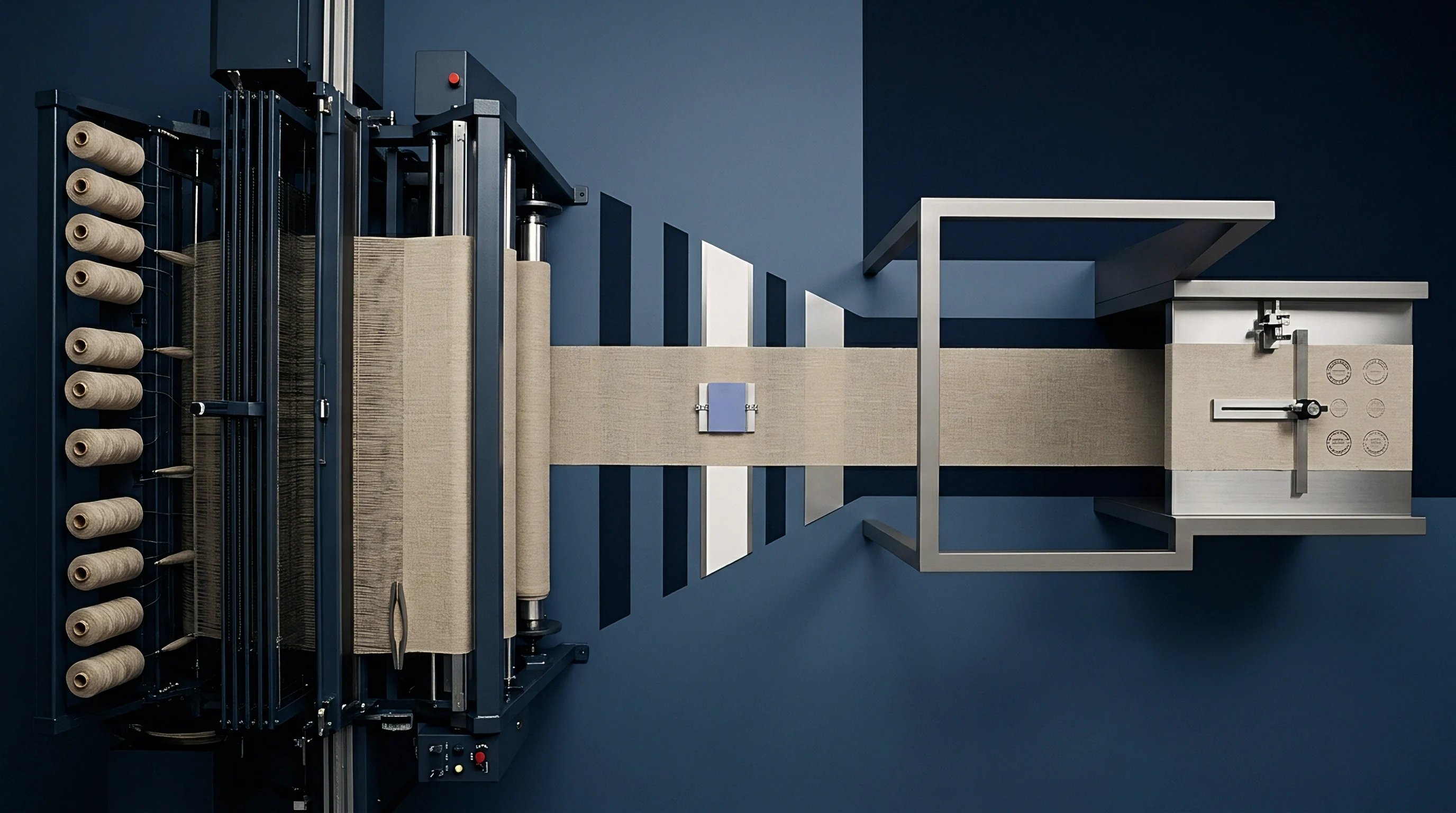
Cot Hardness and Drafting Zone Dynamics
Synthetic rubber roller covers, known as cots, grip wet flax under aggressive moisture and chemical conditions. Hard cots measuring 85 to 90 Shore A resist grooving from coarse bast fibres, yet offer narrower nip contacts that can pinch and crush brittle bundles. Softer cots measuring 70 to 75 Shore A yield wider contact footprints, distributing pressure evenly to promote individual ultimate separation without localized fibre severance.
Roving twist controls initial draft.
Excessive moisture carried from the bath lubricates the roller interface, creating hydrodynamic aquaplaning if cot compound formulations lack microporous venting or specialized synthetic nitrile friction modifiers. In fine yarn production, oil-resistant rubber formulations prevent chemical swelling caused by bath wetting agents. The mechanical pressure on front top rollers ranges from 35 to 65 decanewtons per roller end, exerted through heavy compression springs or pneumatic weighting arms.
What Trough Temperatures Trigger Premature Drafting Failure?
Bath temperatures surpassing 72 degrees Celsius induce catastrophic slippage inside the drafting field before fibre bundles reach the front nip. As hot water and chelating agents liquefy the middle lamella, inter-fibre friction decays exponentially. The draft becomes uncontrolled, pulling thick, untwisted slubs through the zone followed immediately by drafting voids that cause spinning ends to break at the spindle tip.
Spindle tension spikes during starts.
Tension monitoring within the drafting field demonstrates that peak drafting force occurs in the initial 20 millimetres of the drafting reach, where the roving twist unwinds under wet tension. If liquid temperatures sit below 52 degrees Celsius, drafting force spikes to over 35 Newtons for a 500-tex roving, causing roller slippage, cot abrasion, and frequent gear-train shear pin fractures. Operating within an empirical target of 62 to 66 degrees Celsius stabilizes drafting force at a controllable 12 to 16 Newtons.
- Verify raw water hardness at the makeup line, setting ion-exchange regeneration cycles whenever total dissolved calcium carbonate exceeds 20 parts per million.
- Calibrate trough temperature probes against certified reference thermometers, ensuring bath zones exhibit no more than 1.5 degrees Celsius variance across frame lengths.
- Adjust retaining roller saddle weighting to prevent roving creep under back-tension pulled from submerged ceramic guides.
- Measure cot diameter uniformity across top rollers using dial calipers, discarding rubber covers displaying more than 0.05 millimetres radial runout or chemical pitting.
- Set the front draft ratio to match the fibre length distribution determined from oil-comb sorting diagrams, eliminating short-fibre floating defects.
The relationship between spinning bath chemistry and drafting nip geometry resembles the balance between lubrication and friction in heavy industrial journal bearings, where minute shifts in fluid viscosity dictate mechanical grip or catastrophic hydrodynamic separation. Fine linen demands higher cohesion.
Keep the bath hot enough to slide the fibres without letting the front roller slip.

Tenacity
Final yarn breaking force reflects the operational balance maintained inside the wet spinning trough and chemical impregnation line. Individual flax ultimates possess intrinsic tensile strength exceeding 60 to 80 centinewtons per tex, but dry yarn breaking strength depends entirely on inter-fibre friction and residual pectin glue binding ultimates inside the spun matrix. Removing too little pectin leaves thick, rigid bundles that cannot accept twisting consolidation.
Removing too much pectin breaks the ultimate bundle into fragmented, short cells that pull apart under low tensile loads. End breakage drives spinning labour.

Metric Count Boundaries and Bundle Cleavage
Spinning limits shift upwards as bath optimization separates coarse technical fibres into single cellular ultimates. Coarse dry-spun yarns rarely exceed metric count Nm 26 (38.5 tex), whereas optimized wet spinning routinely achieves fine apparel yarns of Nm 39 (25.6 tex) up to Nm 68 (14.7 tex) from high-grade hackled line flax. Reaching Nm 60 requires reducing average drawn bundle diameter below 22 micrometres, approaching the 14-to-18 micrometre single ultimate boundary.
Sliver mass dictates draft velocity.
Fibre cleavage inside the chemical bath also governs yarn hairiness and mass irregularity. Uneven softening produces periodic thick spots where unseparated bundles fail to draft, alternated with thin spots where over-softened fibres slide excessively. Thin places induce loom stops.
Testing yarns on capacitive evenness testers reveals that optimizing chemical bath parameters drops CVm from 24.5 percent down to 18.2 percent on Nm 39 line linen yarn.
Worked Cost Comparison across Spinning Regimes
To quantify the commercial impact of bath optimization, take a 5,000-kilogram lot of water-retted hackled line flax roving evaluated for spinning Nm 39 apparel yarn on a 1,200-spindle frame. Assume raw line flax fibre costs 8.50 USD per kilogram, roving preparation adds 1.80 USD per kilogram, and base spinning conversion costs run 3.20 USD per spindle-hour. Assume weaving yarn specification requires minimum single-yarn tenacity of 28 cN/tex and a maximum CVm of 19.5 percent.
| Spinning Regime | Spindle Breaks (/1000 Sp-Hr) | Frame Efficiency (%) | Tenacity (cN/tex) | Yarn Yield From Roving (%) | Net Yarn Cost (USD/kg) | Fabric Cost (USD/m) |
|---|---|---|---|---|---|---|
| Unheated Water (20°C, No Chemical) | 145 | 72.5 | 21.4 | 81.2 | 18.42 | 4.85 |
| Sub-Optimal Hot Water (50°C, No Additives) | 82 | 84.1 | 25.8 | 88.6 | 15.85 | 4.18 |
| Thermal Only (68°C, Plain Water) | 46 | 91.3 | 29.2 | 92.4 | 14.48 | 3.82 |
| Optimized Bath (64°C, Chelator + Wetting) | 18 | 96.2 | 33.6 | 95.8 | 13.62 | 3.59 |
The sub-optimal regimes fail commercial weaving standards due to low single-yarn tenacity and excessive thin-place defect rates. In the unheated water scenario, frame breaks reach 145 per 1,000 spindle-hours, forcing spinners to drop spindle speeds by 25 percent and inflating net yarn manufacturing costs to 18.42 USD per kilogram. The optimized bath regime, maintaining 64 degrees Celsius with 2.5 g/L sodium hexametaphosphate and 1.0 g/L nonionic wetting surfactant, reduces frame breakage to 18 per 1,000 spindle-hours.
The frame achieves 96.2 percent mechanical running efficiency.
Net yield of saleable yarn rises from 88.6 percent to 95.8 percent when soft bath drafting eliminates roller laps and pneumatic waste. For an apparel fabric woven at 145 grams per square metre with 26 warp ends and 22 weft picks per centimetre, this spinning yield improvement translates to a direct saving of 0.59 USD per finished woven metre. Sourcing managers reviewing delivered yarn test certificates enforce this performance boundary by rejecting lots showing tenacity below 30 cN/tex under ISO 2062 test parameters, because low tenacity indicates compromised trough management that inevitably causes costly warp stop rates on high-speed air-jet looms.
Under international flax supply agreements governed by the standard Euroflax yarn trading terms, failure to meet certified single-strand tenacity thresholds triggers automatic price deductions of three percent per cN/tex shortfall or permits outright cancellation of delivered container balances.