Hydrothermal Roving Softening Kinetics for Wet Line Flax Spinning
Hydrothermal roving softening solubilizes calcium pectate to allow fine wet spinning down to Nm 100 while preserving bundle tenacity.
Soak
Elementary fiber bundles inside technical flax structures rely on calcium pectate bridges within the middle lamella for structural integrity during dry processing. In wet line flax spinning, converting coarse hackled roving into fine yarn numbers requires controlled dissolution and softening of this pectic matrix. Hydrothermal treatment subjects the roving package to hot aqueous media, initiating thermal softening and chemical extraction of low-molecular-weight polysaccharides.
Pectin solubilizes rapidly. Thermal energy breaks hydrogen bonds within the amorphous matrix while aqueous chelation or mild hydrolysis strips crosslinking divalent calcium ions from polygalacturonic acid chains. Controlling activation energy and reaction velocity dictates whether fiber bundles attenuate uniformly at the drafting zone or break into irregular slubs.
Thermal Activation of Pectic Solubilization
Hydrothermal processing between 60 degrees Celsius and 85 degrees Celsius destabilizes the inter-crystalline polymer matrix that holds bast fiber bundles together. Native flax pectin consists primarily of homogalacturonan regions interspersed with rhamnogalacturonans. At lower temperatures, the middle lamella maintains a rigid glass state, resisting drafting forces and causing severe end breakage on wet spinning frames.
Raising fluid temperature above 65 degrees Celsius initiates a glass transition phase in hydrated pectins. Calcium ions crosslink chains. The activation energy for thermal dissolution of middle lamella galacturonans ranges between 68 and 74 kilojoules per mole depending on crop retting uniformity.
Reaction rates follow first-order kinetics during early dwell cycles. Dissolution velocity scales linearly with temperature up to 80 degrees Celsius. Exceeding this boundary without precise chemical buffering induces non-selective cleavage of structural hemicellulose, reducing individual fiber strength.
Cold liquor halts reaction. Maintaining precise temperature equilibrium within the treatment bath prevents premature or excessive degradation of the technical fiber bundle backbone.
Solubilization rate constants for middle lamella pectins double between 65 degrees Celsius and 75 degrees Celsius at pH 7.5.

Alkaline Chelating Equilibria in Package Baths
Adding sodium hexametaphosphate or ethylenediaminetetraacetic acid salts to hot liquor accelerates calcium displacement from middle lamella pectin chains. Divalent calcium ions bind tightly to carboxyl groups on galacturonan rings, forming an insoluble egg-box structure. Solubilization requires replacing these calcium links with monovalent sodium ions or sequestering them entirely via soluble chelating agents.
Viscosity drops sharply. The thermodynamic stability constant of the chelating complex determines how effectively the reagent strips crosslinking cations without disrupting cellulosic crystalline domains.
Process pH dictates the balance between ionic exchange and polymer hydrolysis. Operating in a mild alkaline band between pH 7.2 and 8.5 optimizes calcium sequestration while limiting beta-elimination reactions along galacturonan backbones. Excessive alkalinity above pH 9.5 strips non-cellulosic polymers too rapidly, causing structural collapse of the roving sliver before it reaches drafting rollers.
Water temperature controls swelling.
- Incomplete Solubilization Core ~ Inner layers of high-density roving packages retain intact calcium pectate networks, causing draft waves and severe yarn count variation during spinning.
- Cellulosic Hydrolysis Degradation ~ Excessive liquor temperature above 90 degrees Celsius breaks glycosidic bonds in primary fiber walls, cutting bundle tenacity below acceptable spinning thresholds.
- Uneven Chelate Migration ~ Poor circulation during liquor injection leads to localized depletion of sequestering agents, leaving structural binder variations along the roving length.
- Pectin Redeposition Phase ~ Cooling untreated baths below 50 degrees Celsius precipitates dissolved galacturonans back onto fiber surfaces, increasing surface friction at drafting nips.
Machine builders often blame core drafting irregularities on inconsistent raw material retting rather than acknowledging insufficient liquor circulation across dense package walls.

Viscosity
The mechanical behavior of wet flax roving under drafting rollers depends on the softened state of pectic adhesives. As the roving package absorbs thermal energy, the inter-fiber matrix transitions from a viscoelastic solid to a low-viscosity fluid phase. This rheological shift controls the sliding resistance between ultimate elementary fibers.
Lowering middle lamella shear strength allows controlled slippage under mechanical draft without severing individual primary cell walls.
Middle Lamella Rheology during Drafting
Sub-micron interfibrillar sliding transitions from stick-slip friction to smooth hydrodynamic shear once temperatures exceed the glass transition point of native hemicellulose. Dynamic mechanical thermal analysis shows a steep drop in storage modulus between 58 degrees Celsius and 72 degrees Celsius. Drafting force falls dramatically.
The viscosity of hydrated middle lamella components falls by two orders of magnitude within this thermal window.
Shear rate inside the drafting zone of a wet spinning frame routinely exceeds 10,000 inverse seconds. Under these extreme strain rates, the softened binder acts as a non-Newtonian pseudoplastic fluid. High shear rates temporarily lower apparent viscosity, enabling smooth separation of elementary fibers.
The binder matrix relaxes. When drafting forces cease upon exiting the front nip, residual matrix viscosity recovers, providing cohesive friction as twist inserts into the newly formed yarn strand.

Why Process Kinetics Limit Attenuation Rates?
Increasing front roller speed beyond thirty meters per minute during wet spinning causes structural breakdown if the binder phase remains rigid. The kinetic rate of middle lamella relaxation must match or exceed the mechanical strain rate applied by the frame nip rollers. If mechanical draft occurs faster than the polymer matrix can reorient, technical fiber bundles break rather than split into ultimate components.
Fiber ends slip past smoothly.
| Treatment Temp (C) | Liquor pH | Rate Constant k (min^-1) | Apparent Viscosity (Pa s) | Drafting Force (N) |
|---|---|---|---|---|
| 60 | 6.5 | 0.012 | 4.85 | 14.2 |
| 70 | 7.5 | 0.038 | 1.20 | 6.8 |
| 78 | 8.0 | 0.085 | 0.35 | 3.1 |
| 85 | 8.5 | 0.142 | 0.09 | 1.8 |
Inadequate softening kinetics force mills to slow down frame production or accept coarse yarn counts with poor evenness metrics. Lignin resists thermal softening. Balancing thermal energy input with mechanical line speeds secures maximum attenuation without inducing bundle rupture.
Determining whether mechanical shear forces inside the drafting zone permanently alter pectin macromolecular weight remains an active point of study.
Creel
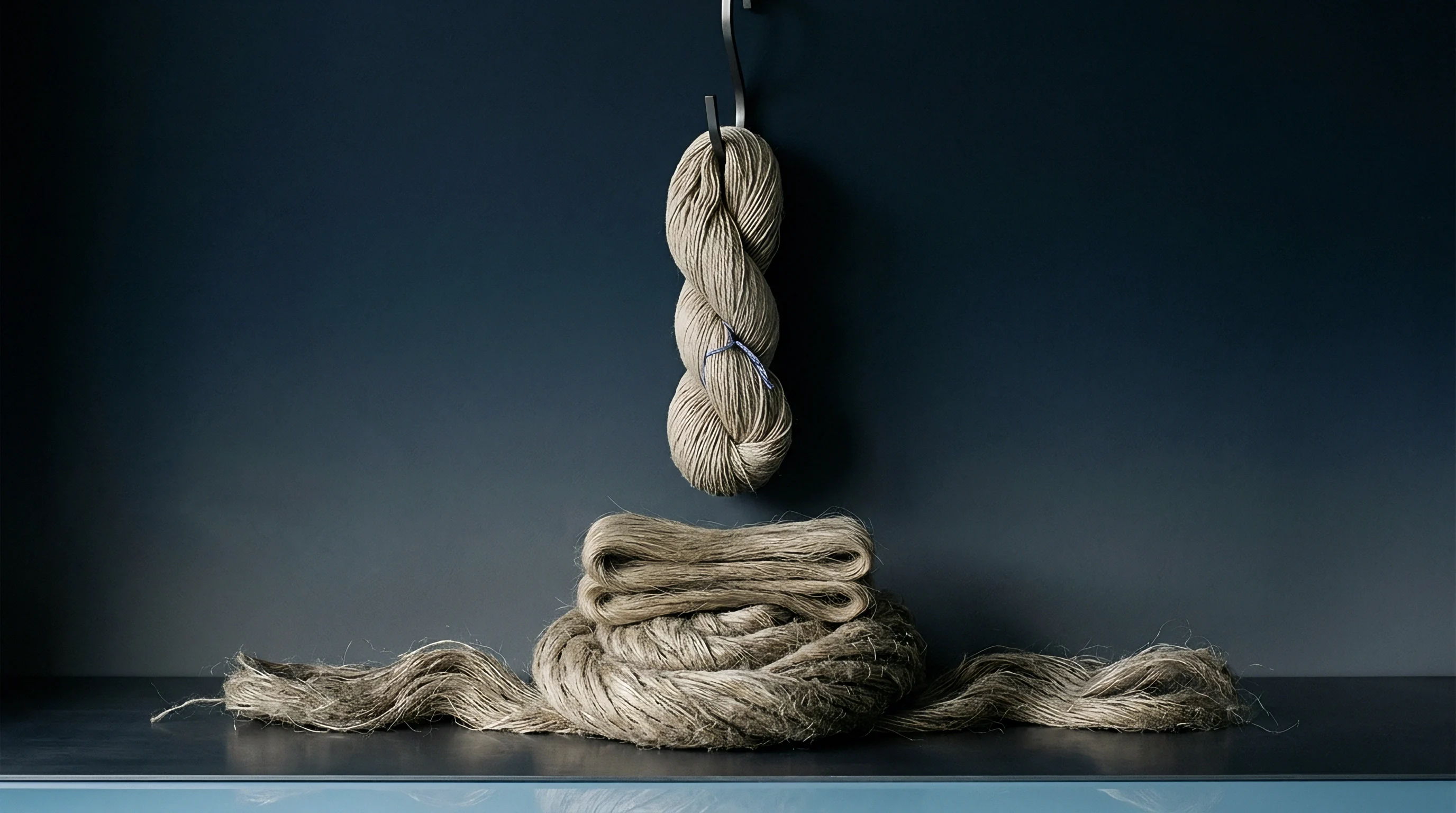
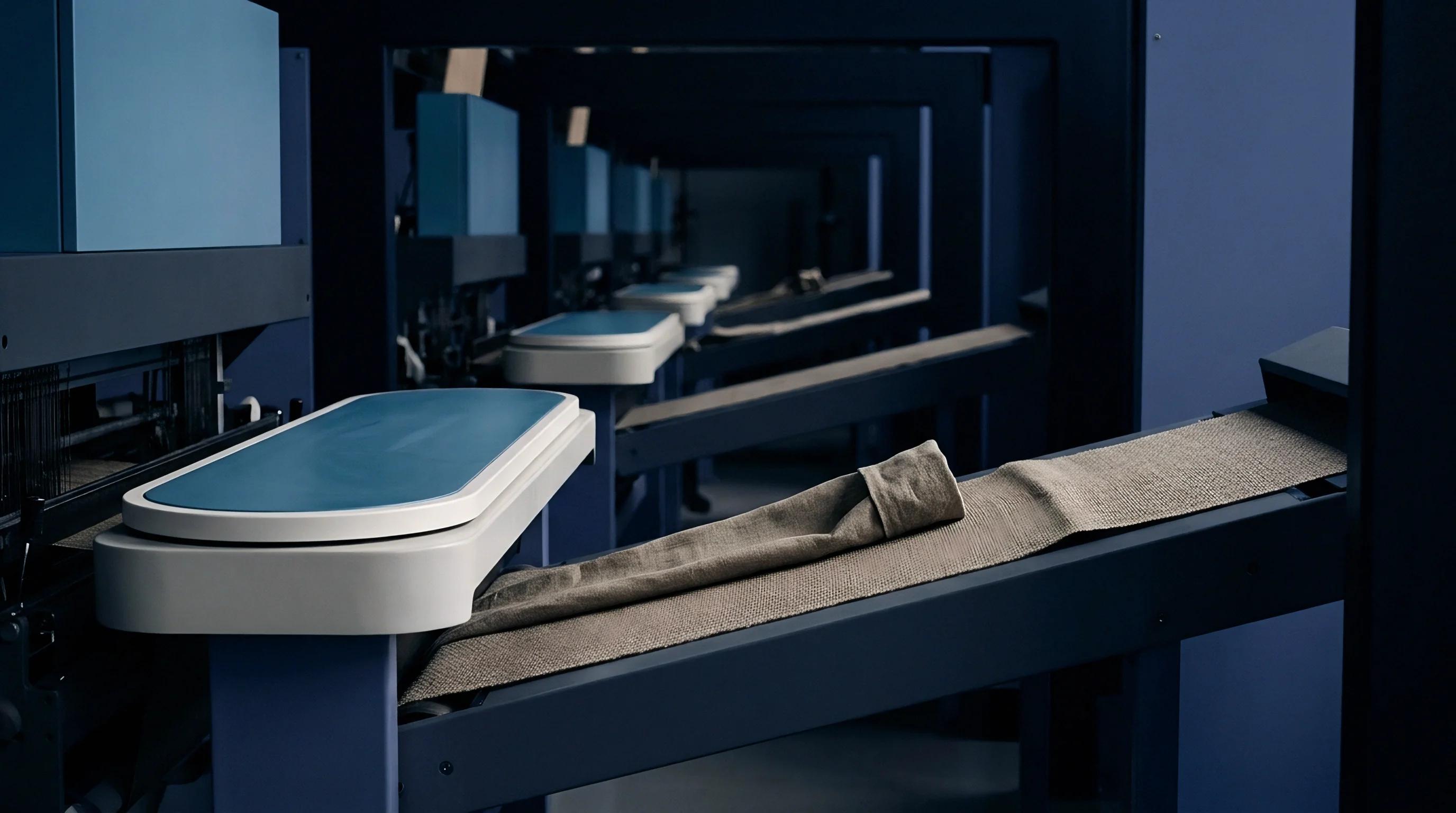
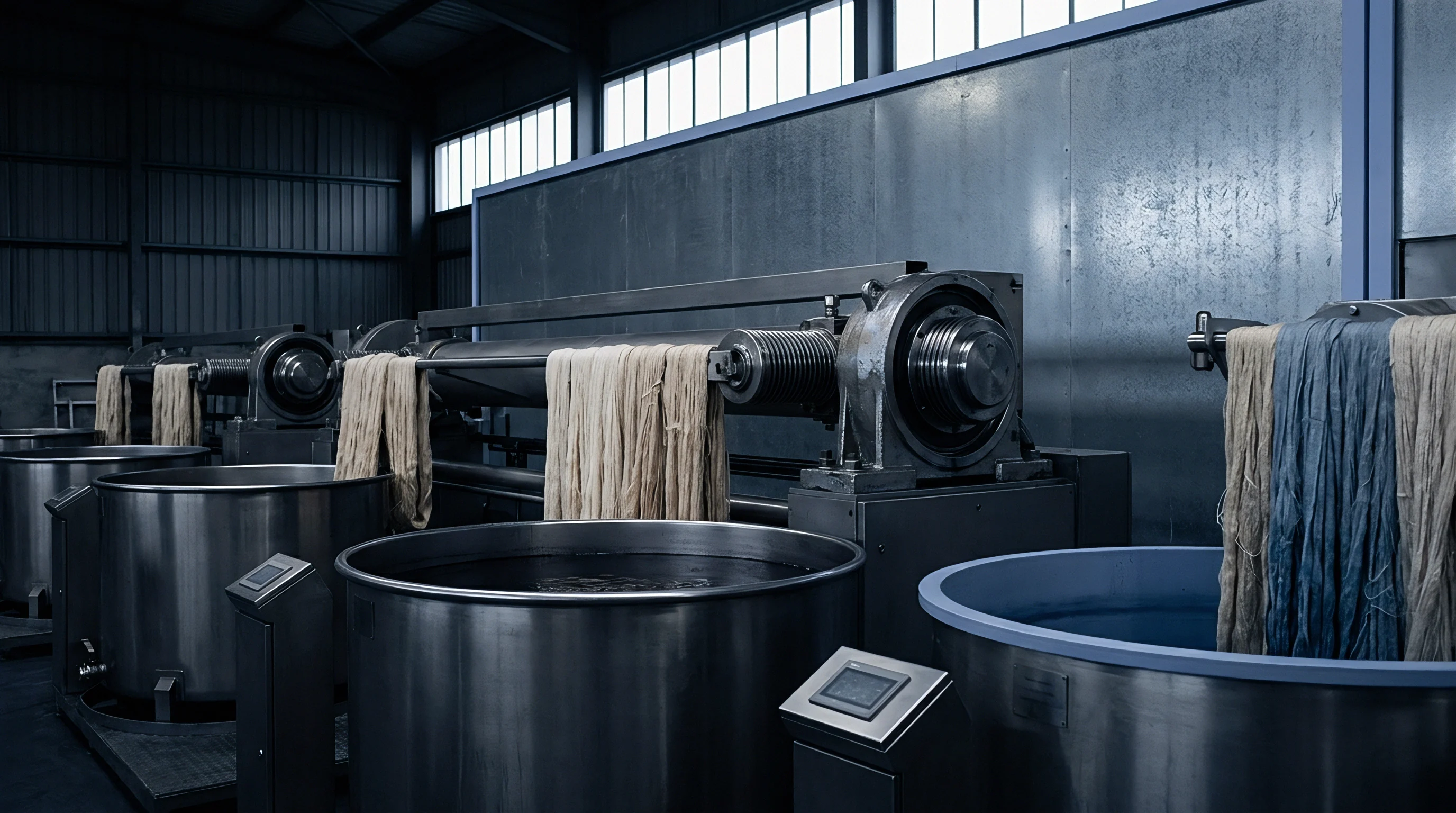
Mounted roving packages undergo forced fluid flow or passive bath immersion depending on bobbin design. Commercial wet spinning frames employ creel conditioning systems that heat and wet the wound roving immediately prior to attenuation. Fluid transport through dense cross-wound packages governs reaction uniformity.
Density variations across bobbin inner, middle, and outer layers create flow channels, yielding uneven softening kinetics if fluid dynamics remain unmanaged.
Radial Thermal Gradients in Softened Bobbins
Heat transfer through dense flax fiber assemblies proceeds through slow conductive paths across the package core. Roving package densities ranging from 0.35 to 0.48 grams per cubic centimeter impede free fluid circulation. Outer package layers reach bath temperature within ninety seconds of immersion, whereas core layers lag by up to six minutes.
Yield figures drop quickly. This radial thermal lag generates a kinetic gradient in pectin solubilization across the bobbin length.
Overcoming internal thermal inertia calls for forced radial circulation. Pressurized creel troughs that drive heated liquor from perforated bobbin tubes outward equalize temperature fields within two degrees Celsius across the entire package mass. Eliminating temperature gradients stops the inner layers from spinning coarse while outer layers over-soften.
Standard ISO 2060 sampling mandates roving density evaluation prior to liquid conditioning trials.
Percolation Dynamics across High Density Packages
Pressurized hot water circulation forces uniform chemical dispersion through tightly wound cross-wound layers. Darcy’s law governs fluid movement through porous textile structures, where permeability correlates inversely with roving linear density and package hardness. As water infiltrates dried flax bundles, cross-sectional swelling reduces inter-fiber pore space, progressively decreasing fluid permeability during the initial wetting phase.
| Bobbin Zone | Radial Distance (mm) | Time to 75C (s) | Pectin Removal (%) | Local Tenacity (cN/tex) |
|---|---|---|---|---|
| Outer Layer | 80-100 | 45 | 18.4 | 29.2 |
| Middle Layer | 40-79 | 180 | 14.1 | 31.5 |
| Core Layer | 0-39 | 380 | 8.6 | 35.1 |
- Measure roving package density on five random bobbins using volumetric displacement prior to liquor entry.
- Set creel fluid temperature to 72 degrees Celsius with a tolerance band of two degrees.
- Circulate liquor inward from the tube core for eight minutes under 1.8 bar differential pressure.
- Reverse liquor flow direction to outward radial percolation for four minutes to equalize core edge temperatures.
- Drain fluid and maintain creel trough ambient steam jacket at 68 degrees Celsius throughout drafting.
Failing to compensate for radial thermal drop generates tens of thousands of meters of off-spec yarn through unattenuated fiber slubs.

Margin
Commercial valuation of fine linen yarn hinges directly on spinning frame efficiency and fiber utilization. Optimizing hydrothermal softening kinetics elevates spinnable count limits while curbing end breakage rates. Over-treating roving to achieve ultrafine yarn counts degrades fiber strength, driving up yarn defect frequencies and waste ratios that erode mill profitability.
Attainable Metric Counts and Spinnability Thresholds
Spinning fine line flax to high fineness demands extreme division of technical fibers into ultimate fibrils. Conventional dry spinning stops near Metric Count Nm 18 due to stiff fiber bundles. Standard wet spinning without chelation reaches Nm 39 to Nm 52.
Hydrothermal treatment utilizing optimized chelation kinetics reduces middle lamella resistance, enabling attenuation up to Nm 80 and Nm 100 on standard frames.
Fine yarn counts deliver premium prices per kilo on international markets. Pushing counts from Nm 26 to Nm 60 increases finished fabric value per meter significantly, provided end breakage stays low. Uncontrolled end breakage increases operator labor overhead and creates excessive pneumafil waste, consuming raw material margins.
Excessive thermal dwell reduces ultimate single-fiber tenacity before improving drafting ease.

Worked Economics of Softening Duration against Yarn Value
Evaluating operational trade-offs between creel conditioning dwell times and spinning frame productivity reveals clear financial boundaries. Consider a 1,000 kilogram raw lot of hackled line flax priced at 8.50 EUR per kilo. Target production focuses on fine line yarn at Metric Count Nm 60, carrying a market value of 34.00 EUR per kilo.
Under Schedule A, roving receives sub-optimal treatment at 60 degrees Celsius without chelation. High matrix viscosity causes incomplete fiber splitting. Spinning frame speed must stay capped at 18 meters per minute to prevent excessive end breakage.
End breakage runs at 14 stops per 1,000 spindle hours, generating 4.2 percent pneumafil waste. Finished yarn yield lands at 820 kilograms, generating 27,880 EUR in gross revenue. Processing labor and waste write-offs consume 3,100 EUR, leaving a gross operational margin of 16,280 EUR above raw fiber cost.
Under Schedule B, hydrothermal treatment operates at 78 degrees Celsius with sodium hexametaphosphate chelation. Pectin solubilization reaches optimal thresholds, dropping matrix viscosity to 0.35 Pascal seconds. Spinning frames run at 26 meters per minute.
End breakage drops to 3 stops per 1,000 spindle hours, cutting pneumafil waste to 1.5 percent. Finished yarn yield rises to 895 kilograms, generating 30,430 EUR in gross revenue. Total processing costs, including chelation chemistry and heating power, total 2,150 EUR.
Net operational margin rises to 19,780 EUR above raw fiber cost, yielding a 3,500 EUR profit improvement per metric ton of processed flax.
| Parameter | Schedule A (Sub-Optimal) | Schedule B (Optimized) | Schedule C (Over-Treated) |
|---|---|---|---|
| Bath Temp (C) | 60 | 78 | 92 |
| Chelating Agent | None | 1.5 g/L SHMP | 2.5 g/L SHMP |
| Frame Speed (m/min) | 18 | 26 | 28 |
| End Breaks / 1000 Spindle Hr | 14.2 | 3.1 | 11.8 |
| Pneumafil Waste (%) | 4.2 | 1.5 | 5.8 |
| Mean Tenacity (cN/tex) | 22.4 | 31.8 | 17.5 |
| Net Margin / Ton (EUR) | 16,280 | 19,780 | 14,120 |
Schedule C demonstrates over-boiling at 92 degrees Celsius. Excessive hydrothermal action hydrolyzes primary cell wall cellulose, dropping fiber bundle tenacity to 17.5 cN/tex. High end breakage and severe waste loss drop net margin below Schedule A performance, proving that aggressive thermal application destroys commercial value.
- Fibre Fineness Profiling ~ Quantify initial metric fiber number via optical micro-projection before setting creel thermal exposure targets.
- Liquor Exchange Verification ~ Audit pump flow rates every shift to confirm minimum volumetric turnover across bobbin walls.
- Tenacity Retention Testing ~ Sample conditioned roving after treatment to confirm single-bundle tenacity stays above 28 cN/tex.
- Yarn End-Break Monitoring ~ Track spindle stops per thousand frame hours to detect inadequate middle lamella softening early.
Chemistries dictate yarn quality. Higher heat degrades cell walls.
Standard purchase contracts for wet-spun flax yarn incorporate ASTM D2256 breaking tenacity clauses that allow buyer rejections whenever mean breaking force falls below specified threshold limits.
Proof
Quality verification for hydrothermal processing requires direct chemical and physical testing on conditioned roving samples. Bench analytical validation confirms whether pectin solubilization hit targeted kinetics without degrading structural cellulose. Integrating wet chemistry with tensile testing validates treatment effectiveness before committing entire fiber lots to high-speed spinning runs.
Residual Pectin Titration and Tensile Loss
Analytical determination of polygalacturonic acid content through carbazole spectrophotometric assay gives precise measurement of binder dissolution. Unretted raw flax contains approximately 4.5 percent to 6.0 percent pectin by dry weight. Roving entering the wet spinning frame should target residual pectin content between 1.2 percent and 1.8 percent by weight.
Higher residual values indicate under-softened stock that will resist attenuation. Lower values signal excessive stripping, leading to fiber shedding and high yarn hairiness.
Single-bundle tensile testing according to ISO 3060 validates structural integrity post-treatment. Normal dry hackled line flax exhibits tenacity values between 38 and 48 cN/tex. Hydrothermal treatment softens the matrix, temporarily lowering wet bundle tenacity during drafting.
Upon drying, re-crystallized pectin and entanglements must recover dry yarn bundle tenacity to at least 28 cN/tex. Dropping below this limit indicates irreversible cellulosic degradation.
Residual pectin content below one percent by weight correlates with excessive yarn hairiness.

Analytical Bench Checks for Softening Uniformity
Standardized laboratory procedures measure both fiber bundle tenacity and linear density variations post-treatment. Measuring linear density variation across conditioned roving meters via capacitance testing detects localized under-treated zones. High mass variation coefficient values predict poor yarn evenness on Uster tester reports.
Cross-sectional optical microscopy of soft roving confirms fiber separation state. Well-conditioned roving displays complete separation of large technical bundles into smaller sub-units containing only three to six ultimate cells. If microscopy reveals intact technical bundles over twenty cells wide, creel bath temperature or chemical concentration must increase.
Careful alignment between spectrophotometric pectin analysis and frame drafting force monitors creates a tight feedback loop that locks in consistent count quality across seasonal crop variations.