Documenting Non Preferential Origin Shift during Scutching and Combing Operations
Non preferential origin shift during flax scutching and combing requires verified mass-balance records and machine logs proving physical transformation.


Qualification
Non-preferential origin determinations under customs enforcement turn on the physical changes raw agricultural biomass undergoes during mechanical decortication. Under Article 60 of the Union Customs Code and equivalent United States Customs and Border Protection rulings under 19 CFR Part 102, processing confers origin only when it results in a substantial transformation. That shift must take the form of either a tariff heading change or a specific manufacturing process recognized under non-preferential origin rules.
Raw, retted flax straw enters trade under Harmonized System heading 5301.10. Mechanical scutching splits the woody core from the bast fibre, producing scutched flax under heading 5301.21 along with tow under heading 5301.29. Combing then aligns, cleans, and refines these fibres into combed sliver under heading 5301.30.
The central legal issue is whether mechanical work alone is enough to confer origin, or whether customs authorities view scutching and combing as minimal operations on par with simple cleaning and sorting.
United States customs jurisprudence and European Union customs guidelines interpret these mechanical steps quite differently. Under U.S. precedents ~ notably those rooted in 19 U.S.C. 1304 and judicial rulings on textile transformations ~ mechanical operations that clean, align, or separate natural fibres without changing their chemical identity or essential character do not confer origin. A bale of French flax straw scutched and combed in a third country remains French origin fibre under United States import rules.
Conversely, Union Customs Code Annex 22-14 lists specific working or processing operations that do confer non-preferential origin for textile products. Under these product-specific rules for Chapter 53, certain mechanical operations qualify if they convert unworked bast fibres into a dressed or spinnable state. Import teams building a dossier have to resolve these conflicting rules before cargo leaves the plant.
A certificate of origin issued without accompanying production logs leaves the importer legally exposed to retroactive duty assessments upon audit.
Proving a substantial transformation takes physical records, not generic declarations from a chamber of commerce. When claiming an origin shift between heading 5301.10 and heading 5301.30, an importer must back it up with consecutive processing logs that trace raw straw through the scutching turbine and into the hackling shop. If those records reveal an incomplete mechanical run, customs auditors reclassify the lot to its primary agricultural origin.
Any mismatch between physical mass balances and declared origins can trigger immediate shipment seizures or punitive tariffs.


Comb

Mechanical Transformation Mechanics
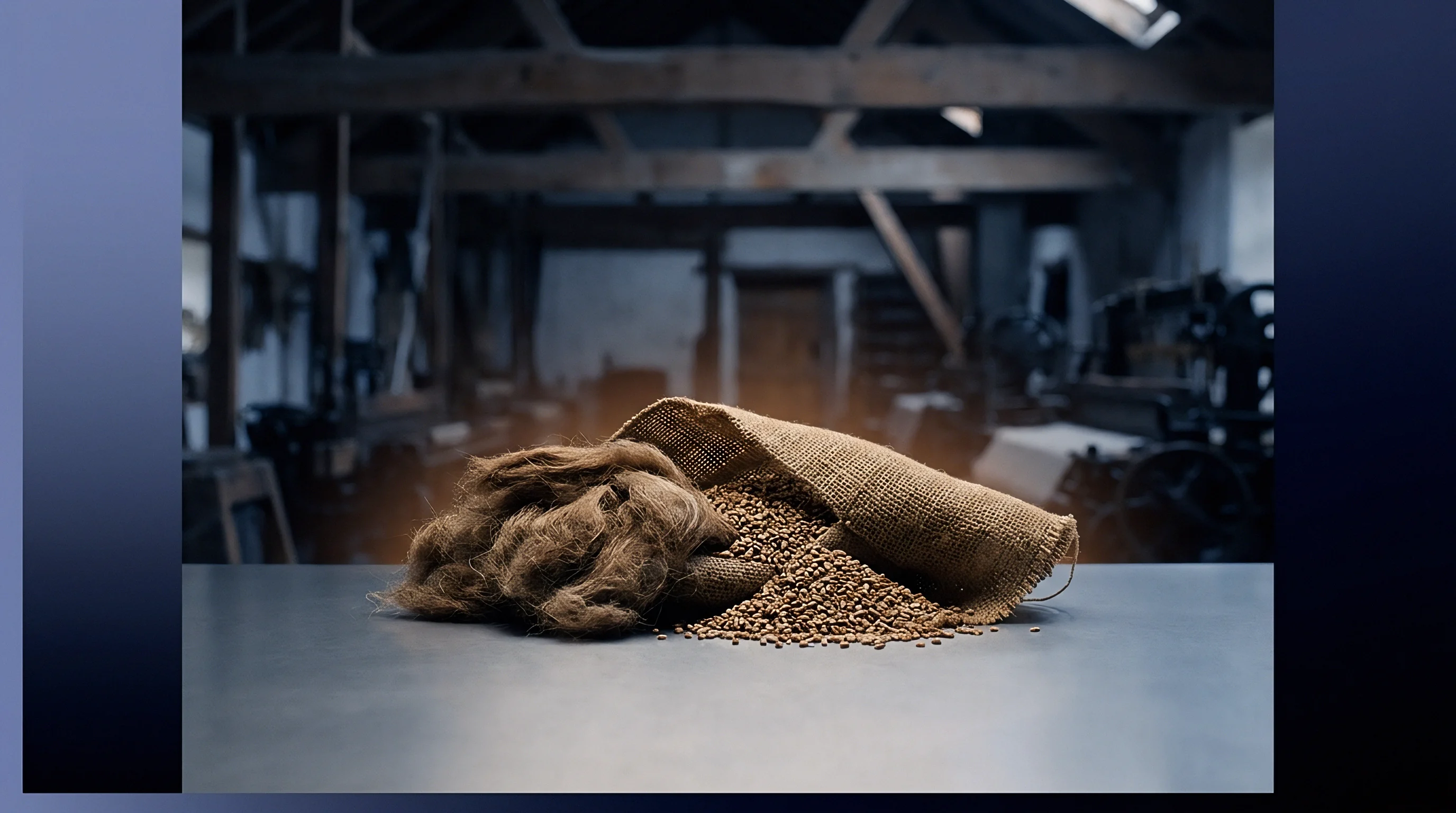
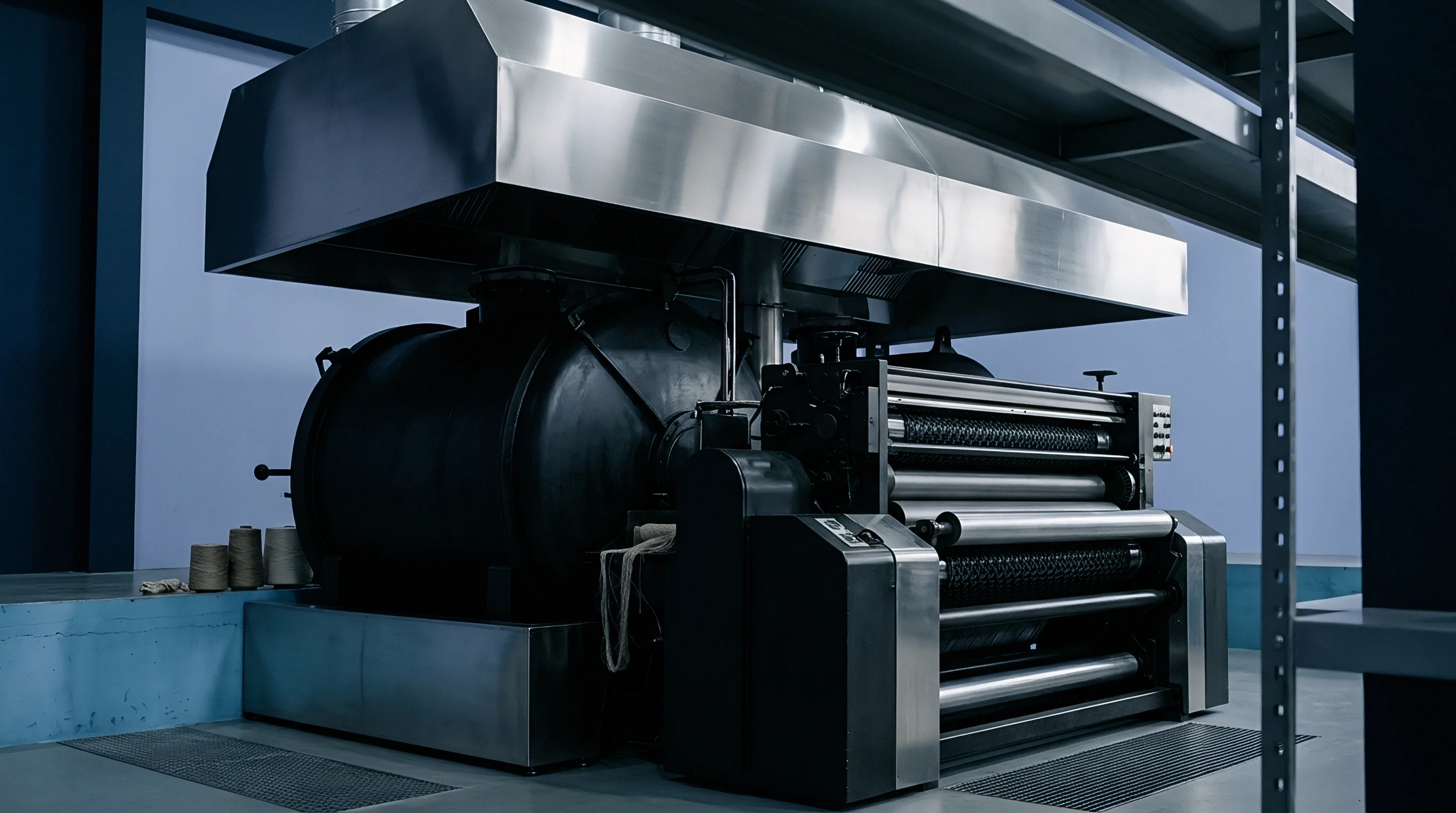
Decortication starts with scutching, an aggressive mechanical step that breaks the inner woody xylem ~ known as shive ~ away from the outer bast fibre bundles. Stalks of field-retted straw pass through fluted metal rollers, crushing the dried core into small bits. Rotating turbine blades then strike the crushed stems, knocking the shives off the long fibre strands.
This splits the raw material into two distinct commercial outputs: long scutched line flax and scutched tow. The long line flax features strand bundles eighty to one hundred centimeters long, while tow consists of short, tangled leftover fibres containing higher levels of shive.
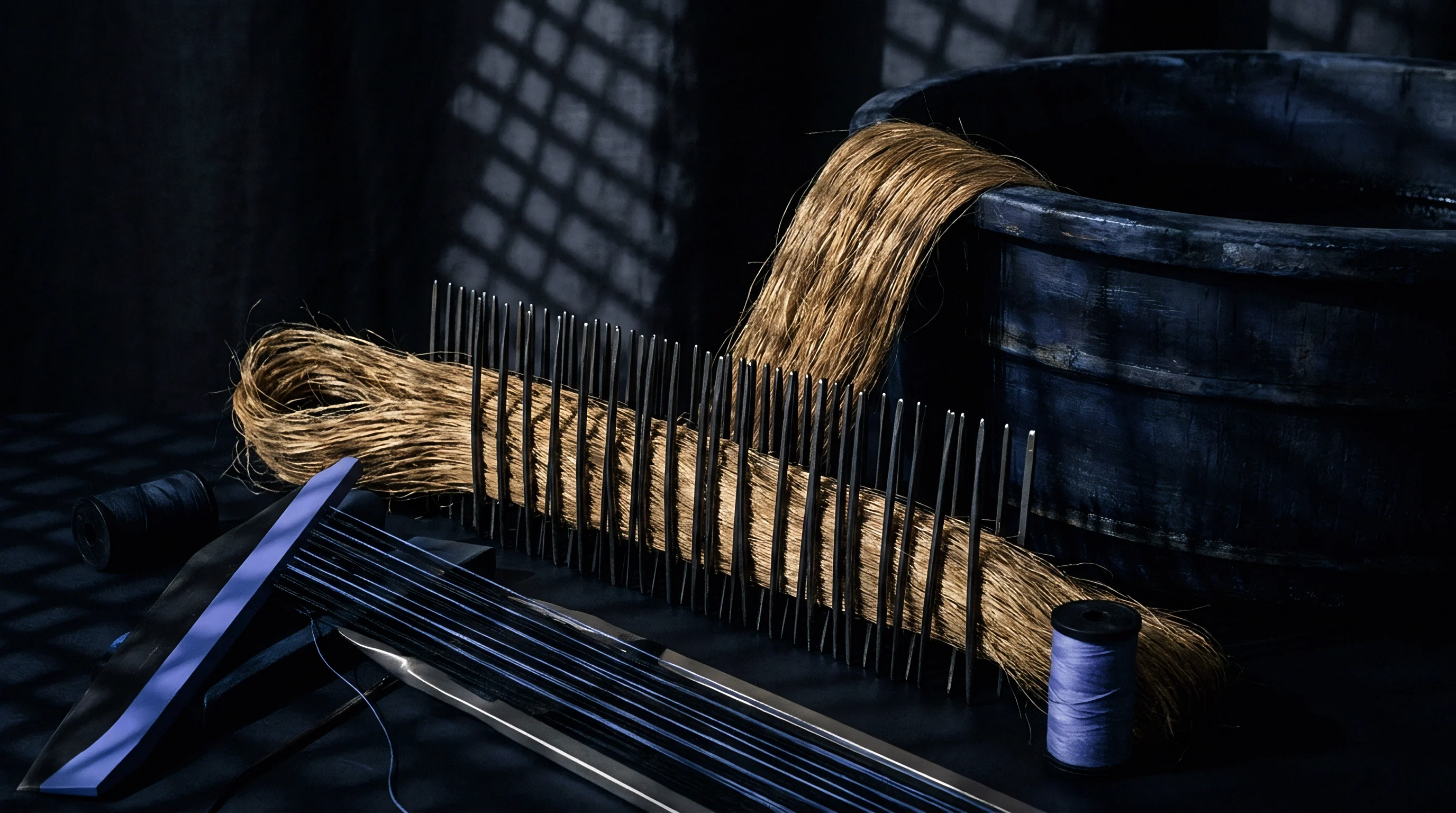
Hackling, or industrial combing, follows scutching to prepare long line flax for wet spinning. Bundles of scutched long line flax are clamped in moving metal carriages and pulled through successive fields of hardened steel pins. These comb beds increase in pin density, moving from two pins per centimeter on the initial coarse bars up to twenty-eight pins per centimeter on the final fine hackling bars.
As the pins work through the material, they split coarse bundles lengthways, separate individual technical fibres, strip out remaining shive fragments, and pull out residual short fibres. The combed line flax exits as a continuous, aligned ribbon ~ combed sliver ~ and coils into cans ready for gill drawing and spinning.
Combing fundamentally alters the physical structure, surface purity, linear density, and commercial classification of the flax bundle. Raw flax straw typically yields twenty to twenty-five percent recoverable long bast fibre, fifty percent woody shive, fifteen percent tow, and ten percent moisture and dust. Hackling removes another fifteen to twenty-five percent of the scutched long line weight as hackled tow.
These operational numbers form the baseline documentation needed to prove actual mechanical transformation.
| Processing Stage | Input Material | Input HS Code | Output Material | Output HS Code | Yield Percentage (Range) | Specific Energy (kWh/t) |
|---|---|---|---|---|---|---|
| Scutching Primary | Retted Flax Straw | 5301.10 | Scutched Long Line | 5301.21 | 18 – 24 | 65 – 90 |
| Scutching Secondary | Retted Flax Straw | 5301.10 | Scutched Tow Residue | 5301.29 | 12 – 18 | 45 – 60 |
| Hackling Coarse | Scutched Long Line | 5301.21 | Rough Combed Strands | 5301.21 | 78 – 84 | 35 – 50 |
| Hackling Fine / Combing | Rough Combed Strands | 5301.21 | Combed Sliver Top | 5301.30 | 65 – 75 | 80 – 115 |

Shive Removal and Fibre Yield Ratios
Auditing a decortication floor requires strict verification of mass balance curves. A plant in normal operation produces high volumes of combustible shive, which it either sells as horticultural mulch or compresses into fuel briquettes. A facility recorded as processing one thousand metric tons of raw straw into combed sliver without producing seven hundred tons of shive, dust, and tow waste is non-existent on its face.
Customs inspectors rely on factory waste disposal manifests, weighbridge slips for debris, and thermal boiler logbooks to verify that declared mechanical work took place on site.
Fibre fineness measurements offer direct physical evidence of hackling work. Uncombed scutched long line has linear densities above twenty to thirty tex, holding substantial residual pectin between individual filaments. After fine hackling through twenty-four-pin combs, those technical fibres split down to bundles measuring two to five tex.
Importers prove this transformation using independent lab tests ~ such as standard airflow fineness methods or automated optical projection microscopy ~ to confirm that the fibre underwent real processing.
Lab testing alone falls flat if factory records lack lot continuity. A mill processing French straw in Ningbo has to log every incoming shipment against internal lot travelers, tracing individual clamp numbers all the way through the comb line.


Ledger
Documentary Trail Architecture
Establishing non-preferential origin takes an unbroken paper trail from the field to the export bale. The dossier starts with farm weigh tickets and transport waybills tracking retted flax straw from local cooperatives to the primary decorticator. Every straw bale carries a field tag listing the grower, retting plot, harvest year, and certified moisture content.
These physical tags must match up cleanly with shipping manifests and gate receiving logs at the scutching plant.
Inside the scutching mill, production controllers assign internal batch numbers to every incoming run of straw. The mill ledger logs operational variables throughout the day:
- Straw Infeed Weigh Tickets record incoming batch tonnages, average stalk moisture content, and transport vehicle registrations before unloading into conditioning bays.
- Turbine Run Logs log the operating hours of breaking rollers, turbine drum speeds, kilowatt-hour power consumption, and shift details for each production lot.
- Scutched Bale Press Records link finished line flax bales to input straw lots, recording net bale weight, moisture levels, fibre grade codes, and serial numbers in sequence.
- Shive Extraction Manifests account for waste sent to cyclones, packaging stations, or biomass buyers, confirming mass conservation across the run.
When scutched flax moves to the hackling shed, a second paper trail begins. The hackling ledger tracks bales out of dry storage and into the comb room. Clamping schedules log which scutched lot numbers go to which combing lines, while hackling sheets record pinned bar setups, pass counts, hackled tow extraction percentages, and the linear weight of the output sliver.
Every coiled sliver can gets a barcode matching the combed lot, machine line, operator shift, and parent scutching lot. This cross-referencing ties sliver shipped under heading 5301.30 directly back to primary straw inputs under heading 5301.10.
A mass balance spread exceeding five percent between incoming straw weight and total recovered fractions points to either document tampering or unaccounted material substitution.

Traceability across International Borders
Cross-border supply chains need customs filings that establish unbroken physical custody during sea transit between farming hubs and processing plants. When raw straw or scutched fibre crosses jurisdictions prior to final combing, transit filings must record exact seal numbers and container manifests. Free zone storage permits, inward processing authorizations, and bonded warehouse entries provide external verification.
If Normandy flax straw enters an offshore processing zone, the entry declaration must list the original agricultural seller, invoice values, and transport bills of lading.
Customs officials inspect inward processing authorizations to ensure raw fibre wasn’t commingled while under bond. Facilities running inward processing schemes must maintain detailed inventory ledgers showing opening stock, bonded imports, production yields, scrap, and finished export counts. Discrepancies between customs stock registers and internal ERP records will invalidate a non-preferential origin claim on the spot.
Auditors trace origin through commercial invoices, delivery dockets, and maintenance logs. If electric power bills don’t line up with declared comb output rates, the non-preferential origin claim falls apart.

Jurisdiction

Divergence in National Origin Regulations
Non-preferential origin rules differ sharply across major import markets, creating real friction in global linen supply chains. The European Union applies Union Customs Code Delegated Regulation 2015/2446, with Annex 22-14 laying out rules for Chapter 53 textile materials. Under the EU view, scutching alone does not confer origin on raw flax straw because breaking and scutching are treated as basic agricultural preparation.
Hackling and combing do qualify as substantial working when they transform uncombed bast fibres into combed sliver under heading 5301.30, provided tariff heading shift and process criteria are both met.
United States Customs and Border Protection follows a different standard under Section 334 of the Uruguay Round Agreements Act (19 U.S.C. 3592) and 19 CFR Part 102. Under U.S. regulations, agricultural goods and natural fibres take origin strictly from where the plant grew and was harvested. Mechanical processes like scutching, hackling, combing, and carding confer no origin under 19 CFR 102.21.
U.S. authorities treat hackled flax sliver processed offshore from European straw as an origin product of the growing country. Importers declaring the processing site as the origin when entering combed sliver into the United States face tariff reclassification, back-duty demands, and civil misdeclaration penalties under 19 U.S.C. 1592.
| Customs Authority | Processing Operation | Governing Statute or Rule | Substantial Transformation Recognized? | Conferred Country of Origin |
|---|---|---|---|---|
| European Union | Scutching Raw Straw | UCC Annex 22-14 | No | Country of Straw Cultivation |
| European Union | Hackling and Combing | UCC Annex 22-14 | Yes (meets heading shift to 5301.30) | Country of Hackling Mill |
| United States | Scutching Raw Straw | 19 CFR 102.21 | No | Country of Harvest |
| United States | Hackling and Combing | 19 CFR 102.21(c)(1) | No (Origin remains agricultural source) | Country of Harvest |
| United Kingdom | Scutching Raw Straw | Taxation (Cross-border Trade) Act | No | Country of Straw Cultivation |
| United Kingdom | Hackling and Combing | UK Non-Preferential Origin Rules | Yes (Specific process rule applied) | Country of Hackling Mill |
Contractual Warranties for Origin Shifting
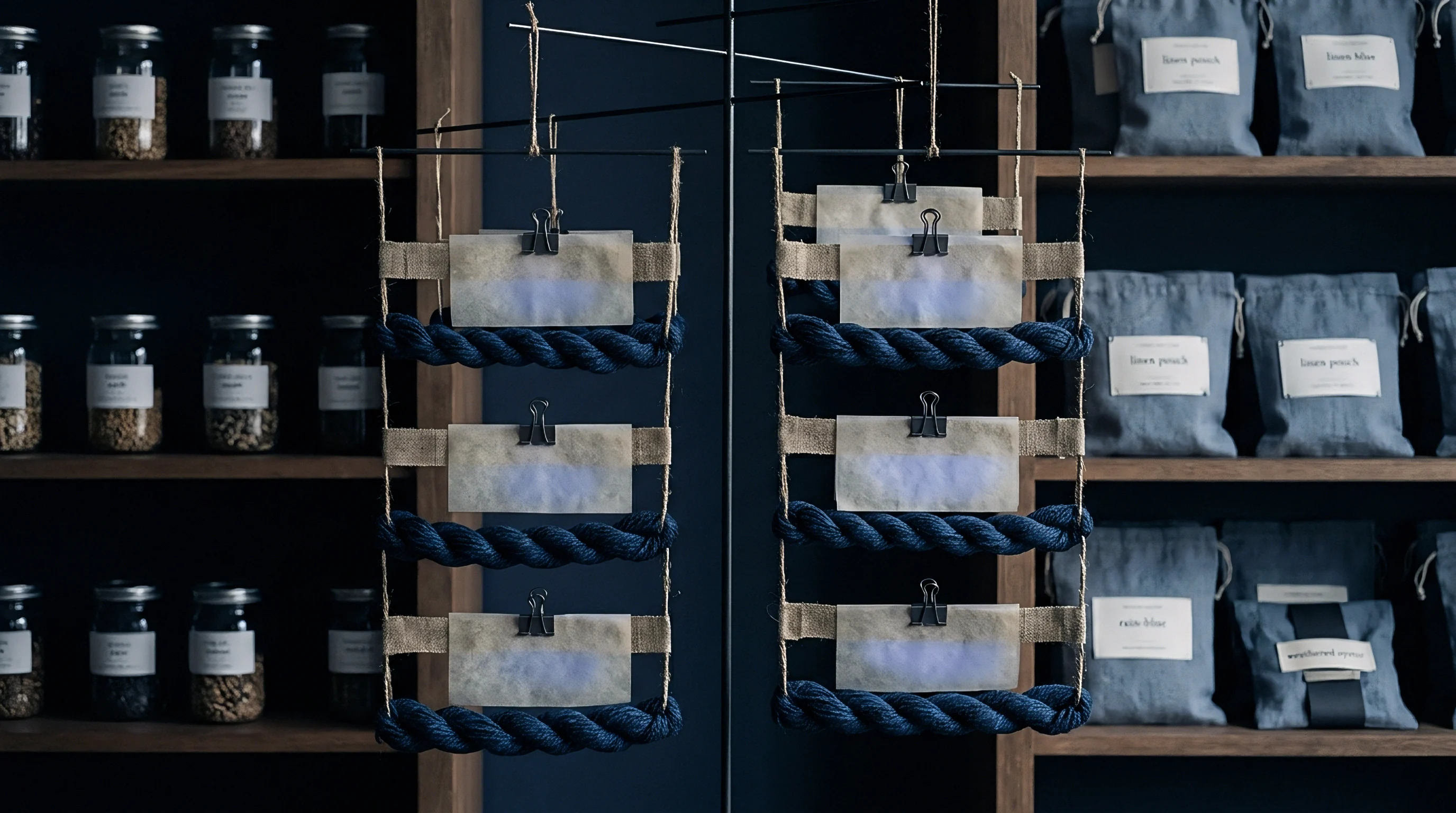
Supply contracts have to assign the legal and financial risks caused by these conflicting rules. Buyers build purchase agreements with clear warranty clauses covering origin declarations, record availability, and indemnity obligations. Generic commodity contract terms leave buyers unprotected during origin audits.
Legal teams drafting these agreements typically include strict conditions precedent before accepting shipments:
- Certified Raw Material Lineage requires the seller to deliver unredacted field traces, scutching tickets, and shipping manifests thirty calendar days before port arrival.
- Jurisdictional Regulatory Alignment obligates the seller to provide certificates of origin tailored to the specific standards enforced at the destination port.
- Duty Indemnification Guarantee requires the processor to reimburse reassessed duties, punitive tariffs, broker correction fees, and legal defense costs if an origin claim is rejected.
- Audit Access Authorization gives independent inspectors access to mill logs, ERP databases, and power consumption records on seventy-two hours notice.
Without these clauses, full compliance liability lands on the importer of record. If customs rejects a declared origin, contractual invoice terms offer no shield against enforcement.
A contract clause stating that goods conform to international trade law provides zero defense when customs officers demand physical comb line run tickets.
This legal split complicates long-term procurement. If a buyer redirects cargo from a U.S. port to a European destination, the origin declared on customs filings must change to match local regulations.


Audit

On-Site Forensic Verification Protocol
Verifying origin shifts during decortication takes on-site forensic checking rather than desk reviews. Auditors inspecting a mill run physical mass balance checks over a rolling ninety-day window. Inspection starts at the weighbridge, comparing incoming delivery slips against software logs from automated scale systems.
Tamper-evident scale logs show whether weights came directly from automated load cells or were entered manually by office staff.
Auditors also check moisture levels across stored raw inventory. Fresh flax straw enters processing at nine to twelve percent moisture. Straw left outside or stored poorly absorbs moisture up to eighteen percent, distorting dry-weight calculations during scutching.
Auditors test ten bales per lot using calibrated pin-type moisture meters adjusted for temperature. If measured moisture strays more than two percentage points from initial weighbridge tickets, mass reconciliation calculations have to be recalculated.
Equipment capacity limits test whether declared throughputs are realistic. Machine speeds on breaking rollers, turbine flutes, and hackling combs have physical ceilings. Auditors check nameplates, gear ratios, and variable frequency drive settings to establish peak hourly output.
Any reported production that exceeds a machine’s theoretical capacity signals fraudulent tolling records or unrecorded fibre blending.

Are Combing Machine Pin Records Reliable Proof?
Combing operations leave physical evidence directly on equipment. Steel hackling pins wear down from contact with abrasive silica and tough bast bundles. An active industrial hackling line needs new pins, bar straightening, and routine maintenance every four hundred to six hundred operating hours.
Auditors review spare parts purchases, inspect scrap bins for worn pins, and audit maintenance work orders.
A total lack of pin replacement orders means combing lines sat idle. If an offshore plant reports producing five hundred metric tons of combed sliver over twelve months without purchasing hackling pins or maintenance services, the combing never happened. Auditors evaluate maintenance spending against industry benchmarks, which run twelve to eighteen dollars per metric ton of combed sliver.
Forensic checks also analyze the plant’s electrical load. Sub-metering records show distinct power profiles for breaking drums, exhaust fans, and hackling drives. Matching hourly power draw against machine shift logs reveals whether equipment was actually running.
A flat power profile during reported high-volume production indicates fabricated documentation.
Material tracking on the shop floor leaves clear traces. Auditors cross-check inventory tags in the sliver warehouse directly against shift-level machine run tickets.
Settlement
Financial risk in origin disputes takes the form of back-duties, penalties, and seized cargo. When customs rejects a declared origin, the importer owes base tariffs plus trade defense duties. Under U.S. Section 301 tariffs, Chinese textiles face a twenty-five percent ad valorem duty on top of standard rates.
An importer declaring French flax combed in China as Chinese origin incurs regular Chapter 53 duties plus punitive tariffs if customs shifts origin back to Europe ~ or vice versa if processing falls short of origin rules.
Take a shipment of forty metric tons of combed flax sliver entering a jurisdiction under origin review. At eleven dollars and fifty cents per kilogram, the total customs value comes to four hundred and sixty thousand dollars. With a base most-favored-nation tariff of four point five percent and a retroactive punitive duty of twenty-five percent, financial exposure mounts rapidly:
- Base Tariff Obligation comes to twenty thousand seven hundred dollars at four point five percent.
- Punitive Tariff Surcharge adds one hundred and fifteen thousand dollars under the twenty-five percent assessment.
- Retroactive Interest Charges accrue at statutory rates ~ typically five to eight percent annually ~ from release date to formal notice.
- Administrative Penalty Exposure under customs negligence or fraud rules ranges from double the unpaid duties up to the full value of the cargo.
Total exposure on that single forty-ton shipment tops one hundred and fifty thousand dollars before legal fees or warehouse detention costs. Import teams limit this risk by maintaining dossiers with full lot traceability back to original field tickets. Either the supplier delivers clean operational records, or the buyer holds back final payments until customs liquidates the entry.
Contract settlement terms should link the final payment tranche directly to customs liquidation. Commercial invoices often hold ten percent back until formal liquidation at the destination port. If customs launches an origin inquiry during the entry window, those funds sit frozen in escrow.
This puts compliance risk back on the plant, ensuring suppliers turn over machine run logs, pin wear sheets, and waste manifests when an audit opens.
Contracts without retainage leave buyers with no leverage once containers clear the gate. An offshore supplier paid in full has little incentive to track down historical scutching logs for a foreign audit. Missing paperwork becomes an immediate cash liability for the importer of record.
Customs authorities in the EU and U.S. use automated cross-matching to compare import manifests against crop yield figures. When raw straw imports don’t align with combed sliver exports over a six-month window, audit flags trip automatically. Importers who verify mill operations on the ground and keep unbroken machine logs survive these audits intact.
A transaction resolves cleanly only when physical evidence matches regulatory requirements. Decortication and combing bring about genuine physical change, but without traceable bale tags, mass balances, and machine tickets, that transformation is invisible to customs law.