Mass Balance Discrepancies Caused by Variable Hot Water Pectin Dissolution in European Flax Audits
Variable hot water pectin dissolution in wet spinning causes unrecorded mass losses up to 6 percent, creating phantom discrepancies in European Flax audits.


Trough
Bale tags attached to dew-retted European flax arriving at spinning mills in Jiangsu or northern France state incoming gross mass, tare weight, moisture regain, and lot certification references under the Alliance for European Flax-Linen and Hemp standard. Roving bobbins wound from hackled sliver carry a nominal pectin binder content between 4.0 and 6.5 percent by dry weight, depending on the fungal retting duration experienced in Normandy, Pas-de-Calais, or Zeeland fields. Wet spinning frames feed this dry roving through immersion baths maintained between 60 and 75 degrees Celsius, where hot water softens the binder and extracts water-soluble polysaccharides, pectic acids, and residual hemicelluloses from the intercellular middle lamella directly into the circulation bath.
Spinning auditors cross-checking transaction certificates encounter an unavoidable thermodynamic mass transfer inside these stainless-steel channels. Capillary action draws hot liquid through the twisted roving bundle within 1.2 to 2.8 seconds of bath entry, dissolving calcium-pectate complexes that glue the ultimate elementary fibres together. As these macromolecules leach into the process liquid, the dry mass of yarn collected on the wet ring tube drops below the dry mass of roving delivered from the creel.
Auditors tracking physical volume against certified ledger credits treat any unexplained weight variance above two percent as potential non-conforming fibre substitution.
A wet spinning trough operating at 70 degrees Celsius leaches up to 48 kilos of water-soluble dry matter from every metric ton of conventionally retted roving.

Submersion Mechanics in Wet Ring Spinning
Immersion depth and passage velocity dictate the extraction boundary layer surrounding each roving strand. Spindle drafts between 10 and 14 pull the softened fibre strand through a drafting zone immediately upon exit from the heated channel, while the liquid carries away unbound galacturonans, neutral sugars, and dispersed cortical cells into the central drain manifold. Flutes guide roving paths across ceramic eyelets under constant tension.
Because dissolution rates accelerate with heat, a frame operating at 24 metres per minute with a bath temperature of 72 degrees Celsius removes 3.8 percent of incoming solid mass within the wetting phase, whereas an adjacent frame set to 58 degrees Celsius leaves 1.9 percent of that extractable fraction intact on the yarn core.
When process operators increase bath temperatures to improve yarn smoothness and spin finer metric counts, such as Nm 39 or Nm 50, the extraction of the pectin cementing the fibre bundles accelerates accordingly. Certified mass balance ledgers rarely capture this operational temperature adjustment. Auditors inspect dry roving delivery weights at the creel and finished package weights at the cone winder, applying static baseline yield coefficients established for dry spinning or low-temperature wet systems.
The unrecorded dissolution leaves the physical mass balance ledger short of output yarn, prompting formal corrective action notices during annual surveillance audits.

Temperature Gradients along Wet Spinning Flutes
Heating elements situated at bath inlets create thermal stratification across long frame beds. Temperature differentials between inlet manifolds and end-of-frame discharge points reach 8 degrees Celsius on machines exceeding 400 spindles. Frames exhibiting this gradient yield variable yarn weight per unit length from identical roving bobbins.
The table below illustrates measured dissolution loss and residual gum levels across five operational bath settings evaluated during commercial wet spinning runs.
| Bath Temperature (Celsius) | Immersion Time (Seconds) | Dissolved Mass Loss (Percent) | Residual Pectin Content (Percent) | Delivered Count (Nm) |
|---|---|---|---|---|
| 55 | 2.4 | 1.85 | 4.35 | 26.2 |
| 60 | 2.4 | 2.40 | 3.80 | 26.0 |
| 65 | 2.4 | 3.15 | 3.05 | 25.8 |
| 70 | 2.4 | 4.20 | 2.00 | 25.4 |
| 75 | 2.4 | 5.10 | 1.10 | 25.1 |
In commercial operations, missing lot mass is routinely attributed to trough extraction whenever boiler temperatures run hot.

Substrate
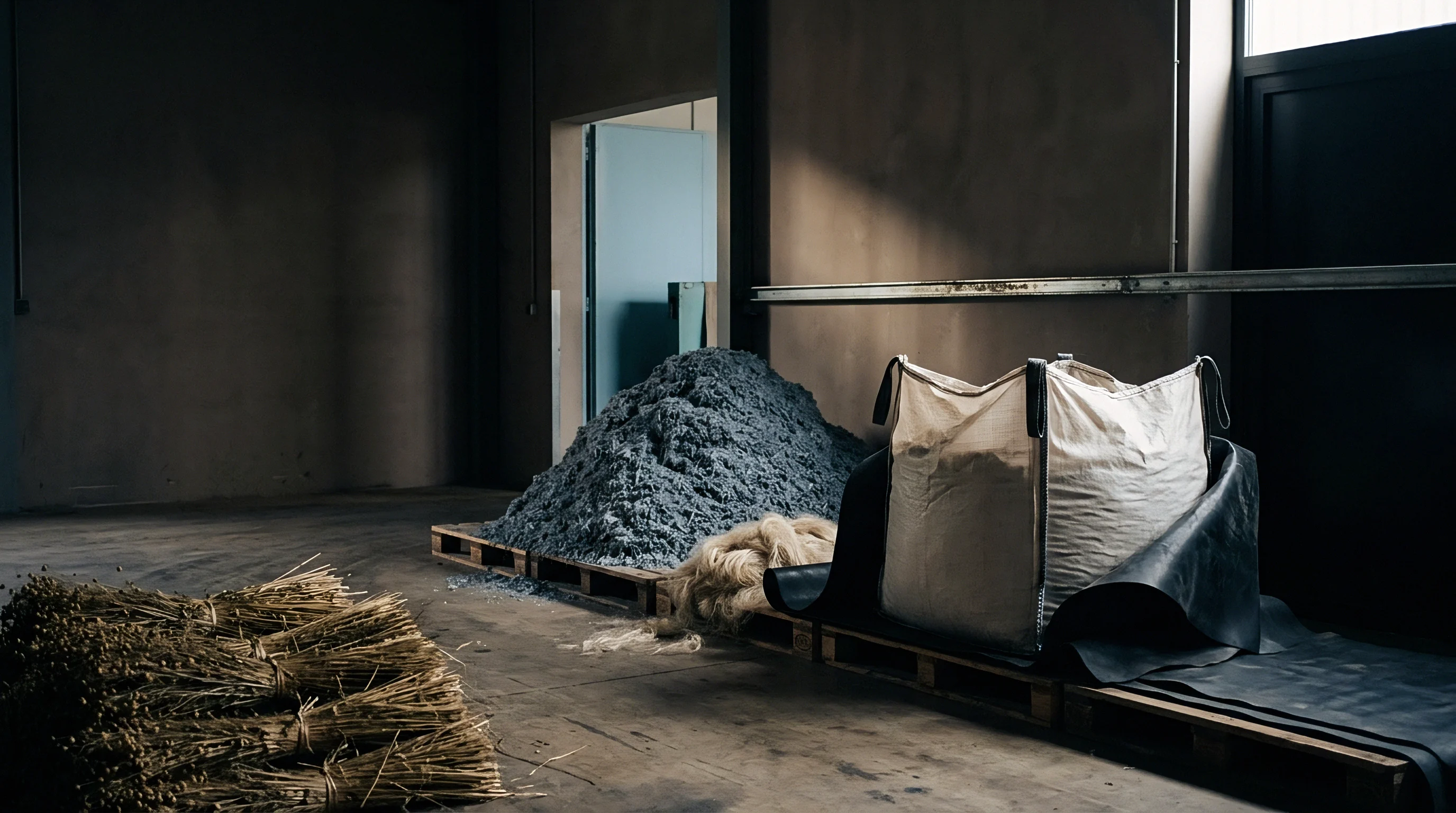
Cellular architecture in European bast fibres governs how much non-cellulosic material leaves the strand during hot aqueous processing. Flax stems pulled in early August dry under open weather across Western Europe, undergoing biological degradation mediated by saprophytic fungi including Cladosporium herbarum and Epicoccum nigrum. These organisms secrete pectinases, xylanases, and cellulases that cleave polygalacturonic acid sequences situated within the compound middle lamella.
Homogalacturonan domains containing methyl-esterified galacturonic acid residues yield to enzymatic breakdown at rates controlled entirely by field moisture and ambient temperatures.
Retting unevenness within a single scutching district produces raw scutched flax bales containing wildly disparate pectin solubilization potential. When fungal action over-penetrates the stem, structural cellulose microfibrils suffer cleaving, yet the remaining pectic fragments turn highly soluble in hot neutral water and shed rapidly. Conversely, under-retted flax harvested after dry summer conditions retains intact, heavily calcium-crosslinked homogalacturonan matrices that resist initial mechanical scutching and hackling, remaining embedded in roving slivers until meeting the pressurized steam and high-temperature baths of industrial spinning frames.

Dew Retting Severity and Polygalacturonase Breakdown
Enzymatic cleaving during field retting alters the ratio between water-soluble and chelator-soluble pectic fractions. Under-retted flax lots processed through industrial spinning troughs release substantial pectic fragments because hot water hydrolyzes the brittle, dry middle lamella once mechanical shear is applied at the drafting rollers. Biochemical markers confirm that the hot water soluble fraction fluctuates from 2.1 percent in heavily retted straw to 6.8 percent in straw cut short of full biological maturity.
Mill auditors using fixed tare equations cannot reconcile why identical metric tons of certified roving produce different yarn masses when raw material lots shift between production campaigns.
- Under-retted fibre inputs entering hot troughs generate heavy bath scum, elevated extractable losses, and wide mass balance deficits during chain of custody audits.
- Optimally retted parcels release between 2.8 and 3.4 percent dissolved mass while maintaining stable yarn tenacity and predictable accounting coefficients.
- Severely weathered lots lose short cellulose fibrils alongside degraded pectins, dumping up to 7.2 percent total dry weight into spinning waste lines.
European Flax standard rules penalize mass discrepancies exceeding five percent without inquiring whether the audited spinning lot originated from an unretted drought harvest.

Rhamnogalacturonan Branching in Bast Middle Lamellae
Macromolecular structure within the middle lamella determines solubility dynamics under thermal stress. Neutral sugar side chains consisting of beta-D-galactan, alpha-L-arabinan, and arabinogalactan extend outward from the rhamnogalacturonan-I backbone, anchoring pectic networks into neighboring hemicelluloses and lignin boundaries. When spinning frames expose roving to neutral water above 65 degrees Celsius, these arabinogalactan side chains detach first.
Neutral sugar loss alters the specific gravity of the wash water and decreases fibre mass without reducing technical fibre bundle length.
Fibre testing laboratories measure this compositional shift using gas chromatography coupled with mass spectrometry, observing sharp declines in arabinose, rhamnose, and galactose fractions after continuous hot water wetting. Auditing inspectors unfamiliar with plant physiology view mass reductions purely through the arithmetic of physical segregation and yield reconciliation. The chemical composition of the input material dictates extraction volume, leaving open the operational question of whether certifiers will ever accept standard biochemical elution benchmarks as statutory explanations for mill ledger shortfalls.

Variance
Physical accounting protocols enforced under the European Flax Chain of Custody Standard demand rigorous reconciliation between certified incoming raw materials and qualified outgoing finished goods. Bureau Veritas and Control Union inspectors examine weighbridge records, bale consumption logs, internal transfer vouchers, and finished invoice volumes across twelve-month audit cycles. Under standard mass balance rules, an enterprise must account for every kilogram of certified material through one of three pathways: finished commercial product, documented processing waste, or inventory on hand.
Process waste categories traditionally recognize scutching tows, carding waste, comber noils, pneumatic suction collector waste, and hard roving ends.
Dissolved organic solids leaving spinning plants through floor gullies and closed effluent pipes bypass physical scales entirely. When an auditor aggregates dry spinning waste and compares the sum against incoming roving mass, an invisible deficit appears on the reconciliation worksheet. For an operation converting 500 metric tons of certified roving into yarn annually, a three percent unrecorded pectin extraction loss removes 15 metric tons of certified material from the physical ledger.
Auditors frequently classify this phantom gap as uncertified material substitution, unauthorized ledger leakage, or deliberate falsification of production conversion ratios, triggering severe administrative penalties.

Alliance Standard Conversion Ratios and Mass Balances
Alliance audit templates specify standard expected yield bands for industrial transformation stages. For wet spinning of pure linen yarn, scheme guidance assumes total processing loss between 8 and 14 percent, allocating the overwhelming majority of that figure to solid carding droppings, drawing waste, and spinning flyer waste. Standard templates fail to establish a dynamic variable allowance for hot water bath extraction linked to water temperature or fibre retting degree.
Mills operating under strict effluent recycling protocols accumulate dissolved pectin concentrates that never touch dry scales, creating a paper discrepancy between physical warehouse inventory and electronic mass balance credits.
- Unregistered dissolution leads to immediate non-conformity findings during annual surveillance inspections.
- Arbitrary ledger adjustments executed by mill accountants to balance invisible losses create secondary record-keeping infractions under ISO 17065 validation guidelines.
- Refusal of transaction certificates occurs when certifiers freeze output documentation pending resolution of unaccounted fibre shortfalls.
- Financial margin erosion impacts spinners forced to surrender certified ledger credits without collecting certified premiums on finished yarn shipments.

Can Hot Water Dissolution Exceed Mill Loss Thresholds?
Mass loss in wet spinning frequently exceeds standard procedural thresholds during the processing of coarse roves destined for heavy apparel and furnishing fabrics. A spinning mill producing Nm 14 yarn uses roves with coarser bundle diameters, requiring bath temperatures near 75 degrees Celsius and extended soaking to achieve necessary fibre slippage. Under these specific conditions, dissolved solids routinely exceed 5.5 percent of gross dry input mass.
The worked scenario below tracks a 40-tonne commercial run of certified European Flax roving through a Chinese wet spinning facility, highlighting where physical mass disappears into the bath liquor.
Assume an incoming lot of 40,000 kilograms of certified roving at an audited dry mass of 35,200 kilograms, accounting for a standard commercial moisture regain of 12.0 percent. The mill runs this lot across 20 wet spinning frames at 72 degrees Celsius to produce Nm 26 yarn. Solid collection points capture 1,408 kilograms of dry drawing waste, 1,056 kilograms of dry comber droppings, and 704 kilograms of hard spinning waste, totaling 3,168 kilograms of physically verifiable dry solid waste, or 9.0 percent of dry input.
The hot water troughs dissolve 4.2 percent of the input dry matter, releasing 1,478 kilograms of organic pectins directly into the effluent stream. The resulting dry yarn harvested on packaging tubes weighs exactly 30,554 kilograms.
| Reconciliation Stream | Physical Wet Mass (kg) | Moisture Content (Percent) | Bone Dry Mass (kg) | Share of Input Dry Mass (Percent) |
|---|---|---|---|---|
| Incoming Certified Roving | 40,000 | 12.0 | 35,200 | 100.00 |
| Solid Dry Waste (Pneumafil and Hard Ends) | 3,540 | 10.5 | 3,168 | 9.00 |
| Hot Water Pectin Dissolution (Effluent) | 0 (Liquid) | 0.0 | 1,478 | 4.20 |
| Finished Wet Spun Yarn on Spools | 34,720 | 12.0 | 30,554 | 86.80 |
| Reconciled Ledger Total (Yarn + Waste) | 38,260 | 11.9 | 33,722 | 95.80 |
| Unaccounted Mass Gap (Paper Discrepancy) | 1,740 | 12.0 | 1,478 | 4.20 |
Auditors examining this run without biochemical extraction data identify a 1,740-kilogram discrepancy on a commercial regain basis, representing 4.2 percent of the original certified input. The auditor assumes that the spinning mill diverted 1.74 tonnes of certified European Flax roving into uncertified yarn lines or inflated outgoing yield declarations. When certifiers penalize this discrepancy, the mill loses transaction certificate eligibility for the entire 34.7-tonne finished yarn consignment, forfeiting customer trust and contractual delivery premiums.

Effluent
Wastewater discharge analysis provides the only verifiable physical record of mass removed through thermal dissolution. Wet spinning mills channel trough blowdown into central wastewater treatment plants or heat recovery exchangers. The chemical oxygen demand and total organic carbon content in this wastewater fluctuate in direct proportion to roving throughput and bath operating temperatures.
Pectin macromolecules, specifically polygalacturonic acids and neutral arabinogalactans, break down into dissolved organic carbon that modern analytical instruments quantify with extreme accuracy.
By correlating water meter fluid exchanges, effluent flow rates, bath dump schedules, and continuous total organic carbon readings, environmental compliance engineers calculate the exact dry mass of organic material discharged per operating shift to satisfy auditor demands for physical evidence. Spinning mills integrating wastewater metrics into their quality control systems bridge the gap between physical mass balance accounting and biochemical extraction losses, replacing arbitrary ledger adjustments with empirical laboratory proof.
Effluent discharge logs recording chemical oxygen demand provide verifiable proof of dissolved non-cellulosic mass lost during industrial wet spinning operations.
Chemical Oxygen Demand in Bath Blowdown Liquor
Dissolved galacturonic acid exerts a theoretical chemical oxygen demand of approximately 1.14 grams of oxygen per gram of pure anhydrous pectin substance. When a wet spinning frame dumps its bath liquor during color changes or routine water refreshes, this chemical demand surges. Facilities equipped with automated composite samplers record chemical oxygen demand values between 800 and 2,600 milligrams per liter in untreated trough drainage.
Environmental discharge records, compiled under local industrial wastewater discharge permits, capture these metrics alongside water volumetric logs.
Mill compliance officers calculate total extracted dry mass by integrating continuous flow meter records with daily chemical oxygen demand concentrations. For a mill discharging 120 cubic metres of trough water per day with an average chemical oxygen demand of 1,800 milligrams per liter, the total daily organic discharge equals 216 kilograms of oxygen-demanding mass. Applying stoichiometric oxidation factors converts this figure into approximately 189 kilograms of bone-dry dissolved pectin and hemicellulose.
Sourcing directors incorporate these verified wastewater logs directly into European Flax audit files to account for missing physical yarn mass.

Do Total Organic Carbon Tests Verify Dissolved Pectin?
Total organic carbon testing provides a faster, cleaner alternative to five-day biochemical tests or dichromate chemical oxygen demand digestions. High-temperature combustion catalytic oxidation instruments vaporize bath liquor samples at 680 degrees Celsius, converting organic compounds into carbon dioxide detected by an infrared cell. Dissolved pectin chains register as sharp organic carbon peaks without interference from inorganic water softening salts or dissolved carbonates.
Spinning mills in Zhejiang province utilize automated total organic carbon analyzers to monitor continuous recycling loops within wet spinning flutes, confirming loss through direct analytical readouts. The data tracks incoming fibre retting variability; an under-retted lot immediately spikes the organic carbon baseline in the circulation water from 450 to 950 milligrams per liter within two hours of creel loading. Contract annexes stipulate that verified total organic carbon logs signed by an ISO 17025 accredited laboratory serve as valid commercial proof of process extraction loss.


Settlement
Commercial contracts between European fibre cooperatives, international spinning mills, and downstream textile buyers require precise definitions of yield tolerances to prevent costly provenance disputes. When transaction certificates are held up by certification bodies investigating mass balance anomalies, supply chains lock up. Forwarders hold containers at destination ports, letters of credit expire without negotiation, and downstream weaving sheds face production stoppages.
Resolving these bottlenecks requires transparent legal mechanisms that accommodate real biochemical processing loss within certification parameters.
To protect gross margins and establish clear loss ceilings, sourcing contracts specifying European Flax or Masters of Linen certified yarn must explicitly define whether mass reconciliation relies on dry roving creel mass or conditioned yarn weight on the package. Furthermore, purchase agreements must define financial and documentary responsibility when mass discrepancies stem from non-cellulosic dissolution rather than illicit material diversion or fraudulent yield reporting.

Contractual Waste Allowances for Wet Spun Linen
Standardized procurement contracts frequently reference generic waste allowances borrowed from cotton or dry-spun synthetic processing. These clauses fail when applied to wet-spun bast fibres. Cotton carding and spinning involve mechanical fiber separation with negligible aqueous dissolution, resulting in dry waste streams that register cleanly on mechanical scales.
In contrast, wet-spun linen loses between 2.0 and 6.0 percent of its incoming weight directly into process water. The table below outlines recommended contract adjustments for procurement agreements across common wet-spun flax yarn counts.
| Yarn Metric Count (Nm) | Standard Mechanical Waste (Percent) | Permissible Aqueous Dissolution (Percent) | Total Contractual Yield Tolerance (Percent) | Required Verification Document |
|---|---|---|---|---|
| 10 to 18 | 7.5 | 2.5 | 10.0 | Monthly Dry Waste Weighbridge Logs |
| 19 to 28 | 9.0 | 3.5 | 12.5 | Batch Wastewater COD Test Summary |
| 29 to 39 | 10.5 | 4.5 | 15.0 | Automated TOC Continuous Log |
| 40 to 60 | 12.0 | 5.5 | 17.5 | ISO 17025 Laboratory Effluent Report |

Transaction Certificate Reconciliation at Destination Customs
Customs authorities enforcing trade compliance and origin labeling scrutinize transaction certificates issued under the European Flax standard. If a transaction certificate declares 30,000 kilograms of finished yarn derived from an input of 35,000 kilograms of certified roving, import inspectors cross-check the conversion ratio against registered industry baselines. An improper mass balance reconciliation at the spinning mill level risks certificate revocation by the certification body, invalidating preferential origin claims and exposing the importing buyer to customs penalties under destination market labeling acts.
Importers verify that the transaction certificate package includes a reconciled mass balance worksheet accounting for aqueous extraction losses. Incorporating laboratory-confirmed dissolution factors into the transaction certificate file eliminates suspected substitution findings during secondary customs audits. Experienced linen procurement managers insist that any processing loss exceeding standard mechanical allowances carries chemical verification from the mill laboratory before paying certified invoices.
In practical linen trading, dry records never settle liquid debts.