Harmonized System Tariff Shift Rules for Linen Goods
Tariff shift for linen requires verifying mechanical transformation at each HS heading, from raw fiber to spun yarn and woven cloth, backed by lot-level mill logs.


Fibre
Raw agricultural flax enters global commerce under heading 5301, covering unspun flax stalks, retted straw, scutched line flax, tow, and flax waste. Processing raw flax straw into scutched line flax removes woody shives while preserving long parallel filaments, reducing total bulk mass by roughly eighty percent. This primary processing step changes the physical presentation of the plant material without altering its underlying four-digit customs heading.
Unretted flax straw, dew-retted flax, hackled tow, and combed line flax remain classified under HS 5301 regardless of whether the material is packed in raw bales or combed into slivers.
European field production yields unspun flax straw that undergoes retting directly in the growing region before scutching. When scutching facilities export processed flax line to overseas spinning mills, transaction documentation records raw mass, clean fiber yield, and bale identification codes. Tariff treatment at this stage remains uniform across international borders because heading 5301 contains no sub-heading shifts based on mechanical cleaning or hackling.
Standard sourcing practice requires tracking lot numbers on scutched bales to substantiate downstream origin claims before mechanical processing blends the material into spinning batches.
Scutched flax line exported at eighty percent moisture-adjusted yield retains heading 5301 classification across all international customs entry formats.
Discrepancies in raw material origin claims frequently emerge during initial processing transitions. Cross-border buyers routinely face documentation failures when raw agricultural entries lack specific lot traceability back to the scutching field logs.
- Unretted Straw Mismatch occurs when raw flax straw moves across customs boundaries without declared moisture content adjustments, altering tariff weight basis.
- Tow Waste Misclassification happens when short-fiber flax tow is improperly entered under spun yarn waste codes to bypass agricultural import quotas.
- Hackled Line Blending arises when European combed line flax is mixed with non-originating short flax fibers prior to initial carding without batch allocation logs.
- Bale Tag Omission develops when intermediate processing facilities remove original scutching mill tags before re-baling for maritime export.
Raw flax line purchased from European aggregators does not automatically retain European origin downstream if a foreign spinning mill converts the fiber into yarn.


Shift
Determining non-preferential origin for flax products relies on specific change in tariff classification criteria codified in international customs regulations. Converting unspun flax of heading 5301 into single or multiple flax yarn under heading 5306 represents a major transformation. This step satisfies the single tariff shift rule from Chapter 53 raw material to Chapter 53 yarn under US 19 CFR 102.21 and equivalent European Union non-preferential rules.
Ring spinning alters heading classification, assigning spun yarn to the country where mechanical spinning takes place, irrespective of where the agricultural harvest occurred.

When Does Yarn Spinning Confer Non Preferential Origin?
Mechanical ring spinning converts carded flax sliver into continuous yarn strands, creating a fresh tariff heading under HS 5306. The operation confers non-preferential origin to the spinning location when the tariff shift rule permits entry from any heading outside HS 5306. Preferential trade agreements apply stricter origin standards.
Under preferential rules, such as the USMCA or EU-UK Trade and Cooperation Agreement, yarn forward rules mandate that both spinning and weaving occur within the free trade area to qualify for zero-tariff preferences. A preferential entry fails if imported European flax yarn undergoes weaving in an intermediate non-member territory before final apparel assembly.
| Input Heading | Output Heading | Process Applied | Preferential Rule Requirement | Non-Preferential Origin Outcome |
|---|---|---|---|---|
| HS 5301 | HS 5306 | Carding, hackling, ring spinning | Fibre forward or regional spinning | Country of yarn spinning mill |
| HS 5306 | HS 5309 | Warping, sizing, weaving | Yarn forward double transformation | Country of fabric weaving mill |
| HS 5309 | HS 6205 | Cutting, panels assembly, sewing | Fabric forward double transformation | Country of garment assembly |
| HS 5309 | HS 6302 | Hemming, cutting, panel joining | Fabric forward requirement | Country of fabric weaving mill |
Converting flax yarn of heading 5306 into woven linen fabric of heading 5309 constitutes a secondary tariff shift. Non-preferential customs regulations assign origin for woven fabric to the country where the loom shed operates. Wet processing steps like bleaching, dyeing, Mercerizing, or Sanforizing do not trigger a tariff heading change under HS 5309, as finishing treatments applied to greige linen cloth alter surface properties while leaving the four-digit tariff code unchanged.
Preferential origin verification demands proof that both yarn spinning and fabric weaving occurred within designated agreement territories.
Verifying tariff shift eligibility requires systematic checks across the conversion chain to ensure intermediate steps meet statutory classification boundaries.
- Input Tariff Code Verification requires checking that all raw fiber, tow, or yarn components enter the facility under correct four-digit HS codes.
- Substantial Transformation Audit confirms that mechanical processing achieves the exact heading jump mandated by destination customs rules.
- Finishing Exclusion Mapping isolates chemical wet processing steps to prevent inappropriate origin claims based solely on dyeing or printing.
- Direct Transport Validation verifies that transformed goods maintain continuous logistics records during transit between processing centers.
Customs entries fail when documentation relies on chemical finishing to substantiate origin shifts. Processing rules treat mechanical formation as the primary determinant of origin change.
Loom
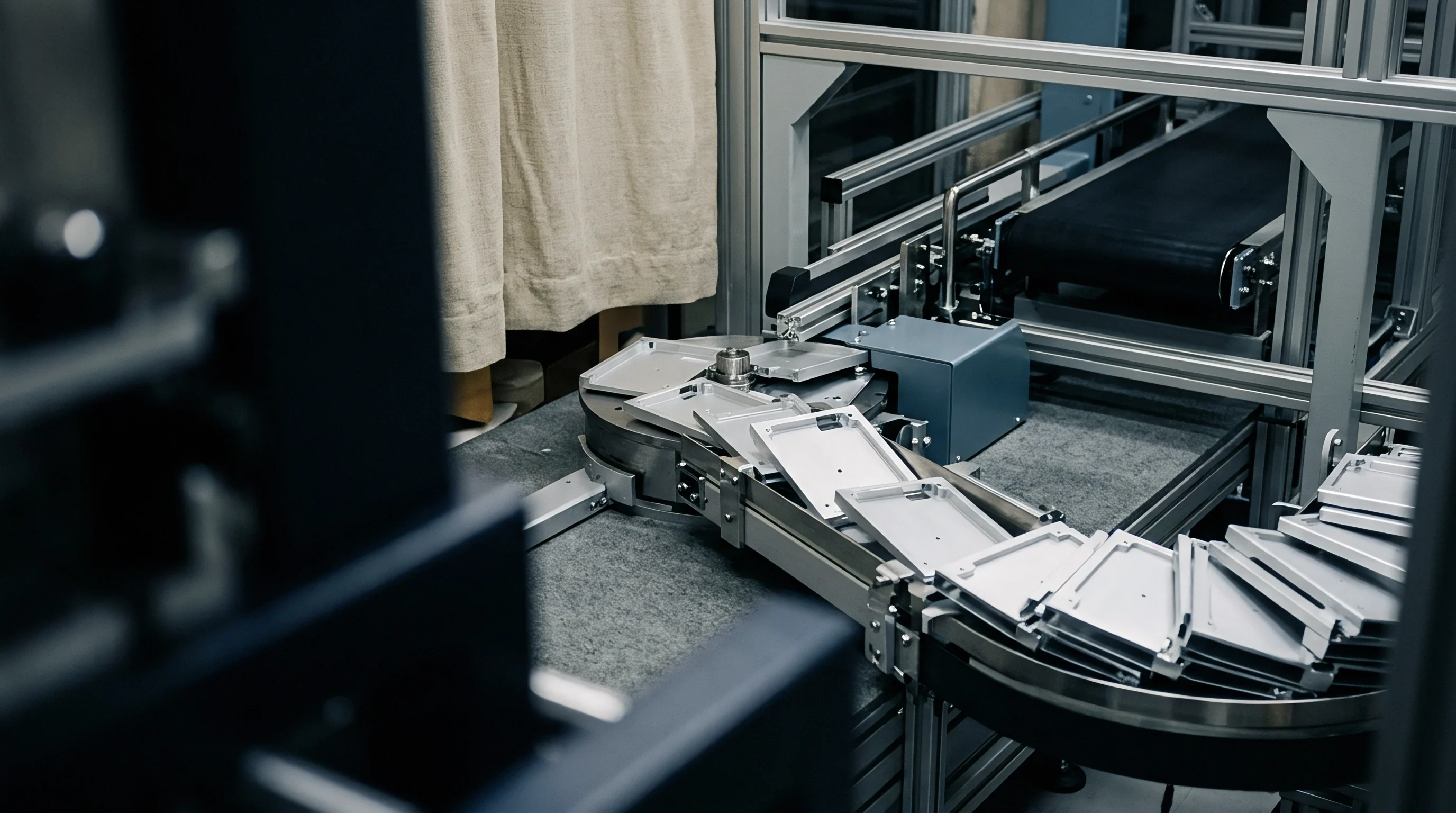
Loom shed operations drive the physical transformation from yarn package to greige linen fabric. Weaving preparation involves beaming the spun flax yarn and applying warp sizing agents to mitigate fiber friction during reed movement. Mass balance reconciliation across weaving operations calculates yarn consumed against woven linear meters produced, accounting for sizing added and warp waste discarded.
Greige linen woven on rapier or air-jet looms carries heading 5309. Wet processing plants later wash out organic sizing materials, reducing gross fabric weight by three to seven percent prior to dyeing or bleaching operations.
| Manufacturing Stage | Input Material | Output Product | Expected Mass Yield Ratio | Primary Waste Mechanism |
|---|---|---|---|---|
| Scutching | Retted flax straw | Scutched line flax | 0.18 to 0.22 | Woody shive extraction |
| Hackling | Scutched line flax | Combed sliver line | 0.65 to 0.72 | Short fiber tow extraction |
| Wet Spinning | Combed sliver line | Boiled flax yarn | 0.92 to 0.95 | Pectin loss and flywheel fly |
| Weaving | Spun flax yarn | Greige linen fabric | 0.96 to 0.98 | Selvedge trim and warp breaks |
| Desizing and Bleaching | Greige linen fabric | Finished white cloth | 0.91 to 0.94 | Size removal and fiber scour |
Finishing mills alter physical hand feel, dimensional stability, and color without causing a tariff shift under global customs rules. Bleached, dyed, or printed linen fabrics retain classification within HS 5309 sub-headings. Under US Customs 19 CFR 102.21, converting greige fabric of heading 5309 into finished bed linen under heading 6302 requires cut-and-sew manufacturing.
Hemming planar bed sheets confers origin based on assembly location only if specific rule exceptions apply. Made-up home textile goods under HS 6302 generally inherit the origin of the fabric weaving location unless the cutting and sewing process meets stringent double-transformation thresholds.
Converting greige linen fabric into dyed or printed cloth leaves the fundamental four-digit heading 5309 customs classification unaltered.
Purchase specifications must define structural origin liabilities across intermediate mill steps. Standard supply contracts enforce origin clarity by stating that origin declarations must identify the loom shed location for all fabric delivered under HS 5309.

Audit
Mill audits establish physical proof of origin by tracking material flow from weighbridge receipts to finished roll racks. Physical verification requires matching incoming fiber lot tags against spinning batch tickets, warp beam production logs, and weaving tension charts. Traceability relies on transaction certificates that bind specific batch weights to explicit customs entries.
Scutched flax bale tags carry grower cooperative codes, moisture measurements, and scutching lot numbers. Spinning offices preserve yield logs calculating mass loss from hackled sliver to boiled yarn package.
Audit steps on the mill floor trace physical inventory movements across successive production departments.
- Compare incoming raw flax delivery notes against raw bale store inventory ledger numbers.
- Inspect carding room batch sheets to confirm blending ratios between originating and non-originating flax fibers.
- Cross-check spinning frame allocation records against yarn lot tags attached to bobbin crates.
- Match loom assignment charts with greige roll inspection receipts and selvedge stamp codes.
- Reconcile total finished cloth export weight against total raw fiber inputs adjusting for standard process waste ratios.
Mass balance auditing identifies discrepancies between declared origin volumes and physical mill capacity. When a mill imports non-originating yarn while claiming full regional origin for finished woven fabric, weighbridge records disclose mass imbalance. Yield ratios below expected baseline parameters signal the potential blending of undocumented yarn lots.
Document verification checks scope certificates against specific shipment dates to confirm valid coverage.
Discrepancy analysis inside spinning and weaving facilities often reveals gaps between transaction dates and batch movement logs, leaving open the question of whether undocumented fiber lots entered the production line during unmonitored shifts.

Penalty
Misdeclaring tariff shift qualification exposes importers to severe statutory penalties, retroactive customs duty assessments, and redelivery demands. MFN import tariffs for raw flax yarn sit between zero and three percent, while finished woven linen fabric carries duties up to eight point eight percent. Finished linen apparel entering under Chapter 62 faces MFN duty rates exceeding twelve percent.
Falsely claiming preferential tariff treatment under a free trade agreement triggers duty recovery plus interest, along with potential civil penalties under US 19 U.S.C. 1592 or European Union customs enforcement statutes.
| HS Code | Product Description | Standard MFN Duty Rate | Preferential Duty Rate | Non-Compliance Risk Exposure |
|---|---|---|---|---|
| HS 5301.21 | Scutched flax line fiber | 0.0 percent | 0.0 percent | Misclassification of raw agricultural origin |
| HS 5306.10 | Single unbleached flax yarn | 2.7 percent | 0.0 percent | Invalid yarn-forward origin certification |
| HS 5309.11 | Unbleached woven flax fabric | 8.8 percent | 0.0 percent | Unsubstantiated loom shed transformation |
| HS 6205.90 | Men’s woven flax shirts | 12.1 percent | 0.0 percent | Invalid cut-and-sew tariff shift claim |
| HS 6302.39 | Made-up linen bed sheets | 6.0 percent | 0.0 percent | Fabric origin override failure |
Customs authorities seize goods when entry records show systemic origin documentation deficiencies. Importers facing audit must present a consolidated documentary package proving origin shift compliance at every transformation stage.
Audit defenses require a fully assembled provenance dossier containing specific trade records before goods arrive at the destination port.
- Scutching Mill Certificate provides raw fiber lot identification, bale weight records, and harvest origin verification.
- Spinning Mill Invoice demonstrates yarn classification shift from raw fiber under heading 5301 to spun yarn under heading 5306.
- Weaving Loom Allocation Log confirms conversion of yarn packages into woven greige fabric under heading 5309.
- Cutting Room Lay Log validates panel cutting and structural garment assembly for Chapter 62 tariff shift claims.
- Customs Entry Summary Form records declared HS codes, preferential agreement claims, and landed valuation figures.
Misdeclaring linen tariff shift eligibility leads directly to retroactive duty assessments, asset seizure, and long-term loss of import privileges across international customs jurisdictions.