Auditing Fine Linen Spinning Mass Loss and Conversion Baseline Calculations
Auditing fine linen yarn conversion reconciles hackling split ratios, roving boil mass drops, and wet spinning moisture regain against commercial regain.

Tow
Flax fiber processing begins with raw hackled stricks that undergo mechanical separation into long-line bundles and short fiber fractions. Auditing fine linen spinning requires precise mass tracking at this initial stage because raw flax bales arrive with variable moisture content, shive inclusions, and extraneous matter. Standard commercial transactions specify raw scutched and hackled flax at a nominal commercial regain of 12.0 percent under international standards such as ISO 6741.
When raw bales arrive at the mill store, physical weighbridge measurements record gross weight, but true net clean dry mass depends on rigorous moisture sampling across incoming lots.
Moisture alters fiber mass directly. A 20-metric-ton consignment of hackled flax delivered at 14.5 percent moisture contains 438 kilograms of excess water above the commercial standard baseline. If an auditor accepts gross scale weight without correcting for moisture regain, conversion efficiency calculations automatically overestimate raw fiber yield.
Mill weighbridge tickets must be cross-referenced against laboratory forced-air drying tests performed according to ISO 2060 methods to establish the true dry fiber baseline.
Hackling Fraction Splits and Raw Fiber Partitioning
Initial processing on hackling frames separates parallel line fiber from tangled residues based on fiber length and mechanical tenacity. High-grade European flax processed for fine yarn counts (Nm 50 to Nm 100) typically yields between 55 percent and 65 percent long-line hackled flax, with the remaining 35 percent to 45 percent exiting as hackling tow, shive dust, and comb waste. Scutched flax carries bark residues.
Hackling combs remove these coarse fragments alongside short fibers, transferring them into tow collector bins.
Auditors evaluate hackling yield by balancing total raw scutched input against the twin outputs of combed line fiber and tow. Discrepancies at this stage indicate either unrecorded waste dumps or informal fiber blending. When a mill reports an abnormally high long-line yield exceeding 70 percent from average-grade scutched flax, mechanical sorting pins were likely set wide.
Wide pin settings allow short, brittle fibers to remain in the line bundle, which subsequently causes high end-break rates during downstream drafting.
| Processing Stage | Output Component | Typical Mass Fraction (Percent) | Standard Moisture Regain (Percent) | Tolerance Band (Percent) |
|---|---|---|---|---|
| Scutching to Hackling | Long Line Fiber | 58.0 | 12.0 | plus or minus 1.5 |
| Scutching to Hackling | Hackling Tow Waste | 36.5 | 12.0 | plus or minus 2.0 |
| Hackling Mechanical Loss | Shive and Dust Fallout | 5.5 | 0.0 | plus or minus 0.8 |
| Combing Short Fiber | Comber Noil Fraction | 18.0 | 12.0 | plus or minus 1.2 |
Mass loss calculations during hackling also account for unrecoverable solid waste. Heavy particles of wood bark and mineral dust fall through frame grid bars directly into pneumatic exhaust systems. This non-fibrous mass drop ranges between 4.0 percent and 7.0 percent of raw bale weight depending on field retting conditions and scutching efficiency.
Standard moisture regain for hackled flax fiber is fixed at 12.0 percent under ISO 6741 test conditions.
Standard Commercial Regain and Moisture Conversion Baseline
Calculations for mass balance depend on established water content ratios defined by international testing protocols. Expressing net dry mass requires converting conditioning scale weights back to zero percent moisture using standardized formula baselines. The commercial mass equals the oven-dry mass multiplied by one plus the official commercial regain fraction.
Failure to standardize regain across every weighing point creates phantom mass gains or losses across mill records. When incoming raw fiber is weighed at high ambient humidity and outgoing combed sliver is weighed under conditioned mill air, uncorrected balance sheets misattribute environmental humidity shifts to mechanical yield changes. Auditors verify relative humidity logs in bale storage areas alongside daily calibration records of electronic moisture probes.
- Uncalibrated Scale Offsets lead to false tare weights on bale transport carts and shift mass yield baselines across multi-ton production lots.
- Inconsistent Regain Sampling skews official dry mass calculations by relying on surface moisture measurements rather than core bale core plugs.
- Unreported Shive Content disguises non-fibrous mass drops as legitimate processing losses during initial mechanical opening operations.
- Bale Wrap Mass Inclusion inflates gross fiber intake figures when mills fail to deduct wooden slats, steel strapping, and woven polymer covers.
Reconciling input fiber lots against hackling outputs establishes the initial mass conversion baseline. Hackling waste leaves the main line. Higher short fiber fractions always correlate with increased mechanical waste during subsequent drawing passages.

Comb
Mechanical refinement of short flax fractions converts raw hackled waste into clean slivers suitable for tow spinning lines. High-value fine linen yarns rely primarily on long-line fiber, but combing operations applied to long-line slivers remove residual short fibers to prepare slivers for wet spinning. The combing process extracts short fibers known as comber noil while orienting long strands into uniform continuous ribbons.
Mass loss during combing represents a significant cost factor because comber noil sells at a fraction of line fiber prices.
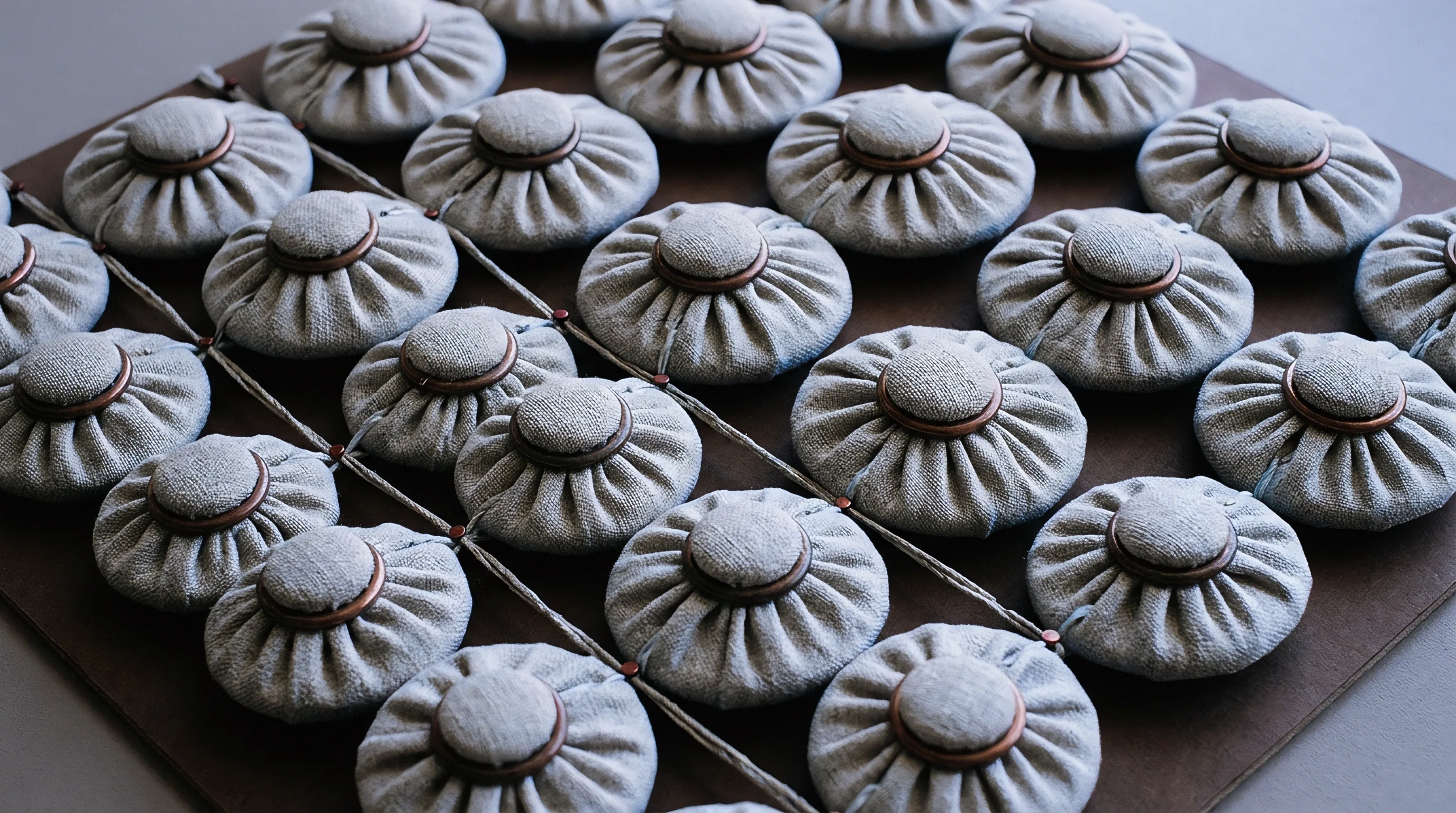
Comber Noil Extraction Rates in High Fine Yarn Counts
Fine flax processing demands rigorous removal of short fibers to maintain drafting tenacity during wet spinning operations. Combing machines set for fine counts (Nm 60 to Nm 80) extract between 15 percent and 22 percent of incoming sliver mass as comber noil. Adjusting top comb depth and nip distance directly dictates the fiber length cutoff point.
Extracting a higher percentage of short fibers elevates sliver uniformity, but reduces total yarn yield per kilogram of hackled flax input.
Combing room audits reconcile lap roll weights entering comber banks against delivered combed sliver cans and waste coiler bins. Shive removal reduces raw weight. If a mill operates five comber heads on a single lot, auditors verify that noil collection boxes are weighed individually before waste aggregation.
Discrepancies between total lap input and combined output identify unmetered fly waste escaping into air filtration systems.

Drawing Sliver Mass Attenuation and Waste Accumulation
Passage through sequential intersecting gill boxes aligns the parallel fiber bundles while shedding loose dust and short fragments. Fine linen spinning lines typically employ three to four drawing passages prior to roving formation. Across these drawing passages, mechanical mass loss occurs through fiber breakage, roller lap clearance, and suction duct collection.
Cumulative mass loss across three drawing passages standardly ranges from 1.5 percent to 2.8 percent of entering sliver mass. Dry fiber absorbs room ambient humidity. Controlling relative humidity at 65 percent plus or minus 5 percent within the drawing shed minimizes static electricity generation, which otherwise increases fiber wrapping on rubber drafting aprons and causes erratic sliver weight variations.
Commercial yarn supply agreements specify that comber noil extraction above eighteen percent shifts to the spinner’s cost account.
Audit baselines compare sliver mass per unit length across drawing passages using linear density metrics expressed in kilotex or tex. Continuous sliver monitoring systems record mass variation coefficients. Abrupt drops in sliver linear mass without corresponding waste bin accumulation signal unrecorded sliver draft adjustments or unreported sliver scrap removal by machine operators.
Spinning mills frequently attribute elevated noil volumes to poor retting quality and excessive brittleness in the incoming raw flax shipments.


Liquor
Chemical treatment of linen roving dissolves non-cellulosic impurities before wet spinning frames draw the fiber into fine yarns. Flax fibers in their natural state are bound together by middle lamella structures composed of pectins, hemicellulose, waxes, and lignin. To achieve the extreme drafting attenuation required for fine counts such as Nm 60 or Nm 100, roving packages undergo hot alkaline boiling and optional peroxide bleaching.
This process solubilizes non-cellulosic binding materials, resulting in substantial chemical mass loss that auditors must differentiate from mechanical processing waste.

What Triggers Unaccounted Roving Boiling Mass Loss?
Alkaline scours dissolve natural waxes, pectins, and hemicellulose compounds stored within the middle lamella of flax bundles. Roving boiling treatments utilize soda ash (sodium carbonate) or caustic soda (sodium hydroxide) solutions maintained at temperatures between 95 degrees Celsius and 125 degrees Celsius under pressure. Pectin extraction changes dry mass ratios.
As these binder substances break down and enter solution, total solid mass drops significantly.
Chemical mass loss during roving boiling ranges from 8.0 percent to 14.0 percent of dry roving weight depending on boil intensity, chemical concentration, and target yarn fineness. Mild boiling treatments intended for coarse, semi-bleached yarns extract less mass, leaving residual pectins intact. Intensive caustic boiling for fine count wet spinning dissolves up to 15.0 percent of initial mass to allow individual ultimate fibers to slide smoothly during spindle drafting.
| Boil Intensity Level | Chemical Agents Applied | Target Yarn Fineness (Nm) | Average Mass Loss (Percent) | Residual Pectin Content (Percent) |
|---|---|---|---|---|
| Light Scour | Sodium Carbonate (2 g/L) | Nm 14 to Nm 26 | 7.5 | 3.2 |
| Standard Boil | Sodium Carbonate (5 g/L) plus Surfactants | Nm 30 to Nm 50 | 10.2 | 1.8 |
| Heavy Alkaline Boil | Sodium Hydroxide (4 g/L) plus Soda Ash | Nm 60 to Nm 80 | 12.8 | 0.9 |
| Full Bleach Boil | Sodium Hydroxide plus Hydrogen Peroxide | Nm 90 and Higher | 14.5 | 0.4 |
Pectin dissolves in warm alkali. Auditors audit chemical mass loss by analyzing chemical liquor bath receipts, treatment duration logs, and pre-boil versus post-boil dry bobbin weights. If a mill reports a chemical mass loss of only 5.0 percent while producing Nm 80 wet-spun linen, the roving was insufficiently boiled, which leads to frequent end-breaks, or synthetic lubricating agents were added to conceal unextracted pectins.
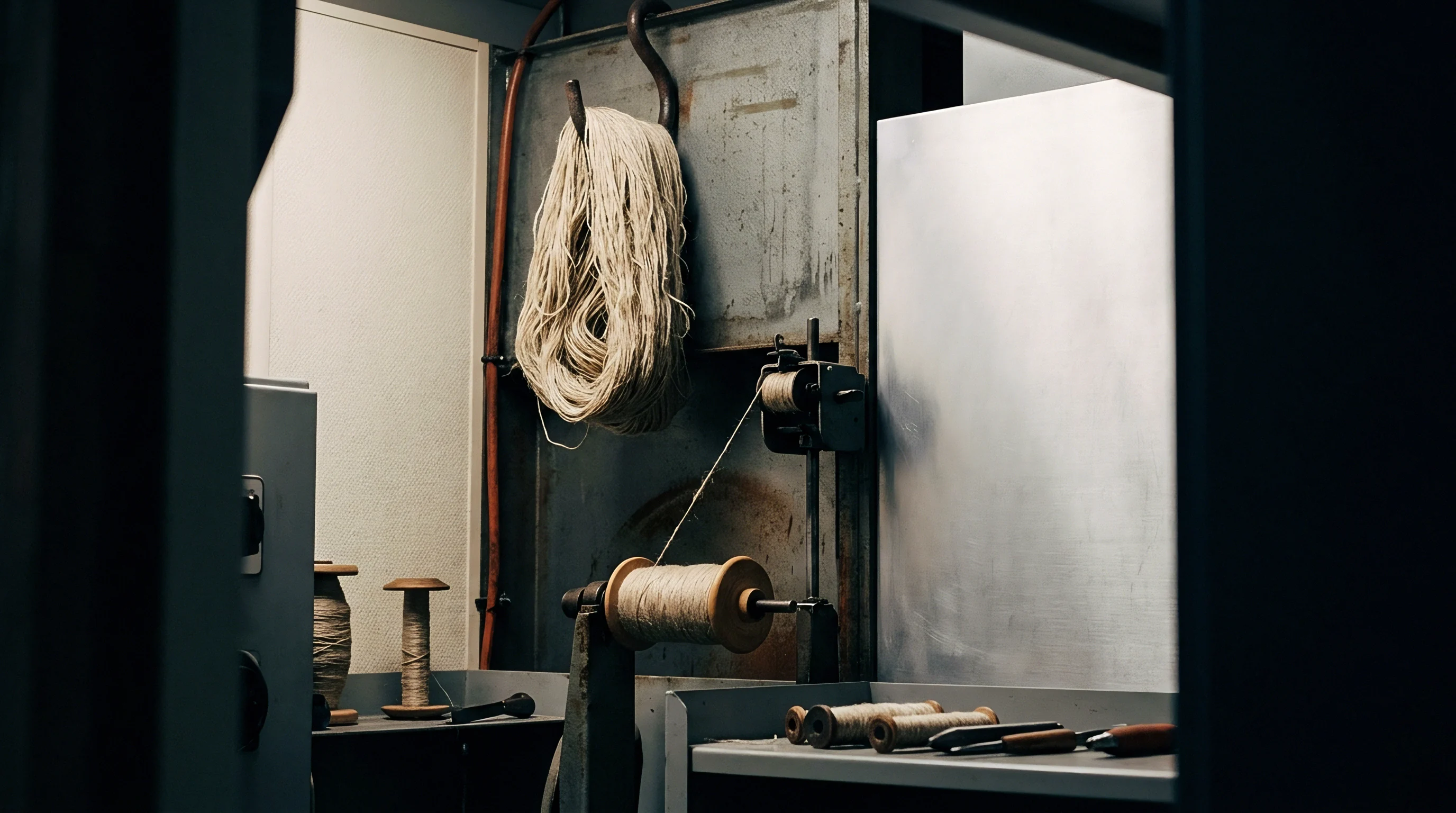
Chemical Non-Cellulosic Component Dissolution Metrics
Weight reduction during wet boiling varies directly with raw fiber retting severity and bath alkaline concentrations. Determining true chemical mass loss requires conducting precise lab extractions on unboiled and boiled roving samples using standardized solvents. Petroleum ether extraction measures residual wax content, while warm ammonium oxalate solutions isolate pectin fractions.
- Determine oven-dry mass of raw grey roving samples using standardized forced-air drying chambers.
- Measure non-cellulosic extractable fractions by running sequential hot water and sodium hydroxide washes.
- Weigh dried residual cellulose samples to calculate net boiling mass loss percentages.
- Compare batch mass loss against mill baseline allowances to flag excess fiber degradation.
Evaluating chemical mass conversion baselines also involves checking bath wash cycles. Residual chemical salts left in dried roving inflate post-boil mass measurements, creating artificial yield spikes. Exhaustive water rinsing followed by acid neutralization removes residual alkalis before final drying.
Contractual purchase terms referencing ISO 6741 specify that chemical weight loss exceeding twelve percent shifts financial liability for lost mass directly to the spinning mill.


Frame
Spinning operations convert boiled roving into finished yarn through immersion drafting and high-twist spindle insertion. Wet spinning frames submerge boiled roving in hot water baths heated to between 40 degrees Celsius and 70 degrees Celsius immediately before drafting rollers. Hot water softens remaining pectins, enabling extreme fiber slip.
Wet spinning uses hot water tanks. Mass loss at the spinning frame consists of spindle fly, broken ends collected by pneumatic tubes, flyer waste, and water-soluble extracts leaching into drafting bath tanks.
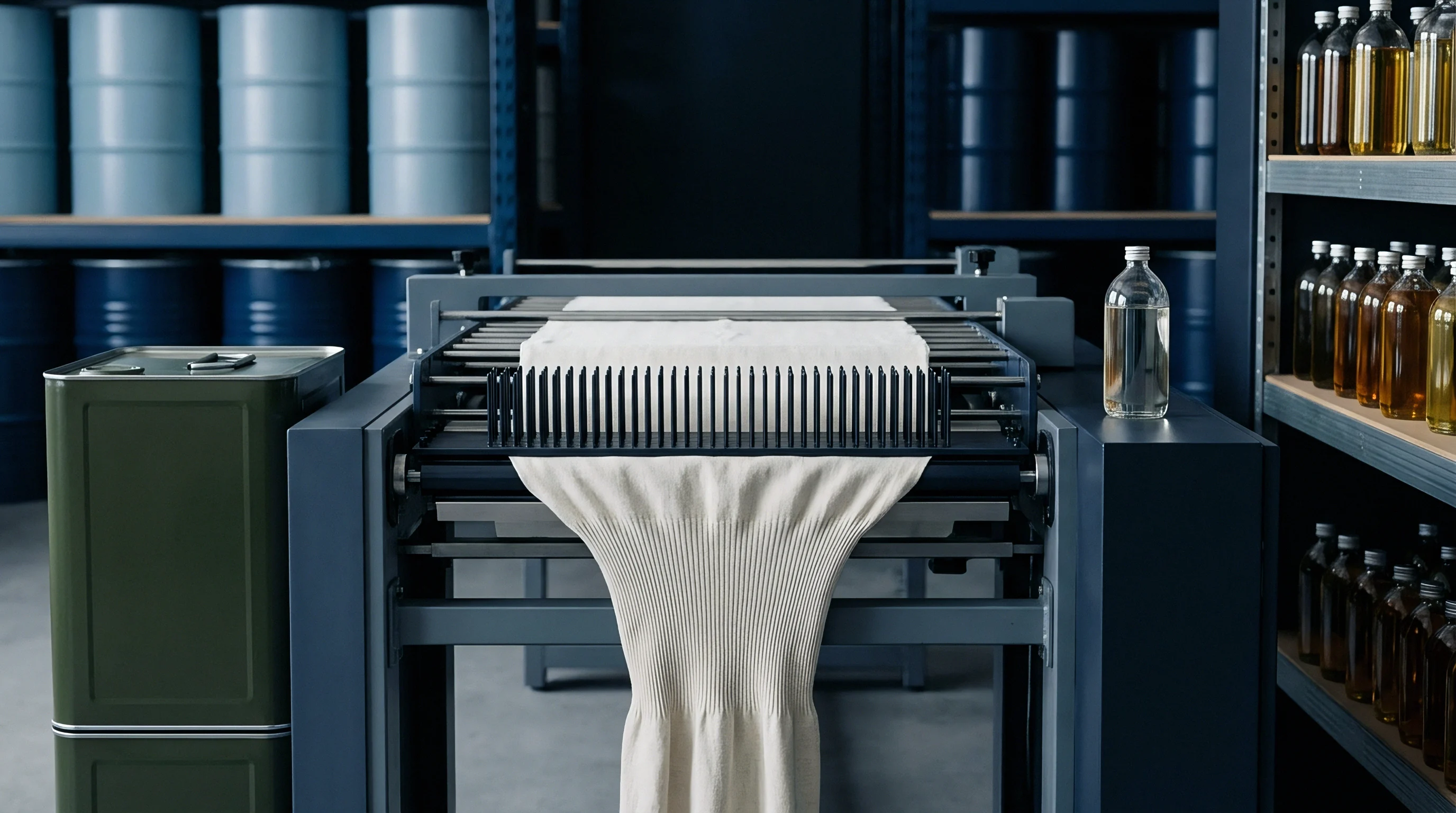
Spindle Waste and Ring Rail Fly Loss Dynamics
Drafting zone breaks create short fiber dispersion that collects on suction tubes and machine surrounds. High speed drafting creates yarn fly. Spindle waste rates correlate directly with roving uniformity, bath temperature stability, and spindle rotational speed.
On modern wet ring spinning frames operating at 6,000 to 9,000 revolutions per minute, mechanical waste accounts for 2.0 percent to 4.5 percent of throughput mass.
Suction collection systems collect broken ends continuously when individual yarns break during twisting. Pneumatic waste bins gather this material, which mills weigh as pneumatic scrap. Auditors cross-check suction waste weights against ring rail doffing schedules.
Excessive suction scrap indicates unstable drafting conditions, incorrect traveler weights, or erratic spindle speeds.
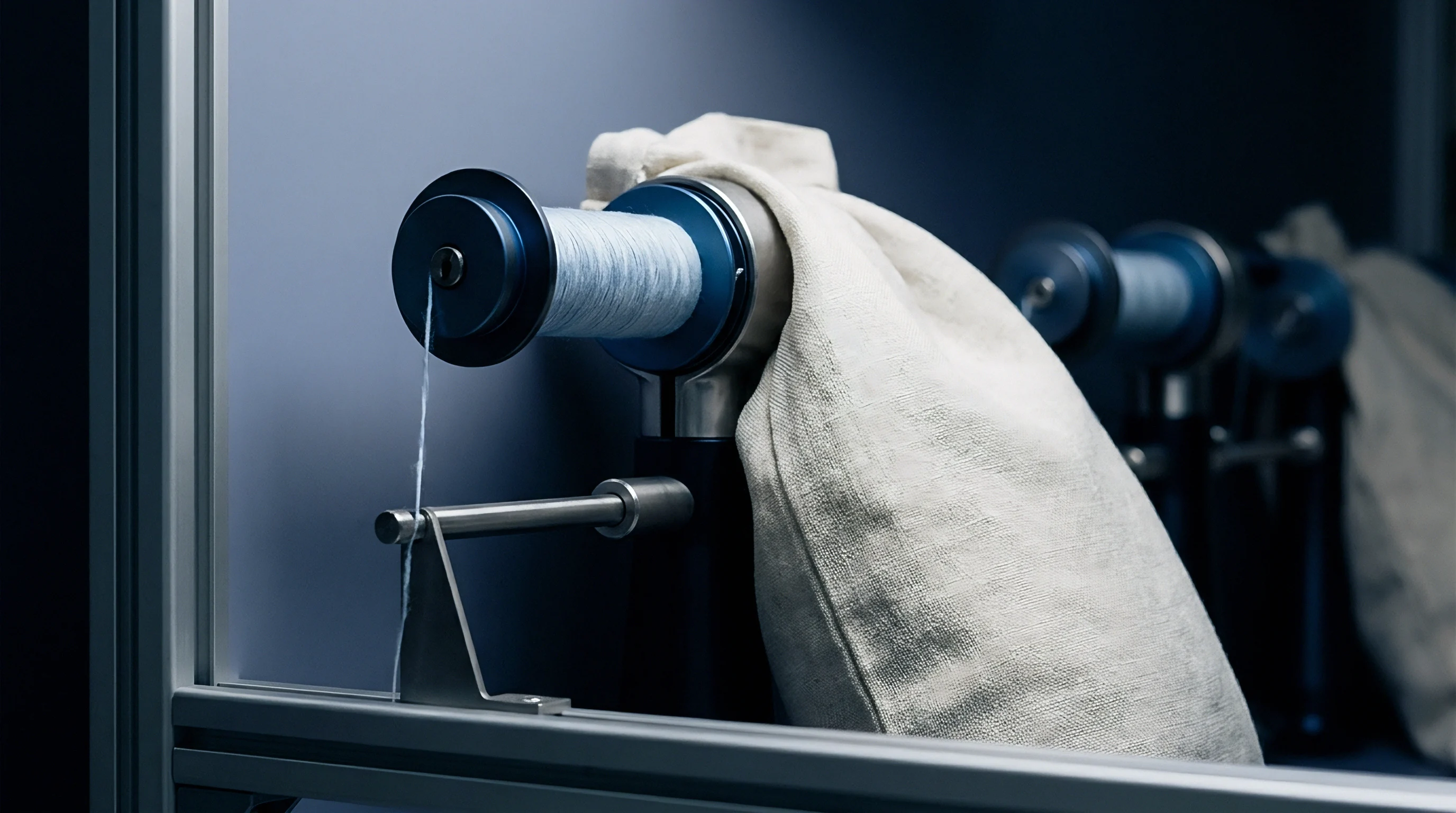
Count Dependent Yield Baselines in Wet Spinning Fine Linen
Production of high-metric yarn numbers increases fiber stress during drafting, which elevates end-break rates and material fallout. Spinning Nm 26 coarse yarn produces minimal spindle waste because the thick fiber bundle withstands high draft tension. Spinning Nm 80 fine yarn reduces total throughput speed and increases relative mechanical loss per kilogram of output.
| Yarn Metric Count (Nm) | Spindle Speed (RPM) | Hot Water Tank Temp (C) | Mechanical Frame Waste (Percent) | Net Yarn Yield from Roving (Percent) |
|---|---|---|---|---|
| Nm 26 | 7,500 | 45 | 1.8 | 98.2 |
| Nm 40 | 7,200 | 50 | 2.4 | 97.6 |
| Nm 60 | 6,800 | 60 | 3.3 | 96.7 |
| Nm 80 | 6,100 | 65 | 4.2 | 95.8 |
| Nm 100 | 5,400 | 70 | 5.6 | 94.4 |
Yield drops as yarn count rises. Spinning fine yarns requires precise compensation for liquid absorption during wet drafting. Yarn packages leave ring frames wet, holding up to 80 percent water by weight relative to dry fiber.
Packages pass through centrifugal hydro-extractors before entering forced-air drying ovens to bring moisture back to the 12.0 percent commercial standard. Drying oven temperature profiles must be audited to verify that overheating does not degrade cellulose fibers or alter final dry mass measurements.
Finer wet-spun yarn numbers generate higher relative flyer waste during drafting than coarse counts.
Completing the frame audit requires auditing yarn winding and clearing operations. Automatic winders slice out yarn defects, slubs, and thin places, splicing ends together mechanically. Winding waste adds an additional 1.0 percent to 2.0 percent mass loss.
Reconciling yarn weight on shipping pallets against ring frame doff weights isolates winding scrap metrics.
- Hackling Delivery Receipts verify gross line fiber mass entered the spinning plant floor and match initial bale store release authorizations.
- Roving Boil Logs record net chemical weight reductions per treatment bath alongside chemical dosing parameters and bath dump volumes.
- Dofficer Spindle Sheets track machine fly waste and suction collection weights across individual spinning frames and shift changes.
- Yarn Weighbridge Tickets record gross finished package weights at standard moisture equilibrium prior to final customer shipment loading.
Tare weights require periodic calibration. The exact boundary where wet spinning thermal bath temperature begins to degrade cellulose tenacity remains disputed across fine yarn spinners.


Balance
Auditing a flax mill requires continuous tracking of input fibers, moisture shifts, and cumulative waste fractions across every processing stage. Reconciling fine linen conversion baseline calculations demands a unified material balance model that connects raw hackled flax input to delivered finished yarn tonnage. Without rigorous baseline checks, buyers risk paying premium prices for certified European flax while receiving yarn diluted with uncertified short-staple tow or synthetic blends.

Comprehensive Conversion Reconciliation Worked Baseline
Constructing an exact material flow audit involves tracing a forty-metric-ton batch of scutched flax through mechanical and chemical transformations. Consider a baseline audit model for producing Nm 60 fine wet-spun linen yarn from a 40,000-kilogram lot of raw scutched flax at 12.0 percent standard moisture regain.
First, hackling operations partition the 40,000 kg input into 23,200 kg of long-line hackled flax (58.0 percent yield), 14,600 kg of hackling tow (36.5 percent yield), and 2,200 kg of non-fibrous shive and dust fallout (5.5 percent mechanical loss). The long-line fraction proceeds to line yarn spinning, while the tow fraction transfers to coarse tow spinning lines.
Second, combing of the 23,200 kg long-line fraction extracts 18.0 percent comber noil (4,176 kg), leaving 19,024 kg of combed line sliver. Subsequent drawing passages induce a 2.2 percent mechanical waste loss (418 kg), yielding 18,606 kg of drawn sliver ready for roving frames.
| Transformation Step | Input Material Mass (kg) | Stage Yield (Percent) | Stage Waste/Loss (kg) | Net Output Mass (kg) |
|---|---|---|---|---|
| Scutching to Hackling | 40,000.0 | 58.0 (Line Fraction) | 16,800.0 (Tow plus Dust) | 23,200.0 |
| Combing Long Line | 23,200.0 | 82.0 | 4,176.0 (Comber Noil) | 19,024.0 |
| Drawing Passages (3x) | 19,024.0 | 97.8 | 418.5 (Drawing Waste) | 18,605.5 |
| Roving Formation | 18,605.5 | 98.8 | 223.3 (Roving Scrap) | 18,382.2 |
| Alkaline Roving Boiling | 18,382.2 | 87.2 (Chemical Net) | 2,352.9 (Solubilized Mass) | 16,029.3 |
| Wet Frame Spinning | 16,029.3 | 96.7 | 529.0 (Spindle Fly/Suction) | 15,500.3 |
| Winding and Clearing | 15,500.3 | 98.5 | 232.5 (Slub Cut Scrap) | 15,267.8 |
Third, roving formation converts 18,606 kg of drawn sliver into roving bobbin packages with a minor mechanical scrap loss of 1.2 percent (223 kg), yielding 18,382 kg of grey roving. Next, intensive alkaline roving boiling for Nm 60 spinning dissolves 12.8 percent of dry mass in non-cellulosic extracts (2,353 kg), reducing clean dry roving mass to 16,029 kg.
Fourth, wet ring spinning converts 16,029 kg of boiled roving into yarn, incurring a 3.3 percent spindle fly and suction waste drop (529 kg), delivering 15,500 kg of un-cleared yarn. Finally, automatic winding and slub clearing removes 1.5 percent in cut scrap (233 kg), leaving a final net package weight of 15,268 kg of Nm 60 fine linen yarn.
Mass balance discrepancies exceeding two percent across a spinning lot indicate undocumented raw fiber mixing or uncalibrated weighbridges.
Weight tickets reveal hidden loss. The overall conversion yield from raw scutched flax (40,000 kg) to finished fine line yarn (15,268 kg) calculates to exactly 38.17 percent. The remaining 61.83 percent of initial mass exists as sellable tow (14,600 kg), comber noil (4,176 kg), mechanical drawing and frame waste (1,403 kg), non-fibrous dust (2,200 kg), and solubilized chemical loss (2,353 kg).

Commercial Audit Discrepancy Thresholds and Surcharge Risk
Discrepancies between physical output mass and theoretical yields reveal whether mill operational baselines match actual fiber consumption. If an auditor compares physical delivery records against this model and finds a mill claiming 20,000 kg of Nm 60 line yarn from a 40,000 kg scutched flax input (a 50.0 percent yield), an immediate audit failure is flagged. Achieving a 50 percent line yarn yield on Nm 60 counts from standard scutched flax is physically impossible without unrecorded blending of lower-cost short fibers or synthetic filaments.
Certified fiber commands market premiums. European Flax certified fiber carries surcharges ranging from 0.40 to 0.85 Euros per kilogram over uncertified raw flax. When mills under-report mass loss or bypass baseline tracking, uncertified tow is routinely substituted into line yarn batches to pad yield margins while collecting certified fiber price surcharges from corporate buyers.
Auditing teams mandate full physical segregation and lot-level reconciliation from weighbridge scale tickets down to final export bills of lading. Commercial contracts must include audit rights permitting unannounced physical weighings of comber noil bins, roving boil effluent samples, and winding scrap boxes. Failing to verify mill baseline calculations results in paying full certified fiber surcharges for uncertified short-staple tow blended into fine yarn runs.