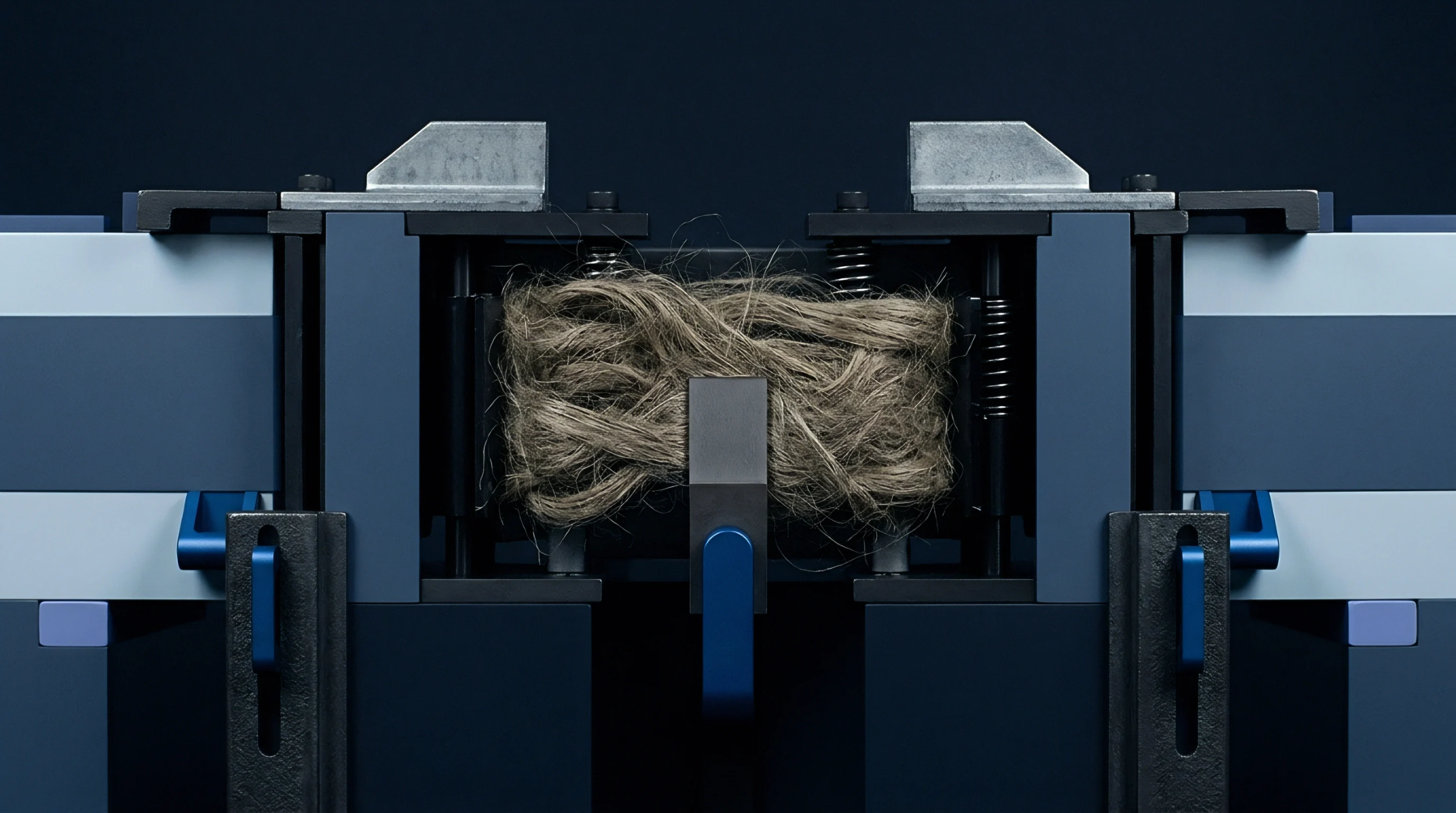
Spinning Preparation
Intermediate fiber strand consolidation measures draft and protective twist application against target linear density prior to final yarn spinning. In Chinese wet flax spinning mills, roving formation converts drawn sliver into a condensed strand held together by light protective twist wound onto wooden bobbins. Hackled flax long fibers require gentle handling during drafting to preserve fiber length while establishing uniform weight per unit length.
The protective twist prevents sliver draft failure during subsequent bobbin handling and boiled roving treatment operations.
Process Mechanics
Flyer speed, bobbin rail traverse rate and drafting roller draft ratios interact during roving creation to establish strand cohesion without over-twisting the fiber bundle. Incorrect drafting settings during roving formation create draft waves that manifest as periodic thin and thick places in the final ring-spun linen yarn. Wet spinning preparation involves boiling the roving on perforated bobbins to soften natural pectins before final drafting, requiring uniform package density to allow even liquor penetration.
Technicians monitor bobbin build profile and winding tension to prevent package sloughing or crushing during autoclave treatment. Proper control of roving twist levels balances bobbin unwinding stability with drafting draftability at the spinning frame.
Production Log
Spinning mill floor sheets document flyer speed, draft constants and twist factors for each roving frame run. Process parameters governing roving formation define the mechanical baseline for subsequent wet spinning frame setup.