Roller Distance
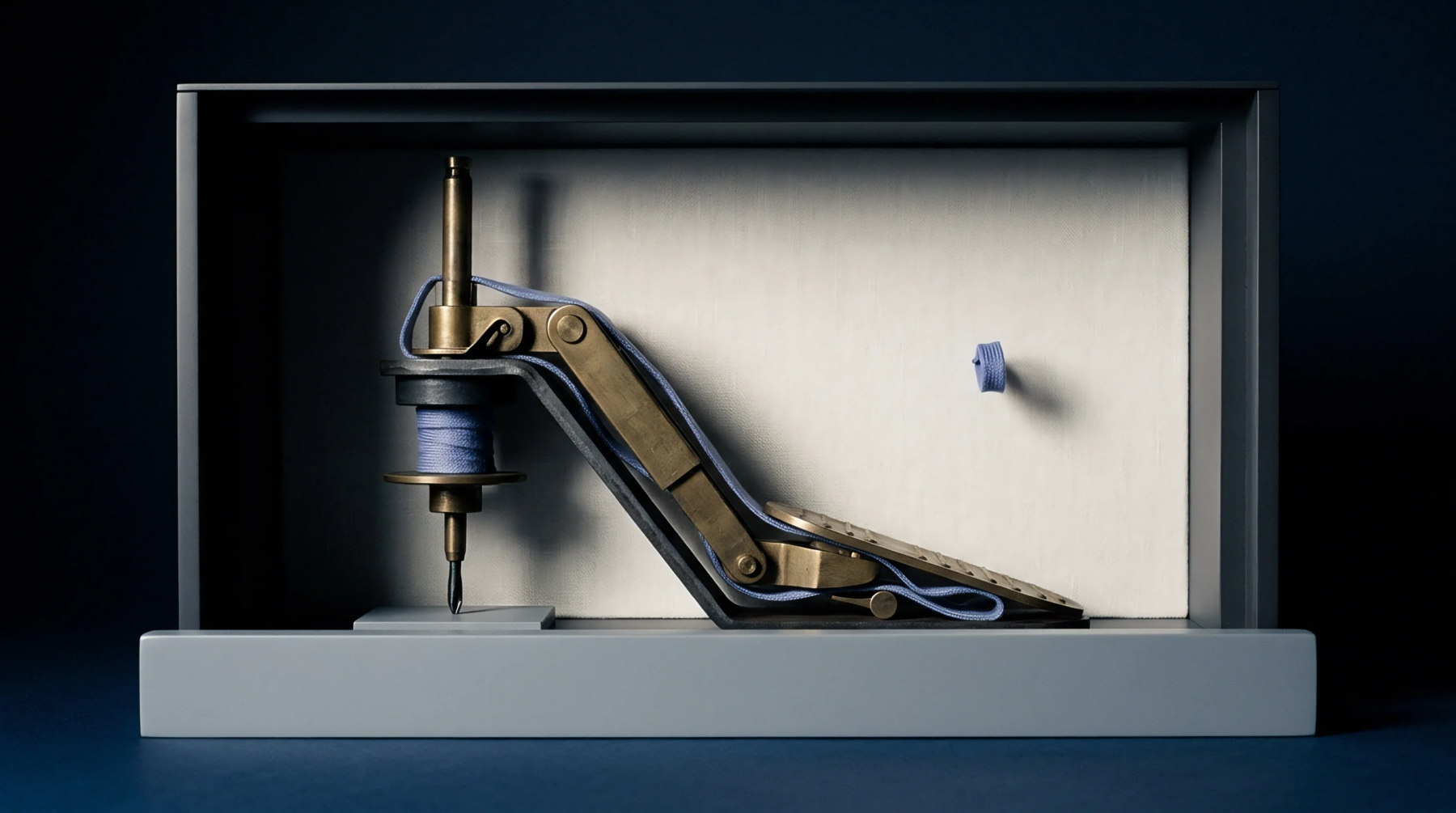
Mechanical spacing between the feed rollers and the draw rollers on a wet spinning frame determines how effectively individual flax fibres are drawn out into a fine yarn. This gap represents the drafting reach, which spinners must calibrate to match the mean length of the prepared flax fibres. If this setting is too short, longer flax fibres are clamped by both rollers simultaneously, leading to fibre breakage and uneven drafting.
If it is too long, short fibres lose guidance and accumulate as bunched clusters that undermine yarn strength and uniformity. Mill technicians must therefore measure the fibre length distribution from each hackling lot before configuring the spinning frames to ensure the machine geometry matches the raw material profile.
Fibre Alignment
Optimising the draw process on wet-spinning machines requires precise alignment to prevent drafting waves. When the drafting reach is set correctly, the individual flax bundles slip past each other smoothly as the pectin binder is softened by hot water. Spinners monitor the drafted strand for mass variation to confirm that the adjustment matches the specific fiber consignment.
Machine Adjustment
Adjustment protocols for the draw frame must be executed whenever a new batch of flax is introduced to the spinning line. Because flax fiber length varies by growth year, the drafting reach must be reset manually to fit the raw material. Maintaining this operational boundary prevents excessive yarn waste and ensures consistent yarn grades for export markets.