Quantifying Micro-Cellulosic Sludge Formation Dynamics during Fine-Count Flax Roving High-Draft Attenuation
High-draft wet spinning of fine flax roving solubilizes residual pectins into micro-cellulosic sludge, requiring strict origin pectin thresholds to prevent yarn defects.


Fibril
Attenuating fine flax roving at high draft ratios subjects wetted strands to mechanical shear forces that exceed the intercellular cohesive strength of residual plant gums. During wet spinning of fine counts ~ specifically Ne 40 to Ne 80 (Nm 70 to Nm 135) ~ the roving bundle passes through a heated bath before entering the main drafting zone. Pre-wetting softens middle lamella pectins so individual elementary fibers can slide past one another.
High draft ratios (15x to 35x) generate steep velocity gradients within the wet fiber core. Under these conditions, incomplete or uneven fiber separation tears cell wall layers, releasing microscopic fragments into the aqueous drafting medium.
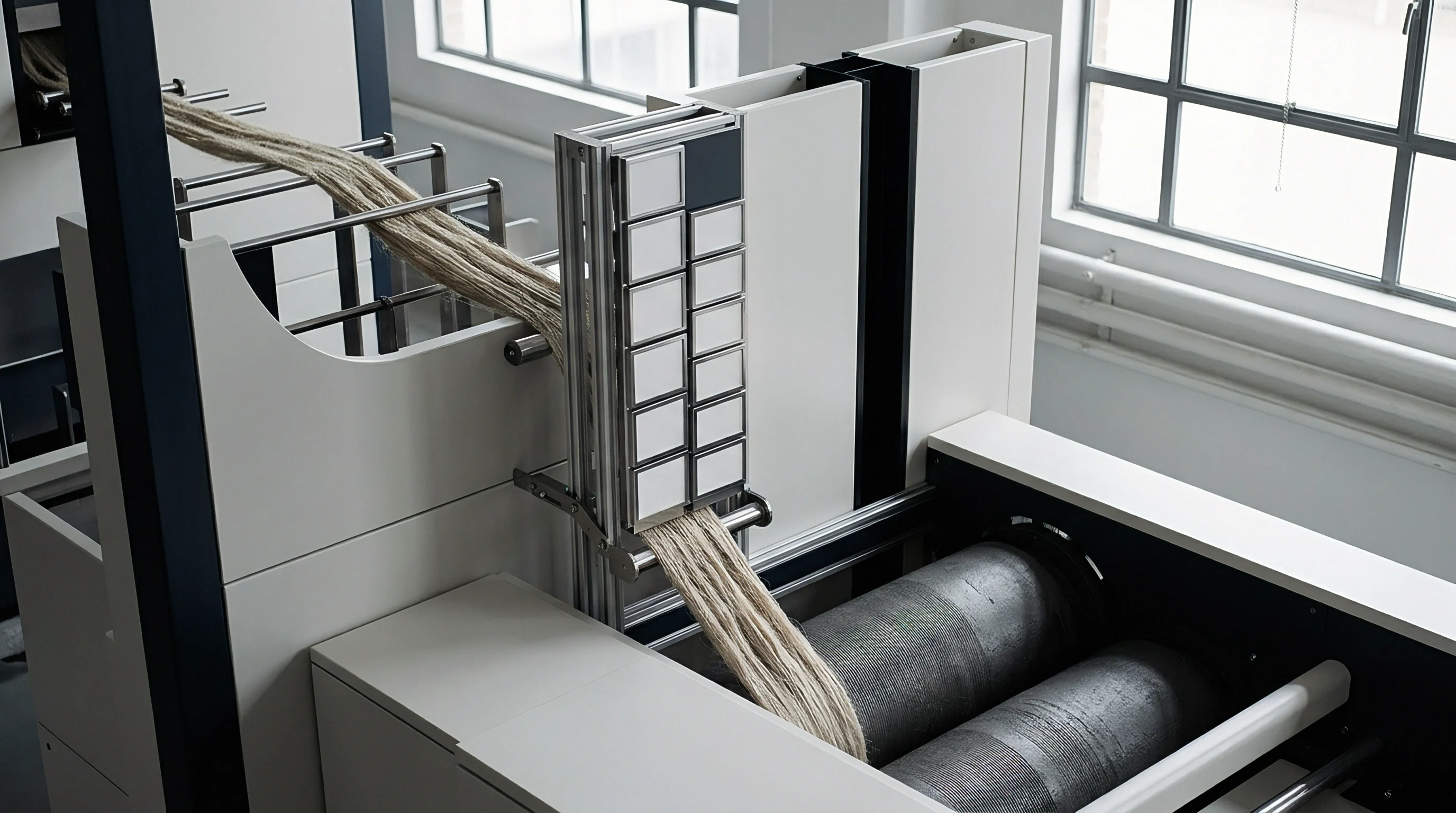
Solid residues foul mechanical nip rolls as micro-cellulosic sludge forms through a mix of mechanical abrasion and chemical solubilization. As roving enters the nip between the back pressure roller and the driven steel cylinder, water penetrates the porous fiber architecture. Hydrodynamic forces strip un-retted or partially hydrolyzed polygalacturonic acid complexes from the fiber surface.
These dissolved polysaccharides combine with detached primary cell wall micro-fibrils to create a sticky gelatinous suspension. The debris spans a bimodal particle size distribution: primary fibrillar fragments measure between 1 and 50 micrometers in length, while precipitated calcium and magnesium pectate aggregates range from 100 nanometers to 5 micrometers.
Temperature drives solubilization velocity, and micro-cellulosic debris detachment correlates directly with draft ratio and line speed. Higher draft attenuation accelerates the mechanical stripping of weak pericortical cells. When processing fine-count rovings, small strand cross-sections require tight roller settings and elevated apron nip pressures, intensifying shear stress at the fiber surface.
This accumulating particulate matter does not remain fully suspended in the bath; hydrodynamic circulation carries the colloidal suspension directly into high-pressure contact points throughout the drafting apparatus.

Mechanics of Inter-Bundle Pectin Softening
Warm water immersion lowers the glass transition temperature of natural flax pectins, turning rigid cell wall binders into mobile hydrogels. Flax fibers are bound inside stem bundles by a matrix of homogalacturonan, rhamnogalacturonan, hemicellulose, and structural proteins. Effective attenuation depends on weakening these pectic substances without degrading the structural cellulose microfibrils that give yarn its tenacity.
Water temperatures in drafting troughs are kept between 50 degrees Celsius and 70 degrees Celsius to optimize pectin hydration.
Below 50 degrees Celsius, residual pectins remain viscous and resist plastic deformation. This high binder viscosity demands greater drafting force, causing bundle breakage rather than smooth fibrillar sliding. Above 70 degrees Celsius, however, the bath extracts excessive low-molecular-weight hemicelluloses, softening the bundle enough to cause uncontrolled drafting slip.
As pectins hydrate and expand, internal swelling pressure forces water molecules into the crystalline microfibril matrix. This hydraulic swelling opens the bundle structure, exposing internal surfaces to the mechanical action of the drafting rollers.
| Draft Ratio | Linear Delivery Speed (m/min) | Water Bath Temp (°C) | Sludge Mass Rate (mg/kg dry fiber) | Fibrillar Particle Range (µm) |
|---|---|---|---|---|
| 15x | 18 | 55 | 140 | 10 ~ 50 |
| 20x | 24 | 60 | 280 | 5 ~ 35 |
| 25x | 30 | 65 | 460 | 2 ~ 25 |
| 30x | 36 | 68 | 720 | 1 ~ 15 |
| 35x | 42 | 70 | 1150 | 0.5 ~ 10 |
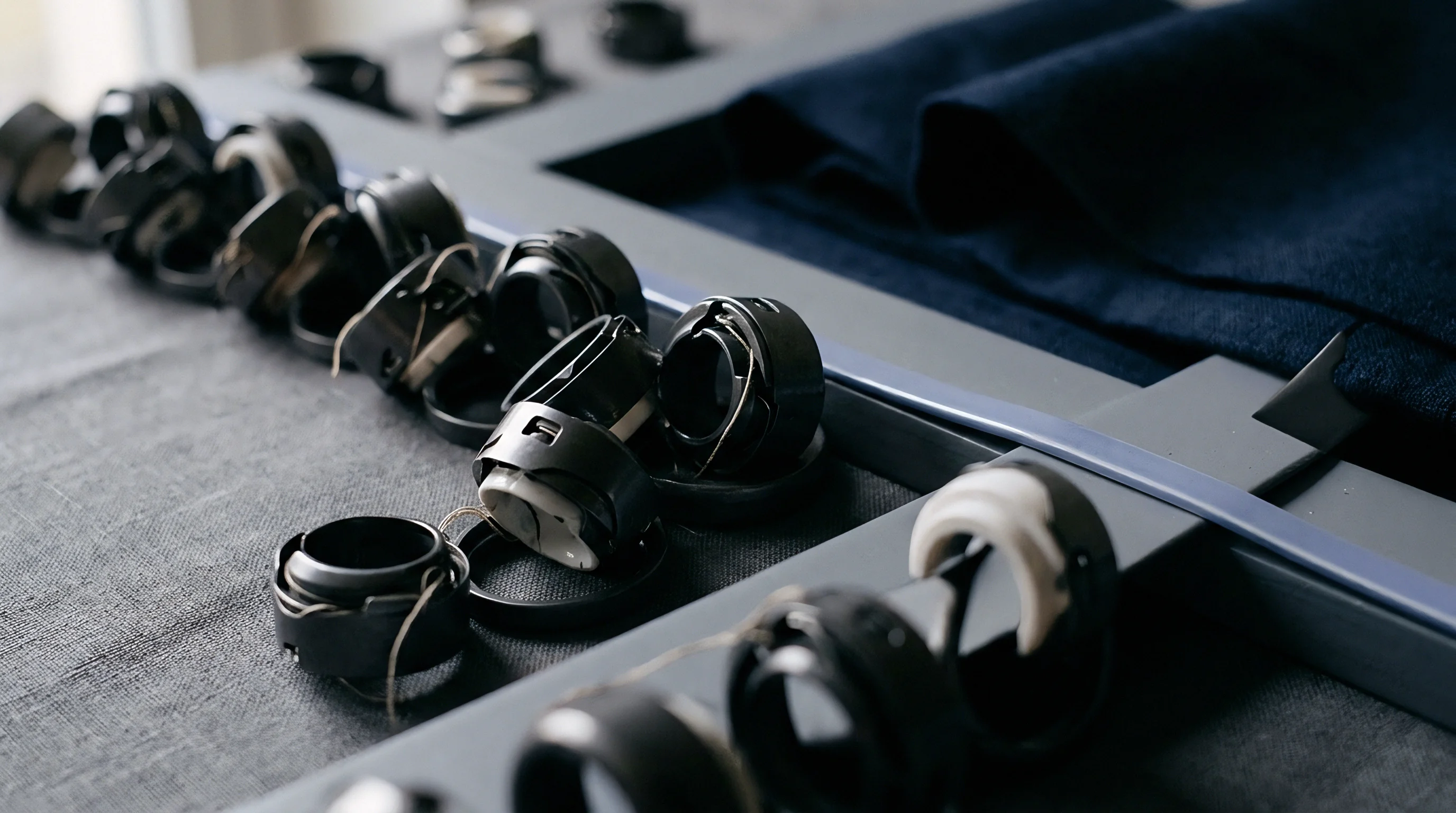
Shear Dissociation along Draft Zone Nips
Linear velocities between drafting rolls range from 15 to 45 meters per minute, creating velocity gradients across the fiber bundle cross-section. Within the drafting zone, the front roller pair rotates much faster than the back pair, generating intense inter-fiber friction as individual elementary fibers accelerate out of the slower roving matrix. Micro-fibrils on the outer perimeter of the bundle experience the greatest drag against stationary trumpet guides and liquid bath surfaces.
Frictional energy generated at the nip mechanically shears fine hair-like fibrils from the main fiber body. These detached fragments ~ alpha-cellulose crystalline ribbons bound to amorphous hemicellulose fragments ~ disperse into the liquid layer carried along by the moving strand. As micro-fibrils accumulate, they alter fluid rheology within the immediate drafting zone.
Analyzing liquid samples drawn directly from the nip outlet confirms that shear-induced dissociation accounts for over 60 percent of total sludge mass.
Higher draft ratios operating on under-retted roving multiply cleaning frequency long before yarn unevenness registers on laboratory capacitance meters.


Hydrodynamics
Fluid recirculation in high-speed wet spinning frames controls how dissolved polysaccharide fragments are carried away from the drafting nip. In wet flax ring spinning, continuous water circulation maintains a uniform bath temperature while flushing liberated impurities out of the draft zone. If fluid velocity across the roving path drops below critical thresholds, detached micro-cellulosic particles redeposit onto the strand or collect inside trumpet delivery nozzles.
Dynamic viscosity increases exponentially as suspended debris accumulates. Recirculating water systems use supply lines and return troughs designed to maintain laminar flow profiles near the fiber bundle while encouraging turbulent mixing in secondary settling chambers. When processing fine-count flax roving, small shifts in water flow rate disturb the thin hydrodynamic boundary layer around the strand.
Insufficient flushing allows micro-particles to aggregate into larger gel masses inside the drafting trough.
Baths maintained at 68 degrees Celsius exhibit a 42 percent reduction in insoluble particulate deposition compared to baths operating at 52 degrees Celsius under identical draft settings.
Chemical conditions within the drafting fluid govern the precipitation kinetics of micro-cellulosic debris. Hard water with high concentrations of free calcium and magnesium ions accelerates sludge formation. Divalent cations bind carboxylic acid groups on adjacent galacturonic acid chains, turning soluble pectin fragments into insoluble calcium pectate gels.
Maintaining ionic stability in the bath requires continuous demineralization or sequestering agents to prevent premature gel precipitation.

Colloidal Deposition in Warm Water Baths
Polyuronide chains leached from flax cell walls act as protective colloids until divalent calcium ions induce cross-linking. In low-solute water, soluble pectins remain dispersed as stable colloidal particles carrying negative zeta potentials. When dissolved calcium concentrations rise above 50 parts per million, electrostatic repulsion between pectin chains diminishes and calcium bridges form between carboxylate groups, driving the agglomeration of dissolved gums and suspended cellulosic fibrils.
This precipitation mechanism turns transparent bath liquid into a turbid, milky suspension. The resulting agglomerates settle onto frame surfaces as sticky, semi-solid deposits that adhere tenaciously to stainless steel troughs, rubber aprons, and ceramic guides. Deposition rates peak in low-shear regions like trough corners and return line elbows.
Controlling colloidal stability requires precise regulation of bath pH, ideally kept between 6.0 and 6.5 to prevent rapid acid-catalyzed or alkali-induced pectin coagulation.
Sludge accumulation creates yarn defects unless liquid recirculation systems use engineered filtration loops to extract suspended solids before water returns to the primary drafting zone. Standard settling tanks fail to capture micro-cellulosic sludge because hydrated pectin-cellulose complexes have nearly the same density as water.
- Roller Wrap Friction increases as sticky cell wall residues accumulate on synthetic apron surfaces, altering nip pressure uniformity across spindles.
- Trumpet Nozzle Clogging restricts fluid replacement at the front drafting zone, inducing localized thermal spikes that harden pectin deposits.
- Apron Slip Variance creates periodic thick places in fine-count yarn when gel build-up reduces mechanical grip on moving strand bundles.
- Recirculation Pump Cavitation develops when dense particulate suspensions clog intake screens and alter fluid density within supply lines.
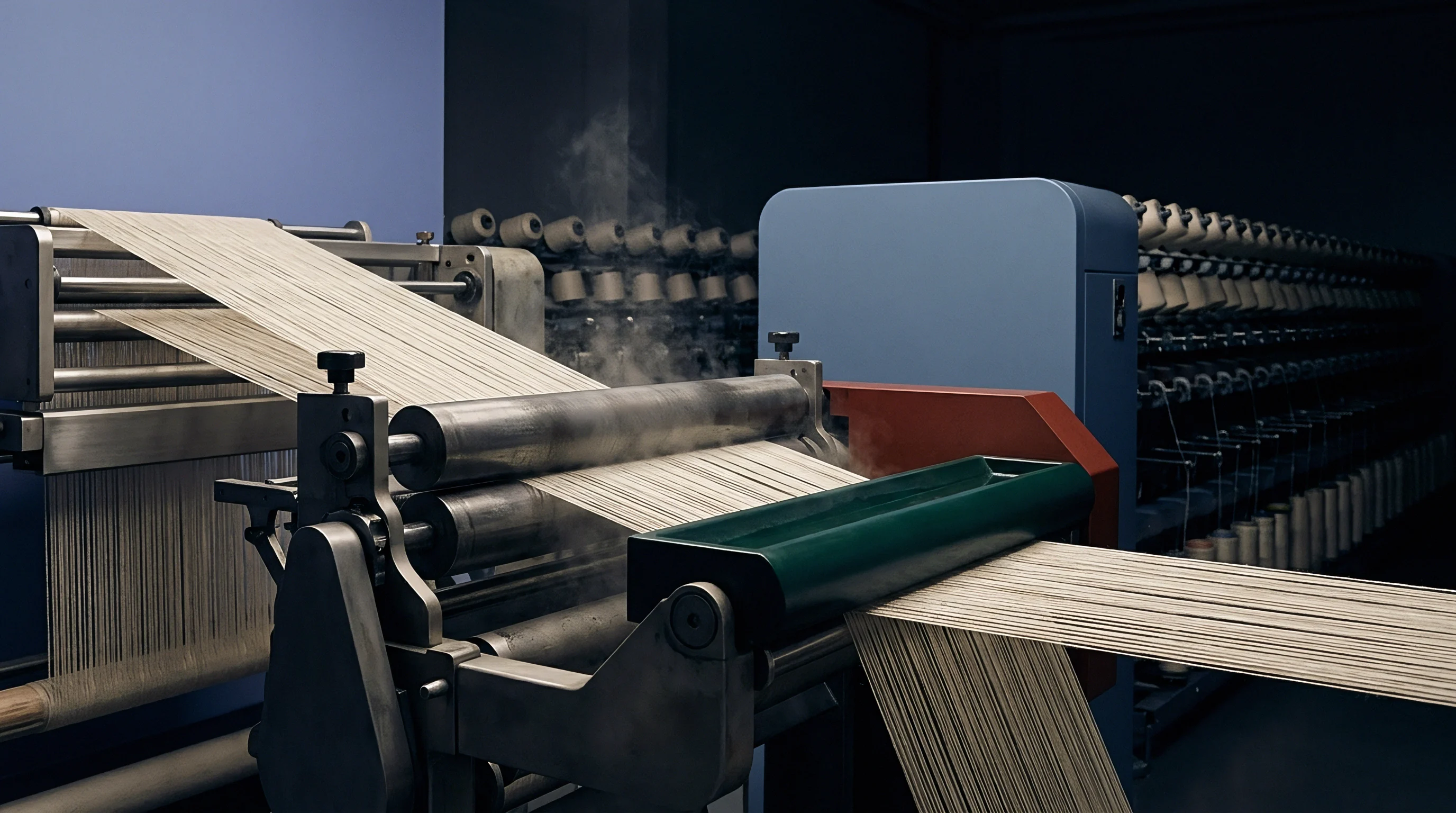
Recirculation Settling Rates and Viscosity Shifts
Concentrations of suspended insoluble matter above 400 milligrams per liter transform bath fluid from Newtonian flow to pseudoplastic shear-thinning behavior. These viscosity shifts alter liquid drag forces acting on the attenuated fiber bundle. Under Newtonian conditions, fluid resistance scales linearly with spinning speed; when pseudoplastic sludge accumulates, static bath fluid offers high initial resistance to movement, impeding the smooth flow of roving through input guide eyes.
High shear rates inside recirculation pump impellers break down larger particulate clusters of un-retted pectin, reducing average particle sizes while increasing total specific surface area. This breakdown accelerates gel hydration and elevates bulk fluid viscosity even when total dry mass concentration stays constant. Mills without continuous water exchange experience progressive bath thickening over twelve-hour production cycles, causing systematic drift in yarn tension profiles.
Spinning mill managers frequently attribute recurring trumpet buildup to unpredictable field retting variations rather than inadequate bath exchange rates.


Rheology
Deformed pectin gels and detached micro-particles display non-Newtonian flow properties under high shear stress. The rheological character of micro-cellulosic sludge determines how it behaves when squeezed between drafting rollers or dragged across ceramic surfaces. At low shear rates, sludge acts as a soft viscoelastic solid, storing elastic energy and resisting deformation.
When shear stress inside the drafting nip exceeds its yield point, the material breaks down structurally and flows as a shear-thinning liquid.
Impurities alter draft roller grip as this viscoelastic duality causes mechanical problems inside fine-count drafting systems. Under the heavy compressive loads exerted by drafting aprons, sludge spreads into thin, sticky films. As the apron surface exits the pressure zone and shear stress drops, the sludge instantly recovers its elastic structure, creating adhesive tack that grabs passing fibers.
This stick-slip behavior induces minor speed fluctuations in the top apron, producing short-term yarn unevenness.

Viscoelastic Drag on Drafting Aprons
Surface adhesion between elastomer aprons and cellulosic debris creates periodic drag impulses during attenuation. Synthetic aprons, typically acrylonitrile-butadiene rubber, have surface energy characteristics designed to grip flax fibers without static buildup. Micro-cellulosic sludge coats these surfaces, masking their micro-texture under a smooth, slippery hydrogel layer.
Adhesive drag forces measured on fouled aprons fluctuate between 0.15 and 0.45 Newtons per fiber strand bundle. This variability disrupts the control needed to draft fine-count rovings, where strand cross-sections in thin zones may contain as few as 15 to 20 fibers. When the apron loses slip resistance, individual fibers accelerate prematurely, escaping back-zone control and generating slubs in the output yarn.
Cleaning aprons with solvent washes temporarily restores surface friction, but sludge redeposition begins within thirty minutes of continuous operation unless bath purity is maintained.
Flax roving produced from un-retted outer cortical fiber strands generates gel deposits faster than core bundle fibers under identical drafting pressure.
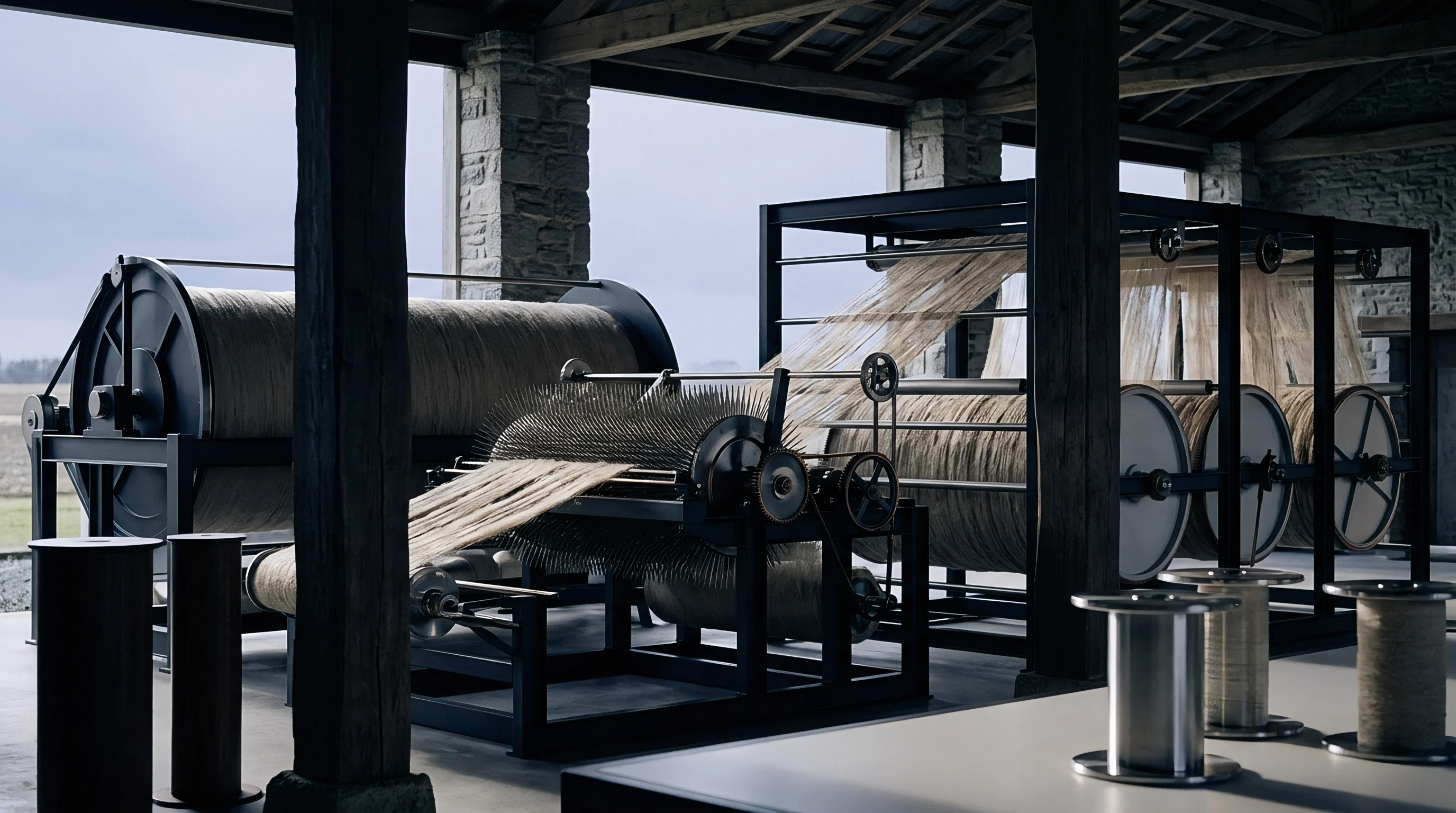
Quantifying Slub Formation and Yarn Mass Variation
Capacitance mass testing reveals sharp peaks in yarn mass variation when accumulated gel masses detach from guides and enter the twisting zone. Sludge deposits accumulating on trumpet guides build up until hydrodynamic drag or fiber friction shears the mass from its anchor point. The detached gel globule adheres to the passing strand and travels directly into the spinning triangle, where it gets twisted into the yarn core.
Yarn mass CV% increases from a baseline of 14.5 percent to over 22.0 percent when sludge deposition levels exceed 500 milligrams per kilogram of processed fiber. Electronic yarn clearers register these integrated gel-cellulose mass inclusions as thick places or short slubs. Slub lengths typically range from 5 to 15 millimeters, with mass increases exceeding 200 percent of nominal yarn linear density.
Cutting and clearing these defects generates excessive bobbin joins, reducing spinning efficiency and driving up winding costs.
| Fiber Origin & Retting Method | Residual Pectin Content (%) | Sludge Yield (mg/kg) | Yarn Mass CV (%) | Tenacity (cN/tex) |
|---|---|---|---|---|
| Dew-retted Normandy Flax (Grade Fine) | 1.2 | 210 | 14.2 | 32.5 |
| Dew-retted Baltic Flax (Grade Medium) | 2.4 | 580 | 17.8 | 26.1 |
| Water-retted Egyptian Flax (Grade Fine) | 0.8 | 110 | 13.1 | 35.8 |
| Chemically Scoured Flax Roving | 0.4 | 45 | 12.5 | 31.0 |
| Under-retted Green Flax Fiber | 4.1 | 1420 | 24.6 | 19.4 |
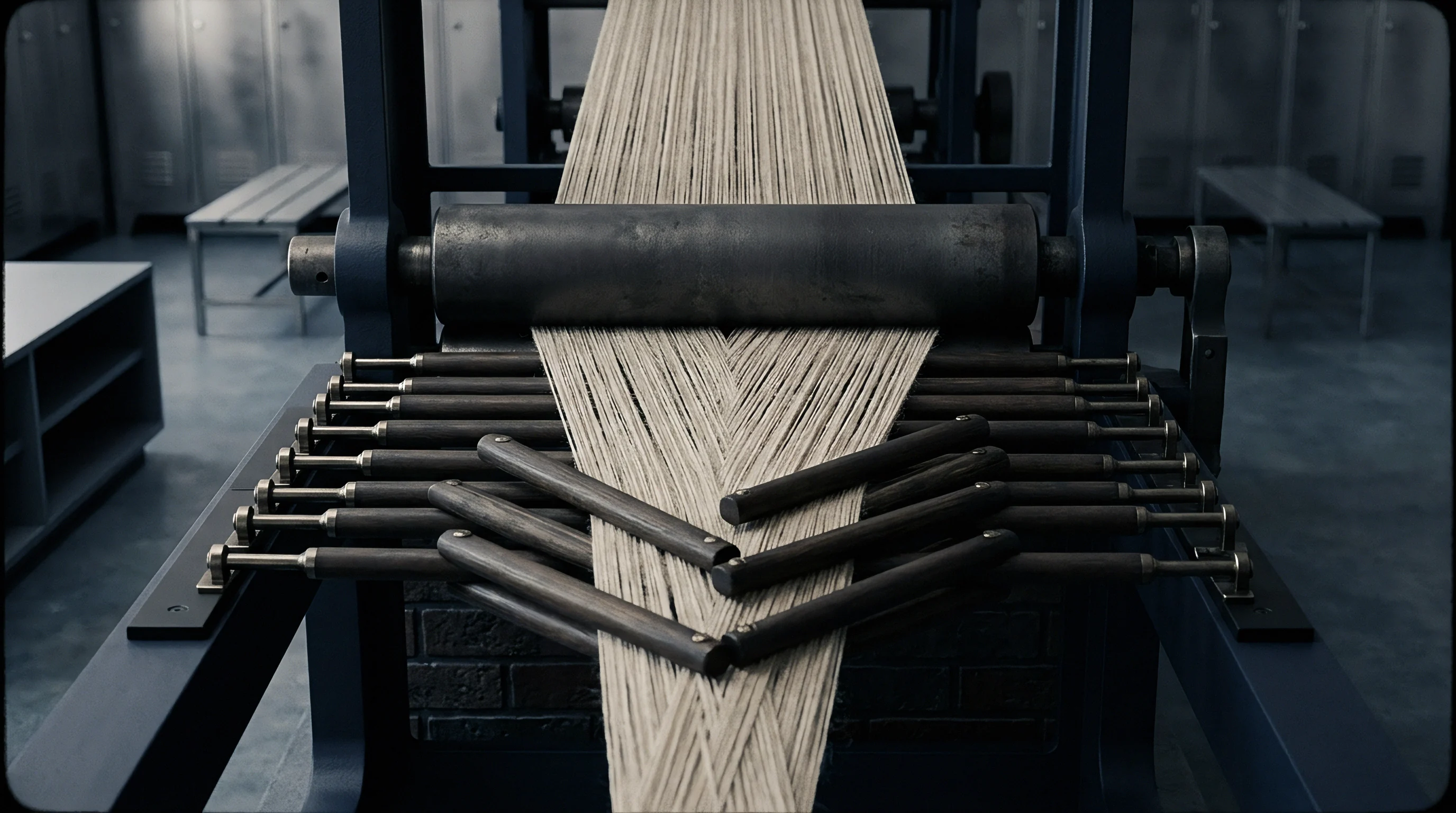
Why Does Dew Retting Accelerate Sludge Precipitation?
Field retting by indigenous fungi leaves uneven residual concentrations of calcium pectate along the stem cortex compared to controlled water tank retting. Dew retting relies on weather and wild fungal populations, predominantly Cladosporium herbarum, to degrade middle lamella pectins. Weather fluctuations lead to inconsistent enzyme distribution along the stem.
Fungi preferentially consume soluble homogalacturonans, leaving behind insoluble branched rhamnogalacturonans heavily complexed with structural calcium ions.
When dew-retted roving enters the warm spinning bath, these calcium-rich pectin residues dissolve poorly. Instead of forming molecularly dispersed solutions, they shed as insoluble microscopic flakes that act as nucleation sites for secondary colloid aggregation. By contrast, older water-retting methods relied on anaerobic bacterial fermentation, which degraded complex pectins into short-chain, soluble organic acids, producing fiber that yields significantly cleaner wet spinning baths.
Whether enzymatic pre-treatments applied during roving preparation can selectively hydrolyze insoluble pectins without diminishing ultimate yarn tenacity remains undetermined.
Accumulation
Measuring the dry mass of solid waste per kilogram of processed yarn establishes the baseline contamination factor for fine flax spinning lines. Quantitative analysis of micro-cellulosic sludge dynamics requires rigorous mass-balance accounting across the wet drafting frame. Calculating net particulate extraction rates involves weighing total dry roving inputs, finished wet-spun yarn packages, continuous bath purge volumes, and dried filter retentate over extended operational shifts.
Wet drafting demands continuous monitoring because solid mass extraction scales with roving linear density, draft ratio, bath exchange velocity, and fiber retting chemistry. Fine-count processing generates disproportionately higher sludge mass per unit weight of yarn because fine rovings undergo higher draft attenuation ratios. The extraction curve is non-linear: increasing draft from 15x to 30x yields a fourfold increase in dry sludge mass accumulation per operating hour.
Compliance with ISO 17025 test parameters for yarn mass variation requires continuous bath filtration logging to prevent systemic calibration drift.
Gravimetric isolation protocols involve sampling recirculating bath fluid, filtering through 0.45-micrometer membrane filters, and drying the residue at 105 degrees Celsius. Chemical analysis of the dry residue via Fourier-transform infrared spectroscopy reveals a composition of 45 to 55 percent alpha-cellulose micro-fibrils, 30 to 40 percent calcium pectate hydrogels, and 10 to 15 percent residual wax and protein fractions.

Mass Balance Verification across Wet Spinning Racks
Reconciling raw roving mass inputs against finished yarn output requires precise accounting for moisture, dissolved extracts, and mechanical lint loss. Roving mass entering the creel does not equal yarn mass exiting the flyer or ring spindle; a portion of the fiber dissolves or disperses into the bath, while short fibers drop beneath the drafting zone as fly waste.
Mass balance loss is calculated using gravimetric equations that isolate volatile moisture content from insoluble organic solids. In a standardized test run processing 1,000 kilograms of fine flax roving (Ne 60 yarn target), mass accounting shows approximately 12 kilograms of organic matter lost into the water bath: 3.5 kilograms of dissolved low-molecular-weight sugars and 8.5 kilograms of insoluble micro-cellulosic sludge retentate on filtration media.
- Weigh dry roving packages to establish initial baseline mass before loading onto the creel.
- Record bath liquid mass and extract baseline total dissolved solids prior to starting the drive motors.
- Collect all filter retentate and settled trough deposits after processing five hundred kilograms of roving.
- Desiccate collected wet residue at one hundred five degrees Celsius until mass stabilizes.
- Calculate total micro-particulate mass generation per weight unit of attenuated fiber bundle.

Filtration Loading and Centrifugal Separation Efficiency
Mechanical separators utilizing continuous micro-filtration units reduce suspended gel particles before recirculation back to the drafting troughs. Standard media filters like depth-wound polypropylene cartridges clog rapidly when exposed to gelatinous sludge. Pectin hydrogels deform under fluid pressure, blinding filter pores and creating sharp pressure drops across the filtration manifold.
Tangential flow filtration and continuous disk-stack centrifuges offer superior separation efficiency. Operating at 4,000 to 6,000 times gravity, centrifugal separation forces dense cellulosic micro-fibrils and calcium pectate agglomerates out of suspension without disposable media. This achieves solid-liquid separation efficiencies above 92 percent for particles larger than 2 micrometers, extending water bath operational lifespan from hours to weeks while stabilizing fluid viscosity.
Ignoring filtration loading metrics leads to rapid roller wear, frequent yarn breaks, and severe financial penalties from downstream weaving mills receiving irregular yarn.
Traceability
Verifying flax fiber provenance provides the data needed to predict sludge yield profiles during wet drafting. Provenance documentation must extend beyond basic geographic origins to include agricultural retting protocols, scutcher processing conditions, and batch-level chemical assays. Mill audits show that roving lots backed by comprehensive chain-of-custody records display significantly lower variance in wet spinning performance.
Audit records frequently reveal origin discrepancies, as standard commercial certificates often verify only geographic growing regions, such as Western European flax growing zones certified under European Flax standards. While geographic certification guarantees European fiber origin, it does not mandate specific pectin content limits or retting uniformity metrics. A buyer specifying fine flax roving for high-draft applications requires lot-level analytical proof to ensure the fiber can withstand high draft without generating excessive sludge.
Bale documentation lacking scutcher extraction batch numbers prevents accurate correlation of pectin levels with spinning frame performance.
Transaction certificates must link raw fiber bales to specific roving batches through unbroken lot numbering. When un-retted or improperly stored flax enters the spinning mill, the lack of batch-level retting data leaves spinners unaware of potential sludge risks. Traceability frameworks that capture scutching and roving pre-treatment metrics allow spinning engineers to adjust bath temperatures, chemical sequestering agents, and draft zone pressures before mounting roving on the creel.

Certificate Scope Alignment for Fine-Count Flax
European Flax certifications confirm geographical origin and farm-level retting practices across European growing regions. Managed by the Alliance for European Flax-Linen and Hemp, the European Flax label guarantees traceable premium fiber cultivated without artificial irrigation. However, this scope focuses primarily on environmental and agricultural criteria rather than downstream mechanical processing parameters.
Masters of Linen certification takes chain-of-custody further, requiring that processing from European fiber into yarn and fabric occurs exclusively within European industrial sites. For fine-count wet spinners, Masters of Linen guarantees processing compliance but leaves chemical parameters, such as residual pectin percentage, to individual mill specifications. Buyers purchasing fine flax yarn from third-country mills processing imported European fiber must demand explicit transaction certificates tracing the exact bale numbers used in each yarn lot.
| Documentation Level | Certification Scheme / Standard | Issuing Authority | Verification Metric | Sludge Risk Correlation |
|---|---|---|---|---|
| Field Origin | European Flax Scope Certificate | Bureau Veritas / Centexbel | Geographic origin & farming rules | Low correlation to pectin kinetics |
| Transformation | Masters of Linen Certificate | CELC / Alliance European Linen | 100% European processing chain | Moderate correlation to fiber processing |
| Chemical Purity | ISO 17025 Test Report (Enzymatic) | Accredited Textile Laboratory | Residual pectin % (< 1.5% target) | Direct inverse correlation to sludge mass |
| Mill Batch | Bale-to-Roving Transaction Doc | Spinning Mill Quality Desk | Lot identification & retting grade | Direct correlation to operational stability |
Discrepancies between Declared Fiber Purity and Mill Sludge Yields
Audit findings frequently reveal mismatches between documented fiber grade certifications and actual non-cellulosic impurity ratios measured at the spinner. Roving invoices carrying generic fine grade tags often contain blends of variable retting quality. When under-retted bales are mixed into roving laydowns to reduce raw material costs, high-draft spinning frames experience sudden spikes in micro-cellulosic sludge output.
Provenance verification limits legal liability when unannounced mill audits verify bale tag lot numbers against scutcher delivery receipts and spinning room creel sheets. Evaluating mass-balance logs at the frame confirms whether declared low-pectin roving lots match measured bath filtration waste yields. Discrepancies between certified fiber attributes and measured sludge rates point to improper bale mixing or fraudulent certificate re-use across uncertified fiber lots.
- Pectin Content Certification verified through laboratory enzymatic assay confirms low residual gum fraction prior to roving drafting.
- Bale Lot Chemical Assays attached to transaction documents identify divalent cation levels capable of accelerating bath gel precipitation.
- Scutcher Yield Reconciliation records match scutcher fiber recovery rates against declared stem retting duration metrics.
- Water Bath Filtration Logs signed by mill quality engineers document operational cleaning intervals during high-draft runs.
Inserting a mandatory pectin threshold covenant into yarn supply contracts allows buyers to reject lots that exceed specified wet drafting particulate limits.


Indemnity
Financial losses stemming from elevated sludge generation include machine downtime, premature component degradation, and yarn price downgrades. Spinning mills operating high-draft fine flax frames incur substantial costs when processing roving lots prone to heavy sludge formation. Quantifying these financial exposures requires complete cost models that capture labor, consumables, energy, and quality claims.
Cleaning intervals dictate production throughput: when processing low-grade roving generating 1,000 milligrams of dry sludge per kilogram of yarn, spinning frames must stop for apron cleaning every 4 operating hours. Each frame stop requires operator intervention, wasting high-cost wet spinning capacity. Production losses on a 480-spindle frame running Ne 60 yarn equal approximately 15.6 kilograms of lost output per frame per day ~ translating to thousands of dollars in unrecovered margin over monthly production runs.
Hardware replacement costs compound downtime losses as micro-cellulosic sludge carrying abrasive mineral particles ~ such as soil residue entrained during dew retting ~ acts as a grinding compound on drafting components. Rubber aprons, which normally last 2,400 operating hours, fail after less than 800 hours when sludge accumulation induces continuous surface abrasion and chemical degradation.

Landed Cost Arithmetic of High Sludge Deposition
Operational accounting models incorporate cleaning labor, apron replacement frequency, and yarn scrap rates into landed yarn pricing. To quantify the monetary impact of sludge formation on finished fine-count linen yarn, an evaluation of a 1,000-kilogram production lot of Ne 50 yarn processed under two distinct roving purity scenarios illustrates the landed cost dynamics.
Scenario A utilizes certified low-pectin European Flax roving (0.9 percent residual pectin) yielding 180 milligrams of dry sludge per kilogram of yarn. Scenario B utilizes uncertified dew-retted roving (2.6 percent residual pectin) yielding 750 milligrams of dry sludge per kilogram of yarn. The raw roving for Scenario B carries a purchase price discount of $1.50 per kilogram compared to Scenario A.
In Scenario A, machine stop frequency for drafting zone cleaning averages once per 12-hour shift. Total frame downtime per 1,000-kilogram run equals 3.5 operating hours. Apron wear remains nominal, requiring zero emergency replacements.
Yarn scrap generated during end breaks totals 12 kilograms (1.2 percent). Landed conversion cost, including raw fiber, labor, energy, and scrap, equals $28.40 per kilogram of finished yarn.
In Scenario B, machine stop frequency escalates to once every 3 operating hours, resulting in 18.0 hours of total frame downtime per 1,000-kilogram run. Accelerated apron degradation requires replacing 48 top aprons at a component and labor cost of $576. Frequent end breaks caused by gel inclusions generate 48 kilograms of yarn scrap (4.8 percent).
Furthermore, 15 percent of output yarn is downgraded from First Quality to Second Quality due to high CV% and slub counts, forcing a $4.00 per kilogram price concession on 150 kilograms of yarn.
Total landed conversion cost for Scenario B ~ after factoring in downtime labor ($450), premature component wear ($576), increased fiber scrap loss ($1,022), and quality downgrades ($600) ~ equals $31.85 per kilogram of delivered first-quality yarn. Because yield variances trigger price penalties, the initial $1.50 per kilogram raw material discount on uncertified roving yields a net loss of $3.45 per kilogram of finished yarn, proving that raw fiber savings are completely erased by sludge-induced operational inefficiencies.

Contractual Origin Warranties and Penalty Allocation
Drafting effective commercial agreements requires explicitly linking fiber provenance warranties to quantifiable spinning performance thresholds. Standard purchase orders relying solely on generic fiber grade descriptors leave buyers unprotected against high pectin variance. Yarn buyers and commission spinners must insert enforceable technical performance covenants directly into raw roving procurement contracts.
Contractual warranties must define maximum limits for residual pectin content (tested via standardized enzymatic hydrolysis), maximum divalent cation concentrations, and certified retting uniformity indices. The contract clause must stipulate that if delivered roving lots generate water bath sludge extraction rates exceeding 300 milligrams of dry mass per kilogram of drafted fiber under standardized laboratory test conditions (60 degrees Celsius bath, 25x draft ratio, Ne 50 target), the seller carries full financial liability.
Remedy terms within the supply contract must specify that non-compliant fiber lots trigger immediate price adjustments, covering the cost of machine cleaning labor, replacement drafting components, and downgraded yarn volumes. Sellers must provide accredited ISO 17025 laboratory test certificates for each bale lot prior to shipment. Establishing precise quality metrics and clear warranty terms protects buyers from unrecoverable costs when processing high-draft fine flax yarns.