Secondary Cell Wall Helical Orientation Effects on Bast Fiber Strength
Steep secondary cell wall microfibril orientation maximizes bast fiber axial tenacity, reducing yarn breakages and lower landed spinning costs.
Pitch
Microfibrillar Architecture in Bast Cell Walls
Under polarized light, the alignment of microfibrils within the secondary cell wall dominates tensile behavior in bast fibres. In bast plants such as flax, hemp, jute, and ramie, secondary cell wall formation deposits thick structural layers inside primary phloem fibres. The S2 layer makes up over eighty percent of total cell wall volume and acts as the elementary fibre’s main load-bearing structure.
Within this S2 layer, long-chain cellulose molecules aggregate into semi-crystalline microfibrils embedded in an amorphous matrix of hemicellulose and pectin. The inclination of these microfibrils relative to the longitudinal fibre axis defines the helical orientation angle, frequently termed the microfibrillar angle.
Bast fibres possess a characteristically steep Z-spiral orientation, with microfibrils winding around the central lumen at angles between five and twelve degrees. Cotton, by contrast, exhibits a shallow S-twist helical orientation, with angles ranging from thirty to forty degrees. When axial tension stretches a bast fibre bundle, load distribution across the cell wall relies on direct axial extension of cellulose chains rather than lateral shear strain in the surrounding pectin matrix.
Lower orientation angles align crystalline cellulose microfibrils parallel to the stress vector, maximizing tensile strength and elastic modulus while limiting ultimate strain at break.
A steeper helical alignment in the secondary cell wall converts axial tension directly into microfibril strain while suppressing shear forces in the surrounding matrix.
Agronomic factors, harvesting timelines, and retting conditions influence how uniform this helical structure becomes during plant maturation. Secondary wall deposition begins as phloem fibres elongate and accelerates during flowering. If stem growth encounters moisture deficits or temperature extremes, cell wall thickening proceeds irregularly, creating local fluctuations in microfibril spiral pitch.
Off-axis orientation increases internal shear stress during extension. Under uniaxial tension, off-axis microfibrils attempt to rotate toward the loading axis, generating circumferential stress that destabilizes the elementary fibre wall and triggers early interfacial debonding.

Load Transfer and Matrix Interfacial Mechanics
Tension applied to an elementary bast fibre transfers through outer primary walls into the dense secondary structure through matrix shear. The hemicellulose-pectin gel matrix exhibits viscoelastic properties that govern energy dissipation during elongation. Microfibrils positioned at a low helical angle transfer mechanical load with minimal lateral displacement.
As orientation angles tilt beyond ten degrees, shear deformation within the matrix increases exponentially, accelerating micro-void coalescence and longitudinal splitting along inter-microfibrillar boundaries.
Excessively retted fibre lots show degraded matrix integrity, which uncouples individual cellulose microfibrils and exposes the S2 layer to premature buckling under compression. Properly retted long-staple flax maintains matrix continuity, allowing microfibrils to share applied stresses evenly across the fibre cross-section. Tensile failure in steep helical structures occurs primarily through tensile cleavage of cellulose chains within crystalline domains, whereas high-angle structures fail through shear-induced matrix cleavage and inter-microfibrillar slippage.
- Axial Tension Efficiency ~ Parallel microfibril orientation directs mechanical stress along covalent beta glycosidic bonds, maximizing breaking force per unit linear density.
- Shear Stress Suppression ~ Minimal inclination angles restrict lateral matrix deformation, preventing premature longitudinal cleavage between microfibrils.
- Modulus Maximization ~ Direct loading of crystalline cellulose domains yields exceptionally high initial elastic modulus values required for technical industrial textiles.
- Energy Dissipation Balance ~ Tight helical packing suppresses plastic flow, resulting in linear stress-strain profiles up to the moment of tensile failure.
Variations in microfibrillar angle across elementary fibres within the same stem introduce unrecoverable strain during yarn spinning. Outer phloem bundles developed early in the growth cycle display tighter microfibril spirals than inner bundles formed later. When mechanical scutching separates stem tissue into long line flax and short tow fibre, the resulting sliver combines elementary fibres with varying helical pitch.
Uniformity of helical pitch across a fibre lot governs bundle tenacity retention during drawing and twisting, directly affecting yarn end-breakage rates on industrial spinning frames.
Selecting long-staple bast lots with consistent low-angle S2 architecture prevents mechanical energy loss during yarn formation. Tightly aligned cellulose spirals resist cross-sectional flattening under drawing roller nip pressure, preserving fibre roundness and cross-sectional density. In wet-spun applications, hot water immersion relaxes amorphous pectin domains while preserving crystalline microfibril spatial distribution, allowing elementary fibres to slide slightly into optimum packing geometry before twist insertion locks the structure into yarn.
In raw bast fibre processing, bundles with steeper microfibril orientation resist transverse compression while exhibiting superior breaking tenacity during mechanical hackling.
Lattice

X-Ray Diffraction Analysis of Microfibrillar Alignment
Wide-angle X-ray diffraction measurements reveal that orientation distribution profiles vary significantly across crop origins. Synchrotron radiation and high-resolution laboratory diffractometers measure the azimuthal intensity distribution of equatorial reflections, primarily the two-zero-zero reflection plane of cellulose I-beta. Quantitative extraction of the mean microfibrillar angle uses Herman’s orientation factor, which calculates the average square cosine of the angle between the cellulose chain axis and the fibre axis.
Tight orientation profiles yield sharp azimuthal diffraction peaks, confirming low angular dispersion among secondary cell wall microfibrils.
Sample preparation requires strict atmospheric conditioning to avoid moisture-induced lattice distortion. Flax fibres absorb environmental water into amorphous hemicellulose zones, causing lateral swelling of the elementary cell wall that artificially broadens XRD azimuthal diffraction arcs. Standardized testing protocols specify pre-conditioning bundles at twenty degrees Celsius and sixty-five percent relative humidity for twenty-four hours before diffraction scanning.
Polarized Fourier-transform infrared spectroscopy serves as a secondary validation technique, comparing dichroic ratios of cellulose absorption bands to verify microfibril inclination.
Fibre testing under ISO 2370 requires humidity stabilization at sixty-five percent relative humidity prior to automated microfibril orientation measurement to prevent hydration-induced lattice expansion.
Cellulose lattice parameters vary across plant species and processing streams. Ramie achieves exceptionally low orientation angles, often between three and seven degrees, yielding single-fibre breaking tenacities exceeding eighty centinewtons per tex. Flax lines typically present angles between six and ten degrees, whereas jute and hemp display broader orientation distribution profiles centered between eight and fourteen degrees.
The structural relationship between cellulose lattice orientation, total cellulose content, and single-fibre tensile parameters across major industrial bast species highlights the mechanical penalty incurred when microfibrils tilt off-axis.
| Fibre Type | S2 Microfibrillar Angle (degrees) | Cellulose Content (%) | Single Fibre Tensile Strength (MPa) | Young’s Modulus (GPa) |
|---|---|---|---|---|
| Flax (Line Grade) | 6.5 – 9.0 | 71.0 – 78.0 | 800 – 1500 | 60 – 80 |
| Hemp (Retting Grade) | 8.0 – 11.0 | 68.0 – 74.0 | 550 – 900 | 35 – 55 |
| Jute (Quality Grade) | 10.0 – 14.0 | 61.0 – 71.0 | 400 – 800 | 20 – 30 |
| Ramie (Degummed) | 3.5 – 7.5 | 83.0 – 90.0 | 900 – 1600 | 60 – 120 |
| Test Method Note: Data compiled using wide-angle X-ray diffraction for orientation angles and single-fibre tensile testing per ISO 11566 at 21°C and 65% RH. Sample size n = 100 per species lot. | ||||
Sample Preparation Sequence for Diffraction Measurement
Accurate determination of cell wall helical orientation requires uniform bundle tensioning during sample mounting to eliminate macroscopic crimp artifacts. The following preparation steps ensure repeatable azimuthal diffraction spectra across commercial fibre samples.
- Select fifty intact elementary fibre bundles from the center of the scutched or hackled strick using fine-tipped forceps.
- Comb the selected bundle manually through a miniature pin density block to remove loose short fibres and residual shive particles.
- Mount the bundle across a rigid aluminum specimen frame carrying a ten-millimeter aperture, maintaining a constant preload force of zero-point-zero-five centinewtons per tex.
- Apply rapid-curing cyanoacrylate adhesive at the aperture edges to lock fibre bundle ends in position without permitting glue wicking into the diffraction beam path.
- Equilibrate mounted specimens in a climate chamber at twenty-one degrees Celsius and sixty-five percent relative humidity for a minimum of twelve hours.
- Position the mounted frame within the X-ray goniometer aligner, centering the fibre axis perpendicular to the incident beam vector.
- Execute an azimuthal scan across the equatorial reflection plane from zero to three hundred sixty degrees, collecting intensity counts at zero-point-one-degree increments.
When microfibrillar alignment broadens across a fibre bundle, tensile failure shifts from brittle crystalline fracture to progressive interfacial slip. Under high-resolution electron microscopy, elementary fibres with steep microfibrillar angles exhibit sharp, transverse fracture faces following tensile failure. Fibres with higher inclination angles show fibrillar pull-out, jagged step-like fractures, and lateral delamination along secondary wall layers.
How much thermal enzymatic retting alters the non-cellulosic matrix binding these tilted microfibrils remains a subject of active experimental investigation.
Uncertainty persists regarding whether local variation in microfibril spiral angle along a single elementary fibre results from micro-mechanical strain fluctuations during stem growth or localized chemical degradation of matrix polymers during field retting.

Kink
Dislocation Zones and Microfibril Deflection
During mill-scale processing trials, aggressive scutching rollers introduce localized dislocations that disrupt spiral continuity. Industrial decortication, scutching, and hackling exert severe bending and compressive stresses on bast fibre bundles. When a rigid, high-modulus stem passes through mechanical breaker rolls, localized shear strains exceed the elastic limit of the S2 secondary wall layer.
This compressive buckling creates structural defects known as dislocation zones, micro-compressions, or kink bands. Within these narrow regions, parallel cellulose microfibrils bend sharply, increasing the local microfibrillar angle by ten to thirty degrees relative to the unbroken fibre axis.
Kink bands act as severe stress concentrators during subsequent tensile loading. When a tensile load travels along an elementary fibre, stress distribution remains uniform through intact segments with low helical angles. Upon reaching a dislocation zone, the sudden change in microfibril orientation forces axial loads into shear vectors.
Matrix material within the kink band experiences intense localized shear, leading to micro-void formation and rapid crack initiation. High dislocation density thus dramatically reduces bundle breaking tenacity, even when the overall bulk microfibrillar angle of the crop remains optimal.
Polarized light microscopy shows a twelve degree rise in local orientation angle within dislocation zones produced during high-speed mechanical scutching.
Kink bands alter optical properties under polarized light microscopy. Under crossed polarizers, intact secondary cell wall tissue shows uniform extinction when aligned with the polarizer axes. Dislocation zones shine brightly at extinction positions because deflected microfibrils restore birefringence.
Quantifying kink band frequency per unit length provides a direct measure of mechanical damage introduced during post-harvest extraction. High-throughput scutching turbine speeds increase kink density, sacrificing intrinsic fibre tenacity for throughput volume.
| Mechanical Processing Severity | Kink Band Frequency (per mm) | Mean Spiral Angle Shift (degrees) | Bundle Tenacity (cN/tex) | Tensile Loss (%) |
|---|---|---|---|---|
| Low-Impact Laboratory Decortication | 1.2 – 2.5 | +2.1 | 58.5 | 3.2 |
| Standard Industrial Scutching (220 RPM) | 4.5 – 7.0 | +6.8 | 48.2 | 20.2 |
| Aggressive High-Throughput Scutching (310 RPM) | 9.8 – 14.2 | +12.4 | 37.1 | 38.6 |
| Over-Dressed Hackling Tow Recovers | 16.5 – 22.0 | +18.5 | 26.4 | 56.3 |
What Disruption Alters Helical Microfibril Alignment?
Beyond mechanical extraction damage, harvesting and field handling introduce structural kinks that compromise secondary cell wall integrity. When flax stems lodge in the field due to heavy rainfall before harvest, lateral stem bending forces outer phloem fibres into compression. Elementary fibres on the concave side of a lodged stem develop structural compression defects before mechanical processing even begins.
Lodged crops consistently display lower line fibre yields, reduced tensile strength, and broader orientation angle distributions during XRD characterization.
Plastic deformation within kink bands disrupts hydrogen bonding networks between adjacent cellulose chains. Amorphous matrix regions inside dislocation zones absorb water faster than surrounding crystalline cell wall segments, making damaged fibre bundles exceptionally sensitive to ambient humidity fluctuations. Moist kink bands exhibit lower friction resistance, allowing internal microfibrils to slip under reduced axial tension.
In dry environments, these same damaged zones become brittle sites of catastrophic cleavage.
- Stem Bending Compression ~ Wind or rain lodging buckles phloem fibre bundles, increasing microfibril inclination angles prior to crop harvest.
- Roller Impact Shearing ~ Fluted decortication rollers crush rigid stem cores, imparting transverse shear forces that fracture secondary wall alignment.
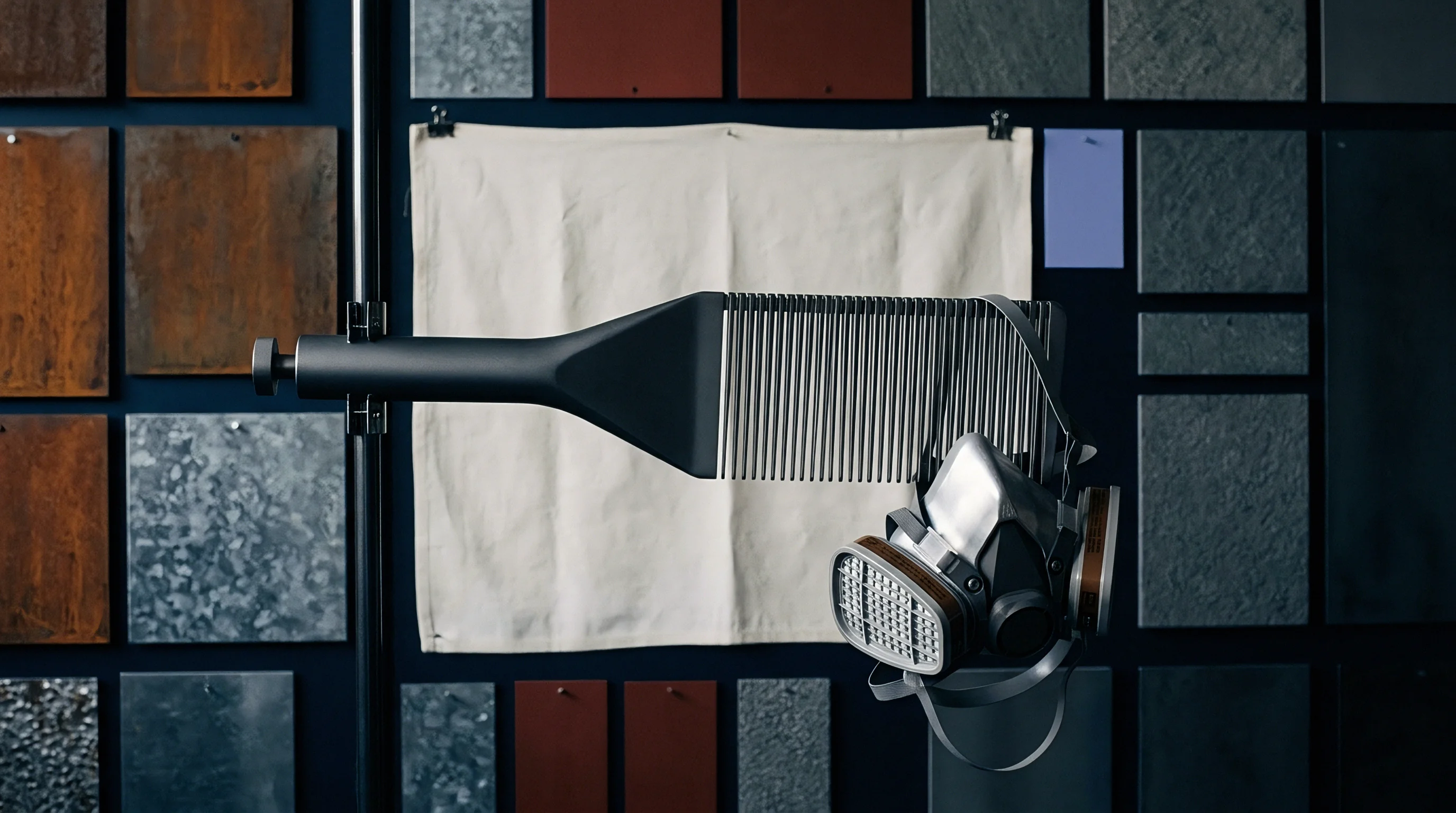
- Hackling Pin Abrasion ~ High-density pin combs catch misaligned bundles, snapping low-ductility fibres at existing kink sites.
- Enzymatic Matrix Stripping ~ Over-retting dissolves structural hemicelluloses, removing lateral support and permitting microfibrils to buckle into wavy profiles.
Managing scutching clearance and drum rotation speeds limits mechanical defect propagation across the secondary cell wall. Processors attempting to maximize throughput frequently adjust breaker roll pressure beyond recommended tolerances to process under-retted or thick-stemmed straw. This practice increases short tow percentage while degrading the ultimate spinning count capability of the surviving long line fibre.
Although scutching-induced kink bands are thought to relax naturally in wet spinning heating troughs, yarn break statistics prove that internal microfibril damage persists into the finished thread.
Count

Spinning Performance and Fine Yarn Limits
In models of the cost structure of wet-spun long-staple flax yarn, the yield differential between low-angle and high-angle lots accounts for nearly fifteen percent of raw material expenditure. Yarn spinning performance relies directly on elementary fibre tenacity, fineness, and bundle length distribution. In wet spinning operations, fine yarn production requires drawing fibre slivers down to thin cross-sections containing few elementary fibres.
At counts above Nm 50 (50 meters per gram), a yarn cross-section contains fewer than twenty-five elementary fibres. If individual fibre tenacity drops due to off-axis microfibril orientation or scutching dislocations, spinning tension exceeds bundle strength, causing frequent end-breaks on the ring frame.
Steep microfibril orientation yields high intrinsic fibre tenacity, permitting high draft ratios on roving and spinning frames without triggering drafting waves or sliver rupture. Fibre lots with low microfibrillar angles (six to eight degrees) sustain spinning speeds exceeding thirty meters per minute at high counts, whereas lots with broader orientation angles (ten to fourteen degrees) suffer end-breakage rates that force spinners to reduce spindle speed or drop to coarser yarn counts. Lower spinning frame efficiency directly inflates conversion costs per kilo of yarn produced.
Yarn spun from line flax with steep helical microfibrils achieves targeted tensile thresholds at significantly lower twist multipliers than tow-rich blends.
Twist insertion imparts radial cohesive pressure that binds staple fibres together, generating yarn tensile strength through inter-fibre friction. High-tenacity elementary fibres with optimal microfibril alignment achieve required yarn breaking strength at lower twist multipliers. Inserting less twist per meter increases ring frame front-roller output speed, reducing electrical energy consumption per kilogram of finished yarn.
Choosing steep-angle bast raw materials enables spinners to maximize frame productivity while producing soft, highly lustrous yarn demanded by high-end weaving markets.
| Fibre Lot Metric | High-Steepness Lot (MFA 6.5°) | Off-Axis Lot (MFA 11.2°) | Variance Impact |
|---|---|---|---|
| Hackling Combed Sliver Yield (%) | 68.5 | 54.2 | -14.3% Combed Yield |
| Maximum Spinnable Limit (Nm) | Nm 80 | Nm 36 | -55.0% Count Reach |
| Wet-Spun Yarn Tenacity at 42 Nm (cN/tex) | 38.4 | 24.1 | -37.2% Tenacity Loss |
| End Breaks per 1000 Spindle Hours | 18.2 | 64.5 | +254.4% Breakage Rate |
| Yarn Tensile Coefficient of Variation (%) | 9.8 | 16.4 | +67.3% Variance Increase |
| Net Landed Yarn Cost ($/kg) | 14.20 | 18.85 | +32.7% Cost Inflation |

Worked Yield Arithmetic and Landed Cost Metrics
The economic impact of secondary cell wall microfibrillar alignment manifests across hackling yields, combed sliver throughput, and wet-spinning conversion efficiency. The following comparison traces two fifty-ton lots of scutched long line flax imported into a wet spinning mill, evaluating net landed yarn costs based on measured MFA characteristics.
Consider Lot A, a high-grade European dew-retted line flax with a mean MFA of six-point-five degrees, and Lot B, a lower-grade off-axis lot with a mean MFA of eleven-point-two degrees. Both lots enter the mill at an initial raw fibre purchase price of four dollars and fifty cents per kilogram landed at the mill store.
Lot A achieves a hackling combed sliver yield of sixty-eight-point-five percent, yielding thirty-four thousand two hundred fifty kilograms of long line sliver suitable for high-count wet spinning. The residual thirty-one-point-five percent passes into tow processing, valued at one dollar and eighty cents per kilogram. Net long line fibre material cost for Lot A, after subtracting tow salvage value, equates to five dollars and seventy-four cents per kilogram of combed sliver.
Lot B achieves a lower hackling combed sliver yield of fifty-four-point-two percent due to high fibre breakage during combing, yielding twenty-seven thousand one hundred kilograms of long line sliver. The remaining forty-five-point-eight percent enters tow recovery at one dollar and eighty cents per kilogram. Net long line fibre material cost for Lot B, after tow subtraction, jumps to six dollars and seventy-eight cents per kilogram of combed sliver.
In the wet spinning room, Lot A spins comfortably to yarn count Nm 42 at a ring frame efficiency of ninety-four percent, registering eighteen-point-two end breaks per thousand spindle hours. Spindle speed operates at twenty-four meters per minute. Conversion cost from combed sliver to finished package lands at five dollars and fifty cents per kilogram, bringing total landed yarn cost for Lot A to eleven dollars and twenty-four cents per kilogram.
Lot B fails to sustain spinning frame stability at Nm 42, experiencing sixty-four-point-five end breaks per thousand spindle hours. To maintain continuous operation, mill management drops ring frame front-roller speed to seventeen meters per minute and increases twist insertion by fifteen percent. Frame efficiency drops to seventy-eight percent, driving conversion cost up to eight dollars and twenty cents per kilogram.
Total landed yarn cost for Lot B reaches fourteen dollars and ninety-eight cents per kilogram.
Spun yarn quality diverges significantly between the two streams. Lot A delivers a wet-spun yarn tenacity of thirty-eight-point-four centinewtons per tex with a tensile strength coefficient of variation of nine-point-eight percent. Lot B produces a yarn tenacity of twenty-four-point-one centinewtons per tex with a coefficient of variation of sixteen-point-four percent.
Air-jet weaving trials confirm that Lot A yarn runs on high-speed looms without stop-offs, whereas Lot B yarn requires sizing reinforcement and lower loom speeds, adding six cents per woven meter to downstream fabric finishing costs.
Hot water immersion inside the spinning trough softens matrix hemicelluloses at sixty degrees Celsius, enabling drawing rollers to slip elementary fibres past one another smoothly. When microfibrils possess steep inclination angles, the applied draft pulls elementary cell walls into uniform parallel alignment just before twisting. Off-axis microfibrils resist uniform orientation during drafting, creating localized fiber entanglements that emerge as thick yarn neps and slubs.
Selecting fibre lots based purely on visual length and color while ignoring microfibrillar orientation leads to severe yield losses in hackling, excessive ring frame end-breakage, and unrecoverable cost inflation per kilo of finished yarn.
Settlement

Specification Clauses and Quality Verification Protocols
Spinning mills incorporate microfibrillar angle maximums directly into raw material supply contracts to guarantee yarn tenacity thresholds. Standard trade specifications traditionally rely on indirect indicators like bundle breaking force, metric fibre count, and hand-classing color grades. These metrics fail to separate physical degradation caused by over-retting or scutching damage from intrinsic cellular orientation variations.
Adding precise cell wall structural limits into purchase agreements protects spinning mills against off-axis, low-tenacity fibre deliveries.
Raw flax purchasing agreements should include mandatory laboratory verification clauses referencing ISO 2370 for fibre fineness and wide-angle X-ray diffraction for microfibrillar angle characterization. A robust quality clause specifies maximum acceptable mean MFA values, maximum allowable orientation distribution variance, and maximum allowable dislocation band frequency per millimeter of long line fibre bundle.
When delivered fibre lots exceed contract MFA thresholds, automatic price adjustments or lot rejection criteria take effect. Technical textile applications requiring high composite reinforcement performance or high-tenacity weaving threads enforce non-negotiable threshold upper limits on S2 helical orientation angles.
- Helical Angle Threshold ~ Delivery lots must exhibit a mean S2 secondary cell wall microfibrillar angle not exceeding eight-point-five degrees as determined by wide-angle X-ray diffraction azimuthal scanning across a hundred elementary fibres per sample lot.
- Dislocation Density Cap ~ Dislocation band frequency must remain below five-point-zero kink zones per millimeter of elementary fibre under polarized light microscopy, ensuring scutching processing damage remains within acceptable operational boundaries.
- Tenacity Floor ~ Scutched long line fibre bundles must demonstrate a minimum breaking tenacity of forty-five-point-zero centinewtons per tex under ISO 3060 test conditions at sixty-five percent relative humidity.
- Humidity Re-Testing Rights ~ Buyer reserves the right to reject or re-price shipments failing XRD orientation metrics upon re-testing after forty-eight hours of climate equilibration at twenty-one degrees Celsius and sixty-five percent relative humidity.
Implementing rigorous cell wall structural criteria transforms flax fibre purchasing from an imprecise commodity trade into an engineered material specification. Mills establishing strict microfibril orientation controls secure stable wet spinning conversion rates, minimize ring frame end-breakage, and deliver uniform high-tenacity yarn to global textile markets.
Standard raw flax supply contract Addendum B specifies that if delivered line fibre lots exceed a mean S2 microfibrillar angle of nine-point-two degrees upon wide-angle X-ray diffraction verification, the mill retains the unconditional contractual right to reclassify the lot as tow-grade stock and apply a thirty-five percent purchase price deduction.