Correlating Vision System Bundle Metrics with Spinning Tension and Slippage
Correlating line-scan bundle area variance with drafting force prevents spinning tension surges, cutting wet-spun yarn breaks and loom downtime.


Camera
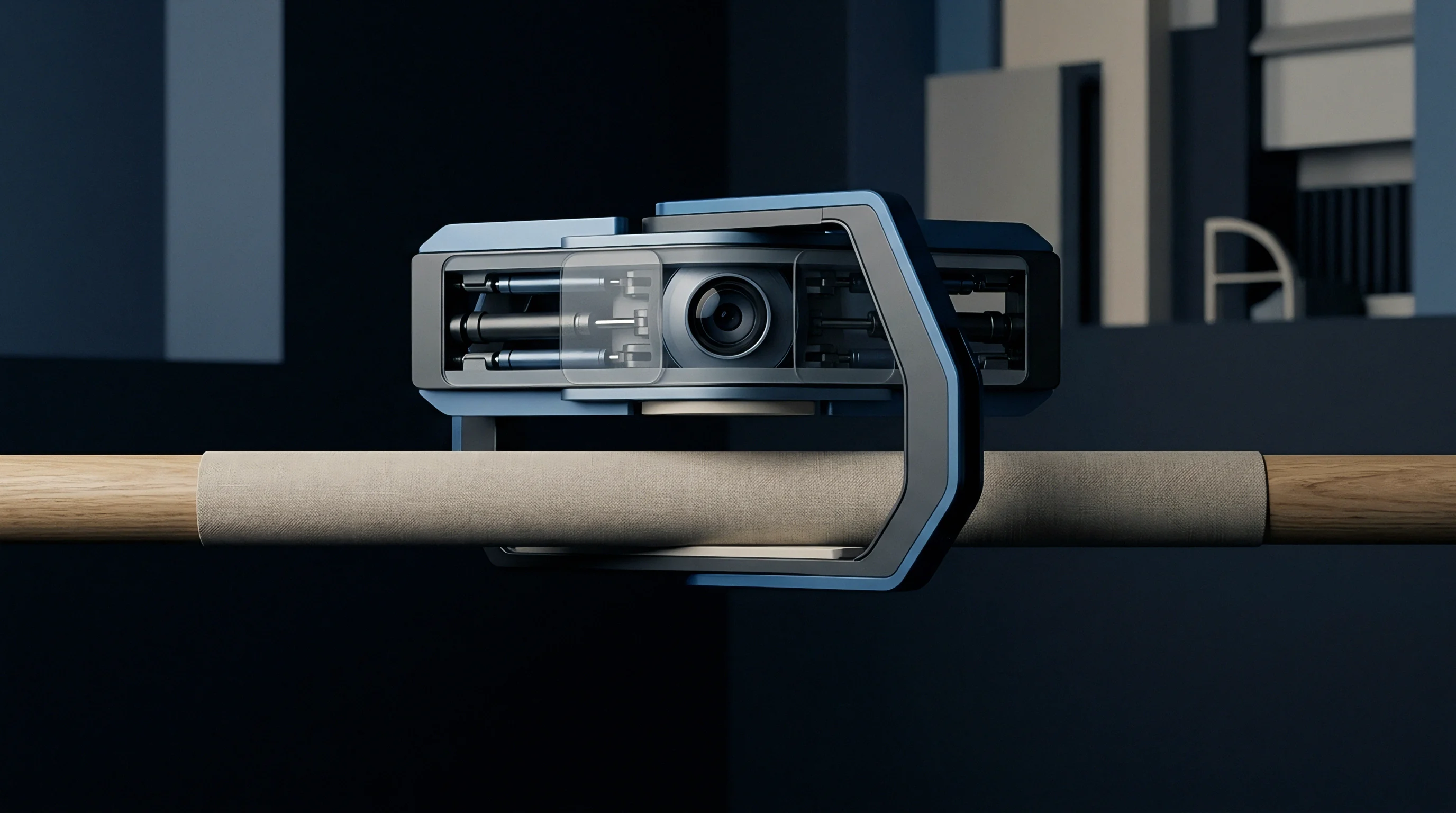
High-speed line-scan units inspect scutched flax bundles directly over the transfer apron. Across five hundred meters of incoming sliver, the optical array reads cross-sectional area, diameter variance, and shive contamination before drawing starts. Coarse bundles wider than eighty micrometers show up as dark mass anomalies, pointing to incomplete separation during hackling.
These dimensional reads feed the mass distribution algorithms running along the sliver length, allowing technicians to pair optical profiles with drafting force sensors and anticipate drawing resistance before mechanical nip rollers make contact.
The inspection units use calibrated telecentric lenses and monochromatic LED backlights running at six hundred and thirty nanometers. This lighting geometry strips out diffraction fringes around the bast filaments, keeping edge sharpness within two micrometers per pixel. Real-time vision processors sort incoming flax into width classes and log the perimeter-to-area ratio of each strand.
Bundles with irregular cross-sections generate higher boundary shear during subsequent drawing passes, and sliver uniformity indices from the camera arrays correlate directly with mechanical resistance in the front drafting zone.
Bundle silhouette irregularities predict drafting resistance before the sliver reaches the front roller.
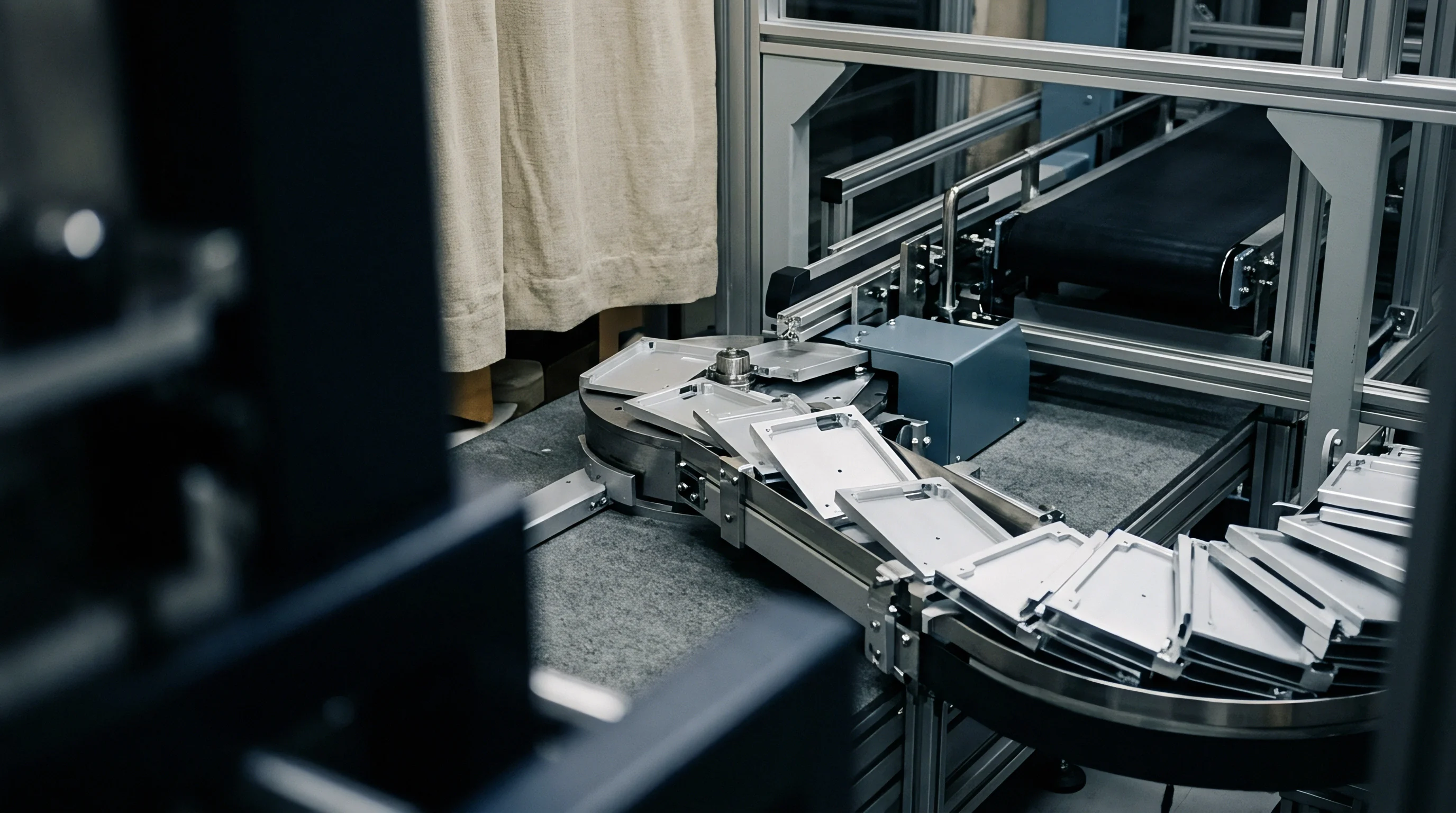
Sensor Placement and Optical Measurement Channels
Dual line arrays set perpendicular to the drafting axis record bundle width profiles every two tenths of a millimeter. Transmitted light profiles map the outer perimeter envelope, while high-angle darkfield illumination isolates woody core shives from technical flax fibers. Unprocessed shive particles reflect yellow light, whereas lignified bast walls scatter blue-shifted photons.
Vision software uses these distinct reflectance signatures to separate woody core fragments from usable fiber substance, logging shive frequency per kilogram of processed material.
- Projected Bundle Width determines the lateral envelope of flax filaments passing under the drafting nip, directly setting the required roller clamping force.
- Division Index quantifies the degree of technical bundle separation achieved during hackling, separating coarse bast ribbons from fine spinning filaments.
- Shive Defect Area isolates unretted woody cortex fragments that jam drafting flutes and initiate strand breakages during drawing passes.
- Transverse Mass Variation tracks millimeter-scale density fluctuations along the sliver length, pinpointing localized thick spots that cause drafting stall.
Optical data streams convert raw pixel counts into linear mass estimates in kilotex. Flax bundles are rarely round; their transverse geometry resembles polygonal ribbons with irregular lumen cavities. Orthogonal dual-camera setups capture the eccentricity of these ribbon profiles, preventing volume overestimation.
Cross-sectional area variance measured across fifty-meter sliver segments serves as an immediate leading indicator of drafting stability.

Projected Area Variations across Scutched Lots
Transverse cross-sections calculated from silhouette shadowgraphs jump erratically whenever unseparated cortical bark clings to the bast strand. Dew-retted flax from northern France shows narrow projected area distributions when field retting has progressed evenly across the swath. Under-retted lots harvested during dry autumns hold onto their pectin glues, yielding broad area spreads with long tails past one hundred micrometers.
Slivers with broad width variance slip unpredictably between drawing flutes, setting up drafting waves that undermine yarn count consistency.
Bundle diameter spread across a production lot largely governs spinning efficiency. Once the coefficient of variation for bundle diameter climbs past twenty-eight percent, standard drawing drafts cause severe bunching: front drafting rollers strip fine filaments out of the sliver matrix while coarse, pectin-bound ribbons lag behind the nip line until the sliver parts. Coarse ribbons then pack in ahead of the front fluted roller until friction drags an uncontrolled mass through the nip.
Natural growth variation makes fiber width spread unavoidable, but downstream gills cannot absorb high area deviations without machinery adjustment.

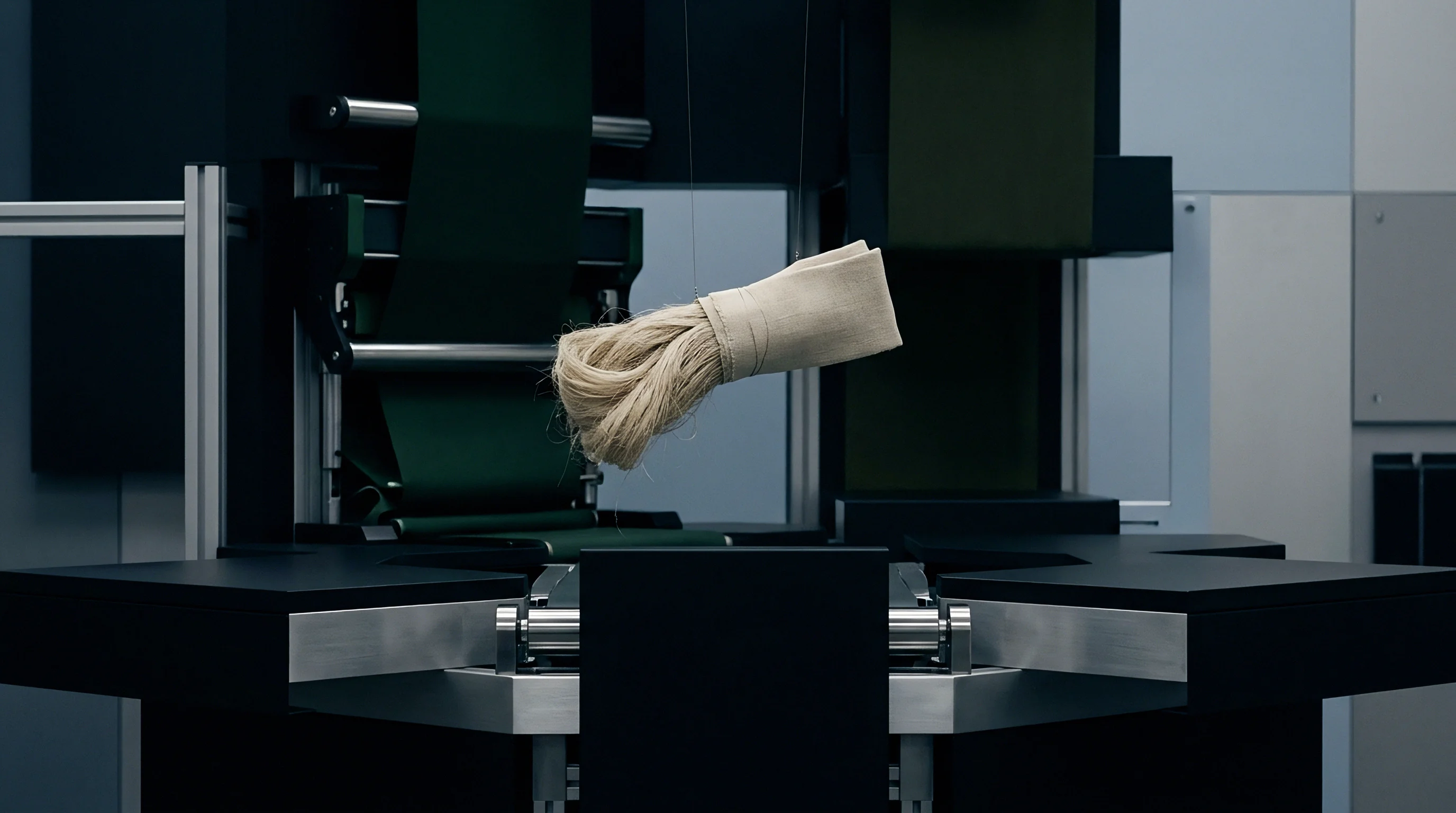
Draft
Nip rollers grip incoming sliver under pneumatic loads between four and seven bar. Fluted steel bottom cylinders work against synthetic rubber cots to pull bast strands into the draft field. Slippage develops as soon as bundle acceleration forces outstrip the frictional hold of the roller surface.
Flax fibers have higher transverse stiffness than cotton or synthetic staples and resist compression in the nip; insufficient clamping pressure allows thick bundles to push top rollers upward, briefly breaking control over adjacent fine filaments.
Drafting force climbs in step with bundle linear density and residual pectin content. On wet drawing frames, drawing force doubles when bundle division drops by thirty percent. High drafting forces induce slippage between the bottom fluted steel cylinder and the elastomeric cot, registering on tachometers as an instantaneous speed drop at the front delivery line.
Once slippage exceeds three percent of line speed, mass flow irregularities inject cyclic thick and thin spots into the roving.
A five percent increase in bundle diameter variance across a 20-kilo sliver raises drawing slippage by twelve percent at seven bar nip pressure.
Should Mill Operators Reject Low Cohesion Lots?
Deliveries with high perimeter-to-mass ratios create unstable conditions inside the gill frame. Fine technical fibers slide past one another without generating enough normal contact force, prompting draft breakdown at standard pin settings. Low-cohesion slivers draft ahead of the nip point, forming erratic necking zones within the faller bed.
Spinners adjust pin faller speed and bed density to hold these premature fiber shifts in check; otherwise, weak inter-bundle contact produces slubs and false drafting breaks that depress drawing yield.
Tenacity measurements across sliver bundles set the rejection threshold for incoming shipments. Running five hundred meters of sliver on an automated drawing bench identifies cohesion valleys where drafting forces collapse below ten Newtons per kilotex. Lots with cohesion drops spaced closer than fifty meters trigger roving run-outs on the spinning floor, forcing mill managers to weigh lower fiber purchase prices against the cost of machine downtime.
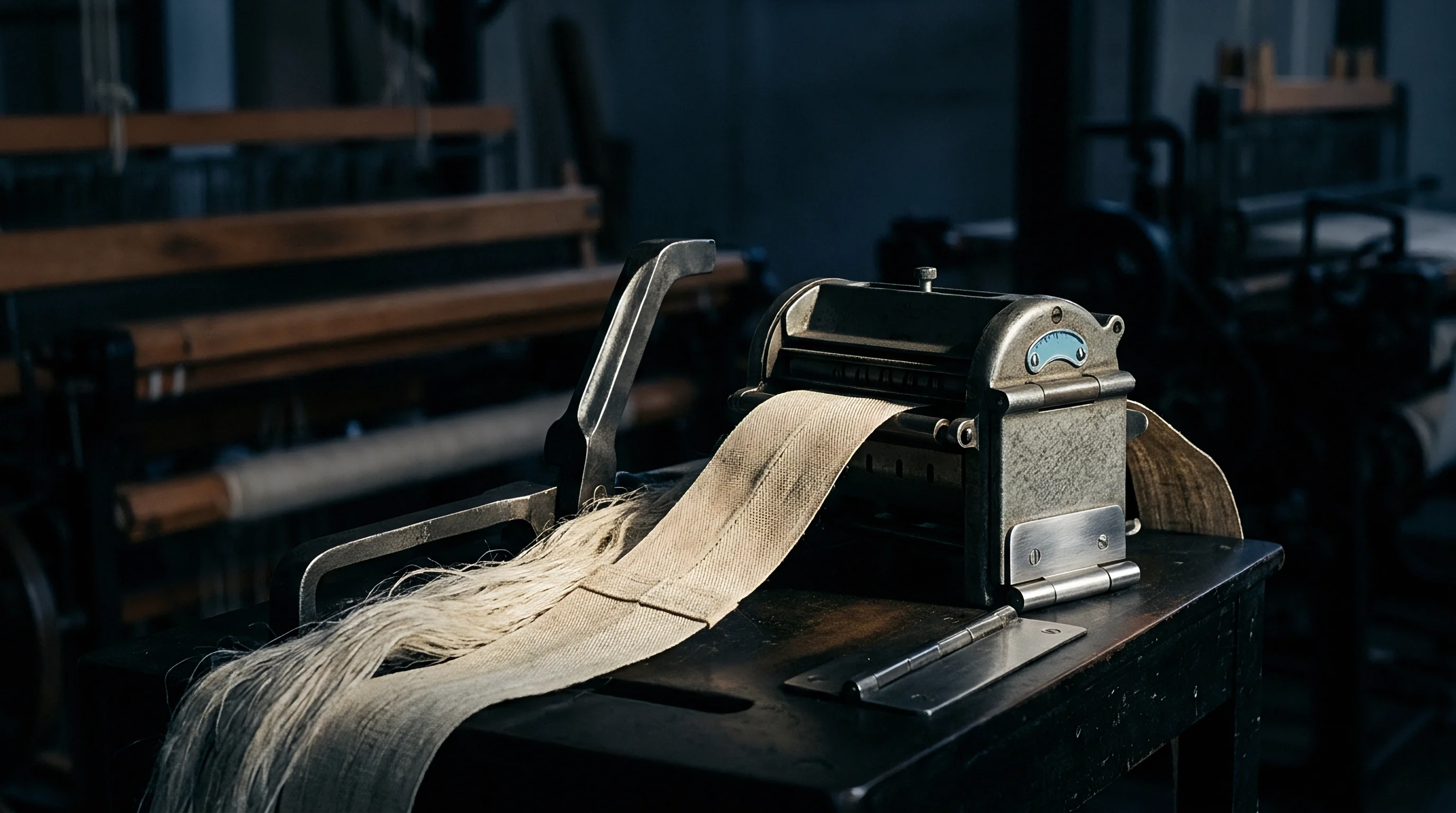
Velocity Differential and Clamping Zone Mechanics
Fluted steel cylinders operate at different surface speeds to draw bast strands apart. The ratio of delivery speed to feed speed sets the nominal draft ratio, which runs between eight and fifteen on standard flax gill frames. Slippage alters this mechanical ratio, turning a theoretical draft of ten into an effective draft of eight point five.
Vision metrics anticipate this loss by tracking the mass profile entering the back rollers: heavy sliver segments deflect the cot, reducing the contact arc and letting bast bundles slide against the revolving steel flutes.
- Pneumatic Pressure Verification checks cylinder loading across the full machine width, correcting uneven cot wear that permits localized fiber slip.
- Roller Cot Shore Durometer Testing measures rubber hardness between eighty and eighty-five Shore A, preventing excessive indentation by thick bast bundles.
- Pin Faller Alignment Calibration adjusts the clearance between faller pins and bottom rollers to twelve millimeters, containing stray fibers during high draft.
- Optical Tachometer Reconciliation registers differences between motor drive frequencies and roller surface velocities during heavy sliver transit.
Drawing trials establish the quantitative link between optical bundle metrics and drafting mechanics. Table 1 compiles data from pilot runs using water-retted Courtrai flax and dew-retted Baltic tow lots, showing how vision-derived metrics track mechanical resistance and slippage indices.
| Fiber Grade Classification | Mean Optical Width (um) | Width Variation (CV%) | Mean Drafting Force (N/ktex) | Measured Nip Slip (%) | Drafting Stability Index |
|---|---|---|---|---|---|
| Courtrai Line Flax 1st Hackled | 42.4 | 14.2 | 28.5 | 0.8 | 0.96 |
| Normandy Line Flax Dew-Retted | 51.8 | 18.6 | 34.2 | 1.4 | 0.91 |
| Baltic Dew-Retted Medium Line | 64.3 | 24.1 | 46.8 | 2.9 | 0.82 |
| Heilongjiang Scutched Flax | 72.1 | 29.5 | 58.4 | 4.6 | 0.71 |
| Machine Tow Coarse Blend | 88.6 | 36.8 | 74.2 | 7.8 | 0.58 |
Clamping load corrects slippage. Operators adjust pneumatic cylinder regulators to maintain steady frictional grip across shifting sliver profiles. Excessive loading crushes brittle cell walls and produces micro-fractures that cut into final yarn tenacity, so balancing nip pressure against optical width metrics preserves drawing control without disturbing cellulose crystalline alignment.
Thick bundles always drag fine filaments forward out of turn when pin beds run loose.

Drag
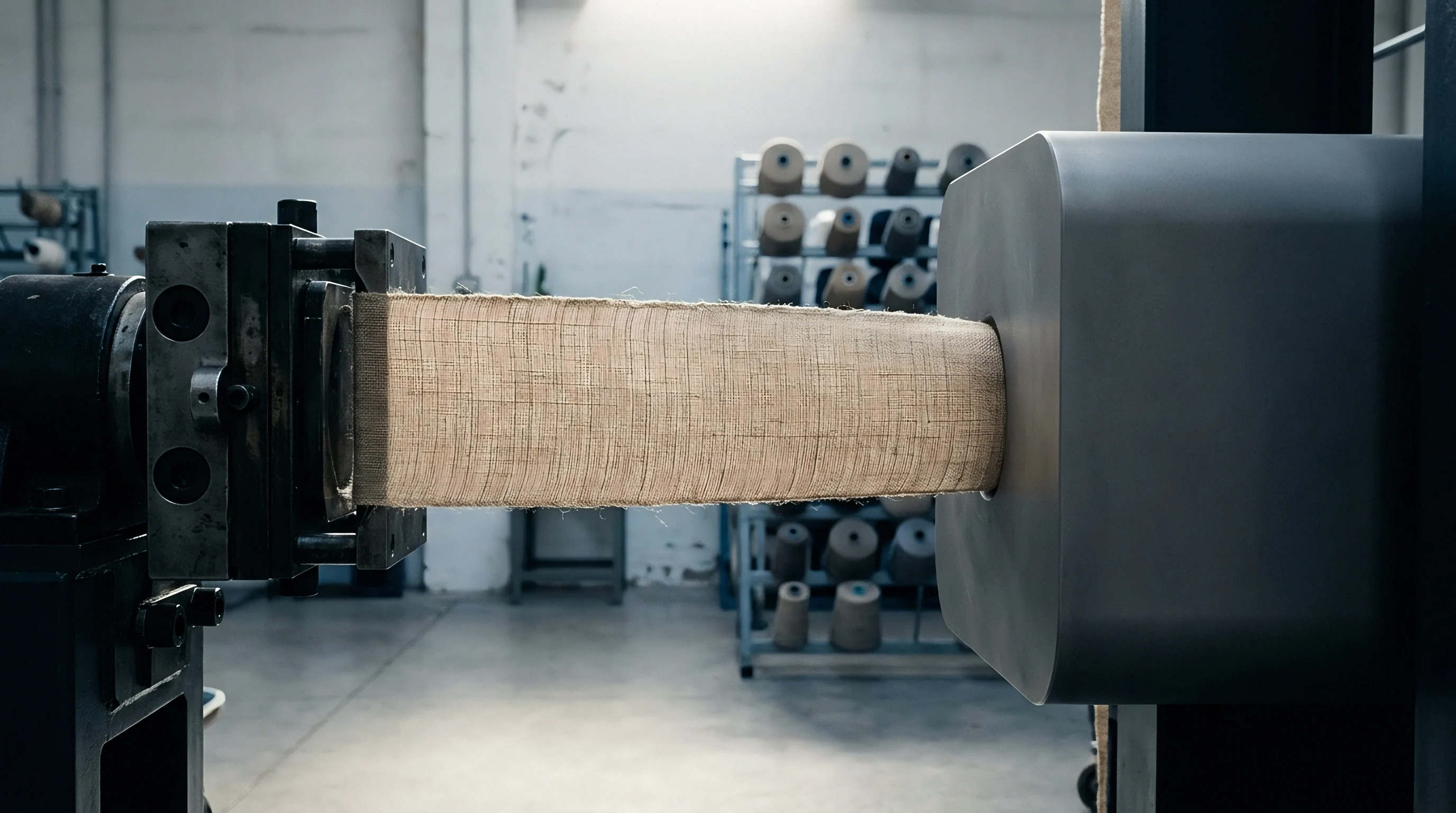
Inter-fiber drag dictates whether filaments slide smoothly past each other or tear apart. In dry drawing, that resistance depends on the surface roughness of unretted bark and the application rate of spinning oil. In wet spinning, sliver roving passes through a water bath at seventy degrees Celsius before reaching the front draft rollers.
The hot bath softens middle lamella pectins, turning rigid bundles into flexible technical filaments that yield under lower shear. If the bath temperature drops or trough dwell time falls short, drag rises abruptly and stalls the draft.
The hydrodynamic shear of wet flax pectin removal mirrors maritime hemp cordage swelling and naval tarring mechanics documented in 19th-century dockyards, where plant polymers underwent controlled water immersion to regulate fiber flexibility under marine loads. Inside the wet spinning trough, water dissolves residual calcium pectate bridges bonding technical bundles together. Incomplete pectin softening maintains high bundle-to-bundle friction.
When unsoftened bundles hit the front draft zone, drawing resistance spikes past the rupture strength of individual fibers, snapping thin spots first.
Specification under ISO 2370 rejects shipments exceeding a thirty percent coefficient of variation in bundle linear density.

Inter-Fiber Friction and Pectin Adhesion Thresholds
Residual hemicellulose gums bonding the technical bundles govern the shear load a roving can endure before failing. Rheometer testing on wet flax rovings shows a sharp decline in cohesion between fifty-five and sixty-five degrees Celsius. Below that range, pectin holds bundles rigid, forcing drafting rolls to overcome heavy resistance.
Above seventy-five degrees Celsius, excessive pectin breakdown weakens the strand to the point of complete draft washout, where the sliver pulls apart under normal feeding tension.
- Middle Lamella Plasticization occurs between sixty and seventy degrees Celsius, loosening galacturonan polymer chains without destroying bundle identity.
- Boundary Lubrication Action delivered by emulsified spinning oils lowers dry kinetic friction coefficients from zero point forty-five to zero point twenty-two.
- Pin Faller Shear Resistance prevents uncontrolled fiber cluster acceleration during mechanical pin extraction cycles.
- Capillary Liquid Binding creates cohesive liquid bridges inside wet rovings, stabilizing the strand geometry between drafting nips.
Vision metrics gauge these surface traits indirectly by tracking fraying and edge roughness. Bundles carrying heavy surface pectin show smooth, unbroken outer boundaries on camera. Well-retted and hackled bundles display fibrillated margins with projecting elementary fibrils that interlock with neighboring strands, raising frictional drag in dry passes and preventing premature slippage through intermediate drawing.

Slippage Detection through Transient Envelope Traces
High-frequency displacement gauges paired with optical width sensors track instantaneous mass transit past the delivery roller. During slip events, optical sensors record a brief dip in delivered mass, followed by a surge as the delayed cluster clears the nip. Matching these optical surges against front-roller drive torque isolates specific slippage incidents.
Most slip events last between fifteen and forty milliseconds, leaving short-wave mass faults that slip right past standard coarse yarn clearers.
The exact slip percentage occurring in the wet-spinning trough apron zone during high-draft runs ~ placed by mill measurements between three point five and eight point two percent ~ remains difficult to isolate. Water lubrication and liquid boundary layer drag shift inter-bundle shear in ways optical sensors cannot read clearly through the fluid stream. Buyers counter that uncertainty by writing a conservative five percent draft back-off margin into wet-spinning contracts to avoid drafting drift.
Whether multi-spectral imaging methods can penetrate hot water troughs to resolve individual elementary fiber slippage in real time remains untested on production frames.


Surge
Tensile loads spike whenever an irregular bundle cluster passes the delivery roller. The spinning triangle, located right below the front roller nip, absorbs these tension jumps as twist enters the drafted ribbon. Coarse bundles with unseparated technical filaments resist twist insertion, skewing the apex of the triangle away from the center line and concentrating stress onto outer elementary fibers.
These edge breaks propagate across the strand, driving instantaneous spinning forces from a baseline of fifteen centinewtons to peaks above fifty centinewtons.
Twist contraction turns the flat sliver into a solid yarn structure, generating radial pressure that locks fibers together. When an optical line-scan unit catches a thirty percent width jump in incoming bundles, downstream tension sensors record an immediate spike in the balloon zone. High tension peaks strain the yarn path across the delivery roll, the pigtail guide, and the ring traveler; if the surge exceeds the yield strength of the partially twisted strand, the end breaks at the ring rail.
Ring spinning frames convert sliver mass irregularities into yarn breaks at the twisting triangle.

Will Drafting Force Spikes Exceed Tenacity Limits?
Tensile stresses along the yarn path often double when irregular sliver feeds the wet ring frame. Flax filaments have a high tensile modulus and very low elongation at break, typically fracturing between one point five and two point five percent extension. Unlike cotton or synthetics, which yield and absorb transient shocks through plastic elongation, flax cannot give under load.
When drafting force spikes exceed bundle tenacity, the yarn snaps cleanly at the twisting triangle.
Table 2 illustrates the dynamic consequences of bundle width variations across three common wet-spun flax yarn counts. Data reflect observations on a ninety-six-spindle ring frame operating at seven thousand revolutions per minute with standard dew-retted French line flax.
| Target Yarn Count (Metric Number) | Bundle Width CV% | Mean Base Tension (cN) | Peak Surge Tension (cN) | End Breaks Per 1000 Spindle Hours | Traveler Life Expectancy (Hours) |
|---|---|---|---|---|---|
| Nm 24 (41.6 tex) | 15.2 | 22.4 | 38.6 | 18.5 | 120 |
| Nm 24 (41.6 tex) | 28.4 | 24.8 | 62.1 | 54.2 | 68 |
| Nm 39 (25.6 tex) | 14.8 | 18.2 | 32.4 | 24.0 | 96 |
| Nm 39 (25.6 tex) | 27.9 | 19.6 | 58.7 | 78.4 | 44 |
| Nm 68 (14.7 tex) | 13.6 | 14.5 | 26.8 | 32.6 | 72 |
| Nm 68 (14.7 tex) | 26.2 | 15.8 | 51.3 | 112.0 | 28 |
Tension spikes track mass variations closely. A fine count like metric number sixty-eight carries an average of twenty-two elementary fibers in cross-section. When a coarse cluster holding twelve unseparated filaments enters the draft zone, it claims over half the cross-sectional quota, leaving neighboring segments starved.
The thin section lacks the cellulose volume to withstand traveler drag, and the yarn parts immediately.

Balloon Motion and Traveler Friction Cycles
Centripetal acceleration throws wet flax outward between the pigtail guide and the spinning ring. The resulting yarn balloon balances air drag, centrifugal throw, and traveler friction against the ring flange. Mass surges entering the balloon increase linear density, widening the balloon envelope, raising air resistance, and forcing traveler friction upward until the traveler overheats and wears, producing rough surfaces that abrade passing flax filaments.
Line speed compounds these shocks. At spindle speeds over eight thousand revolutions per minute, traveler velocities pass twenty-five meters per second along the steel ring circumference. Sudden tension spikes cock the traveler against the ring web, inducing micro-welds between the bronze traveler alloy and the hardened steel ring.
Rapid wear heats the assembly, scorching residual flax wax and leaving charred debris along the yarn surface.
Bypassing vision-based bundle gating lets uncontrolled mass surges hit the ring frame, driving up spindle breaks, generating excessive roving waste, and wearing ring travelers out in less than half their normal operating life.


Penalty
End breaks run up labor costs and drag down ring frame efficiency across the spinning shed. Wet-spinning frames operating above fifty breaks per thousand spindle hours require steady intervention from piecers. Hand splices leave bulky joints that jam loom heald wires during weaving, prompting automatic winders to cut them out and replace them with mechanical splices that introduce fresh knots or clearings into delivery bobbins.
Every cut reduces bobbin mass and generates yarn waste.
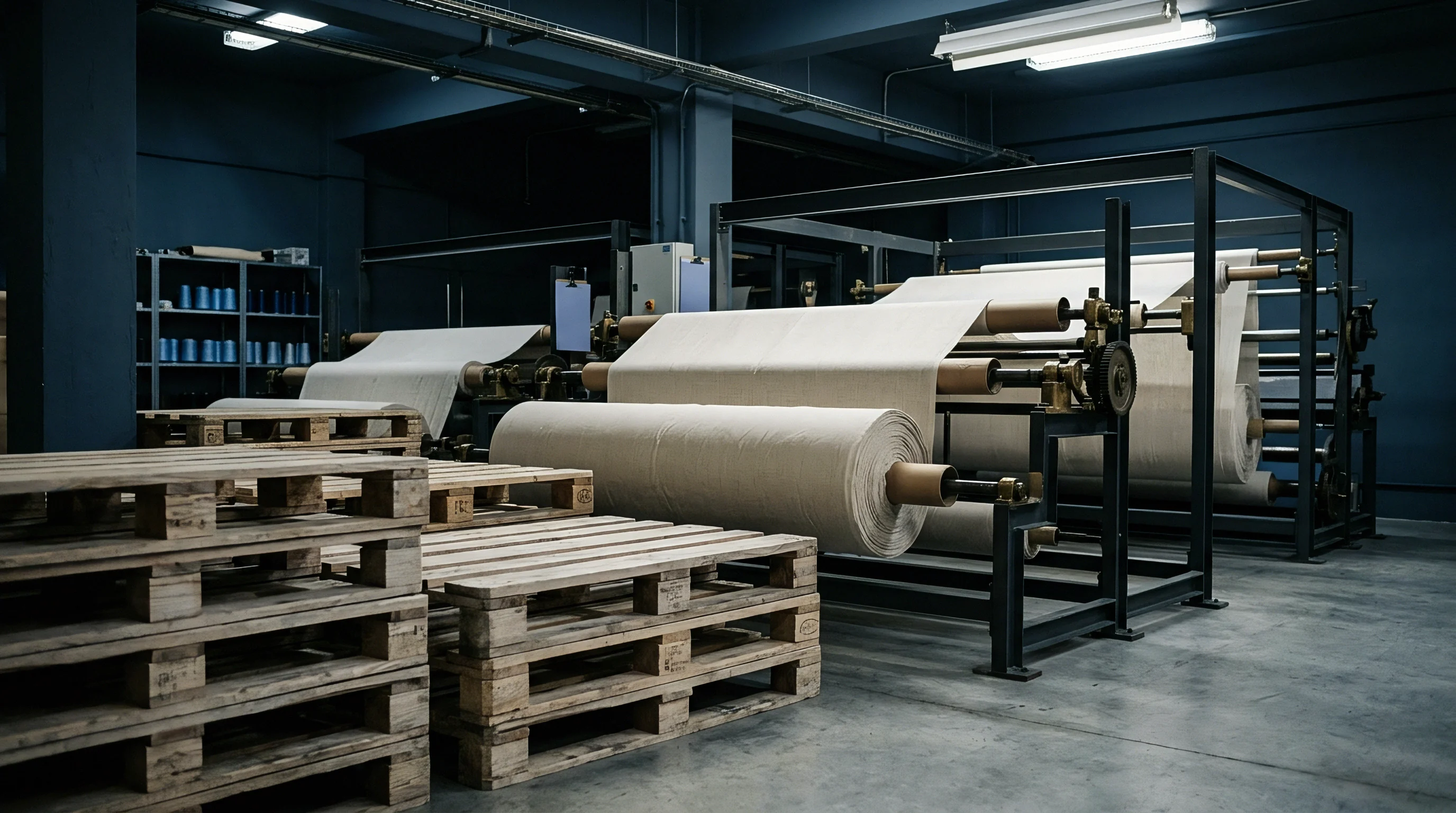
Uncontrolled drafting slippage leaves long-wave count variations in finished linen yarn. When front rollers slip over coarse bast bundles, the produced strand runs heavy against the specified metric count for several meters. Weaving mills running linen yarns with high count variation face sharp warp tension swings on high-speed rapier looms: heavy segments cause warp shedding and mispicks, while thin segments part under beat-up stress, stopping the loom and leaving visible start marks in the cloth.
Financial Fallout on Wet-Spun Linen Looms
Loom stoppages from slubs or thin spots add weaver intervention time to every shift. Modern rapier looms running at four hundred and fifty picks per minute require linen warp yarns that run below one warp stop per hundred thousand picks. Wet-spun yarns produced from slivers with broad vision area variance average five to eight stops per hundred thousand picks, dropping weaver allocation from eighteen looms per operator to fewer than eight and inflating conversion costs.
Table 3 tracks cost additions per finished meter of plain weave linen cloth produced on two-hundred-centimeter wide rapier looms at three hundred grams per linear meter, comparing standard vision-gated line flax against unmonitored lots.
| Cost Component Description | Vision-Screened Lot (CV 14.8%) | Standard Lot (CV 21.2%) | High-Variation Lot (CV 27.9%) |
|---|---|---|---|
| Base Fiber Cost Landed (EUR) | 245.00 | 228.00 | 210.00 |
| Spinning Waste And Reject Loss (EUR) | 18.40 | 31.20 | 54.60 |
| Winder Clearer Cut Remediation (EUR) | 8.60 | 16.40 | 28.20 |
| Loom Stoppage Labor Overhead (EUR) | 12.50 | 28.00 | 64.50 |
| Mending And Grading Demotions (EUR) | 6.20 | 18.50 | 42.00 |
| Net Finished Fabric Cost Per Metre (EUR) | 2.91 | 3.22 | 3.99 |
Fabric woven from unstable yarn shows surface banding and patchy translucency, dropping piece goods from first to second quality. Wholesale discounts on second-quality European linen range between fifteen and thirty percent, erasing whatever margin was gained by buying cheaper, under-hackled scutched lots.
Commercial Settlement Terms for Count Deviation
Contracts for wet-spun yarn specify tight metric number tolerances across conditioned delivery lots. When drafting slippage creates systematic mass variations, yarn lots miss contractual count limits set under standard trade agreements. Contracts enforce price penalties once delivered yarn count wanders more than two point five percent from specification on conditioned bobbins, and broader variations trigger full lot rejection that leaves non-conforming cones stranded in port warehouses.
Buyers protect weaving yields by inserting terms where any lot showing a bundle width coefficient of variation over twenty-two percent under ISO 2370 optical testing incurs an automatic deduction of seventy eurocents per kilogram, or gives the buyer the right to cancel delivery without supplier recourse.