Microbial Decomposition
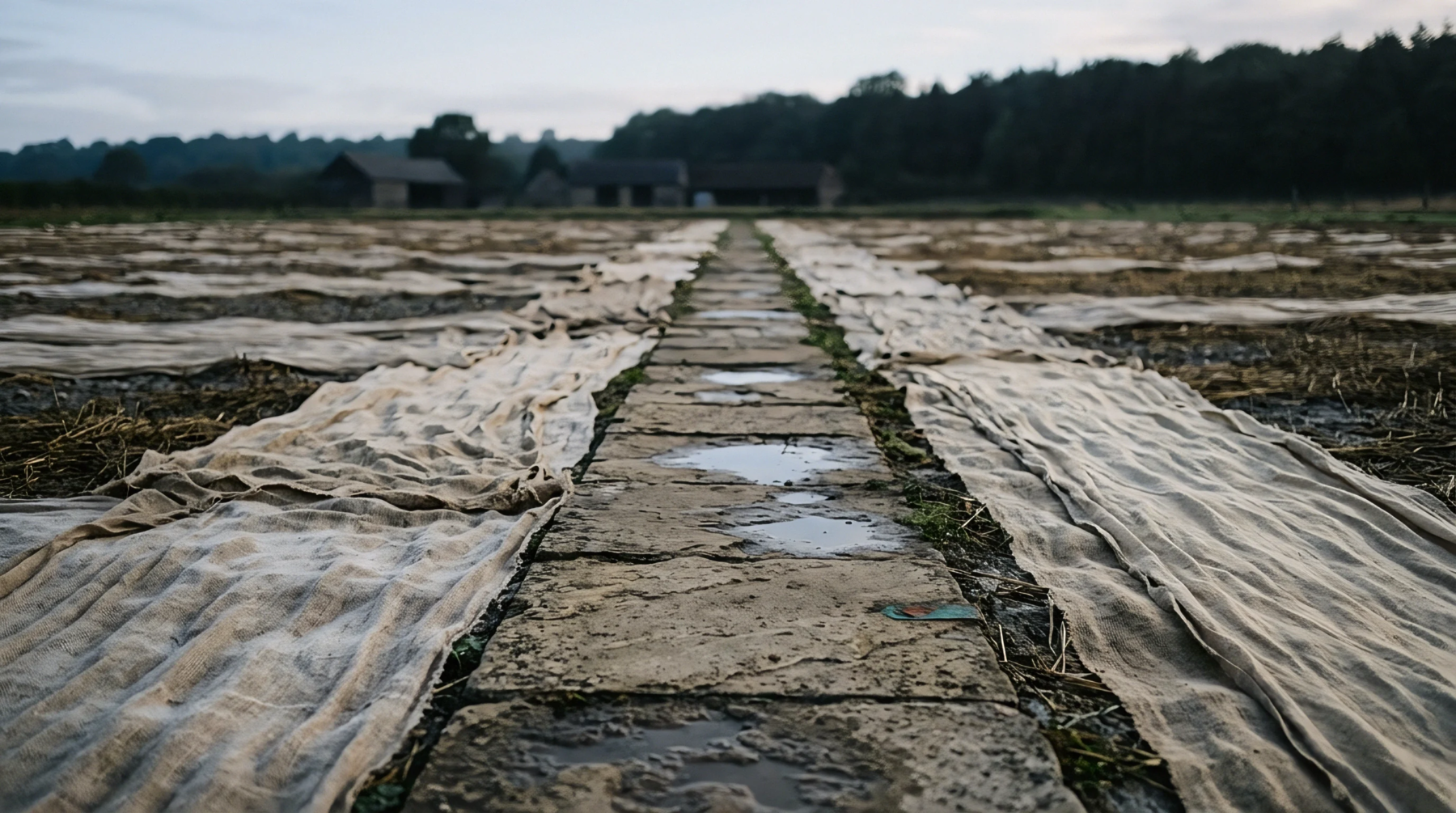
Natural biological breakdown defines dew-retted material as flax straw left upon fields where moisture and fungi dissolve pectin bonds holding the bast fibres to the woody core. Rainfall and nocturnal condensation stimulate indigenous field fungi that produce enzymes targeting the plant cellular matrix. Processing parameters depend upon ambient humidity and temperature during the exposure window, governing how completely microorganisms soften the stem without degrading the cellulose.
Agricultural producers manage turning schedules across the stubble to ensure uniform microbial action throughout the layer. Mill intake inspectors assess this biological processing stage by measuring tensile strength and residual gum content before the harvest moves to mechanical breaking lines.
Cellular Transformation
Fungal action alters the internal stalk chemistry by consuming non-fibrous binding agents until the epidermis peels away cleanly under mechanical force. Bacterial flora colonize the damp outer layers alongside fungi, accelerating the softening of cortical tissues during extended field exposure. Chemical composition shifts from green plant matter containing high carbohydrate levels to a fibrous matrix dominated by structural polysaccharides.
Workers monitor stem coloration changes from golden yellow to weathered grey as an indicator of proper bacterial activity. Moisture levels within the stalks dictate the speed of enzymatic breakdown, requiring immediate baling once the target degradation threshold is reached to prevent structural rot.
Grading Protocol
Technical evaluation categorizes the harvested output within the production workflow according to cleanliness and residual shives attached to the extracted strands. Spinning mills inspect batch uniformity through sample combings that reveal preparation quality prior to carding and drafting. Buyer acceptance criteria establish strict limits on residual pectin content to guarantee smooth passage through high speed drawing frames.
Laboratory technicians record fineness measurements on inspection certificates that accompany the material to export packing stations. Standardized assessment procedures separate raw botanical supply from fully processed yarn, establishing the baseline quality index for subsequent textile manufacturing.