Gravimetric Linear Density Testing Methods for Line Flax Bundle Selection
Gravimetric cut-and-weigh bundle testing under ISO 2370 defines line flax linear density in tex, controlling hackling yield and wet-spinning count limits.


Bench
Fibre testing laboratories rely on gravimetric section weighing to determine the mass per unit length of hackled bast strands. Technical flax fibres do not exist as single cylindrical filaments. They grow as composite bundle structures bonded by inter-cellular pectins within the stem rind.
Measuring flax fineness using projection microscopy or optical laser scans introduces severe errors because bast bundle cross-sections present non-circular, multi-lobed, highly irregular geometries. Gravimetric testing isolates true mass distribution by cutting aligned fiber bundles to precise lengths and measuring dry mass on micro-analytical balances.
Line flax selection hinges on mass profiling. Optical diameter measurements fail on flat ribbons. Direct gravimetric assessment calculates bundle linear density expressed in tex (grams per kilometer) or decitex (dtex).
Evaluating hackled line flax via gravimetric cut-and-weigh protocols enables yarn spinners to categorize raw fiber lots according to their ultimate spinning limit before material reaches the hackling shop or wet-spinning frame. Fine line flax bundles ranging from 15 tex to 25 tex yield fine, even yarns suitable for high-density apparel weaves. Coarse bundles exceeding 45 tex generate uneven slivers and limit spinning capacity to heavy household or industrial counts.

Gravimetric Mass Profiling over Optical Diameter
Bast fibre bundles possess non-circular, irregular polygon cross-sections that render projection microscopy and laser scanning diameter instruments inaccurate. An optical scan measures the maximum visible transverse axis, overestimating the effective volume of ribbon-shaped strands. Gravimetric testing eliminates geometric assumptions by establishing a direct relationship between mass and length.
Cutting a bundle sample to a precise length yields a sample volume whose mass reflects total cellulose and pectin content regardless of cross-sectional shape.
Precision balances used in gravimetric determinations report weights to within 0.001 milligrams. Evaluating thirty to fifty cut bundles per sample lot produces a statistically valid mean linear density and highlights internal lot variance. Fiber classers select line flax based on both the average tex value and the width of the density distribution curve.
Narrow distribution curves indicate uniform bundle splitting during retting and scutching, which prevents draft zone jams during roving preparation.
Atmospheric Equilibrium and Moisture Regain Standardisation
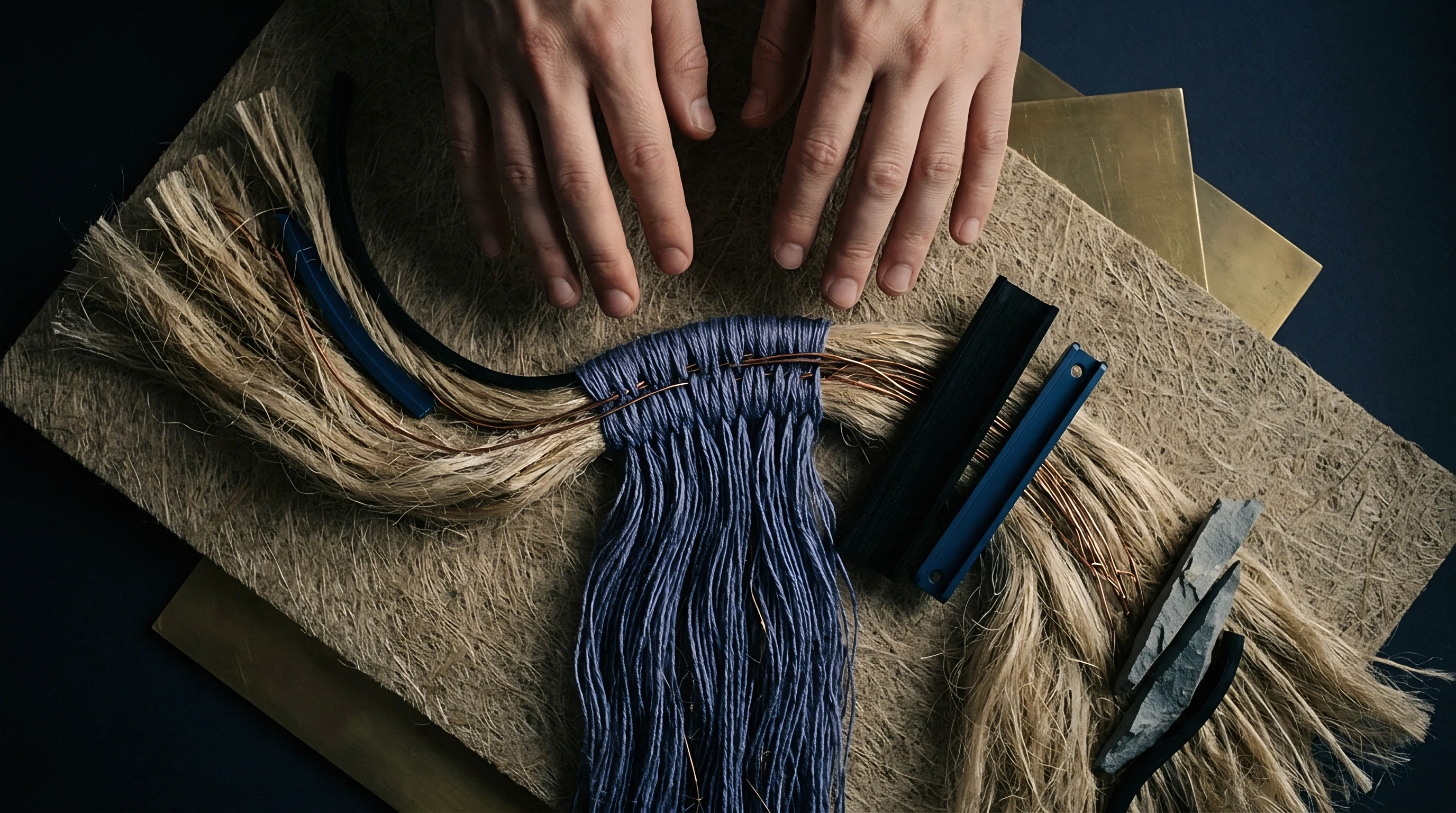
Flax absorbs ambient water vapor up to twelve percent of its dry mass under standard testing environments. Moisture content shifts measured mass without altering fiber structure. Gravimetric test protocols enforce rigorous atmospheric conditioning inside testing chambers maintained at 20°C (± 2°C) temperature and 65% (± 4%) relative humidity according to ISO 139 standards.
Specimens remain exposed to this atmosphere for a minimum of twenty-four hours to reach moisture equilibrium before cutting and weighing.
Alternative laboratory workflows dry fiber specimens completely inside ventilated ovens at 105°C to determine bone-dry mass. Standard moisture regain percentages get applied mathematically to bone-dry values to establish commercial linear density. Standardized moisture correction guarantees that fiber lots evaluated in humid coastal retting locations match specifications verified at dry inland spinning mills.
Failing to account for moisture regain skews linear density calculations by up to eight percent, misrepresenting coarse stricks as fine line fiber.
Standard conditioning of line flax specimens at 20°C and 65% relative humidity for 24 hours eliminates moisture mass errors prior to gravimetric weighing.
Selecting fiber lots without verifying gravimetric linear density leads to unresolvable end-breakage spikes on wet-spinning frames and forces mills to adjust draft ratios downward, increasing production costs per meter.

Shear
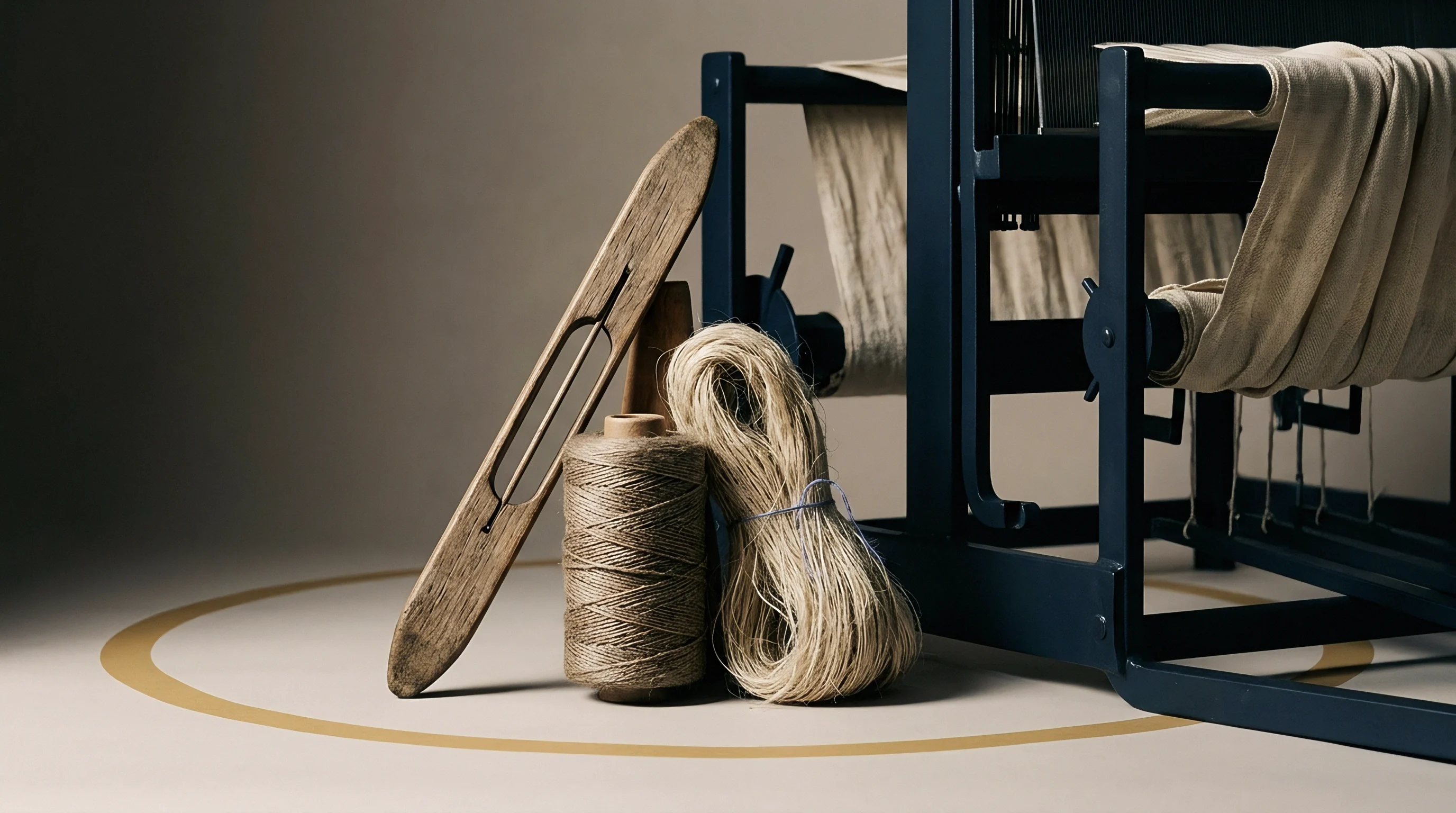
Preparing line flax specimens demands razor-sharp cutting tools that isolate precise fiber lengths without disturbing internal bundle alignment. Specimen preparation transforms raw stricks into clean, parallel fiber beds. Technical flax strands exhibit tapering along their length, running thicker near the root end and finer toward the tip.
Gravimetric sampling procedures specify mid-strand sectioning to capture representative bundle linear density, avoiding the structural anomalies of root and top ends.
Cut Length Selection and Boundary Effects
Specimen length choice alters the observed variation in linear density measurements. Shorter cut lengths, such as 10 mm or 20 mm, isolate local transverse bundle thickness and capture micro-variations caused by pectin node accumulation. Longer cut lengths, such as 50 mm or 100 mm, average out local thickness spikes, providing a macro-level linear density figure representative of draft behavior on spinning frames.
Fiber testing standards specify cut length selection based on the target yarn count regime.
| Fiber Classification | Processing State | Cut Length (mm) | Mean Linear Density (tex) | Linear Density CV (%) | Spinnable Limit (Nm) |
|---|---|---|---|---|---|
| Water-Retted Premium Line | Hackled Stricks | 10 | 18.4 | 14.2 | Nm 80 |
| Water-Retted Premium Line | Hackled Stricks | 50 | 19.1 | 8.6 | Nm 80 |
| Dew-Retted Standard Line | Scutched Long Flax | 10 | 28.5 | 21.3 | Nm 40 |
| Dew-Retted Standard Line | Scutched Long Flax | 50 | 29.8 | 12.4 | Nm 40 |
| Combed Flax Tow | Machine Carded | 20 | 42.1 | 28.7 | Nm 26 |
| Enzyme-Cottonized Flax | Stapled Slivers | 10 | 4.2 | 18.9 | Nm 50 (Dry Blended) |
Selecting 50 mm cut lengths reduces boundary cutting artifacts. Blades must cleanly sever bundle ends without pulling individual filaments out of the matrix bed. Pulling filaments creates false low-mass readings by truncating bundle counts within the weighed section.

Precision Cutting Mechanics and Fiber Clamp Assemblies
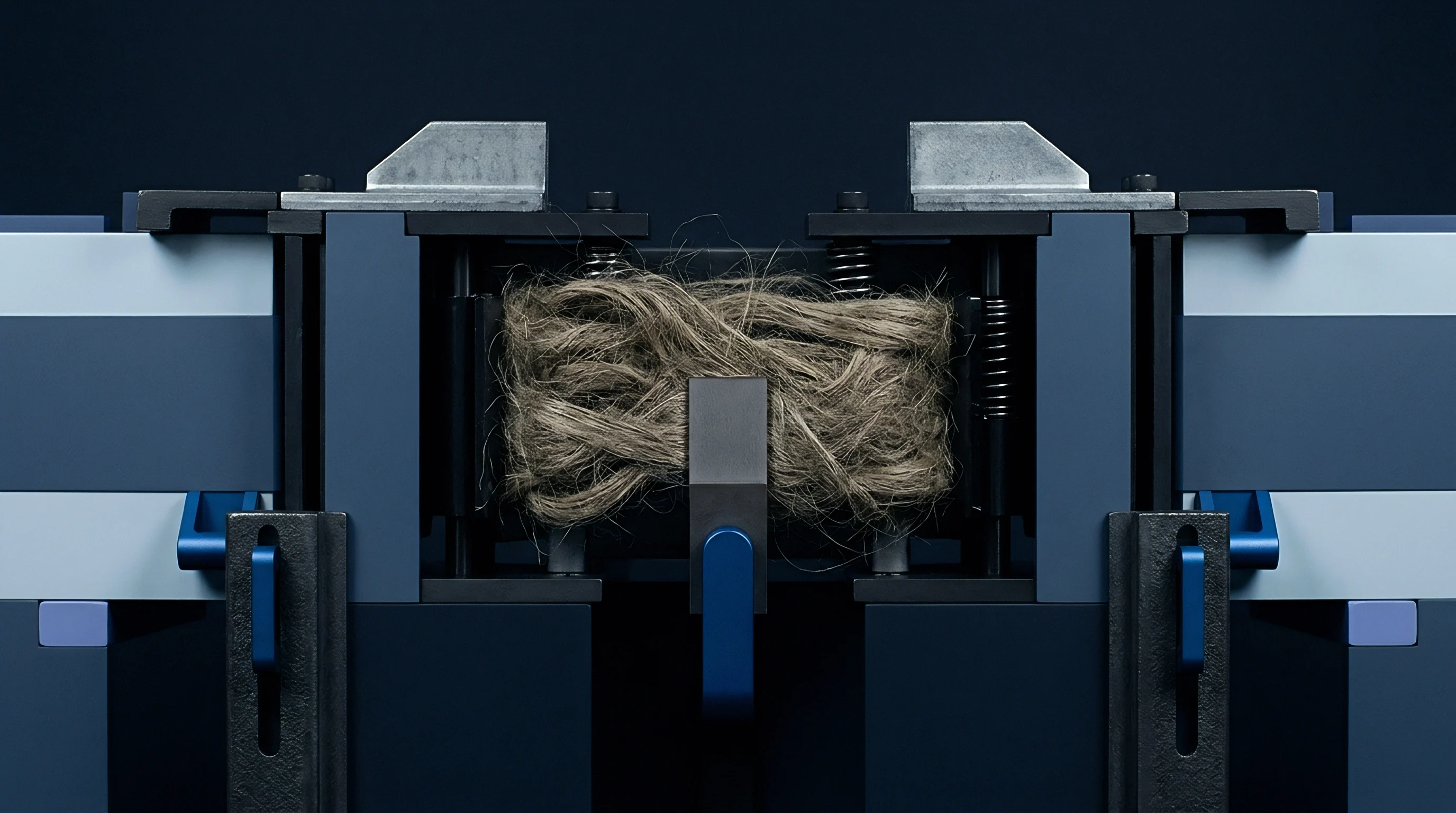
Hardened tungsten blades mounted in dual-stage clamping frames prevent individual filaments from sliding during sectioning. Clamping pressure must hold the fiber array firmly across its width without crushing hollow lumen cavities. Crushing fiber lumens expels trapped air, altering structural bundle density when volumetric cross-checks occur alongside gravimetric weighing.
Clean cuts prevent bundle fraying.
The specimen preparation sequence follows precise mechanical controls to guarantee repeatable gravimetric test specimens across diverse fiber lots.
- Select five representative long flax stricks at random from the core of the sampling bale.
- Comb selected stricks hand-wise through a laboratory pin comb to remove loose shive, dust, and unattached short tow fibers.
- Align middle sections of combed stricks parallel on a velvet-lined mounting board, keeping fiber direction uniform.
- Lock the aligned fiber bed into the primary sectioning clamp under a controlled tension load of 5 Newtons.
- Lower twin razor-cutting blades simultaneously to sever a clean 50 mm central block from the fiber assembly.
- Transfer the severed 50 mm bundle block into a sealed weighing container using fine anti-static tweezers.
- Determine bundle mass on a calibrated micro-balance within thirty seconds of clamp extraction to prevent ambient humidity shifts.
Sharp cutting tools and precise specimen lengths yield repeatable mass values regardless of operator hand technique.

Ribbon
Technical flax fibres exist as composite bundles composed of ten to forty elementary cells linked by pectinaceous middle lamellae. Retting controls the partial breakdown of these middle lamellae, allowing mechanical scutching and hackling to split thick rind ribbons into fine, spinnable strands. Gravimetric bundle density acts as a direct measure of retting quality and fiber division efficiency.
Incomplete retting leaves middle lamellae intact, preserving heavy ribbon bundles that resist drafting.
Bundle geometry varies along the stem. Over-retting degrades cell wall cellulose, reducing individual fiber strength while producing ultra-fine bundles that break during hackling, generating high tow waste. Gravimetric linear density testing detects both under-retted coarse ribbons and over-retted fragile bundles prior to full-scale mill processing.

Pectin Middle Lamella Degradation and Bundle Splitting
Biological retting releases polygalacturonase enzymes that dissolve middle lamella pectins within the stem rind. Dissolving pectins lowers technical bundle linear density from initial raw values over 100 tex down to refined line values below 20 tex. High gravimetric tex values signal excessive residual calcium pectate, requiring aggressive hackling pin schedules that increase fiber breakage.
Chemical analysis of middle lamella residue confirms that gravimetric tex correlates directly with remaining galacturonic acid levels. Fine bundles exhibit low pectin mass ratios, sliding past adjacent bundles smoothly during drawing operations. Coarse ribbons catch on gill pin beds, causing draft waves and thick yarn defects.
Morphological Structural Defect Modes
Incomplete retting leaves coarse multicellular aggregate clusters intact across hackled strands. Defects in bundle morphology corrupt linear density measurements and disrupt down-stream drafting equipment.
- Unretted Shive Aggregates consist of woody core fragments glued to bast bundles that elevate bundle mass while creating zero-strength weak points along the sliver.
- Undivided Coarse Ribbons present wide, flat stem sections where pectin decay failed, forcing bundle linear density above 50 tex and jamming fine comb pins.
- Retting Over-Degradation occurs when clostridial bacteria erode elementary cell walls, yielding fine tex values accompanied by severe tensile strength losses below 30 centinewtons per tex.
- Mechanical Stranding Fractures develop when dull scutching blades crush bundle walls, creating localized mass variations and elevated linear density CV percentages.
Coarse bast bundles with heavy residual pectin resist draft zone pin action and generate thick yarn slubs.
What non-destructive physical measurement can isolate internal pectin bond degradation from mechanical fiber crimp within a high-density line flax bundle?


Arithmetic
Converting laboratory cut-and-weigh measurements into standardised linear density values involves direct mass-to-length ratios. The basic formula expresses bundle linear density (Tt) in tex units, calculated by dividing total specimen mass (m) in milligrams by total cut length (L) in meters:
Tt = m / L
When weighing a bundle group containing N cut strands of uniform length l (in millimeters), the formula expands to account for individual strand count:
Tt = (m 1000) / (N l)
Applying this formula converts empirical micro-balance weights into standardized tex figures, permitting direct comparisons across global sourcing regions.

Which Gravimetric Cut Length Best Isolates Line Fiber Variations?
Testing fifty-millimetre bundle cuts provides the optimal balance between micro-structure noise and macro-tapering distortion. Cut lengths below twenty millimeters reflect localized cell wall thickness fluctuations rather than overall bundle spinnability. Cut lengths exceeding one hundred millimeters blur bundle division differences across hackling stages.
Establishing fifty millimeters as the reference standard isolates bundle-to-bundle fineness variations while remaining practical for laboratory cutting assemblies.
| Processing Stage | Sample Count (N) | Cut Length l (mm) | Total Mass m (mg) | Calculated Linear Density (tex) | Standard Deviation (tex) | Coefficient of Variation (%) |
|---|---|---|---|---|---|---|
| Scutched Raw Line | 20 | 50 | 38.50 | 38.5 | 6.20 | 16.1 |
| First Hackling Pass | 20 | 50 | 29.20 | 29.2 | 4.10 | 14.0 |
| Third Hackling Pass | 20 | 50 | 22.40 | 22.4 | 2.45 | 10.9 |
| Finished Line Strick | 20 | 50 | 17.80 | 17.8 | 1.42 | 8.0 |
| Hackling Combed Tow | 20 | 50 | 44.60 | 44.6 | 8.50 | 19.1 |
| Lot Acceptable Limit | 20 | 50 | < 21.00 | < 21.0 | < 2.10 | < 10.0 |
Calculating mass values under bone-dry conditions requires correcting for standard commercial moisture regain. Substituting uncorrected lab weights into purchase contract formulas distorts delivered values, leading buyers to accept coarse fiber lots that fail wet-spinning requirements.

Statistical Metrics for Lot Homogeneity Evaluation
Calculating the coefficient of variation across thirty repeated strike samples reveals the structural consistency of hackled flax. A low mean tex paired with a high CV percentage signals an erratic fiber mix containing both ultra-fine filaments and heavy undivided ribbons. Spinning frames setup for fine mean tex experience frequent end breaks when unsplit ribbons pass through drafting rolls.
Evaluating batch homogeneity requires verifying specific statistical limits across incoming fiber lots before assigning material to spinning frames.
- Mean Linear Density Threshold must sit below 21.0 tex for line flax lots intended for yarns finer than Nm 60.
- Linear Density CV Ceiling cannot exceed 10.0 percent across thirty test specimens per bale sample.
- Maximum Bundle Tex Limit restricts individual bundle outlier measurements to a maximum of 32.0 tex to prevent drafting roll lift.
- Staple Length Coefficient of Variation must remain under 12.0 percent to prevent sliver thick spots during drawing operations.
Fibre sellers often claim that high mass variation reflects natural agricultural growth conditions rather than deficient hackling machine adjustment.


Mill
Hackling machines process scutched long flax into parallel slivers while removing short fibers and unretted cortical debris. Pin density along hackling combs increases progressively from coarse entry pins down to fine finishing combs holding over twenty pins per centimeter. Gravimetric bundle density dictates the pin progression selection.
High incoming tex values require gradual pin density increments to prevent tearing bundles apart and generating excessive tow waste.
Yield losses alter yarn economics. Fine incoming line flax bundles (17 to 20 tex) withstand fine hackling combs with minimal fiber breakage, yielding up to 65% hackled line flax and 35% comb tow. Coarse incoming bundles (above 30 tex) suffer heavy fiber breakage under fine combs, dropping hackled line yield below 45% and shifting valuable material into low-value tow bins.

Wet Spinning Draft Ratios and Bundle Fineness Limits
Trough water temperature at sixty degrees Celsius softens remaining pectin layers during wet drawing. Roving passes through hot water before entering the draft zone of the wet-spinning frame. Softened pectins permit elementary fibers to slide past one another within the bundle matrix, attenuating a 20 tex bundle strand down to a fine yarn structure.
Gravimetric tex dictates draft limits. The maximum spinnable yarn count (Nm) scales inversely with bundle linear density. Spinning fine Nm 80 yarn requires a bundle linear density under 18 tex.
Attempting to spin Nm 80 yarn from a 30 tex bundle forces drafting ratios beyond physical limits, causing thin spots and instant end breaks at the flyer pin.
| Bundle Linear Density (tex) | Hackling Yield (%) | Maximum Draft Ratio | Spinning Route | Maximum Spinnable Count (Nm) | Target Yarn Strength (cN/tex) |
|---|---|---|---|---|---|
| 15.5 | 68.0 | 18.0 | Hot Wet Spinning | Nm 100 | 28.5 |
| 18.0 | 64.5 | 16.5 | Hot Wet Spinning | Nm 80 | 26.2 |
| 22.0 | 58.0 | 14.0 | Hot Wet Spinning | Nm 60 | 24.0 |
| 28.0 | 51.0 | 12.0 | Warm Wet Spinning | Nm 39 | 21.5 |
| 35.0 | 44.0 | 9.5 | Dry Spinning | Nm 26 | 18.0 |
| 48.0 | 38.0 | 7.0 | Dry Heavy Spinning | Nm 12 | 15.2 |
ISO 2370 compliance dictates that linear density values reflect bone-dry mass corrected by standard moisture regain rather than unconditioned laboratory weights.
Auditing Incoming Hackled Line Lots
Receiving inspections at spinning facilities confirm whether physical fiber parameters match shipping documentation. Auditors pull samples directly from opened bales before raw stock enters the mill storage hall.
- Bale Moisture Content verified with electronic probe meters to confirm compliance with 12.0 percent commercial regain standards.
- Hackled Strick Length measured from root to tip to confirm minimum 750 mm staple length for line classification.
- Gravimetric Fineness Spread verified by 50 mm cut-and-weigh sampling to confirm mean tex sits within contract tolerance bands.
- Shive Content Mass Ratio calculated after hand-combing to ensure wood particle contamination remains under 0.5 percent by weight.
Audit findings drive mill adjustment schedules. Mill technicians adjust drafting roll distances and water trough immersion times based on verified incoming bundle tex, optimizing frame performance before starting full production runs.

Contract
Procurement documents establish binding physical performance thresholds that protect spinners from substandard raw material shipments. Purchasing long flax line fiber based solely on visual grade descriptors such as water-retted or dew-retted exposes buyers to severe quality variations. Incorporating gravimetric bundle linear density metrics directly into contract specifications defines raw material fineness in objective, verifiable terms.
Defect loads trigger batch rejection. Standard commercial contracts specify maximum allowable mean bundle tex, maximum permissible CV percentages, and minimum hackling yield baselines. When delivered fiber fails gravimetric verification tests, contract clauses dictate financial price adjustments or complete lot rejection at the seller expense.
Linear Density Guarantees and Yield Allowances
Commercial purchasing agreements specify maximum allowable bundle tex alongside minimum hackling yield percentages. A standard contract clause for premium line flax guarantees a mean bundle linear density of 18.5 tex (± 1.0 tex) with a maximum CV of 9.5 percent. Delivered lots exceeding 20.0 tex automatically trigger financial penalties based on reduced yarn price realization.
Yield allowances protect buyers from paying line flax prices for material that breaks down into tow during processing. If an incoming lot delivers lower hackling yield than contractually guaranteed, the seller reimburses the difference between line flax landed cost and comb tow market value.
Fiber linear density variability in the hackled strick propagates directly into yarn count variation and fabric surface unevenness.
Landed Cost Calculation per Finished Metre
Calculating finished fabric financial yield requires tracing raw fiber mass loss from grey hackled stricks through yarn wet spinning. A worked calculation demonstrates the financial impact of purchasing 24 tex line flax versus 18 tex line flax for producing Nm 60 pure linen fabric at 150 grams per square meter.
Assuming a raw line flax base cost of $5.20 per kilogram, processing 18 tex fiber yields 62% hackled line sliver, resulting in a sliver cost of $8.38 per kilogram. Wet spinning 18 tex sliver into Nm 60 yarn generates 8% spinning waste, pushing final yarn cost to $9.11 per kilogram. Weaving Nm 60 yarn into 150 gsm fabric yields a raw material cost of $1.37 per linear meter at 1.5 meter width.
Processing 24 tex fiber at the same $5.20 per kilogram base cost drops hackling yield to 48% due to bundle breakdown under fine combs, raising sliver cost to $10.83 per kilogram. High bundle tex forces the mill to spin a coarser Nm 40 yarn to prevent frame breaks, increasing fabric weight to 225 gsm for equivalent cover. Yarn cost rises to $11.77 per kilogram, driving raw material cost per finished linear meter up to $3.97.
Buying coarse fiber increases finished fabric material cost by $2.60 per meter.
Standard purchase contracts incorporate ISO 2370 gravimetric bundle linear density testing as the sole binding arbitration method for settling fineness disputes between fiber merchants and spinning mills.