Pin Density
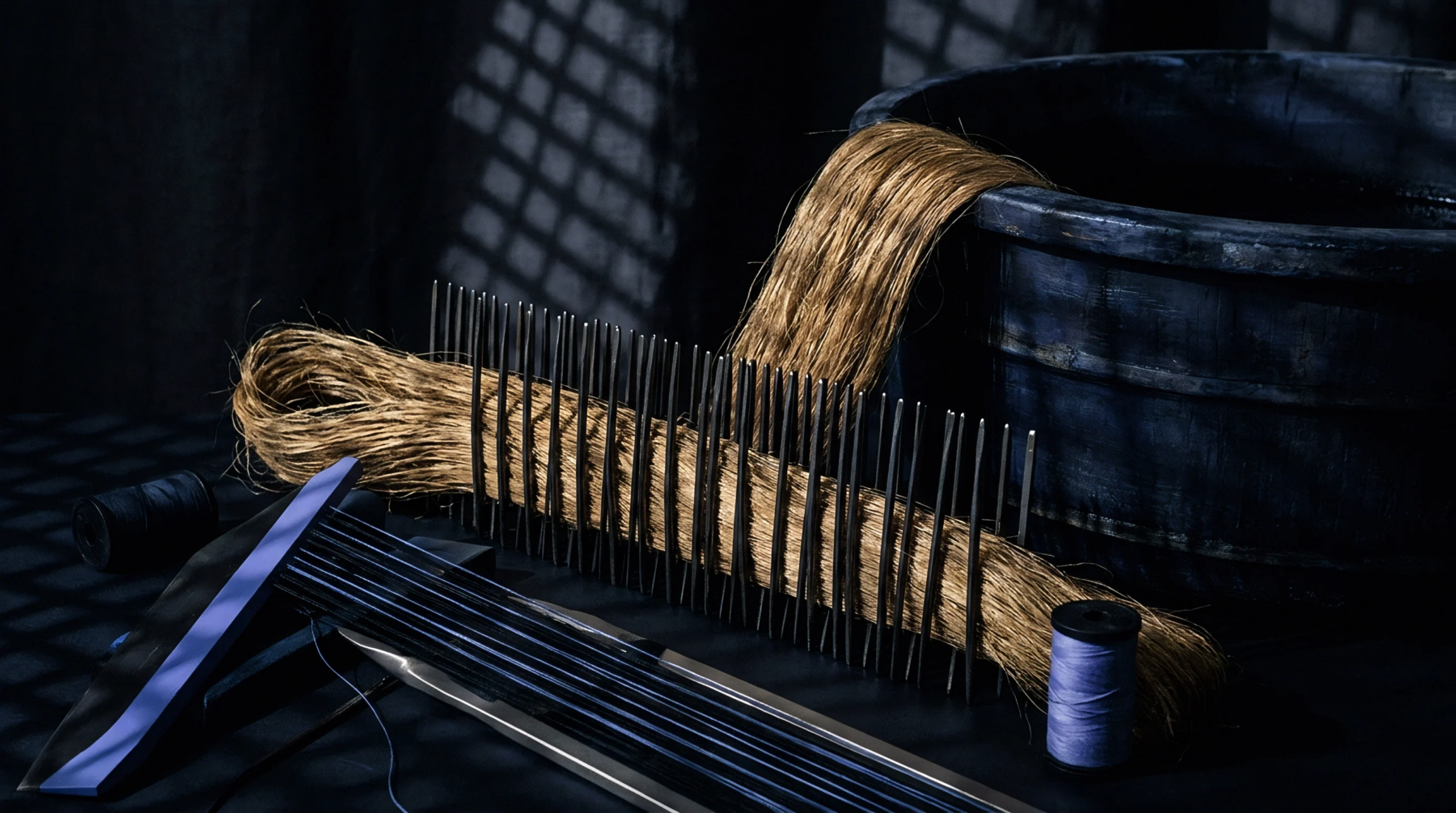
Steel arrays project from the gills of drawing frames to align flax fibres before spinning into yarn. These faller pins penetrate the fibre mass to draft individual strands into a parallel ribbon known as sliver. Proper spacing of the needles prevents fibre breakage during the acceleration phase of mechanical processing.
Density and diameter measurements define the control exerted over different staple lengths within the production line.
Operational Wear
Frequent contact with abrasive raw material reduces the sharp point profile on each needle over time. Wear patterns appear as blunted tips or bent shanks which disturb the uniform drafting force applied to the flax. Operators monitor these deviations to schedule replacement cycles before inconsistent sliver weights occur.
Regular inspections ensure that the drawing process maintains steady mass flow without damaging the integrity of the natural fibres.
Tolerance Specification
Factory standards dictate the maximum allowable variance in pin angle and height for each grade of linen production. Variations exceeding the threshold cause uneven draft tension and lead to hairiness in the final yarn product. Each manufacturer maintains a record of needle maintenance to verify compliance with quality agreements established during the supply contract.
Proper maintenance of the pin field provides the primary mechanism for controlling yarn uniformity during high speed operation.