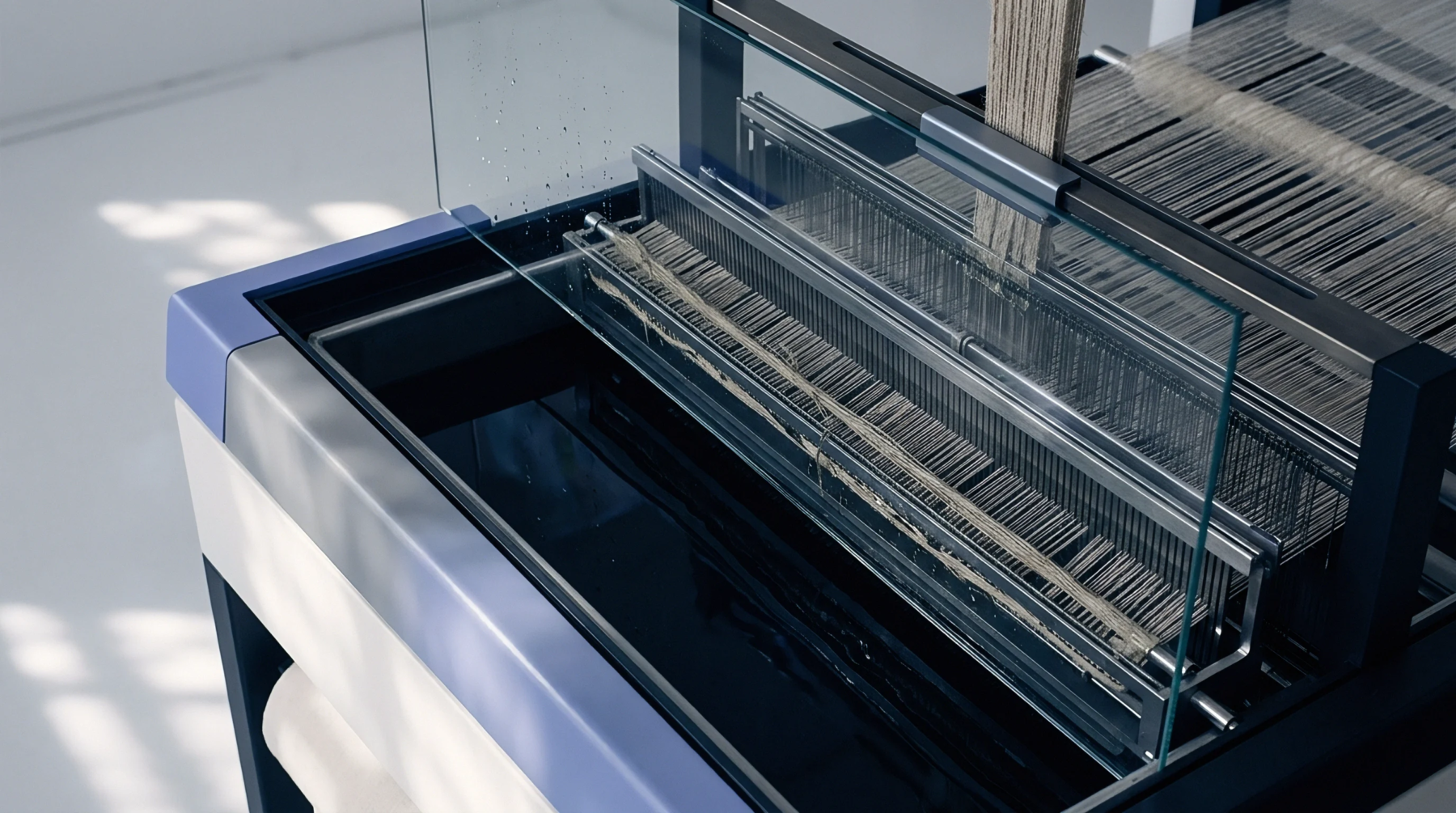
Warp Sheet Mechanical Separation
The forced mechanical cleavage of dried, size-bonded warp yarn sheets into individual threads using stationary transverse bars defines split rod delamination. As parallel yarn ends exit slasher drying cylinders, starch and synthetic binder residues cement individual filaments together into a continuous, hardened planar ribbon. Passing this consolidated sheet over and under staggered split rod arrays snaps the dry size bridges between adjacent ends, restoring separation before warp threads enter the front expansion comb.
The physical cleavage zone begins immediately after the final cooling fan zone and terminates as separated ends pass into the delivery reed. The term does not apply to single-end yarn clearing or fabric selvage splitting processes.
Size Film Fracture Dynamics
Mechanical rupture of brittle inter-yarn adhesive bonds occurs via shear stress concentration across the polished steel splitter surfaces. Staggered rod placements isolate sections of the sheet, dividing total ends into progressively smaller groupings until individual threads emerge free. Inadequate split rod delamination or blunt cleavage angles rip natural bast fibrils away from their yarn cores, leaving frayed hairy envelopes that tangle during loom shedding.
Excessive adhesive application or improper slasher drying exacerbates tear force requirements, leading to high yarn tension spikes and mechanical end breakage right at the dividing bars. Operators inspect rod surfaces constantly to ensure that no sizing buildup introduces abrasive grooves onto running warp threads.
Warp Quality Records
Machine operators log rod configuration sequences on slasher beam production dockets, documenting thread division counts and break incidences during sizing runs. Sizer delivery quality procedures evaluate post-split hairiness using optical sensors positioned before the beam winder. Warp beams exhibiting extensive surface fuzz or burst yarn bundles caused by violent separation face immediate quarantine.
Weaving departments reject beams failing delamination standards because fibre entanglement at the drop wires precipitates mass warp stops on weaving looms. Visual inspection of the separated warp sheet confirms clean individualization without fibre bridges, ensuring regular yarn passage through heald eyes and reed dents.