Optimizing Wet Spun Linen Yarn Sizing Formulations for Friction Reduction
Formulating wet spun linen size with hydroxyethylated starch and ester lubricant cuts kinetic friction to zero point two two and maximizes loom efficiency.


Rheology
Fluid behavior inside the size box dictates how deeply a starch-polymer mix penetrates wet-spun flax. These yarns consist of aligned cellulosic technical fibers bound by pectin and lignin lamellae, forming a stiff core wrapped in coarse outer fibrils. When sizing liquor contacts this structure, its apparent viscosity determines whether it merely forms an exterior shell or encapsulates the individual fibers.
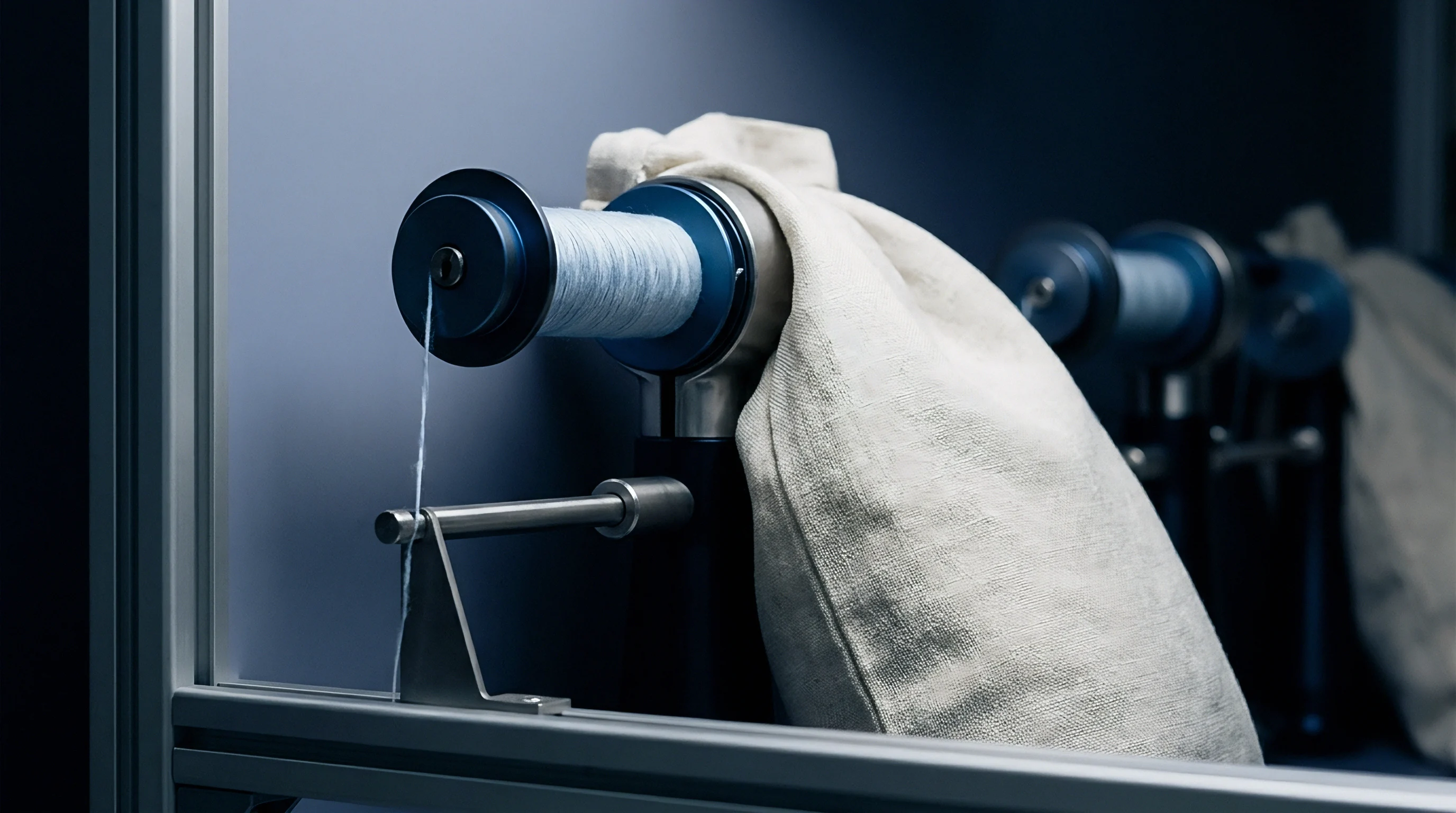
Viscosity Control in Starch Polyvinyl Alcohol Blends
Maintaining thermal stability inside cooking kettles ensures predictable fluid flow across high-speed sizing rollers. Hydroxyethylating native potato or corn starch drops its gelatinization temperature to 60 degrees Celsius, suppressing paste retrogradation over long production runs. Combining 70 parts hydroxyethylated starch with 30 parts fully hydrolyzed polyvinyl alcohol yields a shear-thinning mix that flows under roller nip pressure and sets quickly as it cools.
Uncontrolled viscosity alters core penetration, causing the protective surface film to fracture during weaving.
| Formulation Mix | Shear Rate (s^-1) | Apparent Viscosity (mPa·s) | Core Penetration Ratio (%) | Dry Add-On Target (%) |
|---|---|---|---|---|
| Native Potato Starch (10% Sol) | 1000 | 145 | 8.2 | 12.5 |
| Hydroxyethylated Starch (10% Sol) | 1000 | 42 | 18.5 | 9.0 |
| H-Starch / PVA Blend (70/30) | 1000 | 58 | 16.1 | 8.5 |
| H-Starch / PVA / Ester Wax (65/30/5) | 1000 | 52 | 15.8 | 8.0 |
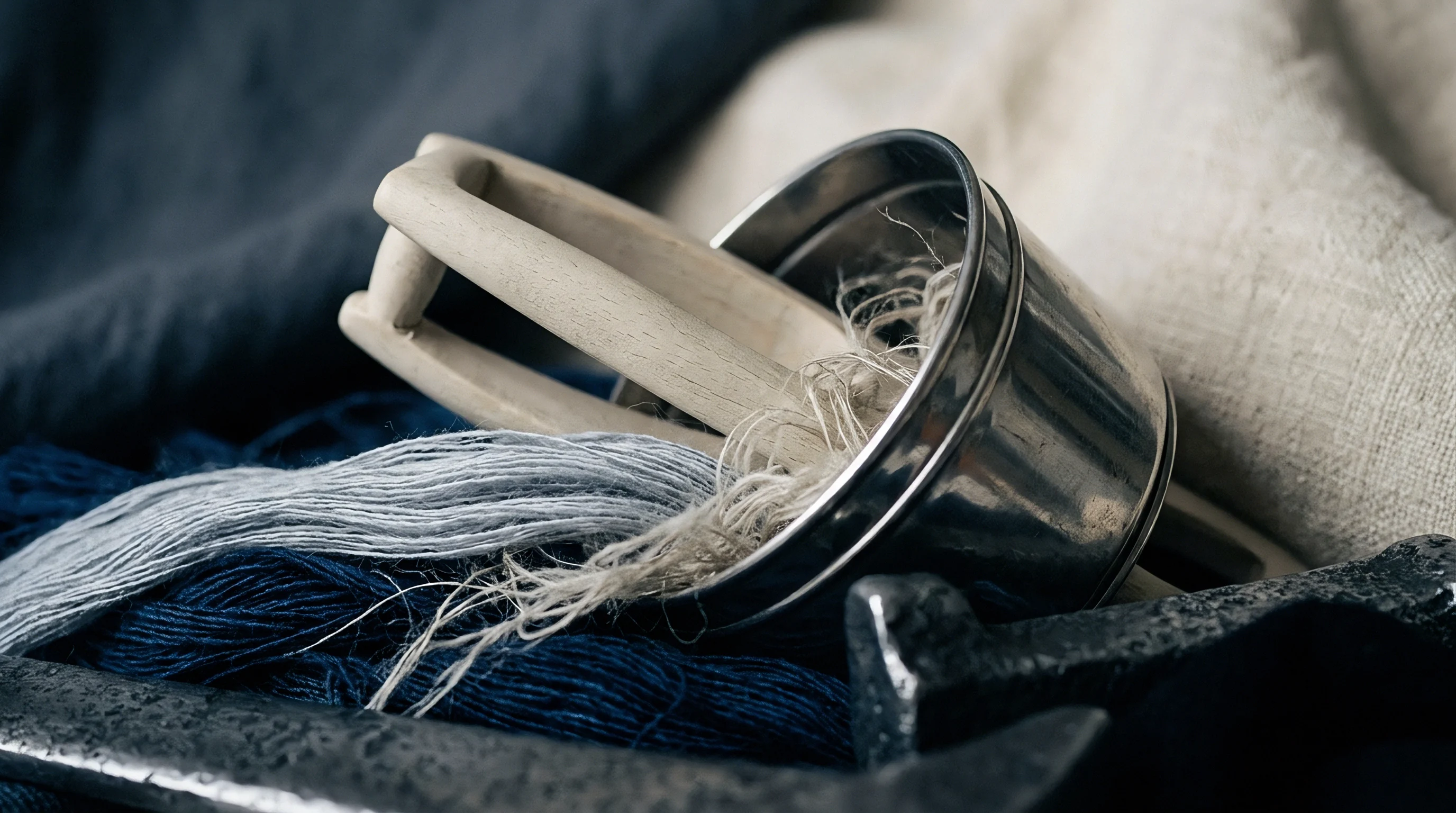
Penetration Depth across Irregular Flax Bundles
Microscopic cross-sections of sized NeL 25 wet spun yarn show how binder solids distribute through the fiber matrix. Penetration reaching 15 to 20 percent of the yarn radius anchors surface fibrils without making the core rigid. Too little migration leaves surface hair loose, causing mechanical entanglement during shedding; too much locks the inner fibers together, reducing flexure and causing brittle breaks under beat-up tension.
Incomplete binder encapsulation leads to localized fibril peeling during shedding, building up fuzz balls behind the reed that trigger immediate warp stop-motion breaks.

Additives
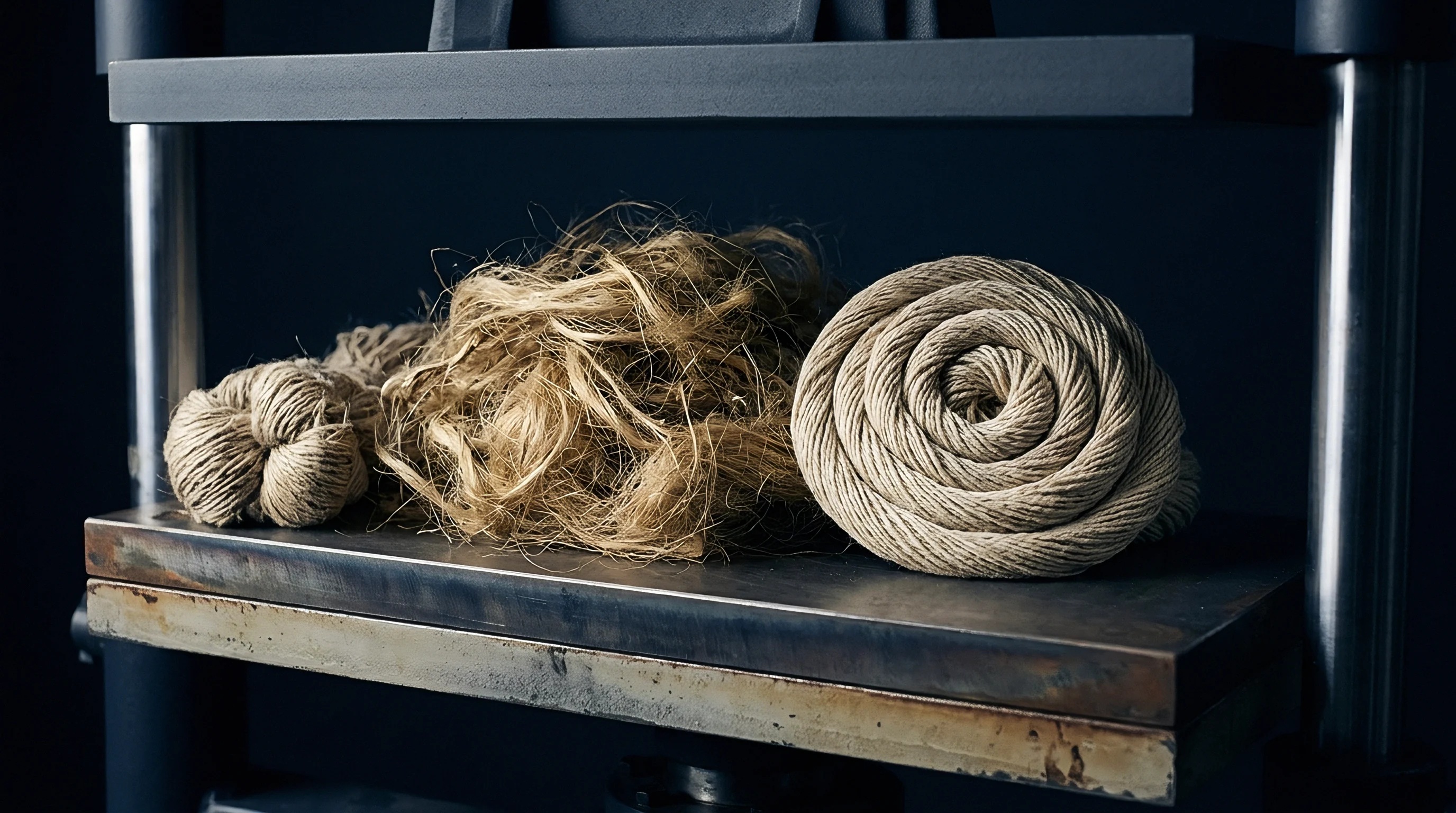
Reducing kinetic friction between spun flax and metal loom parts requires adding surface modifiers directly into the starch matrix. Raw starch coatings generate excessive friction against steel drop wires and ceramic guides, scuffing yarn at speeds above 500 picks per minute. Adding lubricity agents modifies interfacial energy at these contact points.

Boundary Lubrication at High Sliding Speeds
Frictional heat generated along modern rapier tape guides rapidly degrades unmodified starch films. Emulsified hydrogenated tallow and synthetic esters migrate outward as the wet coating dries, leaving a thin hydrophobic grease layer that absorbs shear forces during high-frequency beat-up.
- Charge the cooking vessel with cold soft water and run the primary shear agitator at 120 revolutions per minute.
- Add pre-weighed hydroxyethylated starch and polyvinyl alcohol granules slowly to avoid agglomeration.
- Inject live steam to heat the liquor to 95 degrees Celsius, holding for 30 minutes to achieve complete dispersion.
- Pump the concentrated ester lubricant emulsion into the batch during the final 5 minutes of the hold cycle before transferring to storage.
Adding two percent polyethylene wax emulsion to a ten percent modified starch liquor reduces the kinetic friction coefficient against polished chrome from zero point three five to zero point one eight at eighty degrees Celsius.

Synthetic Ester Emulsions versus Fatty Wax Blends
Mill trials show clear operational differences between mineral waxes and ester lubricants. Traditional fatty waxes often separate in hard water or under continuous pan agitation, building up sticky residues on squeeze rollers. By contrast, formulations with ethoxylated fatty alcohol esters remain stably dispersed throughout eight-hour shifts.
Uncontrolled friction and wax migration impair film adhesion, while low bath temperatures prevent starch from gelatinizing.
Persistent warp dusting often stems from thermal phase separation of low-cost wax components rather than inadequate size box temperature.

Film
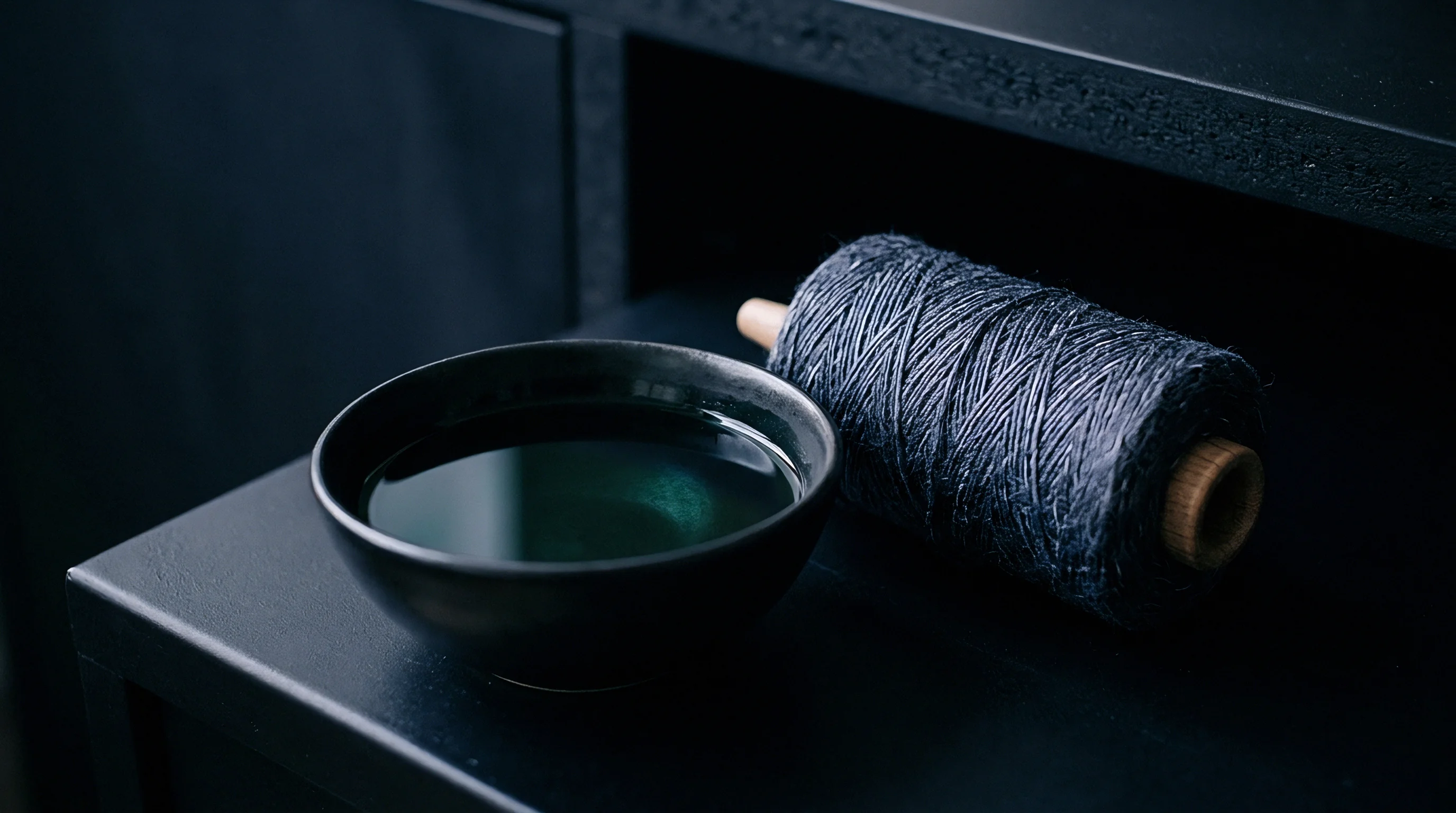
The mechanical toughness of the dried size envelope dictates how well flax yarns withstand repetitive bending and axial tension on the loom. Natural flax fiber breaks at less than three percent elongation, leaving yarn prone to snapping if coated with a rigid film. The dried sizing matrix must remain flexible enough to stretch alongside the cellulosic core.

Moisture Equilibrium in Flax Sizing
Loom shed humidity directly influences how tough starch coatings remain during operation. Yarn conditioned to seven to eight percent moisture stays pliable, while over-drying makes the sizing brittle. Controlling steam cylinder temperature gradients along the slasher prevents thermal damage to surface pectins.
ISO 13934 test protocols mandate that warp tensile strength loss following sizing application remains below five percent relative to un-sized greige yarn standards.

Can Dryer Temperature Profiles Prevent Surface Brittle Cracking?
Graduated heating across multi-cylinder drying ranges keeps binder solids from migrating to the yarn exterior. Running initial cylinders at 65 degrees Celsius before stepping up subsequent drums to 95 degrees stops skin formation that traps internal moisture. Sudden surface drying creates hollow shells that crush under drop-wire pressure.
- Fibril peeling occurs when shallow binder penetration lets outer fibers detach from the yarn core, creating lint knots that catch in the reed.
- Shed dusting happens when brittle starch flakes off under vibration, clogging heddle eyes and triggering false stop-motion trips.
- Drop wire grooving occurs when unlubricated flax fibers cut grooves into contact pins, elevating yarn tension until threads snap cleanly.
- Warp end clinging results from residual surface tackiness that binds adjacent yarns in the open shed, causing rapier mispicks.
- Beat-up stripping occurs when poor adhesion lets the reed wire push the size film backward as the cloth fell consolidates.
Precise moisture control stops size coatings from becoming brittle, preventing shedding dust from clogging heddle eyes.
Standard purchasing contracts under ISO 7211 specify that warps suffering over three percent size flaking weight loss fail compliance, shifting downtime liabilities back to the preparation mill.

Abrasion
Friction test rigs replicate the intense mechanical wear wet-spun linen experiences inside the loom shed. A single warp thread undergoes over two thousand sliding cycles against drop wires, heddles, and reed wires during weaving. Tribological testing measures both kinetic friction and fiber shedding under dynamic load.
Yarn to Metal Kinetic Friction Measurement
Capstan testing rigs record tension changes as yarn runs over a polished steel cylinder at fifty meters per minute. Unsized wet-spun flax yields a kinetic friction coefficient near zero point four two. Adding modified starch and acrylic lubricants lowers this to zero point two two, preventing drop wires from grooving.
| Size Formulation | Friction Coeff (µk) | Zweigle Abrasion Cycles | Dusting Loss (mg/m) | Loom Efficiency (%) |
|---|---|---|---|---|
| Unsized Wet Spun Linen (NeL 25) | 0.42 | 180 | 4.2 | 62.0 |
| Standard Native Potato Starch | 0.35 | 450 | 2.8 | 78.5 |
| Modified Starch + PVA Blend | 0.28 | 980 | 1.1 | 89.0 |
| Modified Starch + PVA + Ester Lubricant | 0.22 | 1420 | 0.4 | 94.5 |
Cyclic Strain Wear in High Speed Shedding
Cyclic tension spikes from eccentric shed opening create micro-cracks in rigid size films. As heddle frames separate the warp sheet, adjacent yarns rub together at high speed, generating shear forces that strip weak binder coatings. Improving film elasticity helps yarn withstand stress through the beat-up zone.
- Chemical solubility rate dictates the dwell time and bath temperature needed during continuous finishing to prevent stiff fabric.
- Effluent biological oxygen demand determines municipal wastewater surcharges when discharging spent scouring liquors.
- Loom downtime reduction tracks savings gained by cutting warp breakage from three stops per loom hour down to zero point five.
- Thermal energy consumption accounts for steam utility expenses across box heating, drum drying, and hot-water scouring.
Smooth yarn surfaces without protruding technical fibers reduce shedding friction more effectively than thick starch layers applied to loose spun structures.
Because flax fibers resist elongation, unmitigated reed friction degrades warp threads, causing frequent shed stops that sharply reduce loom efficiency and throughput.
Debate continues over whether synthetic softeners compromise adhesion between starch molecules and cellulosic fibril walls during extreme humidity fluctuations.
Desizing
The washability of protective sizing directly impacts total wet-processing costs during finishing. Sizing agents must endure weaving yet dissolve completely during warm scouring or alpha-amylase enzyme baths. Ingredients that resist enzymatic breakdown cause uneven dyeing and harsh fabric hand in finished linen.
Enzymatic Hydrolysis for Modified Starch Removal
Alpha-amylase enzymes target alpha-1,4-glucosidic bonds in potato starch, breaking down long polymer chains into water-soluble dextrins. Adding acrylic copolymers or synthetic waxes can block enzyme access to these starch sites. Using water-dispersible polyacrylate binders permits full desizing at 60 degrees Celsius without requiring caustic scouring.
High binder add-on levels increase yarn density while lowering total weaving stop frequencies across wide width jacquard looms.

Financial Impact of Size Pickup on Weaving Metre Cost
Sizing economics depend on balancing chemical costs against weaving productivity. Standard starch formulas cost roughly zero point eight five euros per kilogram of dry solids, whereas advanced synthetic ester blends reach one point six five euros per kilogram. Operating high-speed rapier looms at ninety-two percent efficiency offsets these higher chemical prices by spreading fixed overhead over greater fabric output.
Controlling enzyme bath temperatures ensures complete starch removal, preventing warp defects and avoiding costly loom stops.
Investing in high-grade synthetic lubricants yields higher operational returns than applying heavy coats of cheap native starch.