Quantifying Inter Fiber Shear Micro Fibrillation in High Density Ultrafine Linen Warps under Cyclic Dynamic Strain
Cyclic shedding strain in high-density ultrafine linen warps causes inter-fiber shear micro-fibrillation, controlled by optimized PVA sizing and low shed angle.

Drag
High-speed rapier shedding on ultrafine flax yarns at high thread counts generates heavy localized friction across the warp sheet. Weaving wet-spun Nm 100 linen at 42 ends per centimetre reduces clearance between adjacent threads below nominal fiber diameter during shed crossing. Flax technical fibers consist of elementary cellulose fibril bundles bound by a pectin- and hemicellulose-rich middle lamella.
Unlike continuous filament synthetics or high-twist combed cotton, these bundles have a rigid, irregular polygonal cross-section with frequent axial nodes. Rapid shedding forces adjacent warp ends against each other, creating localized shear forces that strip the protective size film and dislodge outer fibrils.
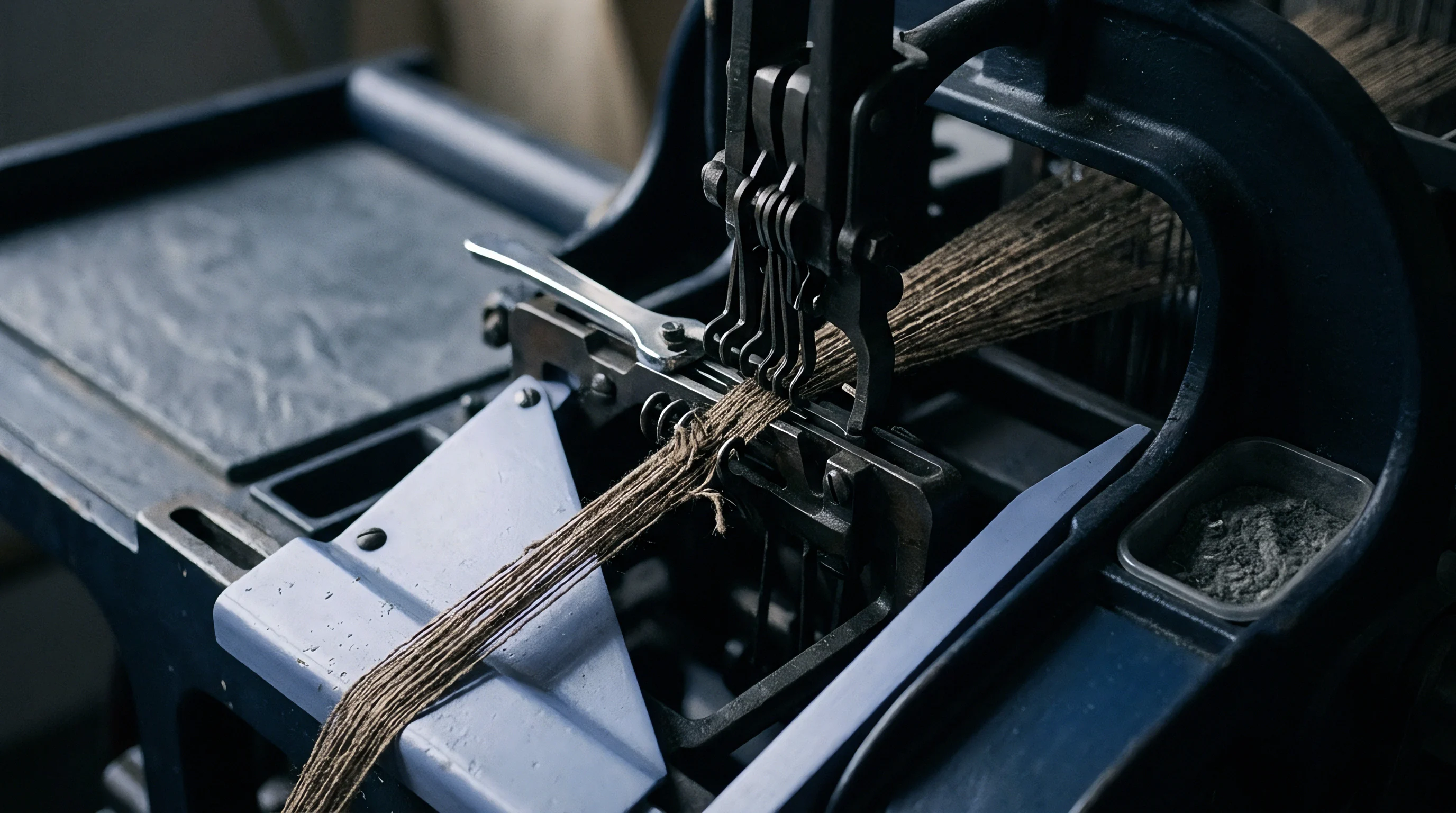
High thread density accelerates mechanical wear in the harness zone between drop wires and the reed. Tension spikes across upper and lower warp sheets when the shed reaches maximum height. In fine setts, ends run close enough that adjacent yarn bodies grind against each other under double-dip tension crests.
This constant lateral rubbing under longitudinal strain causes steady surface abrasion, peeling outer fibrils from the core into fine micro-fibrils. Left unmanaged, loose micro-fibrils entangle neighboring ends, triggering cross-shed clinging, mispicks, false dropper drops, and sudden loom halts.
Shed geometry directly dictates the severity of inter-fiber abrasion on modern looms. A wide shed angle leaves ample clearance for rapier heads or air-jet pick insertion, but sharply increases longitudinal strain and contact pressure between crossing ends. Lowering shed height reduces peak tension, though narrower openings extend physical contact between threads during pick insertion.
Balancing this trade-off requires precise coordination of backrest roller position, drop wire depth, and harness crossover timing. Lowering backrest height by 12 millimetres and advancing harness timing by 15 degrees on a 220-centimetre rapier frame running Nm 110 linen reduces shedding-related warp stops by 14 percent.
| Yarn Count (Nm) | Warp Density (ends/cm) | Loom Speed (PPM) | Cyclic Strain (%) | Peak Tension (cN/tex) | Fibrillation Index (mg/10k picks) |
|---|---|---|---|---|---|
| Nm 60 | 32 | 580 | 1.8 | 2.1 | 1.4 |
| Nm 80 | 36 | 540 | 2.2 | 2.6 | 3.8 |
| Nm 100 | 40 | 500 | 2.7 | 3.2 | 8.2 |
| Nm 120 | 44 | 460 | 3.1 | 3.9 | 14.6 |
| Nm 120 | 48 | 420 | 3.5 | 4.4 | 22.1 |
Shed Opening Dynamics in Ultrafine Warp Setts
Peak warp tension occurs when the shedding harness reaches its fully open position, forcing individual warp threads to stretch around rapier guides. Ultrafine linen carries a high initial modulus with minimal elastic stretch, breaking at total strains under 2.8 percent. Standard tension compensators, such as spring-loaded backrest rollers, must react within milliseconds to prevent localized stress concentration.
In dense warps, close packing leaves no room for lateral yarn displacement under load, concentrating applied strain into direct yarn-on-yarn compression patches.
Tension distribution across the warp sheet depends heavily on lease rod positioning behind the harness. Placed too close to the harness, lease rods create sharp bending angles that worsen friction; positioned too far back toward the warp beam, they leave yarns slack during shed closure, causing floats and snarls. Correct lease rod placement distributes shedding strain over a greater warp length, reducing contact pressure between adjacent ends at crossover.
Mill measurements confirm that shifting lease rod distance from 450 millimetres to 620 millimetres behind the first harness frame reduces yarn contact pressure by up to 28 percent.
Peak warp tension at maximum shed opening directly correlates with inter-fiber contact pressure, elevating micro-fibril shedding exponentially once yarn density exceeds 40 ends per centimetre.

Abrasive Mechanics of Inter-Fiber Contact Shear
Frictional abrasion between adjacent warp threads during shedding stems from surface sliding friction and the mechanical interlocking of surface asperities. Wet-spun linen presents a microscopic profile marked by raised fiber ends, residual pectin flakes, and distinct twist nodes. When dense warp ends slide past each other at crossover, these surface features interlock, generating high instantaneous shear parallel to the fiber axis.
This shear tears weak middle lamella junctions inside technical bundles, releasing fine cellulosic filaments.
Repeated dynamic strain cycles degrade the protective size film applied during warp preparation. If the size lacks flexibility or fails to adhere to the smooth cellulose surface of wet-spun flax, the coating cracks and flakes off under high-frequency flexure. These dislodged size particles act as secondary abrasive media within the warp sheet, accelerating the mechanical stripping of elementary fibers.
Preventing this requires warp preparation protocols that achieve deep core penetration while maintaining an elastic surface film capable of withstanding cyclic shear without fracturing.
- Mount warp beam on slasher stand and verify alignment against machine centerline to ensure uniform end tension across the full sheet width.
- Fill size box with cooked modified starch and polyvinyl alcohol mixture adjusted to 12 percent total solids concentration at 85 degrees Celsius.
- Set squeegee roller pressure to achieve a wet pick-up rate of 110 percent, ensuring deep core penetration without forming an overly thick surface crust.
- Pass warp sheet through multi-cylinder drying section with decreasing temperature zones from 110 degrees to 70 degrees Celsius to prevent thermal shock to flax pectins.
- Apply aqueous wax emulsion at oiling roller station to deliver 0.5 percent surface lubricant by weight of dry yarn prior to beam winding.
Excessive micro-fibrillation is frequently attributed to aggressive mechanical loom settings rather than inherent yarn quality or pectin cohesion levels within the raw flax lot.
Kinematics
Cyclic dynamic strain on a warp sheet during high-speed weaving acts as a driven harmonic oscillation superimposed on steady baseline tension. Frame movement follows a sinusoidal or modified eccentric acceleration curve depending on whether an electronic dobby or conjugate cams drive the harness. As frames separate the warp sheet into upper and lower sheds, every thread undergoes length changes dictated by shed geometry.
On an ultrafine Nm 100 linen warp with a 210-centimetre reed width, this cyclic stretch repeats up to 600 times per minute, producing high strain rates that test fiber endurance.
Yarn deformation during a loom cycle results from structural crimp rearrangement and elastic stretching of cellulose crystalline domains. Flax possesses a highly crystalline structure dominated by cellulose I lattices aligned with the fiber axis, giving high tensile strength with minimal elasticity. Early in the shedding stroke, applied force overcomes structural crimp created by sizing and beam tension.
Once that crimp flattens, remaining strain forces crystalline fibrils to bear the load directly. Because elementary flax fibrils break at elongations between 1.5 and 2.2 percent, dynamic strains over 1.2 percent push the fiber matrix close to plastic deformation.
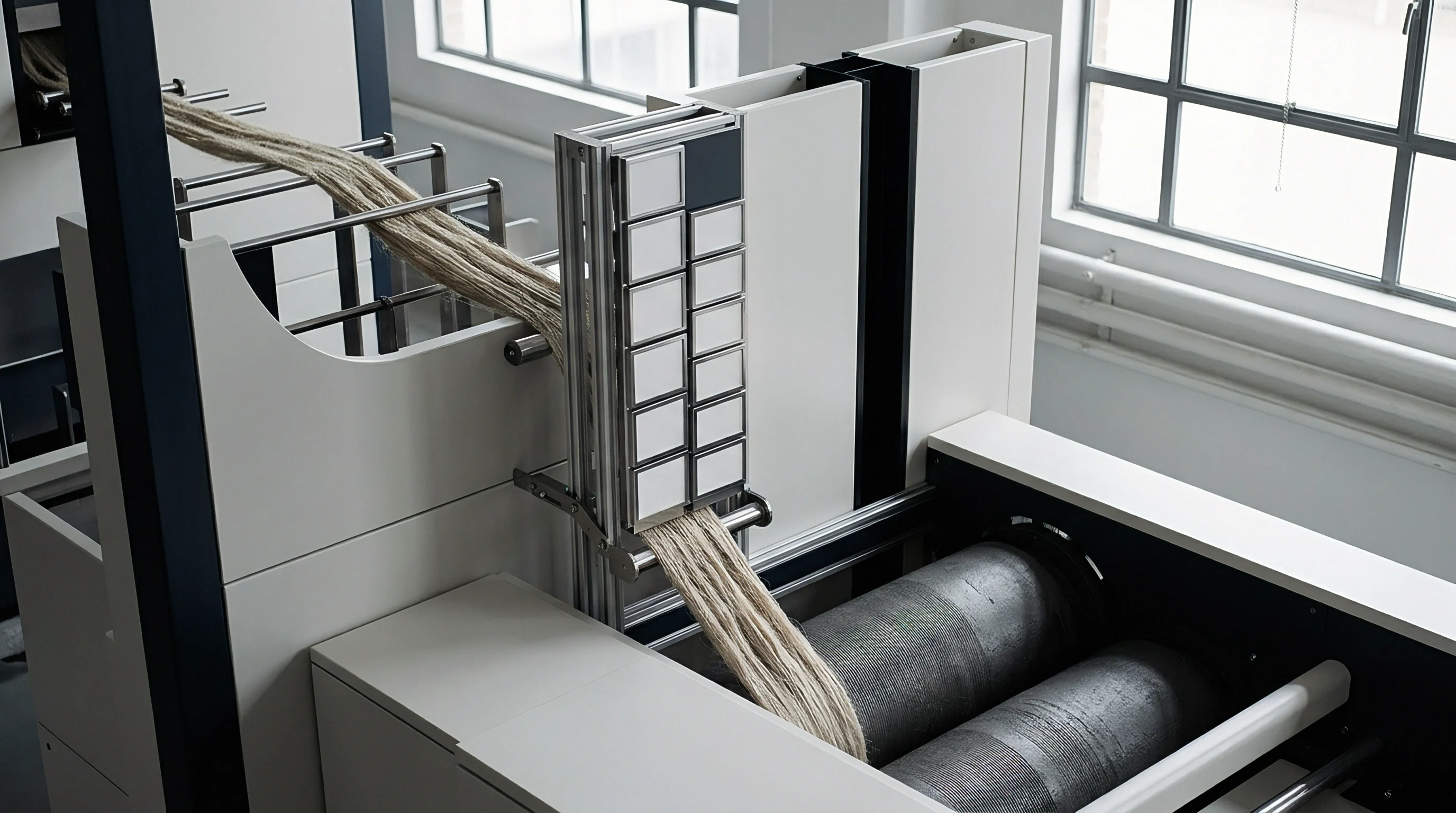
Backrest roller motion plays a key role in smoothing this cyclic strain wave. Active or negative backrest systems oscillate in phase with the harness frames, shifting forward toward the drop wires as the shed opens to yield warp length, then pulling back as it closes to absorb slack. Proper phase alignment dampens peak tension spikes.
Miscalibrated dampening or mechanical lag causes phase shifts that force the yarn to absorb peak elongation while the backrest stays fixed or moves in reverse, sharply increasing inter-fiber shear breakdown.
Tension Waves and Peak Mechanical Load
Tension waves move through the warp sheet at a velocity determined by linear yarn density and dynamic elastic modulus. In ultrafine linen, the high modulus accelerates wave transmission. When loom speed matches a natural harmonic frequency of the stretched warp, standing waves form, creating localized zones of high tension along the yarn path ~ particularly between lease rods and stop-motion drop wires.
In high-density setts, those tension peaks raise yarn-to-yarn compression forces, causing localized micro-fibrillation along the loom bed.
Reed impact during beat-up creates a secondary stress peak on top of the shedding tension curve. As beat-up occurs, the reed drives inserted weft yarn into the cloth fell against the resistance of the warp crossover. In high-density setts, the fell shifts forward slightly under impact, stretching the warp back toward the harness.
This pulse delivers high-frequency shear to the warp ends right at the fell line, where dense reed wires and cloth lock-in leave minimal clearance for yarns to slide freely.
ISO 13934 test protocols executed at standard atmosphere confirm that cyclic pre-conditioning at 1.0 percent strain reduces ultimate tensile capacity of ultrafine linen warps by 18 percent before shedding begins.
Crimp Interlock and Yarn-to-Yarn Interference
Twist insertion and beam winding create subtle surface undulations along warp yarns. At high densities, continuous lateral contact forces the crests of twist spirals on one thread to mesh into the troughs of its neighbor, mechanically locking the crimp. As the shed opens, longitudinal movement drags these interlocked spirals past each other, generating periodic shear forces along the contact area.
Resistance from crimp interlock grows non-linearly with ends per centimetre, shifting yarn behavior from smooth sliding into stick-slip friction.
Mathematical modeling of stick-slip in ultrafine linen shows that peak shear during the slip phase exceeds the yield stress of the middle lamella. Every micro-slip event shears the surface matrix, snapping primary wall fibril bridges and lifting free ends of elementary fibers. These repeated micro-ruptures degrade the yarn surface long before it reaches the fell.
Optical hairiness sensors above the harness zone record a step-function jump in micro-fibril count after 15,000 loom revolutions under strong stick-slip conditions.
Calculating dynamic tension requires evaluating the exact geometry of the loom shedding stroke. Consider an ultrafine Nm 100 linen warp running at 500 picks per minute on a loom with a total warp length from beam to fell of 2,400 millimetres. The shedding depth is 55 millimetres at the first harness frame, located 320 millimetres from the cloth fell.
The geometric elongation of the yarn during shed opening follows the hypotenuse relation:
Delta L = Square Root of (L_1 Squared + H Squared) – L_1
Where L_1 is the harness distance of 320 millimetres and H is the half-shed height of 27.5 millimetres. Substituting these values yields:
Delta L = Square Root of (320 Squared + 27.5 Squared) – 320 = Square Root of (102,400 + 756.25) – 320 = 321.18 – 320 = 1.18 millimetres
Expressed as a percentage of the active shedding length L_1, this represents a localized cyclic strain of 0.369 percent. However, when accounting for high thread density packing (42 ends/cm), lateral contact friction restricts yarn movement behind the lease rods, effectively shortening the active stretch zone from 2,400 millimetres down to 480 millimetres. The real strain absorbed by the shedding segment jumps to 0.246 percent overall, but concentrated local strain spikes reach 1.15 percent at the drop wire interface.
Combined with a static baseline winding tension of 22 cN per end, peak cyclic tension hits 3.8 cN/tex, surpassing the 3.2 cN/tex threshold where inter-fiber shear micro-fibrillation initiates in un-modified flax bundles.
Maintaining shedding tension within 15 percent of the minimum clean shed threshold prevents structural breakdown of fine flax yarns.
Microstructure
Flax’s vulnerability to shear micro-fibrillation stems from its cellular hierarchy. A single technical fiber is a bundle of 10 to 40 elementary fibers bound by the middle lamella. Elementary fibers measure 10 to 40 millimetres long and 12 to 25 micrometres across, with thick secondary cell walls composed of aligned crystalline cellulose microfibrils embedded in a hemicellulose and lignin matrix.
The middle lamella, made mostly of amorphous calcium-pectate gels, exhibits far lower shear strength than the crystalline cellulose walls it joins.
Under repeated inter-fiber shear, mechanical stress concentrates along weak middle lamella boundaries. Cyclic squeezing and sliding force elementary fibers to slip against each other within the bundle. That shear ruptures the amorphous pectin glue, delaminating elementary fibers from the technical core.
Once an end detaches, continuous rubbing by adjacent threads peels the fiber outward, converting a smooth technical yarn into a frayed strand covered in loose micro-fibril tails.
Electron microscopy of damaged ultrafine linen warps shows micro-fibrillation starting as sub-micron longitudinal cracks along the primary cell wall. These cracks follow the helical orientation of cellulose microfibrils, aligned 8 to 10 degrees off the fiber axis. Because of that alignment, longitudinal tension paired with lateral shear triggers Mode II shear failure along fibril boundaries.
Over repeated shedding cycles, these fissures combine, stripping outer primary wall layers into fine cellulosic debris that collects on the harness.
| Size Base Chemistry | Film Tensile Modulus (MPa) | Elongation at Break (%) | Fibrillation Suppression Rating | Core Penetration Ratio (%) |
|---|---|---|---|---|
| Native Potato Starch | 1200 | 1.2 | Poor | 25 |
| Acid-Thinned Maize Starch | 850 | 2.1 | Fair | 42 |
| Carboxymethyl Starch (CMS) | 620 | 4.5 | Good | 65 |
| PVA Low Viscosity (88% Hydrolyzed) | 450 | 8.2 | Excellent | 82 |
| PVA / Acrylic Copolymer Blend (80/20) | 510 | 7.1 | Superior | 88 |
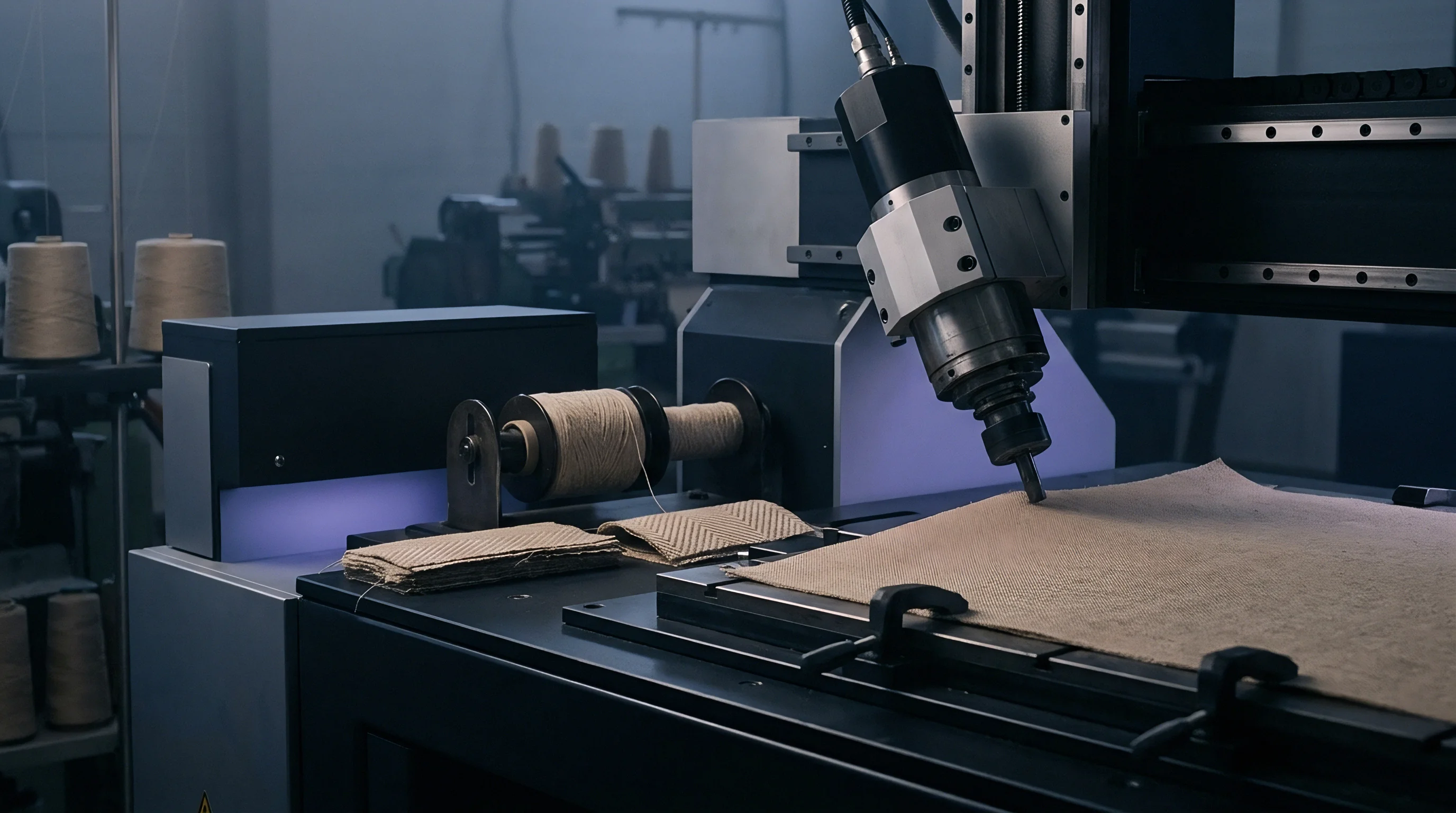
Which Sizing Formulations Mitigate High Warp Density Fibrillation?
Sizing high-density ultrafine linen requires balancing film flexibility, core penetration, and adhesion to native flax waxes. Unmodified native starches form stiff, brittle films that crack under cyclic strain on high-speed looms. Once that protective shell fractures, inter-fiber shear strips the bare yarn body.
Blending low-viscosity polyvinyl alcohol with esterified or etherified starch derivatives yields a ductile polymer matrix that stretches with the flax fibers without cracking early.
Adding acrylic copolymers improves chemical bonding between the polymer film and hydroxyl groups on the cellulose wall. Acrylic monomers reduce film brittleness and moisture sensitivity, keeping the size from softening under high relative humidity. Synthetic wax added in the size bath or post-waxing stations lowers static friction on the yarn surface, directly reducing lateral shear transferred to the middle lamella during thread contact in the shed.
Chemical analysis of shed debris reveals that size formulations containing less than 30 percent flexible synthetic polymers lose structural cohesion after 8,000 shedding cycles at 1.2 percent dynamic strain.
Elementary Fibril Disruption under Cyclic Shear
Disrupted elementary fibrils alter both the physical dimensions and surface behavior of fine linen yarns. Loose micro-fibrils increase effective yarn diameter, boosting aerodynamic drag on air-jet looms and raising mechanical resistance through drop wires and reed dents. Dry friction leaves dislodged fibrils carrying high electrostatic charges, making neighboring threads repel or cling unexpectedly.
That instability interferes with shed separation and triggers false stop signals when hanging threads catch in the upper shed.
The extent of yarn micro-fibrillation depends heavily on how the raw flax was retted. Water-retted flax retains stronger middle lamella cohesion than dew-retted or enzyme-retted fiber. Dew-retted lots often show uneven pectin breakdown, leaving weak spots along technical fibers that fail quickly under dynamic shear.
Sourcing specs for high-density ultrafine warps need strict limits on pectin degradation indices and minimum inter-fibrillar cohesion values measured by micro-bundle extraction.
- Cross-Shed Entanglement occurs when raised surface micro-fibrils on adjacent warp threads interlock during shed division, preventing clean separation and forcing picks to pass over suspended ends.
- Dropper Short-Circuiting happens when metallic micro-fibril lint bridge the narrow gap inside electrical drop wire slots, triggering false automatic loom stops without any structural thread break.
- Reed Dent Clogging arises from the accumulation of stripped size dust and cellulosic micro-fibrils behind reed wires, creating static wedge zones that severely abrade incoming warp ends.
- Pick Insertion Stalls emerge on air-jet machines when protruding fibril halos expand thread diameter, increasing aerodynamic drag and causing main-nozzle air pulses to lose transport control over the weft line.
- Surface Cloudiness develops in finished woven grey cloth as dislodged elementary fibrils align randomly across the fabric face, destroying thread definition and altering light reflection.
The exact threshold of dynamic mechanical work required to initiate sub-surface lamellar splitting across varied raw flax origins remains an unresolved topic across the European wet-spinning industry.

Fatigue
Measuring how micro-fibrillation accumulates under dynamic conditions requires test rigs that replicate simultaneous tensile oscillation and contact shear on the loom. Standard static tensile tests or single-thread abrasion units miss the multi-axial degradation occurring in dense warps. Laboratory assessments rely instead on multi-end cyclic strain abrasion testers, which subject parallel arrays of sized yarns to controlled strain cycles while reciprocating a weighted abrasive element or an intersecting yarn sheet across them at set angles.
Gravimetric analysis of shed dust gives a direct measure of micro-fibrillation intensity. Over 10,000 strain cycles at 1.5 percent dynamic elongation, debris falling from the yarn array is collected on analytical filters. Sorting the collected lint into size polymer fragments and native micro-fibrils through solvent extraction yields the Fibrillation Index.
Lower index values indicate better resistance to shedding abrasion and correlate directly with fewer stops on full-scale production runs.
Optical hairiness monitoring provides real-time tracking of surface decay during testing. Laser arrays above the strain zone measure projecting fiber end density at 1, 2, and 3 millimetres from the yarn core. As cyclic strain breaks internal fiber bonds, 1-millimetre and 2-millimetre micro-fibril counts climb prior to structural failure.
Plotting hairiness against cycle count yields a degradation curve that defines the working life of a warp lot before shedding breakdown starts.
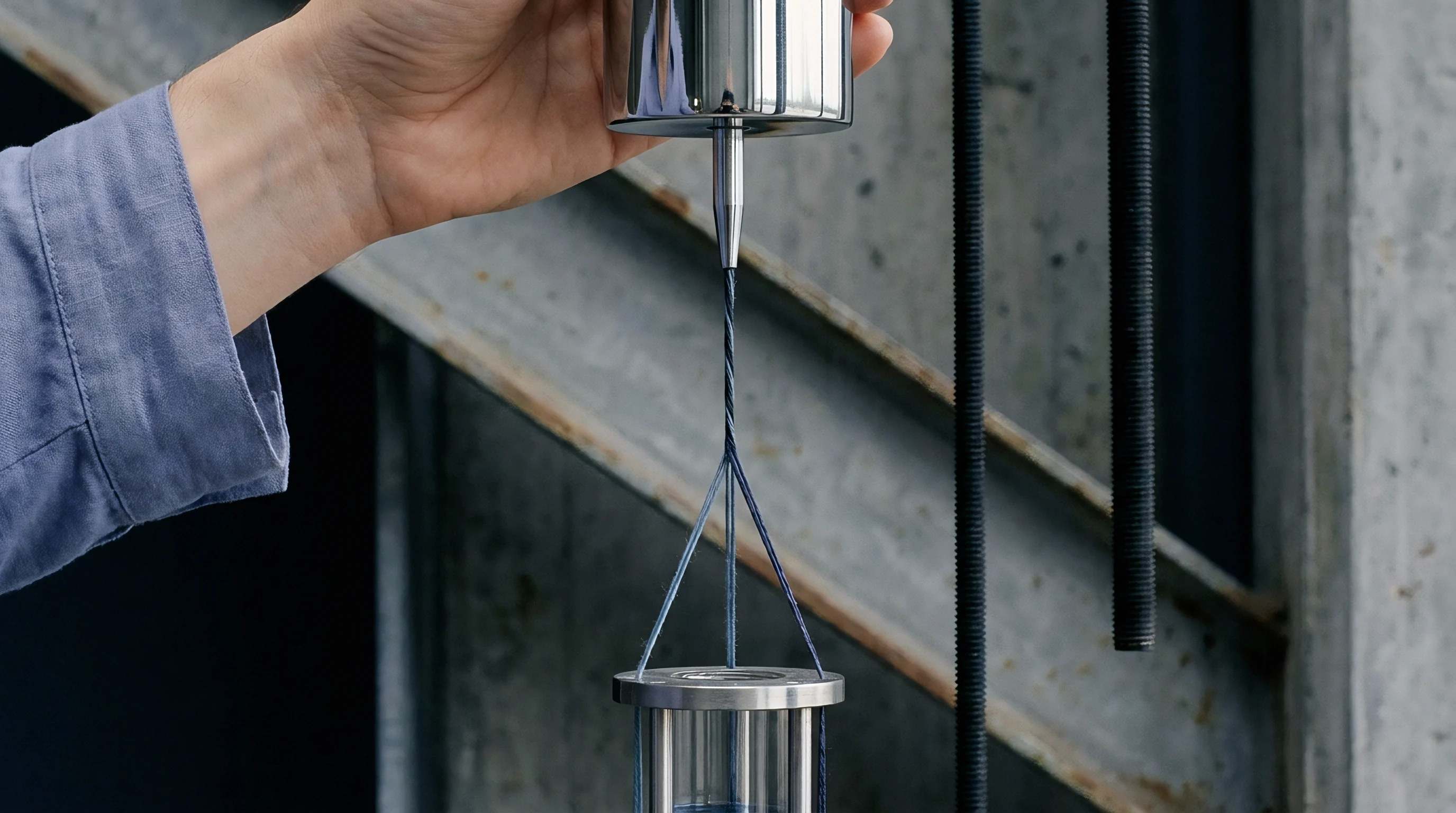
Gravimetric and Optical Quantification Protocols
Testing protocols require strict lab climate control. Flax technical fibers are highly hygroscopic; absorbed moisture swells cell walls and plasticizes the pectin middle lamella. Below 55 percent relative humidity, flax becomes brittle and cracks under shear.
Above 80 percent, moisture softens the size film, raising surface tackiness and stick-slip friction. Labs must hold conditions at 65 percent relative humidity (±2%) and 20 degrees Celsius for reproducible data.
Adding acoustic emission sensors to cyclic strain testers detects internal lamellar micro-cracks before fibrils detach visually. Piezoelectric sensors on warp clamps record stress waves released as intercellular pectin bonds snap under shear. Cumulative acoustic events indicate structural integrity loss early on.
Warps showing high acoustic activity during the first 1,000 cycles consistently break down in high-speed weaving, giving a clear early warning during batch qualification.
Statistical analysis under ASTM D5430 standards shows that warps generating over 12.0 milligrams of fiber debris per 10,000 test cycles cause a 300 percent increase in loom stop frequency on high-density rapier looms.

Cycles-to-Failure Thresholds in Ultrafine Linens
Finding dynamic fatigue limits requires running warp samples to failure at varied strain amplitudes. Plotting dynamic strain against the logarithm of cycles to failure yields S-N curves for specific yarn counts, flax grades, and size pick-up levels. Ultrafine linen warps show a distinct knee in their fatigue curves; exceeding critical strain amplitude causes an exponential drop in cycle life.
On Nm 100 linen sized at 10 percent dry pick-up, that threshold sits at 1.35 percent strain ~ operating above it drops fatigue life from 80,000 cycles to under 12,000.
Acceptance criteria for commercial warp delivery depend on matching lab fatigue metrics against real loom performance logs. A qualified warp batch must survive 50,000 strain cycles at 1.2 percent dynamic stretch with a Fibrillation Index under 5.0 milligrams per 10,000 cycles. Batches failing these criteria need re-sizing with higher polymer concentrations or reallocation to lower-density setts at lower loom speeds.
- Verify Raw Fiber Cohesion by performing micro-bundle extraction tests to confirm middle lamella shear resistance exceeds 18 cN/tex before approving yarn lot for warp spinning.
- Audit Size Penetration Depth using cross-sectional fluorescence microscopy on sizing laboratory samples to ensure size coats at least 60 percent of outer elementary fibers.
- Check Dynamic Strain Response on laboratory cyclic test rig across 10,000 cycles at 1.5 percent elongation, verifying total debris weight remains under 5.0 milligrams.
- Evaluate Film Ductility by testing free-standing size film specimens to confirm elongation at break exceeds 6.0 percent under standard ambient conditions.
- Measure Surface Static Friction on yarn-on-yarn friction meter to confirm coefficient of friction stays below 0.22 following lubricant application.
A rejection of 12,000 metres of fine linen greige cloth for surface cloudiness underscores the risk of relying on standard static lea strength tests rather than dynamic shear fibrillation assays during warp qualification.

Dynamics
Controlling inter-fiber shear micro-fibrillation on the weave floor requires managing room atmosphere, mechanical loom settings, and reed denting architecture together. Humidity control is the first line of defense. Flax warps need higher relative humidity than cotton or synthetics to keep the pectin matrix pliable.
Running the shed at 72 to 75 percent relative humidity and 22 degrees Celsius maintains fiber moisture between 8.5 and 10.0 percent, acting as an internal plasticizer that lets elementary fibrils bend under shear without peeling from the core.
Loom adjustments on high-speed equipment need to minimize shedding shock and localized friction. Using asymmetric shed geometry ~ where upper shed tension sits slightly below lower shed tension ~ staggers warp crossover loads sequentially rather than all at once. That sequential crossover splits the single sharp friction peak into two smaller increments, reducing peak shear along the yarn surface.
Variable-speed electronic shedding drives also allow programmers to ease acceleration at harness motion reversal points, dampening strain spikes.
Reed design and denting plans directly affect inter-fiber shear between the harness and the fell. Packing three or four ultrafine ends into one dent forces adjacent yarns to rub hard against each other and against metallic dent wires during every beat-up stroke. Switching to high-count reeds running two ends per dent ~ or single-end denting ~ eases lateral crowding and gives ends space to shift without crushing neighboring yarns.
High-count reeds cost more up front, but reducing fibrillation stops more than recovers total mill productivity.
| Relative Humidity (%) | Denting Plan (ends/dent) | Backrest System Mode | Loom Speed (PPM) | Warp Stops per 100k Picks | Shed Efficiency (%) |
|---|---|---|---|---|---|
| 55 | 4 | Fixed Rigid | 480 | 14.2 | 76.5 |
| 65 | 3 | Passive Spring | 500 | 8.6 | 84.2 |
| 72 | 2 | Active Oscillating | 520 | 2.1 | 93.8 |
| 75 | 1 | Active Oscillating | 520 | 1.4 | 95.1 |
| 82 | 2 | Active Oscillating | 480 | 5.8 | 88.0 |

Atmospheric Control and Warp Moisture Balance
Targeted atomized humidification systems aimed at the warp sheet between beam and harness deliver moisture right where needed without saturating plant air. High-pressure fogging nozzles under the warp raise yarn moisture by 1.5 to 2.0 percent just before ends enter the high-stress shedding zone. This targeted moisture maintains fiber flexibility during peak strain while keeping loom electronics dry and preventing rust on drop wires and reed dents.
Surfactant-assisted misting refines environmental control further. Injecting micro-emulsified antistatic lubricants into the warp fogging water deposits a monomolecular oil layer on the yarn as it moves toward the harness. This online lubrication reduces friction precisely where sliding shear peaks, dampening stick-slip forces and suppressing fibril stripping during long production runs.
Maintaining loom shed humidity within a strict band of 72 to 75 percent reduces dynamic inter-fiber shear failure by over 60 percent compared to standard ambient textile plant conditions.
Denting Strategies and Shed Drag Reduction
Proper reed wire selection and surface finish prevent micro-abrasion along warp sides. Standard cold-rolled carbon steel dents have micro-burrs along their edges that cut surface size films during beat-up. Specifying stainless steel reeds with polished conical dent edges and diamond-like carbon (DLC) low-friction coatings drops yarn-to-metal friction by up to 40 percent.
The smooth surface stops micro-fibrils from gathering on the reed face, eliminating abrasive lint wedges.
An asymmetric lease rod draft further mitigates yarn crowding behind drop wires. Splitting the warp sheet into four horizontal planes using staggered lease rods spreads physical contact points across four separate longitudinal zones. That spatial separation eliminates crowding, keeping adjacent ends from binding during shed movement and ensuring clean shed openings at full loom speed.
- Document Raw Flax Origin requiring certified batch verification of retting method, pectin content limits, and fiber bundle tensile strength metrics.
- Specify Sizing Polymer Blend mandating minimum 40 percent low-viscosity PVA content and maximum 0.5 percent fat content in dry size formulation.
- Define Loom Shed Mechanics setting exact parameters for shed height, backrest offset, active dampening phase, and reed dent density.
- Establish Environmental Window requiring continuous digital logging of relative humidity and temperature within 2 metres of active warp beam.
- Set Inspection Acceptability Limits defining maximum allowed surface hairiness and micro-fibril count per hundred square metres of greige fabric.
Under international master supply agreements governed by standard ISO 105 and ISO 7211 compliance schedules, incorporating explicit dynamic fibrillation testing thresholds into raw greige specifications allows buyers to reject sub-standard warp shipments before loom mounting, transferring financial responsibility for poor sizing performance directly back to the weaving mill.
Capacity
Inter-fiber shear micro-fibrillation converts directly into lost margin through lower loom efficiency, higher operator workload, and increased greige scrap rates. When a warp sheet micro-fibrillates heavily, protruding filaments catch adjacent ends and trigger optical or drop-wire stops. Each stop requires manual weaver intervention to find tangled ends, clear cross-shed clinging, repair broken yarn, and restart the machine.
On high-density ultrafine linen, warp stops can jump from a manageable 1.5 stops per loom hour to over 12.0 per hour if sizing or shed dynamics off-track.
The financial impact of warp stop frequency on ultrafine fabric margins is substantial. Take a shed operating 100 rapier looms on Nm 100 linen at 500 picks per minute. Baseline operating costs ~ labor, power, depreciation, and plant overhead ~ run €18.50 per loom hour.
At 1.5 stops per loom hour, shed efficiency sits at 91 percent, producing 22.8 metres of greige cloth per hour at €0.81 per metre. When micro-fibrillation pushes stops to 10.0 per hour, weavers get overwhelmed and efficiency drops to 72 percent. Hourly output falls to 18.0 metres while direct production costs jump to €1.03 per metre ~ a 27 percent cost penalty driven entirely by shedding breakdown.
Slowing looms down to suppress stops carries its own commercial cost. Dropping rapier speed from 500 PPM to 380 PPM reduces dynamic strain rates and tension spikes, bringing micro-fibrillation under control and restoring efficiency to 90 percent. But losing pick insertion capacity cuts hourly metre output directly.
The fixed overhead of €18.50 per hour gets spread over fewer metres, raising unit cloth costs and eating up loom hours that could be sold against secondary client contracts.
To see the commercial threshold clearly, consider a 100,000-metre run of high-density Nm 110 ultrafine linen (44 ends/cm, 220 cm reed width) across two production routes. Route A uses standard modified maize starch size on a high-speed air-jet loom at 550 PPM. Route B uses an optimized PVA/acrylic copolymer size, an asymmetric shedding setup, and polished DLC-coated reeds on a rapier loom at 480 PPM.
Under Route A, brittle size failure and inter-fiber shear drive warp stops to 11.2 per 100,000 picks. Efficiency plummets to 68 percent from constant shed clearing and dropper short-circuits. Finishing 100,000 metres takes 6,420 loom hours.
At €19.20 per hour, weaving machine expense hits €123,264. On top of that, surface cloudiness and lint defects cause an 8.5 percent fabric downgrade rate at inspection, adding €14,200 in scrap and pushing landed weaving cost to €1.37 per finished metre.
Under Route B, the premium size formulation and optimized shed kinematics suppress micro-fibrillation, keeping stops at 1.8 per 100,000 picks. Efficiency holds at 92 percent despite running at 480 PPM. Total machine time drops to 4,960 loom hours.
At €19.20 per hour, weaving expense falls to €95,232. Inspection downgrades fall below 1.2 percent, costing only €2,100 in scrap. Even with higher chemical sizing costs (adding €0.04 per metre), landed weaving cost for Route B comes out to €1.01 per finished metre.
That saves €36,000 on the contract and frees up 1,460 loom hours of shed capacity.
Supply contracts for high-density ultrafine linen need to account for these technical and financial realities by writing explicit dynamic yarn qualification protocols directly into purchasing terms. Specifying end counts without checking mill-side size chemistry and shed motion dampening risks severe lead-time delays and cost overruns. Booking capacity for ultrafine linen requires verifying that the weaver uses active backrest dampening, automated climate control, and low-friction shedding geometry before placing firm production deposits.