Basic Setup Parameters for Flax Warp Thread Shedding Clearance
Compact harness stroke and elevated back-rest geometry prevent warp clinging while protecting low-elongation flax from tensile breaks during shedding clearance.

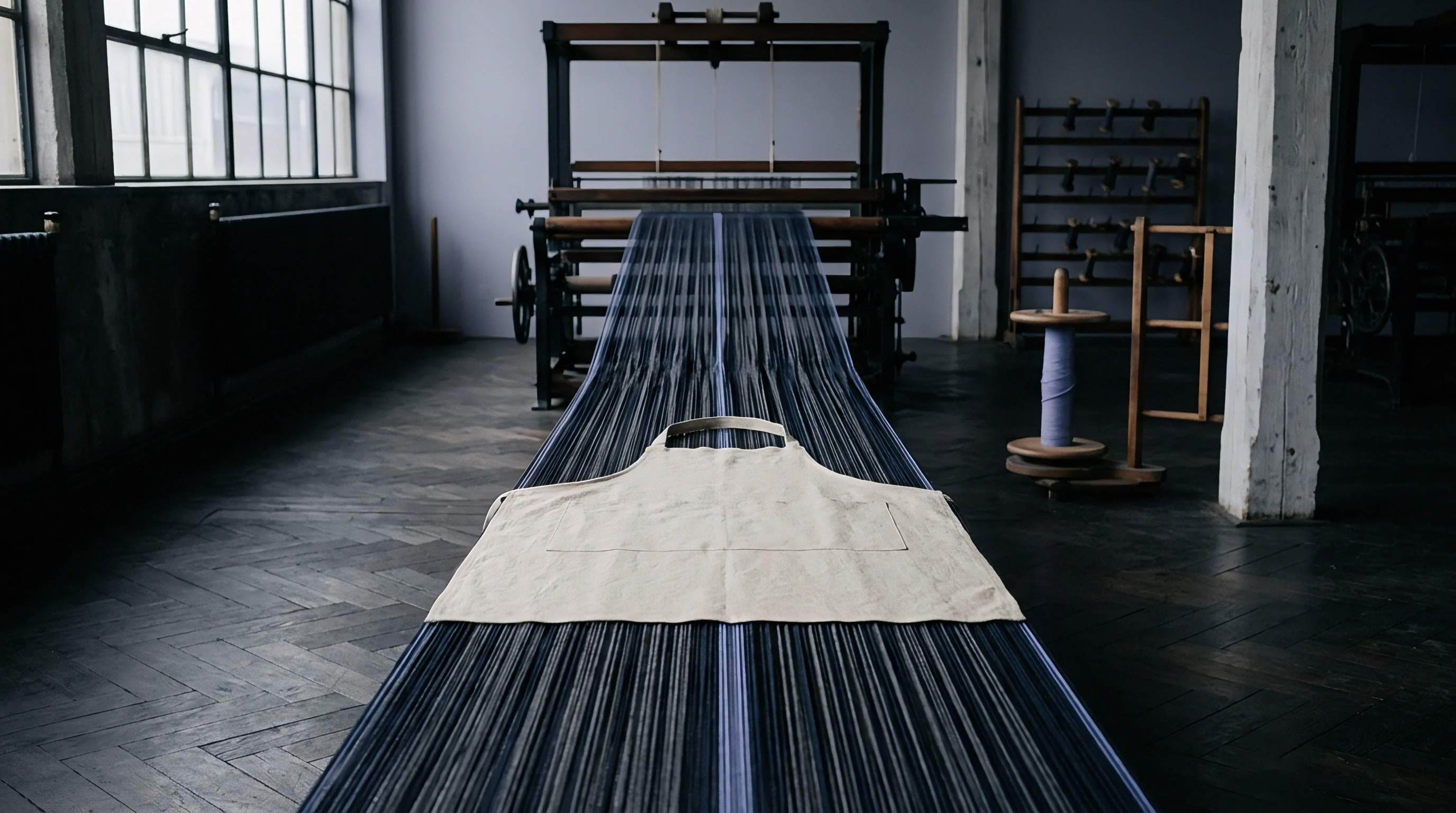
Stroke
Linen warp yarns break when cyclical elongation exceeds two percent. Wet-spun flax features a rigid crystalline cellulose core bonded by amorphous pectin, which leaves little structural elasticity under load. The loom technician controls shed aperture by calibrating heald frame lift heights at the harness drives.
Excessive heald lift snaps yarn ends during shedding motion. Insufficient lift causes the rapier head or projectile gripper to collide with the crossing warp sheet, fraying yarn fibers into hairy slubs that snag adjacent ends.
The shed geometry begins with the distance from the cloth fell to the first heald frame. On modern negative cam or electronic dobby motions, this distance spans 280 to 340 millimeters. The front heald frame requires the smallest vertical displacement, whereas each successive frame toward the back-rest roller requires an incrementally larger stroke to maintain a uniform shed line at the insertion zone.
Setting the front frame lift between 22 millimeters and 26 millimeters delivers the clearance envelope demanded by rapier profiles measuring 12 to 16 millimeters in total cross-sectional height. Back frames operate between 32 millimeters and 38 millimeters of total displacement.
- Frame height calibration establishes the mechanical zero datum against the race plate across all harness frames.
- Lift amplitude setting fixes the graduated stroke on the dobby jacks between 22 millimeters at the front and 36 millimeters at the rear frame. Technicians verify clearance with a stepped steel wedge.
- Shed opening measurement tracks top and bottom yarn sheet angles at maximum displacement. The total angle stays inside 24 to 28 degrees.
- Rapier rail alignment verifies three to five millimeters of vertical clearance between the bottom sheet and the gripper underside across the reed width.
The stroke determines warp extension directly. Hooke’s law applies to the initial geometric extension of bast fibers, where mechanical strain concentrates along non-uniform yarn slubs. Flax yarns spun to counts between NeL 14 (Nm 24, 42 tex) and NeL 40 (Nm 66, 15 tex) tolerate maximum peak shedding extensions of 1.2 to 1.6 percent before microscopic fiber ruptures multiply across the beam width.
Keep the total shed depth compact.
A compact shed stroke preserves the brittle crystalline structure of bast fibers.
Displacement adjustments rely on exact link positions on the dobby levers. Moving a driving rod outward along the lever arm expands vertical travel by 2.5 millimeters per notch on standard dobby assemblies. Shedding errors compound across wide machines.
On a 340-centimeter reed width, a two-millimeter deficit in harness lift at the frame center sags by an additional 1.5 millimeters under yarn tension, resulting in gripper entrapment during high-speed insertion.
Harness leveling must hold absolute flatness across the full lateral width of the heald frame stave.
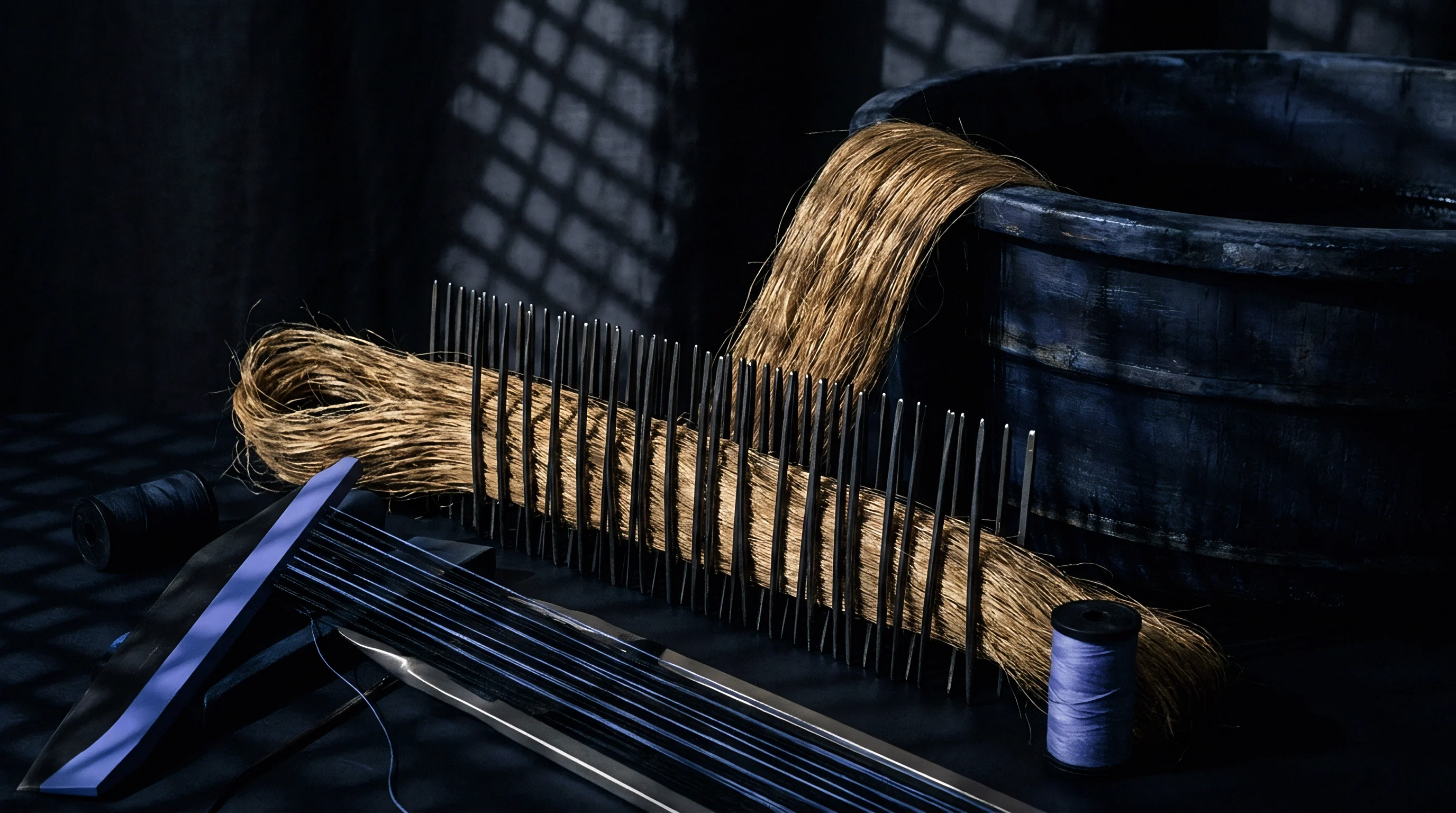

Level
The vertical alignment of the back-rest roller establishes the tension differential between the upper and lower warp sheets. In symmetric shedding, both sheets run under identical tension, leaving wet-spun linen ends to tangle as their protruding surface fibrils interlock during the cross. Raising the back-rest roller creates an asymmetric shed geometry.
The raised back-rest roller elongates the path of the bottom warp sheet during shedding, loading the lower ends with higher tensile stress while allowing the upper sheet to slacken slightly.

Where Does Asymmetric Shedding Prevent Clinging?
The asymmetric shed operates effectively on dense plain constructions such as handkerchief batistes, heavy apparel linens, and canvas duckings. Elevating the back-rest roller 15 to 30 millimeters above the horizontal breast-beam plane imposes ten to twenty percent higher static tension on the lower warp sheet at full shed opening. When the harnesses pass through the closed shed position, the lower sheet rapidly sheds its tension spike, shaking loose entangled pectin fibrils and clearing the opening path for the incoming filling pick.
| Yarn Count (NeL / Nm) | Yarn Tex Rating | Front Frame Stroke (mm) | Back Frame Stroke (mm) | Back-Rest Roller Elevation (mm) | Peak Shed Angle (deg) |
|---|---|---|---|---|---|
| NeL 14 / Nm 24 | 41.7 tex | 26.0 | 38.0 | +25.0 | 27.5 |
| NeL 25 / Nm 42 | 23.8 tex | 24.0 | 35.0 | +20.0 | 25.0 |
| NeL 36 / Nm 60 | 16.7 tex | 23.0 | 33.5 | +18.0 | 24.0 |
| NeL 50 / Nm 84 | 11.9 tex | 22.0 | 31.5 | +15.0 | 22.5 |
Tension variations across the warp sheet alter the mechanical behavior of the drop wires. Excessive asymmetry causes the slack top sheet to sag onto the drop wire bank, causing false electrical stop motions. Defective shed geometry generates specific cloth faults that ruin finishing yields.
- Bottom sheet entrapment occurs when sagging warp yarns drop into the path of the rapier guides, producing continuous broken ends along the left selvedge.
- Top sheet slackness leads to floating ends and skipped interlacings when slackened fibers catch on adjoining knots.
- Harness eye abrasion accelerates when excessive back-rest elevation forces yarns against the lower eyelet rims at steep angles.
- Reed mark striping develops when unequal yarn tensions force adjacent dent pairs to spread unevenly during beat-up.
Elevating the back-rest roller twenty millimeters imposes unequal sheet tensions that break clinging fibril bonds.
Lowering the back-rest roller below center reverses the tension balance, placing excessive load on the upper harness eyes. This inverted setting causes dropped stitches on dobby patterns and induces severe reed friction during the forward beat-up stroke. Cloth planners avoid negative back-rest offsets when processing 100 percent flax warps.
Incorrect warp line elevation produces warp stripiness and irregular cover across the finished roll.
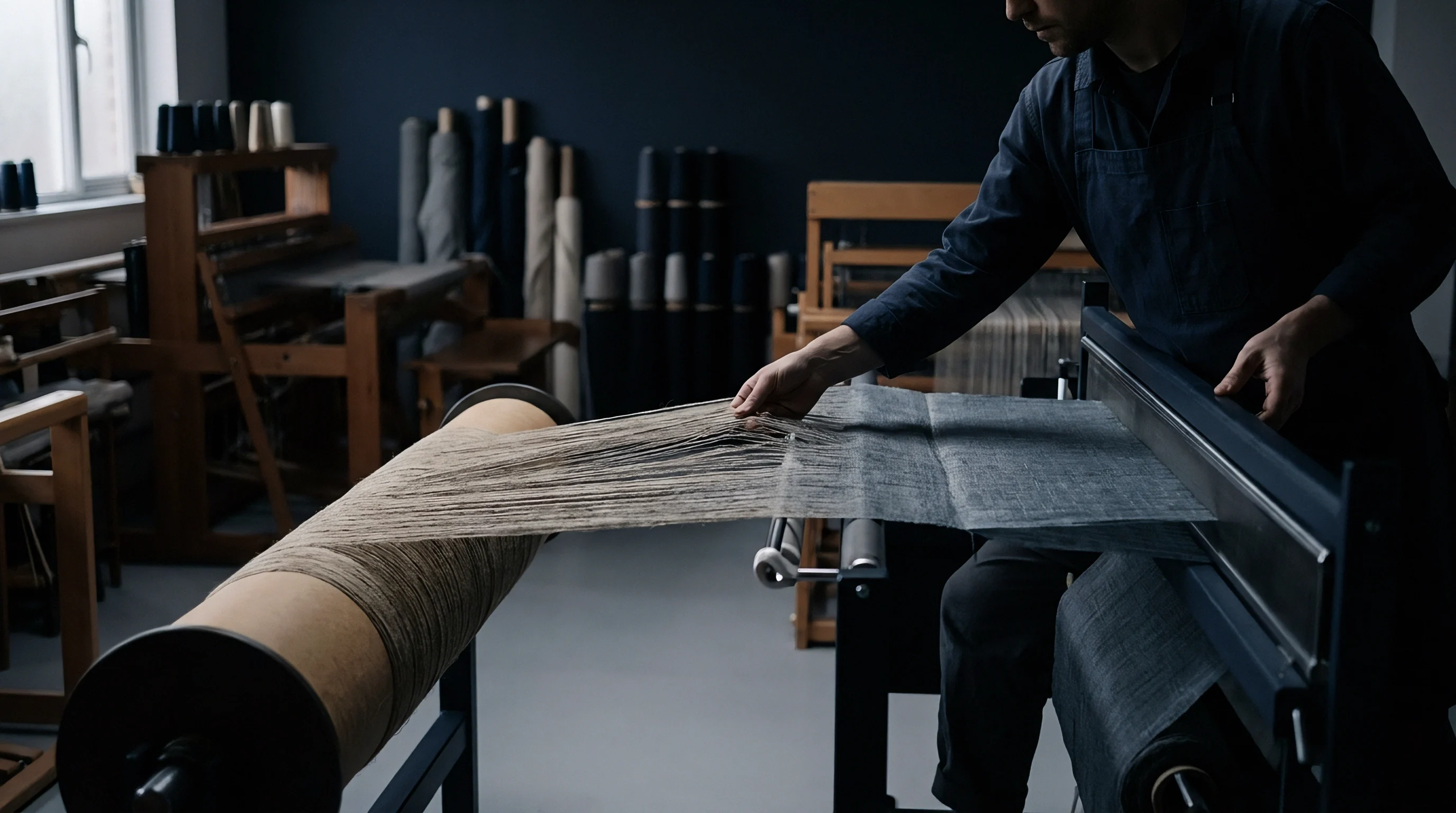
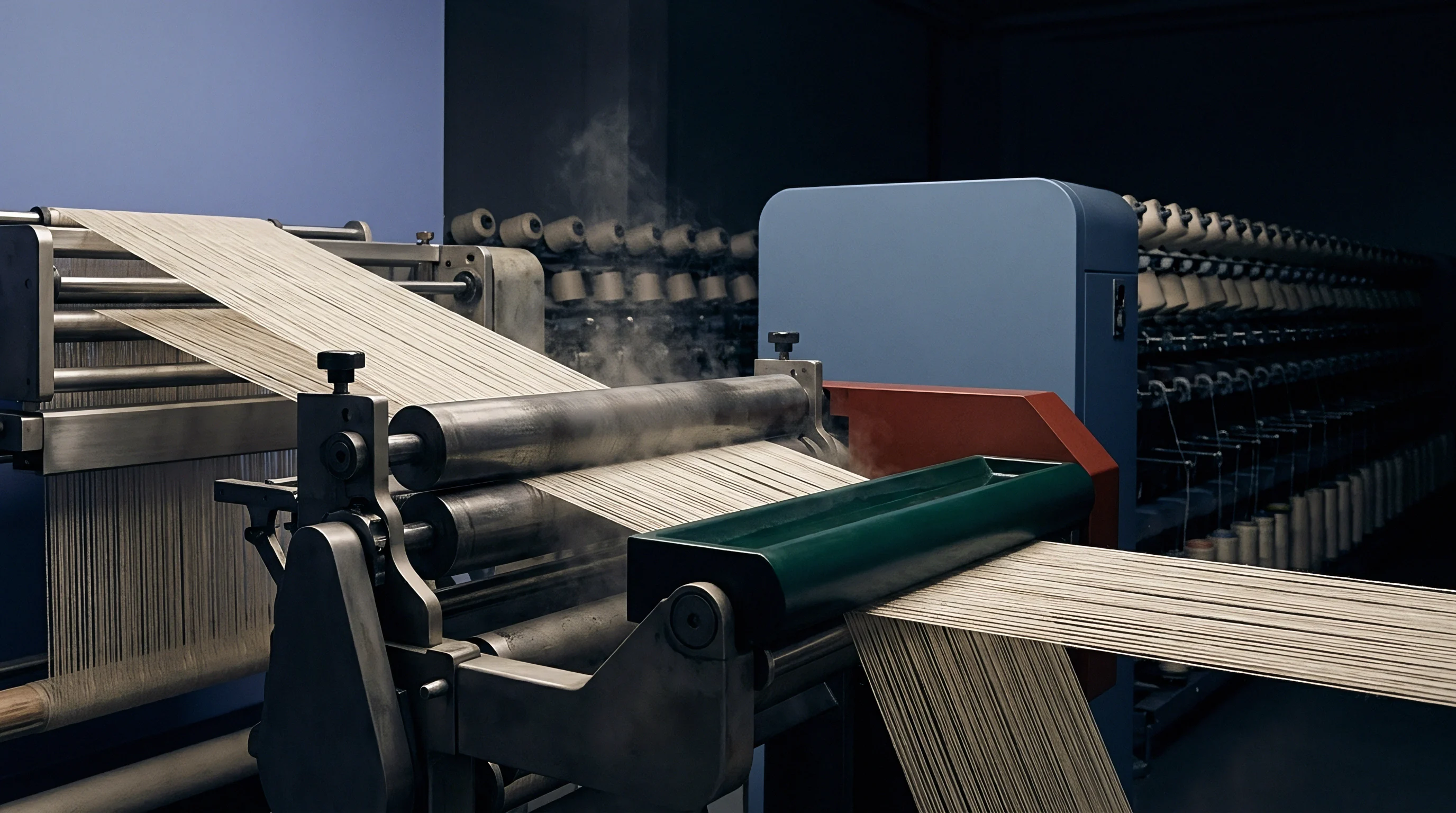
Phase
Crossing angles define the exact degree on the loom crankshaft rotation where harness frames level out. Early shedding closes the shed between 280 and 310 degrees of crankshaft rotation, well before the reed beats the filling yarn into the cloth fell at 360 degrees (0 degrees). Late shedding delays the harness cross until 340 to 355 degrees, nearly coinciding with beat-up impact.
Processing flax yarns demands an accurate balance between early closure to lock yarn positions and late closure to minimize peak impact stresses.

Which Loom Width Demands Shed Height Expansion?
Wide looms spanning 280 to 360 centimeters reed width demand larger vertical clearances at the heald frames. The center of a wide warp sheet experiences gravitational sag and lateral deflection, reducing effective clearance for the center-transfer rapier clamps. Gripper profiles on wide machines measure up to 18 millimeters in vertical depth, demanding a minimum clearance of 28 millimeters at the front harness to prevent guide teeth from clipping warp ends at high speed.
| Loom Insertion System | Operating Speed (PPM) | Shed Cross Degree | Dwell Period (deg) | Insertion Window (deg) |
|---|---|---|---|---|
| Positive Rapier | 320 – 420 | 315 – 325 | 110 – 120 | 85 – 245 |
| Negative Rapier | 450 – 580 | 330 – 345 | 90 – 100 | 95 – 260 |
| Air-Jet with Profile Reed | 600 – 750 | 345 – 355 | 80 – 90 | 105 – 240 |
| Mechanical Projectile | 280 – 360 | 295 – 310 | 130 – 140 | 80 – 230 |
Early shed closure traps the inserted pick firmly before the reed advances. This mechanism arrests filling contraction and controls pick spacing across dense plain cloths. The drawback appears in the mechanical strain imposed on the linen warp.
Closing the shed early forces the crossed yarns to grind past each other while the reed drives the filling pick forward, generating yarn friction that rubs off wax and sizing agents.
Late shedding relieves tension during beat-up. The harnesses cross during the moment of fell impact, allowing warp ends to slide smoothly through the heald eyes as the reed impacts the cloth fell. This reduces peak warp tension by up to 25 percent.
The risk shifts to the selvedges, where late crossing permits high-twist flax filling picks to kink and form loose loops along the catch cords.
A harness crossing angle set to 330 degrees balances beat-up stress relief against filling pick retention.
Electronic dobby drives allow asymmetric dwell angles. Programming a longer dwell on the open shed provides a wide, clean window for the insertion components, while rapid crossover motion limits the time yarns spend rubbing in the intermediate clearance zone. The shed stays fully open across 100 degrees of main shaft rotation on modern rapier looms.
Yarn fuzz clears itself if the loom runs fast enough to shake the harness frames.

Drag
Frictional abrasion inside the shedding zone destroys low-elongation flax warps. Linen yarns contain structural irregularities, node swellings, and residual shive particles that snag inside narrow heald eyelets. Inserting high-density warps with 24 to 36 ends per centimeter demands careful selection of heald wire thickness and eyelet geometry.
Duplex heald arrangements distribute ends across multiple frames to reduce lateral rubbing between adjacent wires.
Heald eyes manufactured from nickel-plated or polished hardened steel prevent rapid groove cutting caused by the abrasive silica naturally present on unbleached flax fibers. Mail eyes with dimensions of 5.5 millimeters by 1.2 millimeters allow slubs to pass without snagging. Round eye edges eliminate the sharp shear points that cause catastrophic yarn snapping under tension.
- Harness frame distribution must spread total warp density across six to eight frames on plain constructions to maintain at least three millimeters lateral clearance between adjacent heald wires.
- Drop wire selection pairs 0.9-gram closed-eye drop wires with fine linen yarns and 1.4-gram wires with coarse counts to balance electrical trip sensitivity against excessive gravity drag on the sheet.
- Lease rod spacing separates the upper and lower sheets behind the harness frames, dampening vibration harmonics that travel forward from the warp beam.
- Yarn lubrication spray deposits paraffin or water-soluble silicone emulsions at the lease zone to lower dynamic friction coefficients below 0.18 during high-speed shedding.
Warp tension control operates through the electronic let-off motion. The electronic load cell measures total warp sheet force continuously, signaling the servo motor to turn the warp beam and maintain an exact static tension. For single NeL 25 flax, static warp tension targets 35 to 45 centinewtons per warp end.
Exceeding 55 centinewtons causes rapid fatigue failure at yarn nodes, while dropping below 25 centinewtons allows the sheet to sag into the shuttle race.
ASTM D5430 inspection standard penalizes repeated warp end breaks that leave stop marks across greige yardage.
Drop wire banks generate secondary drag. Positioning the drop wire box too close to the harnesses amplifies angular yarn deflection, scrubbing the yarn against the wire slots during every shed opening. Placing the drop wire box 400 to 500 millimeters behind the rear heald frame flattens the approach angle, preserving the yarn surface sizing.
Purchase contracts stipulate that greige lots displaying continuous abraded warp fuzz or excessive heald fuzzing will suffer an eight percent price deduction at incoming dock audit.

Quota
Loom speed directly determines shed clearance dynamics. Operating a 220-centimeter rapier loom on medium-weight apparel linen at 480 picks per minute produces a cycle time of 125 milliseconds per pick. The shed must open, stabilize, accept the filling insertion, and cross in this fraction of a second.
High loom speeds compress the available shedding dwell window, forcing accelerated harness movement that generates severe dynamic tension peaks in the warp sheet.
Mill planners calculate production output by linking yarn breakage rates to loom stop time. Each warp break on a modern loom running 100 percent flax consumes three to five minutes of technician labor to locate the broken end, draw it through the drop wire, thread the heald eye, and pass it through the reed dent. A warp break rate exceeding 1.5 stops per 100,000 picks degrades operating efficiency below commercially viable thresholds.
| Stops per 100,000 Picks | Loom Efficiency (%) | Daily Output (Meters at 20 picks/cm) | Loom Cost per Hour ($) | Weaving Cost per Meter ($) |
|---|---|---|---|---|
| 0.8 | 88.5 | 286.7 | 24.50 | 2.05 |
| 1.5 | 82.0 | 265.6 | 24.50 | 2.21 |
| 2.5 | 74.0 | 239.7 | 24.50 | 2.45 |
| 4.0 | 63.5 | 205.7 | 24.50 | 2.86 |
| 6.0 | 51.0 | 165.2 | 24.50 | 3.56 |
Assume a commercial weaving order committing 10,000 meters of NeL 25 plain linen at 20 picks per centimeter on 220-centimeter negative rapier machinery. Total picks calculate to 20,000,000 picks. At an optimal break rate of 0.8 stops per 100,000 picks, the loom records 160 warp stops, completing the run in 34.8 operating days at 88.5 percent efficiency.
If incorrect shed clearance raises the break rate to 4.0 stops per 100,000 picks, total warp stops surge to 800 events. Operating efficiency drops to 63.5 percent, stretching machine allocation to 48.6 days and adding $8,100 in direct loom-hour capacity expenses.
The landed meter cost reflects machine stop frequency. Cloth buyers reserve weaving capacity months ahead during peak seasonal booking windows. When a mill loses fifteen percent efficiency because of incorrect harness lift and yarn clinging, the shed scheduler delays subsequent order slots, bumping deliveries and forcing late-shipment air freight penalties onto the ledger.
Warp sizing formulation works in direct coordination with shed clearance geometry. Applying potato starch or modified carboxymethyl cellulose sizes at add-on levels of six to nine percent lays down yarn surface hairs, allowing cleaner separation during the harness stroke. Sizing without proper back-rest elevation fails to prevent yarn fuzz entanglements on dense constructions.
Calibrating stroke displacement, back-rest height, and crossover phase transforms the difficult physical characteristics of flax into predictable loom output.