Verifying Scope Boundaries in European Flax Supply Chains
European flax verification requires matching batch Transaction Certificates against mill weighbridge receipts and verifying Scope boundaries across all transformation tiers.


Certificates
The Alliance for European Flax-Linen and Hemp governs the primary qualification framework for fiber grown across France, Belgium, and the Netherlands. Origin verification rests on ISO 17065-accredited third-party certification bodies that conduct annual site audits and continuous material accounting. Because physical fiber rapidly separates from initial field declarations as it moves through international processing, provenance checks depend on a clear understanding of document boundaries.
The European Flax system operates on two tiers: Scope Certificates issued to facilities and Transaction Certificates accompanying specific shipments. Understanding the exact limits of each document prevents commercial buyers from accepting invalid provenance claims.
A Scope Certificate confirms that an enterprise possesses the equipment, accounting controls, and segregation capacity needed to process certified flax without mixing it into conventional stock. Certification bodies like Bureau Veritas or Control Union inspect facilities annually, reviewing production logs, warehouse layouts, and mass-balance ledgers. Valid certificates specify exact processing stages, whether scutching, hackling, spinning, weaving, or wet processing.
Crucially, a Scope Certificate alone never proves that a given shipment of fiber, yarn, or fabric contains verified European flax. Treating a facility’s Scope Certificate as proof of physical origin for a delivered lot remains one of the most common auditing errors in textile sourcing.
Scope Certificates expire annually.
Transaction Certificates connect certified facilities directly to specific physical consignments. Issued by the certification body when requested by the seller, a Transaction Certificate lists the net fiber mass, gross weight, commercial invoice numbers, transport dockets, and lot identifiers for a designated shipment. By cross-referencing the Scope Certificates of both buyer and seller, it establishes a traceable chain of custody.
A buyer taking delivery of flax yarn without a corresponding Transaction Certificate holds uncertified inventory, no matter how current the supplier’s Scope Certificate may be. Verification requires matching the net weight on the Transaction Certificate against physical bills of lading and weighbridge receipts at the receiving plant.

Scope Document Architecture and Chain Mechanics
Maintaining audit trails requires cross-referencing across operational levels to guarantee material integrity. Verification begins by checking the issuing body’s accreditation against the official Alliance for European Flax-Linen and Hemp register. Scope parameters establish a facility’s precise boundaries, detailing approved locations, authorized processing steps, and eligible material categories.
For instance, a mill with a Scope Certificate limited to yarn spinning cannot issue certified fabric declarations unless its scope explicitly covers weaving.
Auditors examine transaction certificates against physical delivery notes. The transaction document specifies the weight of certified material transferred between two named entities within a given timeframe. Before approving a Transaction Certificate, the certification body verifies the seller’s available mass balance, preventing a facility from selling more certified material than it received or processed.
If a mill buys 100 metric tons of scutched European flax fiber, its mass-balance ledger limits outward certified yarn issuance to 100 metric tons minus processing scrap and yield loss. Any Transaction Certificate issued beyond this ledger balance indicates either an administrative oversight or deliberate over-declaration.
- Verify that the seller’s Scope Certificate is active in the official scheme database before placing purchase contracts.
- Demand batch-specific Transaction Certificates for every physical consignment within thirty days of delivery.
- Reconcile net fiber weights on incoming Transaction Certificates against weighbridge receipts and commercial invoices.
- Confirm that the Scope Certificate for each intermediate subcontractor covers the specific transformation performed.
- Audit mill mass-balance ledgers annually to ensure certified output volumes do not exceed raw material inputs.
Expiry dates on Scope Certificates require careful monitoring. Processing completed during any gap between expiration and renewal forfeits certified status. If a spinning mill processes fiber while its Scope Certificate is lapsed, the resulting yarn cannot be issued a Transaction Certificate, regardless of how fully documented the incoming raw fiber was.
Sourcing teams need to track renewal schedules across tier-one, tier-two, and tier-three suppliers to avoid gaps in compliance.

Spatial Boundaries of Raw Fiber Cultivation
European Flax cultivation is restricted to Western European coastal farming zones. Growing regions stretch across northern France, coastal Belgium, and the southern Netherlands, where maritime climate, ambient humidity, and soil conditions suit the crop. The field dew-retting process depends on these microclimates, using local rain and dew cycles to drive fungal breakdown of plant pectins.
Fiber grown outside these designated areas cannot carry European Flax certification, no matter what farming techniques or seed lines are used.
Trace elements in the flax stem reflect local soil chemistry, water composition, and seasonal weather patterns. Proximity to the Atlantic Ocean and North Sea gives Western European fiber distinct isotopic signatures. When paperwork faces legal scrutiny, trace element testing provides laboratory verification of origin.
Fiber from continental regions like Eastern Europe, Egypt, or Northern China displays markedly different isotopic profiles due to local precipitation, soil mineral content, and broader temperature swings.
European Flax certification mandates that raw fiber cultivation occurs exclusively within defined maritime zones of France, Belgium, and the Netherlands under natural dew-retting conditions.
Physical traceability is maintained using field identification codes assigned during harvest and processing. Agricultural cooperatives track flax straw from individual farm plots to the scutching mill, logging plot coordinates into the central database. Outgoing fiber bales receive tags with the harvest year, agricultural lot number, and scutching facility code.
Complete physical separation between European flax and conventional or non-European straw during field handling and scutching is required for facility qualification.
| Certification Framework | Approved Fiber Cultivation Region | Mandatory Processing Locations | Chain of Custody Standard | Auditing Body Requirement |
|---|---|---|---|---|
| European Flax | Western Europe (FR, BE, NL) | Global (with unbroken chain) | Physical segregation or Mass Balance | ISO 17065 Accredited Third-Party |
| Masters of Linen | Western Europe (FR, BE, NL) | 100 percent European Union | 100 percent Physical Segregation | ISO 17065 Accredited Third-Party |
| OEKO-TEX Standard 100 | Global (Unrestricted) | Global (Unrestricted) | Chemical Safety Testing Only | OEKO-TEX Member Institutes |
| Global Recycled Standard | Not Applicable (Recycled Content) | Global (Unrestricted) | Transaction Certificate Chain | ISO 17065 Accredited Third-Party |
| Data reflects operational criteria defined in standard specifications published by respective governing organizations. | ||||
Relying on partial paperwork or unverified scope claims exposes buyers to major financial and compliance risks. If an audit reveals that a spinning mill blended uncertified flax into a lot declared as European Flax, the certification body revokes the mill’s Scope Certificate. The buyer holding the resulting fabric then faces mandatory re-labeling, inventory write-downs, and commercial claims for misrepresenting origin.


Scutching
Scutching mechanically separates harvested straw into spinnable long line fiber, short tow, and woody shives. As the initial industrial processing stage in the linen supply chain, scutching mills receive field-retted straw bundles and pass them through corrugated rollers to break the stem’s woody core before turbine blades beat out the bast fiber ribbons. Because this step turns raw farm crops into commercial fiber, precise mass-balance tracking at the scutching mill sets the baseline volume for all downstream processing tiers.
Yield ratios during scutching are governed by plant physiology. Incoming straw carries moisture, woody shives, soil dust, short fibers, and long line fiber. Efficient mechanical processing turns 1000 kilograms of air-dried straw into roughly 100 to 140 kilograms of long line fiber, 100 to 120 kilograms of tow, and 550 to 650 kilograms of woody shives, with the rest lost as dust and moisture.
Mills log yield records for every farm lot, recording raw straw weights against finished fiber outputs.
Yield metrics drive audit checks.
Gaps between straw inputs and fiber outputs indicate processing issues or inventory manipulation. For example, a scutching mill reporting long line fiber yields above 16 percent of total straw mass triggers an immediate audit, as botanical limits prevent higher long-fiber recovery. Auditors reconcile weighbridge slips from incoming straw deliveries against outbound weights for finished bales and tow.
Unmatched ratios point to miscalibrated scales or unrecorded conventional straw fed into the line.

Physical Transformation Ratios and Yield Loss
Processing flax straw demands strict inventory tracking to preserve origin claims. Long line fiber emerging from turbine blades is sorted manually, graded by length, strength, fineness, and color, then compressed into 100 to 200 kilogram bales. Every bale gets a durable barcode tag indicating its unique ID number, scutching mill code, agricultural lot number, and harvest year.
These tags create the primary traceability record for raw fiber trading.
Scutching tow comprises the shorter, tangled fibers knocked free during turbine beating. It undergoes secondary cleaning and carding for coarse yarns or non-woven goods. Because tow sells at a discount compared to long line fiber, mills must account for each fraction separately.
Grouping tow and long line weights under one certified total distorts chain-of-custody ledgers, opening the door to inflating high-value long line volumes with cheaper tow stock.
- Inadequate Physical Segregation allows certified European flax straw to mix with uncertified conventional straw during outdoor field storage or indoor mill staging.
- Uncalibrated Weighbridge Operations introduce weight measurement errors that corrupt input-output mass balance ledgers across entire harvest runs.
- Missing Bale Identification Tags break physical traceability between individual raw fiber units and their corresponding scutching delivery dockets.
- Inaccurate Yield Accounting conceals the blending of imported conventional fiber into certified long line bale inventories during high-demand market cycles.
- Commingling Scutching Waste leads to improper volume allocations where coarse tow masses are fraudulently reported as high-value long line fiber.
Retting conditions directly dictate scutching performance and fiber yield. Under-retted straw retains stiff natural pectins that bind fibers to the stem, increasing breakage and shifting output toward short tow. Over-retting allows fungi and bacteria to weaken the cellulose walls, degrading long line strength and lowering usable yield.
Mills log moisture levels and retting scores for every incoming lot, establishing baseline specifications that follow the certified bale dockets.

Bale Tags and Warehouse Mass Balance
Warehouse systems in scutching plants track certified fiber by scanning physical bale tags into central inventory databases. Bales stay in storage until sold to spinners or merchants. Upon sale, the mill issues a delivery docket detailing every bale barcode and net weight in the lot.
This docket serves as the core source document for the certification body when generating the matching Transaction Certificate.
Further mass loss happens during hackling, whether in dedicated facilities or spinning mills. Hackling combs scutched fiber into aligned parallel ribbons called slivers, removing shorter fibers known as hackling tow. Standard hackling yields roughly 65 to 75 percent sliver, recovering 25 to 35 percent as tow.
Sourcing auditors monitor these ratios closely; receiving 10 metric tons of scutched fiber and logging 9 metric tons of sliver without recording tow output indicates flawed accounting.
Paperwork alone fails.
Warehouse audits combine physical counts with ledger reviews. Auditors pull random bales from racking and scan barcodes to verify inventory records. Finding unrecorded bales in certified processing areas is a critical non-compliance that signals untracked material movement.
Mills must maintain clear physical separation between certified European flax and conventional stock using dedicated bays, floor lines, or physical barriers.
When net mass discrepancies occur, natural moisture loss during storage is frequently cited as the cause. While raw flax fiber fluctuates between 8 and 12 percent moisture regain depending on ambient humidity, normal moisture shifts do not account for missing physical bales or yield deviations beyond botanical limits.

Spindle
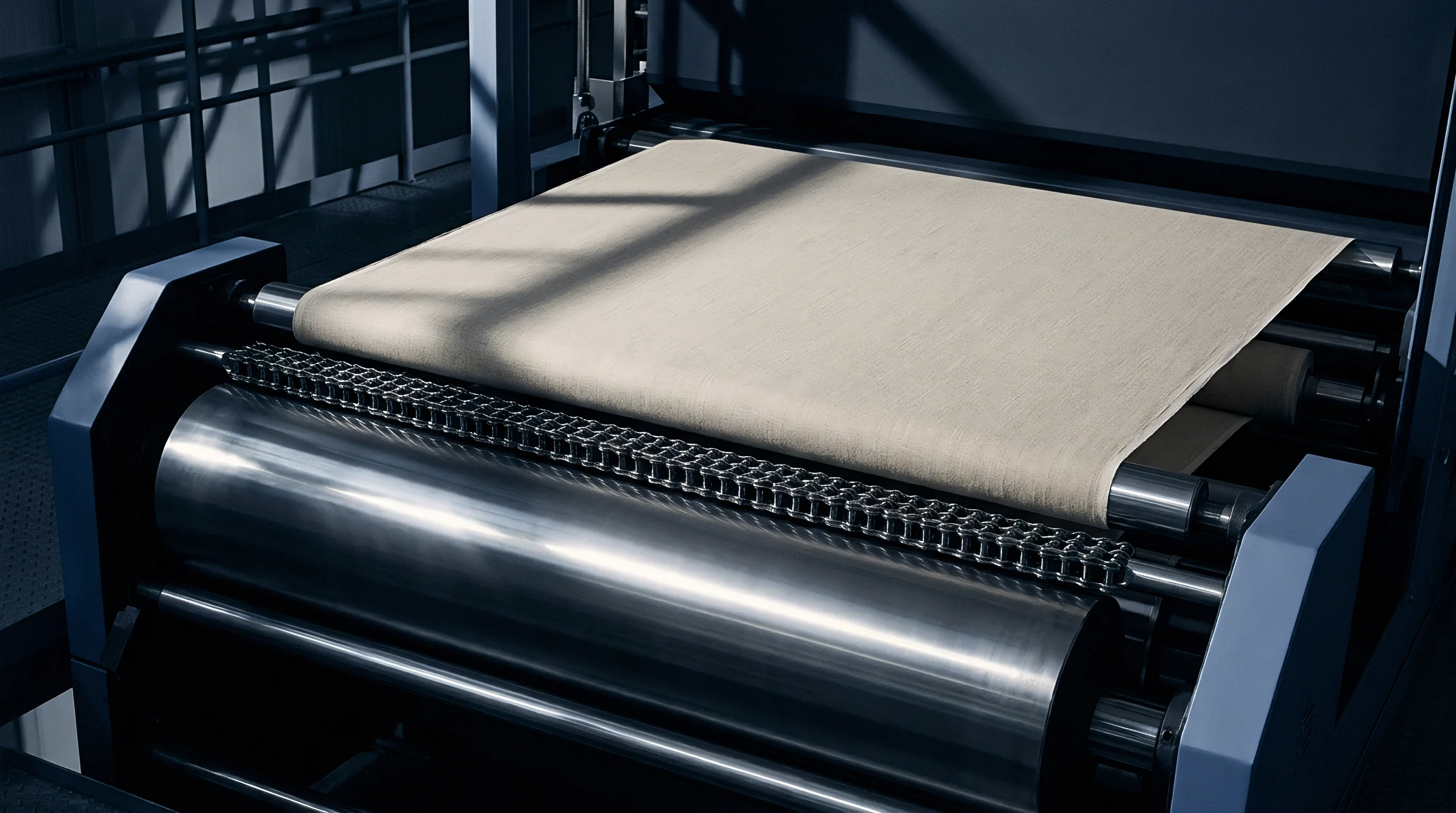
Spinning is the stage where geographic continuity faces the greatest disruption. Mills process hackled sliver into yarn using two main routes: wet spinning for fine, high-tenacity yarns, and dry spinning for heavier, coarser qualities. Fine linen fabrics rely on wet spinning, where roving passes through a hot-water bath during ring spinning to soften pectic binders for drafting.
Given global manufacturing patterns, flax grown and scutched in Western Europe is routinely shipped to spinning operations in China, India, or Central Europe.
Offshore spinning introduces notable chain-of-custody risks. When certified fiber or sliver leaves European ports for Asian mills, documentary continuity hinges on how strictly processors manage Scope and Transaction Certificates. An overseas mill processing certified European flax must hold an active Scope Certificate from an accredited body.
It must also segregate certified European fiber from conventional Chinese, Russian, or North American stock across opening, carding, combing, roving, spinning, and winding.
Yarn count affects yield.
Yarn yield varies significantly with target thread counts, whether measured in metric Nm or Lea. Fine wet-spun counts like Nm 39 (26 Lea) demand higher draft ratios and top-grade fiber, creating more comb waste during preparation than coarse yarns like Nm 10 (6.6 Lea). Finished yarn weight equals sliver input minus comber waste, fly, roving scrap, and winding breaks.
Typical spinning losses run between 8 and 15 percent depending on yarn fineness and equipment age.

Cross Border Processing and Offshore Yarn Production
Long-distance shipping complicates inventory accounting through extended transit, humidity shifts, and customs clearance requirements. Ocean freight exposes fiber to moisture changes that alter gross arrival weights. Audit rules require calculating net dry mass using standard moisture regain formulas under ISO 2060, ensuring moisture uptake does not inflate reported raw fiber inputs at destination mills.
Evaluations of shipment variance show an average unaccounted fiber discrepancy of 4.2 percent by weight. This discrepancy originated from mills adjusting net weights to compensate for moisture evaporation without reporting normalized conditioned dry weights. Sourcing contracts must stipulate that mass-balance reconciliation relies exclusively on standard conditioned weights containing the official commercial moisture regain allowance of 12 percent for raw flax fiber.
The European Flax standard permits spinning operations outside Europe provided the processing mill holds a valid Scope Certificate and maintains unbroken Transaction Certificate records for all material inputs and outputs.
Fiber blending creates substantial risk for provenance claims during yarn production. Mills often blend flax with cotton, viscose, polyester, or uncertified flax to meet aesthetic targets or lower material costs. The European Flax standard allows certified yarn claims for intimate blends only when the precise proportion of certified European flax is calculated and noted on both Transaction Certificates and yarn dockets.
Mixing certified European flax with uncertified flax fiber is prohibited; blending certified and uncertified flax strips certified status from the entire lot.

Can Chinese Spinners Guarantee European Flax Integrity?
Chinese mills process a large portion of Western Europe’s scutched flax exports, making their internal controls critical to global supply chain tracking. Qualifying an overseas spinning plant requires confirming that it uses dedicated production lines or strict scheduled segregation for certified runs. Before starting a certified production run, carding engines, combing heads, roving frames, and spinning spindles must be thoroughly cleaned of conventional fiber residues.
Mill audits focus heavily on physical lot tracking in opening and blending areas, where fiber from multiple certified bales is combined for uniform length and fineness. Auditors match barcode tags pulled during opening against daily production logs and material ledgers. If the weight of opened fiber exceeds the net certified bale volume issued from storage, uncertified stock has entered the line.
| Processing Stage | Input Material Specification | Primary Output Material | Expected Fiber Yield Range | Typical Co-product or Scrap Fraction |
|---|---|---|---|---|
| Scutching | Air-dried Dew-retted Straw | Scutched Long Line Fiber | 10.0% to 14.0% | 10% Tow, 60% Shives, 18% Dust/Moisture |
| Hackling | Scutched Long Line Fiber | Hackled Combed Sliver | 65.0% to 75.0% | 25% to 35% Hackling Tow |
| Wet Spinning | Hackled Sliver (Long Line) | Wet-Spun Fine Flax Yarn | 85.0% to 92.0% | 8% to 15% Comber Waste / Fly Scrap |
| Dry Spinning | Carded Scutching Tow | Dry-Spun Coarse Yarn | 80.0% to 88.0% | 12% to 20% Carding Waste / Short Fiber |
| Weaving | Spun Flax Yarn (Warp & Weft) | Greige Woven Linen Fabric | 94.0% to 97.0% | 3% to 6% Loom Waste / Selvedge Trims |
| Yield figures reflect standard industrial operation averages based on dry weight calculations under ISO testing conditions. | ||||
Masters of Linen imposes far tighter geographic boundaries than European Flax. While European Flax allows spinning, weaving, and finishing anywhere globally if the chain of custody holds, Masters of Linen requires every production step ~ from scutched fiber to woven fabric ~ to take place inside the European Union or Western Europe. A fabric woven in Europe from European Flax yarn spun in China qualifies for European Flax, but fails Masters of Linen rules entirely.
Sourcing managers need to keep these distinctions clear when setting purchasing specifications.
Spindle allocation records offer crucial evidence during site audits. Inspectors check ring spinning frame logs to ensure the number of spindles assigned to a certified production run matches reported output. Machine capacity formulas prevent facilities from reporting high certified volumes from inadequate equipment allocations.
If 5,000 spindles run a certified lot for five days at an output of 15 grams per spindle-hour, physical production cannot exceed 9 metric tons of yarn. Output reported above that ceiling indicates falsified records.
What structural accounting mechanisms prevent offshore spinning mills from re-assigning valid European Flax transaction numbers across uncertified domestic fiber batches during peak export shipping cycles?


Jurisdiction
Customs authorities classify imported flax yarn and fabric under legal frameworks governing origin declarations. Statutory origin rules applied by border agencies function independently of private certifications like European Flax or Masters of Linen. A legal origin ruling determines duty rates, trade preference eligibility, anti-dumping exposure, and mandatory labeling in destination markets.
Buyers must navigate this intersection between commercial provenance claims and statutory trade law.
Country of origin rules under Article 60 of the Union Customs Code (UCC) determine origin based on where substantial transformation takes place. For textiles, non-preferential origin governs the country named on customs entries and mandatory garment care labels. Under standard rules, spinning fiber into yarn or weaving yarn into fabric constitutes substantial transformation, conferring legal origin to the processing country.
Customs enforcement remains strict.
Fiber origin dictates duty.
Fabric woven in China from raw French flax carries China as its legal country of origin on import declarations and FTC care labels. Listing France as the origin on customs dockets for that fabric violates import law, exposing the importer of record to product seizure, fines, and legal liability. Fiber origin can be mentioned in marketing copy or hangtags only if clearly distinguished from the manufacturing location.

Customs Classification and Substantial Transformation Rules
Harmonized System (HS) rules place flax products in Chapter 53 for raw and spun vegetable fibers, and Chapter 63 for finished goods. Raw, scutched, or hackled fiber falls under HS 5301, yarn under HS 5306, and woven fabrics under HS 5309. Moving across these tariff headings through processing generally satisfies the Change in Tariff Heading (CTH) test used to determine substantial transformation.
Sourcing documentation must align HS codes with actual processing steps.
The US Federal Trade Commission enforces origin claims under the Textile Fiber Products Identification Act. FTC guidelines accept labels like “100% Linen Made in USA of Imported Fiber” because they distinguish manufacturing location from fiber origin. However, a label claiming “100% European Linen” is interpreted as declaring that both fiber growth and garment assembly occurred in Europe.
Labeling items made from European fiber processed elsewhere as “European Linen” breaches federal regulations.
- Certificate of Origin issued by a local Chamber of Commerce verifying the legal non-preferential origin of the shipment based on substantial transformation criteria.
- Commercial Invoice Detail specifying the line-item HS classification code, net weight, gross weight, and detailed product description for every SKU.
- Bill of Lading and Transit Manifests documenting continuous transport routing from export port to destination port without unauthorized intermediate processing.
- Mill Declaration of Processing Steps detailing the physical locations where scutching, spinning, weaving, and wet finishing were performed for the lot.
- Transaction Certificates matching the exact weight, buyer, seller, and invoice numbers referenced on the customs entry summary docket.
Customs audits review input origin to detect duty circumvention. Where trade remedies apply to flax yarns from specific countries, authorities examine mill production logs and fiber invoices to match raw material inputs against finished yarn exports. Maintaining full chain-of-custody documentation through European Flax Transaction Certificates provides critical support during customs origin inquiries.

Regulatory Labelling Enforcement across Major Markets
EU Regulation 1007/2011 governs textile fiber labeling across member states. It limits the term “linen” strictly to fibers from the flax stem (Linum usitatissimum). Intimate blends must display fiber percentages in descending order, such as “55% Linen / 45% Cotton.” Importers making claims about European fiber origin must keep supporting documentation on file at their registered offices for market surveillance inspections.
Proof remains mandatory.
Mismatches between label claims and actual fiber composition invite enforcement under consumer protection laws. Regulators pull retail samples for laboratory testing under ISO 1833-11, dissolving non-flax cellulosic components to calculate exact flax content. If a product labeled as 100 percent European flax contains uncertified bast fiber or synthetic additives, authorities can mandate recalls, public notices, and fines against the brand.
Standard Purchase Order Clause: “Seller warrants that all products delivered under this order carry legal non-preferential origin declarations matching the country of final substantial transformation, and that raw material origin claims comply fully with US FTC Textile Rules and EU Regulation 1007/2011.”
Subcontracting dyeing or wet finishing across borders complicates legal origin status. Fabric woven in one nation and shipped to another for bleaching, dyeing, printing, or finishing is evaluated under specific tariff shift rules. Simple finishing steps like washing, tentering, or calendering seldom confer country of origin under standard customs rules.
Audits must examine each intermediate site to confirm correct legal origin before filing customs entries.
Disconnects between marketing claims and customs rulings create legal risk. Advertising “100% French Linen” for garments cut and sewn in Southeast Asia from Asian-spun yarn draws regulatory action unless the label explicitly separates fiber source from garment assembly. Holding European Flax Transaction Certificates validates raw material claims, but it does not change statutory origin labeling rules enforced by border agencies.


Discrepancies
Laboratory testing offers physical verification when paper audits reveal unexplained mass shifts. Sourcing teams cannot rely entirely on documentation, as altered weight slips and fraudulent certificates can pass basic paperwork reviews. Testing the physical, chemical, and isotopic profile of flax fiber establishes empirical proof of origin and fiber identity independent of paper records.
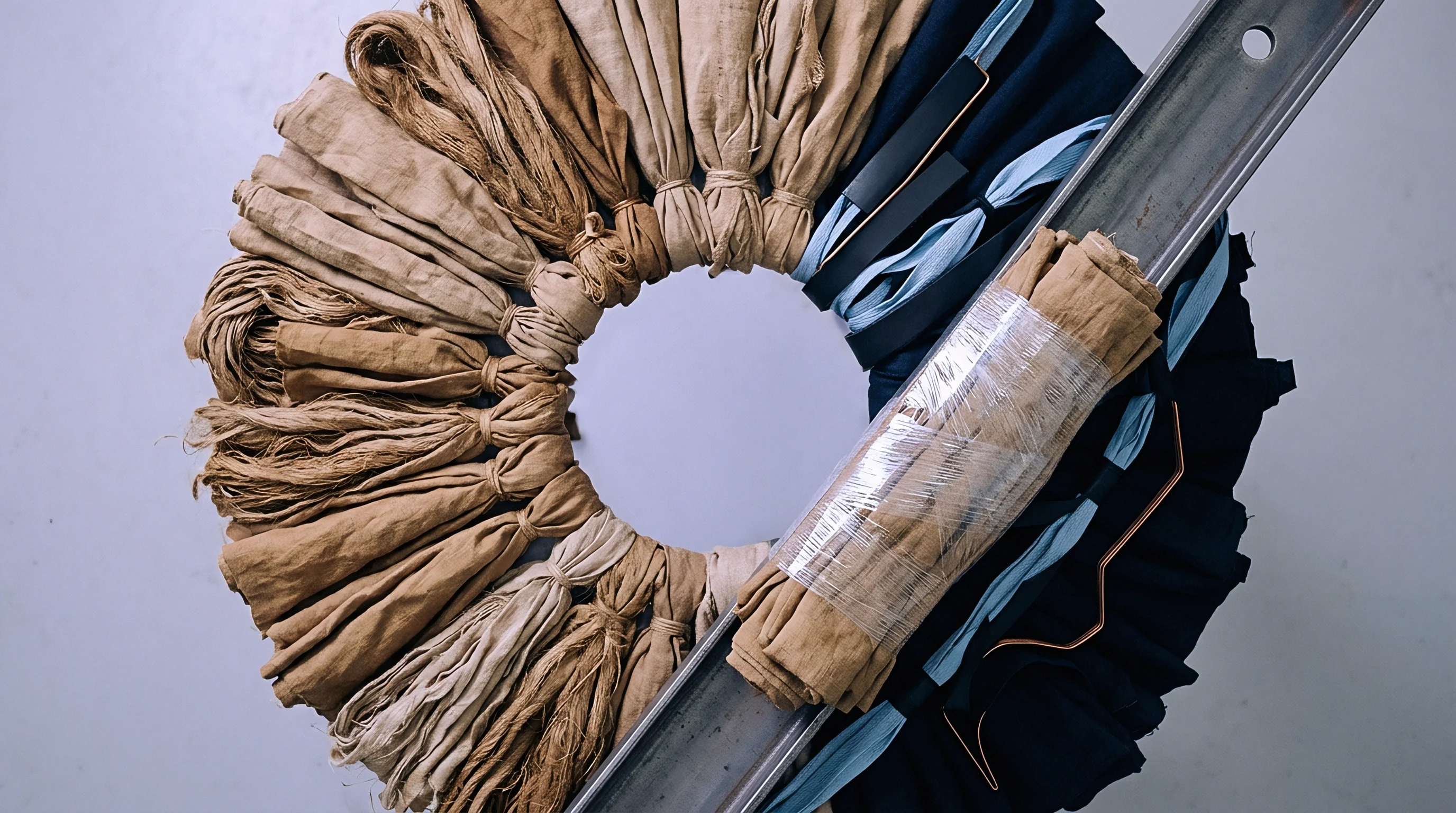
Isotope Ratio Mass Spectrometry (IRMS) measures stable isotopes of carbon, hydrogen, oxygen, nitrogen, and strontium in the flax stem’s cellulose matrix. Factors like elevation, coastal distance, rainfall chemistry, and soil minerals shape the isotopic profile fixed in the plant during growth. By comparing delta 18-O and delta 2-H readings from yarn samples against reference maps for Western European growing zones, testing labs can distinguish maritime European flax from inland continental harvests.
Retting alters chemical signatures.
Strontium isotope ratio testing (87-Sr / 86-Sr) provides geographical discrimination based on regional geology. Western European flax growing on Cretaceous chalk basins and Tertiary alluvial soils shows distinct strontium ratios compared to ancient continental shield geology in Eastern Europe or Central Asia. Measuring 87-Sr / 86-Sr ratios in extracted fiber ash provides strong empirical evidence when verifying claimed origin.
Isotopic Analysis and Geolocation Verification
Sampling protocols require strict controls to prevent contamination. Testing labs analyze undyed fiber or yarn drawn from multiple points across a delivery lot. Chemical preparation removes waxes, pectins, dyes, and finishes, isolating pure alpha-cellulose for testing.
Isotopic values from the sample are then matched against regional reference databases maintained by research institutions.
Inductively Coupled Plasma Mass Spectrometry (ICP-MS) complements isotope testing by measuring trace mineral concentrations in the fiber. Concentrations of rare earth elements, barium, rubidium, and manganese reflect regional soil composition and fertilizer practices. Combining multi-element profiles with stable isotope data creates a distinct geographic fingerprint to cross-check claims on Transaction Certificates.
| Geographic Cultivation Zone | Delta 18-O Stable Isotope Range (per mil) | Delta 2-H Stable Isotope Range (per mil) | Radiogenic Strontium Ratio (87-Sr / 86-Sr) | Primary Soil & Climate Signature Characteristics |
|---|---|---|---|---|
| Western Europe (FR, BE, NL) | +18.5 to +21.5 | -45.0 to -60.0 | 0.7085 to 0.7098 | Maritime Atlantic rainfall, Cretaceous chalk geology |
| Eastern Europe (Poland, Ukraine) | +22.0 to +25.0 | -65.0 to -85.0 | 0.7110 to 0.7145 | Continental inland rainfall, Precambrian/Paleozoic basement |
| Northern China (Heilongjiang) | +23.5 to +27.0 | -85.0 to -110.0 | 0.7125 to 0.7160 | High latitude continental, extreme seasonal temperature delta |
| Egypt (Nile Delta) | +28.0 to +32.0 | -20.0 to -40.0 | 0.7070 to 0.7082 | Evaporative enrichment, Arid climate, Alluvial Nile silt |
| Values represent dry alpha-cellulose isotopic delta values relative to V-SMOW standard based on published geographical baseline studies. | ||||
Microscopy diagnostics evaluate structural fiber features. Flax exhibits distinct transverse nodes along its individual cell walls; lumen diameter and fiber bundle structure differentiate Linum usitatissimum from other bast fibers like hemp, ramie, or jute. Blend analysis performed under ISO 1833 standards confirms that no undeclared bast or synthetic fibers have been mixed into certified yarns.

Reconciliation Audits on Transaction Quantities
Reconciliation audits evaluate physical material movements against paperwork across production cycles. Auditors total all incoming Transaction Certificates received by a facility over twelve months, summing the net fiber mass. They compare this input against total output sold under outgoing certificates, adjusting for standard processing waste.
If outgoing certified weight exceeds incoming raw material volume after accounting for yield loss, an unresolved discrepancy exists.
Moisture alters net mass.
Blend ratios require testing.
Investigating discrepancies requires checking floor-level production data. Auditors inspect dye logs, frame sheets, loom reports, and waste sales slips. Sales invoices for scutching tow, hackling waste, or spinning fly provide cross-verification; missing waste sales records suggest that reported scrap mass was actually spun into uncertified yarn.
- Establish Baseline Mass Balances by compiling all verified incoming and outgoing transaction dockets over the audit period.
- Apply Standard Stage Yield Multipliers to adjust raw input weights for expected mechanical waste and processing losses.
- Conduct Physical Stock Counts of raw fiber, sliver, roving, spun yarn, and greige fabric stored in warehouse areas.
- Extract Fiber Samples for Isotopic Testing whenever mass balance discrepancies exceed three percent of total lot volume.
- Cross-Check Waste Sales Receipts against calculated processing scrap volumes to confirm physical material disposition.
Physical analytical testing serves as the ultimate arbiter when mass balance accounting ledgers and paper transaction dockets conflict during formal supply chain audits.
A mass balance discrepancy exceeding three percent across an annual production cycle indicates systemic audit failure regardless of document availability.


Warranty
Commercial contracts protect buyers by assigning provenance risk directly to supplying mills through enforceable indemnities. Sourcing programs buying European flax must translate technical verification rules into clear contractual terms. Relying on informal supplier claims or standard invoices without explicit origin warranties leaves buyers exposed if provenance issues surface downstream.
Certified flax fiber carries a market premium over conventional material. Pricing reflects higher Western European land costs, environmental standards, auditing overhead, and certificate fees. Surcharges for certified European Flax raw fiber run between 15 and 35 percent over equivalent uncertified grades.
When purchasing yarn, this premium carries directly into landed fabric costs.
Audits carry real costs.
Surcharges compound quickly.
A failed origin claim erases this price premium, downgrading certified inventory to conventional stock. If fabric bought as certified European Flax fails origin checks, financial losses include surcharge refunds, re-labeling expenses, testing fees, and potential retail buy-backs. Contracts should explicitly quantify these liabilities, setting liquidated damages for non-compliant shipments.

Financial Surcharges and Landed Cost Mechanics
Landed cost calculations for certified flax must include all compliance-related overhead. A full model factors in base yarn or fabric price, ocean freight, import duties, insurance, lab testing fees, audit administration, and certificate charges. Including these line items establishes realistic cost comparisons between certified European supplies and conventional alternatives.
Certification agencies typically charge a fixed administrative fee plus a volume fee per metric ton for Transaction Certificates. Sourcing agreements should state clearly which party pays these costs. If a supplier quotes prices including European Flax certification, the purchase order must specify that delivery includes valid Transaction Certificates within thirty days at no extra charge.
Claims require proof.
Indemnification clauses must assign liability across tier-one and tier-two suppliers. When a fabric buyer deals with a weaving mill that sources yarn externally, the weaving mill remains responsible to the buyer if provenance fails due to issues at the spinning mill. Purchase covenants should require weaving mills to flow identical origin warranties down to spinners and scutchers, maintaining legal recourse through the supply chain.

Enforceable Purchase Order Covenants
Drafting enforceable purchase order terms requires technical precision aligned with scheme rules and customs regulations. Covenants should specify performance criteria, document delivery deadlines, testing access rights, and breach remedies. Vague statements like “supplier warrants goods are authentic and sustainable” offer little protection in commercial disputes; contracts need to reference specific standards, including European Flax scheme guidelines and applicable ISO test standards.
Audit clauses should grant buyers and their designated representatives access to production floors, storage areas, mass-balance ledgers, and inventory software. Terms must require cooperation during unannounced site visits and authorize sample extraction for lab testing. Refusing audit access should trigger immediate contract termination and financial indemnity claims.
Default remedies should establish clear compensation steps following a verified origin failure. Options include replacing non-compliant inventory at the seller’s expense, refunding purchase costs, reimbursing testing fees, and paying liquidated damages for downstream losses. Clear choice-of-law and venue provisions ensure origin warranties remain enforceable across international jurisdictions.
Commercial buyers who systematically incorporate scope verification, mass-balance auditing, isotopic testing rights, and strict warranty covenants into contracts protect their investments and preserve brand integrity across global flax supply chains.