Quantifying Non Uniform Cell Wall Microfibril Angle Distributions across Wet Spun Line Flax
Non-uniform microfibril angle distributions in flax cell walls reduce wet-spun yarn tenacity and drive end-breakage during fine-count draft.


Matrix
Individual bast fibre elementary cells contain multiple concentric layers within their primary walls. The thick secondary layer (S2) accounts for roughly 70 to 80 percent of total cell wall volume, housing crystalline cellulose microfibrils wound in helices through a matrix of hemicellulose and pectins. In long-staple line flax destined for fine wet spinning, the mean angle between these cellulosic helices and the fiber axis dictates how the material responds to mechanical tension, wetting, and plastic draft.

Secondary Layer Architecture and Cellulose Orientation
While primary walls display a disordered mesh of microfibrils, the S2 layer houses parallel crystalline bundles aligned closely with the cell boundary. In premium Belgian dew-retted line flax, the mean microfibril angle typically settles between 6 degrees and 10 degrees. At these low angular offsets from the fiber axis, tensile loads translate directly into axial stress along the stiff cellulose backbone, supporting single-fiber tenacities up to 110 centinewtons per tex.
Any departure from this alignment alters load distribution during mechanical draft. This non-uniformity occurs both along individual elementary cells and across the thousands of cells bundled into a technical fiber. Where microfibril angles widen to 14 degrees or 18 degrees, tensile stiffness drops sharply, driving up shear within the amorphous inter-microfibrillar matrix under load.
The resulting variance in elongation along the technical bundle triggers localized strain concentrations before final twist insertion.
Single-fiber tensile testing on dew-retted line flax lots demonstrates a 38 percent drop in elastic modulus when the intra-cellular microfibril angle mean shifts from 7.2 degrees to 13.5 degrees off-axis under standard conditioning at 20 degrees Celsius and 65 percent relative humidity.

Spatial Variation across Single Elementary Technical Fibres
Measurements along a 30-millimetre bast strand show mean angles drifting between 6 degrees and 11 degrees relative to the stem axis. Micro-radiographical and spectroscopic mapping confirms that these shifts coincide with structural dislocations ~ the slip planes or knee joints formed where cellulosic microfibrils bend, shear, or suffer lattice disruptions during mechanical scutching and hackling.
At these dislocations, the effective local microfibril angle can widen to 25 degrees relative to the cell axis, skewing the sliver toward a multi-modal distribution of orientations. Under wet drafting on ring frames, these wide-angle nodes give way first. A high concentration of them causes rapid draft-force fluctuations that destabilize the spinning triangle, producing thin spots in fine yarns like Nm 80 and Nm 100.
Whether localized variation in microfibril angle stems mainly from scutching stress or from genetic factors in the seed line remains an open empirical question.


Diffraction
Bragg reflections from the 200 crystalline cellulose I-beta lattice plane generate equatorial intensity peaks on a two-dimensional detector. Because spot size governs resolution, analyzing the full width at half maximum of these azimuthal reflection arcs provides the most dependable non-destructive measure of cellulose microfibril angle distributions across intact line flax slivers.
Azimuthal Profiling via Wide-Angle X-Ray Transmission
High-brightness synchrotron radiation or micro-focus laboratory sources permit characterization of single elementary cells using beam diameters down to 5 micrometres. Fitting these equatorial azimuthal profiles with Gaussian or Voigt functions yields quantitative parameters for both the mean microfibril angle and its angular dispersion.
High-grade wet-spun line flax yields narrow azimuthal intensity peaks, with standard deviations below 1.8 degrees around a 7-degree mean. By contrast, lower grades or over-retted lots show broader, asymmetric profiles with standard deviations exceeding 3.5 degrees ~ a sign of misaligned microfibrillar fractions that correlate with poor yarn evenness and reduced tensile strength.
| Measurement Technique | Spatial Resolution | Sample Preparation Protocol | Angular Precision Margin |
|---|---|---|---|
| Transmission Wide-Angle X-Ray Scattering | 5 to 50 micrometres | Parallel bundle alignment under 5 MPa clamp tension | plus or minus 0.3 degrees |
| Quantitative Polarising Light Microscopy | 0.5 to 1.0 micrometres | Cross-sectional optical clearing in benzyl alcohol | plus or minus 1.2 degrees |
| Confocal Raman Tensor Spectroscopy | 0.3 to 0.8 micrometres | Microtome cross-sectioning with polisher mounting | plus or minus 0.6 degrees |

Optical and Vibrational Spectroscopy Calibration
Birefringence measurements from quantitative polarizing microscopy confirm helical spiraling patterns when checked against Raman peak ratios. The optical technique uses the optical retardation of polarized light passing through the anisotropic crystalline cellulose to calculate mean microfibril angle across a cross-section, though it relies on careful calibration against the refractive indices of secondary wall components.
Confocal Raman micro-spectroscopy maps orientation directly through the polarization dependence of the 1095 cm-1 cellulose ring-stretching band. Moving the laser spot across the S2 layer in 300-nanometre increments allows Raman tensor analysis to trace microfibril gradients from the lumen perimeter to the middle lamella. Cross-referencing optical birefringence, Raman ratios, and wide-angle diffraction data guards against surface artifacts skewing lot-level metrics.
Under ISO 2370 testing procedures for flax fineness and structure, wide-angle X-ray diffraction measurements must maintain a minimum sample population of 200 bundles per mill lot to restrict angular dispersion error margins within a 95 percent confidence interval.
Accurate structural characterization requires tight preparation protocols to prevent common laboratory artifacts:
- Sample preparation tilt artifacts arise when elementary fibres are clamped under uneven mechanical tension during slide mounting, distorting azimuthal intensity profiles.
- Overlapping crystal reflections from adjacent hemicellulose or pectin fractions distort the 200 peak profile whenever deconvolution routines omit baseline subtraction.
- Beam attenuation across thick technical bundles suppresses weak diffraction signals, hiding high-angle cellulose subpopulations near the lumen boundary.
- Dehydration-induced cell wall collapse alters native spiral geometry if wet-spun line slivers are dried quickly without environmental humidity controls.
Ignoring background amorphous scattering during azimuthal fitting yields an illusion of uniformity, setting up expensive end-breaks when high-count yarns reach final draft.


Draft
Drawing technical bundles through a 65-degree Celsius bath lowers shear resistance within the middle lamella. The hot water trough softens the calcium-pectate matrix binding elementary cells together, allowing overlapping fibers to slip past one another in a controlled manner during high-ratio drafting.

Hot Water Trough Softening and Pectin De-Esterification
As roving passes through the wet spinning trough, heat and moisture disrupt hydrogen bonding within the amorphous pectin and hemicellulose matrices. This plasticization permits elementary cells to slide against one another under the pull of the draft rollers.
With a narrow, highly aligned microfibril distribution in the S2 wall, elementary cells stretch uniformly under draft tension. The crystalline cellulose cores bear axial loads without localized necking while the softened pectins permit steady attenuation down to strands fine enough for Nm 60 or Nm 80 yarns, whereas unretted technical bundles resist plastic yield.

Localised Tensile Instability in High Angular Spread Lots
Strands with microfibril standard deviations above 2.4 degrees neck prematurely during draw frame extension. When elementary fibers with wide angles sit alongside tightly aligned ones in the same roving, draft force distributes unevenly: high-angle cells yield early under low tensile loads, stretching plastically before adjacent low-angle cells begin to slip.
This staggered yielding creates internal micro-voids and local shear failures within the roving bundle. The draft force profile turns erratic, generating localized drafting waves that appear as periodic mass fluctuations on capacitance evenness testers. Severe tension spikes quickly surpass the cohesive strength of the wet bundle, snapping the strand on the frame.
Optimizing the wet draft zone for high-count line flax follows a standard four-step mill protocol:
- Submerge hackled line flax slivers into a temperature-controlled bath held precisely at 65 degrees Celsius for 180 seconds to relax inter-cellular pectins.
- Apply a nominal pre-tension force of 0.15 centinewtons per tex before engaging the draft rollers to align individual technical bundles.
- Set the wet draft ratio to 12.5 on the spinning frame, monitoring real-time load displacement across the draft zone.
- Measure post-draft fibre cross-sections using automated optical image analysis to quantify permanent elongation vs elastic recovery.
Maintaining a wet spinning trough temperature of 68 degrees Celsius with an immersion duration of 2.2 seconds optimizes pectin matrix relaxation without inducing structural hydrolysis of primary wall cellulose chains.
High end-breakage rates during wet drafting are frequently attributed to improper trough water temperatures rather than inherent structural angular variance across the supplied line flax bundles.


Gauge
Characterising a delivery lot requires measuring both the population mean tilt and the secondary harmonic coefficient. High-count line flax producers use structural dispersion limits to grade incoming shipments prior to blending and hackling.

Statistical Dispersion Metrics for Line Flax Classification
Useful statistical metrics extend beyond a simple mean microfibril angle. Bimodality parameters and skewness indices of the azimuthal intensity distribution offer far better predictions of spinning performance.
A fiber lot with a mean microfibril angle of 8.0 degrees and a normal Gaussian dispersion spins adequately at moderate counts. If that same 8.0-degree mean conceals a secondary subpopulation centered at 16.0 degrees, however, end-breakage spikes as soon as yarn counts exceed Nm 50. Practical acceptance criteria must therefore specify both peak position and the allowable volume fraction of high-angle cellulose tails.
| Target Spun Count (Nm) | Mean Microfibril Angle Maximum | Allowable Angular Dispersion (Std Dev) | Maximum End Breakage Rate per 1000 Spindle-Hours |
|---|---|---|---|
| Nm 26 Long Staple Line | 11.5 degrees | 3.2 degrees | 18 breaks |
| Nm 40 Long Staple Line | 9.8 degrees | 2.6 degrees | 22 breaks |
| Nm 60 Premium Line | 8.2 degrees | 2.0 degrees | 25 breaks |
| Nm 80 Ultra-Fine Line | 7.1 degrees | 1.5 degrees | 28 breaks |

Integration into High-Count Wet Spinning Specifications
Purchasing contracts for Nm 60 to Nm 100 long-staple sliver increasingly cap allowable structural misorientation. Incorporating microfibril alignment alongside traditional length, fineness, and color parameters shields spinners from yield losses that remain hidden when baling pressure retains latent moisture.
Before opening fiber bales for production, quality control teams sample ten percent of each delivery lot. The extracted slivers are tested by wide-angle X-ray scattering or calibrated automated birefringence to confirm contract compliance before fiber is committed to hackling blends.
Evaluation of incoming line flax lots for high-count wet spinning relies on four criteria:
- Population mean angle check requires the mean microfibril orientation to sit between 6.0 and 8.5 degrees off-axis for Nm 80 target counts.
- Standard deviation thresholding flags any lot displaying an angular dispersion greater than 2.2 degrees for re-grading or blending.
- Secondary harmonic distribution symmetry verifies that microfibril spiraling maintains a uniform Z-twist without local S-twist inversions.
- Bundle fineness correlation pairs structural orientation dispersion with ISO 1973 linear density tests to prevent low-tenacity thin spots.
Setting an explicit maximum standard deviation of 2.0 degrees for microfibril orientation under ISO 2370 inspection protocols shifts commercial liability for unspinnable lots directly to the scutching mill.

Ledger
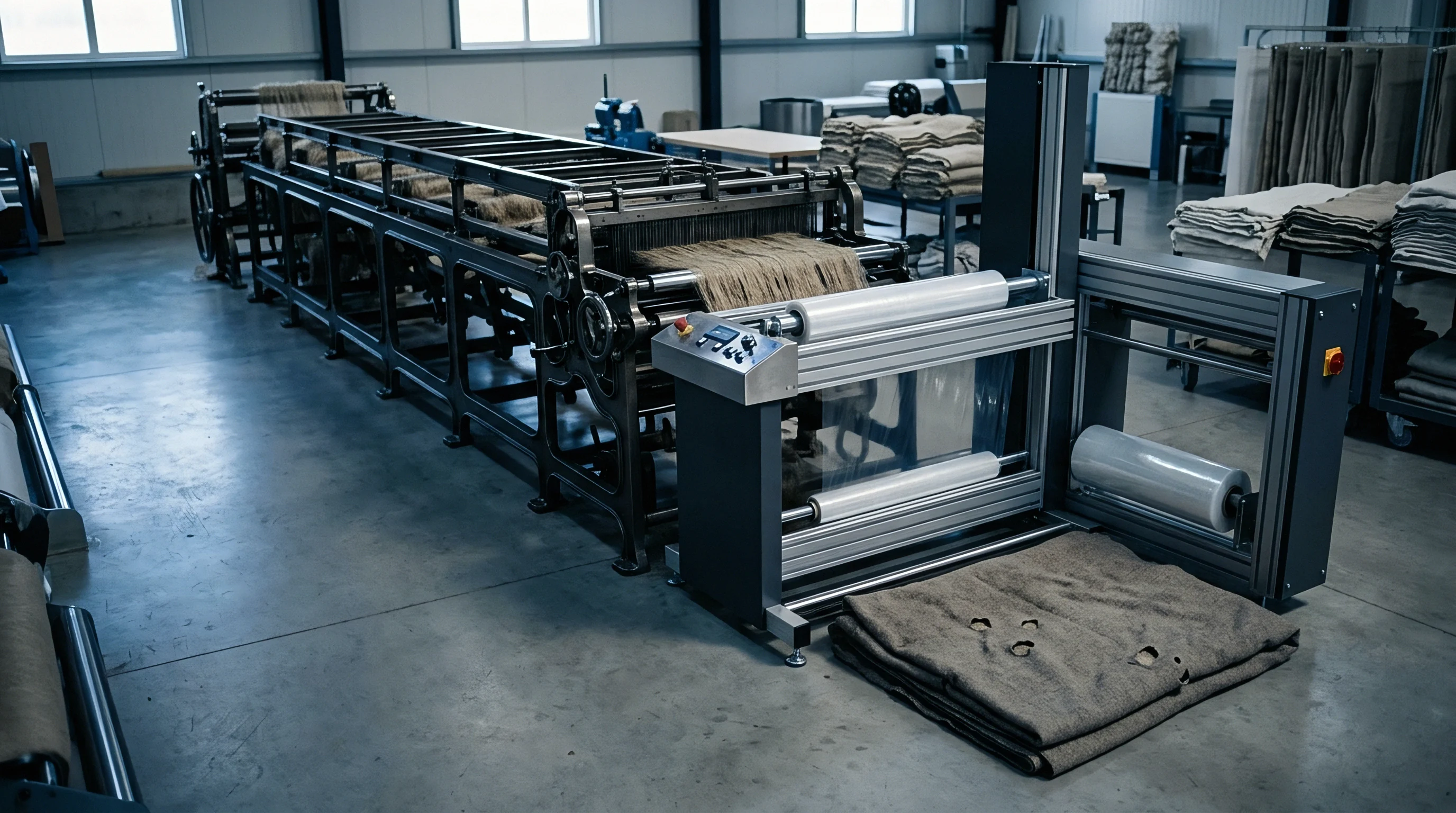
Ring frames running at 8,000 revolutions per minute suffer severe downtime spikes when microfibril angular spread exceeds operational limits. Each end-break drags down direct labor efficiency, overall machine utilization, and saleable yarn yield per metric tonne of raw long-staple line flax processed.
Is Microfibril Alignment Capable of Predicting Mill End Breakage?
End-breakage rates rise along a power curve once microfibril angular spread crosses critical thresholds. On Nm 80 line flax, widening the angular standard deviation from 1.5 degrees to 2.8 degrees pushes end breaks from 24 stops per 1,000 spindle-hours up to 86 stops per 1,000 spindle-hours.
Every stop demands manual piecing, introducing mass irregularities into the package while idling spindle capacity. Running at 86 stops per 1,000 spindle-hours pulls spinning room efficiency from 93 percent down to 81 percent, driving up idle power consumption and lifting spinning labor costs by 14.5 percent per kilogram.
Spinning mill financial audits confirm that a 10 percent drop in ring frame operating efficiency elevates net yarn conversion costs by 0.42 Euros per kilogram on fine wet-spun line numbers.

Worked Cost Model for High-Count Line Yarn Yields
Modeling a 10-tonne order of Nm 80 wet-spun line flax traces cell wall variance directly to finished meter cost. Consider a mill purchasing 10,000 kilograms of hackled long-staple flax sliver at a baseline commodity price of 12.50 Euros per kilogram, aiming to produce Nm 80 yarn for high-density weaving applications.
Under Scenario A, the lot displays a tight microfibril distribution with a mean angle of 7.0 degrees and an angular standard deviation of 1.4 degrees. Wet drafting runs smoothly at 22 stops per 1,000 spindle-hours. Spinning waste stays at 4.5 percent, conversion costs hold at 8.20 Euros per kilogram, and total manufacturing expenditure comes to 20.70 Euros per kilogram of finished yarn, yielding 9,550 kilograms of saleable Nm 80 yarn at a unit cost of 0.258 Euros per 1,000 metres.
Under Scenario B, the raw fiber lot shares identical classical length and metric fineness specs, but exhibits a wide microfibril distribution with a mean angle of 10.2 degrees and a standard deviation of 3.1 degrees. High angular spread causes severe micro-tensile failure during hot water draft. End breaks jump to 78 stops per 1,000 spindle-hours, forcing operators to slow frame delivery speeds by 12 percent to maintain frame operation.
Net spinning waste escalates to 11.2 percent due to frequent piecing waste and unspinnable roving run-offs, while conversion costs surge to 10.80 Euros per kilogram due to efficiency loss.
Total manufacturing cost under Scenario B climbs to 23.30 Euros per kilogram across a reduced yield of only 8,880 kilograms of finished yarn. The resulting unit cost comes to 0.301 Euros per 1,000 metres of saleable yarn, representing a direct financial penalty of 16.6 percent per finished metre resulting entirely from unmonitored secondary cell wall structural variance.
Contracting for wet-spun line flax on micro-alignment metrics secures fine target counts while keeping stoppage losses under control on high-speed ring frames.