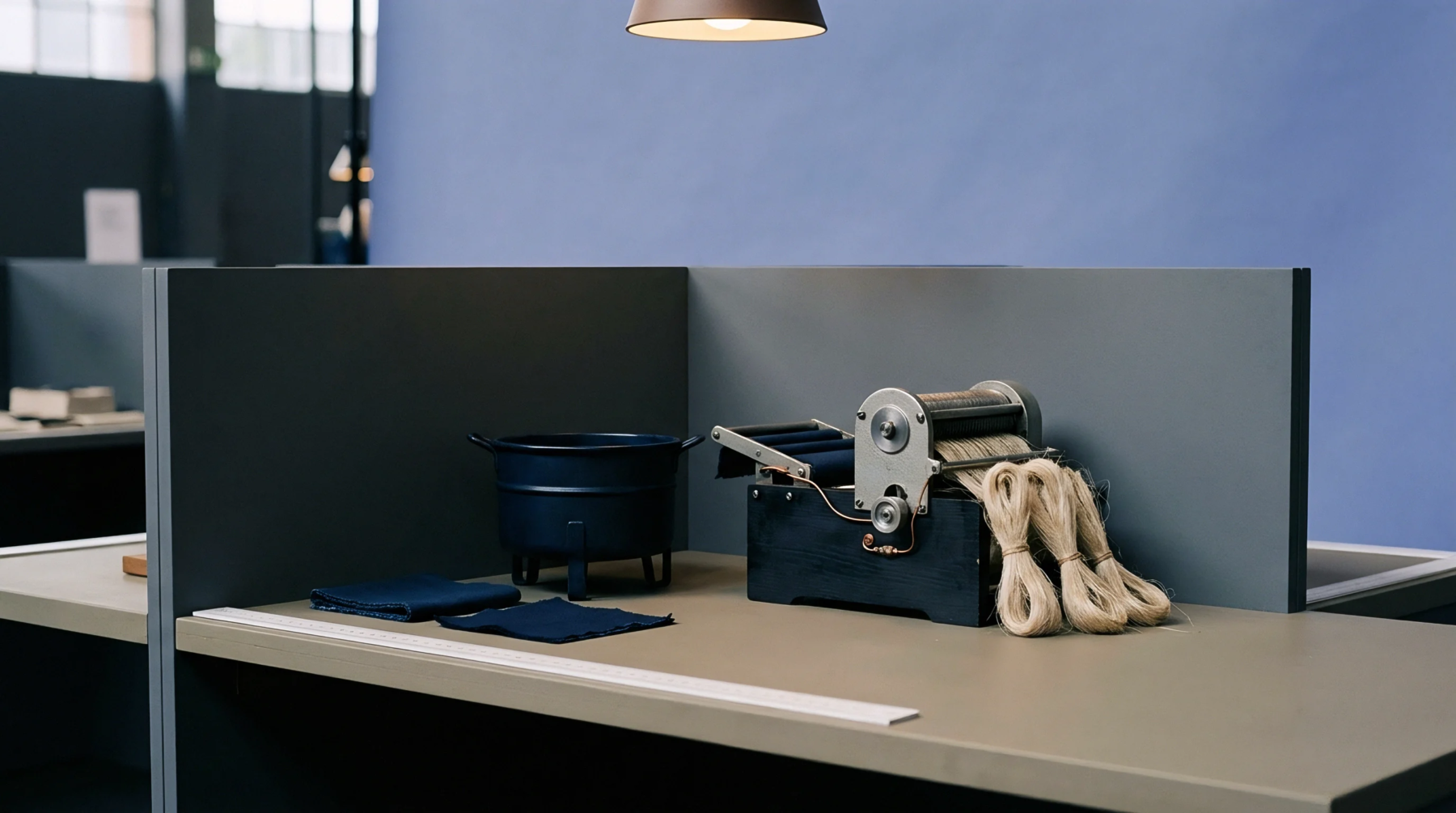
Fibre Dresser
Industrial processing units open, comb, parallelise and split scutched bast fibre bundles through continuous mechanical engagement with graduated pin fields. Operating as the primary preparatory station in linen mills, a hackling machine receives rough, entangled stricks of long flax held firmly within automated traveling clamps. The machinery transports clamped bundles through paired revolving vertical aprons or descending comb fields where pinned bars progressively penetrate the hanging fibre.
Coarse pins initially comb out residual core shive and short entangled tow, followed by fine pin rows that separate bast strands into spinnable line fibre. At the midpoint of the passage, mechanical transfer units release, invert and re-clamp the stricks to process the previously uncombed root and top ends.
Yield Separation
Production technicians operate these multi-station installations to divide incoming raw flax into high-grade line fibre and marketable tow grades. Shift managers document line fibre yield percentages, tow extraction ratios and machine operating speeds on the daily hackling report. A typical well-retted flax lot yields fifty to sixty percent hackled line fibre, with the balance gathered as hackled tow for coarser dry-spinning applications.
The operational speed of the pinned chains and the gradual descent of the strick holders are calibrated against the moisture content and retting grade of the raw stock. Poor machine timing or worn pin fields cause excessive fibre breakage, shifting high-value line material into low-value tow bins.
System Boundary
Large-scale combing systems process only decorticated long flax bundles that have undergone complete biological retting and mechanical scutching. The equipment cannot refine short, tangled unoriented straw or unretted flax containing solid inter-fibre pectin layers. Combed line fibre delivered by the machine requires subsequent drawing, doubling and roving before yarn formation can take place.
Static electricity build-up and fibre breakage occur rapidly if ambient workshop humidity falls below seventy percent during processing. Output consistency from the unit defines the ultimate spinning limit and weaving efficiency of all downstream linen operations.