Determining Fine Wet Spun Linen Single Tensile Thresholds
Determining fine wet spun linen tensile thresholds demands setting single end tenacity limits above 18 cN/tex to maintain high-speed loom shed efficiency.
Strand
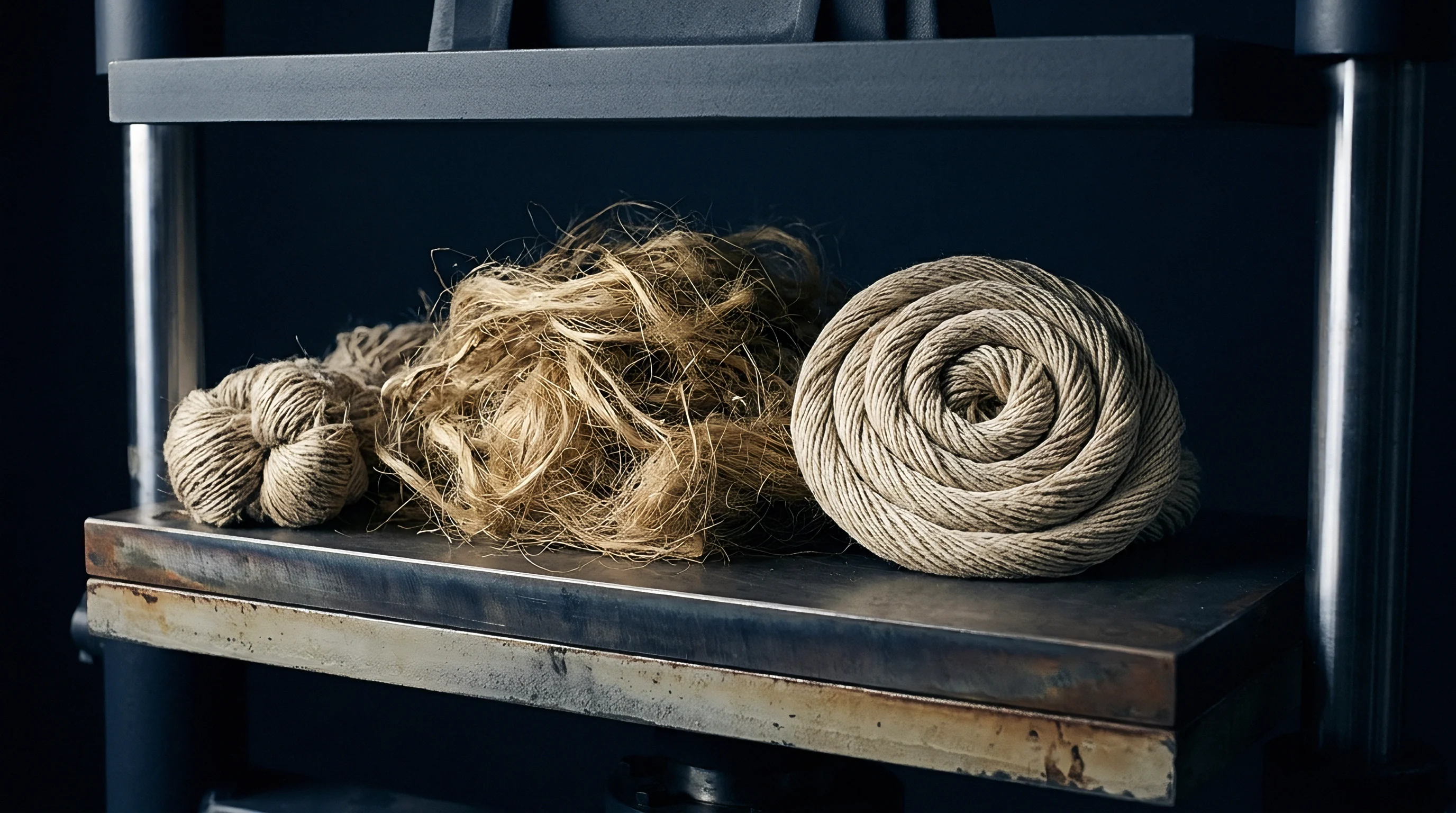
Wet-spun linen relies on a warm water bath during ring spinning to soften inter-fiber pectins. Fine counts run from Nm 67 (NeL 40) down to Nm 170 (NeL 100), where individual fiber ultimate lengths govern tensile behavior under load. Establishing single-end tensile thresholds requires isolating intrinsic yarn breaking strength from structural flaws caused by inconsistent retting or drafting variations.
Single End Tenacity Baseline Figures
Fine yarn counts spun from wet flax fibers require minimum physical breaking strength values to survive warp preparation. Standard long-flake linen yarns in the Nm 67 to Nm 100 range show absolute baseline tenacity values between 18.0 cN/tex and 28.0 cN/tex when tested under standard climatic conditions. Lower tenacity values indicate incomplete pectin re-solidification or excessive fiber damage during scutching and hackling.
When evaluating fine wet-spun yarn, absolute breaking force in centinewtons correlates directly with linear density in tex. An Nm 80 yarn possesses a linear density of 12.5 tex, meaning that at a minimum threshold of 20.0 cN/tex, a single thread exhibits a breaking force of 250 cN. Falling below this 250 cN threshold increases end-breaks during warping and sizing operations.
Fiber quality from Normandy or Courtrai origins yields ultimate fiber lengths exceeding 25 millimeters, providing the physical overlap necessary to reach 24.0 cN/tex in fine counts.
Longer flax ultimates reduce relying on twist cohesion for tensile strength in wet spun counts above Nm 80.

Fiber Pectin Dynamics in Fine Spinning
Warm water treatment during roving drafting dissolves middle lamella binder compounds, allowing ultimates to slide and re-align. As the yarn passes through the spinning spindle onto the bobbin, the re-crystallization of hemicellulose and pectin binds ultimate fibers into a dense, smooth cross-section. This mechanical compaction creates a higher initial modulus than dry spun or wet-spun tow yarns.
Deficiencies in water bath chemistry or temperature control disrupt this inter-fiber adhesion. Water bath temperatures maintained below 60 degrees Celsius prevent full pectin softening, leaving bundle voids that reduce single-end breaking force by up to 30 percent. Over-retted flax exhibits degraded pectin structures that fail to re-bind upon drying, causing single end tensile tests to show brittle fracture profiles with minimal elongation.
Committing yarn with tenacity values below 18 cN/tex to high-speed rapier looms increases warp break stops beyond tolerable shed efficiency levels, forcing mill downtime and creating visible cloth start marks.
Twist
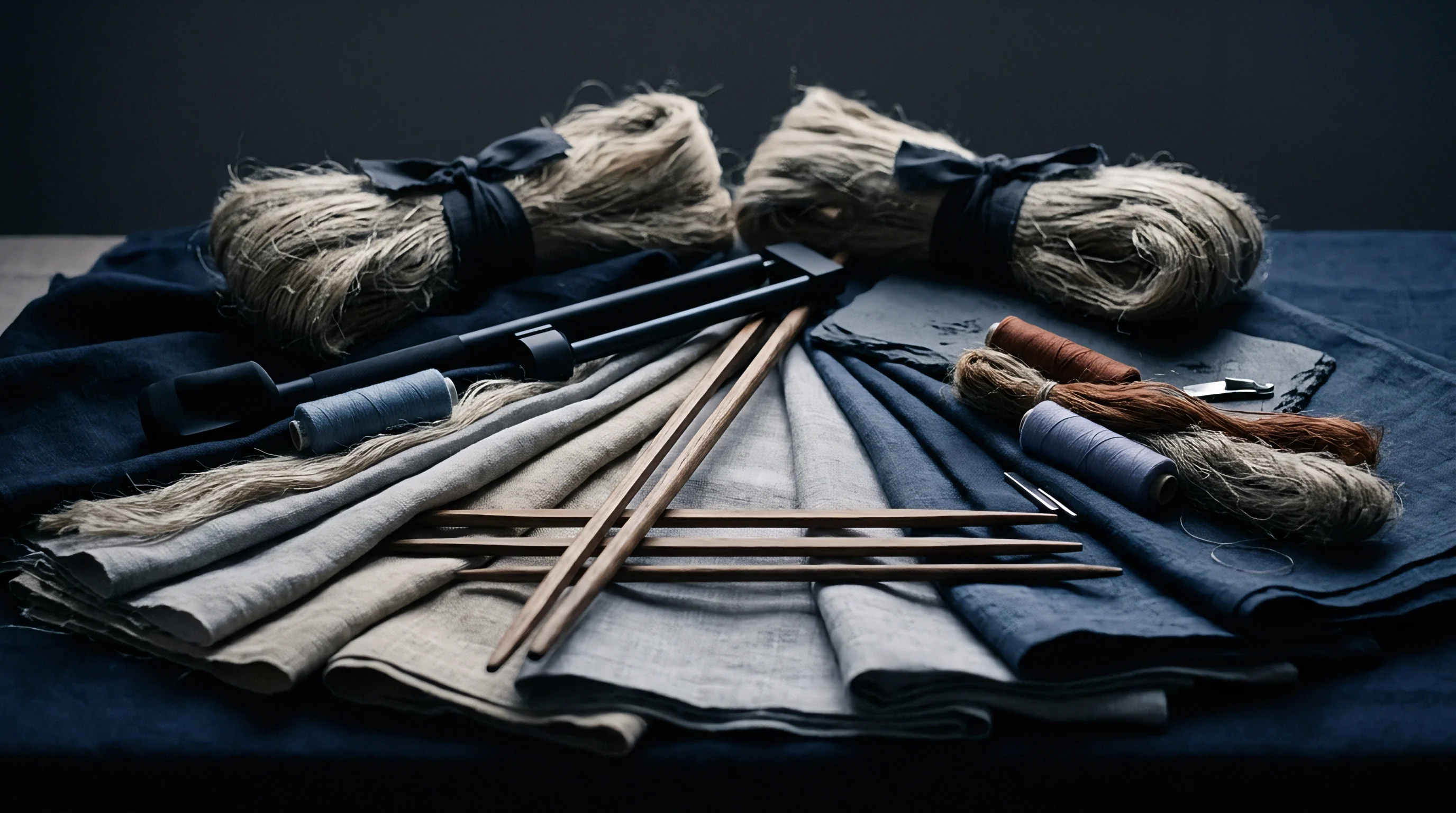
Rotational energy inserted during spinning locks flax ultimates together through lateral surface pressure. Twist multiplier calculations govern the balance between tensile strength and yarn flexibility: excessive twist increases yarn stiffness and torque, while insufficient twist allows ultimate fiber slippage under tension.

Twist Multipliers and Mechanical Cohesion
Alpha values between 115 and 135 yield the optimum balance between break force and bending stiffness. For fine wet spun yarns, the metric twist multiplier alpha metric is calculated relative to yarn count in Nm. A yarn of Nm 80 produced with an alpha metric of 125 carries approximately 1118 turns per meter, with roving twist further influencing final strength.
Insufficiency in turns per meter causes fibers to slide past one another under lower axial loads than their intrinsic breaking limit. Conversely, over-twisting fine linen causes axial fiber shear, reducing overall tenacity and decreasing elongation at break below 1.8 percent. Optimum tensile thresholds require matching twist levels to end-use weaving stresses.
How Does Twist Distribution Affect Single Yarn Breakage?
Mass variations across thin segments concentrate rotational turns away from thick zones, creating weak links. In fine wet spun yarns, thick places absorb less twist per unit length, leaving low-density zones prone to fiber pull-out. Thin places absorb excess twist, becoming brittle zones that snap under impact loads during shed opening.
Single end tensile testing reveals these structural imbalances through force-elongation curves. A steady curve slope indicates uniform twist distribution. Sudden slope changes prior to total failure identify localized fiber slippage within under-twisted segments.
Measuring mass variation alongside single yarn strength isolates whether failure stems from spinning frame dynamics or raw fiber length distribution.
- Twist Multiplier Verification validates that the alpha metric remains within 120 to 130 for warp-way fine linen singles.
- Elongation at Break Monitoring confirms yarn retains a minimum 2.0 percent elongation to absorb peak shedding stresses.
- Mass CV Percentage Tracking limits thin places that act as localized failure points during high-tension loom operations.
- Torque Neutralization Check assesses steaming efficiency to prevent yarn snarling during creel unwinding.
Lower tenacity figures in fine counts reflect raw flax fiber variations alongside mill spinning parameters.
| Yarn Count (Nm) | Linear Density (tex) | Target Twist (TPM) | Min Tenacity (cN/tex) | Min Break Force (cN) | Nominal Elongation (%) |
|---|---|---|---|---|---|
| Nm 50 | 20.0 | 880 | 22.0 | 440 | 2.5 |
| Nm 67 | 14.9 | 1020 | 20.5 | 305 | 2.2 |
| Nm 80 | 12.5 | 1118 | 20.0 | 250 | 2.1 |
| Nm 100 | 10.0 | 1250 | 19.0 | 190 | 1.9 |
| Nm 120 | 8.3 | 1368 | 18.0 | 150 | 1.8 |

Clamp
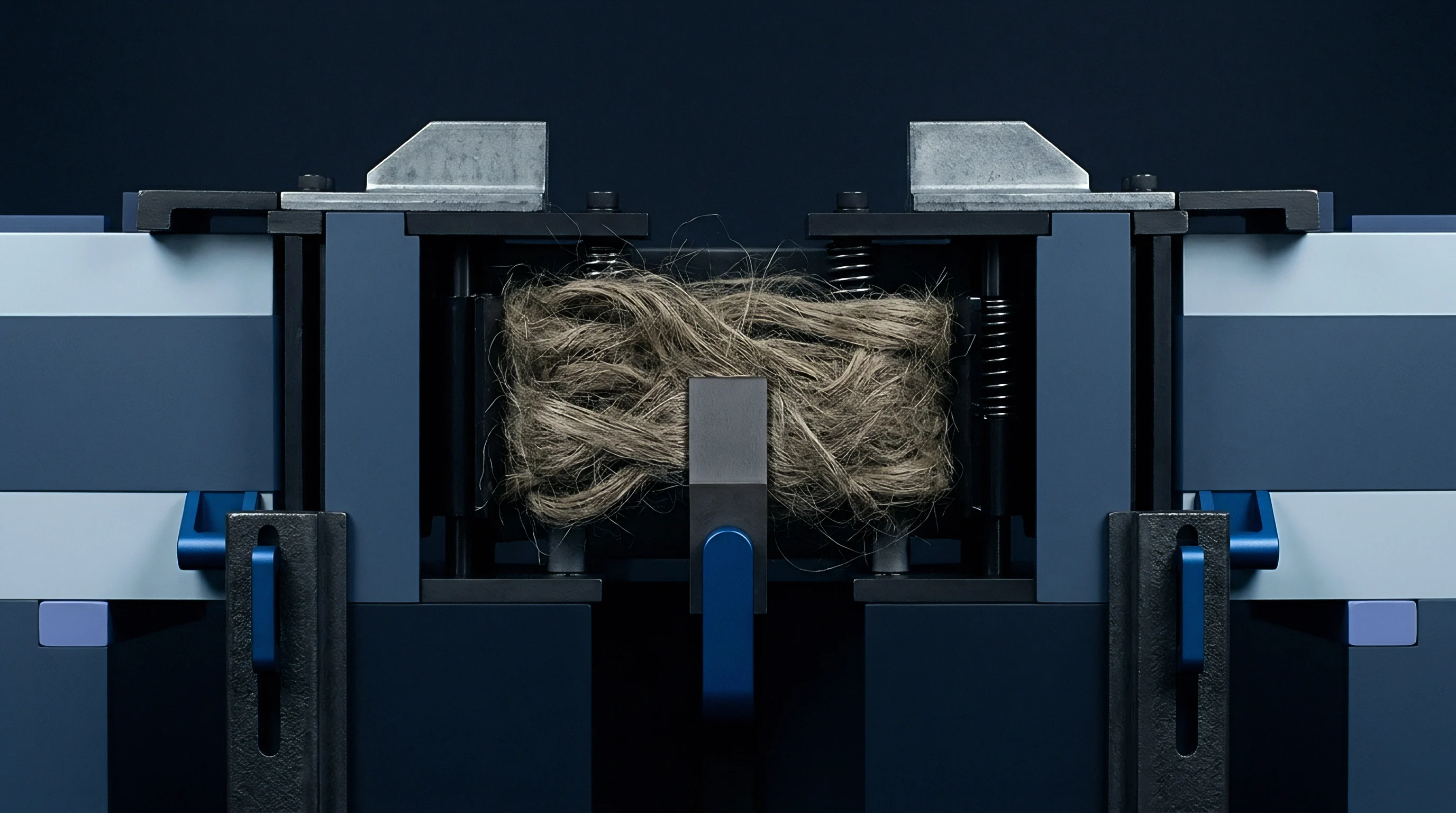
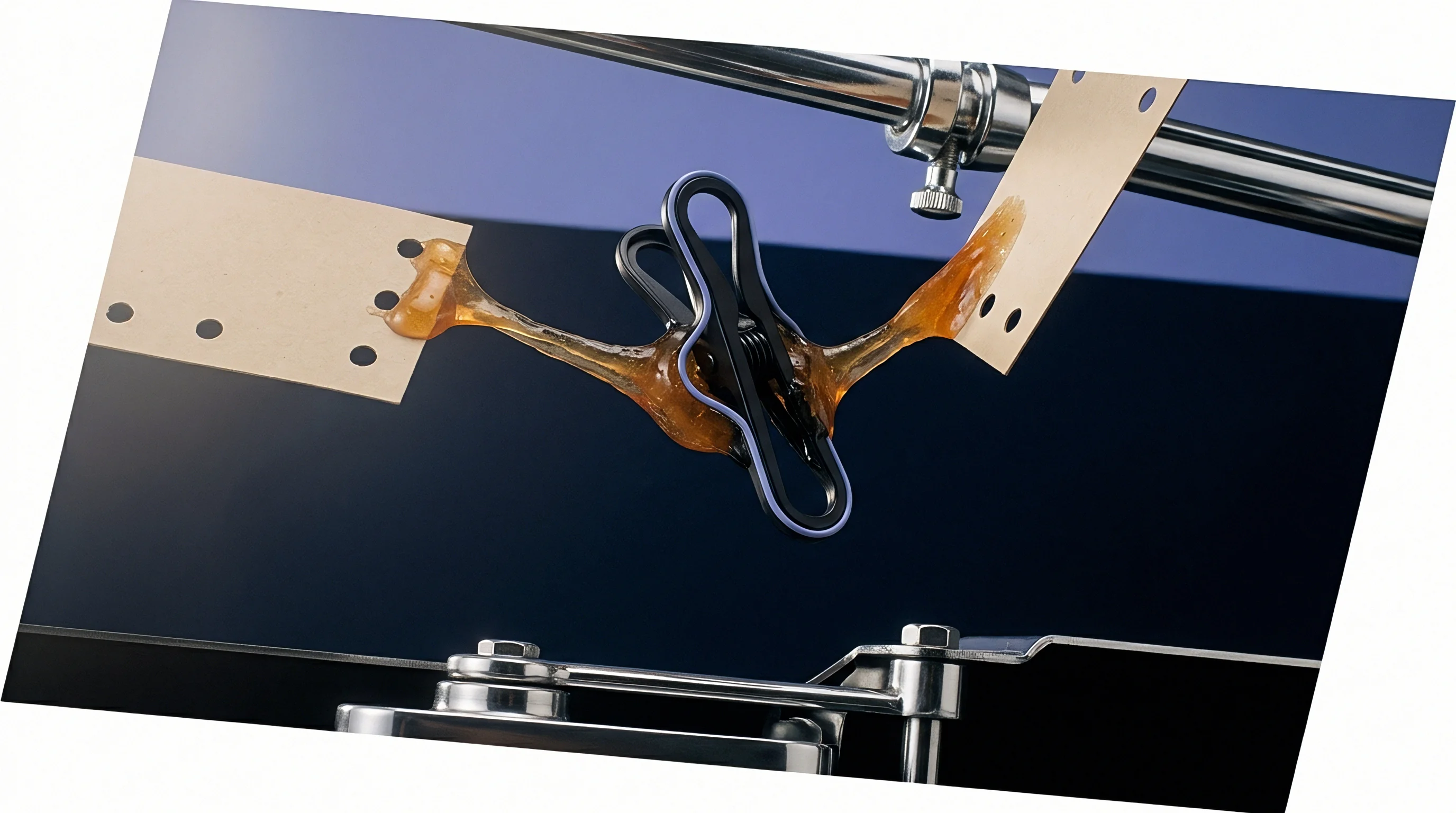
Accurate tensile measurement on fine bast yarn relies on stable mounting interfaces that eliminate mechanical crushing. Testing fine wet spun linen requires protocols tailored to high-modulus, low-extension natural fibers. ISO 2062 specifies procedures for determining single end breaking force and elongation using constant rate of extension testing apparatus.
Single End Tensile Test Configuration
Standardized laboratory procedures under ISO 2062 specify constant rate of extension instruments operating at five hundred millimeters per minute. Gauge length settings directly influence measured strength figures due to weak-link probability dynamics: a gauge length of 500 millimeters captures standard thread defect distribution, whereas short gauge lengths flatter results by excluding thin places.
Pre-tensioning sets the baseline zero point before extension begins. For fine linen yarns, applying a pre-tension of exactly 0.5 cN/tex removes structural crimp without prestraining ultimate fiber structures. For an Nm 80 yarn (12.5 tex), a pre-tension of 6.25 cN aligns the specimen.
Incorrect pre-tension distorts breaking elongation figures, compromising test validity.
Testing Nm 100 wet spun flax at fifty centimeters gauge length yields an average tenacity of twenty-one centinewtons per tex under standard climate conditions.
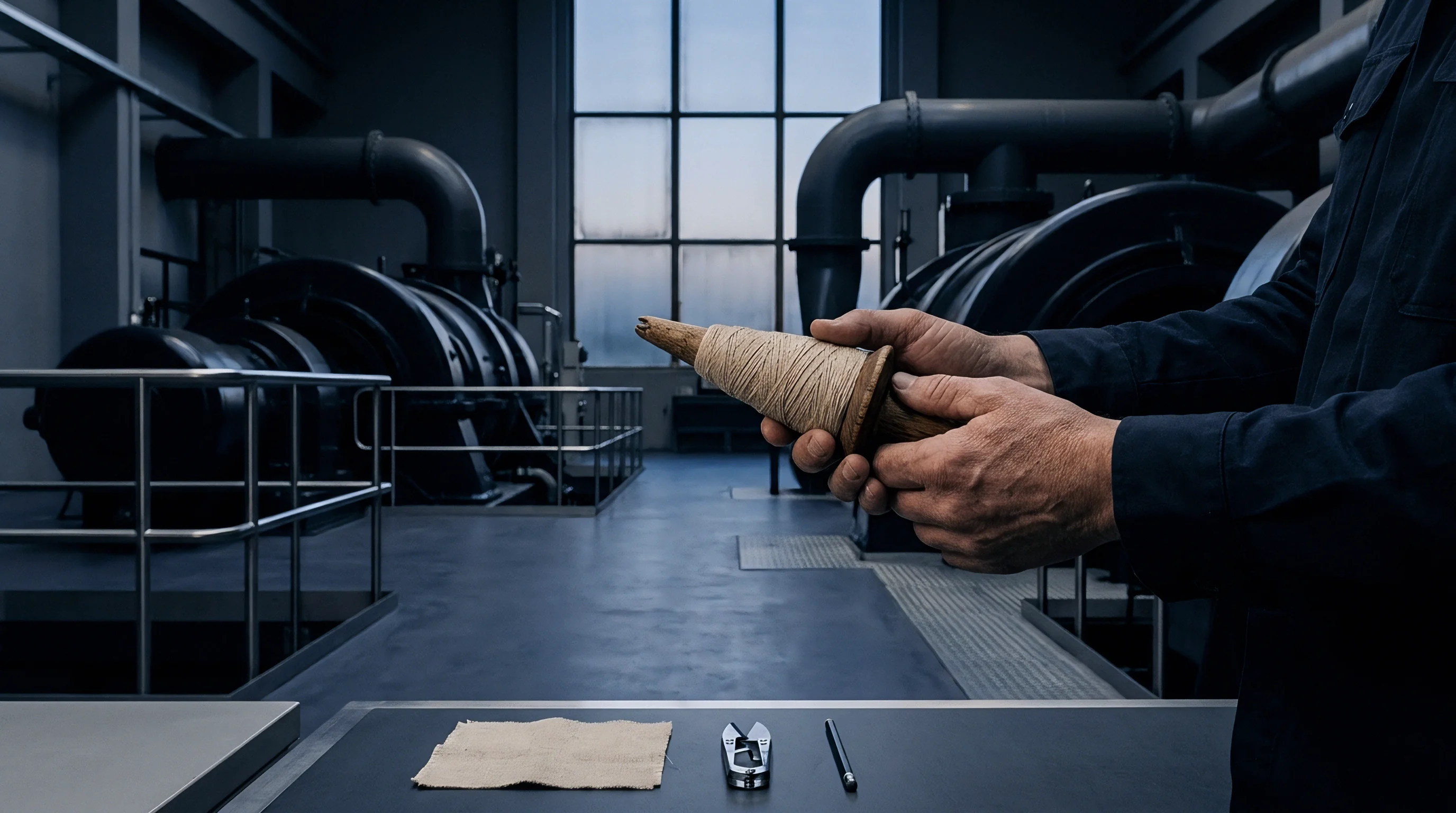
Jaw Selection and Slippage Mitigation
Flat rubber-faced gripping surfaces and pneumatic clamps maintain uniform force without axial slip or crushing fragile bast bundles. Smooth metal jaw faces allow linen yarns to slip during extension, artificially inflating breaking elongation and underreporting true tenacity. Serrated jaw faces crush outer flax fibers, causing early jaw breaks at the clamping boundary.
Jaw break occurrences exceeding 10 percent of total test specimens invalidate the test series. Pneumatic pressure maintained between 4.0 and 6.0 bar prevents jaw slippage while avoiding fiber crush. Line contact clamps equipped with vulcanized rubber faces supply optimal force distribution across fine linen diameters.
Standard purchase contracts require single end tensile testing conducted per ISO 2062 Method A at 500 millimeter gauge length, rendering supplier testing at shorter gauge lengths invalid for batch acceptance.

Disruption
Intermittent thread breakage during high-speed shed opening leads to immediate loom stops and fabric defects. Single end tenacity mean figures alone do not guarantee weaving performance, as the lower tail of the breaking strength distribution curve dictates warp end-break frequency on rapier and air-jet looms.
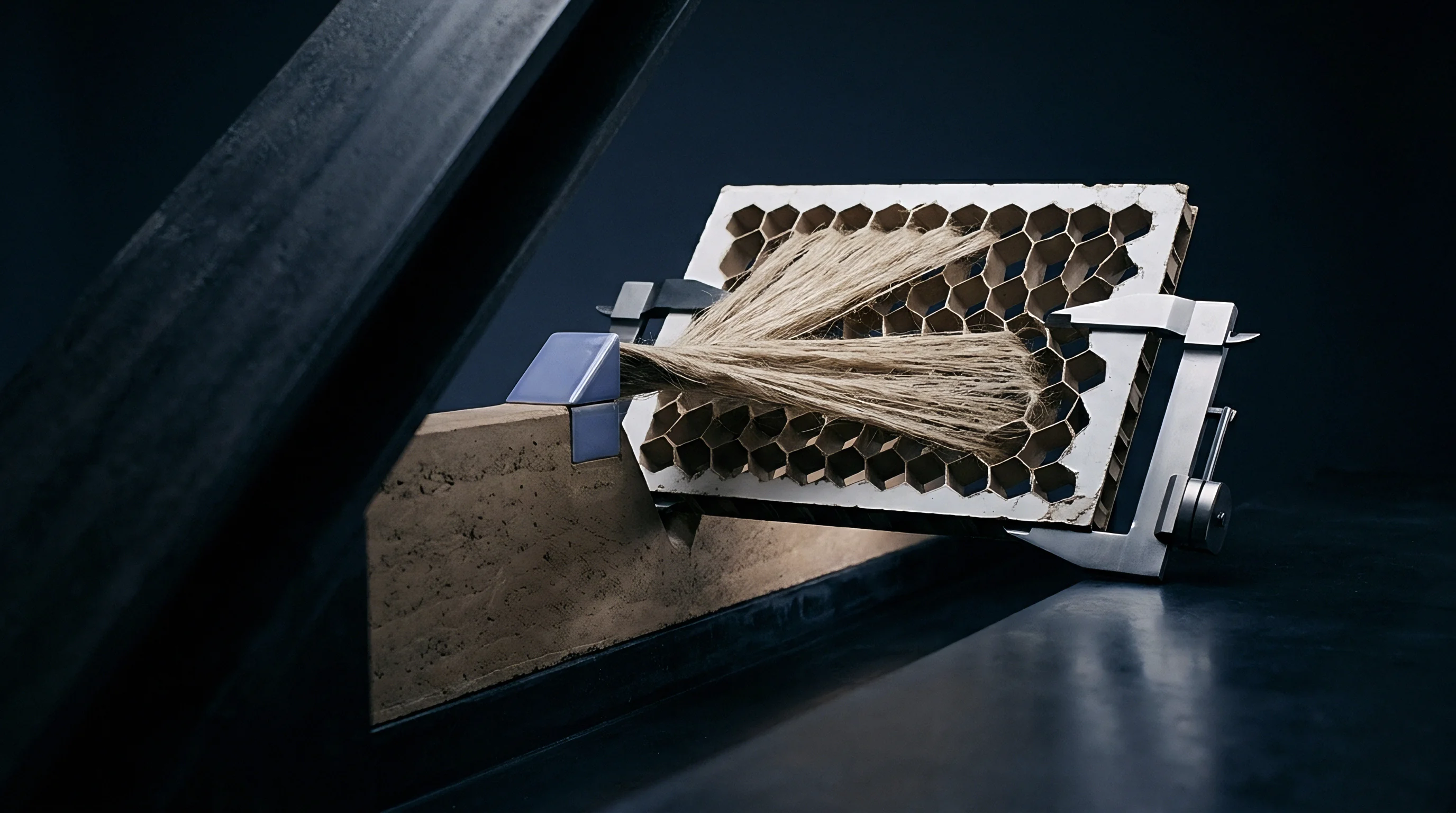
Coefficient of Variation and Weaving Stops
Tensile distribution scatter wider than fourteen percent causes frequent warp thread breaks during shed opening. A lot presenting an acceptable average tenacity of 22.0 cN/tex can yield high breakage rates if its tenacity CV percentage reaches 18 percent, particularly when combined with low elongation. Thin places with localized tenacity dropping below 12.0 cN/tex fail under peak warp tension during beat-up.
High-speed shedding on air-jet looms demands high tenacity, with peak warp tension reaching 1.5 to 2.0 times static pre-tension settings and causing unsized singles to snap. If tensile minimum boundaries fall below peak dynamic tensions, thread disruption becomes continuous, dropping loom shed efficiency below acceptable commercial thresholds.
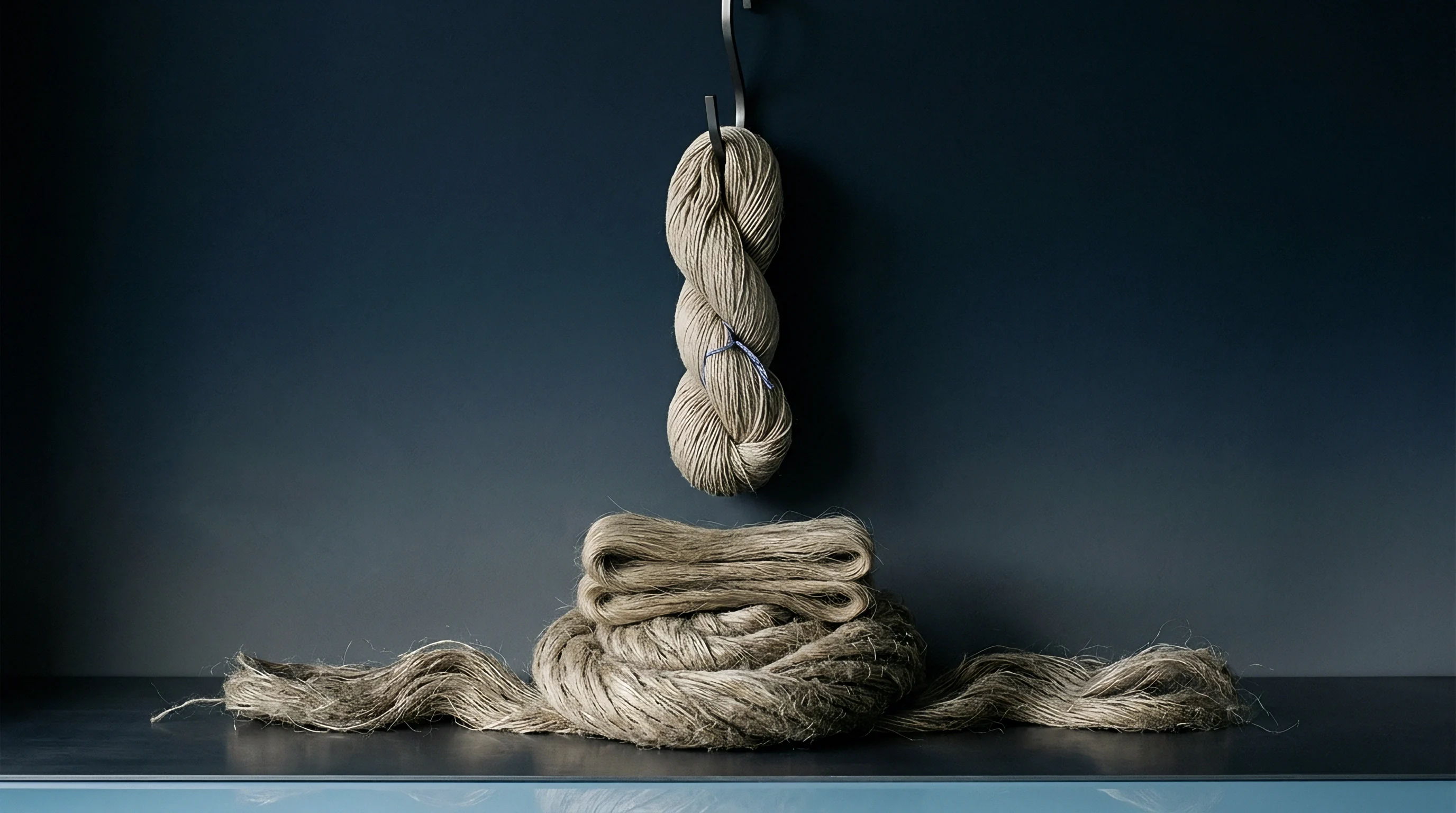
Splice Strength Retainers in Warp Preparation
Air-spliced joints in fine linen single ends retain approximately eighty percent of parent strand breaking force. Splicing fine wet spun linen requires precise tail preparation and water injection to entangle stiff flax fibers. Standard mechanical knots create localized rigid points that catch in reed dents and drop wires, causing end breaks.
Pneumatic splices must maintain a minimum tenacity retainer ratio of 75 percent relative to un-spliced yarn tenacity. A splice on Nm 80 yarn achieving less than 15 cN/tex breaking strength will fail during section warping or beat-up. Splicer settings require adjustment based on yarn moisture content and twist level.
- Low Tenacity Weak Links cause premature end breaks when dynamic shedding loads surpass local strand strength limits.
- Excessive Tenacity Dispersion leads to unpredictable warp stop rates despite high average breaking strength values.
- Insufficient Splice Retainers produce joint failures during high-tension beam winding and weaving.
- Abrasion Sensitivity At Slubs causes fiber accumulation at harness eyes, leading to thread entrapment and breakage.
| Yarn Count (Nm) | Mean Tenacity (cN/tex) | Tenacity CV (%) | Size Add-On (%) | Stops per 100,000 Picks |
|---|---|---|---|---|
| Nm 67 | 21.0 | 12.5 | 8.0 | 1.2 |
| Nm 67 | 21.0 | 16.5 | 8.0 | 4.8 |
| Nm 80 | 19.5 | 13.0 | 10.0 | 2.1 |
| Nm 80 | 19.5 | 17.5 | 10.0 | 7.4 |
| Nm 100 | 18.5 | 14.0 | 12.0 | 3.5 |
| Nm 100 | 18.5 | 19.0 | 12.0 | 11.2 |
| Data derived from rapier loom trials at 450 picks per minute, 190 cm reed width, standard plain weave construction. | ||||
Determining how fine wet spun linen single ends adapt to chemical size formulas without losing essential ultimate fiber flexibility remains a key operational variable across spinning mills.

Tolerance
Commercial agreements define strict statistical boundaries for accepted physical properties before yarn leaves the mill. Establishing lower single-end tensile thresholds requires statistical qualification rather than reliance on single test averages. Receiving inspection protocols must filter substandard lots prior to warp beaming.

Statistical Control Boundaries for Tensile Acceptance
Quality assurance protocols establish minimum lower specification limits based on the three-sigma rule from historical delivery lots, with standard deviation driving rejection limits. For fine wet spun yarn, acceptance limits require that no individual package sample falls below a calculated minimum tenacity baseline.
A statistical evaluation accepts a lot only when the mean tenacity minus 3 times the standard deviation remains above the minimum absolute weaving load requirement. If testing an Nm 80 lot shows a mean of 20.0 cN/tex with a standard deviation of 2.5 cN/tex, the lower three-sigma limit sits at 12.5 cN/tex, signaling a high probability that defective warps will stall rapier sheds.
Delivery contracts enforcing ISO 2062 lower threshold compliance allow automatic batch rejection when mean tenacity falls below seventeen centinewtons per tex.

Commercial Tenacity Threshold Derivation
Buyer specifications define minimum allowable break force calculated from target weave cover factor and loom pick insertion speeds. Fine wet spun single yarns require clear categorization into warp-grade or weft-grade thresholds, as weft yarns experience lower static tension and permit lower breaking strength thresholds than warp yarns.
- Select sample packages randomly from incoming pallet locations using ISO 2859-1 sampling plans.
- Condition yarn packages in standard atmosphere at 20 degrees Celsius and 65 percent relative humidity for 24 hours.
- Mount package on automated single-end tensile tester set to 500 millimeter gauge length and 0.5 cN/tex pre-tension.
- Execute fifty individual breaks per bobbin across ten selected packages to build a statistically valid sample size.
- Calculate mean tenacity, overall tenacity CV percentage, and absolute minimum breaking force across all test specimens.
- Compare calculated three-sigma lower boundary against specified contract minimum threshold.
- Reject shipment or re-assign low-tenacity lots to weft-only application if threshold targets fail verification.
Warp-grade fine linen single yarn requires higher minimum tenacity boundaries than weft-grade yarn to sustain beam tension without end breaks.


Contract
Sourcing agreements specify explicit financial penalties when delivered raw material fails quality standards. Because loom hours govern landed cost, substandard yarn tensile strength directly increases weaving costs through reduced machine efficiency, increased weaver labor, and second-grade fabric defects.
Loom Capacity Penalties for below Threshold Tenacity
Excessive yarn breakage directly reduces shed efficiency percentages, driving up machine hour overhead per linear meter. When warp single end tenacity drops below specification limits, loom efficiency can decrease from an expected 88 percent down to 72 percent. This loss translates into lost production capacity and unrecoverable mill overhead.
Financial accounting models calculate landed cloth costs by factoring loom operating rates. A modern 190 cm rapier loom running fine linen costs approximately 18 to 24 EUR per operating hour. If poor tenacity yarn increases warp stop frequency from 1.5 stops per hour to 6.0 stops per hour, linear meter output drops by 18 percent, increasing weaving cost per meter proportionally.

Specification Clauses for Wet Spun Tensile Compliance
Commercial purchasing agreements stipulate financial rebates when delivered lots exceed agreed coefficient of variation limits. Sourcing dossiers for fine wet spun linen must define precise single end tenacity thresholds, test method standards, sampling frequencies, and financial remedies for non-compliance.
Contracts include debit clauses covering lost loom hours, re-warping expenses, and size recovery costs if yarn fails single end tensile thresholds after warping. Defining clear physical parameter thresholds ensures mills supply properly spun long-flake fiber lots, protecting the commercial viability of fine linen weaving operations.