Rheological Pectin Dissolution Dynamics in High Speed Wet Spinning of Blended Bast Fiber Bales
High-speed wet spinning requires trough water exchange above 1.4 L/kg at 75°C to maintain bath viscosity below 1.5 mPa·s and prevent drafting breakages.
High-speed wet spinning requires trough water exchange above 1.4 L/kg at 75°C to maintain bath viscosity below 1.5 mPa·s and prevent drafting breakages.

Blended flax tow wet spinning keeps end breakage below fifteen stops per thousand spindle hours through precise bath temperature and matched break draft ratios.
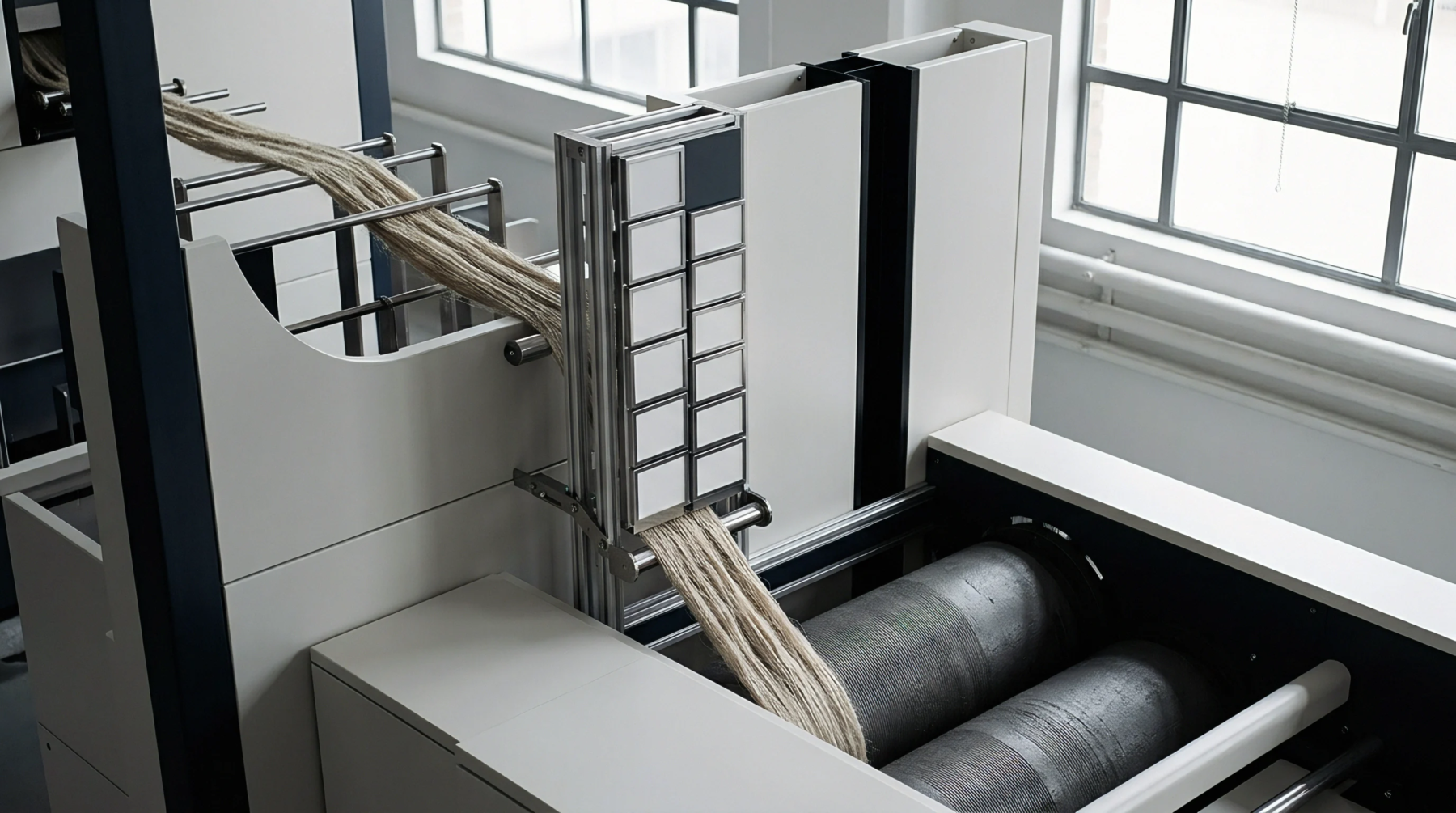
Stabilizing wet-spinning troughs at 60 to 63°C plasticizes flax middle lamella pectins, suppressing drafting force spikes and yarn mass CV drift.
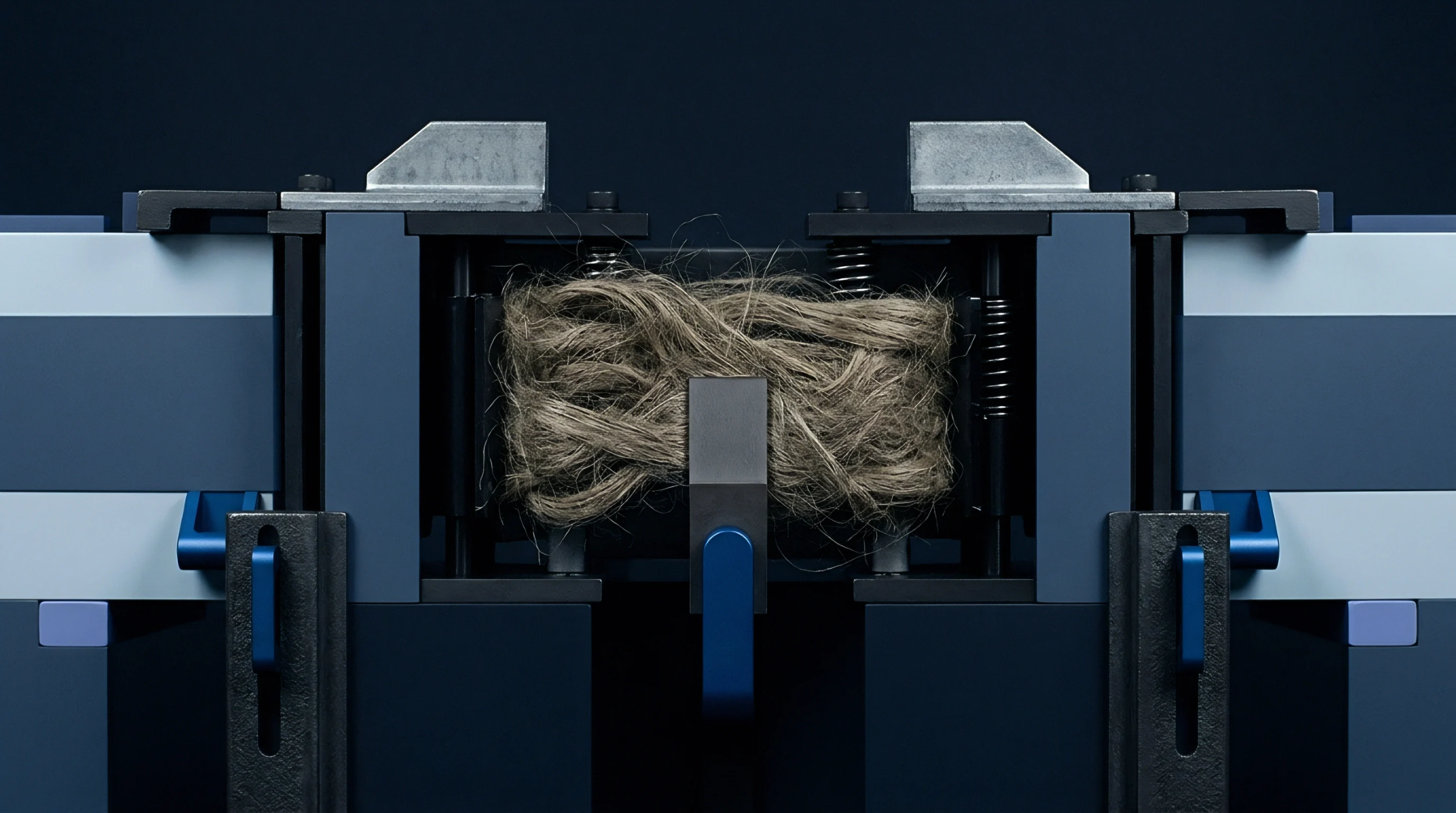
Single-end tensile testing at 500 mm gauge length isolates yarn weak spots to prevent warp breaks and costly loom stoppages in wet spun linen cloth production.

Targeting 1.2 to 1.5 percent residual pectin via controlled hydrolysis stabilizes wet drafting forces below 5 cN per tex, preventing breaks at Nm 80 and above.

Capacitive testing isolates wet-spun linen mass variation and pinpoints spinning frame mechanical defects through precise signal wavelength analysis.
Balancing wet drafting bath alkalinity against biological retting variation stabilizes pectin cleavage to prevent tensile drop during high-speed spinning.

Flax roving wet spinning attenuation defects stem from improper hot-water pectin softening and front roller nip slip, manageable through precise temperature and pressure control.

Verify conditioned skein count, capacitive CVm evenness, and cone hardness against ISO tolerances to stop defective flax yarn before freight release.
Wet spun flax linear density and mechanical properties depend on strict moisture regain control, hot water pectin drafting, and CRE tensile evaluation.
Expertise is a utility, not a secret. sentiention™ publishes its working knowledge as open reference: intelligence layer covering the materials it sources, the markets it enters, and the reference that serves both.