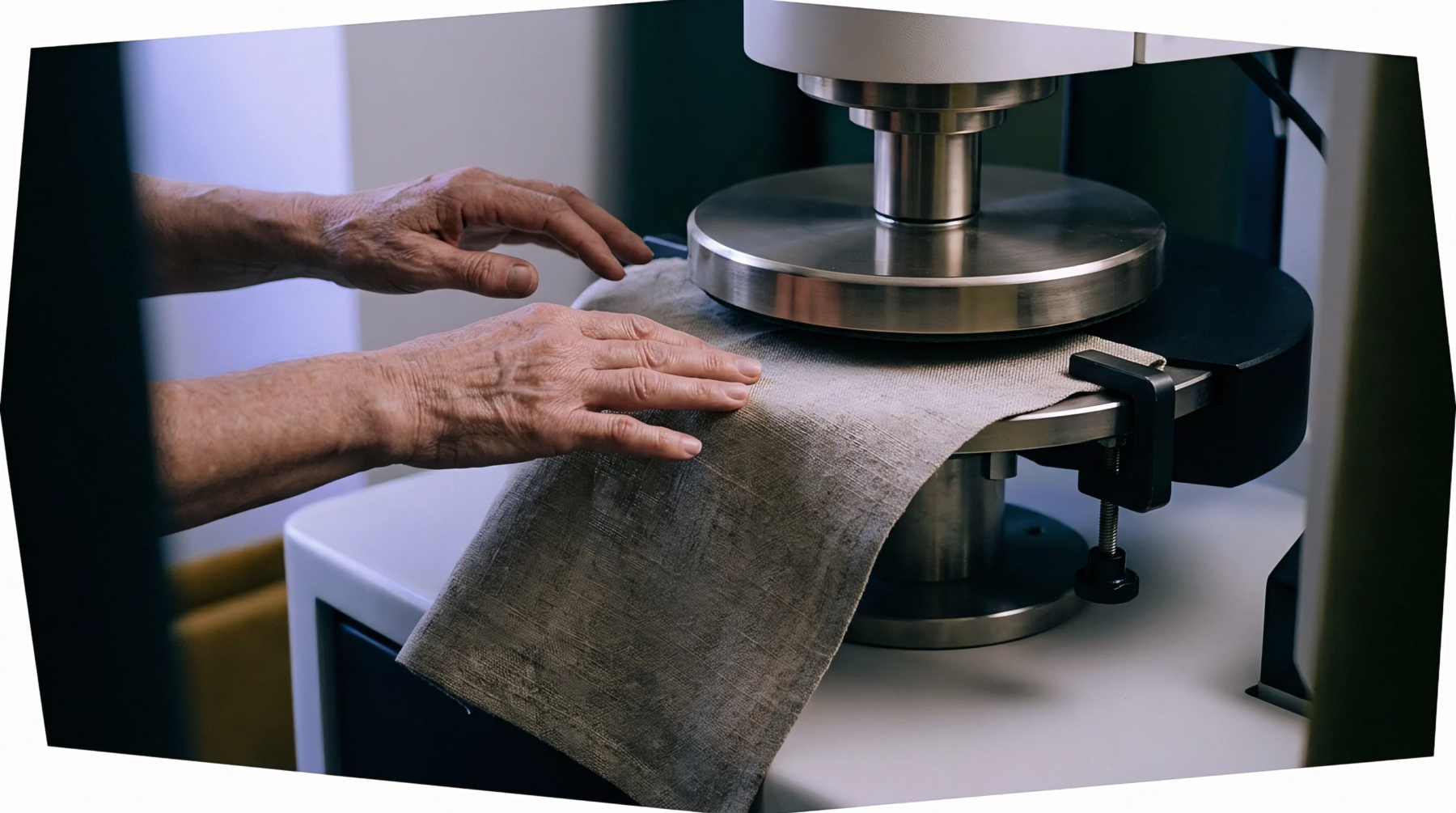
Tensile Methodology
Tensile evaluation for industrial yarns utilizes a mechanism where the rate of deformation is held constant through the entire test cycle. This constant rate of extension ensures that the increase in length per unit of time remains fixed regardless of the load applied to the specimen. Modern electronic strength testers in Chinese spinning mills use this approach to generate force-elongation curves that identify the point of rupture with precision.
The measurement provides a standardized baseline for comparing the breaking tenacity of wet-spun flax yarns intended for high-speed weaving.
Mechanical Response
Resistance offered by the fibre bundle changes as the molecular chains within the flax cellulose align under load. Because the constant rate of extension maintains a steady deformation speed, the resulting data captures the exact load at which the natural hemicellulose bonds between individual fibres fail. This mechanism differs from older pendulum type testers where the speed of extension fluctuated based on the resistance of the yarn.
Consistency in speed allows the laboratory to calculate the work of rupture and the initial modulus without external acceleration variables. Standardized settings often use a speed of 250 millimeters per minute to simulate the stresses found during the warping process.
Quality Acceptance
International standards for commercial yarn exports typically mandate this specific testing mode to verify compliance with buyer strength specifications. Results from a constant rate of extension test are recorded on the certificate of analysis to validate the suitability of the lot for heavy duty loom settings. If the speed varies, the recorded elongation might show artificial increases that mask brittle batches.
The procedure terminates when the yarn breaks, providing the final peak force value used for grading.