Reconciling Blended Sliver Losses and Isotope Testing Limitations in Cross-Border Linen Sourcing
Reconciling blended linen requires auditing draw-frame sliver mass loss and applying water-corrected isotope baselines to prove true origin across borders.

Hackle

Sliver Mass Balance across Mechanical Preparation
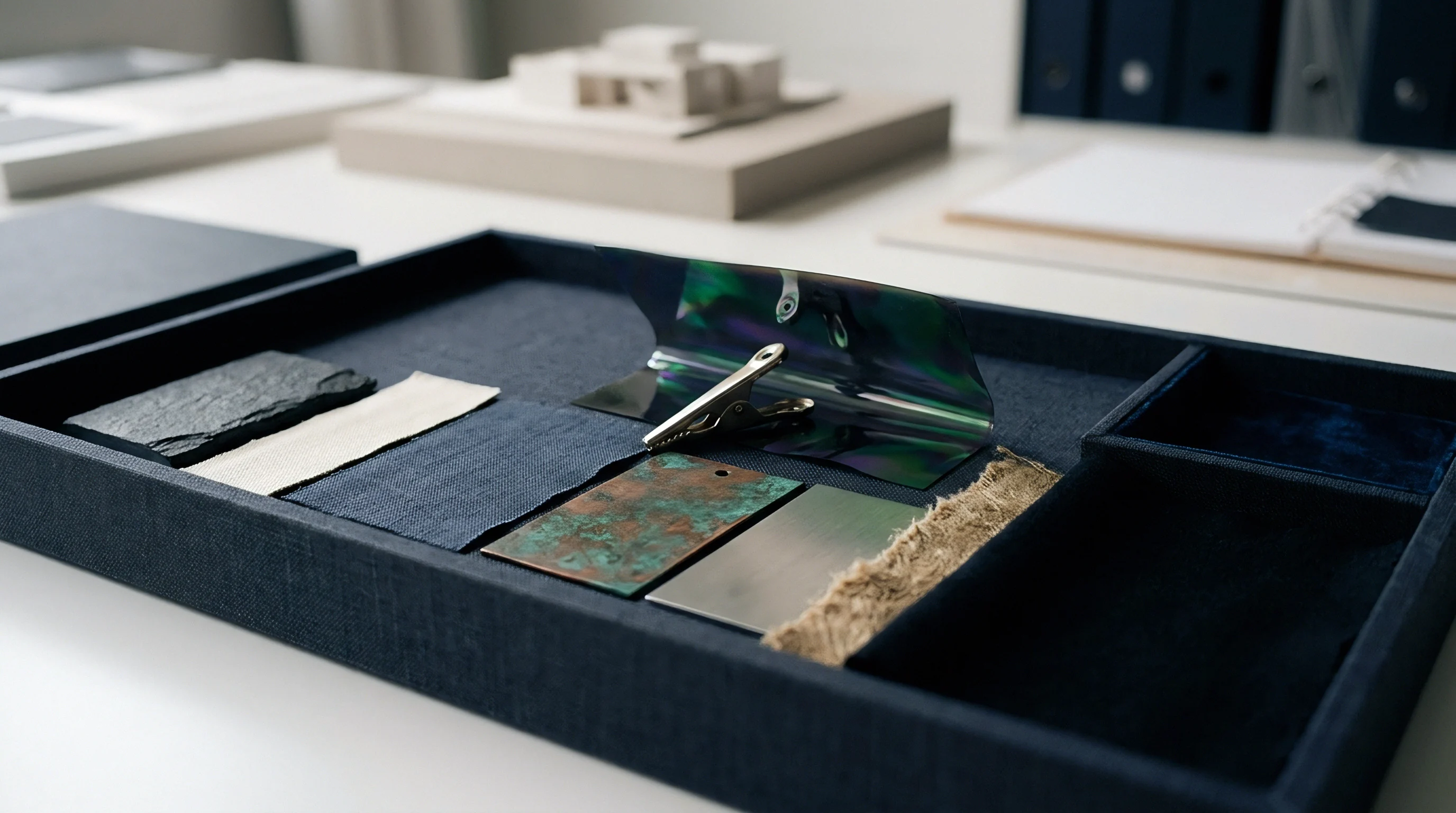
Mechanical preparation pulls long flax line from shorter fibers via hackling, spreadboard blending, and intersecting draw frames. From a standard 1000 kilogram lot of scotched European flax straw, hackling yields roughly 480 to 520 kilograms of line flax sliver and 280 to 320 kilograms of hackling tow. The rest drops under the pinned combs as shive, dust, and unrecoverable waste.
When mills blend different regional origins to meet target yarn counts, these processing losses compound.
Mills in Jiangsu and Zhejiang frequently blend French dew-retted sliver with domestic Heilongjiang or Egyptian imports to stabilize yarn strength. Carding and combing losses soon shift that initial ratio. Because finer hackle teeth shed the shorter, coarser Chinese or Egyptian fibers into tow, the resulting drawn sliver holds a higher concentration of long Western European bast fibers than the raw bale weights suggest.
An input blend billed at 60 percent European flax and 40 percent domestic fiber often emerges from the first draw frame delivery roller with an actual mass split closer to 68 to 32.
Mass balance reconciliation fails when spinning mills calculate blend percentages from raw bale input weights rather than draw-frame delivery sliver weights.
Mass loss concentrates across three main processing stages:
- Carding drop waste sheds heavy shive, cortical tissue, and fibers under fifteen millimeters, losing 8 to 12 percent by mass.
- Intersecting comb noils pull out intermediate fibers between twenty and thirty-five millimeters, cutting primary sliver mass by 5 to 9 percent.
- Draw frame drafting fly vents detached fibrils into suction manifolds, draining another 1.5 to 2.8 percent per pass.
Settings across the draw frame govern this dropout. Draft ratios, pin densities, and faller bar speeds decide what makes it into the continuous sliver and what ends up in waste cellars. Running three draw passages to align fibers before roving generally strips 18 to 24 percent of the starting raw mass.
Auditing origin across blended runs means monitoring every dropout point. Fiber diameter differences create uneven drafting resistance: French flax, averaging 18 to 22 micrometers, clears faller pins under lower drafting tension than coarser 28-micrometer domestic stock. This friction difference steadily enriches the roving with the finer European fraction.
Commercial paperwork regularly ignores this mechanical sorting. Weighbridge dockets capture gross bale weights while spinning worksheets record net yarn output, leaving an unexplained mathematical discrepancy on customs transaction certificates.

Isotope

Stable Isotope Analysis Ratios in Bast Fibers
Stable isotope ratio mass spectrometry identifies geographic origin by measuring natural isotopic variations locked into bast cellulose during plant growth. Carbon ratios reflect photosynthetic conditions and water efficiency during stem elongation; oxygen and hydrogen track local rainfall and groundwater; strontium ratios mirror the bioavailable minerals in the underlying bedrock.
| Geographic Region | Carbon delta 13C VPDB | Oxygen delta 18O VSMOW | Nitrogen delta 15N Air | Strontium 87Sr/86Sr |
|---|---|---|---|---|
| Normandy (France) | -28.4 to -26.1 | +21.2 to +23.8 | +1.8 to +3.9 | 0.7082 to 0.7096 |
| Flanders (Belgium) | -28.9 to -26.5 | +20.8 to +23.2 | +2.1 to +4.2 | 0.7088 to 0.7104 |
| Heilongjiang (China) | -26.2 to -23.8 | +16.4 to +19.1 | +4.5 to +7.8 | 0.7112 to 0.7135 |
| Nile Delta (Egypt) | -25.1 to -22.7 | +25.6 to +28.9 | +6.2 to +9.4 | 0.7071 to 0.7085 |

What Alterations Occur during Chemical Processing?
Chemical finishing alters these natural baselines. While field dew-retting leaves the plant’s isotopic signature intact, scouring, bleaching, and tank retting swap oxygen and hydrogen atoms with process chemicals and water. Warm-water tank retting, caustic sodium hydroxide boils, and hydrogen peroxide bleaching shift oxygen isotope values by 1.8 to 4.2 parts per thousand as cellulose hydroxyl groups exchange with the heated bath.
Mercerization causes further fractionation. Liquid ammonia or concentrated sodium hydroxide disrupts the crystal lattice of the cellulose, and testing labs evaluating finished bleached yarn frequently record shifted delta 18O values that resemble rainfall profiles from entirely different regions.
A bleached linen sample tested for oxygen isotopes routinely shows an artificial downward shift of 2.5 per mil from the raw field baseline.
Preparation methods introduce their own variance. Surface pectins, hemicelluloses, waxes, and spinning oils must be washed out before combustion; incomplete wax removal leaves residual lipid carbon that depresses the final delta 13C reading by up to 1.4 parts per thousand. Without standardized degumming protocols tailored to bast fibers, different laboratories return conflicting values from the exact same roving.
Elemental analyzers convert the cellulose into carbon monoxide, carbon dioxide, nitrogen, and water above 1050 degrees Celsius. Incomplete pyrolysis generates skewed gas ratios that distort collector readings on the mass spectrometer.
Isotopic abundance is expressed in delta notation (parts per thousand) against international reference standards: Vienna Pee Dee Belemnite for carbon, Vienna Standard Mean Ocean Water for oxygen, and Standard Reference Material 987 for strontium ratios. Because baseline ranges overlap between neighbouring European river basins, single-isotope testing rarely provides definitive provenance on its own.

Variance
Blending Mathematics and Mixed Isotopic Signatures
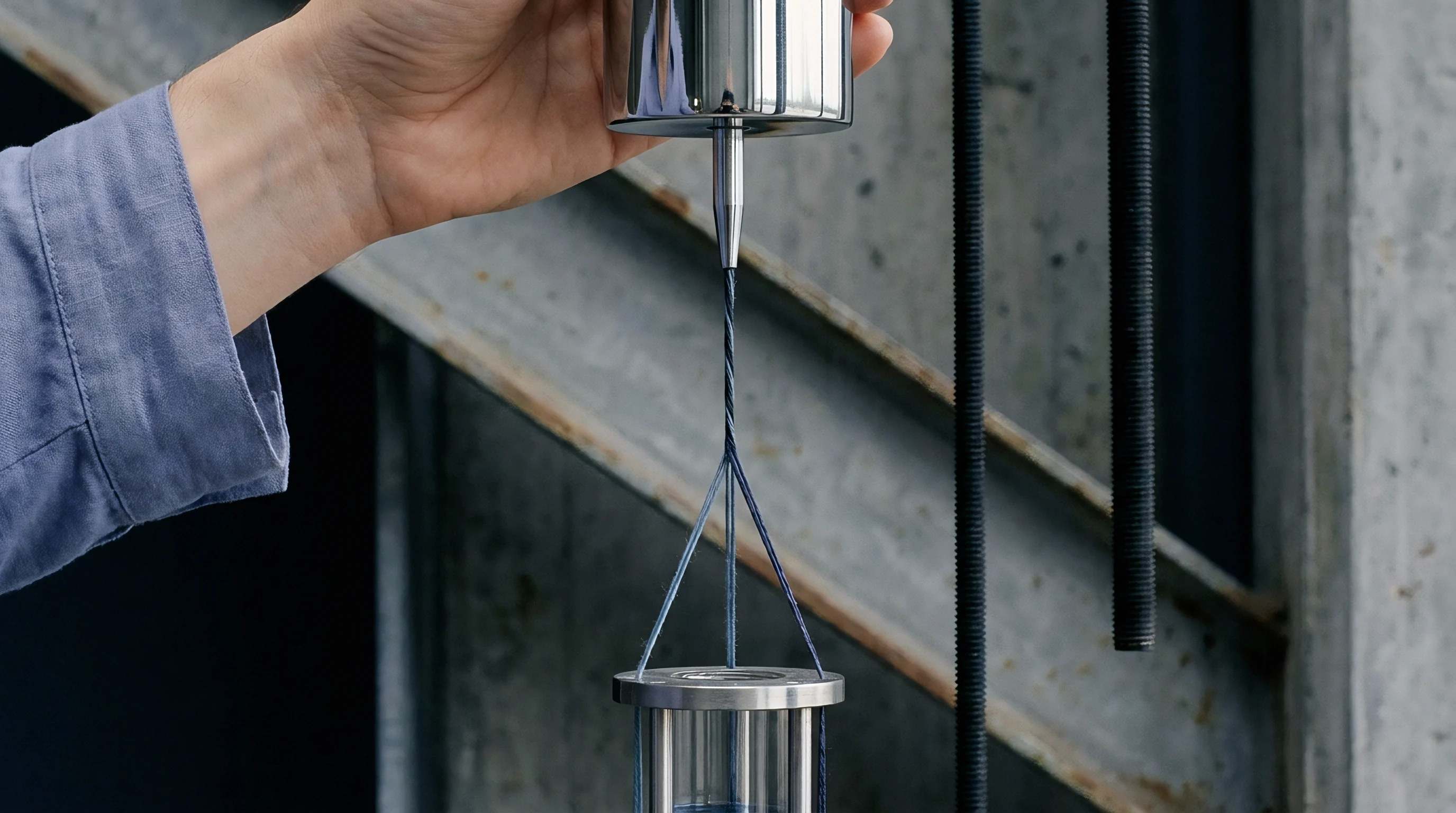
Combusting a blended sliver produces a single composite signal rather than discrete values for each fiber component. When an analyzer burns a five-milligram yarn snippet, the detected ratio follows standard linear mass balance: the measured delta value simply reflects each component’s isotopic signature weighted by its carbon or oxygen mass fraction.
Extracting the origin split from that bulk number depends entirely on having accurate endmember values. In a blend of certified French line flax (delta 18O of +22.5 per mil) and uncertified regional tow (delta 18O of +17.2 per mil), the mathematical midpoint shifts directly with the blend ratio.
| French Fiber Proportion | Regional Fiber Proportion | Expected Bulk delta 18O | Laboratory Uncertainty Band |
|---|---|---|---|
| 1.00 | 0.00 | +22.50 | +22.25 to +22.75 |
| 0.80 | 0.20 | +21.44 | +21.19 to +21.69 |
| 0.60 | 0.40 | +20.38 | +20.13 to +20.63 |
| 0.40 | 0.60 | +19.32 | +19.07 to +19.57 |
| 0.20 | 0.80 | +18.26 | +18.01 to +18.51 |
Natural baseline variation complicates detection. Normandy flax exhibits field-to-field delta 18O spreads of up to 1.5 parts per thousand solely from local rainfall differences and microclimates ~ a natural spread that matches the isotopic shift caused by adding 15 to 20 percent regional filler fiber.
Single-fiber testing is too expensive for regular trade compliance. While Secondary Ion Mass Spectrometry can isolate individual fibrils, sample prep costs exceed two thousand dollars each. Routine verification relies on bulk combustion, which cannot distinguish an authentic lot grown in an intermediate climatic zone from an intentional blend of high- and low-latitude fibers.
Varying fiber cleanliness also distorts bulk values. Clean line flax carries 42 to 45 percent carbon by dry mass, but poorly retted tow can contain up to 8 percent non-cellulosic encrusting material with its own distinct isotopic profile, skewing bulk readings away from pure cellulose reference models.
Mill water introduces another confounding factor. A wet-spinning facility in an arid interior region drawing deep alkaline well water lowers the yarn’s oxygen ratio during processing, yielding a finished profile that no longer matches the raw scutched bales listed on the ocean bill of lading.
Without models that correct for local process water, customs algorithms frequently flag compliant yarn as fraudulent, mistaking water-induced shifts for unauthorized fiber substitution.

Customs
Which Discrepancies Trigger Customs Detention?
Customs authorities cross-check isotope test results against chain-of-custody transaction certificates. Any mismatch between declared Harmonized System classifications and analytical signatures triggers an administrative hold. Flax trades under HS heading 5301 for raw, retted, or hackled fiber, 5302 for tow, and 5306 for single or multiple yarn ~ with each code demanding specific documentation of origin and mechanical processing.
Qualification audits center on three main documentary tiers:
- Transaction certificates issued under accredited certification bodies to verify bale weights, lot numbers, and scutching facility dispatch dates in Europe.
- Mill production ledgers detailing sliver input weights, comber noil extraction rates, and spindle allocations matched to the commercial invoice.
- Stable isotope testing reports disclosing raw delta values, water-correction calculations, and the testing facility’s ISO 17025 accreditation scope.
Auditors test mass balances against standard input-output coefficients. If a mill takes in 100 metric tons of European hackled sliver and spins 92 metric tons of yarn, it must account for the eight missing tons. Reporting 92 tons of pure certified yarn while also selling 15 tons of certified sliver waste immediately invalidates the balance.
Customs authorities reject origin claims when spinning waste credits exceed verified physical inventory records in the mill ledger.
Reconciliation also requires proof of physical segregation. In facilities sharing carding lines across production runs, certified European fiber frequently picks up uncertified material from residual sliver in can coilers, shared ductwork fly, or mixed piecings at the draw frame.
Audit teams also evaluate the calendar between harvest, shipping, and spinning. Flax harvested in Europe in July and scutched in November cannot clear ocean transit and enter Asian spinning lines before January. Documents showing impossible processing windows trigger tariff reclassifications and duty reassessments.
Preferential tariff claims face equal scrutiny under regional trade agreements. When isotopic tests reveal undeclared blending above statutory de minimis thresholds, the shipment loses preferential duty status.
Importers remain legally responsible for incorrect declarations. Penalties include retroactive duties, anti-dumping assessments, civil fines, and border detentions while destructive lab testing takes place.


Remedy
Contractual Allocation and Dual-Track Verification Protocols
Managing provenance exposure requires contracts that link factory mass-balance audits directly to isotopic testing standards. Sourcing agreements need clear mass-loss tolerances, defined analytical protocols, and explicit financial liabilities for testing failures, rather than relying on paper certificates or uncalibrated lab runs alone.
| Verification Tier | Required Documentation | Audit Frequency | Contractual Pass Threshold |
|---|---|---|---|
| Tier 1: Upstream Raw Fiber | European Flax Certificate, Scutcher Bale Tags | Every incoming container | 100 percent bale weight match to bill of lading |
| Tier 2: Mechanical Sliver Loss | Draw-frame mass log, comber waste weigh-tickets | Monthly shift audit | Cumulative sliver mass balance within 3 percent |
| Tier 3: Water Baseline | Process water delta 18O analysis report | Quarterly laboratory test | Baseline correction applied to all yarn tests |
| Tier 4: Bulk Product Isotope | EA-IRMS dual-isotope delta 13C and delta 18O report | Random composite per yarn lot | Values fall within verified regional confidence ellipse |

Structuring Commercial Allocation Clauses
Supply agreements must explicitly distribute testing costs and delay risks between buyer and spinner. Effective contracts lay out clear procedures for lab challenges, re-testing protocols, and financial default terms when isotopic data diverges from sliver declarations.
Contracts should mandate that any result falling outside the regional baseline triggers immediate blind re-testing of split samples at a secondary accredited facility. The mill warrants that process-water isotopic signatures are updated quarterly, and agrees to cover all re-testing fees, port demurrage, and duty penalties if the secondary audit confirms a non-compliant profile.
Standard dual-track verification clauses require the supplier to warrant that all finished yarn originates solely from declared scutched fiber lots, caps mechanical preparation losses at 22 percent by dry mass, and specifies that bulk isotopic shifts beyond 1.2 per mil from the water-corrected baseline constitute a material breach triggering consignment rejection and full indemnification.