Fibre Friction
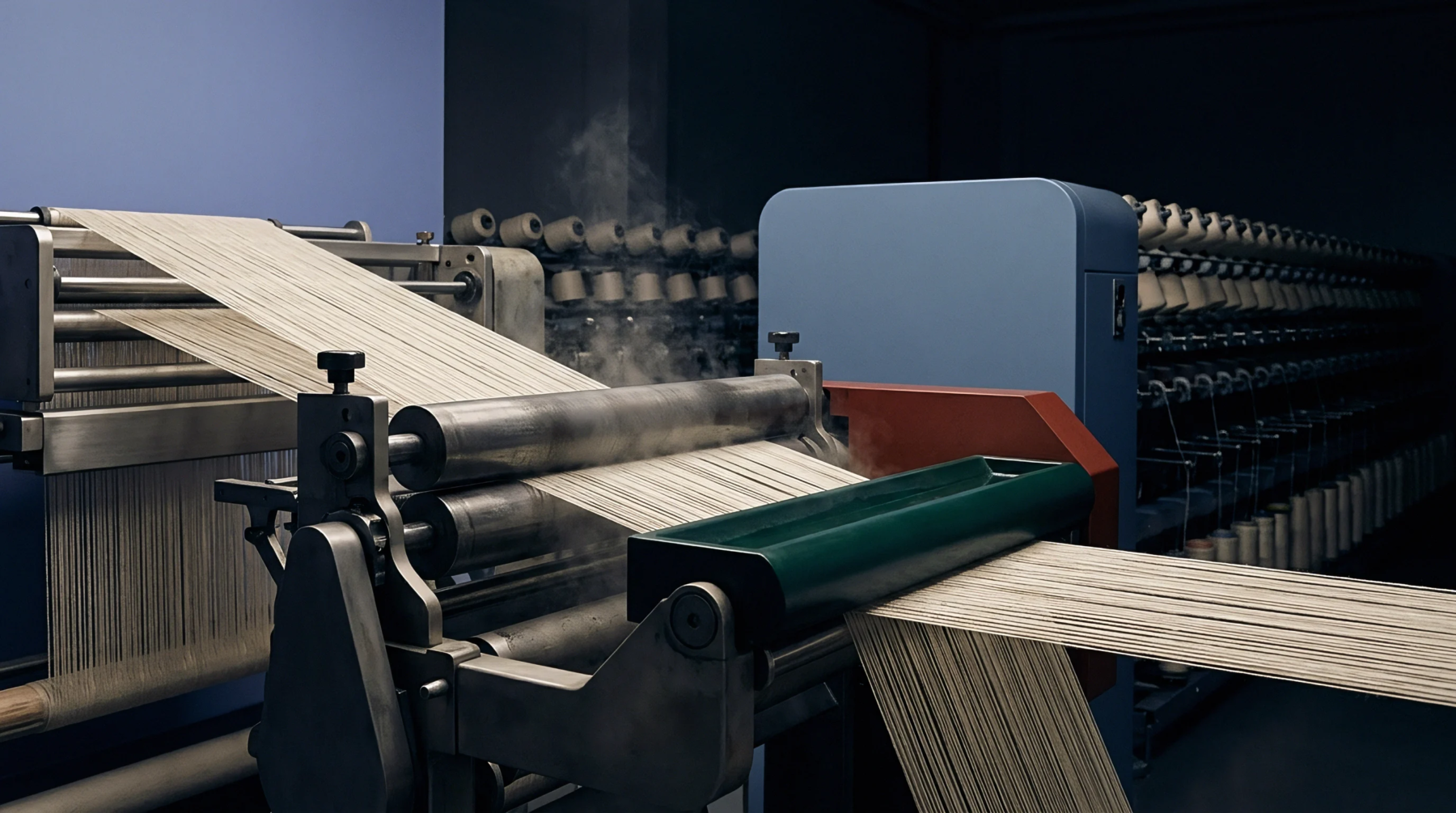
Mechanical resistance within a spinning frame describes yarn cling. This property indicates the degree of adherence between individual flax fibres during the drafting phase. Excessive friction prevents smooth elongation, causing breakage when the drafting rollers pull the strand.
Consistent resistance ensures the roving maintains physical integrity while under tension. Low values allow slippage, which results in thin spots and uneven distribution of density across the final length.
Spinning Measurement
High-speed sensors placed after the drafting zone monitor the tension exerted on the fibre path to quantify yarn cling. Technicians define this threshold by the force required to pull a strand free from its neighboring fibres. Data collected from these sensors populate the production log for every shift.
Each mill sets a internal benchmark to distinguish between acceptable friction and hazardous adhesion. Buyers often demand a secondary verification if their own automated looms report frequent snapping.
Processing Impact
Heavy drag during the drawing stage influences the regularity of the finished output. Surface coatings or humidity adjustments modify the friction levels to keep the strand moving through the porcelain guides without interference. Mills operating at high speeds reduce cling to prevent the build up of lint on metal components.
Regular clearing of those components maintains the stability of the output. Proper management of these forces determines the overall efficiency of the spinning line. Excess adhesion indicates an improper balance of moisture or finish application.