Warp Sizing and Tension Optimization for Rapier Loom Conversion
Optimizing size film elasticity and asymmetric shed geometry on rapier loom conversions cuts warp stops below 0.5 per hour and lowers total metre cost.
Film
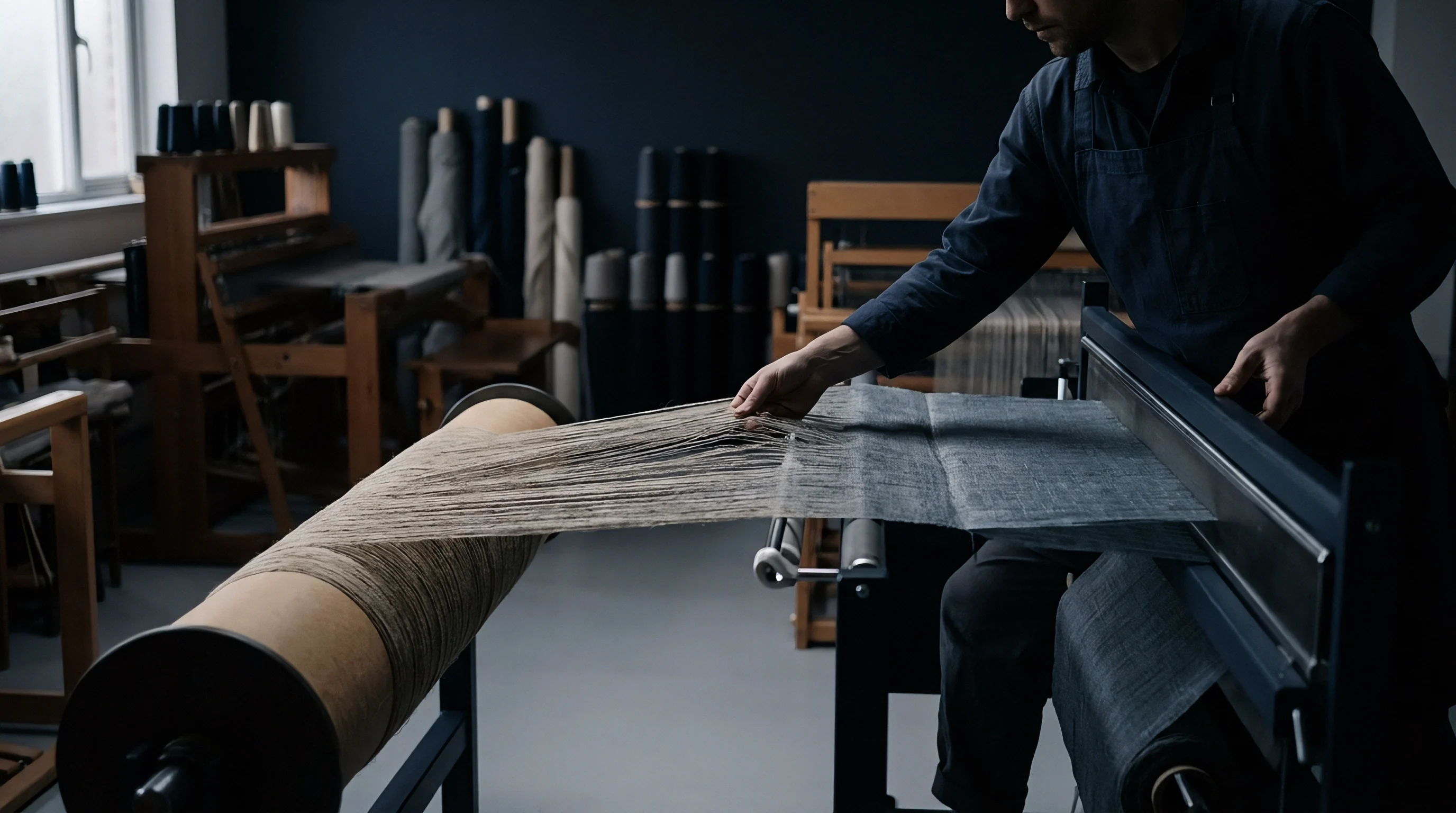
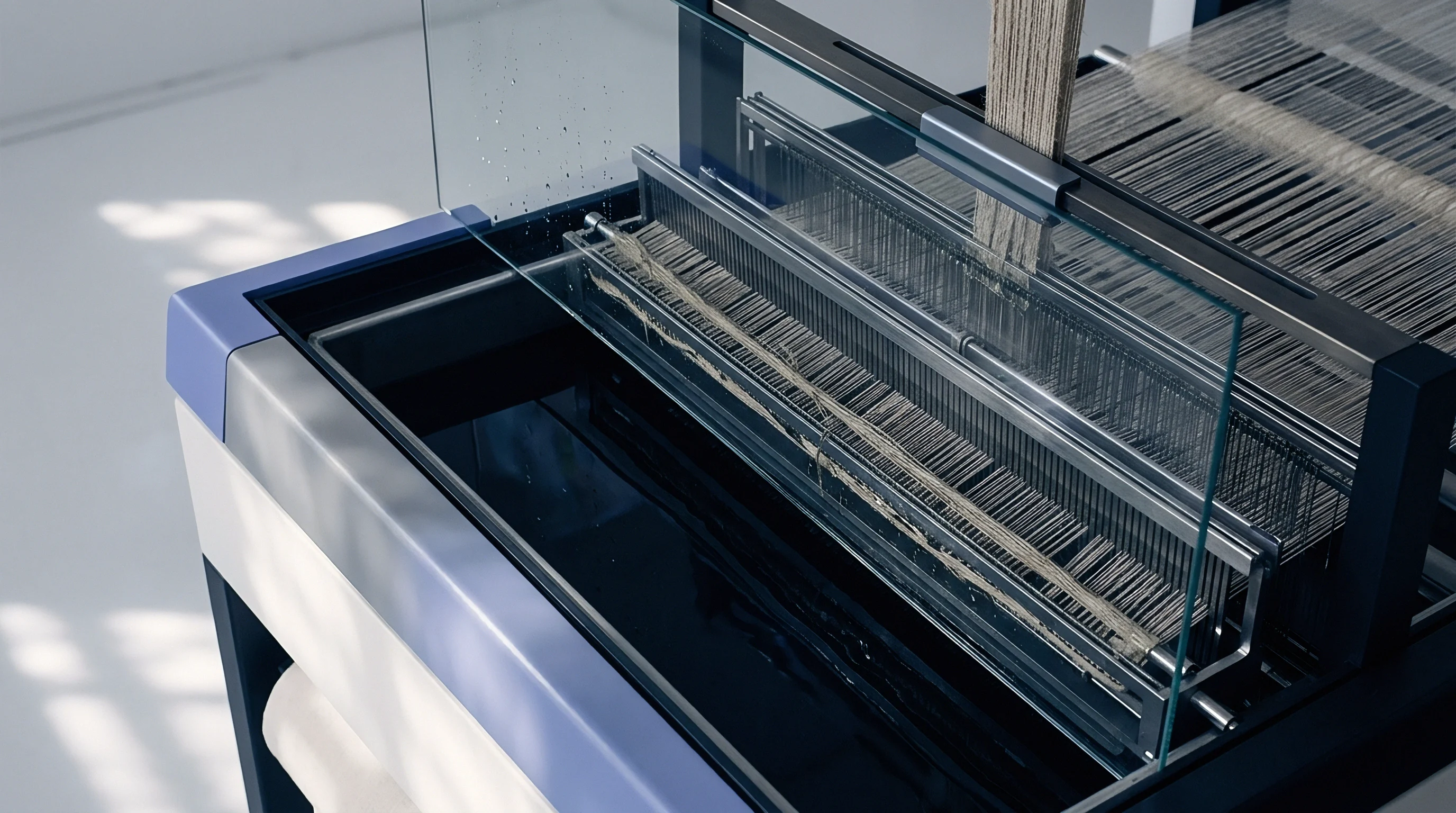
Liquids applied during warp preparation establish the mechanical shell required to shield individual ends from rapier insertion abrasion. Converting a weaving line to rapier insertion shifts the primary strain mode on the warp sheet from aerodynamic drag to intense mechanical friction. Flexible and rigid rapiers enter the shed at acceleration rates exceeding ninety metres per second squared, bringing metal surfaces into direct sliding contact with adjacent yarns.
Plain starch formulations fail under these frictional velocities because un-modified amylose lacks the structural toughness to resist shearing. Modern size formulas balance cross-linked starches with acrylic polymers and cold-water soluble polyvinyl alcohols to form a cohesive, smooth outer envelope around every spun bundle.
Adhesion between the sizing bath components and the fiber core governs thread survival. Low-viscosity acrylics penetrate the interstitial voids between individual staple fibers, while high-molecular-weight starches remain on the surface to bind loose hair ends back into the main core thread body. Hairiness encasement dictates insertion success on rapier conversions.
When surface hairiness exceeds an index value of two point five on the Uster system, protruding fibers interlock during shed crossover. The entering rapier head catches these interlocked fibers, causing clean mechanical snaps or partial end fraying that leads to down-loom warp stops.
A size formula optimized for air-jet insertion relies heavily on high thread density stiffening to maintain a clean channel for the air column. Converting that same beam specification to a flexible rapier loom requires higher elastic recovery. Starch alone lacks elastic recovery.
Sizing chemistries must incorporate plasticized synthetic co-polymers that allow the yarn to stretch up to five percent during beat-up without fracturing the protective surface encasement.
| Yarn Type | Base Polymer Ratio | Binder / Lubricant Additive | Size Concentration (%) | Target Add-On (%) |
|---|---|---|---|---|
| 100% Spun Flax (Nm 26) | 70% Modified Potato Starch / 30% PVA | 2.5% Mutton Tallow / Wax Emulsion | 10.0 to 12.0 | 11.5 |
| 100% Carded Cotton (Ne 30/1) | 85% Thin-Boiling Starch / 15% Acrylic | 1.5% Synthetic Lubricant | 8.5 to 10.0 | 9.0 |
| Polyester / Cotton (65/35 Ne 45/2) | 40% Modified Starch / 60% PVA | 1.0% Polyethylene Wax | 6.0 to 8.0 | 6.5 |
Improper sizing preparation generates distinct failure modes when exposed to rapier shedding forces. Mechanical friction strips brittle coatings, while excessive film penetration leaves the outer fiber bundle unshielded.
- Film Shedding occurs when high cooking temperatures degrade starch chains, creating a dry layer that flakes off inside the drop wires and forms abrasive lint accumulators.
- Hairiness Breakout results from inadequate surface binder concentration, causing fine fibrils to peel back from the main thread core during rapier tape movement.
- End Glazing takes place when wet pick-up levels exceed target values, creating a brittle glass-like surface that cracks under peak beat-up tension spikes.
- Elasticity Loss develops when excessive stretch is applied in the sizing machine drying section, leaving insufficient residual elongation for shedding cycles.
Residual yarn elongation measured after sizing must retain a minimum of seventy-five percent of the greige thread native elasticity to survive peak shedding loads.
Viscosity drops as temperature rises. Cooked size boxes held at ninety-five degrees Celsius preserve uniform pick-up across the entire beam width. Squeezing roll pressures between twenty and thirty-five kilonewtons control penetration depth, limiting chemistry absorption to the outer twenty percent of the yarn cross-sectional radius.
Deep penetration turns the core into a stiff rod that snaps under dynamic cyclic bending. Shallow penetration leaves surface hairs unanchored, filling the reed spaces with sloughs during loom operation.
Formulations with high acrylic content provide superior film toughness while allowing cold washing during finishing. Sizing recipes designed with low elasticity fail when converted to flexible rapier looms running at five hundred picks per minute.
Shed
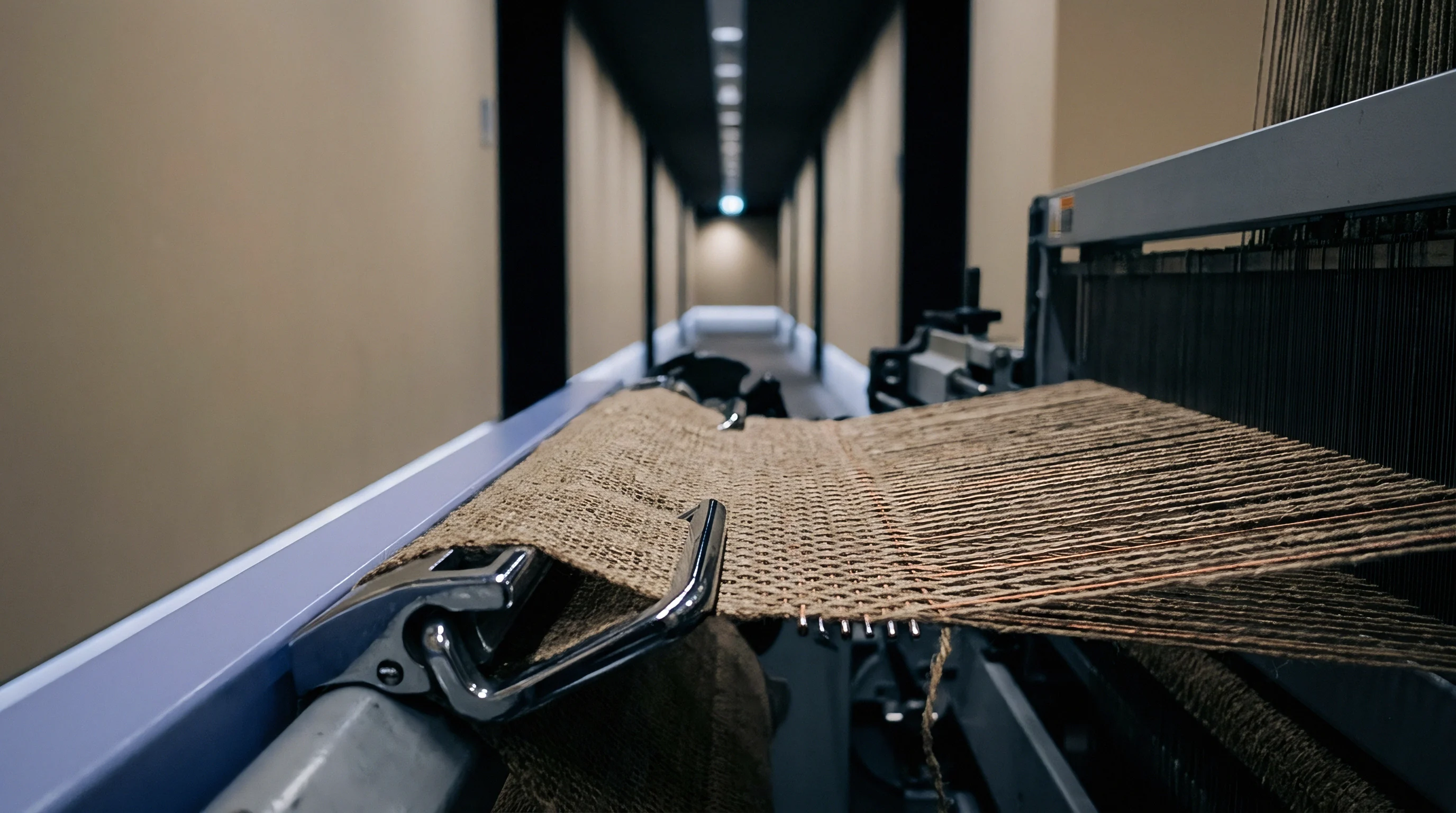
Positioning the mechanical components around the warp line determines the magnitude of physical stress delivered to every thread during each main shaft rotation. Shuttleless rapier conversion demands a revised shed geometry compared to projectile or air-jet configurations. Flexible rapier heads require a clean opening height at the point of insertion to prevent the metallic grippers from clipping upper or lower thread sheets.
Opening the shed wider increases the dynamic stretch imposed on the warp yarns, raising static tension settings to prevent end sagging in the lower sheet.
Backrest roller positioning controls the distribution of tension between the top and bottom sheets during shed opening. Raising the backrest roller eight to fifteen millimetres above the horizontal warp plane creates an asymmetrical shed. The top sheet slackens while the bottom sheet tightens during movement to the full open position.
This asymmetry keeps the lower warp sheet taut under the moving rapier guide tape, preventing yarn loops from entangling the entering tape edge.

Beat-Up Geometry Adjustment
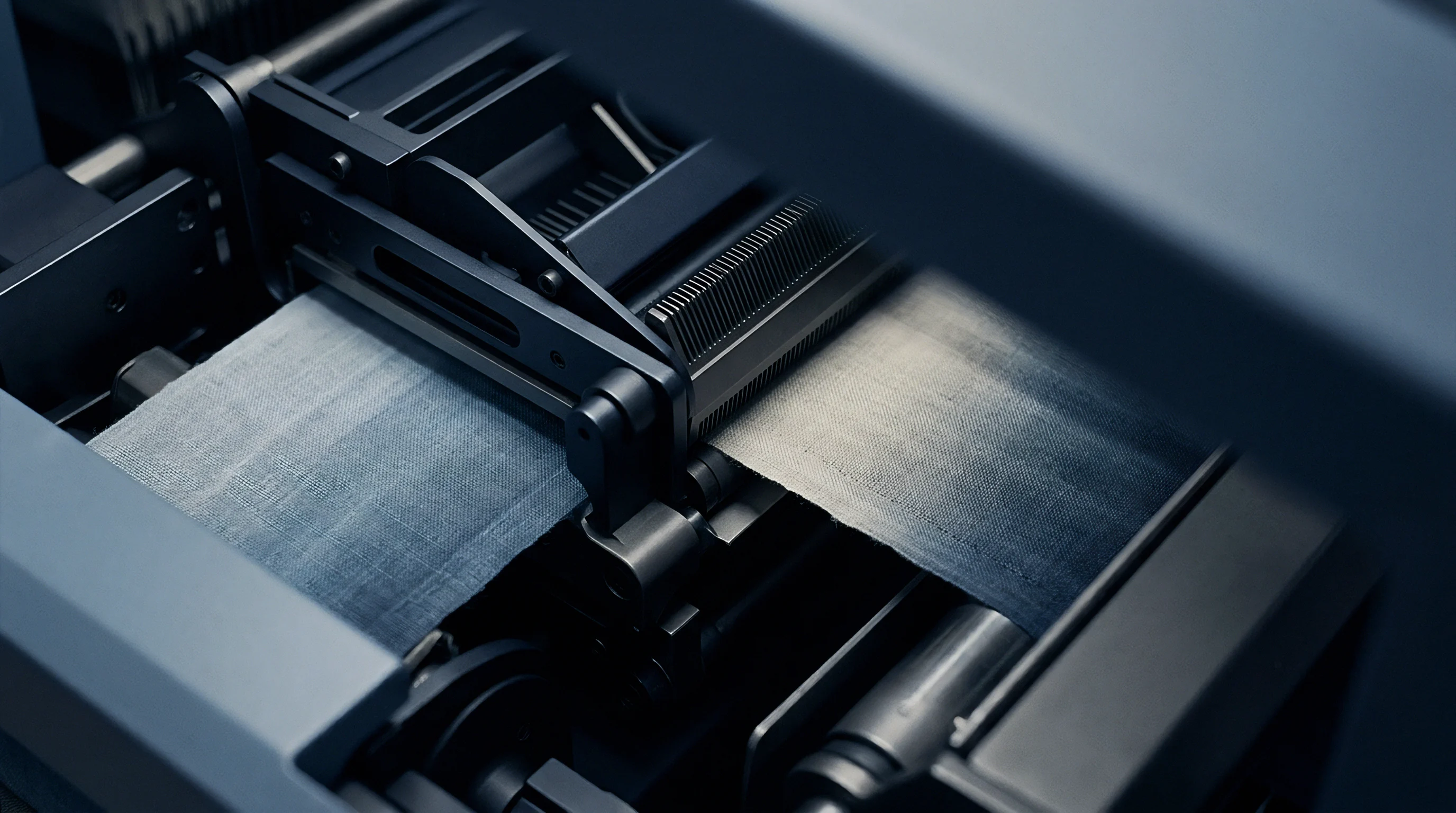
The beat-up position represents the instant of highest physical stress on the warp sheet. Fell distance, reed drop angle, and heald frame crossover timing govern whether the cloth fell remains stable or bounces backward during pick insertion. Early shed crossover, where frames pass each other ten to fifteen degrees before front dead center, locks the inserted pick into the cloth fell before the reed completes its forward stroke.
This early locking action prevents heavy pick density fabrics from sliding backward, reducing pick spacing variations and stopping mark formation.
| Backrest Offset (mm) | Crossover Timing (Deg) | Dwell Tension (cN/tex) | Peak Shed Tension (cN/tex) | Beat-Up Tension (cN/tex) |
|---|---|---|---|---|
| 0 (Level Line) | 300 (Standard) | 1.8 | 3.4 | 4.8 |
| +10 (Asymmetric) | 285 (Early) | 2.1 | 3.9 | 5.6 |
| +15 (High Offset) | 275 (Very Early) | 2.4 | 4.5 | 6.3 |
Converting existing machinery to rapier technology requires a rigorous mechanical alignment sequence to establish stable warp line geometry before committing production warps.
- Level the main breast beam relative to the loom side frames using a precision machinist spirit level across the full reed width.
- Set the backrest roller height to twelve millimetres above the horizontal datum line connecting the breast beam and lease rods.
- Adjust the heald frame height guides to ensure the bottom warp sheet lies zero point five millimetres above the raceboard felt during full shed opening.
- Position the rapier guide hooks so that no vertical deflection occurs on the lower warp sheet as the rapier tape enters the shed.
- Set the drop wire box angle to align parallel with the warp sheet path, preventing excessive dropper friction on outer thread surfaces.
- Calibrate the electronic warp let-off system strain gauge sensors using deadweight calibration blocks attached to the whip roll assembly.
Loom stop rates exceeding one stop per one hundred thousand picks indicate incorrect backrest height settings or improper sizing add-on levels.
Incorrect alignment of the backrest roller creates severe friction points along the raceboard. Excessive tension on the lower warp sheet causes immediate abrasion against the flexible rapier guide hooks, leading to frequent filamentation breaks on fine spun warps. Insufficient tension allows lower sheet ends to sag into the path of the advancing rapier head, resulting in clean sheared ends across the full shed width.
Drag
Friction between the moving rapier tape and the warp sheet introduces dynamic drag forces that do not exist in fluid-jet weaving systems. As the flexible rapier tape flexes into the shed, its underside rubs directly against the stationary warp threads. Peak loads spike precisely at the quarter-cycle and three-quarter-cycle points of main shaft rotation, coinciding with maximum rapier tape velocity.
Minimizing tape drag requires balancing drop wire weight, lease rod smooth finishes, and active whip roll dampening.
Dynamic load cell measurements show that peak tension transients can double baseline static settings during rapier entry. Standard static warp tension for a medium-weight carded cotton yarn sits at two cN per tex. During rapier acceleration, dynamic spikes reach four point five cN per tex.
These peak forces shear weakened fibers, triggering catastrophic yarn breakages if the size chemistry lacks sufficient tensile elasticity.

How Does Rapier Insertion Elevate Peak Warp Stress?
Rapier heads enter the open shed while traveling at linear speeds between twenty-five and thirty-five metres per second. The physical bulk of the gripper head displaces warp threads laterally and vertically, forcing adjacent yarns to stretch locally beyond the average shed opening dimensions. This local displacement generates a high-frequency tension wave that propagates back toward the drop wires and lease rods.
If the whip roll dynamic responsiveness is too stiff, these tension waves reflect back to the yarn fell, creating localized stress concentrations that rupture threads at thin places.
Clean sheds prevent warp stops. Active dynamic whip rolls equipped with pneumatic or torsional spring dampening absorb these high-frequency tension spikes. Softening the dynamic response of the whip roll allows the rear warp path length to adjust instantaneously to local rapier displacement, keeping peak tension variations within a zero point eight cN per tex envelope.
Dynamic warp tension spikes occurring during rapier entry must remain below thirty percent of the single-strand yarn break strength.
Evaluating loom conversion readiness demands continuous dynamic monitoring of thread stress parameters during high-speed sampling runs.
- Whip Roll Spring Rate selection balances static fell stability against dynamic peak load absorption during rapier entrance.
- Lease Rod Surface Treatment featuring hard chrome plating minimizes frictional drag coefficients on fine spun natural yarns.
- Drop Wire Weight Selection prevents dropper bouncing while keeping total warp sheet static weight within structural beam limits.
- Rapier Tape Alignment eliminates downward mechanical deflection against the raceboard, preventing lower sheet fiber scuffing.
Unresolved dynamic load distribution across the width of extra-wide rapier conversions leaves central warp ends exposed to higher stress cycles than selvage threads, leaving open the question of whether active mechanical zone-tensioning devices can fully eliminate mid-width yarn fatigue on high-speed wide looms.
Dossier
Verification protocols establish physical evidence that sizing formulations and loom setups conform to required performance thresholds. Qualification procedures begin with raw thread property verification before beam winding and extend through greige fabric inspection on the perch frame. Standardized testing eliminates guesswork, converting physical observations into quantifiable audit parameters that guarantee loom conversion economics.
Testing single-strand tensile strength and elongation before and after sizing confirms whether the chemical preparation preserved thread integrity. ISO 2062 standard methods apply to single-end strength evaluations, requiring a minimum fifty tests per beam sample to yield statistically valid averages. Abrasion resistance testing on the Zweigle G552 tester provides direct correlation to rapier friction survival.
Unsized yarn that exhibits five hundred abrasion cycles before rupture must achieve over two thousand cycles after size application to pass loom qualification audits.
Greige cloth visual quality inspection relies on the ASTM D5430 four-point system. Demoting defect scores requires identifying warp-wise faults linked to sizing or shed adjustment issues. Sizing spots, broken ends, reed marks, and loose warp streaks carry point penalties based on defect length.
Accumulating more than twenty-eight penalty points per one hundred square metres results in immediate lot rejection and mandatory loom adjustment audits.
- Laboratory Desizing Verification using ISO 105 chemical extraction confirms size add-on percentages against master specification sheets.
- Hairiness Testing Reports utilizing Uster hairiness indexes verify film encasement efficiency across full warp beam widths.
- Tensile Creep Data measures permanent yarn deformation under long-duration loom stop conditions to set maximum stop limits.
- Greige Defect Maps index four-point inspection results directly against specific loom numbers and shift production logs.
Standard purchasing contracts incorporate ISO 105 desizing efficiency clauses mandating ninety-eight percent minimum size removal during standard industrial scouring, imposing full chemical cost reclaims on size suppliers when residual acrylic binder residues cause uneven dye absorbency in downstream finishing operations.
Booking
Loom hour economics govern every decision made on the weaving shed floor. Converting an existing shuttle or air-jet shed to flexible rapier technology involves precise balance between capital expenditure, sizing chemical costs, and running efficiency metrics. Rapier looms run at lower raw picks-per-minute speeds than modern air-jet looms, but their capability to weave complex, slub, and high-density warp structures without stoppages yields superior economic payback on specialized fabric lines.
Loom efficiency drives metre margins. Sizing cost increases associated with adding high-grade acrylic binders or synthetic lubricants are offset by minor reductions in warp stop rates. A single warp stop on a high-speed rapier loom costs approximately two point five loom minutes in lost production, operator labor, and start-mark prevention cycling.
Reducing warp stops from three stops per loom hour to zero point five stops per loom hour adds nearly seven percent to total shift efficiency, drastically lowering the fixed hourly overhead allocated to every finished metre of fabric.
Consider a practical production example converting a line to weave heavy flax linen drapery cloth. Take a standard run of fifty thousand finished metres specified at Nm 26 pure flax warp and Nm 18 flax filling, woven at a width of one hundred and ninety centimetres with twenty-four ends per centimetre and sixteen picks per centimetre. On an unconverted line, high flax yarn hairiness and low elasticity cause four point two warp stops per loom hour, dropping net loom efficiency to sixty-eight percent at three hundred and eighty picks per minute.
Converting the line to flexible rapier looms with an optimized starch-acrylic sizing formula costing zero point two two Euros per kilogram of size mix raises the add-on target to eleven point five percent, increasing chemical cost per linear metre by zero point zero four Euros. The converted rapier loom runs at four hundred and fifty picks per minute with a warp stop rate of zero point four stops per loom hour, raising net shed efficiency to eighty-nine percent.
| Performance Parameter | Unconverted Baseline Line | Converted Rapier Line |
|---|---|---|
| Main Shaft Speed (PPM) | 380 | 450 |
| Shed Operating Efficiency (%) | 68.0 | 89.0 |
| Warp Stop Rate (Stops/Loom Hour) | 4.2 | 0.4 |
| Sizing Chemical Cost (€/Metre) | 0.08 | 0.12 |
| Hourly Loom Overhead (€/Hour) | 18.50 | 18.50 |
| Net Production Output (Metres/Hour) | 9.72 | 15.07 |
| Total Direct Conversion Cost (€/Metre) | 1.98 | 1.35 |
The total direct conversion cost per metre drops from one point nine eight Euros to one point three five Euros on the converted rapier line. This net savings of zero point six three Euros per linear metre amortizes the capital cost of rapier head retrofits and dynamic let-off control upgrades across thirty thousand metres of production. Higher sizing chemical costs represent a minor variable expenditure when weighed against the immediate gain in loom hour productivity and greige fabric quality scores.
Capacity booking strategies rely on precise loom hour calculations that incorporate setup times, size mix changeover wash-downs, and beam gaiting delays. Allocating order volumes across a converted rapier shed demands rigid adherence to beam specification standards, ensuring that sizing add-on parameters, backrest geometry settings, and dynamic let-off controls remain locked to qualified specification sheets throughout the entire production booking slot.