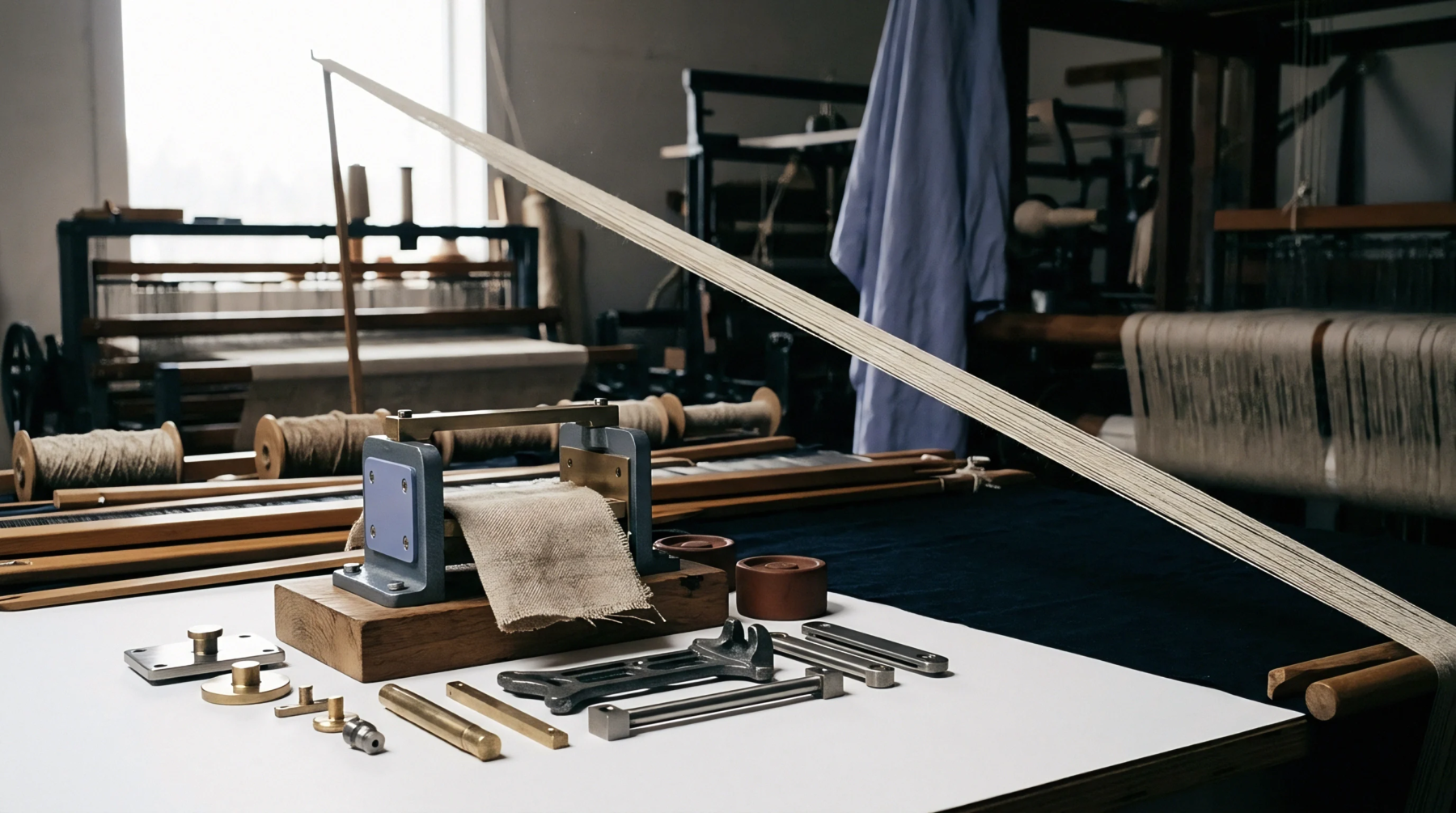
Loom Timing
The synchronization of the harness movement with the movement of the reed defines the point where the warp yarns cross one another before the reed reaches the fell of the cloth. An early shed crossover occurs when the crossing happens well before the reed arrives at the front position, locking the weft yarn into place earlier in the cycle. Linen fabrics often utilize this setting to increase the density of the weave and prevent the weft from rebounding.
This mechanical timing is a primary factor in determining the cover factor and the hand of the finished textile.
Structural Effect
Locking the pick early creates a tighter construction by trapping the yarn under maximum tension. While a late crossover allows for a softer fabric, the early shed crossover produces the crisp, firm texture associated with high-quality flax cloth. It also reduces the tendency of the fabric to fray during the subsequent cutting and sewing stages.
The choice of crossover point depends entirely on the required ends per inch in the final specification.
Weaving Stability
Mechanical strain on the warp increases when the crossover is timed early. Operators must balance this tension to avoid breakage, particularly in the outer selvedges where the stress is most concentrated. Proper alignment prevents the reed from abrading the yarns as they move toward the fell.