Characterizing Scutched Flax Length Arrays for Mechanical Processing
Scutched flax length arrays dictate hackling yield and draft limits, where span length and dispersion metrics set the achievable wet-spun yarn count limit.


Distribution
Scutched flax consists of heterogeneous technical fiber bundles held together by pectinous middle lamellae, ranging from short strands under one hundred millimeters to long fibers exceeding eight hundred millimeters. Mechanical decortication breaks the woody shive core while preserving cortical bast fibers, yet leaves wide variations in bundle length across every harvested lot. Characterizing these length arrays determines how the material behaves during hackling, drawing, and spinning.
Fiber linear density governs cohesion. Unlike uniform synthetic filaments or short-staple cotton, flax length measurements reflect bundle structures rather than individual biological cells.
Morphological Structure of Technical Fiber Strands
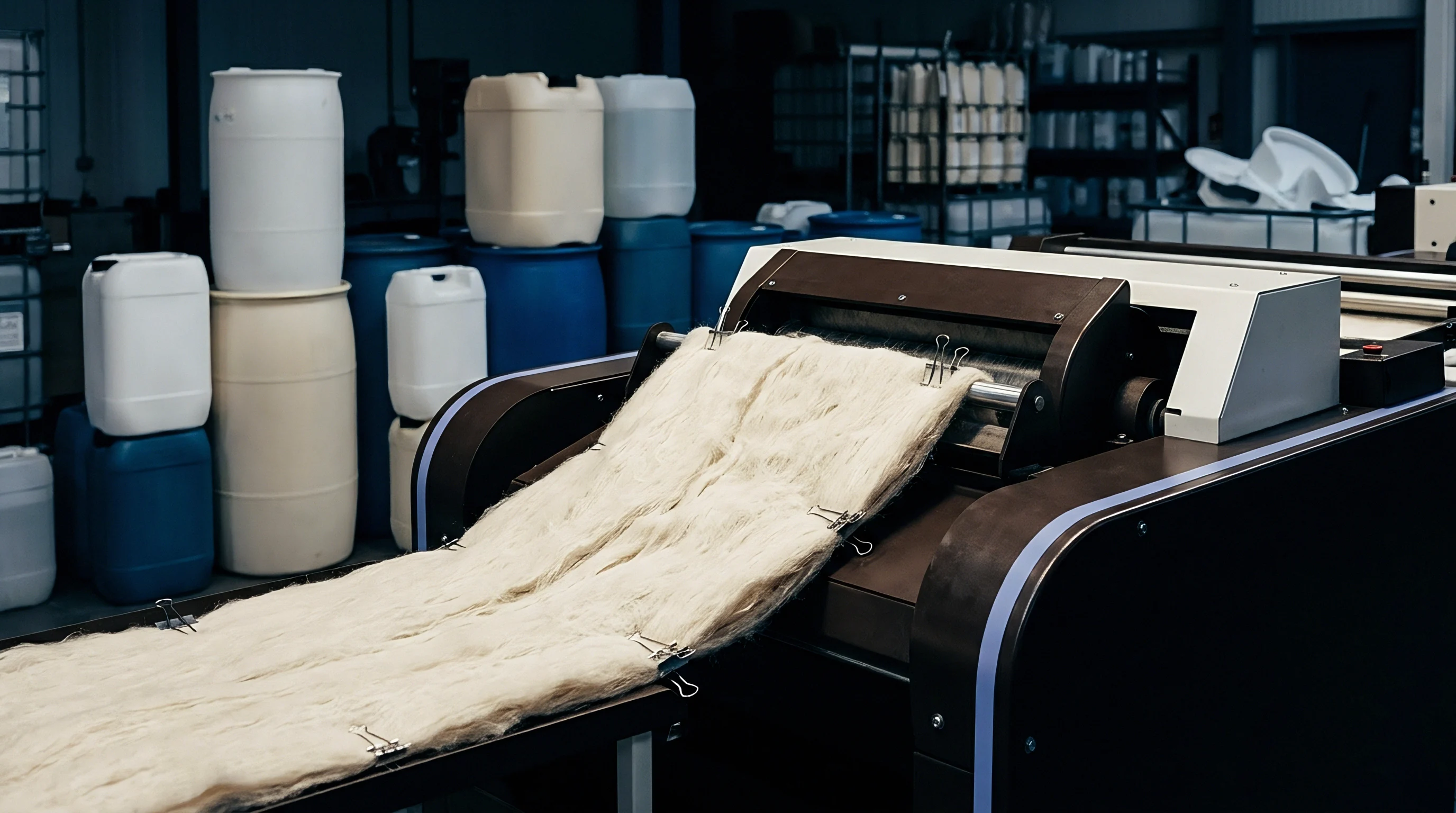
Biological retting dissolves intercellular gums, allowing mechanical scutching blades to separate woody shives from cortical bast tissues. The resulting scutched fiber contains elementary fibers measuring fifteen to twenty-five millimeters in length bonded into technical bundles that span hundreds of millimeters. Degree of retting directly alters this bundle length array.
Over-retted flax fractures easily during scutching, converting long technical strands into short tow fragments. Comb geometry determines waste. Under-retted flax retains heavy pectin bridges, maintaining long length profiles but resisting fiber splitting in subsequent mechanical carding and hackling zones.
Conditioned raw scutched long-staple lots displaying a fifty percent span length above three hundred twenty millimeters yield optimum hackling transfer efficiency at sixty percent relative humidity.

Numerical Metrics for Fiber Length Dispersion
Laboratory measurements record both mean staple values and cumulative frequency curves to describe bundle variation. Two primary values govern industrial quality control: the two point five percent span length and the fifty percent span length. Shive content impairs draft.
The ratio between these two values establishes the length uniformity index. High uniformity indices indicate a narrow length distribution, which prevents fiber uncontrolled drifting during drafting. Coefficient of variation values for scutched flax length frequently exceed forty-five percent, reflecting the natural variability of field-retted bast crops.
Higher proportion of longer technical strands consistently allows finer draft allocation at the first draw frame without generating sliver void defects.

Comb
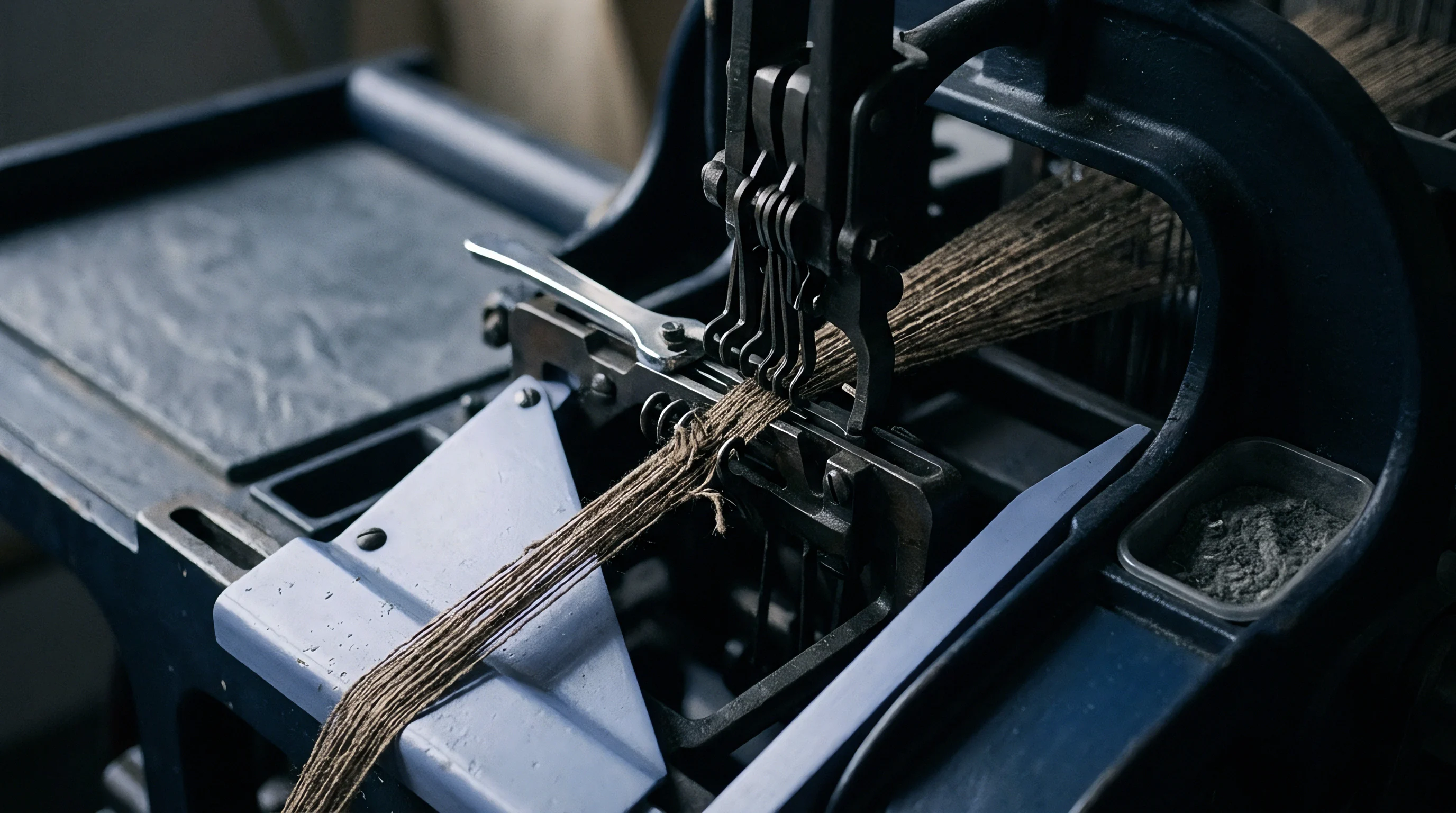
Direct mechanical sorting isolates technical flax bundles into sorted length categories through sequential pin beds. Modern comb sorters utilize a series of fine needle beds to align fiber bases, allowing technicians to draw off length fractions sequentially from longest to shortest. The resulting array forms a physical diagram, mapped on a black velvet board, from which cumulative weight percentages are calculated.

Optical Fibrogram Methods and Sorter Arrays
Automated optical scan instruments measure light attenuation across prepared beard specimens to calculate cumulative length profiles. A clamped beard of fibers, prepared from representative bale samples, moves through an optical sensing slot. Light transmission correlates directly with the mass of fibers present at each distance from the clamp bar.
Hackle pin density dictates split. The instrument processes this attenuation curve into a fibrogram, extracting span lengths and mean lengths within minutes compared to the hour required for manual comb sorting.
Optical systems require careful calibration against manual comb sorter values due to variation in fiber bundle opacity. Coarse technical bundles absorb more light per unit mass than split elementary fibers, occasionally flatters the short-fiber ratio in under-retted lots. Combining optical scans with gravimetric sorting yields reliable baselines for high-speed spinning mills.
| Origin Grade | Span Length 2.5% (mm) | Span Length 50% (mm) | Mean Length (mm) | Coefficient of Variation (%) | Hackling Waste Potential (%) |
|---|---|---|---|---|---|
| Dew-Retted Western European Line | 420 | 280 | 265 | 38 | 14.2 |
| Water-Retted Baltic Line | 460 | 310 | 295 | 32 | 11.5 |
| Dew-Retted Heilongjiang Line | 380 | 230 | 215 | 46 | 18.8 |
| Enzyme-Treated Commercial Tow | 180 | 85 | 78 | 54 | 29.0 |

Staple Parameter Standards across Sourcing Origins
Commercial scutched fiber shipments display marked variation in bundle length uniformity depending on regional agricultural retting conditions and mechanical decortication adjustments. Dew-retted European flax exhibits broad length arrays due to variable field weather exposure during the sun-retting period. Water-retted Baltic stock presents tighter array distributions and higher mean strand lengths, as controlled tank temperature and uniform immersion preserve long technical bundles from mechanical shattering.
Short fibers drift during drawing. Sourcing practices must account for these origin signatures when setting machine drafting distances.
- Bale core sampling depth targets internal moisture pockets to reflect representative fiber extraction across dense three-hundred-kilogram hydraulic packs.
- Beard specimen preparation aligns technical bundles without introducing artificial tensile breaking during manual carding passes.
- Optical scanning alignment sets baseline light transmission thresholds, preventing fine fiber tip shadows from distorting array graphs.
- Clamping pressure calibration holds bundle roots firmly, preventing slippage during mechanical comb drafting sweeps.
Traders routinely claim that elevated short-strand percentages stem from unavoidable weather shifts during field retting rather than aggressive decortication rotor speeds.


Breakage
Mechanical hackling subjects scutched flax bundles to progressive pin penetration, splitting coarse technical strands along pectin boundaries while severing weaker points. As stricks move through hackling machine zones, pin density increases from two pins per centimeter to more than twenty pins per centimeter. Cohesion retains sliver integrity.
This mechanical action alters the length array, converting long scutched strands into hackled line fibers while generating tow waste composed of broken or short fibers.

Bundle Splitting and Pectin Lamellae Severance
Rotary hackling pins penetrate dense scutched stricks, applying lateral shearing forces that cleave multicellular structures into finer technical elements. Highly retted pectin layers split easily under low mechanical force, yielding fine long strands without substantial transverse fracture. Weakly retted pectin bonds resist splitting, causing pins to snag, load, and snap technical strands across their diameter.
Draft allocation dictates count. This transverse fracture shifts the fibrogram curve to the left, expanding the short-fiber population under one hundred millimeters.
Stricks containing coarse unretted pectin bands split unpredictably under heavy pin insertion, generating excessive tow waste instead of uniform line sliver.
Shive Interlocking and Mechanical Damage Modes
Residual woody core fragments pinned within flax stricks create stress concentration points during pin insertion. When a hackling pin strikes an embedded shive, local tensile stress on adjacent fibers spikes beyond ultimate tensile limit. Wet processing swells technical bundles.
The fiber snaps at the shive boundary, increasing short fiber content in the hackled sliver and driving usable long fibers into the tow collector. Yield drops under high speed. Mismatched pin density progression across hackling zones causes premature bundle fracture, reducing line fiber yield by eight percent and flooding tow outlets with short fragments.


Sieve
Standardized laboratory evaluation isolates flax fiber length groups through regulated mechanical classification apparatus. Uniform testing procedures convert raw fiber samples into reproducible array metrics necessary for commercial disputes and process tuning.

Standard Test Protocols for Array Characterization
International normative guidelines mandate specific atmospheric conditioning and specimen mass preparation before performing manual or automated length measurement. Test specimens undergo conditioning at twenty degrees Celsius and sixty-five percent relative humidity for twenty-four hours to equalize fiber moisture content. Staple spread governs yarn evenness.
Standard ISO 2370 outlines precise manual comb sorting protocols for raw and hackled flax, establishing reference standards against which automated optical analyzers are validated.
| Test Method | Measurement Principle | Sample Mass (g) | Testing Duration (min) | Key Length Output | Repeatability CV (%) |
|---|---|---|---|---|---|
| ISO 2370 Comb Sorter | Gravimetric manual array | 5.00 | 45 | Mean Length, Distribution Curve | 2.8 |
| Optical Fibrogram Scan | Light attenuation beard scan | 0.50 | 3 | Span Length 2.5%, Span Length 50% | 1.5 |
| Johannsen-Zweigle Array | Mechanical pin bed sorting | 2.00 | 20 | Frequency Percentage Categories | 3.2 |
| Almeter Optical Array | Capacitance / Light profile | 1.00 | 8 | Barbe Length, Hauteur Length | 2.1 |

Worked Example of Staple Array Conversion Calculation
Consider a forty-metric-ton shipment of scutched dew-retted line flax evaluated under laboratory conditions at sixty-five percent relative humidity. Laboratory testing isolates fiber length fractions into five discrete length groups to calculate the effective mass-weighted mean length, termed Hauteur length in European processing mills.
Assume sample specimen analysis yields the following gravimetric distribution across five length channels:
Channel 1: 400 mm to 600 mm length range, mid-point 500 mm, mass fraction 0.35.
Channel 2: 300 mm to 400 mm length range, mid-point 350 mm, mass fraction 0.30.
Channel 3: 200 mm to 300 mm length range, mid-point 250 mm, mass fraction 0.20.
Channel 4: 100 mm to 200 mm length range, mid-point 150 mm, mass fraction 0.10.
Channel 5: 0 mm to 100 mm length range, mid-point 50 mm, mass fraction 0.05.
Multiply each channel mid-point length by its corresponding mass fraction to establish individual weighted values:
Channel 1 contribution: 500 mm multiplied by 0.35 equals 175.0 mm.
Channel 2 contribution: 350 mm multiplied by 0.30 equals 105.0 mm.
Channel 3 contribution: 250 mm multiplied by 0.20 equals 50.0 mm.
Channel 4 contribution: 150 mm multiplied by 0.10 equals 15.0 mm.
Channel 5 contribution: 50 mm multiplied by 0.05 equals 2.5 mm.
Summing these individual weighted values yields an overall Hauteur mean length of 347.5 millimeters. Calculate short fiber content by summing mass fractions below one hundred fifty millimeters, which totals 0.10 or ten percent. Fine counts demand low variation.
If a buyer contract specifies a minimum Hauteur length of 350 millimeters and a maximum short fiber fraction of eight percent, this lot fails both parameters, triggering contract penalty adjustments.
- Extract ten primary subsamples weighing twenty grams each from randomized positions throughout the opened bale core.
- Store the consolidated sample inside a conditioned room maintained at twenty degrees Celsius and sixty-five percent relative humidity for twenty-four hours.
- Perform initial hand-carding across a wide-gauge pin bed to remove unattached shive particles without breaking long technical fibers.
- Draw five parallel beard specimens weighing exactly five hundred milligrams each, ensuring end alignment along the baseline bar.
- Feed each prepared beard through the measuring zone at a constant feed rate of two millimeters per second.
Purchase contracts referencing ISO 2370 allow buyer rejection whenever the measured twenty-five percent span length falls more than five percent below certified lot documentation.
Incorporating IWTO-certified staple distribution limits into raw material supply contracts obligates merchants to reimburse processing losses incurred from sub-standard long-staple fractions.

Frame
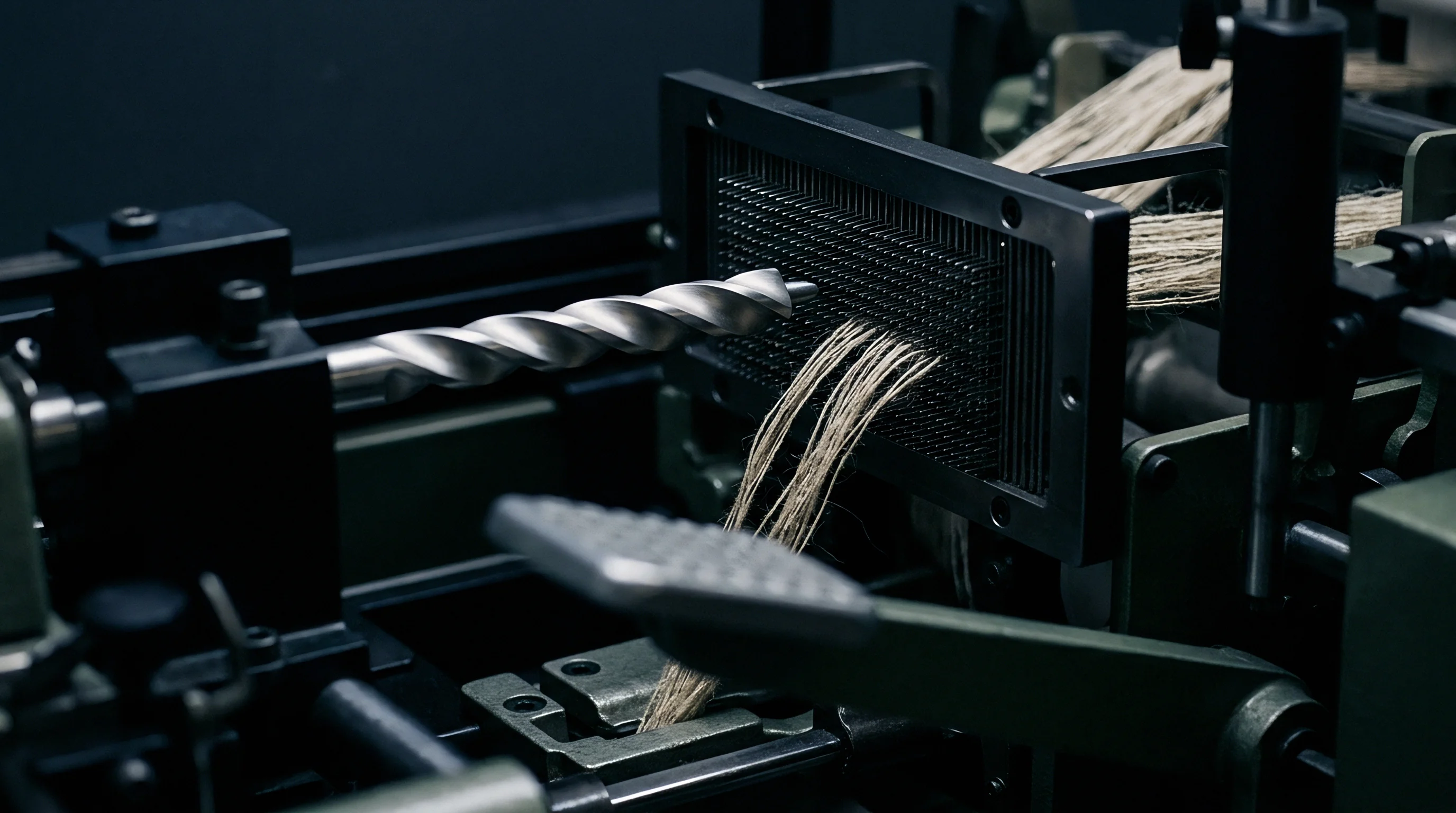
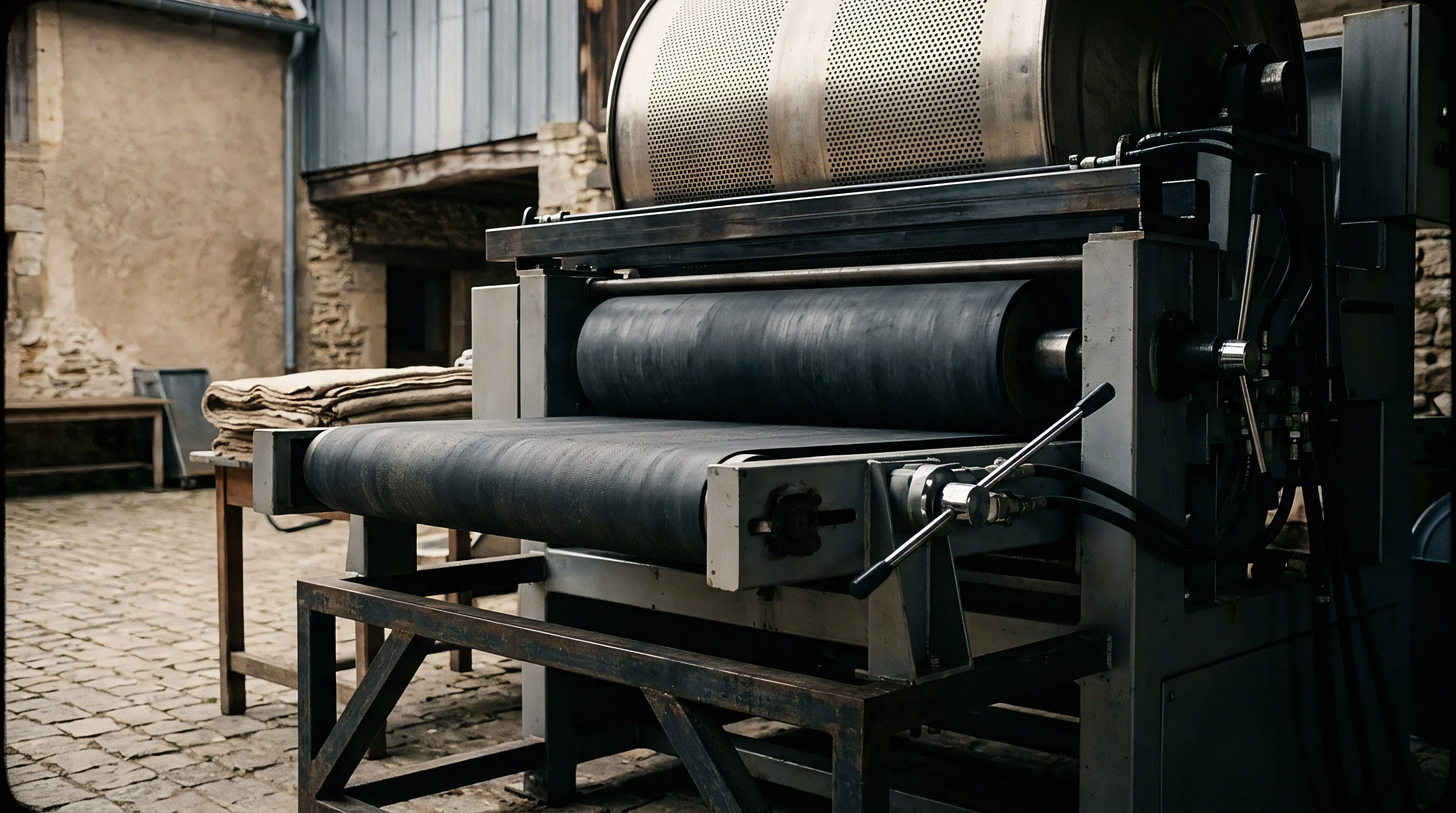
Drawing systems rely on controlled roller speed differentials to attenuate hackled flax slivers into uniform roving strands. Pin-gills control long flax fibers between back and front drafting rollers. The length array directly governs optimum ratch settings, which represent the physical distance between back and front roller nips.
Floating Fiber Dynamics in Drafting Zones
Uncontrolled short strands traveling between drafting rollers move at unpredictable velocities, causing localized linear mass variations. When ratch distance exceeds maximum fiber length, long strands remain under pin control until front rollers grip their tips. Short fibers under eighty millimeters fall between faller pins and front roller nips without clamping control.
Moisture alters bundle tenacity. These floating fibers accelerate prematurely, clumping into thicker sliver cross-sections that register as yarn thin and thick defects.
Short technical fibers under eighty millimeters escape pin control in gill boxes, accumulating as slubs in the final drawn roving.

Defect Generation in High-Draft Processing
Excessive draft ratios applied to slivers with high staple length coefficient of variation trigger drafting waves and periodic thin spots. Setting ratch distance too tight breaks long technical strands, artificially generating short fibers. Retting degree dictates fiber split.
Setting ratch distance too wide expands uncontrolled drafting zones, increasing short fiber acceleration chaos.
- Drafting wave periodicities occur when short fiber clusters move uncontrolled through roller nips, generating periodic yarn thickness fluctuations.
- Gill bed clogging arises from excessive short-staple fly accumulating between faller pins, causing fiber lap-ups on front rollers.
- Roving false twist failure develops when long technical bundles resist uniform consolidation during bobbin winding operations.
- Wet-spinning trough fly build-up results from unattached short fibers detaching inside hot water baths, causing continuous end breaks.
Mill trials continue to debate whether active pneumatic suction installed directly above drafting fallers can eliminate floating short fibers without destabilizing long-staple alignment.

Ledger
Commercial evaluation translates raw staple distribution data into net yield models, yarn count capabilities, and landed cost per spun meter. Fiber value depends entirely on spinnable yarn fineness and mechanical processing waste allowances.

Spinnable Count Limits Based on Staple Arrays
Fine wet-spun yarn production demands long, uniform technical bundles capable of remaining coherent at low strand linear density. Wet spinning in hot water at sixty degrees Celsius softens intercellular pectins, allowing technical fibers to slip during final drafting. Pin density governs sliver waste.
Long staple arrays with low coefficient of variation permit fine count spinning up to Nm 80, whereas broad arrays containing elevated short fiber fractions break down above Nm 26.
| Raw Staple Class | Long Fraction >300mm (%) | Hackling Line Yield (%) | Max Wet-Spun Count (Nm) | Net Fiber Cost Multiplier |
|---|---|---|---|---|
| Prime Premium Line | 70 | 68 | Nm 80 | 1.00 |
| Standard Commercial Line | 55 | 58 | Nm 40 | 1.18 |
| Low-Grade Short Line | 38 | 44 | Nm 26 | 1.42 |
| Combed Tow Stock | 12 | 22 | Nm 18 (Dry) | 1.85 |

Cost Modeling across Processing Routes
Financial calculations combine hackling line loss, tow re-sale credit, and spinning break frequency to establish true fiber cost per kilogram of yarn. Raw scutched flax purchased at three Euros per kilogram with a fifty-eight percent line yield yields an effective hackled line fiber cost of five Euros and seventeen Cents per kilogram after accounting for tow recoverables. Lowering short fiber content by five percent improves hackling line yield by four percent, reducing raw material landed cost per finished woven meter by six percent.
Adjusting raw material purchase allocations toward lots with narrow length distribution curves lowers overall spinning manufacturing costs despite higher initial bale prices.