Dynamic Warp Tension Fluctuation Metrics during High Speed Rapier Shedding
Dynamic warp tension spikes during high speed rapier shedding are controlled through active backrest compensation and optimized shed opening geometry.
Shed Opening Waveform Mechanics
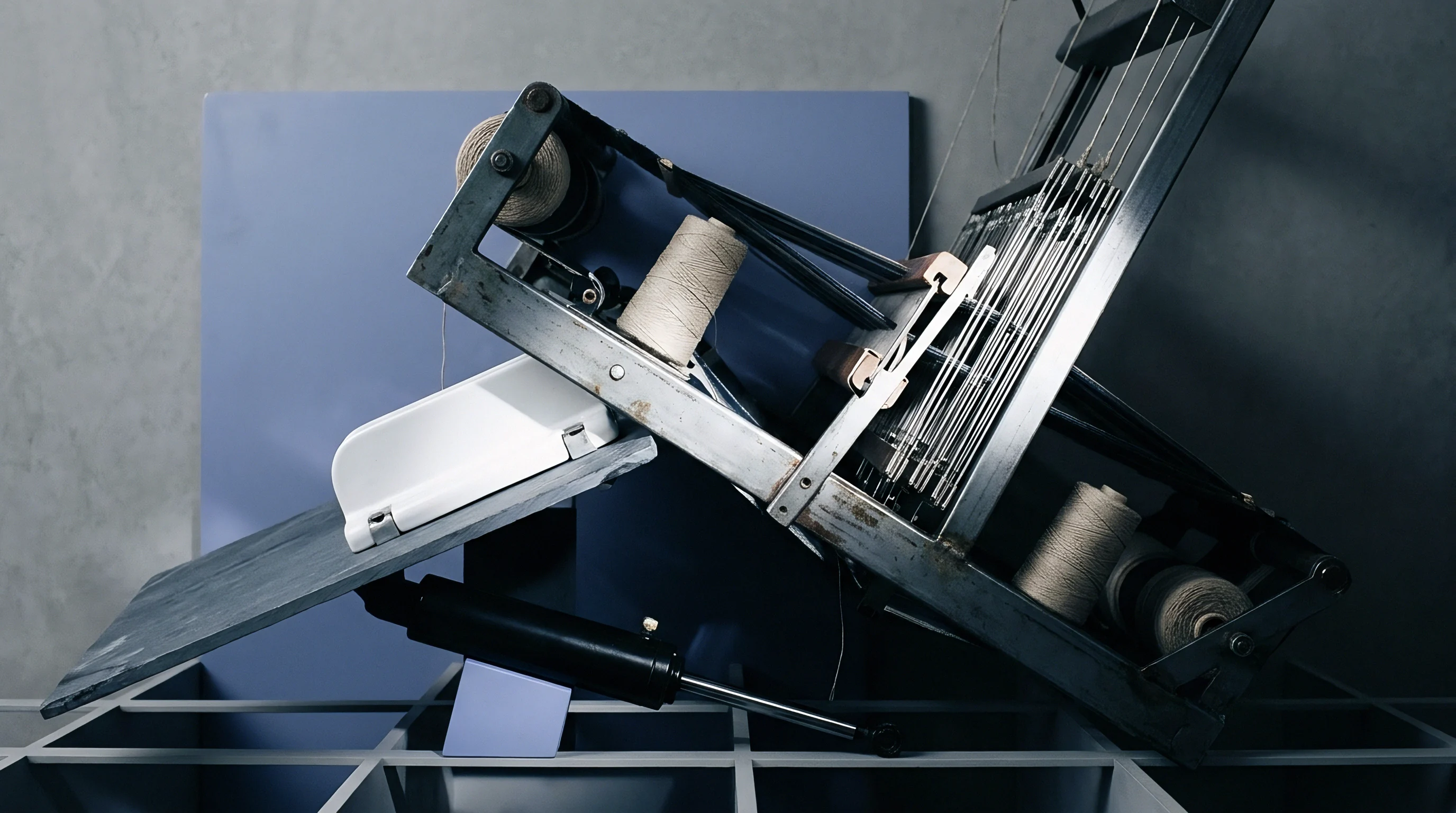
High speed rapier looms operating above five hundred picks per minute subject warp strands to severe cyclic stress variations. Primary tension fluctuations originate from the geometric displacement of harness frames during shed opening, compounded by the mechanical insertion of rigid or flexible rapiers. As harness frames move from the neutral crossover line to full shed geometry, individual warp ends stretch rapidly over short spatial distances.
This motion generates a cyclic tension profile characterized by a baseline static tension, a primary shed opening peak, a secondary insertion transient, and a distinct beat-up pulse.
Rigid kinematic linkages in conjugate cam shedding systems enforce precise heald frame movements, yet the dynamic response of yarn strands introduces higher-frequency harmonic ripples. Peak dynamic warp tension routinely reaches values between 1.7 and 2.4 times the static baseline setting. When weaving high-density linen or fine filament constructions, these dynamic spikes exceed the yield point of single spun yarns.
The rate of tension rise during shed opening exceeds two hundred Newtons per second per end at six hundred picks per minute. Mechanics of this speed eliminate the damping capacity of conventional mechanical spring backrests, transferring peak strain loads directly into the warp yarn body.
Peak tension amplitude scales with the square of loom operating speed during shed opening.
Peak force magnitude depends directly on the shedding motion profile. Asymmetric asymmetric shed configurations increase strain on the top warp sheet while reducing strain on the bottom sheet. Electronic rotary dobbies allow custom dwell angles, extending shedding transition times to moderate tension acceleration slopes.
Negative dobby mechanisms introduce additional floating strain pulses due to spring-return lag at high insertion speeds. Understanding the harmonic components of the dynamic tension curve requires analyzing the physical properties of the yarn, the elasticity of the sizing film, and the mechanical rigidity of the loom backrest assembly.
Harmonic Resonance across the Weaving Bridge
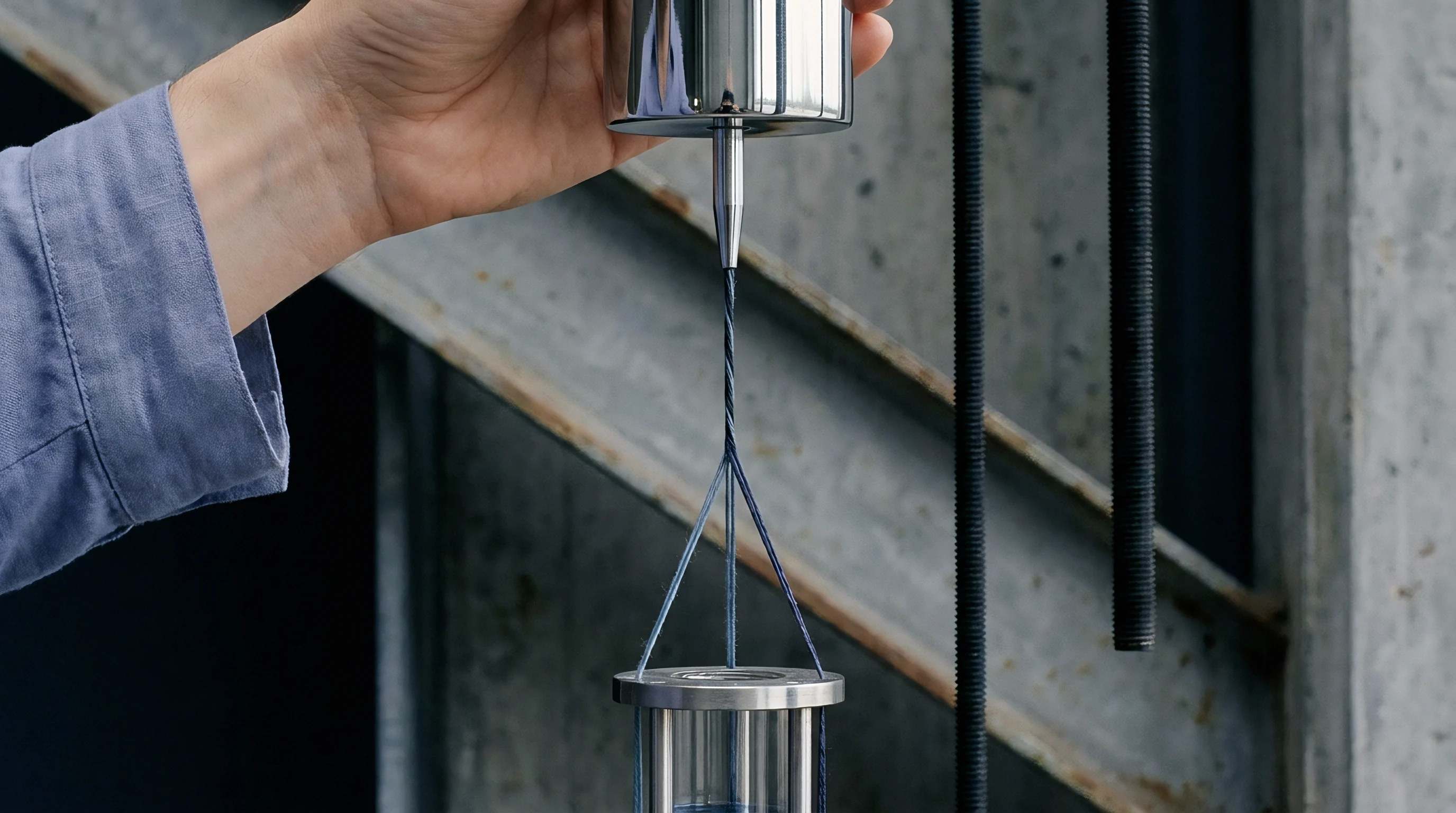
Mechanical vibration throughout the backrest roller, lease rods, and dropper bars creates dynamic standing waves along the warp sheet. Continuous velocity changes in the harness frames excite harmonic frequencies matching the natural frequency of the stretched warp yarns. When the fundamental frequency of shed opening aligns with yarn dynamic resonance, tension spikes double without any change in mechanical lift geometry.
Lease rods act as nodal reflection points along the warp path. Tension waves generated at the fell move backward toward the warp beam, reflecting off the lease rods and superpositioning onto incoming forward waves. This wave interference produces localized zones of elevated dynamic strain between the lease rods and the heald wires.
Uncontrolled acoustic and mechanical harmonics increase yarn friction against dropper pins, driving localized fiber abrasion and premature sizing film disintegration.
The system leaves unsettled whether real-time active hydraulic damping of backrest rollers can fully eliminate second-harmonic tension spikes across variable-speed weaving cycles.

Measuring Dynamic Tension with Precision Sensors
Capturing transient tension phenomena during high speed rapier shedding demands instrumentation capable of high sampling rates. Conventional mechanical tensiometers averaging values over multiple loom revolutions fail to detect millisecond tension spikes. Modern diagnostic rigs integrate piezoelectric force transducers directly onto active backrest roller support arms or beneath individual warp yarn guide pins.
These sensors convert mechanical force differentials into digital signals at acquisition rates of at least two kilohertz.
Continuous data collection over thousands of consecutive shedding cycles yields statistical metrics defining warp stress stability. The Peak Tension Index calculates the average ratio of maximum shed-opening force to static baseline force. The Coefficient of Dynamic Tension Variation measures yarn strain uniformity across the entire reed width.
Wide variations in tension between the warp edges and the center sheet signal uneven beam winding density, improper lease rod placement, or deflection of the backrest roller bar under heavy shed loads.
| Weave Structure | Nominal Sett (ends/cm) | Target Dynamic Peak Index | Maximum Tension CV (%) | Minimum Sensor Rate (Hz) |
|---|---|---|---|---|
| Plain Weave (1/1) | 28.0 | 1.85 | 6.2 | 1000 |
| Twill Weave (2/2) | 36.0 | 1.60 | 7.5 | 1000 |
| Satin Weave (5-end) | 44.0 | 1.45 | 8.8 | 2000 |
| Damask (Jacquard) | 32.0 | 2.10 | 11.4 | 2000 |

Signal Processing and Waveform Deconvolution
Raw force signals extracted from backrest load cells contain high-frequency mechanical noise generated by rapier drive gears, main drive belts, and shed drive linkages. Filtering algorithms isolate yarn tension dynamics from loom structural vibration. Fast Fourier Transform processing separates the fundamental shedding frequency from secondary mechanical noise, exposing micro-transients caused by warp yarn clinging during shed crossover.
Digital signal deconvolution identifies the exact angular position of the main loom shaft where tension anomalies peak. Clinging warp ends create a sharp upward tension step immediately after the shedding motion passes the crossover point. Beat-up impact generates a narrow, ultra-high peak lasting less than five milliseconds.
Mapping these dynamic signatures against the loom timing diagram allows operators to isolate mechanical setup faults from yarn sizing defects without stopping production.
Baseline dynamic tension measurements belong on a clean shed before tuning high-speed electronic backrests.

Geometric Variables in Shedding Kinematics
Shedding geometry defines the physical path length change imposed on warp ends during every revolution of the loom shaft. Lift angle, harness frame position, drop wire depth, and backrest position combine to determine total yarn extension. When harness frames lift to create the rapier passage shed, warp path length increases from the straight line length.
Elastic elongation of the yarn accommodates this geometric displacement.
Asymmetric shed geometry balances physical clearance requirements for rapier insertion against tension stress limits. Raising the backrest roller above the breast beam level creates unequal line lengths between the top and bottom shed sheets. The top sheet slackens slightly while the bottom sheet tightens during lower harness lift, providing a clean shed bottom for rapier guide hooks while protecting fragile top warp threads from excessive extension strain.
A ten-millimeter shift in backrest roller elevation alters peak shed opening tension by twelve percent under standard operating loads.
Calculating dynamic extension requires precise dimensional modeling of the shed bridge. Assume a loom configuration with a distance of seven hundred fifty millimeters from cloth fell to backrest roller. The distance from cloth fell to the first harness frame equals two hundred millimeters.
At a shed height opening of sixty millimeters, geometric calculation reveals the absolute warp thread strain.
Hypotenuse distance calculation yields the total elongated thread length:
Extended Length = Square Root of (200 squared + 30 squared) + Square Root of (550 squared + 30 squared)
Extended Length = Square Root of 40900 + Square Root of 303450 = 202.24 mm + 550.86 mm = 753.10 mm
Total thread elongation equals 3.10 millimeters over a static length of 750 millimeters. This geometric movement creates a dynamic warp strain of 0.413 percent. For a high-modulus spun linen warp yarn with an elastic modulus of six Gigapascals, this small strain increment generates an immediate dynamic force spike of 2.4 Newtons per thread.
Multiplying this value across four thousand warp ends produces an instantaneous total force increase of nearly ten Kilonewtons on the backrest assembly.
How Do Backrest Springs Modify Wave Energy?
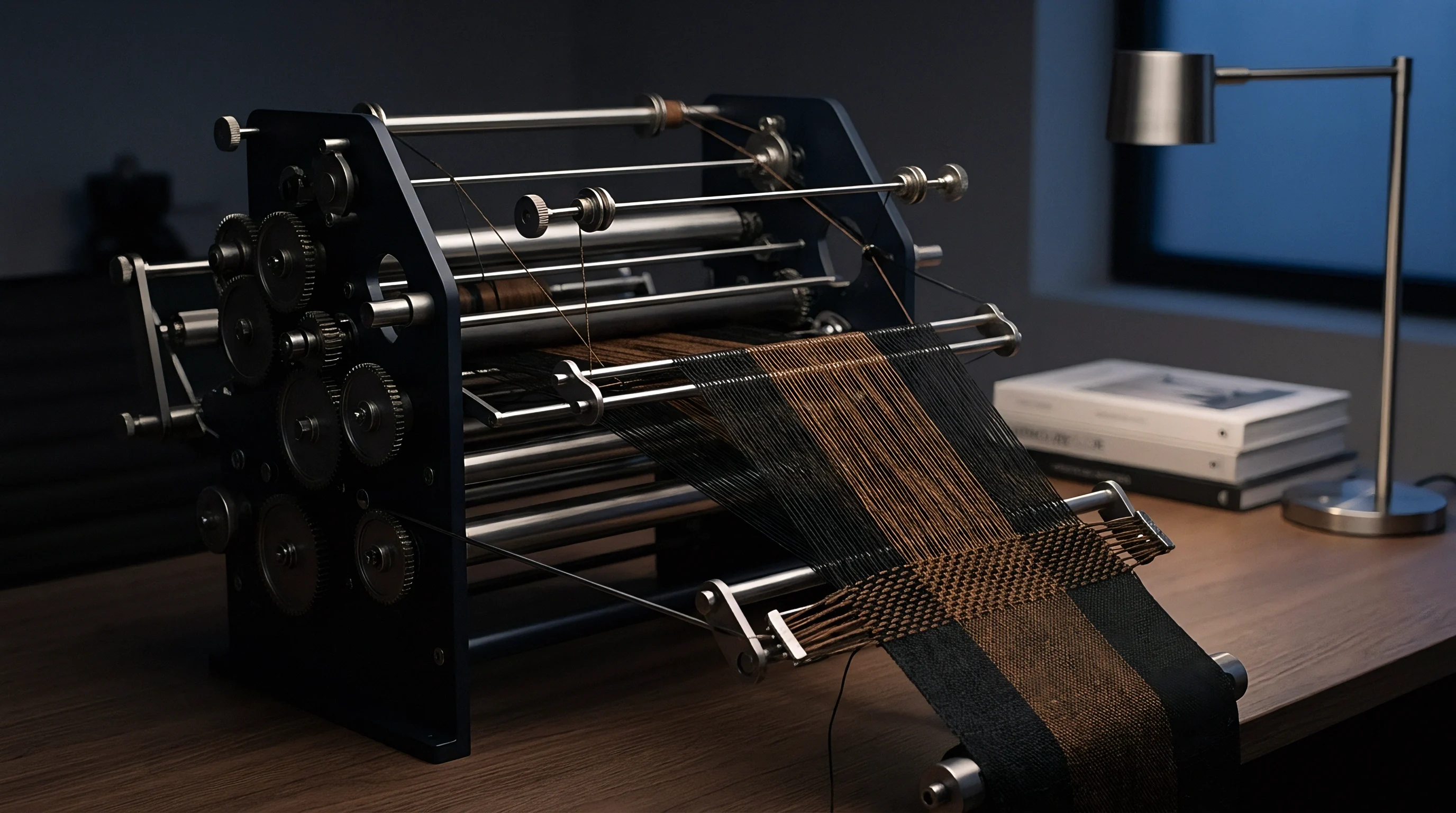
Passive mechanical backrests utilize pre-loaded steel coil springs or torsion bars to yield under dynamic warp strain. As harness frames open, the backrest roller moves forward toward the harness frames, shortening the total warp path and damping peak force tension spikes. Inadequate spring pre-load causes the backrest to bottom out, causing unmitigated tension spikes directly into the yarn.
Excessive damping delay prevents the backrest from returning to its original position before beat-up, resulting in loose cloth fell formation and uneven pick spacing.
Modern rapier sheds utilize active pneumatic or hydraulic backrest compensation systems. Electronic servo drives manipulate backrest positioning in direct synchrony with the main loom shaft encoder, moving the backrest forward precisely as harness lift accelerates. Dynamic compensation reduces peak tension variations by up to forty percent compared to fixed rigid backrest arrangements, enabling higher loom operating speeds on low-elongation spun warps.
Setting backrest spring rates without accounting for yarn elastic modulus leads to persistent warp stop activation, heavy reed marking, and severe cloth fell drift.

Rheological Response of Warp Yarns under Rapid Cyclic Extension
Yarn response to high-speed dynamic loading depends on fiber substance chemistry, yarn structural alignment, spun cohesion, and sizing formulation. Spun linen yarns exhibit high initial modulus with extremely low elastic strain limits, making them vulnerable to rapid tension spikes. Continuous synthetic filaments demonstrate stress relaxation properties over long duration loading, but behave like stiff spring elements when extended in cycles lasting under fifty milliseconds.
Cyclic loading during high speed weaving causes progressive structural fatigue within the yarn body. Fiber-to-fiber slip occurs when dynamic tension peaks exceed internal friction forces established during yarn twisting. Sizing agents lock surface fibers to the yarn body, increasing resistance to dynamic shedding forces.
Repeated cyclic stretching breaks microscopic sizing bridges, reducing fiber cohesion and causing progressive yarn softening followed by sudden tensile failure.
Sizing film elasticity must equal or exceed the maximum dynamic extension percentage of the warp strand.
Understanding structural failure mechanics requires categorizing how cyclic strain destroys warp yarn integrity during high speed shed formation.
- Fibrillar Friction Fatigue develops when internal fiber friction generates local heat, weakening protective polymer coatings.
- Sizing Shell Rupture occurs when localized elongation exceeds sizing film failure limits, shedding protective polymer fragments into heald eyes.
- Micro-Shed Interlocking manifests when surface fibers migrate outward from the yarn core, clinging to adjacent ends during shed crossover.
- Viscoelastic Hysteresis Decay accumulates when rapid extension cycles outpace fiber relaxation rates, shifting internal stress points to core fibers.

Viscoelastic Energy Dissipation in Sized Strands
Energy lost during cyclic loading converts to heat within the yarn bundle. The dynamic hysteresis loop plots stress against strain during one complete shedding cycle. The area enclosed within the hysteresis loop represents energy absorbed by internal fiber friction and sizing film deformation.
High dynamic hysteresis indicates significant energy dissipation, accelerating thermal degradation of natural fiber polymers.
Spun yarns sized with modified starches demonstrate narrower hysteresis loops under dry shed conditions, but show rapid energy absorption when relative humidity rises above sixty-five percent. Synthetic carboxymethyl cellulose and polyvinyl alcohol sizing formulations maintain consistent hysteresis profiles across high speed shedding cycles, maintaining yarn energy dissipation capacities across long production runs.
Suppliers routinely state that warp thread breakages at six hundred picks per minute stem entirely from latent yarn spin slubs rather than uncompensated shed opening dynamic tension peaks.
Mechanisms of Warp Thread Breakage and Greige Defect Generation
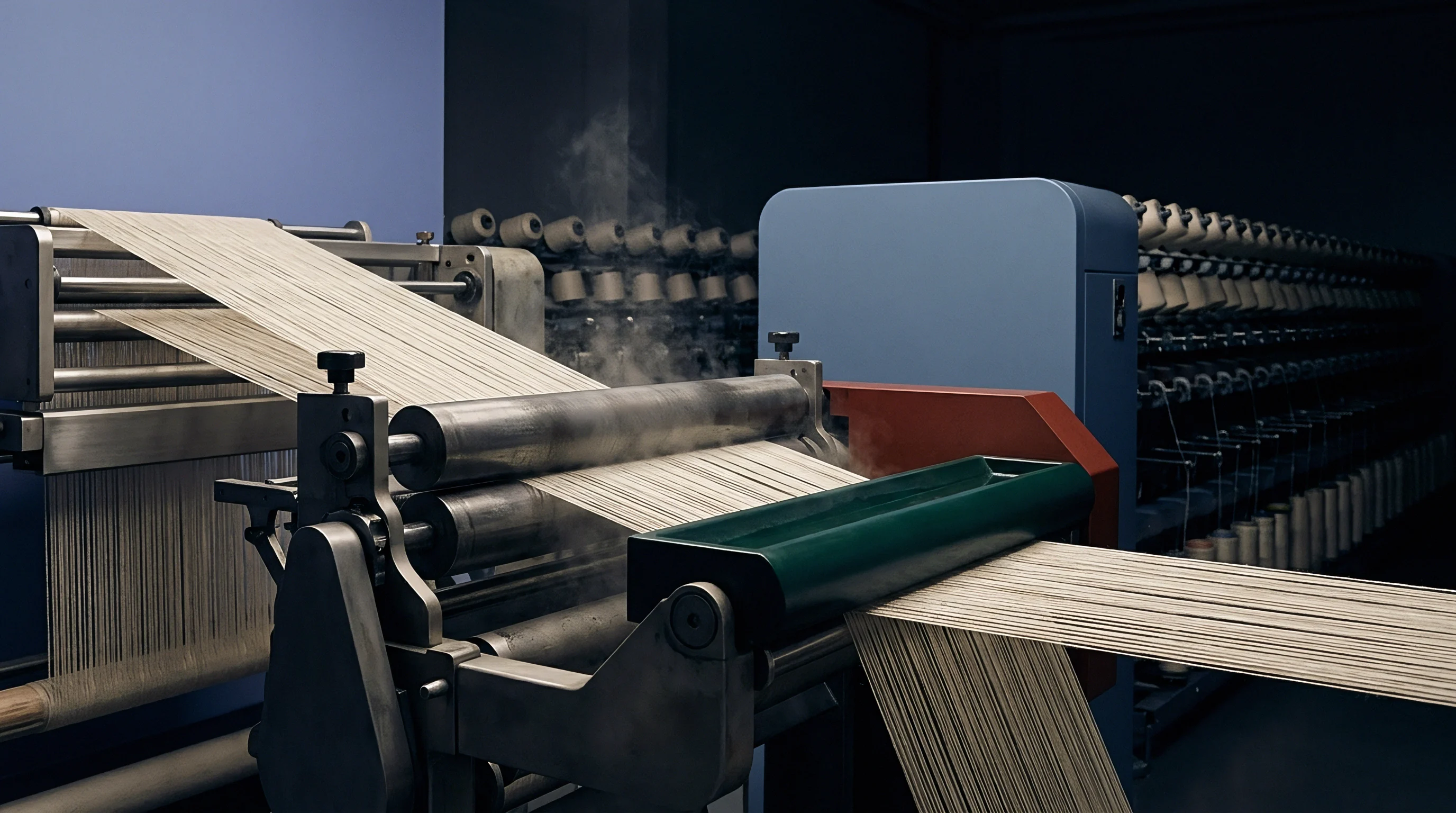
End breaks occur when transient peak dynamic tension exceeds the localized breaking strength of a warp strand. Spun yarns contain inherent linear density variations, thin places, and nep structures. Weak points traversing the shedding zone experience simultaneous dynamic tension spikes, abrasion against heald wires, and lateral friction from adjacent threads.
When a thin place with fifty percent normal tensile strength encounters a two-fold dynamic tension peak, structural failure occurs immediately.
Abrasive wear at heald eyes and reed dents strips protective sizing coatings, exposing raw fiber cores to mechanical damage. Dropper wires bouncing violently under dynamic tension fluctuations generate false warp stops, interrupting loom efficiency. Conversely, insufficient dynamic tension allows slack warp ends to entangle during shed opening, causing rapiers to pierce the warp sheet and create catastrophic multi-end smashes.
Standard mill specifications mandate total warp stop rates below 1.5 stops per one hundred thousand picks at six hundred picks per minute.
Optimizing mechanical loom parameters prevents warp tension defects through systematic bring-up and calibration procedures.
- Mount precision piezoelectric force transducers to the backrest roller mounting brackets and zero sensor bridge amplifiers under static zero-tension load conditions.
- Draw in warp beam sheet under static tension setpoints calculated at fifteen percent of mean yarn single-end tensile strength.
- Inaugurate slow-speed loom rotation to capture static shedding geometry, verifying heald frame alignment and crossover timing relative to main shaft degrees.
- Accelerate loom step-wise to target operating speed while logging real-time dynamic tension waveforms over two thousand consecutive revolutions.
- Adjust backrest compensation spring rate or electronic actuator phase delay until the peak tension index falls within prescribed structural tolerances.
- Fine-tune warp stop motion dropper bar sensitivity to eliminate vibration-induced false loom stops caused by shed acceleration pulses.
| Observed Cloth Defect | Primary Tension Anomaly | Physical Root Cause | Corrective Adjustment Action |
|---|---|---|---|
| Reed Marks | Excessive Peak Shed Tension | Yarn crowding in reed dents due to high peak lateral forces | Lower backrest height; reduce shed opening height angle |
| Warp Stalls / Bowing | Asymmetric Top-Bottom Sheet Tension | Differential crimp distribution between top and bottom shed | Advance shed crossover timing; re-level harness frame baseline |
| Loose Warp End Streaks | Insufficient Static Baseline Tension | Yarn failure to recover from elastic extension during relaxation | Increase main beam brake torque; stiffen backrest dampening rate |
| Stitching / Float Errors | High Tension Variation CV (%) | Shed clearance loss caused by slack threads clinging at crossover | Apply anti-static sizing additives; increase shed crossover delay |

Systematic Analysis of Fabric Imperfections
Continuous monitoring of dynamic tension metrics isolates systemic loom setup errors from material defects. Uniform structural defects occurring across the entire cloth width point directly to mechanical drive errors, out-of-round warp beam barrels, or improper backrest dampening profiles. Edge-only warp end breaks indicate lateral reed spreading, temple roll friction, or improper selvedge harness timing setup.
High-frequency inspection frames utilizing high-resolution line-scan cameras detect dynamic tension defect signatures in real time. Pattern recognition software links fabric density fluctuations directly to loom encoder positions, flagging micro-barre effects before greige cloth rolls proceed to wet finishing operations.
The standard sales agreement holds that delivered greige cloth containing warp streaks from dynamic tension variations exceeding three percent of nominal pick density fails four-point inspection thresholds, transferring all finishing re-work costs to the mill owner.
Economic Evaluation of Loom Capacity and Tension Control
Dynamic warp tension management dictates the maximum operating speed limits of modern rapier weaving sheds. Pushing loom speeds from five hundred to six hundred fifty picks per minute increases nominal fabric output by thirty percent, but elevates dynamic stress forces on warp yarns by over sixty percent. If elevated break rates increase machine downtime, net shed output drops while labor and maintenance costs soar.
Loom hour costs combine direct electrical power draw, operator labor allocation, floor space allocation, machinery depreciation, and spare parts allocation. A single warp stop on a high-speed rapier loom requires an average of two minutes for operator repair, knotting, and re-starting. Running a shed at excessive speeds where end breaks rise from 0.8 to 3.5 stops per loom hour reduces net loom efficiency below target operating margins.

Worked Financial Calculation of Loom Shed Efficiency
Evaluating loom capacity economics demands precise calculation of downtime financial impacts. Consider a weaving facility operating one hundred rapier looms producing high-density linen upholstery fabric at six hundred picks per minute. Fixed operating cost per loom hour equals $18.50.
The planned order volume requires ten million picks.
At baseline operating parameters (Case A), loom speed equals 550 picks per minute with an average warp stop rate of 0.8 stops per loom hour. Total loom stops per hundred hours equal 80. With two minutes repair downtime per stop, total downtime per hundred loom hours equals 160 minutes (2.67 hours), yielding a net loom efficiency of 97.33 percent.
Effective production rate equals 535 picks per minute per loom. Total loom time to complete ten million picks equals 311.5 loom hours. Total production cost equals $5,762.75.
At elevated speed parameters (Case B), loom speed increases to 650 picks per minute, but dynamic warp tension spikes increase the warp stop rate to 3.8 stops per loom hour. Total loom stops per hundred hours equal 380. With two minutes repair downtime per stop, total downtime per hundred loom hours equals 760 minutes (12.67 hours), dropping net loom efficiency to 87.33 percent.
Effective production rate equals 567 picks per minute per loom. Total loom time to complete ten million picks equals 293.9 loom hours. Total production cost equals $5,437.15.
However, increased stop rates in Case B demand additional weaver labor. Operator allocation drops from twenty looms per weaver to ten looms per weaver, adding $3.20 per loom hour in direct labor costs. Recalculating Case B with a total operating cost of $21.70 per loom hour yields a total production cost of $6,377.63.
The higher loom speed increases total production expense by $614.88 per ten million picks, despite saving 17.6 machine hours. Optimizing dynamic warp tension to allow high-speed operation without elevating end breaks remains the primary path to mill profitability.
Loom Shed Technical Evaluation Checklist
Sourcing practice audits must verify mill technical capability before placing high-density spun warp orders on high-speed rapier machinery.
- Piezoelectric Diagnostic Rigging installed directly on sample looms to record dynamic shedding tension waveforms across all target shaft speeds.
- Active Servo-Driven Backrest compensation mechanisms integrated with main shaft optical encoders for real-time path length adjustment.
- Sizing Polymer Elasticity Dossier establishing film elongation parameters against peak shedding dynamic strain metrics.
- Dropper Bar Vibration Isolation dampening mounts preventing false warp stops under high-frequency shedding dynamic loads.
- Electronic Warp Let-Off Response calibration logs demonstrating constant tension control from full beam diameter to bare core end.
Shed efficiency tracking relies on continuous automated data collection from loom monitoring networks. Real-time dashboard analytics highlight individual looms exhibiting dynamic tension drift, allowing maintenance technicians to replace worn backrest bearings, worn harness cam tracks, or failing let-off clutch packs before structural yarn damage occurs. Sourcing managers utilize these historical metrics to select mill partners capable of maintaining precise tension standards across multi-thousand-metre production commitments.