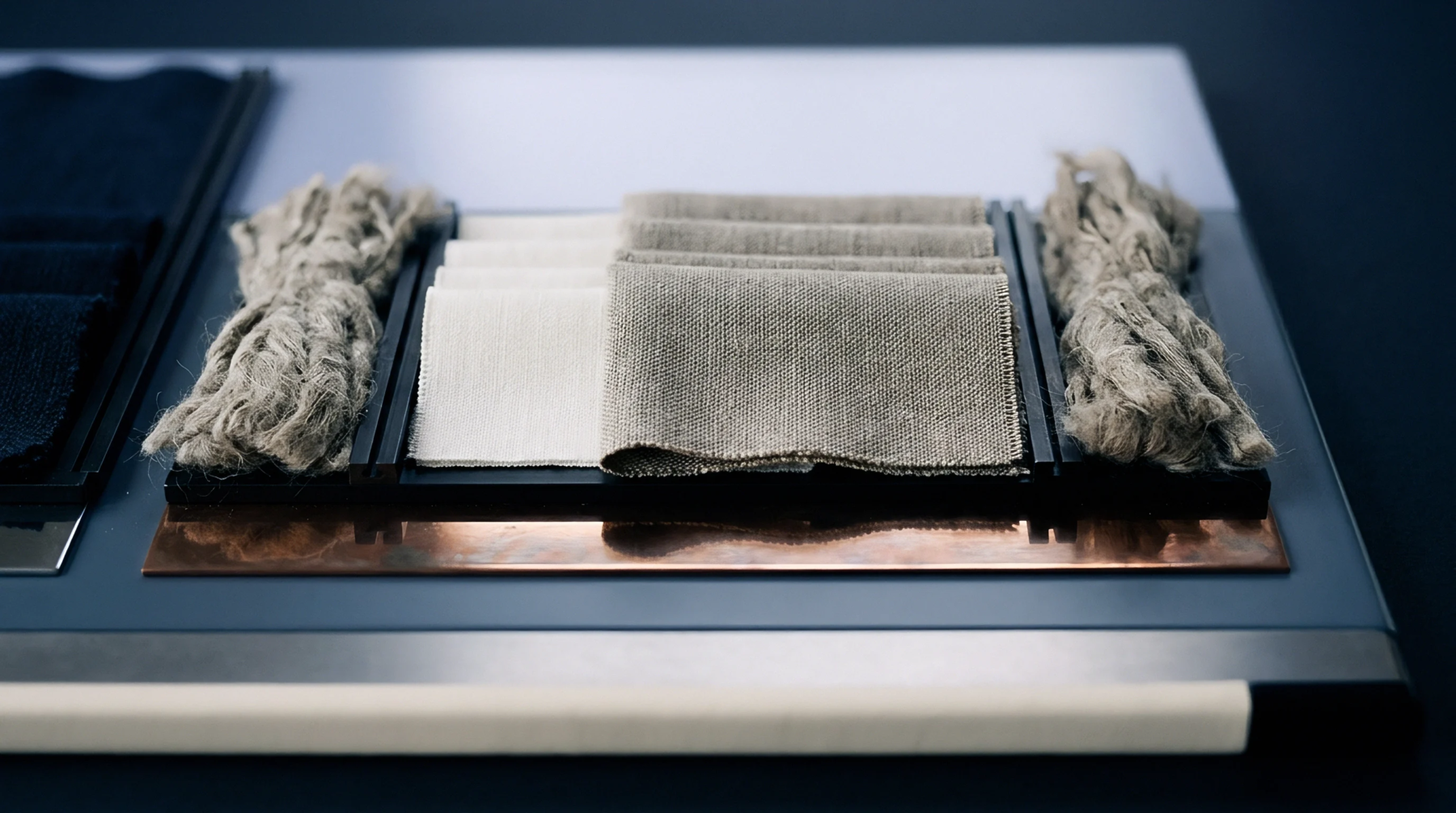
Fibre Breakdown
Elementary fibril delamination is the mechanical separation of microscopic cellulose layers inside flax bast cells during high pressure wet spinning preparation. Chinese mills record this structural splitting on the daily batch assessment sheet for the spinning department before yarns move to the loom shed. Natural plant polymers loosen under roller pressure when moisture levels exceed standard thresholds in the soaking vats.
Wet processing conditions dictate the rate of cell wall fracture, and dry ambient air halts the progression instantly. Raw bast material undergoes aggressive mechanical drafting after steeping, which forces the internal layers apart to create finer strands for spinning. Technicians grade the resulting filament quality by measuring tensile resistance against internal mill benchmarks rather than export merchant contracts.
Export yards rely on finished fabric handle rather than microscopic structural splits inside individual filaments, so yarn suppliers maintain separate internal tolerances for processing floors. Cellulose separation increases yarn flexibility during high speed spindle rotation, but excessive splitting reduces the residual breaking length of the spun thread.
Splitting Mechanics
Roller pressure gradients trigger internal shear stress along natural boundary planes within the plant cell walls. Technicians adjust machine clearance settings to control the depth of structural separation without crushing the hollow lumen inside each filament. High friction coefficients between steel pins and damp plant matter accelerate surface wear during industrial carding runs.
Production supervisors monitor fibre slippage values hourly to prevent uncontrolled splitting that weakens the final yarn bundle. Machinery operators calibrate the drafting heads according to atmospheric humidity readings inside the factory hall.
Quality Variance
Structural integrity checks differentiate raw bast grades from finished textile classifications on the factory floor. Laboratory inspectors evaluate filament samples under polarized light to verify the extent of internal wall detachment before yarn goes to the weaving floor. Buyers inspect the final woven cloth for density and drape, leaving microscopic structural evaluation to internal mill technicians.
Divergent standards separate mill production targets from buyer acceptance thresholds, because merchants test surface regularity instead of internal cell geometry. Spindle operators adjust twist rates to compensate for structural changes that occur during aggressive wet drafting stages.