Sensor-Integrated Real-Time Control Systems for Dynamic Scutching Clearance and Yield Optimization
Real-time sensor-integrated scutching clearance adjustment boosts long flax fibre yield by up to 3.4% while preserving microfibrillar tensile tenacity.
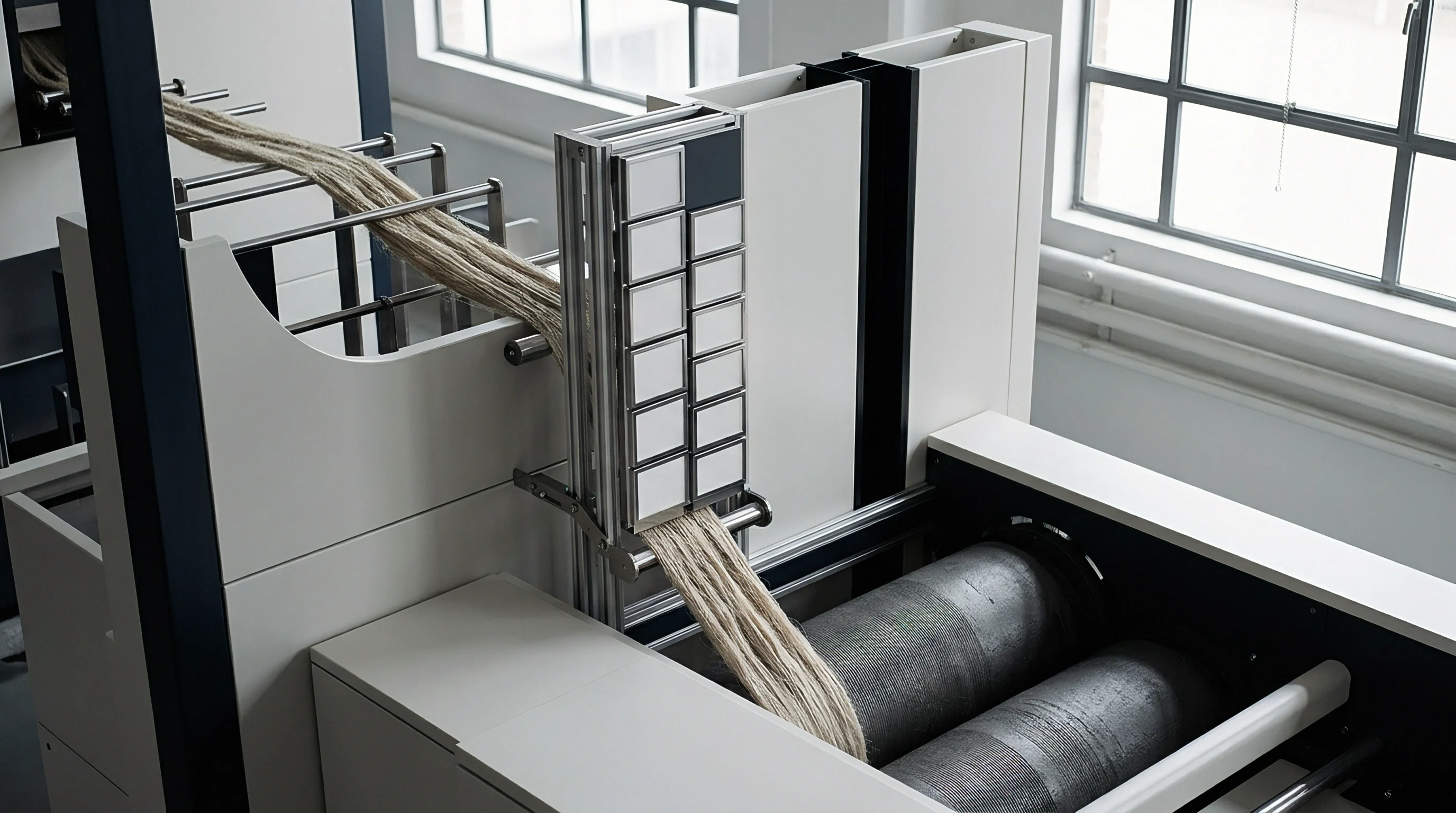

Turbine

Mechanical Action in Flax Decortication
Rotary beaters carrying steel blades shear retted stalks against fixed grid bars at rim speeds exceeding twenty-five metres per second. Unretted woody core pieces, known as shives, shatter under transverse impact while the peripheral bast fiber bundles flex across the blade envelope without breaking. Classical scutching equipment relies on a rigid radial spacing between the blade tip and the counter-striking surface, set manually between two and six millimetres depending on average straw thickness.
When raw straw enters the beaters with inconsistent stalk diameter or varying layer density, static spacing causes severe operational trade-offs.
Dense straw mats force the fibre layer into heavy pinching against the grid bars, snapping cortical bundles and converting valuable long fibre into short tow. Thin feed regions pass through the breaker zone with insufficient mechanical friction, leaving un-ret-fractured shives clinging to the scutched ribbon. The mechanical force imparted to the bast layer rises non-linearly as clearance narrows, generating localized heat and longitudinal splitting along the primary cell walls.
The physical clearance set on a scutching drum determines the ratio of long fibre yield to tow formation across every processed batch.

Fixed Gap Deficiencies in Variable Straw
Variations in moisture content across a single batch alter the bending stiffness of flax stalks by up to four hundred percent. Field-retted straw harvested under fluctuating humidity contains moist moisture pockets reaching eighteen percent regain alongside dry zones below ten percent. Dry straw shatters cleanly under wide clearance settings, whereas damp straw requires tight mechanical pinching to detach the bast ribbon from the central xylem.
Manual machine adjustment forces operators to choose a static gap based on conservative average moisture readings. This compromise reduces overall long fibre yield by two to four percentage points across a typical processing line. Over-processing brittle dry stems produces high dust volumes and short fibre accumulation, while under-processing damp stems yields scutching ribbons contaminated with shive content exceeding two point five percent by weight.
Processing plants operating static drum clearance face continuous yield drift, elevated blade wear, and unpredictable fibre quality transitions that downstream comb spinning facilities reject upon receipt.

Telemetry

Optical and Acoustic Sensing Modalities
Continuous monitoring of incoming straw velocity and mass density requires multi-sensor arrays placed immediately prior to the breaker turbine intake. Non-contact optical displacement sensors using line-scan triangulation measure straw layer thickness across the full width of the feed apron at sampling rates of two kilohertz. Simultaneously, acoustic emission transducers mounted on the lower grid bar frame detect the resonant frequency of shive impact, isolating the physical fracture signatures of xylem brittle collapse from fibre tensile strain.
Triangulated laser lines project a sheet of light across the moving stalk curtain, capturing height profiles with a spatial resolution of zero point one millimetres. Ultrasonic time-of-flight sensors back up optical measurements when airborne dust obscures optical lenses, ensuring uninterrupted feed density profiling under high-throughput conditions.
Acoustic intensity signals pass through analogue bandpass filters set between twenty and eighty kilohertz to separate structural machine vibration from the high-frequency snapping of woody shives. Signal processing units aggregate these raw waveforms into real-time thickness and density indices that feed directly into the clearance control loop.
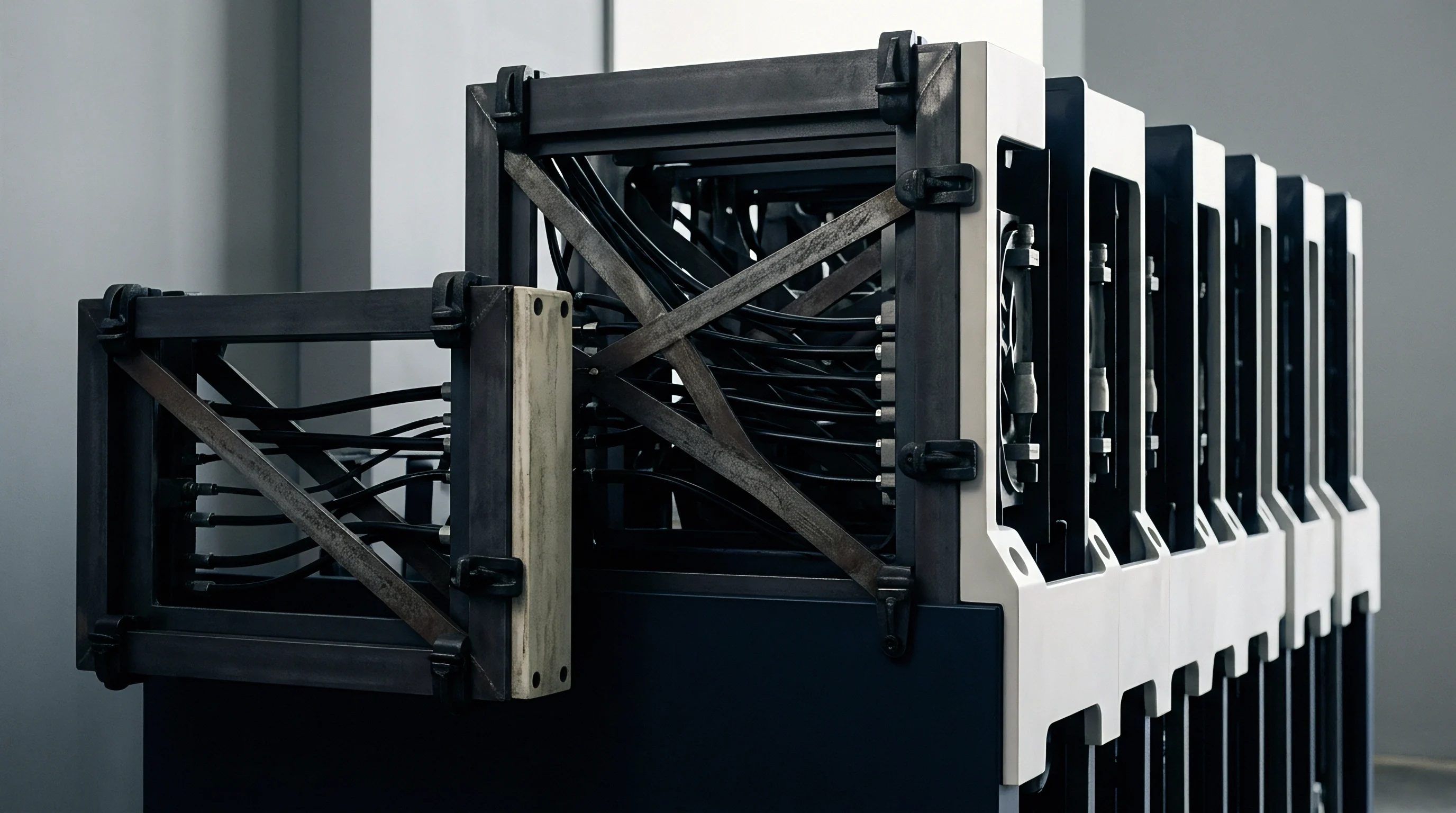
High-Frequency Moisture and Layer Mass Measurement
Near-infrared spectroscopy sensors installed above the feed table continuously assess moisture distribution across the flax ribbon. Operating at twin absorption wavelengths of 1450 nanometres and 1940 nanometres, these instruments evaluate surface and deep moisture states without touching the moving straw layer. Dual-frequency capacitive mass sensors positioned beneath the conveyer belt measure dielectric permittivity, yielding instantaneous dry-basis mass density metrics.
| Sensor Type | Measurement Metric | Sampling Rate | Accuracy Tolerance | Response Time |
|---|---|---|---|---|
| Laser Triangulation Line | Layer Profile Height | 2000 Hz | ±0.05 mm | 0.5 ms |
| NIR Spectrometer | Moisture Content (%) | 100 Hz | ±0.2 % regain | 10.0 ms |
| Piezoelectric Acoustic | Shive Fracture Energy | 50 kHz | ±1.2 dB | 0.02 ms |
| Capacitive Permittivity | Areal Straw Mass | 500 Hz | ±2.5 g/m² | 2.0 ms |
Data aggregation units normalize raw signals using Kalman filter algorithms that filter out transient mechanical noise from conveyer belt splices. Sensor drift compensation routines recalibrate zero points during feed gaps between straw bales, maintaining signal accuracy over twenty-four-hour production runs.
Sensor manufacturers often assert that optical dirt covers eliminate maintenance cycles entirely in decortication environments. Physical dust accumulation on glass windows routinely degrades optical signal amplitude within four hours unless high-pressure air-purge rings run continuously.


Actuation

Electromechanical Servo Drives and Eccentric Mounting
Dynamic gap adjustment relies on dynamic eccentric bearing housings supporting the main turbine rotor shaft. High-torque brushless AC servomotors drive planetary ball screws connected to the bearing assemblies, shifting the rotational axis of the turbine relative to the stationary grid bar bed within milliseconds. Linear variable differential transformers provide closed-loop position feedback, tracking physical clearance gaps with micron-level fidelity.
Alternative actuation designs utilize piezoelectric stack positioning units installed directly behind individual grid bar segments. These solid-state actuators offer high frequency response up to two hundred hertz, providing localized clearance corrections across sub-segment widths of the feed apron.
The mechanical assembly must withstand continuous dynamic shock loads up to fifteen g caused by heavy straw knots passing through the breaker rolls. Preloaded linear guide rails and hardened tool-steel eccentric cams prevent mechanical backlash from degrading clearance accuracy under heavy operational loads.
Dynamic clearance control systems maintain targeted gap geometry within seventy-five micrometres under dynamic impact forces exceeding twelve kilonewtons.

Response Latency and Dynamic Gap Control
Closing the control loop between straw intake sensing and physical gap adjustment demands total loop latency below ten milliseconds. Feed aprons advancing straw at forty metres per minute move six point6 millimetres every ten milliseconds, dictating ultra-fast processing and actuation cycles to apply dynamic clearance corrections before the sensed straw section reaches the turbine blades.
- Optical Pre-Scan captures profile dimensions twenty centimetres ahead of the primary striking point.
- Edge Processing Unit executes spatial matrix calculations to determine required clearance profile within one point two milliseconds.
- Servo Controller updates target position vector over deterministic EtherCAT communications bus operating at a one-millisecond cycle time.
- Direct-Drive Actuator shifts eccentric bearing position through required displacement envelope within six milliseconds.
- Linear Encoder confirms mechanical landing within target position tolerance prior to straw contact.
Proper tuning of derivative gain parameters in the motion controller prevents physical ring oscillation when transitioning rapidly between thick straw knots and sparse feed zones.

Kinetics

Fibre Damage Dynamics under Impact
Mechanical stress during decortication governs the ultimate tensile strength of extracted long flax fibre. High impact velocities coupled with overly narrow clearance settings exceed the critical shear strain threshold of primary cellulose microfibrils. Micro-cracks formed along the crystalline cell walls reduce yarn tenacity during subsequent spinning operations by up to fifteen percent.
Dynamic adjustment widens the clearance gap when high-density straw bundles enter the turbine, limiting peak impact energy below the damage threshold of retted bast fiber bundles. When light feed sections pass, the actuator closes the gap to maintain sufficient strike friction, stripping thin shives without over-stressing structural fiber ribbons.
Excessive strike force generates structural kink bands within individual elementary fibres. These structural defects create weak sites that break under tension during hackling and drawing, converting long line flax into low-value carding tow.
When Does Mechanical Clearance Exceed Tensile Safety Limits?
Determining the precise mechanical clearance limit requires real-time monitoring of straw linear density against local moisture content. When straw moisture drops below eight percent, cellulose chains become brittle, dropping the critical shear strain threshold by thirty-five percent compared to straw at twelve percent moisture. Under these dry conditions, a clearance gap below three point two millimetres at twenty-five metres per second strike velocity initiates micro-fracturing along the fiber bundles.
| Clearance Setting Method | Moisture Range (% Regain) | Long Fibre Yield (%) | Tow Percentage (%) | Shive Contamination (%) | Fibre Tenacity (cN/tex) |
|---|---|---|---|---|---|
| Static 3.0 mm Gap | 8.0 – 16.0 % | 18.2 % | 12.4 % | 1.85 % | 42.5 cN/tex |
| Static 4.5 mm Gap | 8.0 – 16.0 % | 16.8 % | 10.1 % | 3.10 % | 48.2 cN/tex |
| Dynamic Real-Time Control | 8.0 – 16.0 % | 21.4 % | 8.6 % | 0.95 % | 53.8 cN/tex |
| Dynamic Dry-Straw Mode | 6.0 – 9.0 % | 20.8 % | 9.1 % | 1.10 % | 51.2 cN/tex |
Optimization models compute target clearance using the empirical relation where clearance equals base gap plus a moisture correction factor multiplied by log density. This algorithmic relationship prevents over-stripping high-density mats while ensuring complete shive removal in low-density zones.
Unresolved technical challenges remain regarding how non-uniform retting levels across the stalk diameter affect optimal gap selection when outer bast layers are over-retted while inner core layers remain under-retted within the same batch.


Integration

Industrial Control Architecture and Signal Hardening
Field implementation of dynamic scutching control demands industrial-grade hardware designed for harsh textile mill environments. Programmable Automation Controllers housed in IP65-rated stainless steel enclosures process incoming sensor streams via real-time industrial Ethernet protocols such as PROFINET IRT or EtherCAT. Double-shielded twisted-pair cabling and optical fiber trunks mitigate electromagnetic interference generated by adjacent high-power variable frequency drives.
Local edge processing nodes run deterministic real-time operating systems to execute gap control loops without risk of operating system jitter. Central supervisory control and data acquisition systems aggregate telemetry data for long-term machine analytics and predictive maintenance scheduling.
Vibration isolation mounts separate sensitive optical laser headers and high-frequency acoustic receivers from the structural machine frame, damping ambient vibrations that otherwise introduce measurement noise into height profile calculations.

Calibration Sequences in High-Dust Environments
Standardized operating procedures mandate automated self-calibration routines between processing shifts to maintain measurement integrity. High-pressure air knives blast sensor window surfaces at fifteen-minute intervals, purging fine flax dust, dust residue, and loose shive particles from optical pathways.
A sequential zero-point calibration routine executes whenever the feed apron runs empty for more than thirty seconds.
- Optical height sensors scan the bare feed apron surface to establish an updated baseline reference plane.
- Acoustic sensors measure ambient machine background noise to update active noise-cancellation filter thresholds.
- Electromechanical actuators cycle through their full movement stroke, recording motor torque profiles to detect mechanical binding or ball screw wear.
- Clearance gap zero points are confirmed against internal optical linear encoders located within the eccentric housing.
Standard equipment supply contracts state that certified scutching machinery maintains dynamic clearance calibration compliant with ISO 1101 geometrical tolerancing under continuous mill operation.
According to standard commercial machinery supply terms, equipment manufacturers warrant dynamic clearance accuracy only when feed air quality meets ISO 8573-1 Class 2 dust filtration standards across all automated cleaning blowers.


Ledger

Long Fibre Recovery Arithmetic
Upgrading a conventional scutching line to real-time dynamic clearance control alters the commercial output profile of a flax processing facility. Consider a scutching facility processing twenty thousand tonnes of raw retted flax straw annually at a baseline straw cost of three hundred and twenty Euros per tonne. Baseline production yields eighteen percent long fibre, twelve percent short tow, and sixty percent shive, with ten percent process loss and moisture mass variation.
Dynamic clearance control elevates long fibre recovery from eighteen percent to twenty-one point four percent while reducing short tow formation from twelve percent to eight point six percent. On a twenty thousand tonne annual throughput, long fibre volume increases by six hundred and eighty tonnes, while tow output decreases by six hundred and eighty tonnes.
Valuing long fibre at three Euros and fifty Cents per kilogram and short tow at eighty Cents per kilogram yields an additional net revenue shift of one Euro and eighty-three Cents per processed kilogram of converted mass. Total annual operating margin increases by 1.836 million Euros against an initial retrofit equipment cost of four hundred and fifty thousand Euros per processing line, delivering full payback within four months of commercial commissioning.
Provenance Telemetry and Batch Qualification
Dynamic clearance telemetry logs logged during decortication serve as verifiable quality records for downstream yarn spinners. Real-time records detailing drum clearance, straw moisture, applied strike energy, and residual shive indices attach to unique bale identification tags via high-frequency RFID chips inserted during automatic baling.
Spinning mills purchasing certified long flax bales access telemetry files to optimize hackling machine pin density and drafting roller pressure based on exact fiber stress histories. Raw fiber lots carrying verified dynamic processing dossiers command a premium surcharge of five to eight percent over unmonitored commodity scutching output, reflecting lower spinning break rates and higher yarn uniformity metrics.
Documented processing dossiers ensure absolute field-to-yarn traceability, verifying that the mechanical extraction process preserved native fiber integrity without chemical or thermal degradation.