Predictive Dynamic Load Modeling for Asymmetrical Shedding in Fine Count Linen Weaving
Predictive dynamic load modeling prevents brittle flax end breakage in asymmetrical shedding by optimizing backrest offset and late shedding timing.
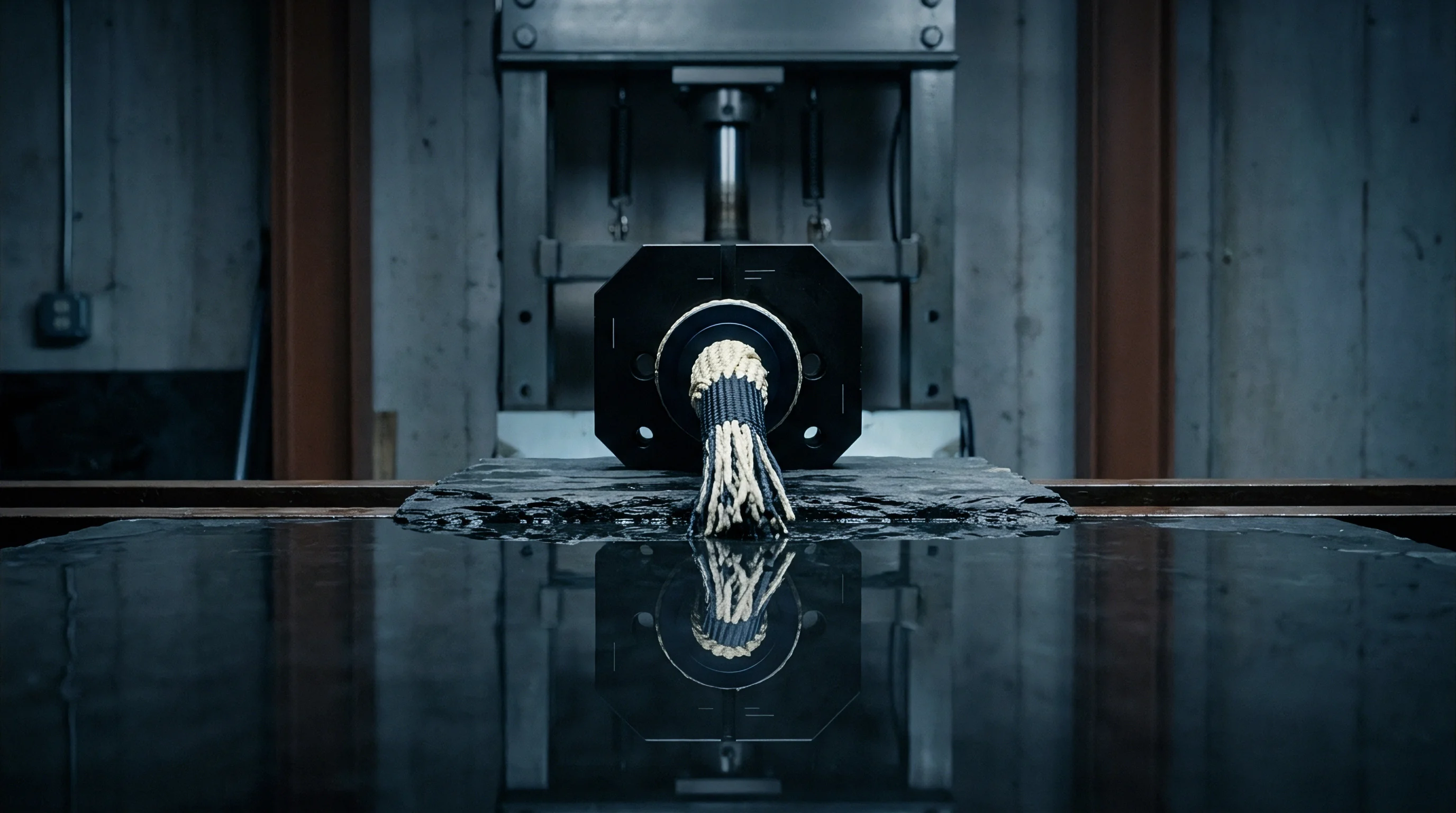

Geometry

Asymmetrical Shedding Mechanics in Fine Flax Yarns
Wet-spun linen yarns in fine counts ~ specifically metric counts from Nm 80 to Nm 100 (NeL 47 to NeL 59) ~ have virtually no give. Flax carries a high initial Young’s modulus of 18 to 22 GPa, with ultimate tensile strain at break sitting between just 1.5% and 2.2%. Symmetrical shedding divides the upper and lower sheets at equal angles from the fell line, distributing strain evenly across every end.
Asymmetrical shedding disrupts that balance by design. In unbalanced constructions like 3/1 broken twills, satin weaves, or Jacquard damasks, the ratio of raised to lowered ends shifts with every pick. Across a typical shedding arc of 28 to 34 degrees, the yarn path through the upper shed can diverge from the lower shed path by several millimeters.
Any yarn forced along a longer path registers a sharp tension spike at full shed opening. In fine linen, leaving a 1.8 mm path difference uncompensated across a 300 mm backrest-to-fell distance drives static tension from a baseline of 25 cN per end up to dynamic peaks over 65 cN. Flax lacks the elastic recovery of synthetic fibers or wool, so dynamic loads past 30% of single-end breaking tenacity start opening micro-cracks in the crystalline cellulose fibrils.
When the shed crosses, abrasion from neighboring ends and reed wires hits those weakened spots, and the ends snap.
| Shed Angle (Degrees) | Shed Lift Ratio (Top/Bottom) | Path Delta (mm) | Mean Static Load (cN) | Peak Dynamic Load (cN) | Breakage Rate (Breaks/105 Picks) |
|---|---|---|---|---|---|
| 28 | 50 / 50 | 0.00 | 22.5 | 38.2 | 1.2 |
| 30 | 60 / 40 | 0.85 | 24.0 | 47.6 | 2.8 |
| 32 | 70 / 30 | 1.42 | 26.5 | 58.1 | 5.4 |
| 34 | 75 / 25 | 1.98 | 29.0 | 69.4 | 11.2 |
Moving the backrest roller shifts the strain between the top and bottom sheets. Dropping it below the breast beam plane lengthens the run of the upper shed relative to the lower one, relieving peak tension on upper ends during high lifts by shifting part of that load into the tighter bottom shed. Fine flax leaves little margin here.
Setting the backrest roller 12 to 18 mm below center balances dynamic tension across unequal harness lifts, keeping the top shed taut enough to clear the insertion while protecting the bottom shed from tension spikes.
Peak dynamic load on wet-spun linen must remain below 25% of single-end tensile strength to prevent micro-fibrillar rupture during shed crossing.
If shed geometry goes uncorrected on asymmetrical runs, the cloth fell rocks forward and backward with each insertion. That fell drift creates uneven beat-up resistance, showing up as irregular pick spacing, reed marks, and cloudy patches in the greige fabric. These faults are routinely blamed on weak yarn lots, though the real cause is uncorrected backrest height and mismatched harness timing.

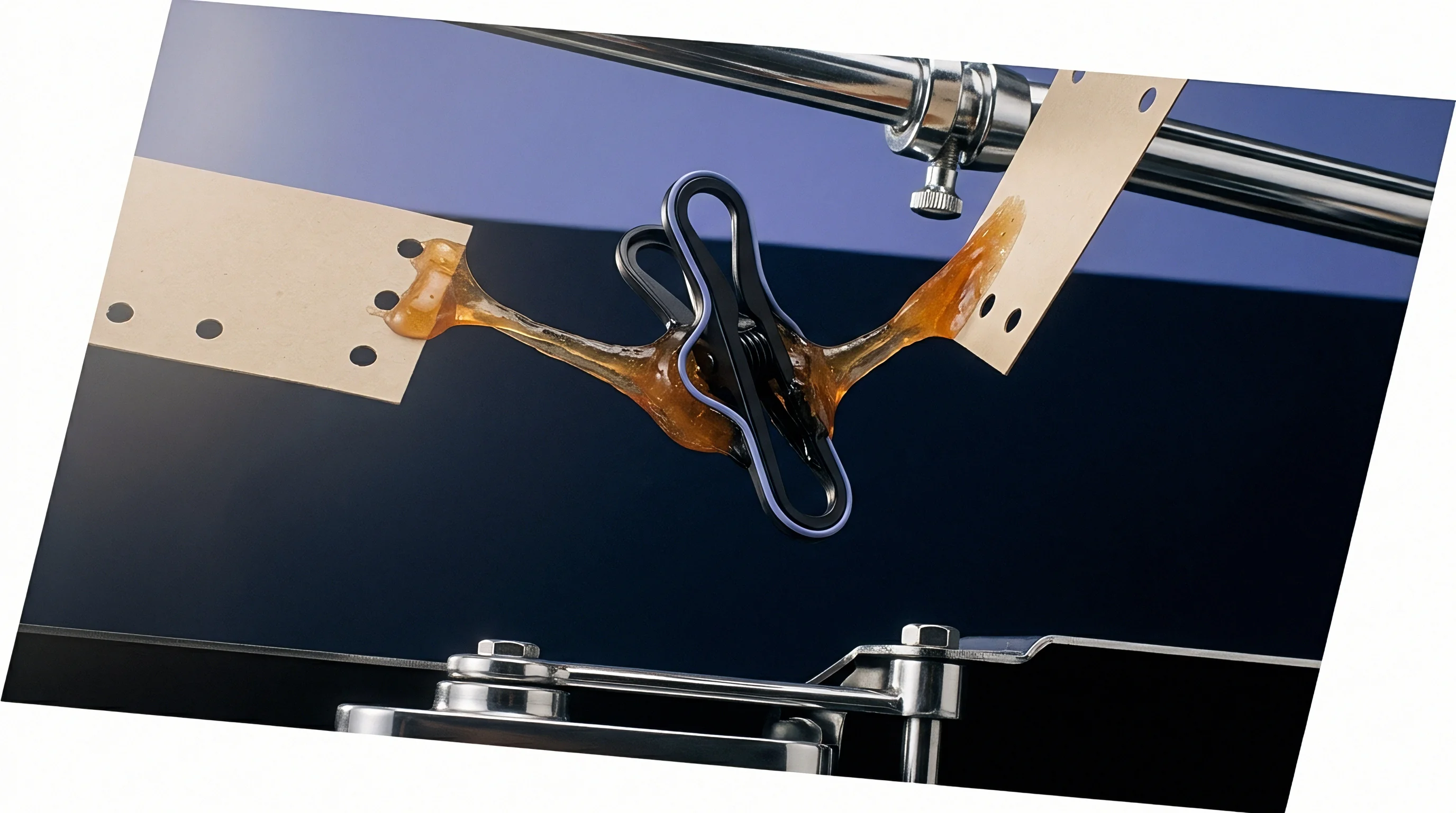
Flexure
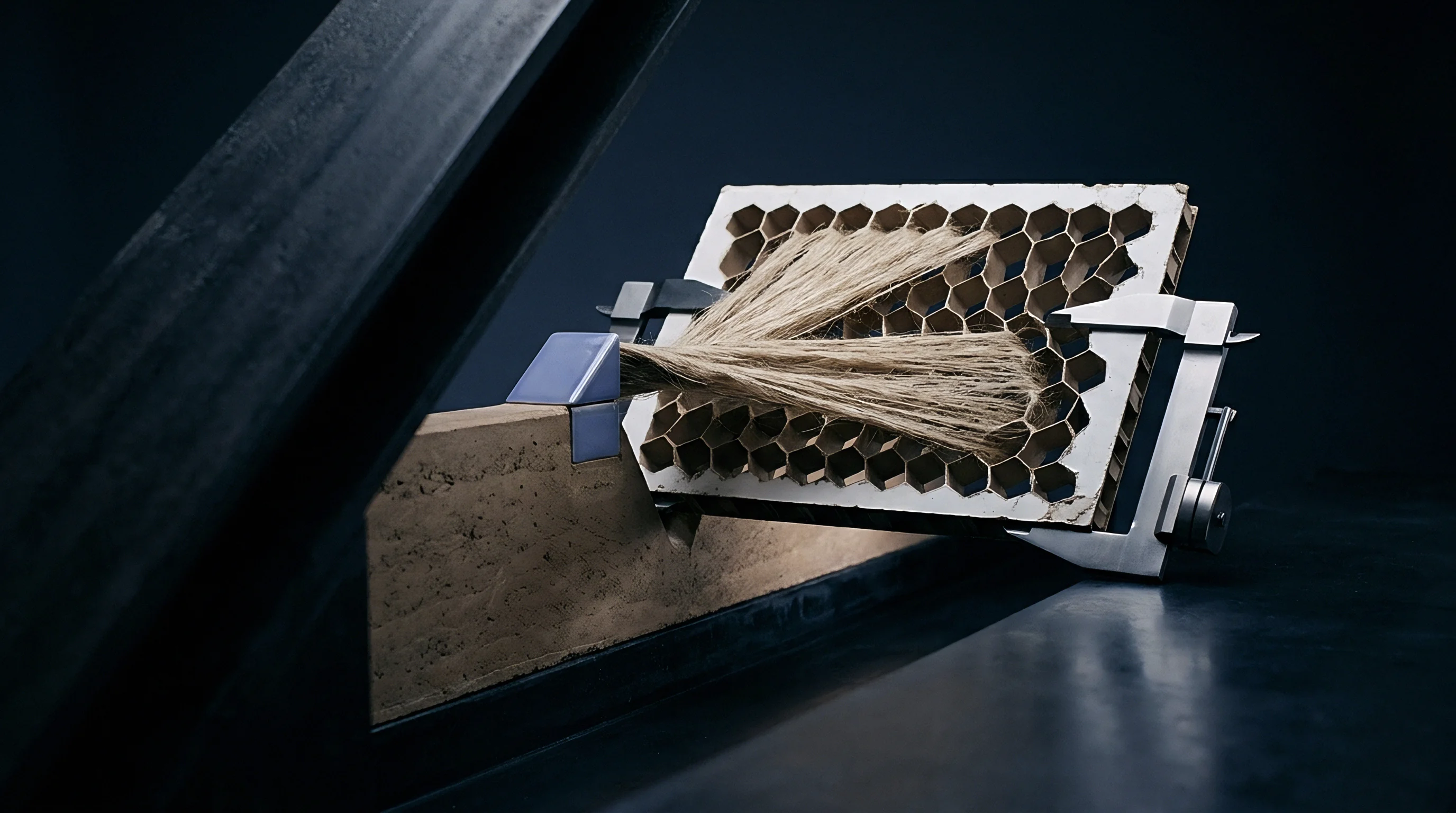
Bending Rigidity and Yarn Crimp Dynamics
Flexural rigidity determines how wet-spun linen bends across heddle eyes, lease rods, and neighboring ends during rapid shed changes. Thick cell walls and high crystallinity give flax considerable bending stiffness; on Nm 90 linen, bending modulus can hit 0.45 mN·mm². Subjecting the yarn to repeated flexure under an asymmetrical shed builds shear stress between fiber bundles.
The resulting internal friction generates heat and fatigues the fibers, degrading tensile strength well before the yarn actually breaks.
Crimp exchange between warp and weft cushions shedding and beat-up shocks. In asymmetrical weaves, warp ends with longer floats take up less crimp than ends binding frequently in plain-weave zones, which splits tension unevenly across the warp beam. Low-crimp ends stay drum-tight and absorb most of the shedding movement, whereas high-crimp ends go momentarily slack, inviting crossed ends and rapier traps.
ISO 7211 method analysis confirms warp crimp differentials exceeding 3.5% across asymmetrical weave zones induce fell drift and uneven beat-up resistance.
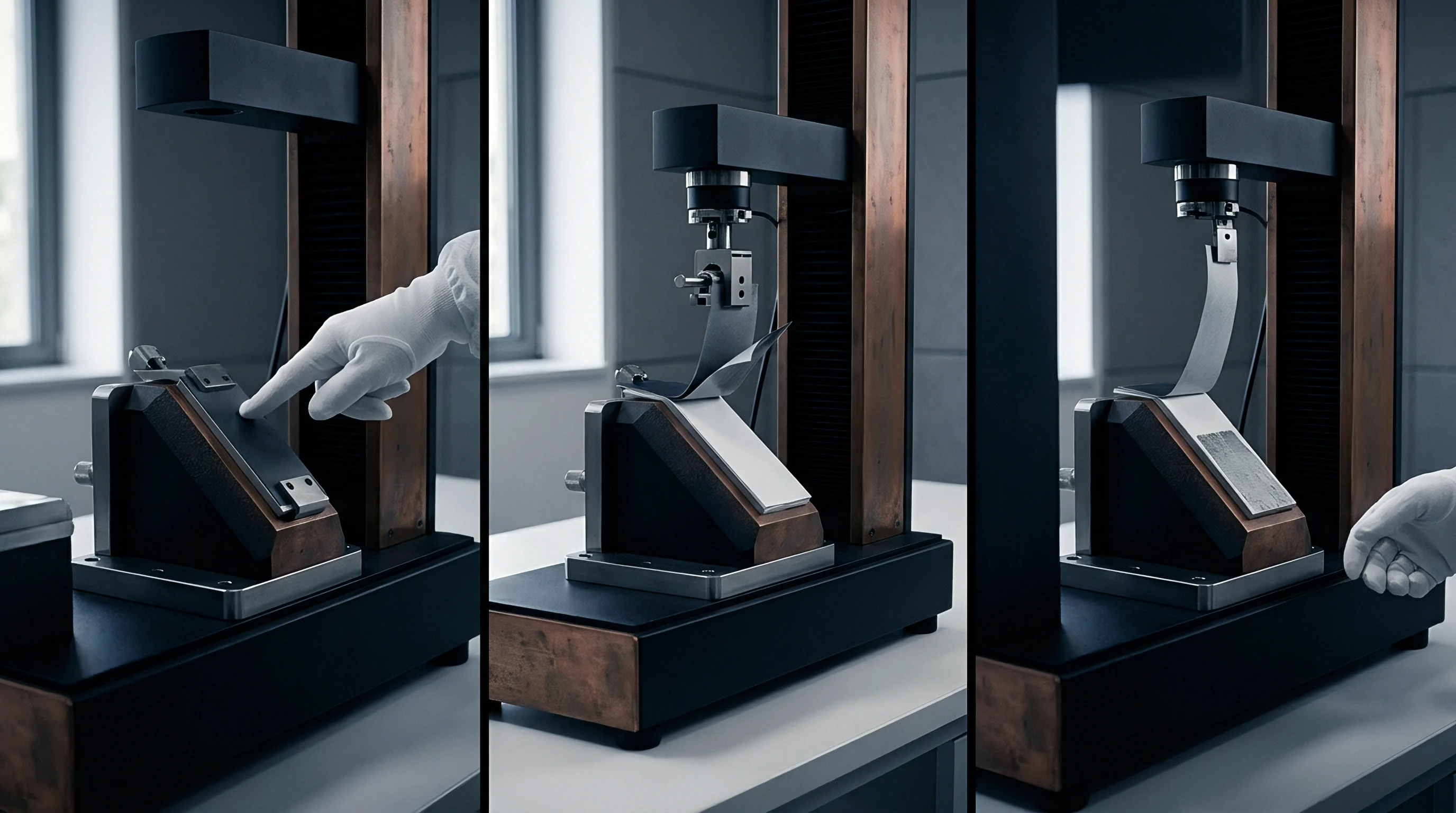
Tracking these differences requires testing stress-strain responses under cyclic loads at actual loom speeds ~ typically 300 to 450 cycles per minute. Standard static tensile tests miss the viscoelastic lag that defines fine flax.
- Viscoelastic Hysteresis Measurement requires cycling loads between 5 cN and 40 cN at 5 Hz to measure residual elongation and energy loss per shed cycle.
- Flexural Fatigue Testing cycles yarn over a 0.5 mm radius ceramic pin until failure, using an asymmetrical tension ratio of 1.5 to 1.
- Friction Coefficient Determination measures dynamic friction yarn-to-yarn and yarn-to-metal under both wet and dry conditions to define sizing film limits.
Sizing changes flexural behavior substantially. Raw flax absorbs moisture rapidly, swelling in ways that increase yarn stiffness and internal shear. Sizing agents for fine linen have to lay down a smooth, pliable film that cuts surface friction and maintains fiber cohesion without making the strand brittle.
An 8% dry solids add-on of modified potato starch combined with synthetic acrylic polymers preserves enough flexural compliance for the yarn to pass heddle eyes without dusting or cracking the film.
As a rule of thumb, sizing pick-up should increase by 0.5% for every 10% rise in harness lift asymmetry to counteract the abrasion of high shed angles.
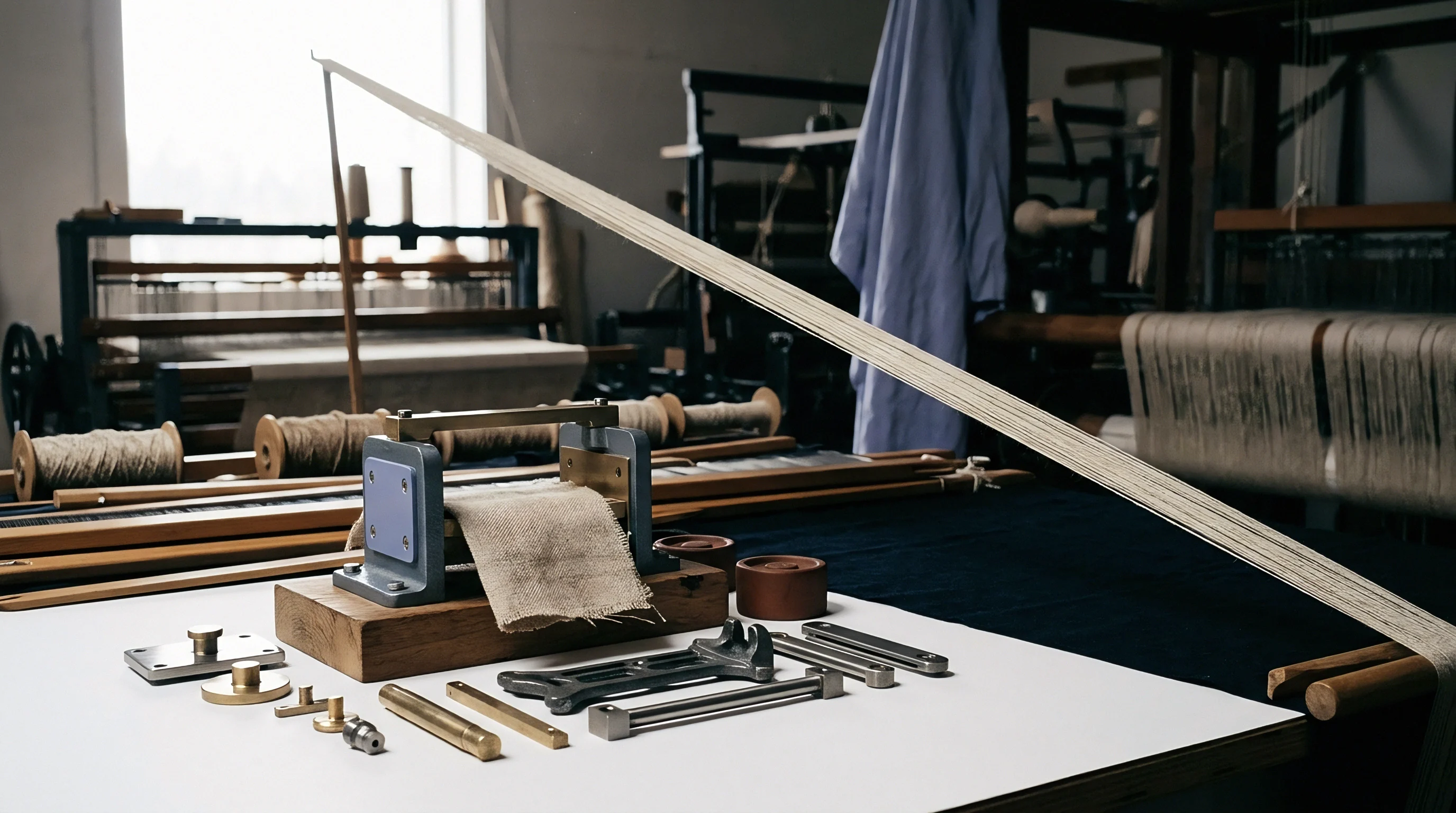
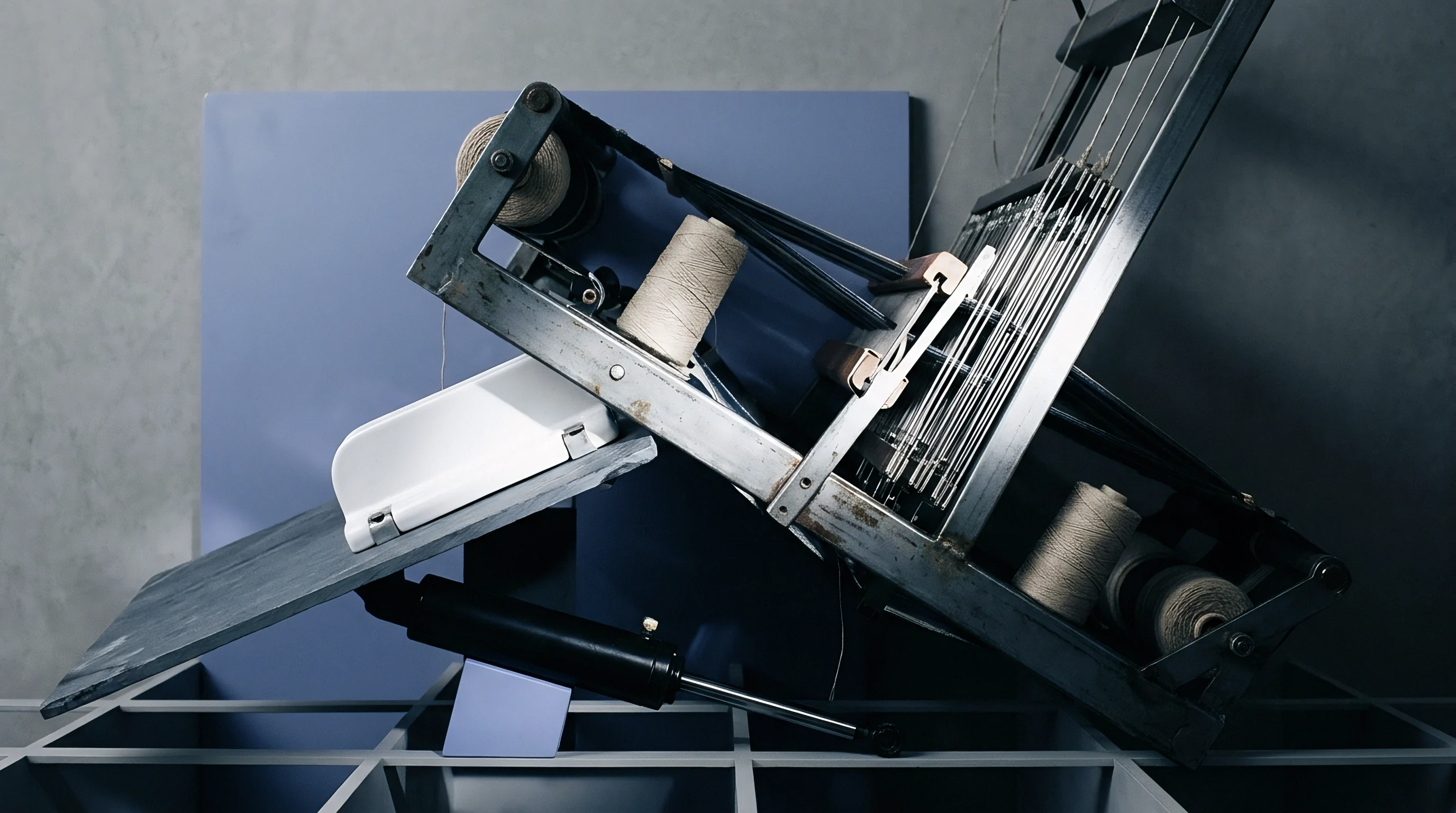
Dynamics

Mathematical Modeling of Dynamic Tension Waves
Modeling dynamic loads in asymmetrical sheds means tracking the transient tension waves that run down the warp during harness motion. Under periodic forcing, the warp sheet acts as a non-linear viscoelastic continuum. Tension wave propagation along a single end follows:
rho (d²u / dt²) = d/dx – F_friction(x, t)
Here, rho is the linear mass density in kg/m, u represents axial displacement along the warp line, E(e) is the strain-dependent dynamic modulus, eta is the internal damping coefficient of the sized yarn, and F_friction captures contact friction across lease rods, drop wires, and heddle eyes. On modern electronic dobby and Jacquard looms, shedding motions run on non-harmonic drive curves; harness velocities change abruptly near reversal points, generating sharp acceleration peaks.
Asymmetrical sheds also knock the phase angles of these tension waves out of alignment between harness frames. If frame 1 rises to full shed while frame 4 drops to full bottom shed, waves traveling from the backrest and whip roll rebound off the fell out of phase. Where those peaks coincide, localized dynamic stress climbs well past the average warp tension registered by the let-off sensor.

Does Dynamic Tension Peak during Backshedding?
Dynamic tension actually peaks during backshedding, right as the upper and lower sheets cross at the center line. Harness acceleration hits its maximum at that crossing, and yarn-to-yarn friction surges as ends moving in opposite directions scrape past one another. In fine linen counts, tension spikes recorded at crossing often run 15% to 25% higher than those measured at full shed opening.
Predictive models sample strain gauge signals at 2,000 Hz per warp channel to capture these transient peaks. By feeding harness cam profiles, yarn modulus, sizing thickness, and beam geometry into the model, one gets a real-time tension map across the full weave repeat.
| Dobby Motion Profile | Max Harness Accel (m/s²) | Damping Factor (eta) | Peak Tension Location | Calculated Peak Load (cN) | Measured Peak Load (cN) |
|---|---|---|---|---|---|
| Harmonic Standard | 42.5 | 0.012 | Fully Open Shed | 48.2 | 49.5 |
| Asymmetrical Dwell 60° | 38.0 | 0.014 | Shed Opening Phase | 42.1 | 43.0 |
| Modified Sinusoidal | 51.2 | 0.011 | Shed Crossing Point | 58.7 | 61.2 |
| Linear Accelerated | 64.0 | 0.009 | Shed Crossing Point | 72.4 | 76.8 |
Model accuracy rests on reliable damping factors for the wet-spun yarn. Because dynamic modulus drops non-linearly under strain, static strength data will consistently underestimate peak dynamic tension during fast harness acceleration. Sizes that overly stiffen the yarn reduce internal damping, allowing mechanical vibration to bounce between breast beam and whip roll well after the harness has finished its stroke.
Whether piezoresistive sensors embedded directly in dense heddle eyes can read tension fast enough to drive adaptive magnetostrictive backrests at speeds past 400 picks per minute remains an open question.
Frame

Loom Mechanical Setup and Tuning Protocol
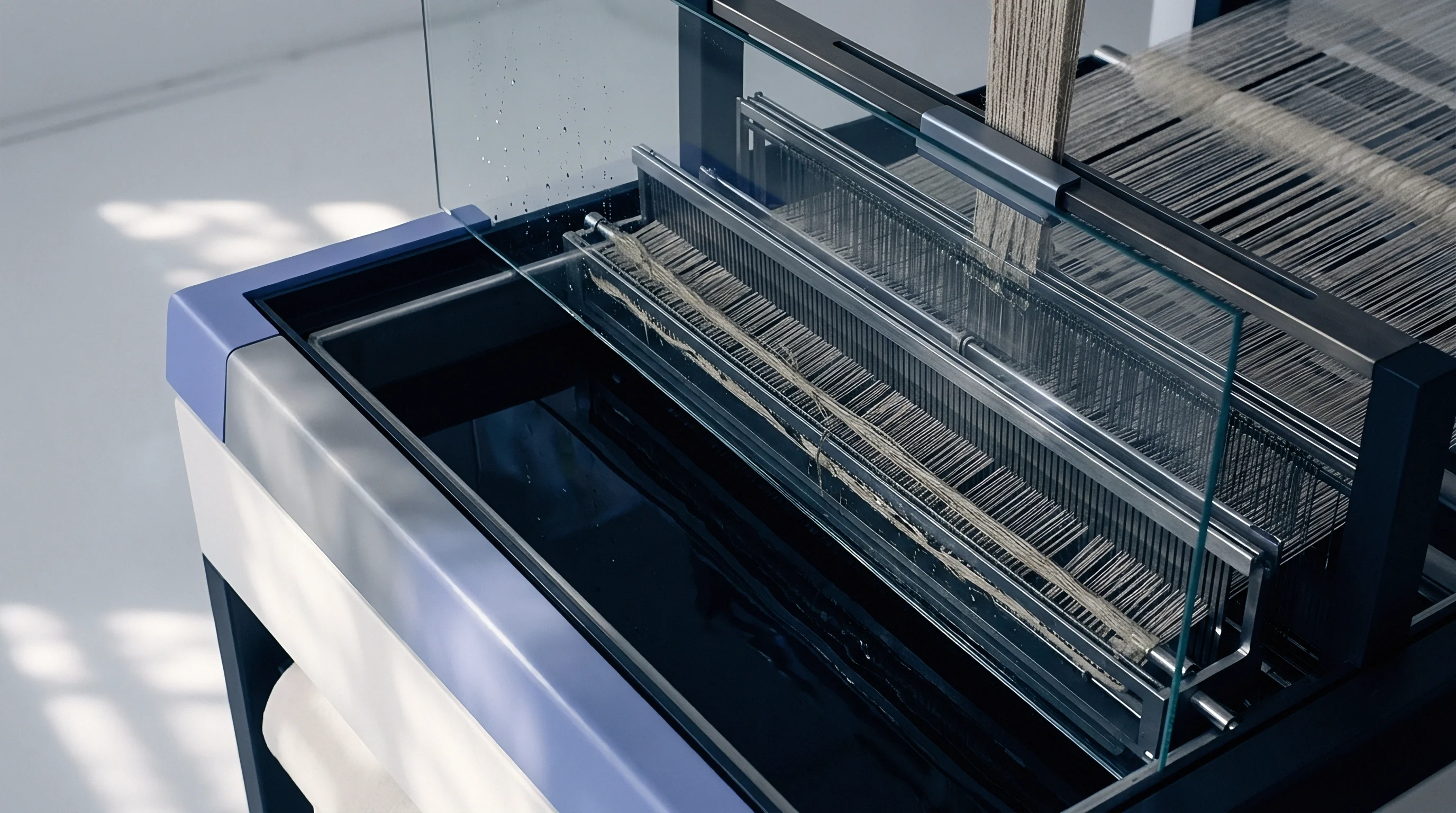
Controlling dynamic tension during asymmetrical shedding in fine linen comes down to mechanical setup across the shedding motion, let-off, and backrest. Modern rapier and air-jet looms running fine flax can set dwell times, lift heights, and asymmetric crossing angles independently on each harness frame.
The whip roll acts as the main shock absorber for the warp. A rigid backrest directs every dynamic spike straight into the yarn, snapping brittle flax fibers. Installing a spring-loaded whip roll with adjustable torsion bar resistance lets the roll rock forward as the shed opens, absorbing path-length growth while holding enough static tension to ensure a clean shed.
- Inspect heddle eyes under 20x magnification to ensure ceramic coatings are intact, aligned across all frames, and free of micro-grooving.
- Set harness heights so the bottom shed rests lightly on the race board or reed table at full opening, holding clearance between 0.5 mm and 1.0 mm.
- Retard shedding crossing timing from the usual 300 degrees loom position to 325 or 330 degrees, reducing beat-up resistance against a closed shed.
- Drop the backrest roller 15 mm below the breast beam plane to ease top-shed strain during asymmetrical lifts.
- Sync the active whip roll oscillation arm in phase with the densest harness frames, taking up uneven path changes before tension spikes develop.
- Calibrate the continuous let-off load cells with a 0-100 cN tensiometer, verifying signal accuracy against physical line tension from full to empty beam.
Shed opening height is a trade-off between insertion clearance and warp strain. Fine linen runs best with the smallest shed that lets the rapier through cleanly. Opening the shed even 1 mm wider than necessary raises dynamic warp tension by 8% to 12%, driving up yarn breaks without improving weft insertion.
ASTM D5430 inspection standards require immediate machine stoppage when warp end failure rates exceed 3 breaks per 100,000 picks on first-quality fine linen production runs.
Under standard purchase contract terms, failure to meet specified fabric density and mechanical properties through improper loom tuning entitles the buyer to reject entire greige lots without paying freight or processing surcharges.


Fracture
Failure Modes, Abrasion, and Surface Degradation
Under unchecked asymmetrical shedding loads, fine linen breaks down in predictable stages. Flax is a bast fiber made of individual ultimate cells bound by pectin; dynamic stress shears these intercellular bonds well before the individual fibrils fracture. The breakdown starts when friction against heddle eyes and adjacent ends peels surface hair away from the yarn core.
That fuzz forms micro-entanglements between the upper and lower sheets at crossing. On the subsequent opening stroke, clinging ends fail to clear, leaving an obstructed shed. The incoming rapier or shuttle catches these trapped ends, causing warp breakouts, insertion faults, or long floats across the face of the fabric.
A secondary failure path is cyclic tensile fatigue. Unlike synthetic filaments that neck down under load, fine flax fractures cleanly and transversely across its cell walls. Micro-cracks spread inward during the high-tension stroke of an asymmetrical cycle, snapping the yarn suddenly with no prior plastic yield.
| Dynamic Load Ratio (Peak / Yield Strength) | Primary Fault Mode | Microscopic Fiber Appearance | Frequency per 1,000 Metres | Loom Stop Duration (Min/Stop) |
|---|---|---|---|---|
| 15% to 20% | Minor Surface Fuzzing | Intact cores, loose fibril ends | 0.4 | 1.5 |
| 21% to 28% | Clean Shed Cling | Pill formation on yarn surface | 1.8 | 2.2 |
| 29% to 35% | Cyclic Fatigue Snap | Transverse cell wall micro-cracks | 4.6 | 4.0 |
| Exceeding 35% | Brittle Tensile Rupture | Sharp, non-fibrillated end breaks | 12.5 | 6.5 |
Loom stop logs reflect this pattern. When dynamic shedding tension runs high, warp breaks cluster between the heddle eyes and drop wires ~ clear evidence that combined friction and cyclic bending do far more damage than simple line tension in the open shed.
Ignoring dynamic load limits on asymmetrical linen carries steep penalties: repeated stops drop weave room efficiency under 70%, double the weaver’s patrol load, inflate repair time, and drive first-quality yield low enough to turn production runs unprofitable.


Yield

Loom-Hour Costing and Financial Optimization
On high-speed looms, loom time dictates production cost directly. Running modern rapier equipment ~ factoring in machine depreciation, power, humidification, maintenance, and direct labor ~ yields a fixed operating expense per loom-hour. For a modern European or Asian mill weaving dense linen, overhead typically ranges from $8.50 to $12.00 per active loom-hour.
Asymmetrical shedding hits those economics through lost speed and lower efficiency. Running Nm 90 linen at 380 RPM with balanced dynamic loads delivers roughly 88% loom efficiency across a 100,000 pick run. Without dynamic load control, technicians often have to throttle back to 300 RPM and accept an efficiency drop to 72% under constant warp stops.
The resulting output figures make the difference obvious. At 380 RPM and 88% efficiency, a machine turns out 20,064 picks an hour. On a cloth set at 30 picks per centimeter (3,000 picks per meter), that comes to 6.688 finished meters per hour.
At a $10.00 loom-hour rate, direct weaving cost stands at $1.495 per finished meter. Backing off to 300 RPM and 72% efficiency drops output to 4.320 meters an hour, raising direct weaving cost to $2.315 per meter ~ a 54.8% unit cost penalty.
Price quotes have to account for these shed performance realities before locking in firm contract rates on fine asymmetrical linen. Estimators who overlook dynamic warp strain in their cost models routinely under-quote complex twills and damasks, leaving mills to absorb the resulting margin erosion once the warp hits the loom.
Fine count linen warps usually require minimum commitments of at least 3,000 meters to cover gaiting, drawing-in, and dobby programming. Incorporating dynamic load adjustments into warp sizing and initial loom tuning keeps the shed running, protects operating margins, and produces consistent cloth from the first pick to the run-out.