Determining Dry Cellulosic Mass Yield in Wet Flax Roving Processing
Dry cellulosic yield in wet flax roving requires gravimetric tare subtraction, moisture regain adjustments, and chemical boil-off loss corrections per lot.


Bath
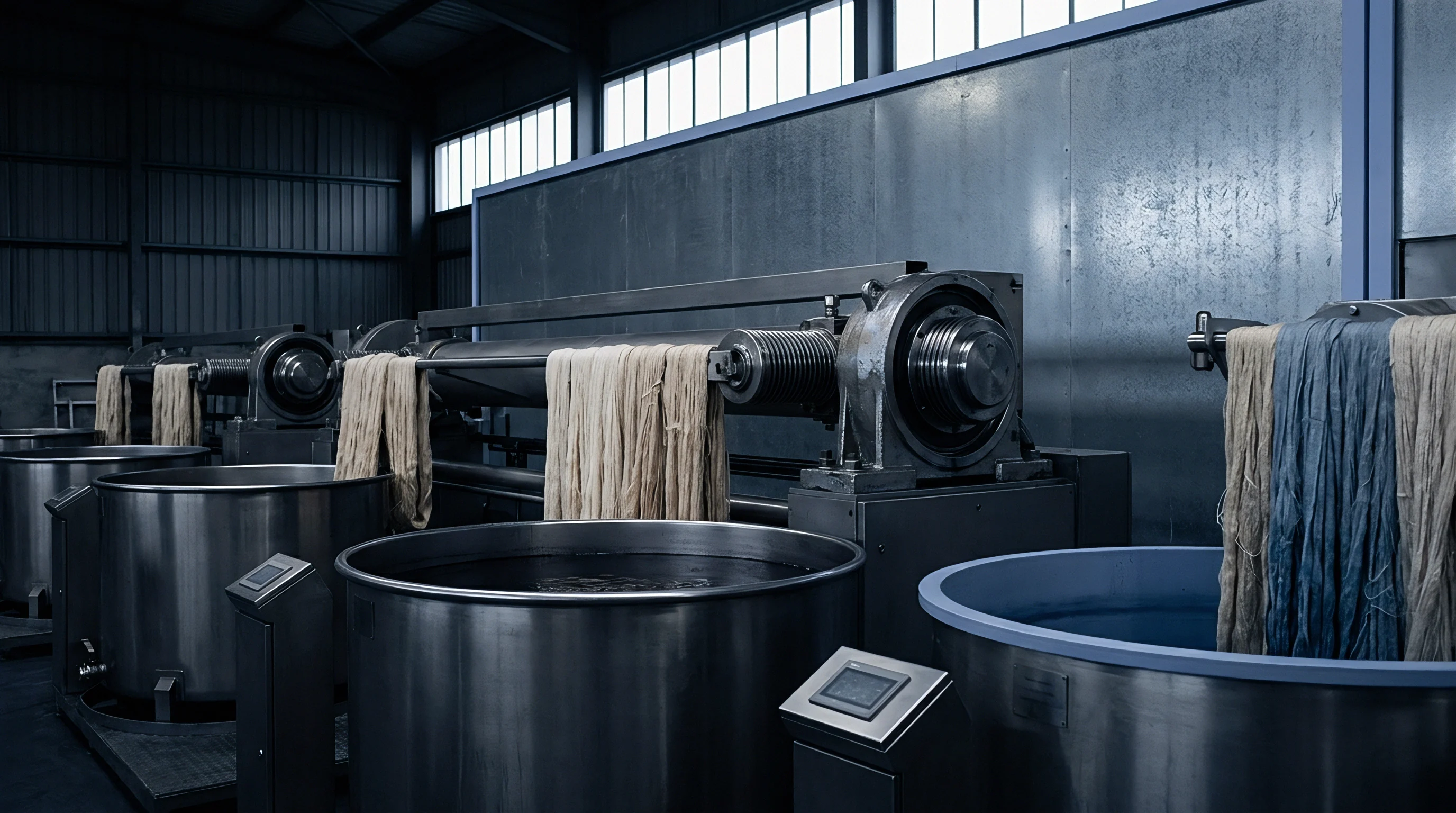
Wet roving processing begins when wound packages of hackled flax enter pressurized stainless steel kettles for hot aqueous extraction. Raw bast fiber arrives at the spinning mill carrying a mix of structural cellulose, intracellular pectins, hemicelluloses, natural waxes, and field moisture. Determining true dry cellulosic yield requires isolating pure alpha-cellulose from these non-cellulosic components while accounting for liquid absorption during boiling and bleaching.
Audits of wet spinning operations in Jiangsu or Western Europe routinely show that failing to isolate true dry cellulose mass leads to systematic overpayment on fiber invoices and inaccurate yarn yield forecasts. Extraction takes place inside closed circulating kettles where aqueous alkaline liquor is forced through perforated plastic bobbin tubes supporting the drawn roving packages.
Mechanical package density dictates how evenly the boiling solution penetrates the winding layers. High winding tension causes liquor to bypass interior layers, leaving unextracted pectins trapped in the package core. Conversely, when density runs too low, fluid channeling causes uneven mass loss and localized fiber entanglement.
Industrial wet roving kettles operate at liquor-to-material ratios between six to one and ten to one. Keeping tight control over sodium carbonate concentrations, surfactant wetting additions, and temperature ramping profiles enables reproducible non-cellulosic mass extraction across every bobbin in the load.
Liquor Mechanics and Extraction Thermodynamics
Pumping fluid through dense cellulosic packages requires controlled head pressure to maintain uniform chemical exposure across all roving layers. The primary extraction bath relies on an alkaline liquor containing sodium carbonate at concentrations from four to twelve grams per liter, supplemented with non-ionic wetting agents to lower surface tension. Temperature ramping follows a strict curve, rising from ambient conditions to ninety-five degrees Celsius or pressurized boiling at one hundred fifteen degrees Celsius.
At these elevated temperatures, ester linkages within the pectic middle lamella undergo rapid alkaline hydrolysis, releasing soluble galacturonic acid salts into the bath.
Raw flax fiber exhibits a natural moisture regain of eight to twelve percent under standard ambient conditions, but immersion in boiling alkaline liquor causes the amorphous regions of the cellulose to swell. As non-cellulosic constituents dissolve, the solid mass of the roving package drops while its total wet mass increases significantly because of liquid trapped within newly opened inter-microfibrillar spaces. High-speed centrifugal hydroextraction strips away excess surface liquor, but the roving still retains an internal wet pickup ratio between fifty and eighty percent relative to its dry weight.
Accurate yield calculations have to decouple this mechanical water retention from the permanent chemical extraction loss incurred during the boil.
| Sodium Carbonate Concentration (g/L) | Bath Temperature (°C) | Liquor Ratio (L:kg) | Treatment Duration (min) | Average Mass Loss (%) | Residual Pectin Content (%) |
|---|---|---|---|---|---|
| 4.0 | 85 | 10:1 | 60 | 6.2 | 2.8 |
| 6.5 | 95 | 8:1 | 75 | 9.8 | 1.4 |
| 9.0 | 105 | 6:1 | 90 | 12.5 | 0.7 |
| 12.0 | 115 | 6:1 | 90 | 14.8 | 0.3 |

Alkaline Penetration Dynamics in Bobbin Packages
Package density governs the volumetric flow rate of aqueous reagents moving from the perforated core out to the package exterior. Standard roving packages are wound onto polypropylene cores at densities between zero point three zero and zero point four five grams per cubic centimeter. Differential kettle pressure alternates the flow from inside-out to outside-in to minimize channeling.
Extraction proceeds outward from the lumen and primary cell wall, dissolving water-soluble compounds first, followed by alkali-soluble hemicellulose fractions.
Removing the pectic binding matrix liberates individual flax ultimate fibers, providing the flexibility needed for high-draft wet spinning. However, excessive alkali exposure degrades structural cellulose chains, reducing the degree of polymerization and lowering overall fiber strength. Monitoring liquor pH through the boiling cycle provides direct data on alkali consumption as galacturonic acid is neutralized.
A drop in pH below nine point five indicates exhaustion of active soda ash, risking the re-precipitation of dissolved pectins back onto the fiber surfaces.
High liquor turnover combined with low package density prevents unextracted pectin cores while excessive caustic strength strips structural hemicellulose and weakens the ultimate yarn matrix.
Rinsing cycles follow the boiling phase to remove residual solubilized organic compounds, sodium salts, and unreacted surfactants. Cold water flushes alone cannot remove the high-molecular-weight pectic gels held mechanically inside the package. Effective rinsing requires hot water flushes at sixty to seventy degrees Celsius, followed by an acid neutralization wash using dilute acetic or formic acid to neutralize residual caustic soda.
Establishing a neutral pH prevents fiber yellowing during thermal drying and ensures stable gravimetric measuring conditions.
Analytical control requires taking pre-boil and post-boil package mass measurements under standardized drying protocols. Relying solely on wet mass post-hydroextraction introduces severe calculation errors, as centrifugal extraction efficiency varies with package position in the centrifuge basket, ambient humidity, and bobbin winding density. True yield determination requires isolating the dry cellulosic residue through calibrated oven drying and quantitative chemical extraction assays.

Degumming
Raw bast fibers stripped from the flax stem consist of structural cellulose microfibrils held together by a complex non-cellulosic matrix. Chemical degumming targets this inter-crystalline cementing material, which contains pectins, hemicelluloses, lignin, and lipophilic surface waxes. The dry cellulosic mass yield depends entirely on the initial composition of the green or retted flax straw and the severity of the chemical extraction process.
Field retting creates substantial baseline variation; under-retted flax contains up to twenty-two percent non-cellulosic material, whereas over-retted fiber retains under ten percent non-cellulosic binder mass prior to wet spinning processing.
The breakdown of pectic substances occurs primarily through the cleavage of alpha-one-four-glycosidic bonds in polygalacturonic acid chains. Alkaline conditions saponify surface fats and esterified waxes, converting water-insoluble lipids into soluble fatty acid soaps that wash out during hot rinsing. Hemicellulose fractions, consisting mainly of xylan and glucomannan polymers, undergo partial solubilization depending on caustic concentration and processing time.
Lignin, an aromatic polymer embedded within the secondary cell wall, resists mild alkaline boiling and requires oxidative bleaching for complete removal.

Pectin Degradation and Hemicellulose Solubilization
Alkaline hydrolysis targets the polygalacturonic acid chains forming the middle lamella between adjacent fiber bundles. The dissolution rate of pectic substances accelerates rapidly above eighty degrees Celsius in the presence of sodium ions. Calcium and magnesium ions cross-link pectic chains into insoluble pectates that resist mild scouring.
Kettles operating with hard water accumulate mineral deposits within the roving package, artificially inflating final dry mass readings. Modern wet spinning plants use chelating agents like ethylenediaminetetraacetic acid or hydroxyethylethylenediaminetriacetic acid to sequester divalent cations and accelerate pectin removal.
Hemicellulose removal occurs concurrently with pectin extraction. While crystalline cellulose remains insoluble in dilute alkaline solutions below fifteen percent sodium hydroxide concentration, amorphous hemicellulose polymers dissolve readily in mild soda ash liquors. Extracting hemicellulose reduces the structural mass of the roving while increasing the relative percentage of pure alpha-cellulose in the residual dry mass.
Yield monitoring protocols must measure this loss accurately to differentiate between desired binder extraction and unwanted cellulose chain degradation.
- Pectic cleavage reduces middle lamella binder mass during hot alkaline saponification.
- Hemicellulose dissolution removes alkali-soluble xylans and glucans from the amorphous fiber zones.
- Lipidic emulsification strips epicuticular waxes, lowering hydrophobicity to enable water penetration.
- Lignin fragmentation cleaves aromatic polymers under elevated temperature and pH conditions.

Residual Surface Waxes and Ash Fractions
Non-extractable mineral components remain embedded within the cell walls following hot aqueous scouring. Flax fibers contain inorganic ash constituents including silica, calcium, potassium, and phosphorus absorbed from the soil. Standard dry mass yield calculations must account for this residual ash fraction, which typically represents zero point five to one point eight percent of total dry sample mass.
Ignoring inorganic ash leads directly to an overestimation of net cellulosic content.
ISO 1833-1 mandates solvent extraction prior to chemical quantitative analysis to prevent residual fiber waxes from inflating measured cellulosic yields.
Surface waxes present another complication during gravimetric yield determination. Epicuticular waxes protect the living flax plant from moisture loss and constitute zero point eight to two point zero percent of raw fiber mass. Hot alkaline scouring saponifies most of these fats, but residual traces remain bound to the primary cell wall.
Laboratory analysis uses petroleum ether or dichloromethane extraction in a Soxhlet apparatus to isolate residual lipids from the dried fiber sample, ensuring that gravimetric figures reflect true cellulosic yield rather than unextracted fats.
The structural integrity of spun flax yarn relies on preserving high-molecular-weight alpha-cellulose polymers while stripping away low-molecular-weight amorphous gums. Chemical degradation of alpha-cellulose through hydrolytic or oxidative chain scission reduces fiber tensile strength and causes excessive short fiber generation during wet drawing. Controlling degumming severity preserves cellulosic yield without sacrificing yarn uniformity or spinning efficiency.
Higher boiling mass losses can reflect aggressive raw fiber cleaning rather than structural cellulose loss caused by uncontrolled caustic liquor temperatures.


Gravimetry
Determining true cellulosic yield demands precise oven-drying protocols to strip all moisture without scorching organic polymer chains. Standard industrial gravimetry relies on forced-air drying ovens maintained at strict thermal tolerances to measure bone-dry fiber mass. ISO 6741-1 and ASTM D2495 define the procedures for determining the oven-dry mass of textile fibers, accounting for moisture regain, carrier tare weight variations, and air buoyancy during analytical weighing cycles.
Double-desiccation cycles verify mass equilibrium before issuing commercial yield certificates.
Atmospheric water molecules adsorb strongly onto hydrophilic hydroxyl groups on cellulosic and pectic polymer chains. Achieving absolute dry mass requires driving off both surface-adsorbed water and structural capillary moisture. The drying temperature must remain at one hundred five degrees Celsius plus or minus two degrees.
Exceeding one hundred ten degrees risks thermal degradation of amorphous cellulose regions and caramelization of residual monosaccharides, which alters sample mass through volatile gas emission.

Oven-Drying Parameters and Thermal Hysteresis
Standard testing environments maintain forced air circulation at 105 degrees Celsius until consecutive weighing cycles show mass equilibrium. The sample container must allow free airflow around the roving package while preventing fiber lint from escaping into the heating chamber. Weighing hot samples inside an oven creates upward convection currents that exert buoyancy forces on the balance pan, resulting in falsely low readings.
Analytical protocols specify transferring samples to sealed glass desiccators charged with active silica gel or phosphorus pentoxide to cool to room temperature before recording final masses.
Bone-dry cellulose is hygroscopic, absorbing atmospheric water within seconds of exposure to ambient air. Analytical balances need draft shields and rapid-stabilization electronics to record sample weights within ten seconds of removal from the desiccator. Automated drying systems equipped with internal balances bypass human transfer errors by continuously measuring sample mass inside the heated chamber until mass change falls below zero point zero one percent over a fifteen-minute interval.
- Weigh the wet roving package immediately upon removal from the bath hydroextractor.
- Place the specimen inside a forced-draft ventilated drying oven maintained at 105 degrees Celsius.
- Transfer the heated sample into an airtight desiccator containing active silica gel for thirty minutes.
- Record the final dried weight on an analytical balance calibrated to one tenth of a milligram.
How Does Moisture Regain Alter Dry Yield Calculations?
Fiber mass shifts constantly in response to atmospheric humidity changes during floor transit between processing stages. Flax fiber possesses a standard commercial moisture regain of twelve percent, established by international trade convention. This figure represents the mass of water expressed as a percentage of the bone-dry fiber mass under standard testing atmosphere conditions of twenty degrees Celsius and sixty-five percent relative humidity.
Yield calculations must distinguish between absolute bone-dry mass and commercial invoice mass adjusted for standard regain.
Standard commercial flax regain is fixed at twelve percent by weight under standard atmospheric conditions of twenty degrees Celsius and sixty-five percent relative humidity.
Moisture absorption hysteresis introduces non-linear weight variations depending on whether the fiber approaches equilibrium from a wet or dry state. Desorbing water from wet roving leaves a higher moisture content at a given relative humidity than absorbing water into dry fiber. Standardizing mass yield requires converting all raw weighings to absolute bone-dry mass first, then applying the official commercial regain factor of one point one two to calculate commercial billing weights.
Failing to dry samples to absolute zero moisture content before applying regain multipliers compounds moisture measurement errors across large commercial shipments.
The synthetic polypropylene or stainless steel bobbin tubes supporting the roving package must undergo separate dry tare calibration. Plastic carrier tubes absorb small quantities of water and process chemicals during high-temperature boiling cycles, increasing their mass by zero point two to zero point eight percent. Preserving gravimetric precision requires baking empty carrier tubes under identical drying conditions to determine their true saturated-and-hydroextracted tare weight prior to calculating net fiber mass yield.
Whether online high-frequency dielectric sensors can match laboratory desiccation accuracy across variable package densities remains an open technical question for high-speed wet spinning operations.

Equation
Mathematical formulas transform laboratory gravimetric mass readings into standardized dry yield percentages across commercial batches. Evaluating wet roving yield requires reconciling raw fiber incoming mass, carrier bobbin tare, boiling mass loss, residual chemical moisture, and commercial regain allowances. Evaluating a five-hundred-kilogram wet roving lot requires mapping every mass fraction into a unified material balance equation to prevent double-counting water weight or misclassifying extracted pectins as process scrap.
The core yield formula isolates pure bone-dry cellulosic mass relative to the original dry mass of raw fiber introduced into the processing kettle.
Raw flax enters the spinning plant carrying field moisture and non-cellulosic impurities. The total raw mass loaded into the boiling kettle consists of dry cellulose, dry non-cellulosic matter, and raw fiber moisture. Following alkaline scouring, rinsing, and hydroextraction, the package mass consists of dry residual cellulose, unextracted non-cellulosic remnants, plastic carrier tare, and absorbed mechanical water.
The quantitative yield formula must eliminate all water components to yield the exact percentage of dry cellulosic recovery achieved by the processing plant.
Mathematical Formulation of Bone Dry Yield
Converting wet roving gross mass to absolute cellulosic yield involves subtracting tare weights, moisture fractions, and extractable impurities. Let the initial gross mass of the raw roving package prior to processing be represented by mass term gross-initial. The tare mass of the dry carrier tube is represented by mass term carrier-tare.
The initial moisture fraction of the raw fiber, expressed as a decimal, is denoted by moisture-raw. The absolute dry mass of the raw fiber introduced into the system is calculated according to the following baseline expression:
Absolute Dry Raw Mass = (Gross Initial Mass – Carrier Tare Mass) / (1 + Raw Moisture Fraction)
Following alkaline scouring, rinsing, and hydroextraction, the wet package yields a post-treatment gross mass represented by mass term gross-wet. A representative sample of the wet roving fiber is drawn, stripped of carrier tare, and placed in a gravimetric drying oven to determine its post-treatment bone-dry solid fraction, denoted by solid-fraction. The total absolute bone-dry mass of treated fiber recovered from the package is determined by the secondary expression:
Absolute Dry Recovered Mass = (Gross Wet Mass – Carrier Tare Mass) Solid Fraction
The percentage bone-dry cellulosic yield is subsequently defined as the ratio of absolute dry recovered mass to absolute dry raw mass, multiplied by one hundred:
Percentage Dry Cellulosic Yield = (Absolute Dry Recovered Mass / Absolute Dry Raw Mass) 100

Worked Mass Balance for a Scoured Roving Lot
An industrial spinning lot entering wet treatment contains five hundred kilograms of raw fiber wound onto synthetic bobbin carriers. Consider a batch consisting of two hundred fifty bobbins. Each empty polypropylene carrier tube possesses a measured bone-dry tare mass of zero point one two zero kilograms.
The gross mass of the raw lot prior to processing, including bobbin carriers, equals five hundred thirty kilograms. Laboratory testing confirms the incoming raw flax fiber possesses a moisture fraction of ten point five percent (zero point one zero five decimal). The net raw fiber mass equals five hundred thirty kilograms minus thirty kilograms of carrier tare, leaving exactly five hundred kilograms of wet raw fiber.
The initial absolute dry raw fiber mass equals five hundred kilograms divided by one point one zero five, yielding four hundred fifty-two point four nine kilograms of bone-dry raw material. The remaining forty-seven point five one kilograms represents raw field moisture. The batch undergoes alkaline scouring at ninety-five degrees Celsius with a sodium carbonate liquor, followed by rinsing and centrifugal hydroextraction.
Upon emerging from the hydroextractor, the gross mass of the wet bobbin lot measures seven hundred eighty kilograms.
A ten-gram sample of wet fiber is drawn from the middle layer of a test bobbin and dried in a gravimetric oven at one hundred five degrees Celsius until mass stabilization. The oven-dry residue of the sample weighs four point eight eight grams, establishing a post-treatment solid fraction of zero point four eight eight (forty-eight point eight percent solid fiber, fifty-one point two percent absorbed water). The total gross wet mass of seven hundred eighty kilograms contains thirty kilograms of carrier tare, leaving seven hundred fifty kilograms of wet roving fiber.
Applying the measured solid fraction to the net wet roving mass yields the absolute dry recovered mass: seven hundred fifty kilograms multiplied by zero point four eight eight equals three hundred sixty-six point zero zero kilograms of bone-dry scoured fiber. The total mass lost during chemical degumming equals four hundred fifty-two point four nine kilograms minus three hundred sixty-six point zero zero kilograms, which equals eighty-six point four nine kilograms of dissolved pectins, hemicelluloses, waxes, and soluble ash constituents.
| Processing Phase | Gross Mass (kg) | Tare Mass (kg) | Net Mass (kg) | Moisture / Liquid (kg) | Bone-Dry Solid (kg) |
|---|---|---|---|---|---|
| Raw Package Loading | 530.00 | 30.00 | 500.00 | 47.51 | 452.49 |
| Alkaline Scour & Rinse | 1250.00 | 30.00 | 1220.00 | 854.00 | 366.00 |
| Centrifugal Hydroextraction | 780.00 | 30.00 | 750.00 | 384.00 | 366.00 |
| Thermal Oven Drying | 396.00 | 30.00 | 366.00 | 0.00 | 366.00 |
| Commercial Regain (12%) | 440.00 | 30.00 | 410.00 | 44.00 | 366.00 |
| Test conditions: Alkaline scouring executed at 95°C with 8.0 g/L Na2CO3 for 75 minutes. Gravimetric desiccation executed at 105°C per ISO 6741-1. | |||||
Calculating the final percentage bone-dry yield proceeds by dividing three hundred sixty-six point zero zero kilograms by four hundred fifty-two point four nine kilograms and multiplying by one hundred. This yields a bone-dry cellulosic mass yield of eighty point eight nine percent. The corresponding chemical boil-off loss equals nineteen point one one percent.
Commercial billing mass at standard twelve percent regain is calculated by multiplying the bone-dry recovered mass of three hundred sixty-six point zero zero kilograms by one point one two, resulting in four hundred ten point two8 kilograms of commercial fiber weight.

Adjusting Commercial Invoiced Weight against Measured Yield
Financial settlements between fiber suppliers and spinning mills rely on dry mass calculations adjusted for standard commercial regain. Sourcing contracts specify a target dry cellulosic yield baseline, typically eighty-four percent for standard dew-retted European flax roving. If the measured yield falls below the contracted baseline, the buyer calculates an invoiced mass adjustment to recover the monetary value of lost fiber yield.
Unextracted pectic remnants increase fiber stiffness while reducing spinning draft uniformity during fine yarn production.
Consider the worked example where the measured bone-dry yield returned eighty point eight nine percent against an eighty-four percent contract benchmark. The yield deficit equals three point eleven percentage points. On a five-hundred-kilogram raw fiber consignment purchased at ten Euros per kilogram commercial weight, the financial impact is calculated directly against the dry cellulose recovery deficit.
The buyer calculates the delivered commercial weight credit by determining the missing dry cellulosic tonnage and multiplying by the contract unit price adjusted for standard regain.
Miscalculating dry cellulosic yield by two percent on a ten-ton wet roving lot inflates raw material expenditure while skewing downstream yarn linear density metrics.

Tolerance
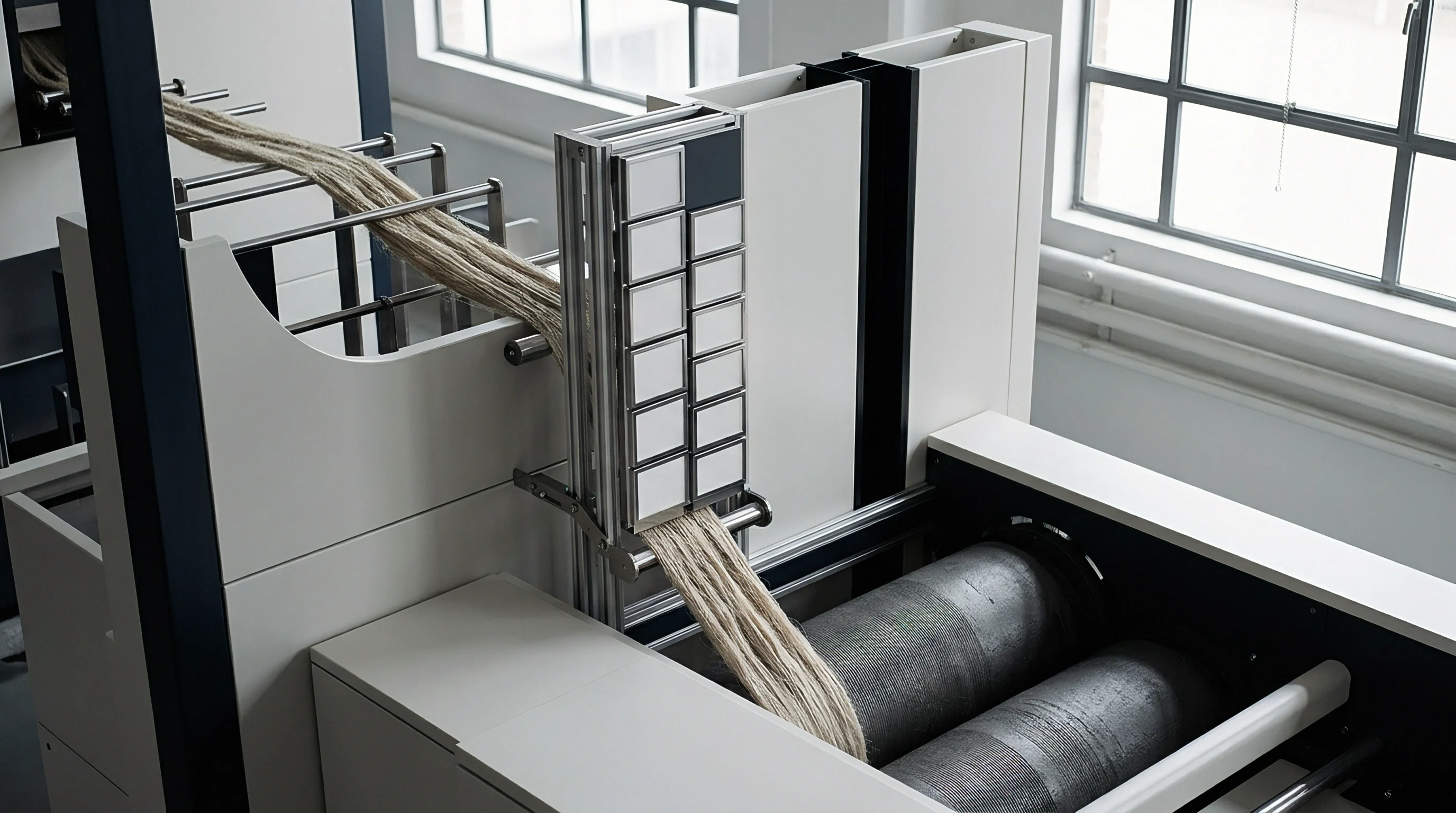
Physical discrepancies arise across wet roving lots due to uneven retting, variable package density, and thermal gradients in processing kettles. Routine mill audits show radial moisture gradients across bobbin layers, where outer package windings hold significantly more liquid than inner core layers following centrifugal hydroextraction. Evaluating yield accuracy across an entire kettle load demands structured sampling protocols that account for package position within the vessel, vertical temperature distribution, and radial winding variations.
Relying on a single surface fiber sample generates massive sampling bias, skewing estimated lot yield by several percentage points.
High-density zones within a roving bobbin restrict liquid flow during boiling, leaving localized pockets of unextracted pectins. These unextracted zones increase localized dry mass, giving a false impression of high cellulosic yield while causing severe drafting failures during subsequent wet spinning operations. Establishing statistical tolerance limits for intra-bobbin and inter-bobbin mass loss variance protects yarn spinners from accepting poorly scoured roving lots.

Radial Moisture Gradient across Bobbin Layers
Differential centrifugal force during hydroextraction leaves higher liquid retention in outer package windings than near the core tube. During high-speed spinning of hydroextractor baskets, water moves radially outward under centrifugal acceleration. The innermost fiber layers adjacent to the perforated polypropylene tube lose water readily, while outer layers absorb escaping fluid.
As a result, the wet moisture content of outer layers can reach seventy-five percent while inner layers drop to forty-five percent wet moisture content.
Because bobbin layers hold moisture differently, gravimetric core sampling requires slicing test bobbins into three distinct radial concentric zones: the core zone within ten millimeters of the tube, the middle zone representing fifty percent of total package mass, and the outer peripheral zone comprising the outer fifteen millimeters of winding depth. Calculating true package yield requires weighing each zone independently or taking mass-weighted composite samples across all three zones prior to oven desiccation.
| Bobbin Concentric Zone | Wet Pickup Post-Centrifuge (%) | Boil-Off Mass Loss (%) | Residual Pectin (%) | Dry Cellulosic Yield (%) |
|---|---|---|---|---|
| Inner Core (0–10 mm) | 46.2 | 11.4 | 2.1 | 88.6 |
| Middle Layer (Center Mass) | 58.5 | 14.2 | 0.9 | 85.8 |
| Outer Periphery (Outer 15 mm) | 74.8 | 15.6 | 0.4 | 84.4 |
| Weighted Package Average | 61.8 | 14.1 | 1.0 | 85.9 |
Retting Variance and Batch Sampling Tolerances
Agricultural field retting conditions create natural fluctuations in raw fiber pectin levels between harvest origins. Flax stems retted under rainy autumn conditions exhibit advanced fungal degradation, yielding low non-cellulosic residual fractions. Flax retted under dry weather conditions retains tightly bound pectic binders, requiring aggressive alkaline boiling.
Sampling protocols must stratify raw fiber incoming lots by farm origin, harvest year, and scutcher bale grade before assigning standard yield baselines.
Proper sample stratification across multiple package depths prevents overestimating total yield from dry package surfaces.
Acceptance sampling for wet roving processing follows statistical quality control protocols matching ISO 2859-1 standards. A standard kettle charge containing two hundred fifty bobbins requires selecting a random sample of thirteen bobbins distributed across top, middle, and bottom kettle positions. Gravimetric yield testing across these thirteen test bobbins yields a mean lot yield and a standard deviation figure.
If the standard deviation of dry cellulosic yield exceeds zero point seven five percentage points across the sample set, the entire lot fails uniformity requirements and requires re-scouring or chemical re-balancing.
- Core sampling isolates inner bobbin layers to check for unextracted pectin pockets.
- Mid-layer extraction measures average boil-off loss across standard winding densities.
- Periphery testing evaluates outer layer fiber degradation from high velocity liquor impact.
- Tare verification weighs empty carrier tubes to eliminate plastic weight variance from mass balance totals.
- Bale tag records trace raw fiber lots back to field retting origins and harvest dates.
- Kettle logbooks document caustic concentrations, temperature curves, and liquor circulation times.
- Desiccation certificates provide oven-dry mass readings and moisture regain figures per lot.
- Weighbridge tickets confirm gross incoming wet roving weights prior to spinning conversion.
Standard statistical sampling protocols require core samples from five percent of bobbins per kettle charge to ensure representative dry mass figures across the entire shipment.
Clause
Procurement contracts for wet flax roving incorporate strict quantitative yield covenants to protect buyers against water weight inflation. Drafting raw fiber procurement contracts requires inserting strict moisture regain limits and mandatory gravimetric dry yield verification rules tied to commercial payment terms. Sellers often attempt to bill shipments based on hydroextracted wet weight or standard regain applied to partially dried fiber.
Establishing clear contract clauses defining bone-dry cellulosic mass yield determination methodology prevents legal disputes over water billing and missing fiber mass.
Raw flax roving prices reflect the clean dry cellulosic content delivered to the mill floor rather than gross fiber mass. Contract clauses establish a baseline yield percentage, typical chemical test protocols, independent arbitration laboratory selections, and automated debit adjustment formulas applied to final commercial invoices. Integrating verifiable gravimetric standards directly into purchase orders ensures that mass balance losses exceeding contractual tolerances trigger immediate financial recourse.

Yield Guarantees in Wet Spinning Master Purchase Agreements
Commercial agreements stipulate maximum allowable non-cellulosic mass loss during alkaline scouring operations. Master purchase agreements specify that delivered flax roving must achieve a minimum bone-dry cellulosic mass yield, typically set between eighty-two and eighty-six percent depending on agreed fiber grade and retting type. The agreement defines the precise test standard governing compliance, citing ISO 6741 for dry mass determination and ISO 1833 for quantitative chemical analysis.
The financial responsibility for excessive boil-off loss falls squarely on the fiber vendor if raw non-cellulosic content exceeds agreed parameters. Contract clauses specify that if measured bone-dry yield falls more than one percentage point below the contracted threshold, the vendor absorbs both the mass deficit financial correction and the operational cost of additional chemical reagents consumed during boiling.
Reconciling Invoice Weights with Scoured Cellulosic Mass
Final financial settlement occurs when gravimetric oven-dry tests confirm the delivered dry cellulose tonnage against invoice declarations. The buyer retains the right to draw representative sample bobbins from incoming shipments within five business days of delivery. Sample preparation, desiccation, and yield calculations take place in an ISO 17025 accredited testing facility using the exact mathematical formulation detailed in contractual specifications.
Invoice adjustments execute automatically upon receipt of certified lab test results. If the tested bone-dry yield exceeds contractual specifications, no price premium applies unless explicitly negotiated under high-purity specialty fiber terms. If the tested yield falls below specification, the total invoice amount is recalculated using the verified dry cellulosic mass plus standard twelve percent moisture regain, discarding the vendor’s original billing mass statement entirely.
Standard purchase contracts include the provision that delivered lots yielding below eighty-four percent dry cellulosic mass grant the buyer an automatic price deduction equal to the percentage yield deficit plus additional kettle processing energy costs.