Mechanical Separation
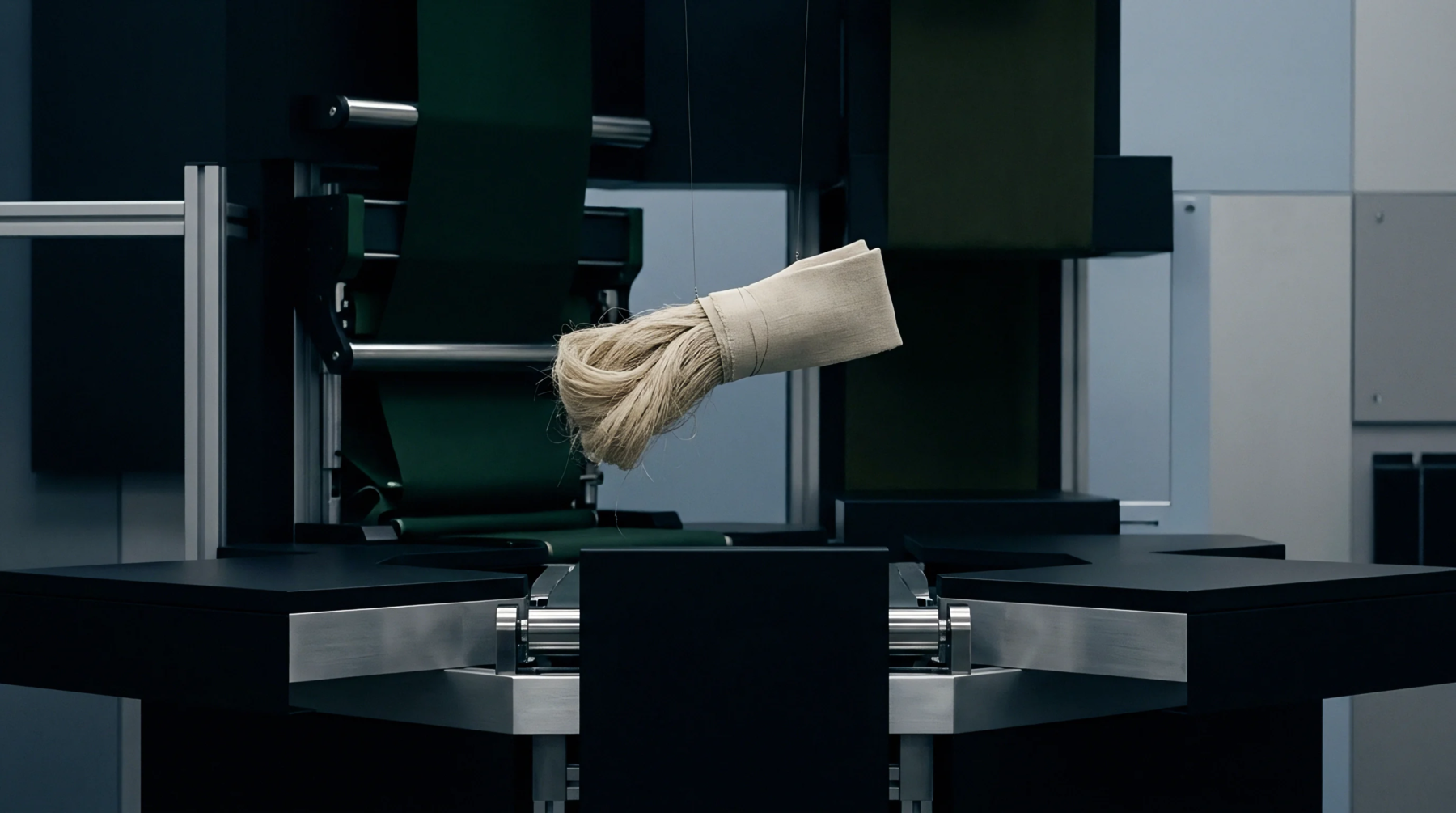
Mechanical separation represents the removal of cellulose bundles from the woody core of flax stalks through physical force. Bast fibre extraction employs rollers or beaters to break the non-fibrous lignin components, which allows the raw material to pass into the degumming stage of linen production. This process governs the yield and physical integrity of the resultant material before it enters the spinning mill.
Industrial settings monitor the efficiency of this step by measuring the percentage of non-cellulosic impurities remaining within the long line material. Failure to achieve proper separation introduces excessive shive into the drafting process, which causes significant machine wear and reduces the strength of the final yarn.
Output Assessment
Quality control personnel inspect the processed material against standardized physical samples to verify the absence of woody contaminants. Documentation in the production log specifies the grade of the fibre based on fineness, color, and tensile strength after the mechanical treatment ends. Buyers define acceptance criteria according to the maximum allowable shive content and the length of the individual strands.
Mills reject batches containing a high volume of fractured strands because the damage reduces the spinning potential during the later drafting cycles.
Processing Parameter
Variations in moisture content significantly alter the performance of the rollers during the liberation of the vascular bundles. Operators adjust the pressure applied to the stalks to account for fluctuations in the raw material density, ensuring that individual fibres remain intact throughout the mechanical impact. Precise management of this operation determines the final volume of spinnable material available for export from the primary processing facility.
Excess force creates unnecessary fibre breakage, while insufficient pressure leaves residual lignocellulosic matter attached to the surface. Effective control over this stage establishes the baseline for the mechanical durability and softness of the linen fabric produced later in the supply chain.