Harmonized System Origin Classification Rules for Flax Textiles
Harmonized System origin rules assign non-preferential flax origin to the spinning or weaving country based on tariff shift rules regardless of fiber harvest site.


Taxonomy
Flax raw material and derivative products move through international trade under specific numeric codes defined within Chapter 53 of the World Customs Organization Harmonized Commodity Description and Coding System. Raw or processed flax fibre sits under heading 5301, spanning raw flax, retted flax, scutched flax, hackled flax, and flax tow or waste. Flax yarn occupies heading 5306, divided by single yarn under subheading 5306.10 and multiple or cabled yarn under subheading 5306.20.
Woven fabrics of flax fall under heading 5309, separated by weight into fabrics containing 85 percent or more by weight of flax under 5309.11 and 5309.12, alongside mixed blends under 5309.21 and 5309.22. Downstream products leave Chapter 53 entirely, entering Chapter 62 for woven apparel or Chapter 63 for finished home textiles including bed linens under heading 6302.
Customs authorities determine origin by identifying where the item underwent its last substantial, economically justified transformation. Raw agricultural harvest in France, Belgium, or the Netherlands establishes initial country of origin for unspun flax fibre under heading 5301. Subsequent processing stages frequently occur across different international customs territories, separating the location of harvest from yarn spinning, fabric weaving, and garment assembly.
Non-preferential origin rules determine the baseline origin marked on commercial invoices, import entry declarations, and consumer labels. Preferential origin rules apply exclusively to trade under specific bilateral or multilateral free trade agreements, demanding compliance with strict product-specific origin criteria to qualify for reduced or zero tariff rates.
European Flax certification establishes raw fibre cultivation origin in Western Europe but leaves subsequent spinning country status to customs origin rules.

Harmonized System Headings for Flax Inputs and Products
Determining the correct tariff heading forms the foundational step of any origin analysis. Misclassification of the input fibre or intermediate yarn invalidates the entire downstream origin determination chain.
| HS Code | Description | Transformation State | Primary Origin Driver |
|---|---|---|---|
| 5301.10 | Flax, raw or retted | Unprocessed straw | Agricultural harvest site |
| 5301.21 | Flax, scutched | Mechanically separated bast fibre | Scutching mill location |
| 5301.29 | Flax, hackled or otherwise processed | Combed long staple fibre or tow | Hackling and carding facility |
| 5306.10 | Flax yarn, single | Spun single yarn strands | Wet or dry spinning mill location |
| 5306.20 | Flax yarn, multiple or cabled | Twisted multi-ply yarn | Plying and twisting operation |
| 5309.11 | Unbleached or bleached woven flax fabric | Greige or bleached woven cloth | Loom shed weaving location |
| 5309.19 | Other woven flax fabric | Dyed, printed, or finished cloth | Weaving plus finishing process |
A central uncertainty remains when raw fibre harvested in one country undergoes scutching in a second territory and hackling in a third before entering the spinning mill. Trade compliance rules leave open whether mechanical scutching alone constitutes sufficient processing to shift non-preferential origin before yarn spinning begins.


Shift
Origin determination under tariff classification principles relies on structural changes in Harmonized System codes between input materials and output goods. A Change in Tariff Classification occurs when manufacturing operations within a country transform imported inputs classified under one code into a distinct product classified under a different code. Specific origin protocols mandate whether this transformation demands a Change in Chapter, a Change in Tariff Heading, or a Change in Tariff Subheading.
Non-preferential origin for flax textiles under European Union Union Customs Code provisions and United States Code of Federal Regulations title 19 section 102 hinges on specific physical processing thresholds. Spun yarn under heading 5306 produced from imported raw or scutched flax under heading 5301 meets the Change in Tariff Heading requirement across major jurisdictions. The single-step conversion from raw fibre to yarn imparts origin to the location of the spinning mill under non-preferential principles.
Woven cloth under heading 5309 produced from imported single yarn under heading 5306 similarly meets the Change in Tariff Heading rule, placing fabric origin in the country where the loom shed operates.

Tariff Shift Thresholds across Processing Steps
Each manufacturing conversion requires documentation proving that imported inputs changed tariff headings within the processor’s domestic territory.
Single-stage processing confers origin only when the tariff schedule explicitly permits that specific heading jump for non-preferential declaration.


Yarn
Spinning represents the primary structural disjunction in flax provenance documentation. Western European agricultural cooperatives grow high-grade flax straw, executing retting and scutching within France, Belgium, and the Netherlands. Scutched long flax fibre and hackled sliver are packed into dense bales, exported under heading 5301, and delivered to spinning facilities in Eastern Europe or Asia.
A Chinese spinning mill importing scutched flax under heading 5301 and wet-spinning it into fine count yarn under heading 5306 creates a product whose non-preferential customs origin becomes China.
Wet spinning of imported scutched flax converts raw fibre into yarn and assigns non-preferential origin to the spinning mill jurisdiction.
Trade agreements impose strict exceptions to this standard rule. Preferential trade regimes including the United States-Mexico-Canada Agreement and European Union free trade agreements enforce specific rule-of-origin formulas. Many preferential frameworks enforce a yarn-forward or fabric-forward origin rule.
Under a yarn-forward rule, finished garments classified in Chapter 62 qualify for preferential zero-duty entry only if the yarn spinning, fabric weaving, and garment assembly all take place within participating treaty states. European scutched fibre spun into yarn within a non-treaty country loses eligibility for preferential treatment upon re-importation, regardless of raw fibre provenance certificates.

Does Wet Spinning in China Transfer Origin Status?
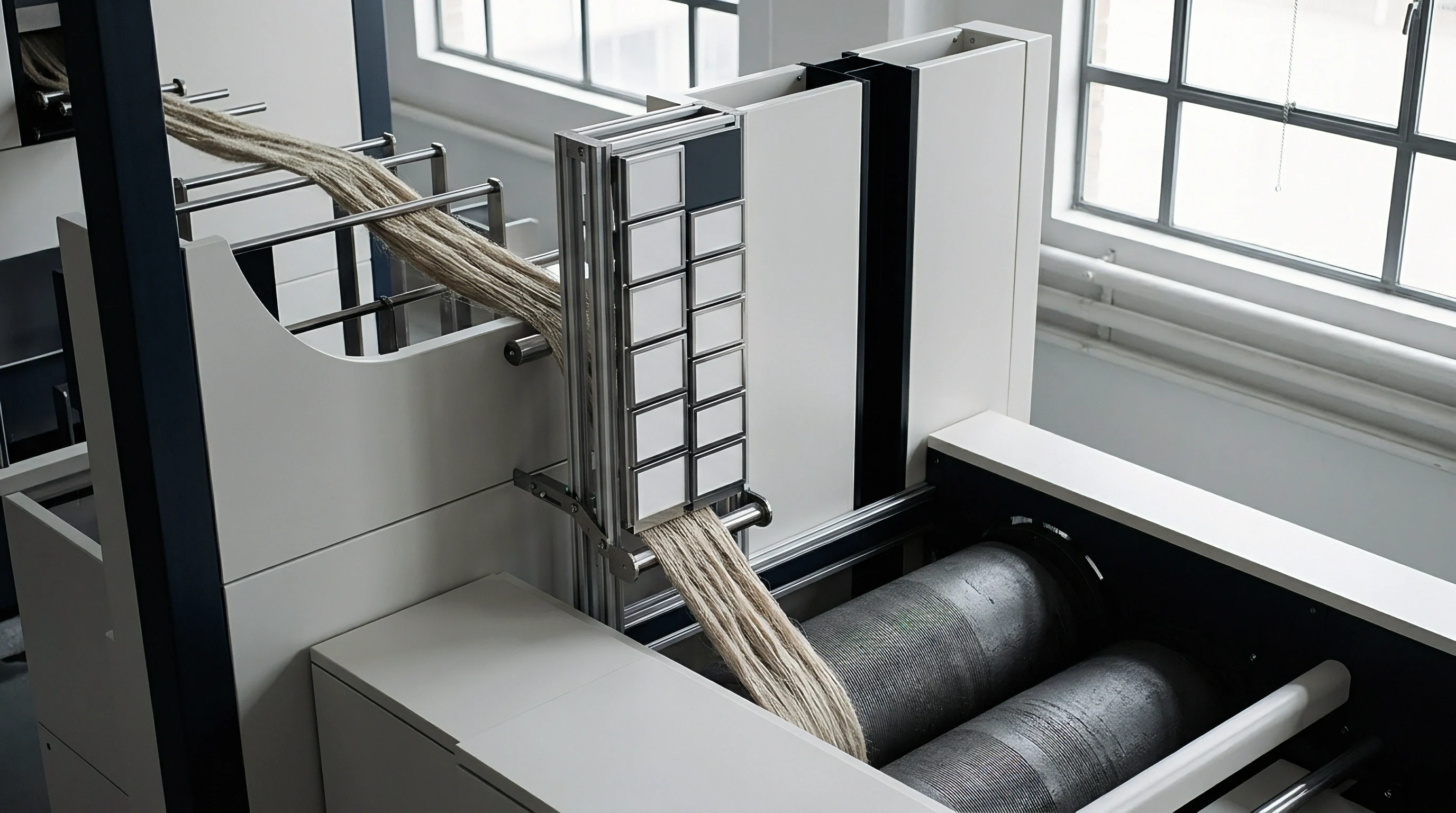
Physical transformation during wet spinning dissolves pectins in warm water baths, drafting sliver down to targeted yarn counts before applying twist. Customs authorities treat wet spinning as a substantial transformation. A bale of French flax fibre entering a Jiangsu mill yields yarn whose commercial invoice legitimately states Chinese origin for standard customs entry.
Chinese spinners frequently issue statements claiming European origin based on raw fibre inputs, but customs auditors reject these declarations for tariff calculation purposes.
| Import Jurisdiction | Input State and Code | Processing Operation | Resulting Non-Preferential Origin |
|---|---|---|---|
| United States | EU scutched flax (5301.21) | Spinning into yarn (5306.10) | Country of spinning mill |
| United States | Chinese flax yarn (5306.10) | Weaving into cloth (5309.11) | Country of loom shed |
| European Union | EU scutched flax (5301.21) | Spinning in non-EU mill | Non-EU country of spinning mill |
| European Union | Non-EU flax yarn (5306.10) | Weaving and finishing in EU | EU country of weaving shed |
Assume an importer orders 10,000 metres of dyed 100 percent flax fabric woven in Portugal from yarn spun in China using French scutched fibre. Non-preferential customs declaration requires marking the fabric origin as Portugal based on weaving and finishing operations under European Union customs rules. Declaring French origin on import entries based on raw fibre growing location violates customs regulations, triggering penalty reviews under local tariff enforcement codes.
Spinning mills in East Asia state that buying certified Western European fibre permits them to invoice finished yarn as European origin product.

Evidence
Auditing origin claims requires reconciling physical material flows against documentary records at every processing stage. Scope certificates verify that a production facility possesses the operational capability and quality control standards to process certified materials. Scope certificates carry annual validity periods and cover facility infrastructure.
Transaction certificates link specific physical shipments, lot numbers, and net weights to certified input batches. A valid scope certificate without corresponding transaction certificates for individual shipments fails to prove chain of custody for imported textile lots.
European Flax certification guarantees traceability for premium flax fibre grown in Western Europe. The European Flax scheme tracks fibre from agricultural farm gates through scutching and hackling units. Once fibre enters spinning facilities outside certified European chains, transaction tracking relies on scheme-specific lot accounting.
Masters of Linen certification requires that every transformation step occurs within European territories, including spinning, weaving, and finishing. Mixing Masters of Linen claims with yarn spun outside Europe breaks certification validity immediately.

Reconciling Mass Balance in Scutched Tow Sourcing
Mass-balance accounting tracks total weight of certified raw fibre entering a spinning facility against finished yarn weight dispatched from the site. Processing losses during hackling, carding, and wet spinning consume a portion of input mass. Long flax hackling yields short fibre tow and combings, generating processing waste rates between 15 percent and 30 percent depending on target yarn count.
An auditor verifying a 50-tonne yarn delivery checks that the mill purchased at least 65 tonnes of scutched fibre to account for spinning loss. Inability to produce matching weighbridge tickets and scutcher delivery notes reveals uncertified fibre substitution.

Scope Certificates against Batch Transaction Papers
Customs investigators review specific documentation streams when auditing non-preferential and preferential origin declarations. Paperwork must trace physical lots sequentially without gaps in dates or material weights.
- Bale weighbridge receipts record net mass and lot numbers at the scutching facility exit point.
- Bills of lading confirm containerized transport of raw fibre bales from export ports to spinning destinations.
- Spinning mill raw material receiving logs record bale tag entry and allocation to specific production lots.
- Yarn test reports document lea count, twist metrics, and moisture content linked to internal batch numbers.
- Weaving mill yarn receipt registers match yarn batch numbers to loom setup sheets and greige roll production logs.
- Commercial invoices carry explicit non-preferential origin statements matched to final export entry declarations.
Purchase orders must explicitly require transaction certificates for every shipment lot rather than relying on annual supplier scope certificates.
Standard procurement terms define liability for unverified claims: “Seller warrants that all commercial invoices and origin statements correspond to verified transaction certificates, agreeing to indemnify Buyer for all duties, penalties, and legal fees resulting from invalid origin declarations.”

Penalty
Misdeclaring country of origin on customs entries exposes importers to immediate legal and financial sanctions. United States Customs and Border Protection enforces origin rules under title 19 section 1592 of the United States Code, assessing penalties based on degree of culpability. Negligent misdeclaration incurs penalties up to two times the duty loss or 20 percent of the entered value.
Gross negligence escalates penalties up to four times duty loss or 40 percent of entered value. Fraudulent misdeclaration, including deliberate falsification of origin certificates or laundering Chinese spun yarn through intermediate transit ports, incurs civil penalties up to the total domestic value of the merchandise alongside potential criminal prosecution.
European customs authorities enforce equivalent recovery mechanisms under Union Customs Code Article 116. Customs audits retroactively reclassify misdeclared goods up to three years after import clearance. Reclassification triggers immediate demand for unpaid baseline duties, anti-dumping duties, and statutory interest charges.
Importers who rely on unverified supplier marketing statements instead of physical transaction documentation remain solely liable for unpaid duties and fines.

Financial Exposure in Non Preferential Misdeclaration
Consider an importer bringing 500,000 US dollars of flax bed linen into the United States under heading 6302. Declaring European origin based on raw fibre cultivation when yarn spinning and weaving occurred in China misleads customs inspectors. Correcting the entry to Chinese origin applies standard tariff rates alongside applicable section 301 punitive tariffs of 25 percent.
The resulting duty recalculation adds 125,000 US dollars in unpaid duties, accompanied by statutory negligence penalties under section 1592 reaching 100,000 US dollars. Total financial exposure exceeds 225,000 US dollars on a single entry lot.

Enforcing Origin Warranties in Purchase Contracts
Protecting commercial operations demands inserting strict origin warranty clauses into international supply contracts. Effective contracts shift regulatory risk directly onto manufacturing suppliers.
Failure to audit supplier transaction certificates before customs entry leaves the importer fully liable for duty shortfall demands and statutory misdeclaration fines upon official audit.