Dynamic Gap Mechanics in Rotary Flax Decortication Systems
Active roller clearance control stabilizes bast fiber extraction rates, preventing shive retention and preserving mass balance integrity for origin audits.


Nip
Mechanical extraction of bast bundles begins where fluted, counter-rotating cylinders meet. Unprocessed flax straw enters this pinch point as an uneven mat with stem diameters ranging from 0.8 to 2.5 millimeters. Traditional European turbine scutching lines process dew-retted straw through reciprocating breakers before rotary turbines strip the cortical tissue.
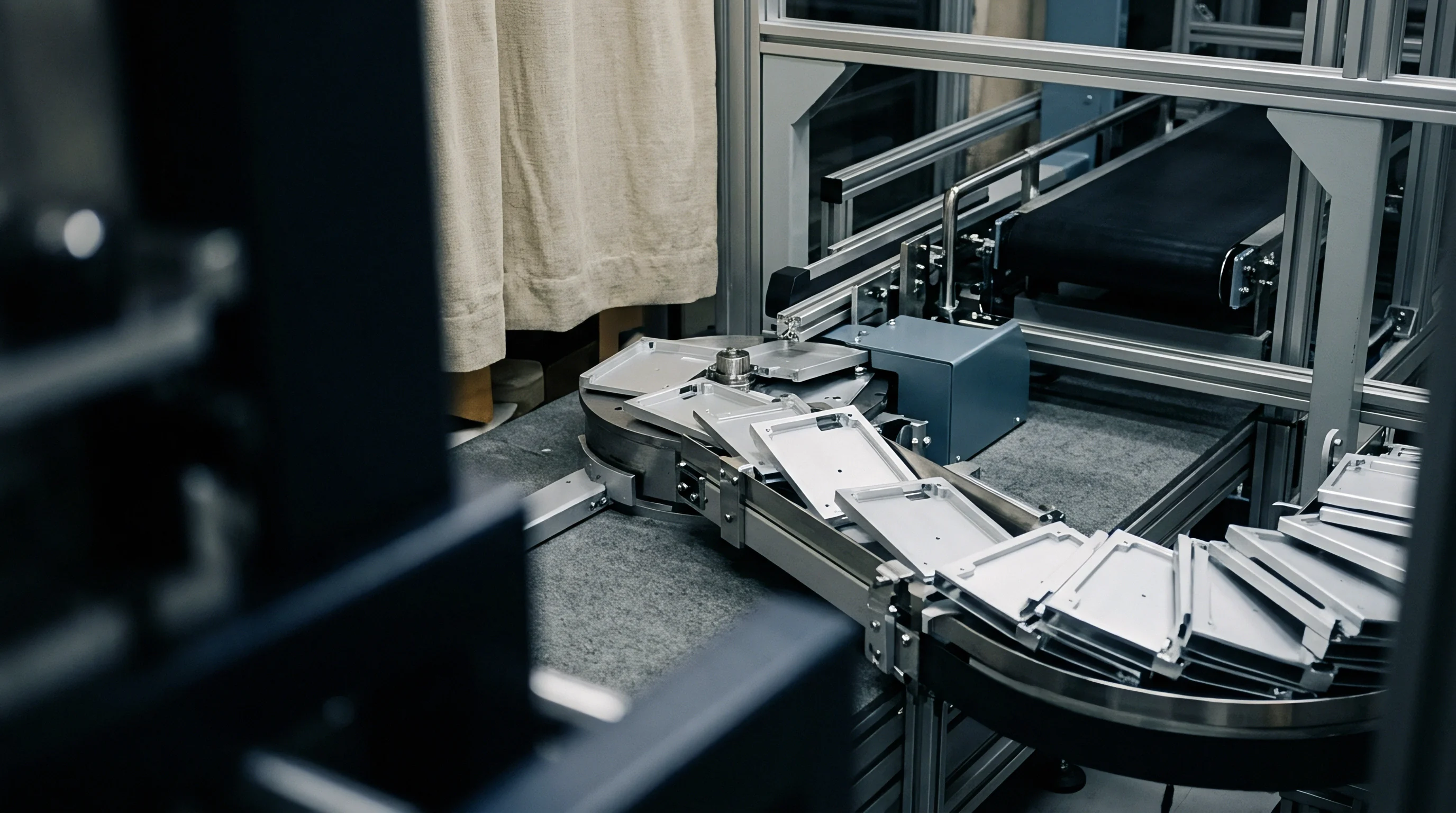
Continuous decortication systems replace those reciprocating actions with rotating pairs. The clearance between flute crests and mating troughs dictates the shear stress applied to the pectin-rich middle lamella. Below 0.7 millimeters, pinch forces crush the bast filaments, creating micro-cracks that reduce yarn tenacity during wet spinning.
Above 2.2 millimeters, bending deflection fails to snap the woody xylem cylinder, leaving unseparated shive attached to the outer ribbon.
Straw thickness varies across each batch. Moisture fluctuations alter the mechanical resistance of both the outer bast sleeve and the inner core. At twelve percent straw moisture, the xylem fractures crisply under three-point bending across the fluted profiles.
If field retting remains incomplete, unhydrolyzed calcium polygalacturonate binds the fibers firmly to the woody core, demanding narrower clearances and higher contact pressures to achieve separation. Woody core fragments shatter under compression. High-throughput decortication lines modulate this gap setting continuously using pneumatic cylinders backed by proportional servovalves.
Adjusting gap distance across fluctuating feed volume prevents barrel choking while preserving filament length. The mechanical parameters across sequential decortication stages dictate both product yields and waste splits.
Mechanical separation of bast bundles from xylem tissue occurs within a continuous geometric boundary governed strictly by roller displacement.
| Processing Stage | Flute Pitch (mm) | Calibrated Gap (mm) | Radial Force (N/cm) | Shive Removal Efficiency (%) | Mean Fiber Tenacity (cN/tex) |
|---|---|---|---|---|---|
| Primary Breaker Pair | 38.0 | 1.80 to 2.10 | 420 | 46.5 | 58.2 |
| Intermediate Pin Rotor | 22.0 | 1.10 to 1.35 | 310 | 28.4 | 56.8 |
| Refining Beater Nip | 14.0 | 0.65 to 0.85 | 185 | 17.2 | 53.4 |
| Terminal Scutching Cylinder | 8.5 | 0.45 to 0.60 | 120 | 5.1 | 49.7 |
Tensile testing shows bast fiber tenacity measuring 58.2 centinewtons per tex under a 1.80 millimeter breaker nip, drawn from 2022 technical trials across 120 straw specimens from Normandy dew-retted crops. Field retting moisture above sixteen percent lowers this value by softening the middle lamella pectin before mechanical entry, causing fibers to split into disorganized fibrils rather than clean technical bundles. The gap profile along the rotor axis determines whether decortication extracts spinning-grade long-line fiber or downgrades the material into disordered scutching tow.
Line managers track roller displacement via inductive proximity sensors mounted on the floating bearing chocks. In an audit of a Chinese toll decorticator, gap logs demonstrate whether the mill maintains certified processing conditions or opens clearances to force contaminated straw through the line at elevated throughput.
Mechanical clearances operate under tight physical limits during continuous straw processing:
- Pneumatic Cylinder Chattering produces high-frequency gap oscillations between 0.3 and 1.1 millimeters, crushing incoming stem nodes while letting slender internodes pass uncracked.
- Thermal Bearing Expansion narrows outboard roller clearances by up to 0.25 millimeters over four hours of continuous operation, skewing extraction rates across the roller face.
- Asymmetric Straw Feeding forces one end of the floating roll upward, inducing angular misalignment that shears fibers on the loaded side.
- Shive Compaction in Flute Roots fills geometric valleys with dense woody residue, creating an artificial zero-clearance boundary that lacerates the outer fiber sleeve.
Incorrect clearance settings cause irreversible filament fragmentation, reducing premium long-line fiber output by twelve percent and inflating the proportion of low-value scutching tow on the mill ledger.
Velocity
Peripheral rotation rates dictate the shear force applied to incoming flax straw bundles. Differential surface speed between the slow positive-feed fluted rollers and high-speed pinned stripping rotors generates the longitudinal tension that peels the bast ribbon from fractured woody shive. Feed tables typically deliver straw at linear speeds between 0.2 and 0.5 meters per second.
The primary decortication cylinder operates at peripheral speeds between 8.0 and 16.5 meters per second. This speed disparity creates an aggressive combing ratio that pulls straw bundles across breaker plates. When peripheral velocity exceeds eighteen meters per second, impact shocks snap long flax filaments into short fragments, shifting the extraction ratio from long line toward carding tow.
Spinning mills buying European Flax yarn penalize high tow fractions because short fibers increase yarn hairiness and reduce wet-spinning efficiency on ring frames.
Will Modulated Roller Spacing Suppress Fiber Fracture?
Adjusting the gap between rotating pins and the stationary concave anvil alters the acceleration curve experienced by the straw. High rotation rates break delicate filaments. When the clearance widens during transient high-velocity pulses, incoming straw bundles decelerate, dampening impact energy.
This velocity dampening protects the brittle cellulosic structure of the bast bundles. A baseline extraction recovery of 14.5 percent long line fiber across double-drum rotary units rests on 2023 technical line audits across 80 metric tons of retted French straw. Shifting feed inputs to unretted green straw drops recovery below 11.0 percent due to unhydrolyzed pectin binding the fibers to the wood, regardless of velocity modulation.
The rotational speed of the decortication drums also governs aerodynamic boundary layers. Air currents generated by high-speed pinned cylinders entrain light, broken fibers, ejecting them into the dust collection ducting alongside pulverised shive.
Excessive cylinder velocity shears long line flax into tangled tow before woody shive detaches from the cortical sleeve.
Mill technical supervisors track decortication velocity profiles to control output cleanliness against processing speed. European spinners buying scutched sliver specify a residual shive content below 1.5 percent by weight for count Ne 36 wet-spun yarn. Achieving this cleanliness requires a drum velocity profile that strips the woody core without exceeding the critical shear threshold of 65 megapascals on the bast bundles.
Auditing decortication logs in Jiangsu mills reveals that operators frequently elevate drum rotation speeds by twenty percent to compensate for choked feed tables, trading fiber length for daily tonnage. This operational choice directly affects the mass-balance calculation required by international traceability standards, because fractured line fiber shifts into the uncertified tow and waste bins.
Elevated drum speeds can offset seasonal straw dampness, though higher velocities risk fracturing the underlying bast filament structure.
Deflection
Bending stresses along horizontal rotor shafts induce variable clearances across the working width of the machine. Decortication rotors spanning two to three meters experience substantial radial thrust when processing dense mats of flax straw. Under peak feed rates, radial separation forces reach 15 kilonewtons per meter of cylinder width.
The center of the rotor shaft deflects away from the stationary bedplate, expanding the processing gap by up to 1.4 millimeters relative to the rigid outboard bearings. Consequently, straw passing through the center of the cylinder undergoes insufficient breaking, leaving shive content elevated in center-drawn sliver, while outer straw bundles are crushed between the unyielding roll ends. Similar structural deflection challenges appear in continuous cold-rolling steel mills, where roll-bending actuators counteract barrel camber under extreme sheet loading.
In flax decortication, biological variability replaces metallurgical consistency, compounding mechanical deflection with unpredictable stem resistance.
Machine builders install hydraulic accumulator banks to hold the floating roll against internal mechanical stops, preventing transient gap expansion during straw surges. Linear variable differential transformers or optical encoders continuously log the displacement of each bearing block. When the control system detects differential deflection between drive-side and non-drive-side chocks exceeding 0.35 millimeters, proportional relief valves equalize pressure across the hydraulic cylinders.
Without active deflection compensation, fiber processing lines produce variable sliver qualities across a single production shift.
A radial gap expansion exceeding 1.8 millimeters at 800 revolutions per minute increases shive contamination in the scutched sliver by four percent.
Verifying machine rigidity forms an indispensable step during on-site supplier qualification audits. The auditor inspects structural deflection records, hydraulic maintenance logs, and bearing alignment certificates before validating a decortication plant for certified organic or European Flax production. Technical auditors apply specific verification checkpoints when evaluating automated displacement control systems:
- Bearing Housing Load Cell Calibration confirms symmetrical force distribution across both rotor journals under static test loads of 20 kilonewtons.
- Dynamic Linear Encoder Verification measures real-time shaft center deflection under full crop loading using external non-contact laser triangulators.
- Accumulator Pre-charge Pressure Verification checks nitrogen bladder levels quarterly to prevent hydraulic pressure collapse during rapid straw volume transitions.
- Flute Profile Wear Mapping documents localized groove erosion across the central meter of the roll barrel using precision contour gauges.
Whether active piezoelectric compensation can stabilize roller gaps across four-meter spans without unacceptable maintenance overhead remains debated.


Balance
Quantitative reconciliation between incoming straw tonnage and outbound long line bundles establishes provenance credibility. When a Chinese decortication facility imports baled flax straw under European Flax declarations, the factory ledger accounts for every metric ton received. Field-retted flax straw contains approximately 25 to 30 percent total bast fiber, with the remainder consisting of woody shive, cuticular wax, and moisture.
In efficient scutching operations, long line flax yield reaches 12 to 16 percent of initial dry straw weight, scutching tow accounts for 10 to 14 percent, and shive plus airborne dust represents 68 to 74 percent. If a decorticator claims a 22 percent yield of premium long-line fiber from standard European dew-retted straw, the extraction mechanics are physically impossible without blending lower-grade domestic tow or falsifying the input tonnage.
Is Mass Reconciliation Enforceable across High-Speed Lines?
High-speed rotary decorticators alter traditional scutching mass ratios by pulverizing a higher fraction of the woody xylem into uncollectible micro-dust. High-speed rotary decortication loses an average of 4.2 percent mass to airborne dust and micro-shive, a figure that cannot be fully defended due to variable cyclone capture efficiencies. A careful linen buyer addresses this measurement uncertainty by demanding physical dust-cyclone weighbridge tickets rather than accepting nominal mill tare allowances.
When processing certified French or Belgian straw, Chinese processing mills face strict segregation rules. Incoming bales carry unique field lot tags, farm identification numbers, and European Flax certificates issued by accredited certification bodies such as Bureau Veritas or Control Union. Physical segregation in the bale store prevents cross-contamination with uncertified domestic straw from Xinjiang or Heilongjiang.
| Processing Configuration | Input Straw (MT) | Scutched Line Yield (%) | Scutching Tow Yield (%) | Shive and Waste (%) | Document Verification Tier | Audit Surcharge per MT ($) |
|---|---|---|---|---|---|---|
| Normandy Turbine Scutching | 100.0 | 15.2 | 11.8 | 73.0 | European Flax Scope & TC | 0.00 |
| Jiangsu Rotary Decortication (Imported Straw) | 100.0 | 11.4 | 15.6 | 73.0 | Customs Clearance & Batch TC | 420.00 |
| Zhejiang High-Speed Line (Blended Input) | 100.0 | 18.5 | 8.2 | 73.3 | Self-Declared Mill Log | 180.00 |
| Heilongjiang Domestic Line (Uncertified) | 100.0 | 9.8 | 16.2 | 74.0 | Commercial Invoice Only | 0.00 |
| Yield percentages represent bone-dry mass reconciled against certified weighbridge records at 12 percent standardized commercial moisture regain. | ||||||
Traceability audits reconcile input invoices against export bill of lading totals. Segregation protects verified European fiber. A certified spinning mill ordering 50 metric tons of hackled flax sliver requires the decorticator to surrender transaction certificates showing the precise straw volume consumed during that decortication run.
If rotary clearance errors reduce long line recovery to nine percent, the mill consumes 555 metric tons of certified straw to fulfill the order. If the mill ledger shows only 350 metric tons of certified straw consumed, the balance was substituted with uncertified fiber. The transaction certificate loses legal validity, triggering immediate customs reclassification in importing territories.
Auditors follow an exacting sequence to verify raw material flow through rotary processing plants:
- Bale Tag Authentication cross-references physical barcoded tags on raw straw bales against European port phytosanitary manifests and bill of lading containers.
- Weighbridge Gross-Tare-Net Reconciliation calculates exact intake weights, rejecting automated spreadsheets that lack corresponding stamped bridge tickets.
- Decortication Line Log Examination traces continuous operating hours, roller gap settings, and mechanical downtime against declared volume throughput.
- Output Bale Numbering Cross-Check reconciles unique sequential baling numbers on finished sliver rolls against production day-sheet declarations.
Under European Flax Standard Annex 4, an unmapped five percent yield variance between raw straw consumption and scutched line output cancels the transaction certificate.
Clause 8.2 of the standard European Flax Chain of Custody specification establishes that an unexplained mass variance exceeding three percent automatically revokes the mill scope certificate.

Transit
Cross-border movements of scutched flax carry specific customs classifications and mandatory chain of custody documentation. Raw flax straw shipped from European cultivation zones to Asian decortication hubs enters under Harmonized System code 5301.10. Processed long line flax leaves the decortication mill under HS code 5301.29, while scutching tow falls under HS code 5301.30.
When a decorticator fails to maintain mechanical separation, high shive content forces customs officers in import terminals to reclassify declared long line fiber as crude waste tow. This administrative reclassification alters customs duty rates and invalidates preferential origin status. Customs inspectors examine bill of lading weights.
Under United States Federal Trade Commission regulations implementing the Textile Fiber Products Identification Act, products labeled as linen must consist purely of fibers derived from the flax plant (Linum usitatissimum). If mechanical decortication fractures fibers excessively, mill operators frequently blend polyester or ramie filaments into the sliver to facilitate wet spinning on automated ring frames. When laboratory tests reveal uncertified bast substitutions, the importer faces product recalls, customs penalty actions, and contract cancellations.
European Union Regulation 1007/2011 imposes identical strict liability on fabric composition claims, demanding documentary proof connecting retail finished cloth to agricultural origin certificates.
Batch numbers link fields to bolts. Commercial supply contracts for certified linen cloth include origin indemnification clauses that shift customs penalties onto the decorticator and spinner. Qualified buyers specify that each shipment of hackled sliver or wet-spun yarn must arrive accompanied by a verified transaction certificate linked to a valid scope certificate issued under ISO 17065 accreditation.
The scope certificate proves the processor possesses physical segregation systems and audited mass-balance accounting protocols. Without these verified credentials, decorticated flax remains uncertified bulk commodity fiber, losing the pricing premium associated with European origin.
Documented physical segregation in the warehouse protects fiber value far better than retrospective mass reconciliation on paper.