Resolving Moisture Content Discrepancies in Containerized Raw Flax Cargoes during Port Intake Reconciliation
Resolve flax container intake mass discrepancies by oven drying core samples to recalculate invoiced weight against standard twelve percent commercial regain.


Scale

Discrepancy Mechanics across Container Unstuffing
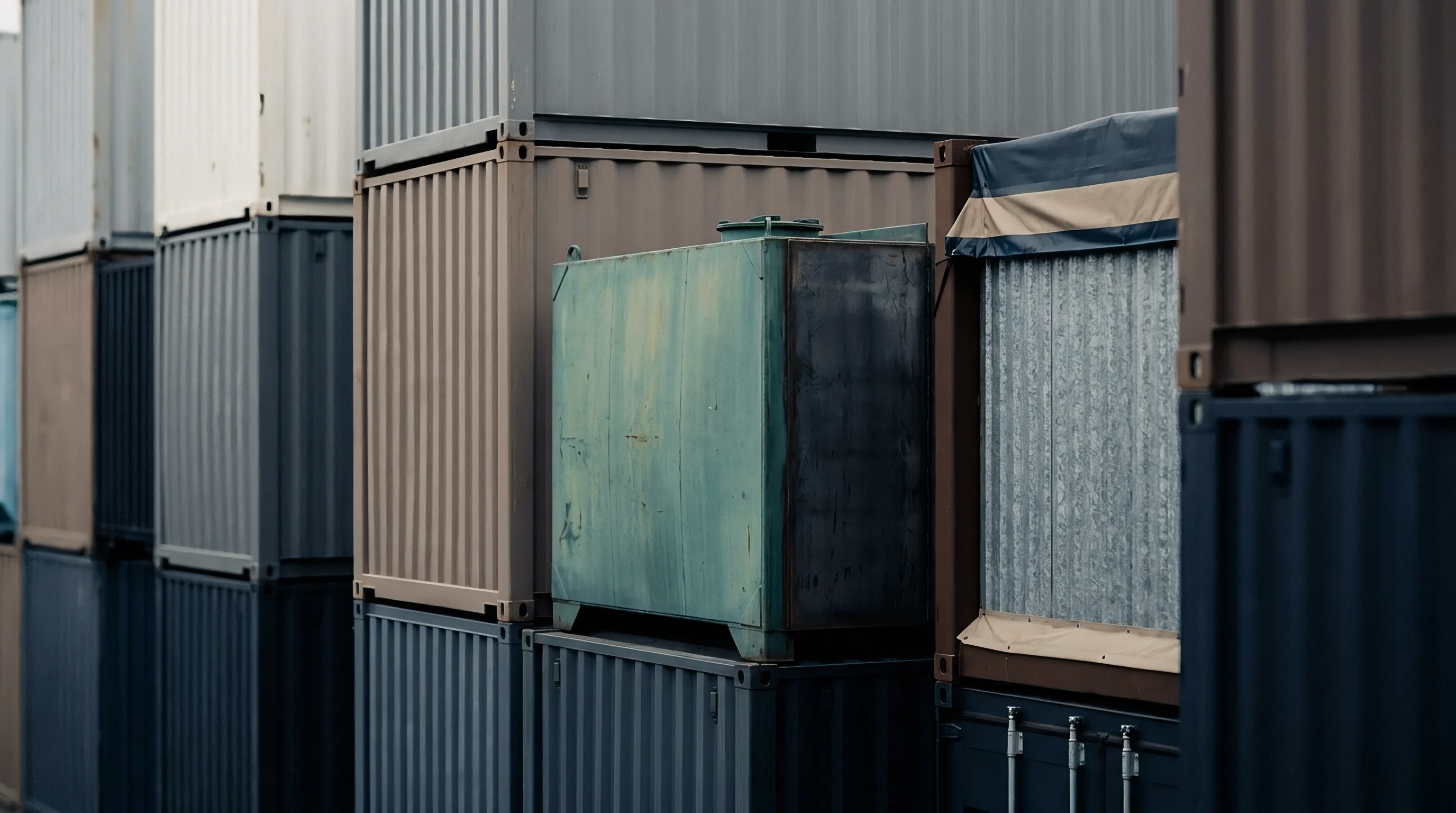
Gross weighbridge readings at port intake terminals routinely differ from seller bill of lading quantities by 1.5 to 4.2 percent on uncarded raw flax shipped under HS code 5301. Dry-van containers moving from Northern European ports such as Antwerp, Le Havre, and Rotterdam undergo significant humidity swings during ocean transit to Asian destinations like Qingdao, Ningbo, and Chittagong. High relative humidity inside sealed steel boxes can raise raw scutched flax moisture from a 10.5 percent export baseline up to 14.8 percent upon arrival, creating artificial weight gains that distort inventory reconciliation and unit pricing.
Importers buying scotched long flax or tow under International Chamber of Commerce Incoterms 2020 face immediate invoice disputes when delivered container weights exceed contracted limits. Flax fiber carries a standard commercial moisture regain rate of 12.00 percent under ISO 6741-1 rules, whereas moisture calculated on a wet basis yields a different value against absolute dry mass. A standard 40-foot high-cube container loaded with 88 bales of raw flax at 250 kilograms per bale holds 22,000 kilograms of nominal cargo weight when packed at origin.
A containerized parcel of raw flax loaded at 10.5 percent moisture gain absorbs up to 940 kilograms of atmospheric water during forty-two days of transit through equatorial maritime routes.
Receiving mills that record gross cargo weight at intake without verifying dry matter register false inventory surpluses. That excess moisture evaporates during opening, conditioning, and carding inside the spinning preparation hall, leaving the yarn production line short on actual fiber compared to customs declarations. When port customs authorities assess value-added taxes and import tariffs on gross landed scale figures, the buyer incurs financial duties on transient water mass unless corrected by standard dry-mass recalculation protocols.

Can Port Weighbridge Slips Override Pre-Shipment Certificates?
Disputes emerge when port delivery documentation contradicts the pre-shipment inspection certificate issued at European dispatch depots. European Flax certificate documentation issued under the Alliance for European Flax-Linen and Hemp verifies territorial origin across France, Belgium, and the Netherlands, alongside baseline lot specifications at the processing plant. Transaction certificates attest to physical fiber batches, but these documents do not insure against water sorption inside container microclimates during long ocean transits.
| Route Profile | Transit Days | Origin Moisture (Percent) | Intake Moisture (Percent) | Mass Discrepancy (Kilograms/Container) | Commercial Impact (USD/Container) |
|---|---|---|---|---|---|
| Antwerp to Qingdao Direct | 34 | 10.2 | 13.8 | +792 | +$3,722 |
| Le Havre to Ningbo Transshipment | 46 | 11.0 | 14.6 | +788 | +$3,703 |
| Rotterdam to Chittagong Monsoonal | 52 | 9.8 | 15.2 | +1,186 | +$5,574 |
| Antwerp to Mumbai Dry Season | 28 | 12.1 | 11.4 | -154 | -$723 |
Automated spinning mills inspect each container lot directly at the destuffing dock. Commercial contracts specifying settlement on commercial mass under standard regain parameters protect downstream margins, allowing the consignee to file an immediate notice of discrepancy with the shipping agent, surveyor, and seller prior to bale break.
Water uptake inside maritime containers often reflects natural atmospheric equilibrium during ocean transit rather than origin non-compliance.

Hysteresis
Sorption isotherms for raw bast fibers create measurable differences during laboratory verification. Cellulosic bast polymers contain hydrophilic hydroxyl groups across crystalline and amorphous microfibril regions, meaning moisture absorption follows a different thermodynamic path than desorption during ambient port storage.

Sorption Dynamics in Uncarded Bast Fibers
Water uptake within raw flax bales occurs unevenly through the pressed fiber mass. Outer layers of a 250-kilogram export bale packed at a density of 380 kilograms per cubic meter absorb airborne moisture rapidly, while the interior core remains close to dispatch conditions. Sampling protocols that draw fiber exclusively from the outer perimeter skew lot-wide moisture calculations by up to 2.8 percentage points above the true weighted average.
Under ISO 6741-2 standard conditioning at 20 degrees Celsius and 65 percent relative humidity, raw scutched flax fibers exhibit an equilibrium moisture hysteresis gap of 1.4 percent between absorption and desorption states.
Accurate field verification depends on representative sample extraction. Handheld electrical resistance probes penetrate roughly 100 millimeters into bale sides, measuring perimeter conditions rather than core moisture distribution. Oven drying under ISO 6741-1 establishes the definitive reference baseline, driving moisture off test specimens at 105 degrees Celsius until mass stabilizes.
Core boring tools extract cylindrical specimens through the full depth of the bale. By combining outer, intermediate, and central fiber layers, core sampling produces an integrated composite sample for gravimetric analysis.
- Bale selection isolates ten percent of the total container pack at random locations across door, middle, and forward tiers to capture thermal condensation near steel container walls.
- Core penetration extracts cylindrical test specimens across a 400-millimeter path using a motorized hollow drill bit operating at low speeds to prevent frictional thermal drying.
- Airtight encapsulation seals extracted raw fiber cores within vapor-impermeable aluminum-foil laminate canisters within ninety seconds of extraction from the compressed bale.
- Weighbridge logging cross-references individual serial identifiers on certified bale tags against the master customs cargo manifest.
Faulty sampling produces inaccurate weight deductions during cargo settlement. Laboratory technicians run tests under controlled atmospheric conditions to prevent moisture gain or loss during sample handling.
Contractual settlement clauses based on the International Flax and Hemp Federation commercial regain standard of twelve percent eliminate discrepancies arising from natural sorption hysteresis.

Deduction

Commercial Invoice Mass Recalculation Formulas
Financial intake adjustments require mathematical standardization from measured port weights back to commercial invoice dry mass. Mill intake clerks apply the International Bureau for the Standardisation of Man-Made Fibres and Bast Fibres formula to determine invoiced mass, balancing measured wet mass against lab-verified moisture content and the agreed commercial regain rate.
Assume a landed container consignment with a gross measured net fiber weight of 22,800 kilograms across 88 bales. Port intake core testing indicates an average moisture content of 14.50 percent, whereas the original European export invoice charged the buyer for 22,000 kilograms based on 10.50 percent moisture. The agreed contractual commercial regain allowance stands at 12.00 percent.
Calculation follows sequential mass-balance stages:
- Absolute dry mass extraction separates solid cellulosic fiber from moisture, yielding 19,494.00 kilograms of bone-dry flax from the 22,800-kilogram intake reading.
- Commercial weight calculation adds the contractually permitted 12.00 percent regain allowance back to the absolute dry mass, establishing an adjusted invoice weight of 21,833.28 kilograms.
- Net discrepancy determination reveals that the buyer received 21,833.28 kilograms of commercial fiber despite paying for 22,000.00 kilograms on the origin bill of lading.
- Monetary variance settlement values the 166.72-kilogram shortfall at the purchase rate of 4.70 USD per kilogram, generating an immediate debit note of 783.58 USD against the shipper.
International trade contracts governing raw flax stipulate that invoice settlement defaults to commercial weight calculated from absolute dry mass plus twelve percent commercial moisture regain.
When intake moisture climbs to extreme levels, this calculation protects the buyer from paying raw fiber prices for ambient sea-route humidity. Conversely, if dry winter transits reduce intake moisture to 9.00 percent, the formula credits the supplier for delivered dry cellulosic density. Commercial risk transfers fairly when arithmetic replaces raw weighbridge printouts.

Is Oven Drying Feasible for High-Volume Port Intake?
Oven drying remains the arbitration standard, yet high-volume processing requires rapid decisions before container demurrage fees accumulate. Destuffing terminals allow a limited free period, typically seven days from vessel discharge, whereas standard drying oven cycles take up to eight hours per sample set and create bottlenecks at busy intake docks.
| Testing Method | Turnaround Time | Precision (Plus/Minus) | Sample Integrity | Cost per Lot (USD) |
|---|---|---|---|---|
| Oven Drying (ISO 6741-1) | 6 to 8 Hours | 0.10 Percent | Destructive Oven Run | $220 |
| Capacitance Bale Probe | 2 Minutes | 0.85 Percent | Non-Destructive Surface | $15 |
| Near-Infrared Spectrometry | 5 Minutes | 0.30 Percent | Micro-Sample Surface | $95 |
| High-Frequency Conductance | 3 Minutes | 0.65 Percent | Pin Penetration Local | $25 |
| Precision and turnaround times reflect port-side laboratory validation trials on 250-kilogram compressed scutched flax bales under ISO 17025 operating conditions. | ||||
Modern intake facilities utilize calibrated electronic resistance probes for rapid screening across every bale. If probe readings deviate by more than 1.0 percentage point from the shipping manifest tolerance band, the receiving team pulls core samples for formal oven validation. Rapid screening keeps discharge lanes moving while preserving evidentiary standing for financial claims.
Failure to maintain strict calibration logs for secondary testing devices voids buyer claims during commercial arbitration proceedings.


Adjudication
Formal cargo claims require prompt documentation aligned with international trade law and maritime shipping rules. Importers discovering substantial moisture variances file a formal notice of protest within three business days of seal breaking, as delays past this window allow suppliers to claim subsequent warehouse contamination.

Contractual Dispute Protocols
Effective procurement agreements specify an independent surveyor accredited under ISO 17020 to supervise container opening, seal recording, and composite core sampling. The surveyor verifies that container seals remained intact from departure, isolating the dispute to cargo condition rather than transit pilferage or direct water ingress from damaged container roofs.
Maritime claims adjusters distinguish between condensation rain and inherent cargo moisture. Container sweat occurs when cold ocean air cools container roofs below the dew point of the warm interior air mass, dropping liquid water onto top bale tiers. Top-tier localized water staining creates insurance claims against ocean carriers, whereas lot-wide moisture increases represent commercial adjustment claims against the vendor.
- Surveyor attendance record confirms the presence of certified third-party inspectors during container destuffing and core collection.
- Moisture certificate issue states the tested absolute dry weight, gross weight, tare weight, and resulting commercial weight under ISO 6741 standards.
- Commercial debit notice presents the mathematical adjustment calculated on the contract base price per clean commercial kilogram.
- Customs amendment filing submits corrected dry-mass declarations to national customs authorities to recover overpaid import duties.
Reconciliation protects downstream mill balance sheets. When spinners feed unadjusted moist flax into blending lines, yarn counts drift coarse, tenacity drops, and spinning break rates multiply. Resolving intake weight discrepancies at the port scale secures both raw material cost basis and yarn uniformity across subsequent processing stages.
International arbitration panels operating under the Rules of Arbitration of the International Chamber of Commerce enforce commercial mass determinations when supported by ISO 17025 accredited test records.