Sliver Cohesion Thresholds for High Speed Wet Spinning Frames
Dynamic sliver cohesion between 16 and 22 cN/ktex under controlled trough temperatures prevents drafting waves and high-speed wet spinning end breaks.
Grip
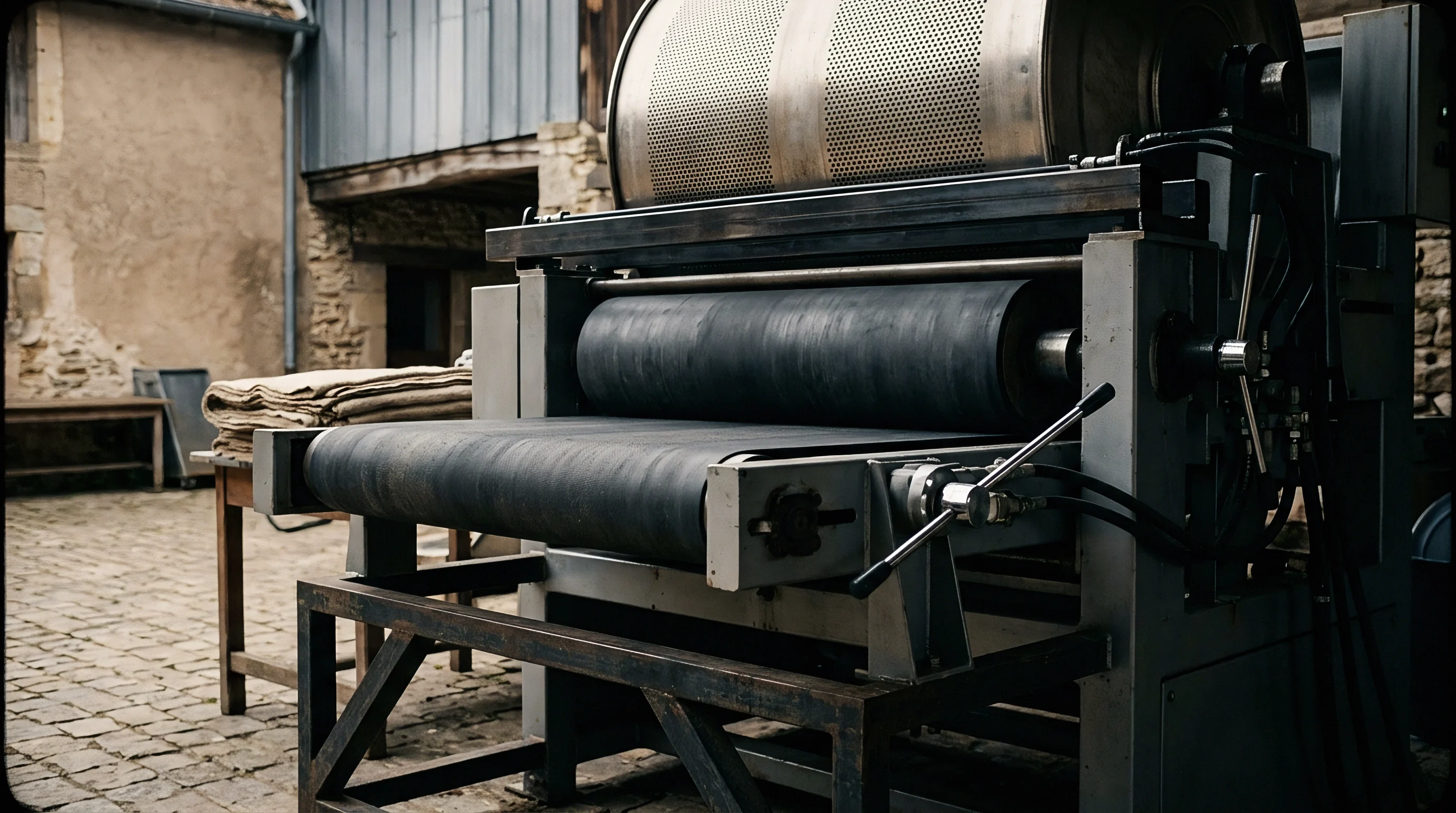
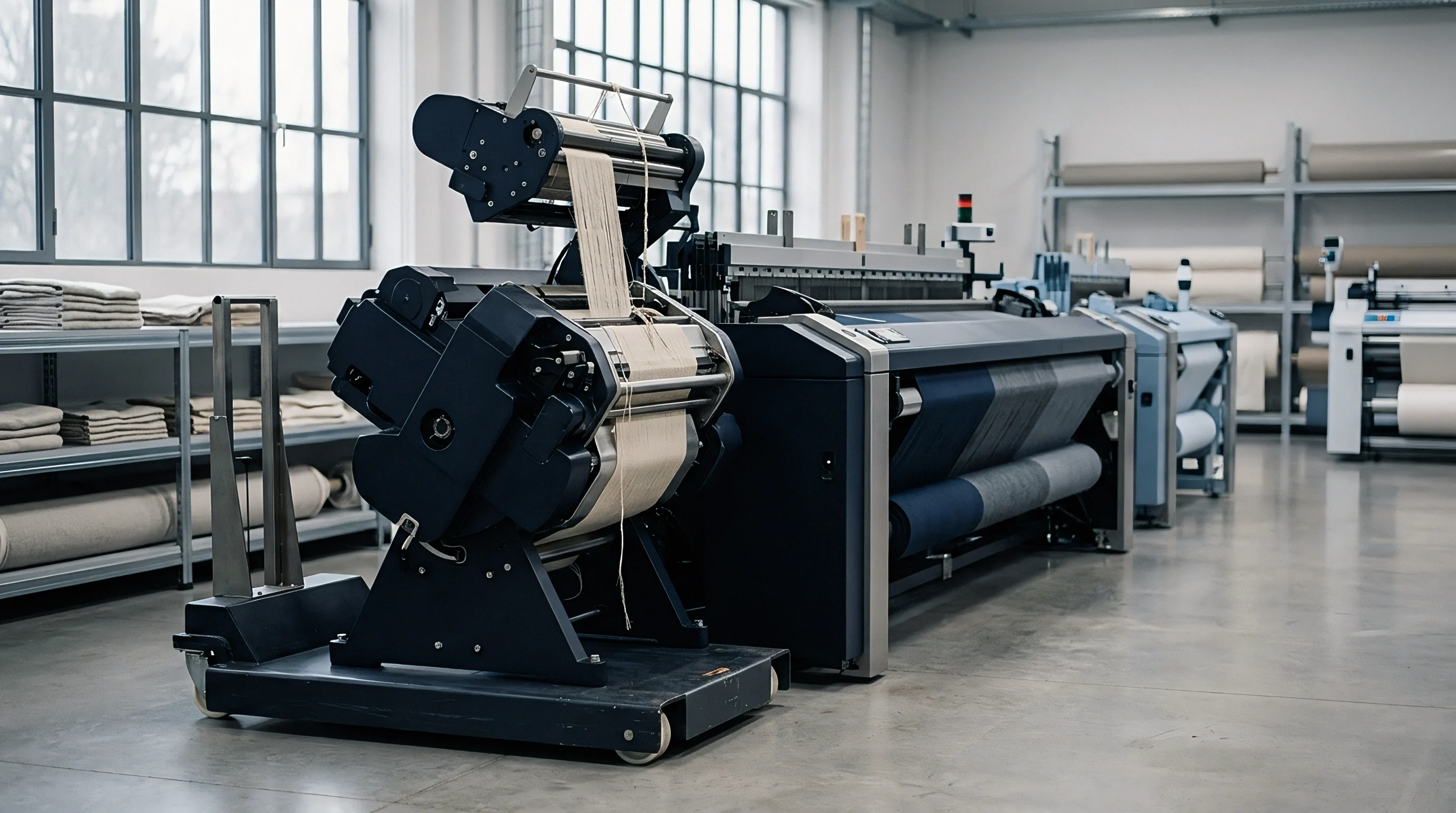
A 3.8 kilotex sliver of water-retted line flax entering the back drafting rollers of a wet spinning frame at 28 metres per minute is compressed under a pneumatic load of 450 newtons across an 18-millimetre nip width. Cohesive resistance between adjacent elementary bast fibrils dictates whether this ribbon draws out into a uniform roving or breaks into uneven clumps. Because bast fibers feature irregular surface topography, residual hemicellulose, and varied bundle lengths, any uncontrolled acceleration of short fibers introduces drafting waves that disrupt yarn evenness.
In practice, line flax splits unevenly across the bundle.
Dynamic drafting resistance measures the tangential shear force needed to pull overlapping bast bundles past each other under set normal pressure, expressed in centinewtons per kilotex. Determining this value involves drawing a conditioned sliver through a calibrated measuring nip on a laboratory drafting dynamometer under standard climate conditions of 20 degrees Celsius and 65 percent relative humidity. Premium water-retted Belgian line flax typically demonstrates dynamic cohesion between 16 and 22 centinewtons per kilotex.
Below 13 centinewtons per kilotex, the material suffers from drafting slippage, mass fluctuations, and frequent end breaks during high-speed wet spinning.
Dynamic cohesion resistance between 16 and 22 centinewtons per kilotex preserves bundle integrity across drafting speeds exceeding 25 metres per minute under standard 65 percent relative humidity.
Conversely, dynamic cohesion exceeding 26 centinewtons per kilotex generates excessive drafting resistance that overloads the flutes, snapping individual fibers rather than allowing them to slide. This breakage releases irregular debris into the drafting zone, producing thick slubs in the drafted strand and quickly leading to roller lapping.
Inter-Fibre Boundary Resistance
Surface friction in unspun flax ribbons arises from both mechanical interlocking and chemical bonding among adjacent bast bundles. After biological retting, primary cell walls retain non-cellulosic encrusting compounds, with residual calcium pectate functioning as a structural binder between individual ultimate fibers. Dew-retted flax from northern France tends to hold higher wax concentrations along cuticular fragments than water-retted stock processed in closed anaerobic tanks; these waxy deposits lower the static friction coefficient, whereas residual pectins increase dynamic shear resistance under transverse compression.
Production rates ultimately depend on front roller speed.
Testing under modified bast fiber adaptations of ISO 2370 shows that fiber bundle fineness determines the contact surface area per unit volume. Finer line bundles with a metric number above 280 present more cross-sectional contact points than coarse tow bundles below 150 metric number, distributing higher normal force across the nip. Modern wet frames adjust pneumatic saddle pressures to offset lot-to-lot variations in bundle fineness, maintaining the balance between draft cohesion and mechanical fiber rupture.
Dynamic Drafting Thresholds
Running wet spinning frames at delivery speeds between 25 and 35 metres per minute narrows the margin for stable drafting cohesion. Vibrations from high-speed fluted steel rollers send mechanical shocks into the drafting zone; if cohesive force in the incoming strand drops below dynamic drafting tension, the strand pulls apart before reaching the front roller nip, starving the zone and interrupting yarn delivery at the spindle.
Exceeding established cohesive limits increases drafting wave amplitude, pushing roving unevenness past an 18 percent coefficient of variation. The resulting end breaks leave bobbins underfilled and subject to contamination from loose fly waste.


Pin
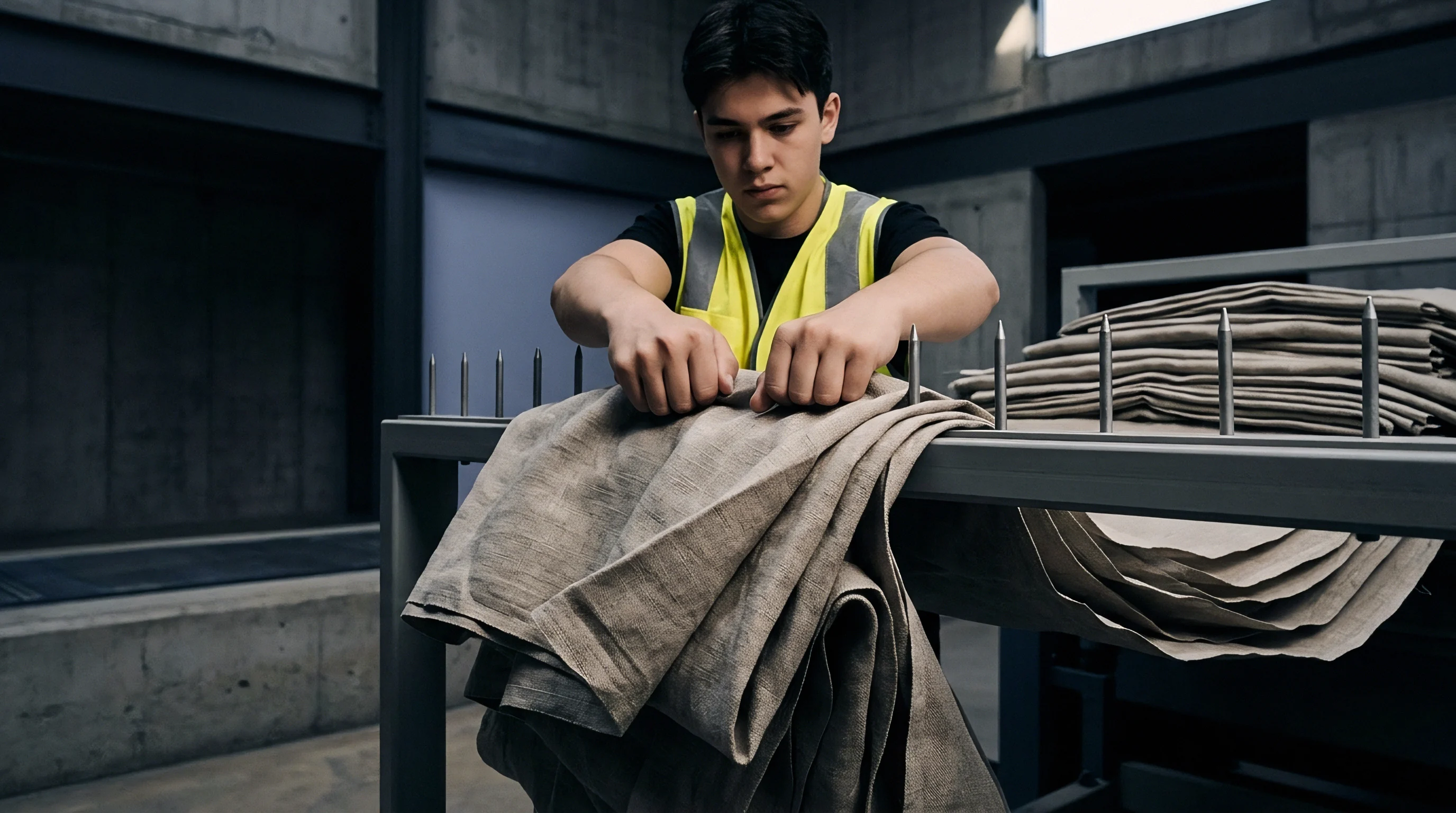
Faller bars in gill boxes and intersecting drawing frames control floating bast fibers during attenuation. Because drafting rollers leave open gaps where fibers shorter than the drafting gauge can move without positive clamping, faller beds drive hardened steel needles into the moving mass to apply controlled drag. Processing fine line flax requires intersecting gill systems whose opposing needle fields penetrate the sliver simultaneously from above and below, keeping bundles parallel prior to roving formation.
Waste regularly accumulates around the gill bed during operation.
Needle density along the faller bar determines how firmly the sliver is held. A density of 8 to 11 pins per centimetre effectively controls line flax strands from 3.0 to 4.5 kilotex. Moving through the drafting zone at a lead speed 2 to 5 percent faster than the back feed rollers, the pinned bar clears residual entanglements, straightens crimped fibers, and yields uniform sliver cohesion.
If pin penetration depth is misadjusted, the center of the sliver remains uncontrolled, leading to internal sliding and drafting waves.
Excessive faller pinning shatters bast bundles before the drafting rollers can slide them.
What Dynamic Friction Governs Drafting Resistance?
Inter-fiber friction within the needle bed involves two physical regimes: hydrodynamic boundary drag and solid asperitic contact. Microscopic wax platelets on the flax surfaces deform elastically under compression from the faller bars. Because non-cellulosic components exhibit viscoelastic shear behavior, dynamic friction rises alongside drafting speed, increasing resistance through the pin field at higher speeds and demanding lower draft ratios to prevent bundle damage.
This balance can shift rapidly during processing.
Dynamometer testing shows dynamic friction peaking as fibers accelerate away from the faller pins toward the front nip. On 500 metres of commercial French dew-retted sliver, dynamic drafting forces on a 4.0 kilotex strand range between 45 and 95 newtons, depending on needle taper angle, pin surface roughness, and the applied draft ratio. Switching to smoother nickel-plated pins lowers peak drafting force by 14 percent, permitting higher drawing speeds without breaking fibers.
| Preparation Passage | Input Weight (ktex) | Pin Density (pins/cm) | Faller Lead (percent) | Draft Ratio | Dynamic Cohesion (cN/ktex) |
|---|---|---|---|---|---|
| First Drawing Passage | 22.0 to 28.0 | 3.5 to 4.5 | 2.0 to 2.5 | 6.0 to 7.5 | 8.5 to 12.0 |
| Second Drawing Passage | 10.0 to 14.0 | 5.0 to 6.5 | 2.5 to 3.2 | 6.5 to 8.0 | 12.5 to 16.0 |
| Third Drawing Passage | 4.5 to 7.0 | 7.0 to 8.5 | 3.0 to 4.0 | 7.0 to 9.0 | 15.5 to 19.5 |
| Finisher Roving Frame | 2.8 to 4.0 | 9.0 to 11.5 | 3.5 to 4.5 | 8.0 to 11.0 | 18.0 to 23.5 |
| Dynamic cohesion measured on Rothschild drafting tester at 20 m/min drafting speed; values represent 95 percent confidence intervals across 40 continuous production lots. | |||||

Faller Field Control
Effective fiber control across the gill bed requires aligning faller pin spacing with incoming bundle fineness. When sliver cohesion drops below 14 centinewtons per kilotex, fibers lack sufficient inter-bundle drag to bridge the gaps between needles; the strand then splays outward across the faller bar, creating edge loss and weight variations in the drafted web. Excessive cohesion, on the other hand, can bend or jam pins against the dense fiber mass, raising noise levels on the floor and scoring the steel flutes.
Sliver defect modes develop rapidly when cohesion thresholds deviate from established machine parameters:
- Drafting Wave Periodicity appears as cyclic mass variations along the strand when low inter-fiber friction lets floating fibers accelerate prematurely into the front roller nip.
- Lateral Ribbon Splay occurs when dry bundles lose transverse cohesion, spreading beyond the working width of the faller bar to build up as lap waste around back roller bearings.
- Fibre Bundle Fracturing develops under heavy needle penetration loads when high pectin concentrations lock adjacent filaments together, causing cell wall shear rather than smooth slipping.
- Roller Neck Lapping occurs when low-cohesion slivers shed loose fibers that wrap around bottom fluted steel rollers, forming rings that distort drafting geometry.
Pins entering the sliver cleanly without deflecting fiber bundles preserve stable draft control across an entire shift.
Trough
A heated water bath located between the roving creel and drafting rollers plasticizes dry bast roving for spinning. Submersion relaxes structural stresses set in the cellulosic matrix during roving formation, as hot water penetrates primary cell walls to soften the intercellular pectin binder holding elementary fibrils together. This thermal softening allows drafting rollers to divide coarse filaments into fine, spinnable strands.
Thermal energy directly plasticizes native pectin in the fiber.
Trough water temperature governs both the speed of pectin softening and the resulting dynamic drafting force. Operating the trough between 60 and 72 degrees Celsius lowers dynamic cohesion from 22 centinewtons per kilotex to between 4.5 and 6.5 centinewtons per kilotex in the wet zone. Colder water fails to soften calcium pectate binders, leaving bundles stiff and resistant to attenuation; the resulting high drafting tension leads to roller slippage, thread breaks, and coarse, uneven yarn.
Hot water softens intercellular pectin without dissolving the structural cellulose core.

Thermal Pectin Plasticization
At elevated temperatures, pectin gels exhibit shear-thinning behavior similar to non-Newtonian thermoplastic melts under high draw ratios. During wet flax spinning, water molecules break hydrogen bonds between galacturonic acid chains in the rhamnogalacturonan backbone of bast pectin. Softening begins above 55 degrees Celsius and peaks near 68 degrees Celsius, where reduced shear yield stress in the matrix lets elementary fibers slide past one another without tearing the underlying cellulose microfibrils.
Changes in water temperature directly alter bundle rheology.
Excessive bath temperatures above 80 degrees Celsius or prolonged immersion cause total hydrolytic degradation of bast pectin. If intercellular cement breaks down completely, the strand loses structural cohesion and disintegrates into a soft mass of loose fibrils that quickly wrap around drafting rollers. Bath temperature must therefore match spinning speed: a delivery rate of 30 metres per minute leaves less than 1.5 seconds of immersion, requiring water at 70 degrees Celsius to achieve heat penetration through the roving cross-section.
| Bath Temperature (Celsius) | Immersion Time (seconds) | Residual Pectin Plasticization (percent) | Wet Drafting Force (cN/ktex) | End Break Rate (per 1000 Spindle Hours) |
|---|---|---|---|---|
| 50 | 1.8 | 42 to 48 | 9.8 to 12.4 | 85 to 110 |
| 60 | 1.8 | 68 to 74 | 6.5 to 8.2 | 42 to 55 |
| 68 | 1.8 | 88 to 94 | 4.6 to 6.1 | 18 to 26 |
| 75 | 1.8 | 95 to 98 | 3.8 to 4.9 | 22 to 31 |
| 85 | 1.8 | 99 to 100 | 1.8 to 2.6 | 95 to 140 |

Aqueous Residence Kinetics
Water chemistry directly impacts drafting consistency. Softened water with under 50 parts per million calcium carbonate equivalent avoids mineral precipitation on fiber surfaces, whereas hard water introduces divalent calcium ions that cross-link free carboxyl groups on de-esterified polygalacturonic acid chains, reversing plasticization and raising draft resistance. Adding non-ionic wetting agents at 1.0 to 2.0 grams per litre reduces liquid surface tension from 72 millinewtons per metre to 32 millinewtons per metre, promoting fast, uniform water penetration into dense roving cores.
Water trough maintenance protocols ensure consistent roving plasticization:
- Conductivity Monitoring verifies that total dissolved solids remain below 400 microsiemens per centimetre to prevent scale buildup on ceramic roving guides.
- Temperature Profiling ensures trough thermal sensors keep water temperature within a 1.5-degree tolerance band from creel end to drive end.
- Active Wetting Agent Dosing maintains dynamic surface tension through continuous proportional replenishment, preventing dry roving cores during runs.
While running cold trough water can appear to preserve yarn tensile strength by keeping fiber bundles intact, the practice masks poor roving preparation and increases end breakage rates to unsustainable levels.


Drift
Mass variations along a delivered sliver introduce cohesion fluctuations that high-speed drafting mechanisms cannot absorb smoothly. When sliver mass variation exceeds a 3.5 percent coefficient of variation on a capacitance tester, drafting resistance oscillates between nips. Dense sections increase clamping loads and restrict fiber sliding, while thin spots lack the contact density needed to handle drafting tension, attenuating prematurely and creating weak points that break during twisting.
Short fibers tend to slip out of control in these regions.
Higher delivery speeds amplify each of these physical imperfections.
Capacitance testing under ISO 2060 demonstrates that sliver mass variance translates directly into yarn count variability. At high delivery speeds, dynamic draft fluctuations outpace the pneumatic damping adjustments of mechanical saddles. The drafting zone then amplifies variations: a 5 percent increase in sliver linear density variation can widen finished yarn count variation by up to 14 percent.
Keeping sliver cohesion within narrow limits protects the spinning frame against severe mass drift.
Inserting ISO 2370 linear density tolerances directly into the letter of credit eliminates supplier disputes over roving mass irregularity.

Is Autoleveler Correction Sufficient across High Speed Frames?
Mechanical autolevelers on modern intersecting gill boxes use grooved measuring rollers to sample sliver thickness across 1.5 to 3.0 millimetre intervals before adjusting the draft ratio through servo-driven planetary gearboxes. However, servo response time creates a delay between fault detection and correction. At delivery speeds exceeding 250 metres per minute on finisher drawing frames, the sliver moves up to 40 millimetres before a draft correction takes effect.
Environmental conditions on the mill floor also affect performance.
While autolevelers correct long-term mass drift over lengths exceeding 2 metres, short-term cohesion deficits pass uncorrected. Dynamic cohesion relies on fiber-to-fiber contact geometry, retting uniformity, and bundle length distribution rather than aggregate mass alone. If an incoming sliver contains patches of over-retted or broken fibers that happen to match nominal weight, the autoleveler maintains a constant draft ratio even as actual drafting resistance collapses, producing uneven draft despite active electronic control.
Variance Transmission through Continuous Attenuation
Consider a practical example of how cohesion drift affects mill performance: a 20,000 kilogram lot of water-retted line flax processed into Nm 42 wet-spun yarn on modern high-speed frames operating at 7,500 spindle revolutions per minute. The setup uses a baseline delivery speed of 24 metres per minute, a total draft of 18, and operates 24 hours a day across 4,000 active spindles.
In Case A, uniform retting and consistent bundle lengths yield a dynamic cohesion value of 18.5 centinewtons per kilotex with a coefficient of variation of 4.2 percent. Drafting resistance stays within the stable operating window, holding end breaks to 22 per 1,000 spindle hours, operational efficiency at 94.5 percent, and pneumatic collector waste to 1.8 percent of total throughput.
In Case B, an inconsistent lot with the same declared metric fineness of 320 exhibits variable retting, causing dynamic cohesion to range erratically from 11.2 to 27.8 centinewtons per kilotex with a 16.8 percent coefficient of variation. Weak sliver sections break under drafting tension while overly cohesive sections trigger roller lapping. End breaks surge to 78 per 1,000 spindle hours, dropping operational efficiency to 81.2 percent and increasing suction waste to 5.4 percent.
Overall spinning efficiency drops significantly under these conditions.
This 13.3 percentage point loss in efficiency corresponds to a production shortfall of 2,660 kilograms of yarn over the cycle. Replacing lost first-quality yarn with downgraded suction waste elevates energy consumption per delivered kilogram by 16.4 percent, turning a lower-cost fiber lot into a net commercial loss.
Standard dynamic cohesion tests are performed on laboratory instruments at 20 metres per minute, leaving behavior at 35 metres per minute inside a 70-degree wet trough unverified by standardized testing. Without official standards for high-speed wet drafting, buyers often need to build empirical correlation charts on miniature spinning frames before taking delivery of large shipments.

Qualified Evaluation Sequence
Establishing incoming sliver quality requires systematic bench evaluation before sending raw material to the spinning floor:
- Capacitance Mass Profiling measures linear density variation across 500-metre test lengths to verify that the mass coefficient of variation stays under 3.5 percent.
- Dynamic Cohesion Dynamometry records peak and mean draft resistance in a standard atmosphere, confirming shear cohesion sits within the 16 to 22 centinewtons per kilotex range.
- Aqueous Extraction Testing calculates residual pectin and wax content by gravimetric analysis after boiling water extraction, checking that binder content remains between 2.0 and 3.2 percent by weight.
- Bundle Length Array Analysis measures mean staple length and fiber distribution using a comb sorter to ensure fibers under 30 millimetres account for less than 8.0 percent of bundle mass.
Whether sliver cohesion variations stem primarily from field retting differences or from improper drafting settings during drawing remains a matter of ongoing debate in European and Asian mills.

Settlement
Commercial contracts for linen yarn and flax sliver frequently omit drafting parameters, focusing instead on declared metric count and gross weight. Yet a roving lot that meets weight specs on a dry skein balance can fail on a high-speed wet spinning frame. Cohesion deficits that cause downtime, high waste, and yarn defects lead to operational losses that are hard to recover once bales are opened.
Drafting tension can spike suddenly when cohesion drops.
Production halts whenever slivers part in the drafting zone.
Mill profitability depends heavily on the cost of converting sliver to cone. High-speed wet frames involve high capital depreciation and heavy power demands to heat troughs and spin rings at 8,000 revolutions per minute. Stoppages from drafting failures directly increase conversion costs per kilogram, while yarn hairiness, thin spots, and count variation degrade weaving efficiency and lower fabric value per running metre.
| Yarn Count (Nm) | Sliver Cohesion Status | Spinning Efficiency (percent) | Spinning Waste Allowance (percent) | Yarn Manufacturing Cost (USD/kg) | Fabric Production Cost (USD/metre) |
|---|---|---|---|---|---|
| Nm 26 | Qualified (18 cN/ktex) | 96.2 | 2.1 | 8.45 | 4.12 |
| Nm 26 | Deficient (12 cN/ktex) | 86.5 | 5.8 | 9.80 | 4.68 |
| Nm 39 | Qualified (19 cN/ktex) | 94.0 | 2.8 | 11.20 | 5.35 |
| Nm 39 | Deficient (13 cN/ktex) | 82.4 | 7.2 | 13.15 | 6.18 |
| Nm 68 | Qualified (21 cN/ktex) | 89.5 | 3.9 | 18.60 | 8.90 |
| Nm 68 | Deficient (14 cN/ktex) | 71.0 | 11.5 | 23.40 | 10.95 |

Cost Exposure from Broken Ends
End breaks in wet spinning generate both labor costs and material waste. When yarn breaks at the spindle, the strand keeps feeding at 28 metres per minute into pneumatic vacuum collectors. Piecing the thread requires an operator to stop the spindle, locate the end on the bobbin, clear the wet roller nip, re-thread through the pigtail guide, and restart the ring traveler ~ a process averaging 25 seconds per break.
These delays squeeze fabric margins across the operation.
On fine counts like Nm 68, running sliver with deficient cohesion drives end break rates from 35 up to 125 per 1,000 spindle hours. In a 20,000-spindle mill, this increase creates 1,800 extra manual piecings per hour. Operators cannot keep pace, forcing supervisors to stop whole banks of frames.
Unplanned downtime inflates overhead and can raise finished fabric production costs by over two dollars per linear metre on fine shirting.
Purchase Specification Governance
Protecting margins requires putting clear cohesion specifications directly into raw material contracts. General terms like water-retted Courtrai line flax offer little protection against drafting problems; contracts should instead define testing methods, acceptable variance bands, and explicit remedies for non-compliant deliveries.
Specifications ought to link mechanical cohesion to settlement terms, establishing price adjustments whenever the lot-to-lot coefficient of variation exceeds 5.0 percent on dynamic drafting resistance tests.
Standard purchase contract clause LF-2024 requires the supplier to reimburse documented waste costs above 3.5 percent whenever third-party dynamometer testing confirms dynamic cohesion below 15.0 centinewtons per kilotex.