Residual Pectin Influence on Bast Fiber Separation Behavior
Residual pectin dictates bast fiber division limits, wet-spinning drafting resistance, end-break rates, spinnable yarn count, and fabric yield per kilogram.


Lamella
Phloem fiber bundles in flax stalks remain cemented to surrounding cortical tissues by an intercellular matrix containing structural polysaccharides. Elementary flax fibers, consisting of high-crystallinity cellulose microfibrils, aggregate into bundles of ten to forty cells held together by this middle intercellular region. Calcium pectate forms the primary binding matrix within these boundaries, co-existing with hemicellulosic glucuronoxylans and low concentrations of structural lignin.
Mechanical decortication and scutching strip outer epidermal bark while leaving intercellular pectin networks largely intact. Bast fiber separation behavior during downstream processing depends on the mechanical breakdown and chemical dissolution of these pectin networks.

Structural Architecture of the Middle Intercellular Layer
Direct division of primary bast ribbons into spun elementary fibers depends on chemical dissolution of inter-cellular matrices. Unretted flax stems contain between five and eight percent pectin by dry weight. Controlled biological degradation through dew-retting or water-retting reduces this concentration.
Dew-retting relies on indigenous saprophytic fungi such as Cladosporium herbarum to secrete pectinolytic enzymes that cleave galacturonan chains. Water-retting utilizes anaerobic bacteria, predominantly Clostridium felsineum, to digest soluble polysaccharides under submerged conditions. Retting speed governs fiber fineness.
Fibers harvested from under-retted straw retain high residual pectin levels, keeping elementary cells bonded into thick, rigid bundles. These coarse bundles resist attenuation during mechanical hackling, producing heavy tow fractions and low line flax yield. Over-retting degrades cell walls.
Excessive enzymatic exposure digests not only intercellular pectin but also structural hemicellulose within the secondary cell wall, reducing individual fiber tenacity. Efficient separation requires retaining sufficient pectin to protect long-staple line integrity while removing enough matrix to permit fiber sliding during drafting.
Residual pectin levels above four percent preserve bundle cohesion during hackling but force higher drafting resistance during wet spinning.
Decortication method alters residual pectin retention across processed lots. Mechanical scutching without prior moisture treatment leaves dense pectin sheaths intact around fiber bundles. Thermal and chemical pre-treatments modify matrix solubility before mechanical carding.
The table below outlines residual pectin concentrations and physical bundle characteristics across four standard primary processing routes.
| Processing Method | Residual Pectin (% Dry Weight) | Mean Bundle Diameter (μm) | Scutching Line Yield (%) | Elementary Fiber Fineness (Nm) |
|---|---|---|---|---|
| Green Decorticated (Unretted) | 5.8 – 7.2 | 45 – 65 | 42.0 | 12 – 18 |
| Dew-Retted (Standard Commercial) | 2.5 – 4.2 | 22 – 35 | 51.5 | 26 – 40 |
| Warm-Water Retted (Controlled Tank) | 1.2 – 2.0 | 15 – 24 | 58.0 | 50 – 70 |
| Enzyme-Assisted Tank Retted | 0.8 – 1.5 | 12 – 18 | 62.5 | 65 – 90 |
Elementary fibers must separate cleanly to achieve fine yarn counts. Unretted bark resists division. Residual pectin retention above four percent maintains coarse bundle structures that limit drafting velocity on spinning frames.


Ester
Galacturonic acid polymers forming the linear backbone of plant pectins vary in chemical reactivity based on functional group substitution. Homogalacturonan consists of α-1,4-linked D-galacturonic acid units where carboxyl groups exist either as free acid, salt complexes, or methyl esters. The Degree of Esterification defines the proportion of esterified carboxyl groups relative to total galacturonic acid residues within the pectin polymer.
High methoxyl pectins possess a Degree of Esterification exceeding fifty percent, whereas low methoxyl pectins fall below this threshold. This ratio dictates water solubility, ionic cross-linking potential, and enzymatic hydrolysis rates during fiber extraction.

Degree of Esterification in Homogalacturonan Chains
Methoxyl substitution along α-1,4-linked D-galacturonic acid units determines the charge density of the polymer matrix. Low Degree of Esterification pectins carry dense negative charges at neutral or basic pH due to ionized carboxylate groups. Divalent calcium ions (Ca2+) bind to these negatively charged sites, forming ionic bridges between adjacent galacturonan chains.
This configuration creates rigid egg-box junction zones within the middle lamella. Divalent bonds increase mechanical cohesion between elementary fibers, making cold water extraction ineffective.
High Degree of Esterification pectins lack dense negative charge arrays, reducing calcium ion binding affinity. Esterified carboxyl groups introduce hydrophobic methyl moieties that alter hydration behavior. Thermal energy disrupts these hydrophobic associations more readily than ionic salt bridges.
Wet-processing formulations targeting high methoxyl pectins employ elevated bath temperatures to mobilize the pectin matrix without requiring strong chelating agents.
Contracts specifying fiber fineness below twenty-five metric number require verified galacturonic acid content under two point five percent by weight.
Rhamnogalacturonan-I regions intersperse homogalacturonan domains within the pectin network. These branched segments contain a backbone of alternating L-rhamnose and D-galacturonic acid residues carrying neutral side chains of arabinans, galactans, and arabinogalactans. Neutral side chains sterically hinder mechanical separation.
Enzyme selection for commercial fiber refining hinges on targeting specific linkages: pectate lyases cleave unesterified galacturonan backbones through β-elimination, while pectin lyases attack highly esterified sequences without requiring prior de-esterification by pectin methylesterases.
Suppliers frequently cite weather anomalies during field retting when delivered lots fail bundle fineness specifications. The mill claimed that seasonal dew-retting variations in Northern Europe naturally elevate methyl ester content without impairing wet-drafting velocity.


Trough
Wet-spinning machines submerge roving strands in heated liquid baths immediately prior to dynamic attenuation between drafting rollers. Submersion hydrates the roving package, causing the remaining pectin binder to swell and soften under thermal action. The wet-spinning trough acts as a continuous chemical reactor where temperature, residence time, liquid movement, and bath chemistry adjust the rheological properties of the inter-cellular matrix.
Softening the pectin matrix lowers the force required to slide elementary fibers past one another during drafting.
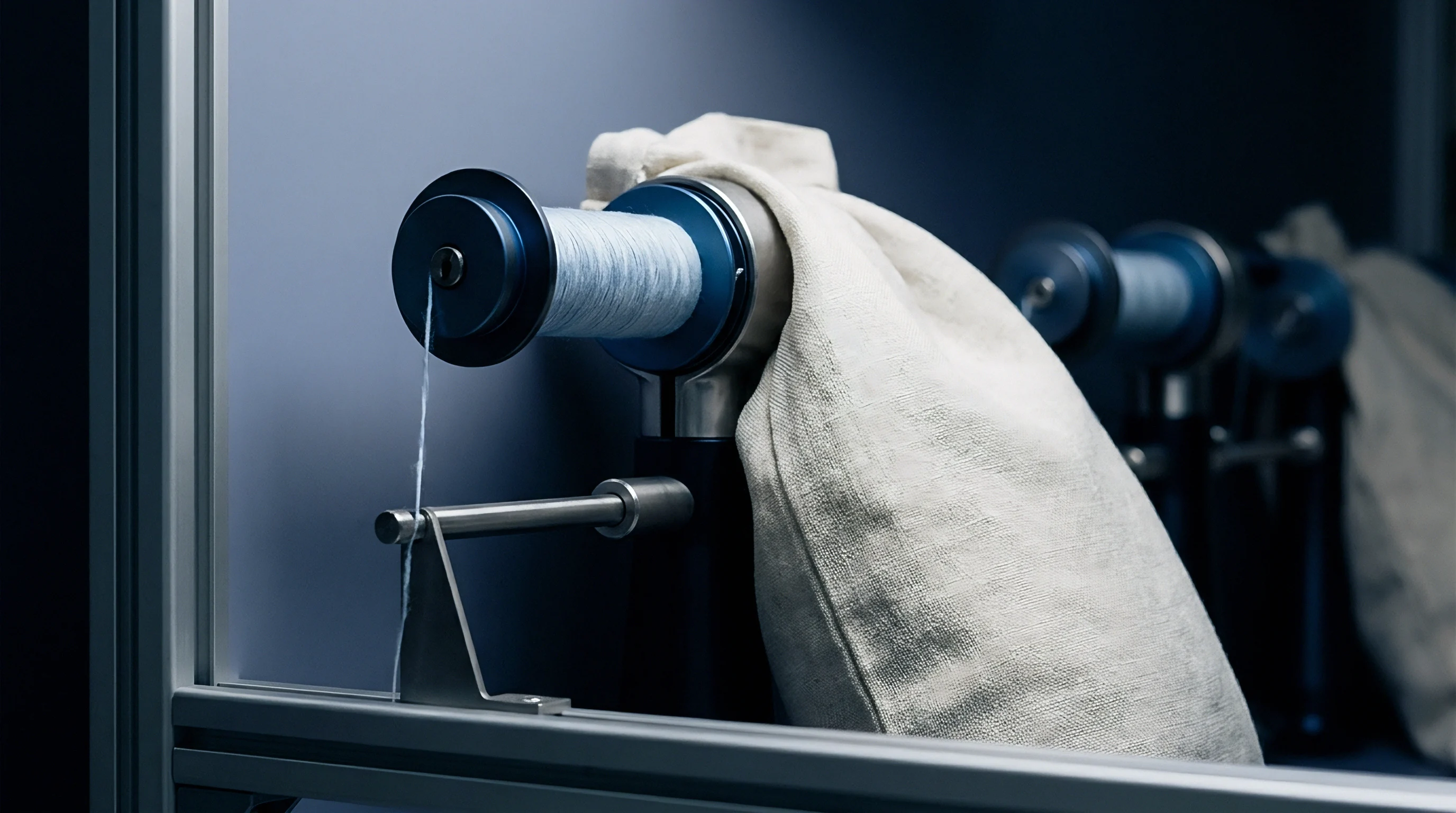
Are High Trough Temperatures Sufficient to Dissolve Methylated Pectins?
Thermal bath conditions reaching seventy degrees Celsius soften amorphous pectin networks without cleaving high-molecular-weight methyl esters. Pure water baths at neutral pH soften low methoxyl pectins by disrupting hydrogen bonding, yet calcium pectate complexes remain insoluble. Elevating trough water temperatures from sixty to eighty-five degrees Celsius reduces liquid viscosity and accelerates hydration speed.
High heat softens the gum. Water bath heat alone cannot break ionic calcium cross-links, causing residual bundle clumps to persist during high-speed drafting.
Alkaline additives introduced into the wet-spinning trough modify residual pectin solubility during roving passage. Sodium carbonate or trisodium phosphate additions raise bath pH to between eight point five and nine point five. Alkaline conditions saponify methyl ester groups, converting high methoxyl pectin into low methoxyl forms while displacing bound calcium ions.
This chemical shift solubilizes galacturonan fragments directly within the trough liquid, allowing fine elementary fibers to slip smoothly through the drafting nip.
- Maintain incoming water temperature at seventy degrees Celsius across all spinning positions to reduce matrix viscosity.
- Control feed water hardness below fifty parts per million of calcium carbonate to prevent ion-mediated cross-linking in roving strands.
- Dose the liquid bath with sodium carbonate at two grams per liter to elevate bath pH to eight point five.
- Cycle liquid volume hourly to eliminate dissolved galacturonans and prevent re-deposition on passing fibers.
- Verify nip roll pressure at the drafting zone to ensure consistent fiber attenuation before bobbin winding.
Hot water bath extraction at sixty degrees Celsius removes soluble galacturonans while leaving insoluble calcium pectates intact within the fiber bundle core.
Standard purchase specifications dictate verification of yarn linear density following hot water desizing. ISO 2060 yarn linear density testing specifies hot-water desizing prior to reel conditioning to remove residual pectin mass contributions from reported yarn counts.


Sliver
Drawing frames attenuate carded or hackled fiber ribbons through differential roller surface velocities. Sliver uniformity relies on controlled fiber movement within the drafting zone. Inter-fiber cohesive forces dictate drafting tension during drawing passages.
Residual pectin acts as an inter-fiber friction agent, creating static and dynamic resistance to sliding. Excessive pectin binder retains multi-fiber aggregates, producing irregular draft waves where bundle clusters pull through intact rather than dividing into elementary filaments.

Attenuating Fibres under Inter-Bundle Friction
Inter-fiber cohesive forces dictate drafting tension during drawing passages. Dynamic friction measurements on hackled slivers reveal stick-slip movement when residual pectin levels exceed three percent. Fiber bundles jump through the drafting nip in discrete groups, creating periodic mass variations known as draft waves.
High residual pectin causes excessive sliver irregularity (Uster CV%), reducing yarn breaking tenacity and generating thin spots prone to breakage during winding.
Low residual pectin permits elementary fiber separation, decreasing average bundle mass entering the drafting zone. Fine fibers experience uniform surface contact, smoothing dynamic friction profiles. Over-retting eliminates pectin cohesion entirely, causing sliver drafting tension to drop below operational limits.
Unbound elementary fibers float uncontrolled between drafting rollers, generating high fly waste and short-fiber neps.
| Pectin Content (% Dry Weight) | Mean Bundle Diameter (μm) | Peak Drafting Force (N) | Sliver Mass Variation (Uster CV%) | Maximum Spinnable Count (Nm) |
|---|---|---|---|---|
| 4.5 | 48.2 | 18.5 | 16.8 | 18 |
| 3.5 | 34.1 | 14.2 | 13.5 | 26 |
| 2.5 | 24.6 | 9.8 | 10.2 | 39 |
| 1.5 | 16.3 | 6.1 | 7.8 | 60 |
| 0.8 | 11.8 | 3.9 | 11.4 (Nep formation) | 80 (High End-Breaks) |
Draft ratios demand uniform slip. Sub-optimal pectin control during primary processing induces structural defects that propagate through every post-carding machine passage.
- Sliver thick places result from unsoftened pectin clusters binding adjacent elementary fibers into rigid, unyielding bundles.
- Excessive end-breakage occurs when localized spikes in pectin concentration exceed the drafting force capability of the front rollers.
- Roller wrapping develops as partially hydrolyzed, sticky galacturonans transfer onto elastomeric drafting cots during wet processing.
- Nep formation accelerates when over-retted, weakened elementary fibers collapse under mechanical drawing tension.
Inadequate control of residual pectin in drawing operations produces extreme mass variation, causing fabric streakiness and uncompensated downtime on spinning frames.

Dossier
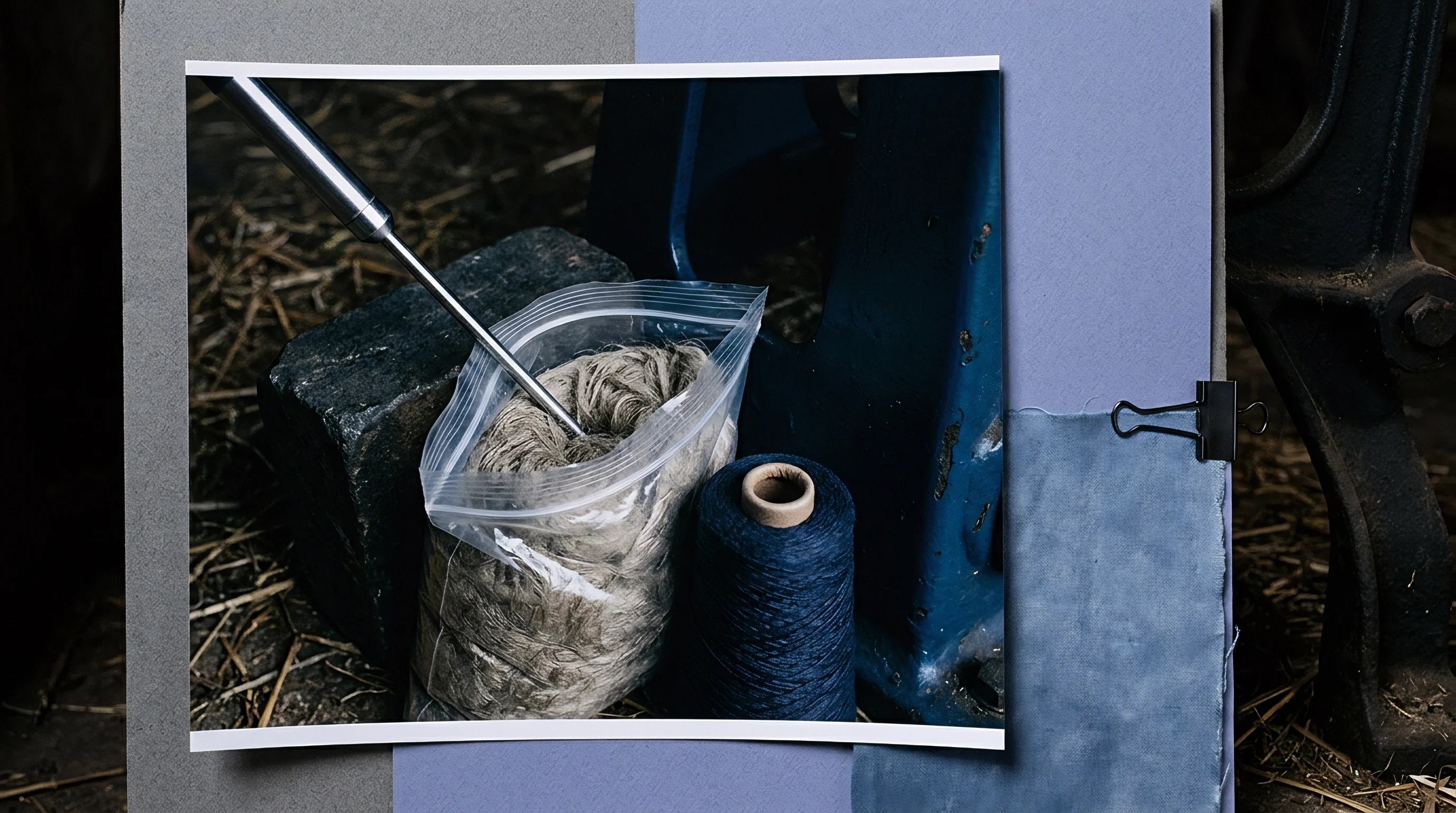
Technical qualification of incoming flax lots requires quantitative chemical and physical laboratory verification. Relying solely on visual classing or hand-pull feel introduces subjective error into spinnable count estimations. Laboratory testing isolates galacturonic acid concentrations, degree of esterification, and physical fiber bundle dimensions to establish factual grading metrics before committing fiber to mill production runs.

Spectroscopic and Chemical Quantification Protocols
Laboratory analysis quantifies galacturonic acid mass fraction through colorimetric carbazole assays following acid hydrolysis. Fiber samples undergo dewaxing in ethanol-benzene mixtures, followed by hot ammonium oxalate extraction to isolate pectin fractions from structural cellulose. Carbazole reagents react with hydrolyzed galacturonic acid, producing a pink complex measured at five hundred twenty nanometers on a spectrophotometer.
This assay isolates total pectin content with precision within zero point one percent dry weight mass.
Fourier-Transform Infrared Spectroscopy offers a rapid non-destructive alternative for esterification profiling. Spectra collected via Attenuated Total Reflectance exhibit distinct absorption bands for functional groups. The ester carbonyl stretching band at seventeen forty reciprocal centimeters compares against the ionic carboxylate asymmetric stretching band at sixteen hundred reciprocal centimeters.
The integrated area ratio of these twin peaks yields the Degree of Esterification without wet chemical digestion.
| Property Measured | Standard Test Method | Sample Size | Tolerance Limit | Operational Limitation |
|---|---|---|---|---|
| Galacturonic Acid Content | Colorimetric Carbazole Assay | 5.0 grams dry fiber | ± 0.15% dry weight | Requires total wax removal prior to extraction |
| Degree of Esterification | FTIR-ATR Spectroscopy | 1.0 gram raw fiber | ± 2.0% esterification ratio | Moisture peaks at 1640 cm⁻¹ interfere if un-dried |
| Fineness and Permeability | ISO 2370 Air-Flow Method | 10.0 grams hackled sliver | ± 1.5 Nm metric number | Measures bundle mass, not elementary fiber width |
| Chelatable Calcium Content | Atomic Absorption Spectroscopy | 2.0 grams dry ash | ± 25 ppm ion concentration | Destructive digestion process required |
Complete lot verification documentation protects buyers against off-spec fiber shipments. The checklist below itemizes mandatory analytical attachments for contract verification files.
- Carbazole assay reports quantify total galacturonic acid mass fraction derived from triplicate fiber bundle extractions.
- Fourier transform infrared spectra record absorbance ratios between seventeen forty and sixteen hundred reciprocal centimeters to determine methylation levels.
- Air-flow fineness certificates record metric fiber number performed under ISO 2370 standard atmospheric conditions.
- Ash content analysis measures divalent calcium and magnesium ion concentrations retained within the plant tissue.
Spectroscopic absorbance ratios at seventeen forty reciprocal centimeters reveal esterification levels above sixty percent when measured on dry fiber bundles.
Whether enzymatic pre-treatments can selectively cleave rhamnogalacturonan branching without compromising the structural cellulose framework of the elementary cell wall stays unresolved across commercial mills.


Ledger
Fibre price per kilogram represents only an initial input parameter in yarn manufacturing accounting. Hackling yield losses, drafting waste allowances, chemical additive consumption, and spinning frame end-break downtime alter the final landed cost per yarn kilo and woven fabric meter. Buying cheap, under-retted flax with high residual pectin inflates processing waste, rapidly reversing any initial raw material price advantage.

Yield Losses and Spinnable Count Limits
Hackling waste percentages scale inversely with retting uniformity and matrix dissolution. Take a ten thousand kilogram lot of long-staple scutched dew-retted flax containing four point two percent residual pectin, purchased at three dollars and eighty cents per landed kilogram. High pectin retention maintains coarse bundle structures.
Hackling this lot yields fifty-eight percent line flax (five thousand eight hundred kilograms), thirty-two percent tow flax, and ten percent comb waste drop. The maximum spinnable count ceiling lands at Nm 26 line yarn due to bundle thickness. Wet-spinning frame efficiency drops to eighty-nine percent, driven by an average of twelve end-breaks per one thousand spindle hours.
Net yarn output yields five thousand one hundred sixty-two kilograms after spinning waste allowance.
Compare this against a ten thousand kilogram lot of enzyme-treated long-staple flax containing one point eight percent residual pectin, purchased at four dollars and sixty-five cents per landed kilogram. Low pectin content permits fine bundle division during hackling. Line flax yield increases to sixty-seven percent (six thousand seven hundred kilograms), tow drops to twenty-five percent, and comb waste decreases to eight percent.
The spinnable yarn count ceiling ascends to Nm 50 line yarn. Wet-spinning frame efficiency rises to ninety-six percent, experiencing only three end-breaks per one thousand spindle hours. Net yarn output yields six thousand four hundred thirty-two kilograms of fine line yarn.
| Cost & Yield Metric | Dew-Retted Lot (4.2% Pectin) | Enzyme-Treated Lot (1.8% Pectin) |
|---|---|---|
| Raw Fiber Purchase Cost ($/kg) | $3.80 | $4.65 |
| Line Flax Yield Percentage (%) | 58.0% | 67.0% |
| Spinnable Yarn Count Ceiling (Nm) | Nm 26 | Nm 50 |
| Wet-Spinning Efficiency (%) | 89.0% | 96.0% |
| Final Spun Line Yarn Mass (kg) | 5,162 | 6,432 |
| Effective Yarn Material Cost ($/kg) | $7.36 | $7.23 |
| Fabric Weight & Construction | 150 GSM Plain Weave (1.5 m) | 150 GSM Plain Weave (1.5 m) |
| Finished Fabric Cost ($/Meter) | $2.42 | $2.11 |
Effective yarn cost per kilogram for the high-pectin lot reaches seven dollars and thirty-six cents after absorbing hackling drop and spinning break losses. The low-pectin lot yields an effective yarn cost of seven dollars and twenty-three cents per kilogram despite its higher initial raw material purchase price. Yield falls as retting deepens.
Spun into a standard one hundred fifty grams per square meter plain weave fabric at one point five meters width, the Nm 50 yarn requires less total fiber mass per meter of structural coverage while running at higher loom efficiency. The resulting fabric cost lands at two dollars and eleven cents per meter for the low-pectin lot versus two dollars and forty-two cents per meter for the high-pectin stock.
Fibre length dictates yarn strength. Residual pectin management controls the absolute yield ceiling across every conversion step from scutched bale to finished grey cloth.