Flax Roving Wet Spinning Bath Mechanics
Flax wet spinning relies on heated, softened water baths at 65°C to dissolve pectin and enable smooth drafting of ultimates for fine yarn counts.

Vat
Flax roving enters the spinning frame as a twisted, low-density strand wound on perforated bobbins, carrying a metric count between 0.8 and 3.5 Nm. Direct mechanical drafting of this dry strand produces coarse, irregular yarn with end breakage exceeding forty stops per thousand spindle-hours. The liquid chamber mounted directly above the drafting zone counteracts this brittleness by flooding the roving structure with conditioned water. Immersion softens the intercellular pectins that bind single ultimates into technical fibre bundles, permitting individual ultimates measuring 10 to 40 millimetres to slide past each other under the draw of the drafting rollers.
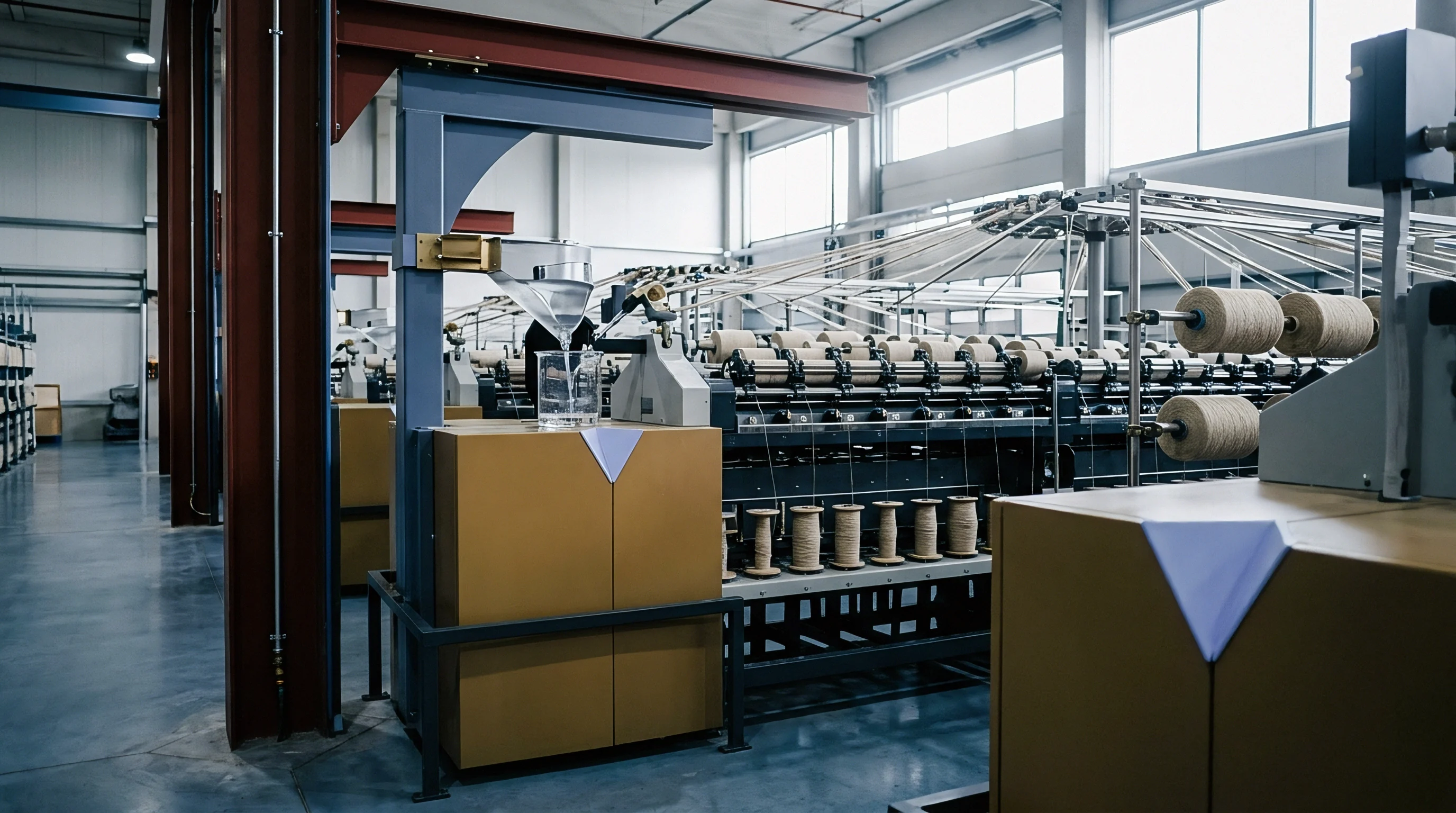
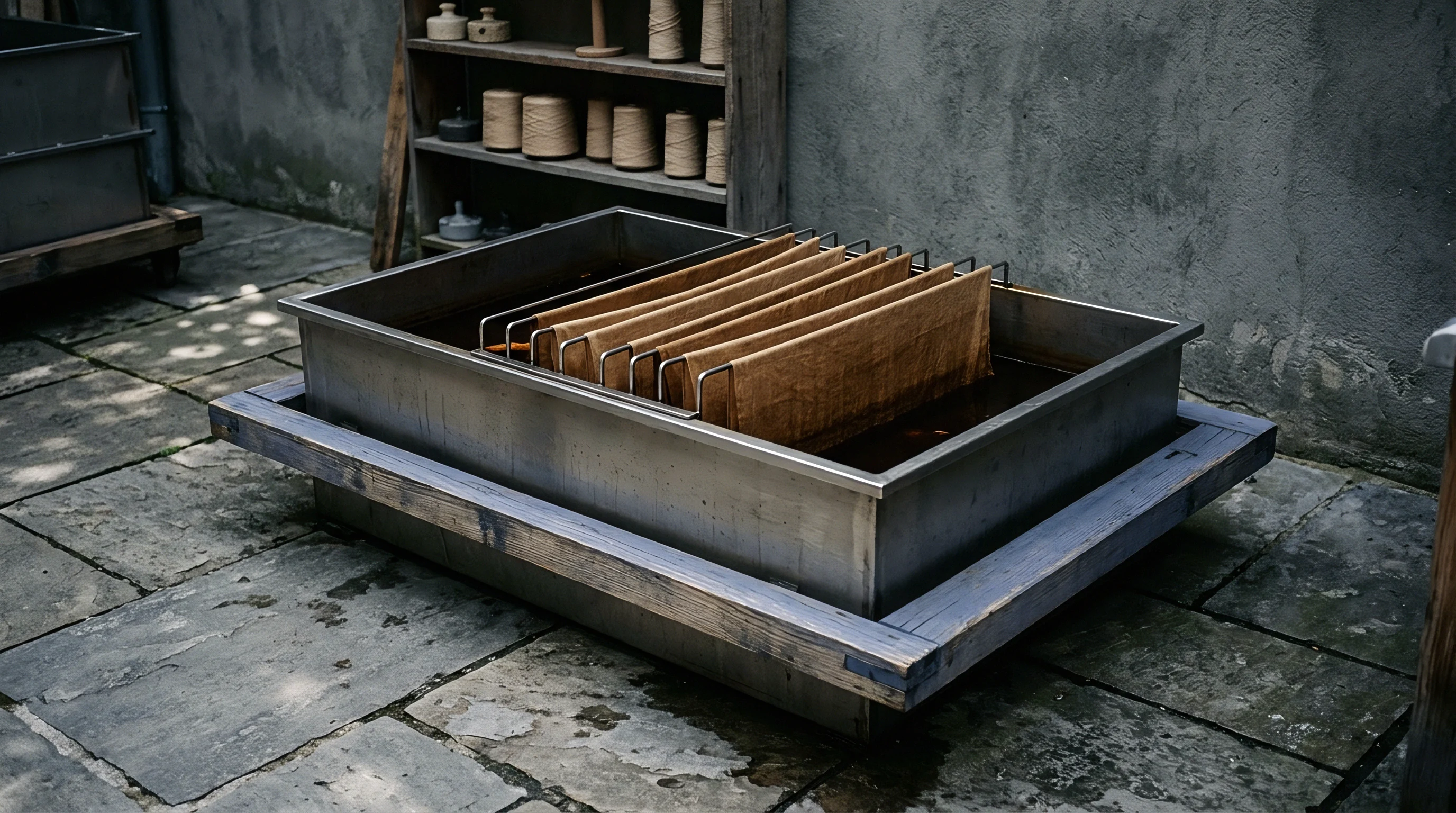
Submersion depth and path routing dictate the exact dwell time of the roving within the liquid. A standard trough design routes the roving over porcelain guides, down into a heated immersion zone measuring between 350 and 600 millimetres in submerged path length, before directing it upward through exit eyelets to the back roller nip. Roving linear speed through this zone ranges from 8 to 22 metres per minute, depending on the yarn count target.
Dwell time ranges from 1.2 to 4.5 seconds. Heavier roving lots require longer path configurations to prevent dry-core passage into the drafting zone.
Trough residence sets penetration depth.
When roving travels too rapidly through the liquor, water fails to displace air trapped within the dense bundle interior. The outer ring of fibres swells while the core remains desiccated, creating two distinct drafting regimes at the nip. Dry core bundles break rather than divide, depositing short, blunt debris into the roller flutes and driving the coefficient of variation in yarn mass above fifteen percent.
| Roving Count (Nm) | Bundle Diameter (mm) | Submerged Path (mm) | Dwell Time (s) | Core Saturation (%) | Drafting Force (cN) |
|---|---|---|---|---|---|
| 0.8 | 1.45 | 600 | 4.2 | 98.2 | 142 |
| 1.2 | 1.18 | 500 | 3.5 | 96.8 | 118 |
| 2.0 | 0.92 | 450 | 3.1 | 95.4 | 84 |
| 2.8 | 0.76 | 400 | 2.8 | 94.1 | 62 |
| 3.5 | 0.62 | 350 | 2.4 | 92.7 | 48 |
Liquor level fluctuations destabilize the drafting zone directly. An uncompensated loss of fifteen millimetres of liquor depth reduces immersion contact by eight percent on an angled guide layout, causing immediate spikes in drafting tenacity. Modern frames integrate automated overflow weir systems and continuous pump circulation, replacing water lost to yarn carriage and evaporation while maintaining surface levels within a two-millimetre tolerance.
The trough supplier claims that standard cold immersion runs fine whenever delivery schedules tighten.
Heat
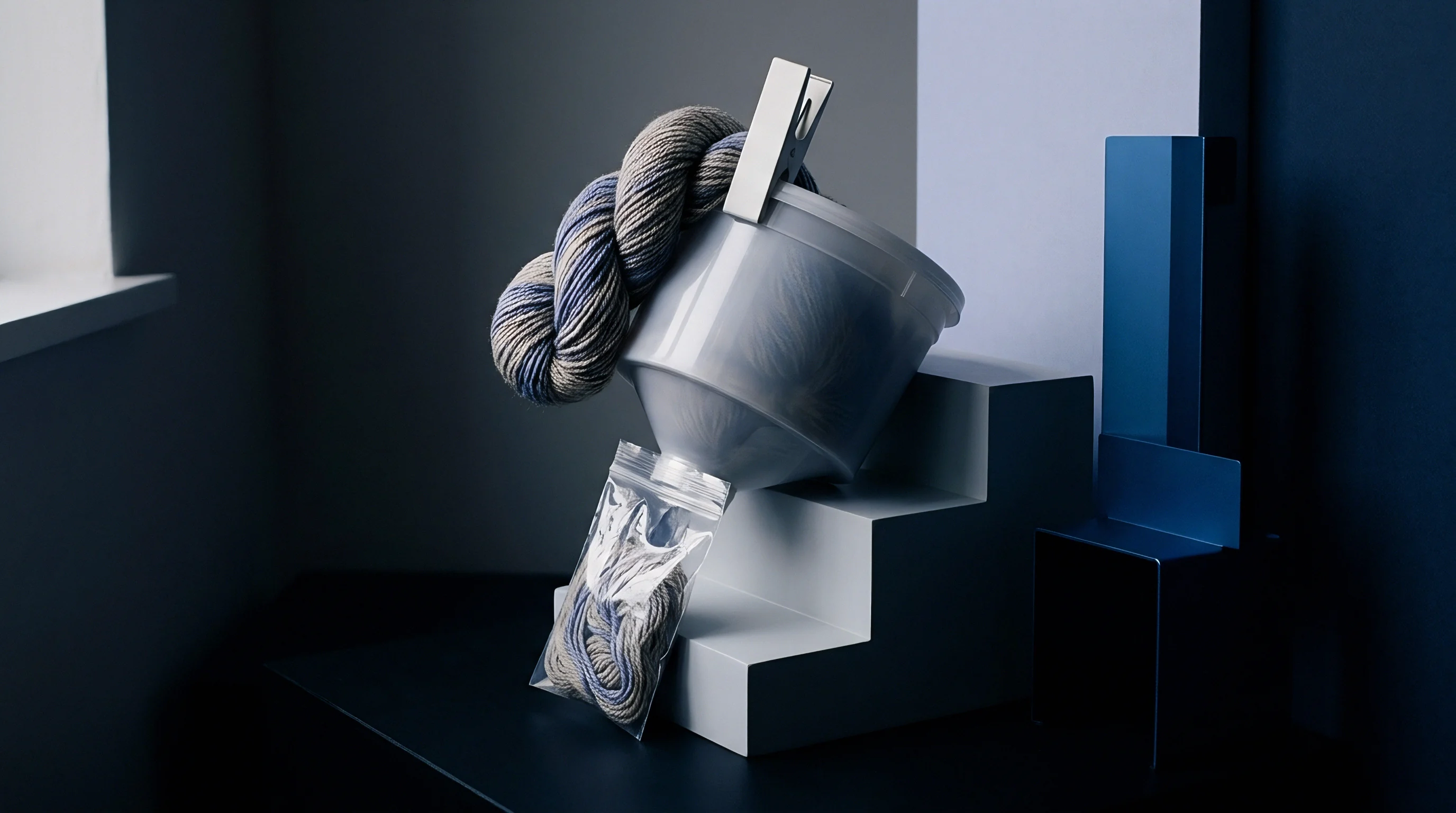
Submerging bast fibres in cold water yields minor swelling of the secondary cell walls without loosening the middle lamella. Pectin dissolution and the associated reduction of intercellular adhesive shear require elevated kinetic energy within the fluid. Processing temperatures below fifty degrees Celsius maintain calcium pectate gels in a rigid state, forcing the drafting rollers to fracture the bundles mechanically.
Mechanical fracture shortens average fibre length, produces excessive fly waste, and caps the finest attainable yarn count at 24 lea.
Cold water arrests drafting slip.
Raising the trough temperature initiates a sharp drop in bundle tensile resistance within the aqueous zone. Polygalacturonic acid chains within the middle lamella undergo structural relaxation when heated liquid breaks intermolecular hydrogen bonds. The softening zone becomes pronounced between 55 and 70 degrees Celsius, where drafting forces decline by sixty percent compared to ambient water immersion.
Running the bath between 62 and 66 degrees Celsius delivers consistent bundle cleavage into fine technical strands without degrading individual cellulose ultimates.
Water temperature maintained at sixty-four degrees Celsius lowers drafting resistance by sixty-two percent compared to ambient wetting.

Thermal Transitions in Pectinaceous Matrices
The intercellular matrix of scutched flax comprises roughly sixty-five percent rhamnogalacturonan and homogalacturonan polysaccharides, twenty percent hemicellulose, and small fractions of structural proteins and waxes. Heating the bath to sixty degrees Celsius triggers the glass transition of wet native pectin. In this state, the cross-linked gel shifts into a viscous, deformable fluid that flows under the shear stress applied by the drafting rollers.
Ultimate fibres separate along the longitudinal axis without transverse fracture of their crystalline cellulose walls.
Pectin softens above fifty degrees.
Superheating the trough beyond seventy-five degrees Celsius triggers severe operational penalties. High water temperatures melt cuticular wax fractions, which migrate into the bath and coat porcelain guides with gummy residues. Furthermore, excessive thermal exposure dissolves low-molecular-weight pectins completely rather than softening them, causing gum to accumulate on drafting roller aprons and flutes.
The bath fluid darkens rapidly from leached tannins, staining the wet strand a dull grey that resists uniform bleaching during subsequent yarn finishing operations.
| Bath Temperature (°C) | Pectin Solubilization (% w/w) | Drafting Tenacity (cN/tex) | End Breakage Rate (per 1000 Sp-h) | Yarn Lea Limit | Single End Tenacity (cN/tex) |
|---|---|---|---|---|---|
| 20 | 0.8 | 4.2 | 78 | 18 | 14.2 |
| 40 | 1.9 | 3.1 | 52 | 26 | 16.8 |
| 55 | 4.4 | 1.8 | 24 | 40 | 20.5 |
| 65 | 7.2 | 0.9 | 9 | 65 | 24.6 |
| 80 | 14.6 | 0.6 | 31 | 50 | 19.1 |
| Data gathered from water-retted Courtrai line flax roving spun at 2.4 Nm roving count into 50 lea yarn on a ring frame running at 6,500 spindle RPM. | |||||
Will Bath Temperature Alter Drafting Tenacity?
Experimental runs on uniform roving lots confirm that bath temperature governs drafting resistance directly. At twenty degrees, the pulling force required to slip the fibres measures four times higher than the force required at sixty-five degrees. When temperature drops across a multi-spindle frame due to uneven steam injection, the drafting resistance climbs spindle by spindle.
Front rollers slip against the wet strand on colder positions, generating thick slubs alternating with thin, over-drafted regions.
Thermal control stabilizes bundle cleavage.
Uniformity requires indirect steam jacketing or closed-loop electrical heating plates beneath the trough floor. Direct steam bubbling creates turbulent thermal gradients, where liquid near the injector reaches eighty degrees while distal corners stay at forty-five. Maintaining a tight three-degree operational window across a four-hundred-spindle frame preserves drafting force stability, holding yarn coefficient of variation below eleven percent across all spinning bobbins.
Allowing bath temperature to drop ten degrees below target increases drafting force variability, snapping fine roving strands at the roller nip and throwing thirty percent of spindle capacity into idle downtime.
Solvent
Pure condensate water acts as the base carrier, but raw process water contains minerals and contaminants that disrupt pectin breakdown. Alkaline earth ions, notably calcium and magnesium, cross-link free carboxyl groups on de-esterified polygalacturonic acid chains to synthesize rigid calcium pectate precipitates. Water hardness exceeding five German degrees of hardness inhibits bundle division, leaving fibres coarse and brittle at the back drafting roller.
Mill operations feed demineralized or softened water into the spinning trough to ensure unrestricted fibre slippage.
Hard water precipitates calcium pectate.
Chemical additions modify surface tension and accelerate hydration. Untreated raw flax roving resists instantaneous wetting due to residual surface waxes and cutin layers on the fibre exterior. Adding non-ionic wetting agents at concentrations between 0.5 and 2.0 grams per litre lowers surface tension from 72 millinewtons per metre down to 32 millinewtons per metre.
This reduction ensures instantaneous liquid uptake into the roving core during the three-second immersion pass, eliminating the dry-core defects observed in pure water troughs.
Wetting bath conductivity maintained below fifty microsiemens per centimetre prevents calcium-induced stiffening of the middle lamella during high-speed drafting.
Defect Modes in Chemical Bath Formulation
Managing the chemical balance of the wet-spinning liquor requires tight surveillance over four parameters:
- Mineral scale accumulation occurs when feed water hardness exceeds 1.5 millimoles per litre, depositing insoluble carbonates inside delivery nozzles and across ceramic yarn guides.
- Surfactant foam development occurs at mechanical agitation points when non-ionic wetting agent concentration exceeds 2.5 grams per litre, lifting the roving clear of the immersion pins.
- Alkaline cellulose depolymerization accelerates whenever caustic rinse carryover drives bath pH above 8.5, eroding fibre tenacity by breaking glucose chains within the cell wall.
- Biological slime fouling establishes inside stagnant trough corners during weekend halts, seeding the liquor with anaerobic bacteria that discolour flax fibres during Monday startups.

Bath Acidification and Surface Chemistry
Natural water leaching extracts organic acids from the flax roving, causing an unmonitored bath to drift toward an acidic pH between 4.2 and 4.8 over an eight-hour shift. This acidic regime stabilizes carboxyl groups on the pectin chains, slightly decreasing the rate of middle lamella dissolution. Conversely, introducing mild alkaline conditions by dosing sodium carbonate up to pH 7.5 enhances pectin solubilization, facilitating the production of very fine yarn counts above 70 lea.
Acidic baths degrade cellulose chains.
Uncontrolled alkalinity carries severe risks for ring and traveller mechanics. High pH levels leach excessive hemicellulose and lignin into the bath, converting the spinning liquor into a viscous, dark brown broth. This broth splashes onto the spindle rail, gummy deposits foul the rings, and traveller friction increases fourfold within twenty-four hours.
Running the bath between pH 6.0 and 7.0 balances bundle softening against liquor cleanliness, preventing machinery fouling while protecting the structural integrity of the ultimate fibres.
Technologists continue to debate whether synthetic enzymatic additions in the trough can replace thermal energy entirely without causing uncontrolled cellulose depolymerization along the yarn profile.


Nip
The drafting zone translates the softened roving strand into an attenuated yarn structure ready for twist insertion. Roving emerges from the wet trough and immediately enters the nip of the back feed rollers. From there, it spans across a reach or ratch distance into the nip of the high-speed front rollers.
The mechanical ratio between front roller surface speed and back roller surface speed sets the total draft, which ranges from 8 to 28 on wet ring spinning frames processing line flax roving.
Draft ratios exceed twenty.
Liquid carried by the roving functions as an internal lubricant inside the drafting zone. As rollers pull the strand, shear stress overcomes the softened pectin matrix, causing single ultimates and small technical bundles to slide past each other along their longitudinal axes. If the liquid volume is deficient, fibre-on-fibre friction generates localized tension spikes that snap long ultimates.
If the roving carries excessive free surface liquid, hydroplaning occurs at the roller interface, allowing unattenuated clumps to slip through into the yarn.

Is Chemical Softening Measurable at the Spindle?
Spinning trials demonstrate that bath temperature and surfactant dosage register directly as variations in spindle drafting force. A load-cell transducer mounted behind the front bottom roller records the pull exerted by the fibre strand as it exits the drafting zone. At a bath temperature of twenty degrees Celsius, peak drafting forces reach 180 centinewtons for a 1.8 Nm line flax roving.
When the water temperature rises to sixty-five degrees Celsius, this force drops to 68 centinewtons, reflecting the complete plasticization of the middle lamella.
Roller pressure governs sliver cohesion.
Variations in roving saturation show up as rapid fluctuations on drafting force traces. A roving strand with an un-wetted core exhibits an irregular, jagged force profile with frequent spikes exceeding 220 centinewtons, corresponding to bundle snap events. Fully saturated roving exhibits an even, sinusoidal force signature centred below 75 centinewtons.
Measuring drafting force at the front roller nip provides an accurate method for verifying bath penetration efficiency on an operational mill floor.
Drafting force drops below seventy centinewtons on fully plasticized line flax roving entering a high-speed roller nip.
Fluted rollers grip wet bast.
Roller surface geometry dictates grip efficiency on the slippery, wet flax strand. Back rollers feature deep, axial fluting cut into stainless steel or brass to lock the saturated roving firmly without allowing back-slippage under high draft tension. Front top rollers utilize synthetic rubber or polyurethane cots with a Shore A hardness between 85 and 95.
Softer cots deform prematurely under the constant hydraulic pressure of the expelled bath water, whereas harder cots fail to grip fine ultimate bundles, causing drafting drift and uneven yarn counts.
| Ratch Setting (mm) | Total Draft Ratio | Top Roller Hardness (Shore A) | Nip Pressure (daN/cm) | Fibre Slippage Index (%) | Yarn Unevenness (Uster CV%) |
|---|---|---|---|---|---|
| 45 | 12.5 | 80 | 4.5 | 8.2 | 14.8 |
| 55 | 16.0 | 85 | 6.0 | 3.1 | 11.2 |
| 65 | 20.0 | 90 | 7.5 | 1.4 | 9.6 |
| 75 | 24.0 | 95 | 8.5 | 4.6 | 12.4 |
| 85 | 28.0 | 98 | 9.0 | 9.8 | 16.1 |

Control Criteria for Wet Attenuation
Operating a wet-spinning drafting system requires strict management across critical machine parameters:
- Ratch distance calibration aligns the distance between roller nips to the staple diagram of the flax ultimates, maintaining a setting between 50 and 70 millimetres.
- Roller pressure regulation applies between 6 and 8.5 dekanewtons per centimetre of roller contact, expelling excess water without crushing delicate cellulose walls.
- Top roller cot maintenance schedules buffing cycles every four hundred operating hours to remove surface grooves cut by the abrasive, wet bast fibres.
- Fibre clearance air jetting directs dry air across the front roller nip to clear loose fibres and prevent roller wraps that break adjacent spinning ends.
Yarn count tracks drafting force.
Setting the ratch distance shorter than the longest ultimate fibres leads to fiber breakage, producing weak yarn loaded with short-fibre neps. Conversely, setting the ratch longer than 75 millimetres allows short ultimates to float uncontrolled between the nips, causing drafting waves that manifest as periodic thin and thick spots in the finished yarn. Sourcing engineers audit ratch settings against laboratory fibre length arrays prior to releasing production runs for fine linen weaving yarns.
Roving that slips under the roller flutes always makes uneven yarn.
Spool
Yarn exiting the front drafting rollers passes through a traveller mounted on a spinning ring, which inserts real twist before collecting the strand onto a bobbin package. The yarn carries its own dry weight in absorbed bath liquor as it winds onto the tube, reaching a package moisture content between 90 and 110 percent. High moisture content makes the freshly spun yarn tender and highly susceptible to mechanical damage.
Centrifugal forces generated at spindle speeds between 5,500 and 7,500 RPM sling excess water against the frame splash guards, requiring continuous drainage channels beneath the ring rail.
Wet spinning commands premium counts.
Package density must accommodate wet swelling and subsequent drying contraction. Wet linen yarn wound under excessive winding tension contracts radially as it dries, crushing lightweight plastic tubes or locking tightly onto stainless steel spinning bobbins. Mill operators calibrate ring rail traverse speeds and wind-down angles to produce open, porous bobbin geometries that permit uniform hot-air circulation during drying oven processing.
Wound yarn packages containing over ninety percent moisture collapse thin plastic bobbin tubes during convection oven drying.
Line flax yields uniform lea.
Drying wet-spun bobbins requires low-temperature convection ovens operating between 50 and 65 degrees Celsius for sixteen to twenty-four hours. Rapid drying above eighty degrees Celsius induces moisture gradients between the outer yarn layers and the inner bobbin core. When outer layers dry quickly, migrating pectin and solubilized hemicellulose accumulate on the bobbin surface, gluing adjacent yarn coils together.
This condition, termed package glazing, causes frequent yarn snapping during subsequent rewinding and warping operations.
Sliver defects double spinning waste.
Finished wet-spun linen yarn commands prices between twenty-two and thirty-eight dollars per kilogram on international markets, depending on yarn count and grading standard. Achieving these counts requires high-grade water-retted or dew-retted line flax with a minimum hackled fibre yield of fifty percent. Tow fibres spun through wet troughs yield irregular yarns prone to slubs, capping their value at nine to fourteen dollars per kilogram.
For fine linen apparel fabrics measuring 120 grams per square metre, using 60 lea wet-spun line warp yarn establishes the fabric tensile strength, distinct surface lustre, and cool hand that cannot be duplicated by dry-spun flax or open-end spun yarns.
Excess moisture rots wound packages.
Commercial acceptance across international trading ports operates under the strict specifications of ISO 6741, which establishes an official commercial moisture regain allowance of twelve percent for boiled or bleached flax yarns, and twelve and a quarter percent for grey linen yarn, calculated on an oven-dry mass basis.