Dynamic Capillary Equilibrium and Bundle Cohesion Limits inside Compressed High Density Flax Bales
Compaction above 350 kg/m3 induces capillary condensation in flax bales, elevating inter-fiber friction and dropping combed line yield by up to 18 percent.


Pore
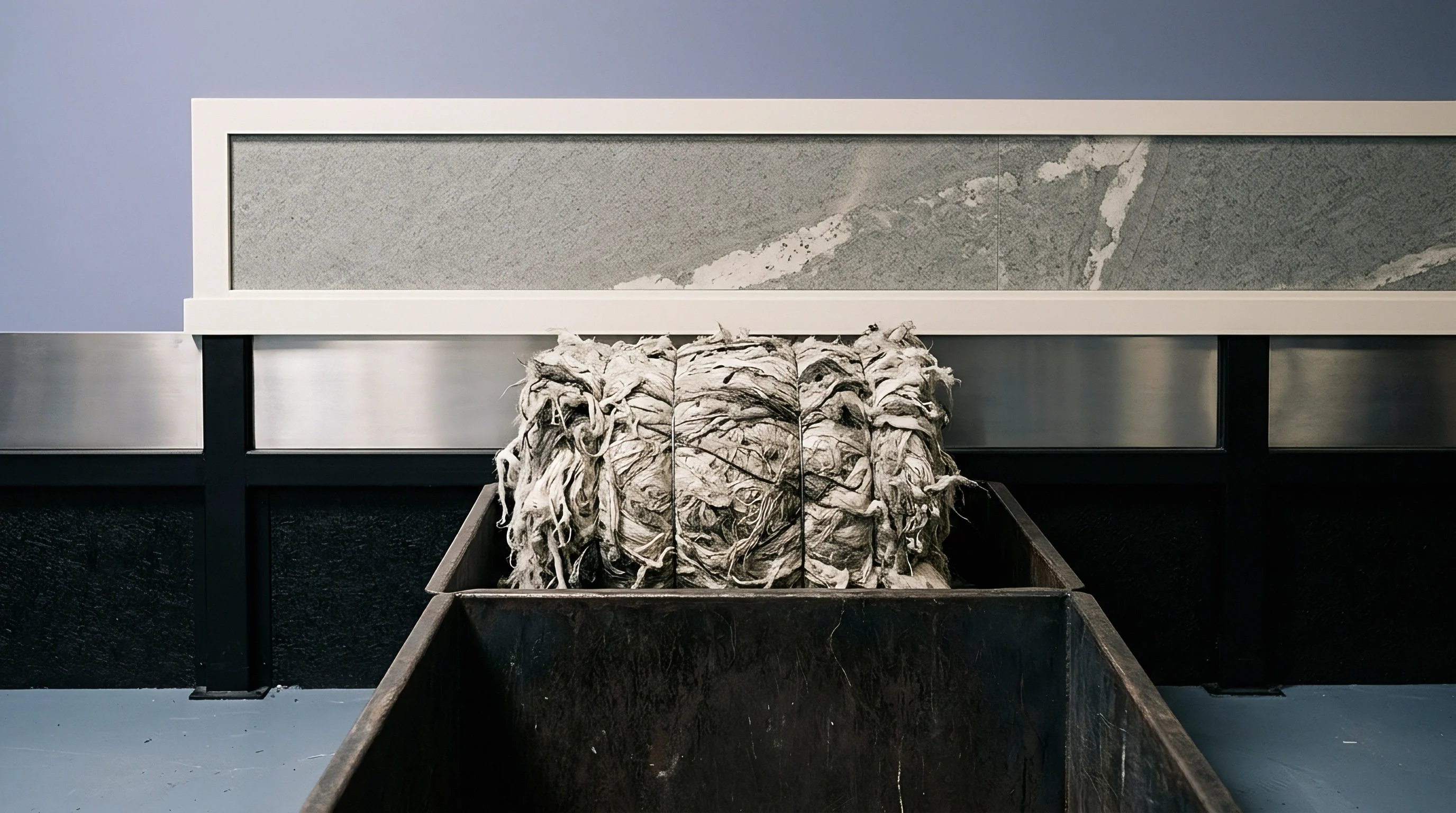
Compaction of raw scutched long-staple flax into high-density shipping units alters the physical layout of technical bundles. High-density baling presses compress loose, combed bast fiber from an uncompressed density of forty kilograms per cubic meter up to three hundred and eighty or four hundred and fifty kilograms per cubic meter. Bale press forces are extreme.
Under high compressive stresses, the open structural arrangement between adjacent plant stem strands undergoes permanent dimensional alteration. Inter-fiber channels, lumen voids, and microscopic fissures inside the cell walls shift position, reducing total void space.

Mechanical Volumetric Compression and Lumen Occlusion
Hydraulic press force exceeding four hundred bar drives individual elementary strands together, squeezing empty spatial regions out of the bundle core. Internal void space disappears. Standard technical flax bundles consist of ten to forty elementary fibers glued together by middle lamella pectin and hemicellulose.
Uncompressed elementary fibers carry central hollow channels known as lumens, which measure two to five micrometers in diameter. High baling density flattens these lumens completely, converting tubular cell structures into solid ribbons with minimal internal free volume.
Volumetric consolidation forces the primary cell walls of adjacent fibers into continuous surface contact. Elastic deformation of cell walls occurs immediately during the pressing cycle, followed by plastic shear deformation if high pressure continues over extended holding periods. When press dwell times exceed thirty seconds at max pressure, the geometric reduction of inter-fiber space becomes permanent, directly altering internal fluid transport pathways.
Micro-Void Shrinkage across Inter-Fiber Interstices
Structural shifts inside packed bast tissue force wall structures into intimate contact, drastically reducing liquid transit channels. In an uncompressed state, the void space between parallel bast bundles forms an interconnected network of macroscopic pores ranging from ten to fifty micrometers in diameter. Hyper-compaction compresses these large channels down into sub-micron inter-fiber capillaries measuring less than fifty nanometers across.
Shrinkage of inter-fiber voids changes how water vapour and liquid moisture migrate through the bale mass. Macro-capillaries that previously allowed rapid air movement and vapor exchange disappear, replaced by dense networks of nano-capillaries. Liquid moisture previously contained as a surface film on loose strands becomes trapped within tightly squeezed fiber intersections.
Compaction pressure introduces distinct physical structural degradation modes within dense bast bundles:
- Lumen collapse produces irreversible mechanical flattening of elementary fiber cell cavities that restricts internal vapor dispersion during mill conditioning.
- Pectin matrix shear disrupts the protective middle lamella adhesive layer, causing premature splitting of long technical bundles into weak elementary fragments.
- Inter-fiber crimping creates mechanical stress concentration points along parallel strands, reducing long-line yield during downstream comb processing.
- Void occlusion isolates internal moisture pockets within the dense bale center, preventing uniform environmental humidity equalization during warehouse storage.
Exporters frequently claim that mechanical pressure variations during baling represent standard seasonal press adjustment tolerances rather than structural damage.
Condensation
Moisture distribution inside dense bast fiber packages changes dramatically as internal air spaces collapse. Liquid water behavior inside compressed porous materials relies on capillary radius, relative humidity, and local ambient temperatures. In uncompressed bast fiber, water absorption occurs through surface sorption onto hydrophilic cellulose hydroxyl groups and swelling of amorphous pectin.
Inside compressed high density bales, reduced pore dimensions initiate spontaneous liquid phase condensation at ambient relative humidity levels that normally maintain vapor equilibrium.
Kelvin Equation Dynamics in Nanometer Scale Intramural Cavities
Physical reduction of capillary radii shifts the local thermodynamic state of water trapped within plant cell walls. Theoretical equilibrium between liquid water and vapor phase water inside small pores follows the Kelvin equation. As compressive force reduces inter-fiber pore radii down below ten nanometers, the vapor pressure required to cause liquid condensation drops significantly below saturation pressure.
Free water condenses inside lumens.
| Bale Density Range | Mean Pore Radius | Condensation Relative Humidity | Capillary Pressure |
|---|---|---|---|
| 150 to 220 kg/m3 | 45 nanometers | 97.5 percent | 3.1 MPa |
| 250 to 320 kg/m3 | 18 nanometers | 92.1 percent | 8.2 MPa |
| 350 to 420 kg/m3 | 6 nanometers | 81.4 percent | 24.6 MPa |
| 450 to 520 kg/m3 | 2 nanometers | 58.3 percent | 73.8 MPa |
Pore size shrinkage causes liquid water to condense inside nanometer-scale cavities at normal storage humidities of sixty to seventy percent. Moisture moves toward smaller pores. Local capillary condensation saturates the pectin binder matrix surrounding technical bundles even when overall bale weight measurements show acceptable average moisture levels.
Capillary pressure climbs sharply.
Dynamic capillary equilibrium inside dense bales shifts liquid water into micro-voids at sixty percent ambient relative humidity under four hundred kilograms per cubic meter density.

Hygroscopic Sorption Hysteresis under Mechanical Load
Desorption paths divergence from absorption curves widens when external pressure alters available binding sites. Compressed flax exhibits enhanced sorption hysteresis compared to loose fibers. Water molecules entering compressed technical bundles become trapped within micro-capillaries formed by forced cell wall contact.
During warehouse storage under fluctuating temperature cycles, moisture redistributes along internal pressure gradients, migrating from warmer exterior surfaces toward the cooler, highly dense core of the bale.
Trapped moisture inside squeezed inter-fiber gaps causes localized hydration of non-cellulosic polymers. Pectin and hemicellulose absorb condensed capillary water, transitioning from a rigid glassy state into a soft, rubbery hydrogel. Hydrogel conversion weakens inter-fiber bonding within technical strands while simultaneously increasing sticky surface drag between adjacent bundles under mechanical load.
Whether internal capillary condensation during ninety days of ocean transit irreversibly alters the crystalline lattice of cellulose in hyper-compacted flax remains an open laboratory question.
Cohesion
Frictional drag between parallel elementary strands dictates how technical bundles subdivide during mechanical combing. Technical flax bundles must possess sufficient internal cohesion to remain intact during preliminary handling, while maintaining precise slip limits that allow controlled bundle division during hackling. Mechanical compaction in high-density baling alters this balance by compressing middle lamella pectins and forcing mechanical interlock between individual fiber surface irregularities.
Pectin Matrix Viscoelasticity and Friction Coefficients
Middle lamella polymers behave as temperature-dependent binder layers that resist lateral displacement. The adhesive force holding elementary fibers inside a technical bundle relies on chemical hydrogen bonding and mechanical friction. High density compaction forces elementary strands into contact areas five times larger than those found in uncompressed bales.
Increased real area of contact magnifies intermolecular Van der Waals forces and hydrogen bonding across adjacent fiber surfaces.
Excessive inter-fiber friction prevents technical bundle division during combing and increases short fiber waste generation.
Condensed capillary water softens middle lamella pectins, reducing their shear modulus. Softened pectin acts as a high-viscosity adhesive under slow deformation, but behaves as a brittle, high-friction solid under rapid mechanical impact. Pectin matrix failure is rapid.
When hackling pins strike sticky, high-density fiber bundles, high dynamic friction prevents clean strand separation along natural middle lamella boundaries.
| Fibre Moisture Content | Bale Density State | Inter-Fiber Friction Coeff | Critical Pull-Out Force |
|---|---|---|---|
| 9.5 percent ISO regain | Uncompressed 50 kg/m3 | 0.22 mu | 1.4 N/tex |
| 12.0 percent elevated | Medium 250 kg/m3 | 0.38 mu | 2.8 N/tex |
| 14.5 percent capillary sat | High 400 kg/m3 | 0.59 mu | 5.2 N/tex |
| 17.0 percent excessive | Hyper 480 kg/m3 | 0.81 mu | 8.7 N/tex |
| Test conditions according to ISO 2370 at twenty degrees Celsius and sixty-five percent relative humidity across ten bundle pulls. | |||
Critical Pull-Out Force and Technical Fiber Separation
Tensile loads applied during drafting overcome physical inter-strand bonding to allow smooth attenuation. Friction replaces inter-fiber hydrogen bonding. If the critical pull-out force needed to slide elementary fibers past each other exceeds the transverse tensile strength of individual elementary cell walls, mechanical draft action snaps the cellulose strands instead of separating the bundle into finer technical units.
Bundle rupture degrades spinnable long-line length, converting valuable line flax into low-value short tow waste.
Verifying inter-fiber cohesion parameters before releasing high-density lots to spinning frames relies on systematic laboratory evaluation:
- Core sample extraction removes representative fiber bundles from three distinct depth zones within the compressed bale mass.
- Capillary moisture mapping identifies localized wet spots using high-frequency electrical resistance probes calibrated against ISO 6741 drying methods.
- Bundle pull-out testing measures static dynamic friction coefficients across ten technical fibers pulled from combed sliver.
- Hackling simulation trials evaluate long line recovery percentages on laboratory combs under standard draft ratios.
Mishandling moisture profiles inside dense bales causes catastrophic end breakage at high-speed drafting frames, driving yarn rejection rates above twelve percent.

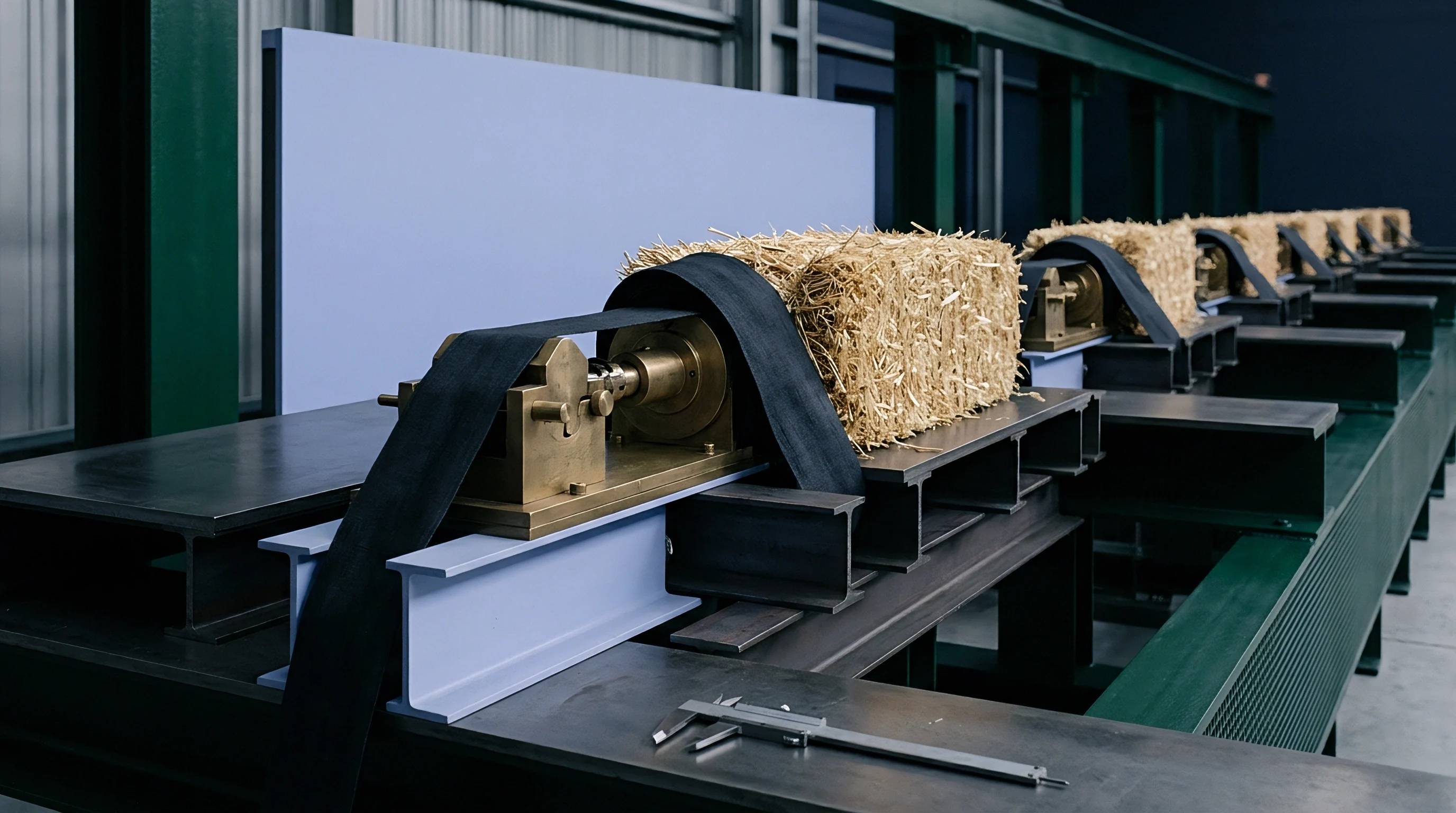
Hackling
Combing pins entering compressed flax bundles encounter structural resistance directly proportional to inter-strand friction. The primary purpose of hackling is opening, cleaning, straightening, and splitting coarse scutched flax bundles into fine, parallel technical fibers suitable for wet spinning. Dense bales subjected to extreme capillary pressure resist pin penetration, causing structural damage to comb needles and individual fibers alike.
Comb Resistance and Pin Penetration Dynamics
Metal needles striking dense fiber heads experience severe bending stresses when pectin binders remain rigid. High compaction density packs individual fibers into tight, continuous mats. Comb pins bend under load.
Instead of sliding between individual technical strands, hackling pins encounter solid resistance, deflecting off course and causing uneven fiber distribution across the comb field.
Pin deflection generates high frictional heat, locally drying sticky pectin surfaces and exacerbating bundle resistance. High resistance causes pin breakage, comb tooth distortion, and uneven sliver weight profiles at the hackling delivery head. Short tow fractions multiply quickly.
Fiber bundles held tightly by compressed core zones suffer severe transverse shear, snapping across their primary cell walls rather than splitting along intercellular lamellae.

Long Line Yield Degradation and Tow Generation Rates
Excessive bundle fracture converts valuable parallel line stock into short, tangled waste fractions. Uncompressed long-line flax yields sixty to sixty-five percent combed line fiber and twenty-five percent tow during standard hackling routines. Flax subjected to capillary saturation under four hundred kilograms per cubic meter density yields under forty-five percent combed line fiber, while tow generation climbs above forty percent.
Hyper-compacted flax bales with core moisture above fourteen percent generate excessive comb waste and reduced long-line yield.
Evaluating mill processing performance of high-density shipments uses a standardized verification sequence:
- Open bale strapping forty-eight hours before processing to allow mechanical relaxation of compressed fiber heads.
- Measure core conditioning temperature and moisture content across five location points using needle probes.
- Adjust hackling bed pin density from coarse initial pin spacing to fine needle sets in gradual steps.
- Collect and weigh hackling tow generated at each combing stage to establish precise yield balances.
- Check delivered sliver linear density uniformity using capacitance evenness testing across ten sample meters.
Yarn evenness suffers immediately. Direct yield loss impacts margins. Flax bundles processed before dynamic moisture equilibrium stabilizes break across combs rather than opening into clean, parallel technical strands.


Margin
Financial losses from moisture imbalance manifest at the invoicing table long before yarn reaches the spinning frame. Scutched flax trade transactions use mass-based pricing adjusted for standard moisture regain. Sourcing raw long-line flax under high density compression introduces financial risks tied to excess water mass paid for as fiber weight, coupled with severe yield loss during comb processing.
Commercial Mass Standard Reconciliations under ISO Standards
Correcting raw landed weights to standardized moisture terms relies on rigorous oven-dry testing of core samples. ISO 6741 defines the commercial mass of flax fiber as dry mass plus an agreed official allowance for moisture regain, fixed at twelve percent for raw flax. Landed weight needs strict adjustment.
Moisture regain dictates final cost. When high-density bales contain fourteen to sixteen percent moisture due to capillary condensation during storage, buyers pay raw fiber prices for excess water weight unless strict commercial adjustment clauses are enforced.
| Bale Moisture State | Landed Gross Weight | ISO 6741 Adjusted Mass | Combed Line Yield | Landed Yield Cost / kg |
|---|---|---|---|---|
| 10.0 percent sub-dry | 10,000 kg | 10,181 kg | 62.5 percent | 4.48 EUR |
| 12.0 percent standard | 10,000 kg | 10,000 kg | 61.0 percent | 4.59 EUR |
| 14.5 percent condensed | 10,000 kg | 9,782 kg | 51.2 percent | 5.62 EUR |
| 17.0 percent saturated | 10,000 kg | 9,572 kg | 42.8 percent | 6.85 EUR |
Oven dry testing settles disputes. Bales carrying fourteen point five percent moisture require a two point two percent downward adjustment on billed mass under ISO 6741 standards. Yield drop from sixty-one percent down to fifty-one point two percent inflates effective fiber cost per spinnable kilo from four point fifty-nine Euros to five point sixty-two Euros, driving up grey yarn production cost per finished meter of woven linen fabric.
Calculated commercial mass adjustments under ISO 6741 protect purchasing budgets against inflated water weight in dense bales.
Financial Consequences of Moisture Deviation on Finished Metres
Yield drops of two percent across hackling frames translate directly into higher raw material cost per square meter of woven fabric. A mill spinning Ne 30 wet-spun line yarn consumes approximately two hundred and twenty grams of combed line fiber per square meter of finished two-hundred-gram linen cloth. Unplanned tow conversion caused by hyper-compacted, high-moisture fiber escalates raw material intake requirement by fifteen percent to deliver the same cloth yardage.
Enforcing financial claims against suppliers supplying water-saturated dense bales demands accurate commercial documentation:
- Independent inspection certificates establishing gross weight, tare weight, and sealed core sample identification numbers at container unloading.
- Oven-dry test reports executed according to ISO 6741 testing procedures by an accredited textile testing facility.
- Hackling yield audit records documenting comb line loss percentages verified across a minimum five-tonne processing run.
- Yarn irregularity reports showing end breakage rates exceeding established statistical mill control limits.
Incorporating explicit ISO 6741 moisture reconciliation terms into purchase contracts shifts financial liability for excess internal moisture back to the seller.