Morphological Assembly
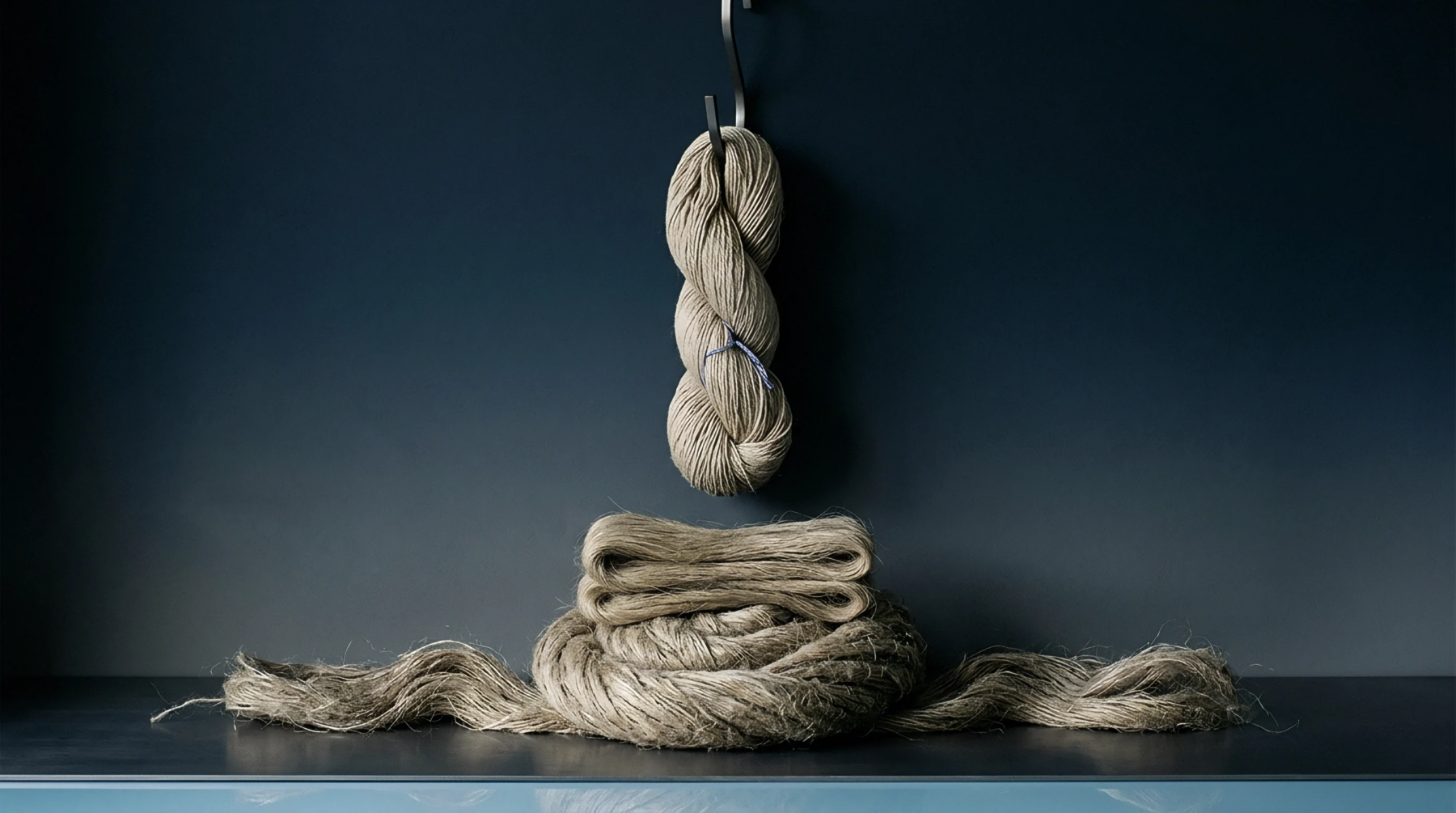
Composite macro-filaments composed of multiple overlapping single-cell fibres cemented by an intercellular polysaccharide matrix constitute the structural bast units extracted from dicotyledonous plant stems. In commercial linen production, technical flax bundles represent the primary textile raw material obtained after field retting, breaking, mechanical scutching and hackling operations. Individual bundles measure between twenty and one hundred centimetres in length, containing anywhere from ten to forty elementary fibres joined along their middle lamellae.
Tensile strength and bending stiffness depend directly on bundle diameter, elementary fibre count, the degree of pectin lignification and internal microfibrillar orientation within elementary cell walls. Quality grading protocols categorize hackled line flax according to bundle fineness, cleanliness, colour uniformity and longitudinal cohesiveness.
Industrial Processing
Subsequent mechanical refinement during drawing, roving preparation, flyer twisting and wet spinning progressively divides these composite strands into finer commercial units. Mill processing routes utilize technical flax bundles to generate continuous slivers on gill boxes, where pinned fallers align parallel bundles while drawing rollers attenuate the stream. In wet-spinning systems, hot water immersion softens the middle lamella, enabling controlled bundle division down to groups of two or three elementary filaments at the front drafting roller.
Without this progressive division, coarse bundles produce uneven, slub-heavy yarns unsuitable for fine apparel fabrics. Spinning mills document incoming bundle fineness using gravimetric tex measurements and airflow porosity testers, verifying raw stock suitability against contract yarn count targets.
Dividing Boundary
Complete separation of bundles into completely isolated individual elementary fibres defines the mechanical failure point for wet-spun yarn integrity. Industrial linen spinning requires residual bundle structure to preserve yarn continuity, because solitary elementary fibres lack sufficient length to sustain tension through drafting zones without falling into waste chutes.