Alkaline Chelation and Thermal Kinetics in Wet Line Flax Attenuation
Alkaline chelation at 68-75°C extracts middle lamella calcium ions to lower bundle drafting force, enabling high-draft attenuation into fine Nm 60 yarn.
Bath
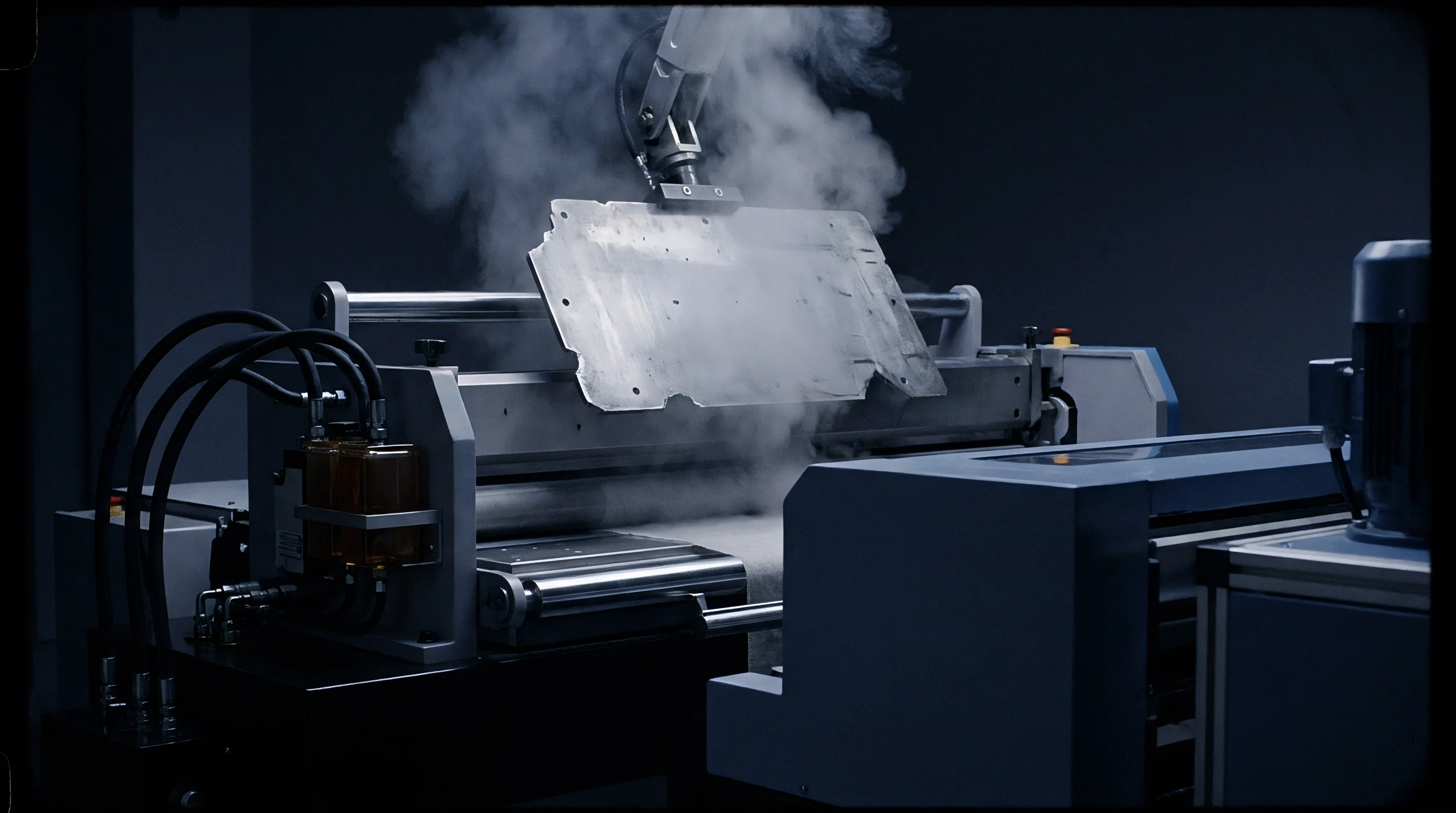
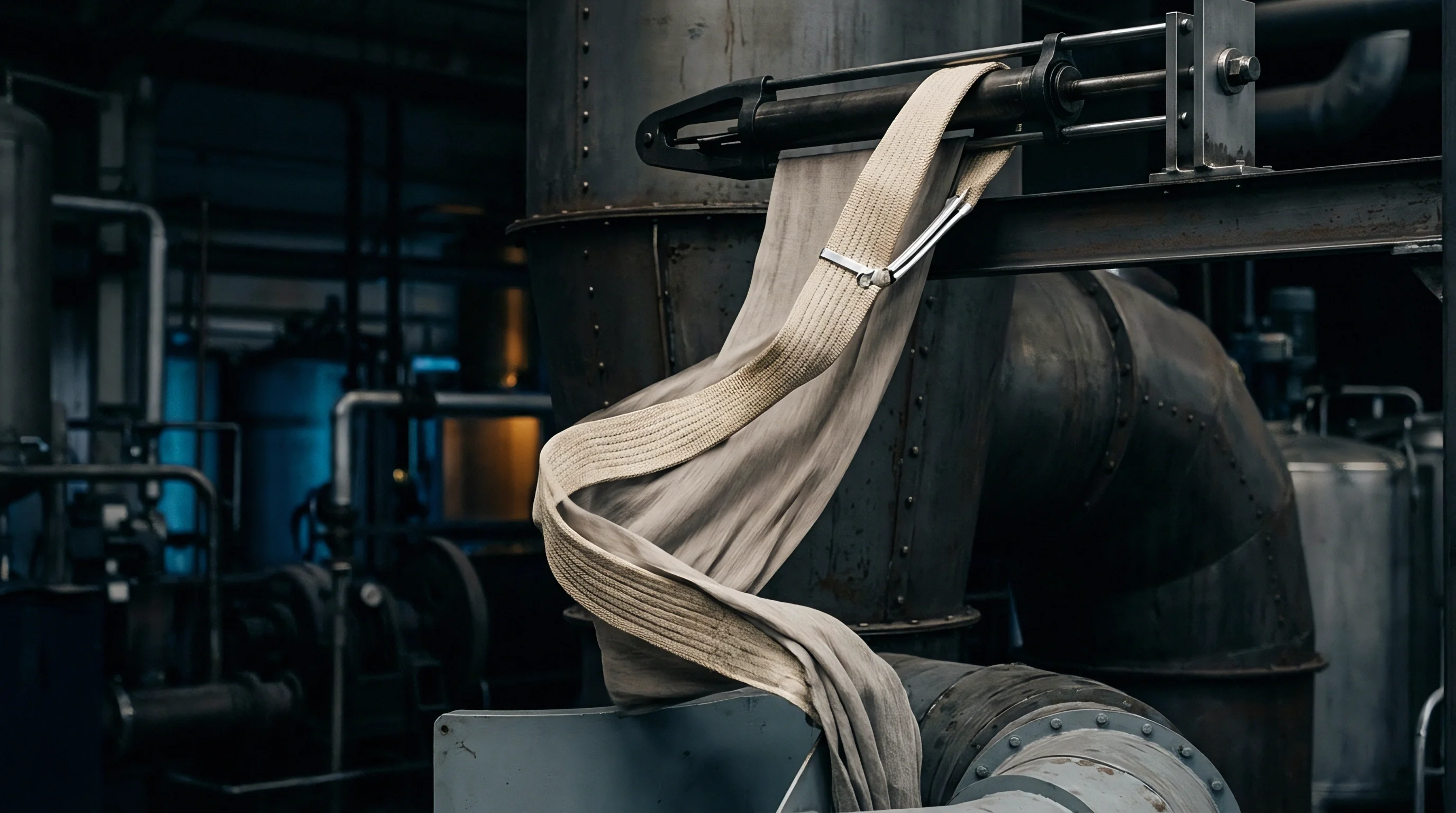
In wet line flax spinning, heavy long-staple roving carrying a linear density of 240 tex enters an aqueous vessel maintained at 68°C to prepare inter-fibre pectin networks for drafting. The fluid media contains 2.5 g/L tetrasodium ethylenediaminetetraacetate combined with 1.2 g/L sodium carbonate to establish an operational alkalinity of pH 9.4. Dwell duration equals eighteen seconds.
Under these inline conditions, divalent calcium ions anchoring the middle lamella of bast fibre bundles undergo ion exchange with alkali metals. Fluid agitation and thermal energy loosen the structural cohesion between elementary flax filaments, enabling high-draft attenuation without mechanical fibre fracture.
Chemical Composition of Industrial Roving Troughs
Continuous liquor circulation units control concentration gradients across the immersion chamber to prevent localized depletion of active sequestering compounds. Water quality dictates reagent efficiency. When untreated hard water supplies Ca2+ ions exceeding 150 mg/L, added chelation agents bind dissolved minerals in the incoming supply instead of extracting structural cations from the flax substrate.
Sodium carbonate buffers the fluid to prevent acidic hydrolysis of crystalline cellulose microfibrils, maintaining hydroxyl group ionization along pectic polymer backbones.
Alternative formulations incorporate trisodium citrate at 4.0 g/L or sodium tripolyphosphate at 2.0 g/L to meet specific effluent guidelines. Citrate chelation requires higher heat. Phosphates form complex coordination spheres with iron and calcium impurities, but their discharge triggers biological oxygen demand surcharges in industrial wastewater streams.
Tetrasodium EDTA maintains high stability constants across elevated temperature bands, securing predictable pectin solubilization across multi-shift spinning operations.
| Reagent Formulation | Operating Temperature (°C) | Liquor pH | Calcium Extraction Rate (%) | Yarn Tenacity (cN/tex) | End Breaks per 1000 Spindle Hours |
|---|---|---|---|---|---|
| Tetrasodium EDTA (2.5 g/L) + Na2CO3 (1.2 g/L) | 68 | 9.4 | 78.4 | 28.5 | 12.2 |
| Trisodium Citrate (4.0 g/L) + Na2CO3 (1.5 g/L) | 75 | 9.1 | 64.2 | 26.1 | 18.4 |
| Sodium Tripolyphosphate (2.0 g/L) + Na2CO3 (1.0 g/L) | 70 | 8.8 | 71.0 | 27.3 | 14.8 |
| Deionized Water Control (No Additives) | 60 | 6.8 | 14.2 | 21.4 | 46.5 |
| Data measured on Nm 60 (16.6 tex) wet-spun long line flax yarn processed from dew-retted French hackled band stock under ISO 2062 test conditions. | |||||

Dwell Kinetics and Thermal Gradient Dynamics
Liquor penetration inside tightly twisted roving bundles depends on transport properties controlled by temperature and strand tension. High strand twist slows aqueous diffusion into the central strand core, leaving inner elementary fibres un-chelated while outer layers over-soften. Trough temperature reaches seventy degrees.
Elevating the immersion temperature lowers fluid viscosity, accelerating mass transport of sodium ions into the intra-bundle interstitial spaces.
Over-heating the aqueous fluid beyond 85°C induces premature degradation of non-cellulosic matrix components, generating excessive fly waste at the front drafting rollers. Precise temperature regulation within a 2°C tolerance envelope prevents viscosity fluctuations that alter draft force profiles across the spinning frame.
A dwell time of 28 seconds at 72°C in 3.0 g/L tetrasodium EDTA yields a 42 percent reduction in bundle drafting force for 240 tex roving.
- Sample incoming supply water twice daily using complexometric titration to determine total background hardness prior to chemical dosing.
- Calibrate inline pH sensors at 60-minute intervals using standard buffer solutions corrected for thermal expansion at 70°C.
- Monitor liquor conductivity continuously to maintain target salt concentrations as fresh water feeds into the immersion tank.
- Extract 50 mL fluid samples from the mid-depth zone of the immersion tank to measure accumulated calcium concentration by atomic absorption spectroscopy.
- Dewater outgoing roving strands through rubber nip rollers set to 0.3 MPa nip pressure to retain forty percent wet pickup by weight.
Inadequate chemical monitoring inside the wet preparation vessel leads to variable inter-fibre friction along the strand, causing erratic drafting force spikes that snap fine line filaments and generate thick slub defects across the spun yarn package.


Chelation
Polygalacturonic acid chains within the middle lamella organize into rigid gel domains held together by coordinate ionic bonds between carboxyl oxygen atoms and divalent calcium cations. Removal of these calcium nodes destabilizes the insoluble pectic network, converting dense structural gels into soluble monovalent alkali pectates. This selective ion replacement weakens bundle cohesion without degrading structural cellulose microfibrils that give flax filaments their axial strength.

Pectic Polygalacturonate Scaffolds and Divalent Bridges
Homogalacturonan regions of flax pectin contain non-esterified galacturonic acid residues that form egg-box structures around calcium ions. The stability of these complexes prevents elementary fibre slippage during dry drafting. Alkaline environments above pH 8.0 promote de-esterification of methyl-esterified carboxyl groups, expanding the available sites for calcium binding and subsequent complexation by active chelating compounds.
Calcium displacement requires pH eight. Organics containing multiple carboxylic and aminocarboxylic acid functional groups display high thermodynamic affinity for divalent alkaline earth metals. When tetrasodium EDTA enters the middle lamella matrix, its six ligand sites enclose the divalent calcium cation, forming a stable hexadentate chelate ring structure with a log stability constant of 10.6.
| Ligand Compound | Log K (Ca2+) at 25°C | Log K (Mg2+) at 25°C | Optimum pH Range | Residual Pectin Content (% w/w) | Mean Bundle Diameter (µm) |
|---|---|---|---|---|---|
| Ethylenediaminetetraacetic Acid (EDTA) | 10.6 | 8.7 | 9.0 – 10.5 | 1.15 | 14.2 |
| Nitrilotriacetic Acid (NTA) | 6.4 | 5.4 | 8.5 – 9.5 | 1.82 | 17.8 |
| Trisodium Citrate | 4.7 | 3.4 | 7.5 – 9.0 | 2.45 | 21.5 |
| Sodium Gluconate | 1.2 | 0.7 | 10.0 – 11.5 | 3.10 | 26.0 |
Ligand Exchange Efficiency across Divalent Metals
Magnesium ions also participate in middle lamella pectin cross-linking, though their smaller ionic radius yields lower binding energy than calcium. Alkaline extraction baths target both divalent cations simultaneously to maximize elementary fibre release. Chelants with high selectivity for calcium over magnesium achieve faster bundle division, reducing the mechanical force required to pull elementary filaments past one another in the drafting zone.
Unbound calcium hardens pectin gel. Residual calcium levels above 0.35% by weight in processed roving indicate incomplete complexation, leading to coarse filament bundles that produce harsh, hairy yarn profiles. Proper chelation yields uniform draft.
Adherence to ISO 2370 linear density protocols mandates thermal conditioning of attenuated strands to prevent gravimetric error from residual chemical salts.
- Calcium Precipitation Phase occurs when local pH drops below 7.0, driving extracted calcium back into insoluble oxalate or carbonate salts that deposit on drafting rollers.
- Cellulose Hydrolysis Defect arises when alkali concentrations exceed pH 11.5 at elevated temperatures, cleaving beta-1,4-glycosidic bonds and reducing ultimate yarn tenacity.
- Non-Uniform Complexation stems from insufficient liquor penetration into dense roving cores, creating a structural gradient of soft outer fibres and stiff un-attenuated center cores.
- Effluent Salt Accumulation develops when rinse stages fail to remove complexed calcium-EDTA species, leaving abrasive crystal deposits on finished package cones.
Suppliers frequently defend high end-break figures by asserting that variations in field retting history, rather than poor bath control or incomplete cation extraction, dictate bundle drafting resistance on the spinning frame.

Kinetics
Thermal activation governs the rate of chemical bonds breaking inside the pectic matrix during wet attenuation. The cleavage of galacturonide linkages follows pseudo-first-order rate equations where temperature elevation lowers the apparent activation energy of extraction. Raising trough temperature from 50°C to 75°C increases the calcium extraction rate constant by a factor of 3.4, allowing faster roving throughput speeds without increasing drafting roller pressure.

Arrhenius Temperature Dependence of Polygalacturonate Cleavage
Non-enzymatic alkaline degradation of flax pectins proceeds via beta-elimination at esterified galacturonate units alongside direct ligand exchange at calcium bridge nodes. The activation energy for thermal pectin solubilization in alkaline EDTA solution measures 48.5 kJ/mol. Operating spinning troughs below 60°C forces reliance on higher chemical concentrations, which increases raw material costs and wastewater neutralization expense.
Fibre tenacity drops below target. High temperature accelerates reaction rate constants while simultaneously reducing fluid viscosity inside the strand bundle, promoting rapid transport of fresh chelant into tight micro-fibrillar voids.
Elevating trough heat beyond the degradation threshold of inter-fibre pectins weakens the core cellulose structural chains before attenuation finishes.

Which Alkaline Agent Prevents Excess Bundle Degradation?
Sodium sesquicarbonate operating at 72°C offers precise control over hydroxyl ion activity, restricting unwanted cellulose chain depolymerization while maintaining effective pectin cleavage rates. Carbonate-bicarbonate buffering systems stabilize the pH between 9.2 and 9.6, preventing sudden alkalinity spikes when processing acidic or under-retted flax lots.
Excess alkali degrades cellulose chains. Strong alkalis such as un-buffered sodium hydroxide induce excessive swelling of the elementary flax cell wall, altering microfibrillar alignment angles and reducing final yarn modulus.
- Thermal Profile Audit requires continuous logging of trough temperature across three sensor positions to ensure temperature variations remain within 1.5°C of target values.
- Alkalinity Buffer Control relies on automated titration loops that inject sodium bicarbonate whenever fluid pH exceeds 9.8.
- Roving Dwell Optimization adjusts frame speed and immersion path length to match the chemical reaction half-life at the chosen operating temperature.
- Liquor Refresh Rate mandates replacing twenty percent of bath volume per hour to prevent saturated calcium-chelant complexes from reaching chemical equilibrium.
Standard sales agreements for wet-spun flax yarn incorporate technical clauses specifying maximum permissible coefficient of variation in count, where failure to maintain thermal kinetics in wet drafting voids seller performance guarantees.


Splitting
Mechanical force applied by drafting rollers pulls softened flax strands apart into smaller sub-units down to elementary fibre dimensions. In wet spinning, back rollers clamp the roving while front rollers operating at higher surface speeds draw out the filaments. The ratio of front roller speed to back roller speed defines the draft ratio, typically set between 10 and 22 for fine line linen yarns.
Inter-fibre friction modified by chemical chelation determines whether strands slide smoothly or break under tension.
Drafting Mechanics and Fibrillar Bundle Division
Elementary flax cell walls possess diameters between 10 and 20 micrometres, whereas raw hackled line ribbons measure over 100 micrometres across. Wet attenuation breaks down large technical bundles into fine structural units containing only 2 to 5 elementary cell strands. High drafts cause end breaks.
Reducing bundle slip force via controlled chelation permits drafting at higher speed ratios without exceeding the tensile strength of the strand.
Total draft ratio reaches eighteen. Stick-slip friction dynamics during drafting generate periodic thickness variations along the attenuated sliver. Optimizing nip roller pressure to 0.45 MPa stabilizes the drafting zone boundary, preventing uncontrolled strand movement between back and front rollers.
| Draft Ratio | Trough Temp (°C) | Mean Sub-Bundle Diameter (µm) | Uster CV (%) | Yarn Tenacity (cN/tex) | Thin Places (-50% / km) |
|---|---|---|---|---|---|
| 12.0 | 60 | 28.4 | 18.2 | 22.1 | 145 |
| 15.5 | 68 | 18.6 | 14.1 | 27.8 | 42 |
| 18.0 | 75 | 14.2 | 12.4 | 29.4 | 18 |
| 22.0 | 85 | 11.8 | 15.8 | 23.5 | 88 |

Yarn Structural Quality and Tensile Metrology
Finished line yarn yarn count uniformity depends directly on the stability of bundle division in the drafting field. When chelation removes middle lamella pectins evenly, individual elementary fibres slip past each other without forming nep agglomerates or micro-voids. Yarn count variance exceeds limits.
Measurement of single-yarn strength under ISO 2062 confirms that uniform attenuation elevates break tenacity while reducing hairiness metrics.
Residual calcium reduces yarn lustre. Inadequate splitting leaves thick un-attenuated bundles in the yarn body, decreasing light reflection uniformity and yielding dull fabric appearance after weaving.
Uncontrolled bundle slippage during wet drafting produces severe count periodicities that persist through drying and weaving operations.
- Metric Yarn Count Target defines the nominal linear density expressed in Nm, requiring verification by skein reeling and oven-dry mass determination under ISO 6741 standards.
- Tenacity Limit Specifications state that fine line Nm 60 yarn must achieve a minimum breaking force of 26.0 cN/tex with a coefficient of variation below 9.0 percent.
- Mass CV Tolerance Window establishes an upper allowable limit of 13.5 percent Uster CV to ensure uniform appearance in high-density loom warp configurations.
- Imperfection Mass Thresholds mandate that thin places (-50%) shall not exceed 30 per kilometer and thick places (+50%) shall not exceed 50 per kilometer.
Maintaining balanced chemical dosage and thermal heat input during wet drafting ensures consistent fibre strand division without causing structural filament breakage.

Dossier
Evaluating financial performance across wet line flax spinning routes demands full cost accounting of chemical reagents, thermal energy inputs, hackling yield loss, and final yarn quality classification. Processing a 1000 kg batch of scutched long flax fibre into fine Nm 60 (16.6 tex) line yarn serves as an operational benchmark for comparing chelation strategies against landed yarn market prices.
Worked Economic Balance of Chemical Thermal Attenuation
Assume 1000 kg of scutched long flax fibre purchased at 6.20 EUR/kg, yielding 680 kg of dressed hackled line flax following comb separation, with 290 kg of hackling tow recovered as lower-value by-product at 1.80 EUR/kg. The remaining 30 kg represents non-recoverable shive and dust waste. Dressed line flax enters roving preparation and wet spinning to produce Nm 60 yarn.
Steam consumption drives line expenditure.
Bath turnover occurs hourly. Operating a wet spinning frame running at 18 m/min delivery speed with 200 spindles consumes 4.2 kW of electrical drafting energy alongside 14.5 kg/h of saturated steam to maintain trough temperature at 70°C. Chemical dosing using 2.5 g/L tetrasodium EDTA and 1.2 g/L sodium carbonate adds 0.14 EUR per kilogram of spun yarn. Total spinning conversion cost, including energy, labor, chemicals, and equipment depreciation, equals 4.80 EUR per kilogram of yarn.
Yield arithmetic translates raw fibre input into net landed fabric costs. Total expenditure for producing 640 kg of finished Nm 60 line yarn from the initial 1000 kg raw flax lot equals 6.20 EUR/kg raw fibre cost (6200 EUR) plus conversion cost (3072 EUR) minus hackling tow credit (522 EUR), netting 8750 EUR total lot cost. This establishes a net manufacturing cost of 13.67 EUR per kilogram of spun yarn.
At a fabric weight of 140 g/m² woven at 1.60 metre width, yarn cost contributes 3.06 EUR per linear metre of loom-state linen cloth.

Commercial Quality Verification and Contractual Tolerances
Yarn delivery contracts specify strict statistical limits on physical properties to prevent downstream loom stops. Receiving inspection samples ten cones per 1000 kg yarn box, testing linear density according to ISO 2060 and twist structure under ISO 2061. Deviations exceeding 2.5 percent from nominal count trigger automatic price adjustments or lot rejection.
Landed cost accounting must factor in scrap rates during cone winding and clearing. Electronic yarn clearers set to cut slubs larger than +150% remove structural defects caused by poorly attenuated fibre bundles, but each splice adds minor structural variance and machine downtime costs. Maintaining precise chelation and thermal kinetics in wet drafting minimizes clearer cuts, protecting mill margin margins and yarn structural integrity.
The exact commercial boundary where higher thermal energy expenditure offsets expensive complexing agents remains dependent on fluctuating industrial gas prices and local environmental discharge tariffs.