
Basic FTIR Identification Methods for Raw Retted Flax Fibers
ATR-FTIR spectroscopy identifies raw retted flax by tracking the 1735 cm-1 ester carbonyl and 1505 cm-1 lignin bands against the 1030 cm-1 cellulose baseline.
ATR-FTIR spectroscopy identifies raw retted flax by tracking the 1735 cm-1 ester carbonyl and 1505 cm-1 lignin bands against the 1030 cm-1 cellulose baseline.

Klason lignin testing verifies bast fiber processing levels through acid hydrolysis and ash correction to confirm tariff codes and audit mill degumming claims.

Differentiating volatile finish loss from moisture evaporation requires solvent pre-extraction or Karl Fischer titration to protect commercial yarn weight billing.

Adjusting yarn dry mass for residual spin finish involves deducting solvent extractable matter before applying official moisture regain figures to prevent overbilling.

Deducting non-cellulosic spin finishes from oven-dry flax roving mass prevents double-billing and aligns cross-border invoices with net dry fibre content.

Integrating ISO 6741 gravimetric testing into roving contracts establishes oven-dry mass baselines, removing water and oil weight shifts from invoices.
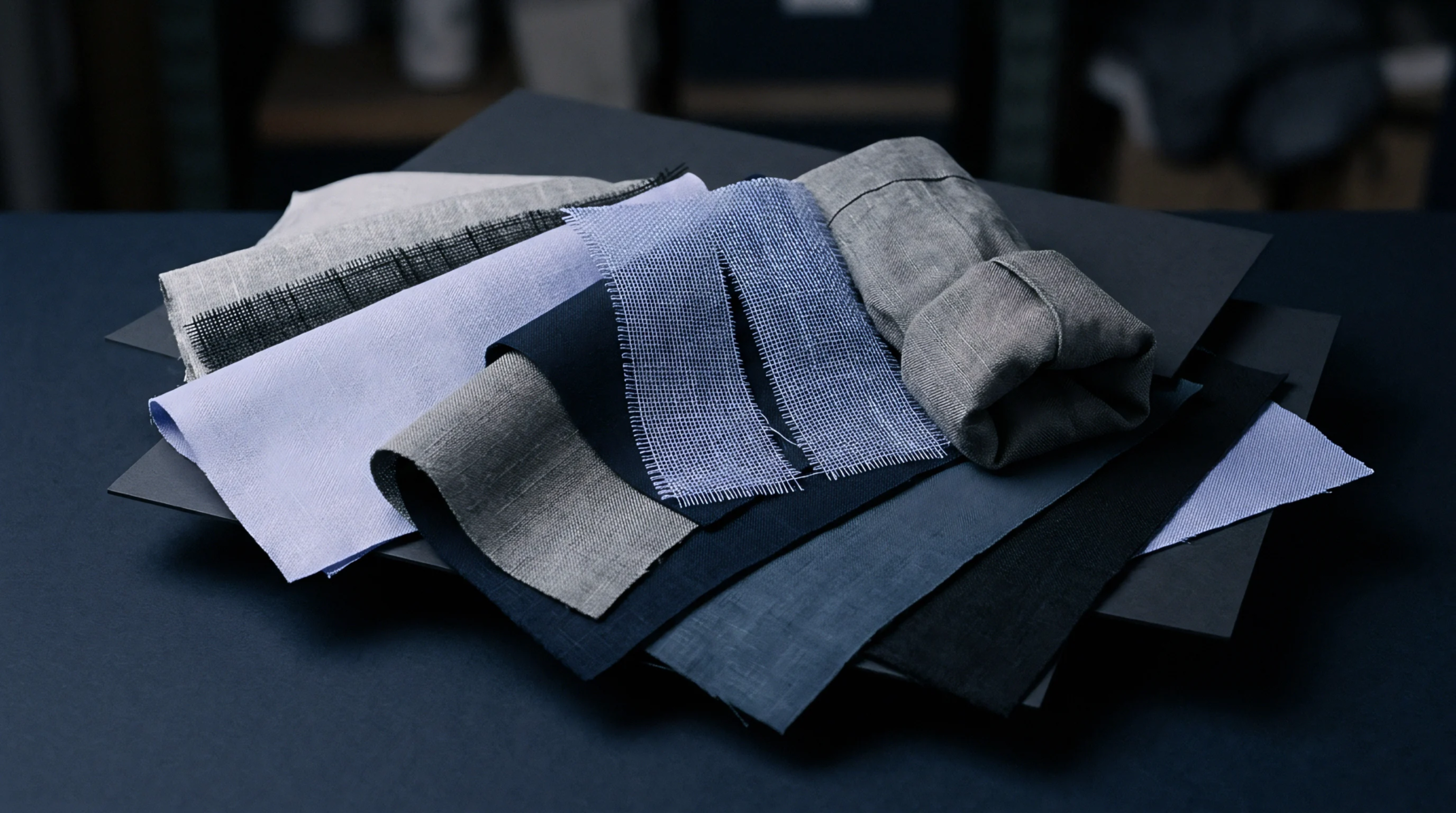
Optical vision scanners estimate surface impurity area but require routine calibration against gravimetric chemical extraction weights to verify true clean fibre yield.

Resolving bast fabric solvent extraction discrepancies demands batch-specific d-factor calibrations and moisture regain controls near tariff border limits.

HS classification for pure flax relies on gravimetric mass determination on a clean dry basis adjusted for statutory moisture regain allowances under ISO 1833.

Reconciling commission finishing mass balances depends on separating raw yarn wax stripping loss from chemical finish pick-up and standard moisture regain.

Finished fabric yield calculations must deduct dry size pickup percentages and natural scour losses from greige warp mass before applying crimp factors.

Oven dry mass baselines for grey linen yarns require 105C desiccation and solvent extraction adjustments to prevent structural yarn count and billing errors.

Reconciling blended yarn customs weight ratios demands applying statutory commercial regains to oven-dry masses extracted of non-cellulosic impurities.

Residual pectin degradation products induce elementary fibre slippage that suppresses measured flax yarn tenacity independently of true cellulose DP integrity.

Auditing wet spun flax pairs isotope spectrometry with mass balance logs to expose undocumented fiber blending masked by paper transaction certificates.

Standardizing alkaline digestion metrics verifies flax roving origin by confirming that chemical mass loss stays between 2.6 and 4.2 percent.
Expertise is a utility, not a secret. sentiention™ publishes its working knowledge as open reference: intelligence layer covering the materials it sources, the markets it enters, and the reference that serves both.