Fabric Stiffness
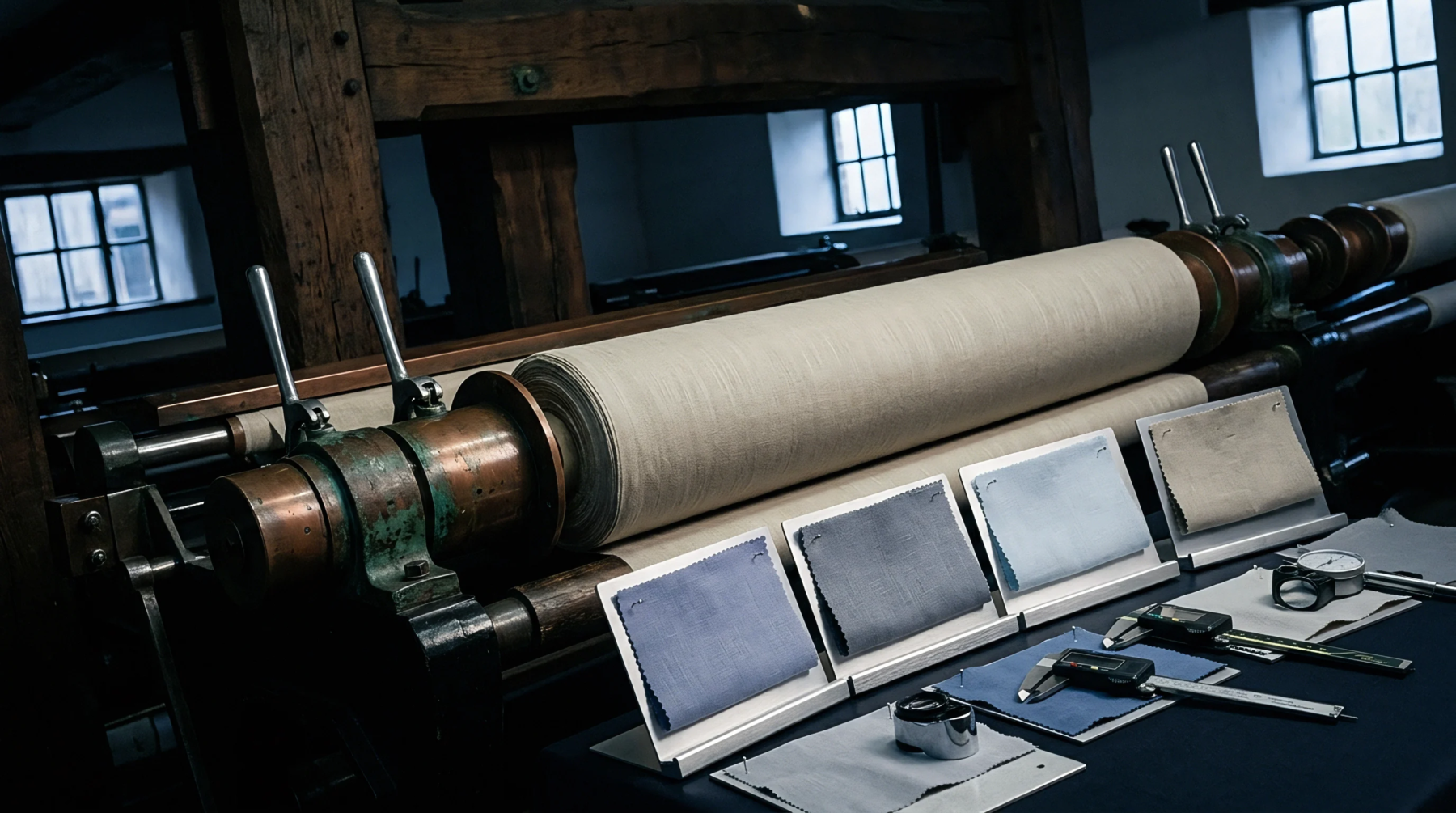
The metric bending length quantifies how far a cantilevered strip of linen cloth drops under its own weight, governing the drape characteristics of garments leaving the finishing floor of a textile mill. High values denote rigid flax yarns that resist deformation during mechanical handling, whereas low numbers indicate pliable fabrics suited for soft apparel. Chinese processing houses evaluate this property using standard cantilever apparatuses to ensure compliance with export quality certificates issued before shipment.
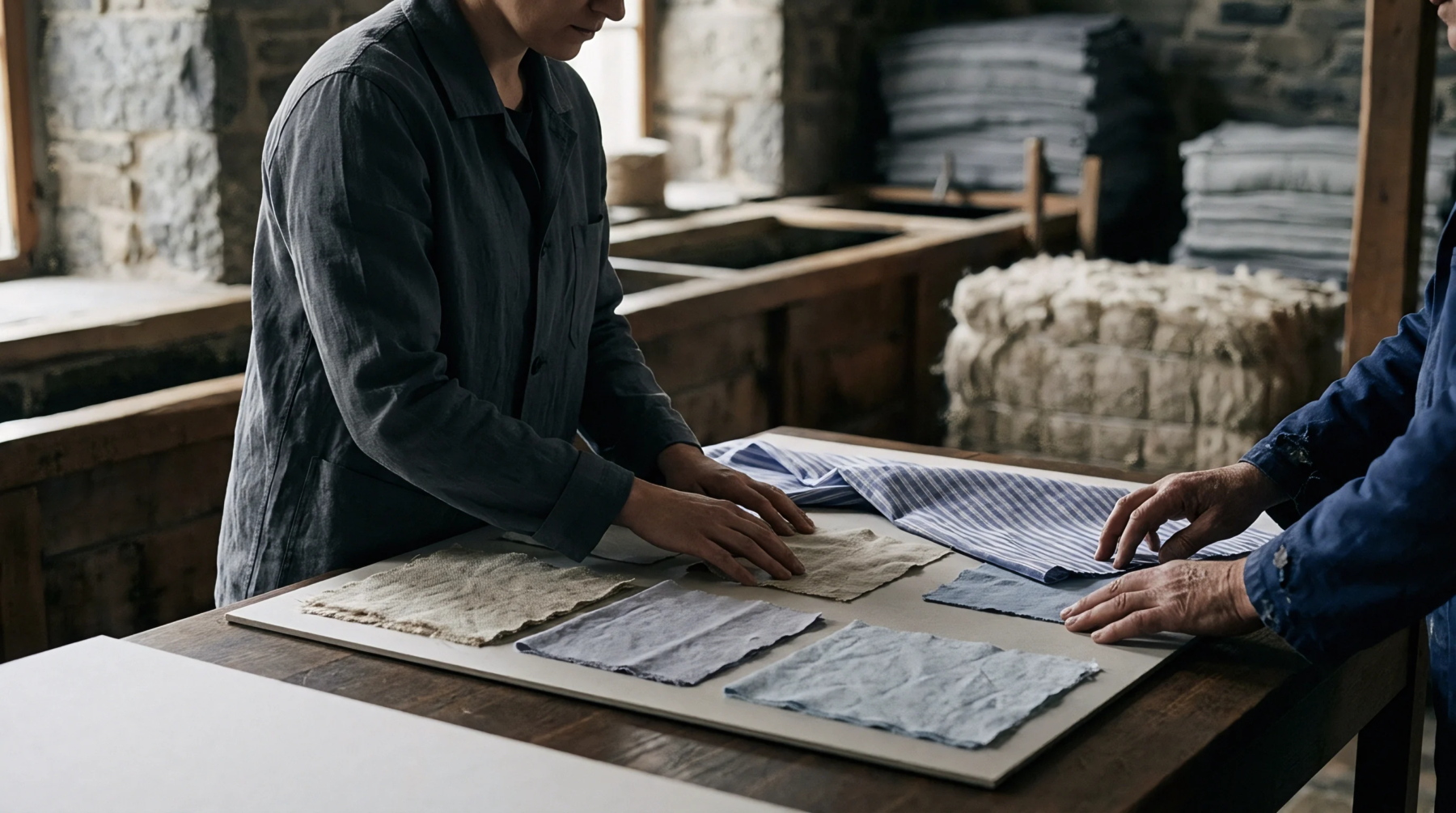
Inspectors take multiple square samples from each finished bolt, conditioning them at precise humidity levels before sliding them across a horizontal platform until the leading edge touches a sloped mirror at a forty-one-point-five degree angle. Half of the overhang distance yields the required value in centimeters, which technicians record alongside warp and filling densities in the mill production register.
Yarn Drape
Mechanical behavior during finishing determines whether raw flax fibres yield a crisp tablecloth or a fluid dress fabric. Loosely twisted yarns allow greater fiber mobility within the yarn structure, producing low resistance to curvature and a soft handfeel that foreign buyers demand for summer collections. Stiff starches applied during sizing artificially elevate the measured value until a hot water wash strips the chemical additives away, exposing the true structural drape of the linen substrate.
Mills maintain strict tolerance bands for these measurements because excess rigidity causes garments to crease permanently during commercial packing.
Buyer Tolerance
Commercial supply agreements establish strict numerical thresholds that distinguish acceptable mill output from rejected lots destined for domestic discount markets. Acceptance criteria enforced by European importers penalize batches exceeding predetermined limits for stiffness, forcing supervisors to adjust scouring durations and calender pressure settings. Production supervisors log these metrics daily to track batch-to-batch variation arising from raw flax crop fluctuations caused by weather conditions during retting.
Subsequent processing stages rely on consistent physical properties to maintain high speed sewing line efficiency without needle breakage or seam puckering. Strict adherence to specified limits protects the manufacturer from expensive cargo rejections at the port of destination.