Quantifying Structural Micro Slippage Dynamics within Water Assisted Bast Fiber Pneumatic Joins
Water-assisted pneumatic splicing increases bast fiber splice strength above 80% retained strength by plasticizing pectin with 10-30 µL atomized water mist per cycle.

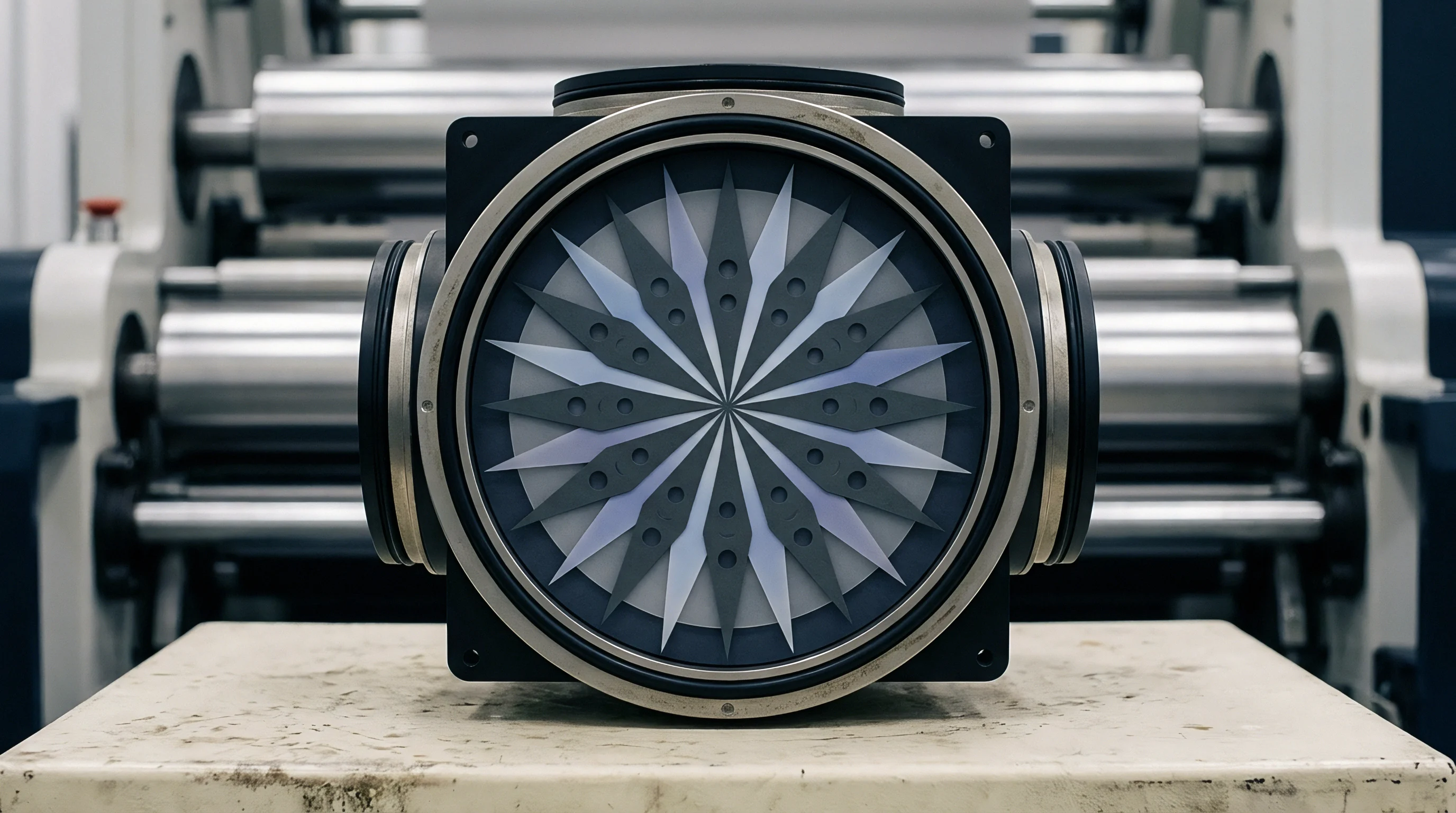
Splice
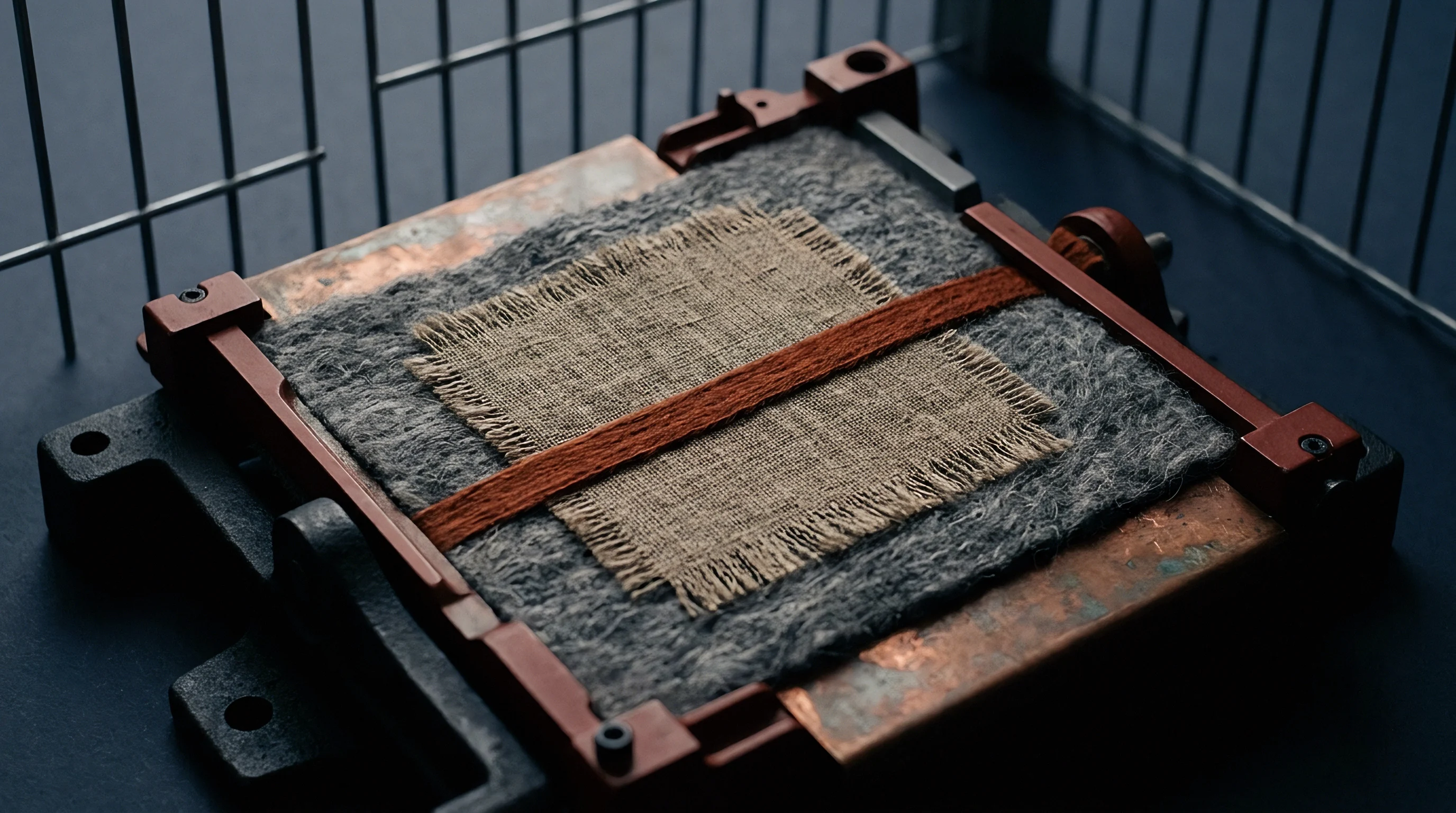
Mechanical Interlocking of Discontinuous Bast Fibers
Pneumatic splicing of ring-spun linen yarn requires overcoming the inherent flexural rigidity of bast fiber bundles. Unlike continuous filament synthetics or highly pliable combed cotton, flax fibers possess a rigid crystalline structure dominated by highly oriented cellulose microfibrils bound by an amorphous matrix of pectin and lignin. When dry compressed air enters a jointing chamber, the air vortex attempts to untwist the yarn ends, intermingle the exposed ultimate fibers, and re-impart real or false twist to consolidate the assembly.
In dry joins, the high bending modulus of flax prevents tight mechanical interlock. Fiber tails resist curling around adjacent strands, producing a bulky join with minimal inter-fiber friction that pulls apart under modest warp tension spikes.
Water injection into the turbulent air stream changes the structural geometry of the intermingled zone. Fluid droplets atomized at pressures between 0.35 MPa and 0.50 MPa penetrate the opened fiber bundle within milliseconds. Moisture plasticizes the cell walls, temporarily lowering the flexural rigidity of the outer flax technical fibers.
This compliance allows the turbulent air flow to wrap individual fiber ends tightly around neighboring bundles, creating a denser cross-sectional packing geometry. Upon drying, the mechanical crimp and lateral compaction achieved in the chamber remain locked, yielding a spliced segment whose diameter exceeds the parent yarn diameter by less than thirty percent.
Water assistance increases the average inter-fiber contact length within a 25-millimeter splice zone from 3.2 millimeters in dry joins to 8.7 millimeters under identical air pressure settings.

Micro-Structural Discontinuities within the Intermingled Zone
Cross-sectional analysis of wet pneumatic joins reveals three distinct structural regions along the axis of the intermingled zone. The central mixing core exhibits the highest fiber density, where untwisted fibers from both yarn ends entrain into a shared cylindrical core. Flanking the core are two transition zones where the tail ends of the inserted yarns lie exposed against the surface of the main yarn body.
In failure modes under axial stress, these tail exposure points function as stress concentration sites where micro-displacement initiates.
Flax fiber bundles do not possess uniform cross-sectional dimensions along their length. Variations in pectin breakdown during retting leave random clusters of ultimate fibers glued together into coarse technical fibers alongside fine, individual filaments. During pneumatic mingling, coarse fiber bundles resist the swirling action of the air jet, remaining straight while finer fibers wrap around them.
This structural inhomogeneity creates micro-voids inside the splice matrix. When tension is applied, fine outer fibers tighten first, bearing the initial shear load, while central coarse bundles remain unstrained until outer slippage occurs.
The structural integrity of the join depends on avoiding specific physical defects during the air-water injection cycle:
- Unraveled Tail Ends where insufficient air pressure leaves dry bundle tips protruding outward, catching heddle eyes during high-speed shed opening.
- Decentralized Core Core Splicing caused by asymmetrical yarn positioning in the jointing channel, concentrating inter-fiber friction into less than forty percent of the cross-section.
- Hyper-Densely Compacted Nodes resulting from excess fluid injection that prevents the turbulent air from untwisting the core, creating an inflexible hard mass.
- Sloughing Outer Sheaths where surface fibers wrap loosely around an intact, unmingled core bundle, sliding freely along the yarn axis under ten centinewtons of force.
Spinning mills often attribute weak joins to seasonal retting inconsistency rather than re-calibrating the splicing chamber settings for varying yarn counts. Technical personnel frequently argue that batch-to-batch fiber stiffness shifts make uniform pneumatic jointing impossible without continuous manual adjustment.
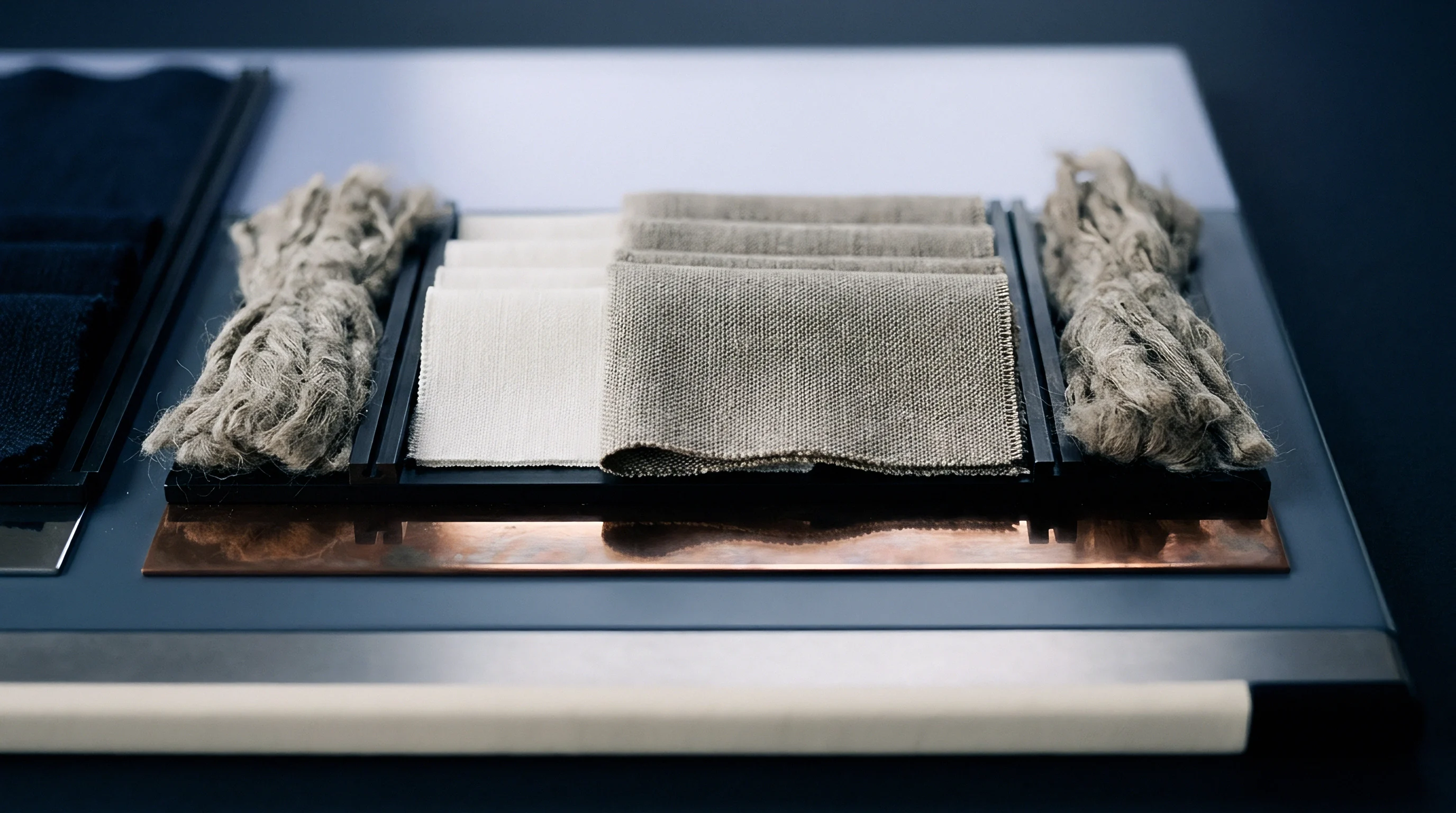
Shear
Frictional Resistance Mechanics under Axial Strain
The resistance of a spliced yarn segment to tensile axial loading depends directly on inter-fiber shear strength rather than single-fiber fracture limits. When a woven warp undergoes cyclic shedding movement, the jointed section experiences repeated tension peaks reaching up to thirty percent of ultimate tensile strength. Under these dynamic conditions, failure occurs through progressive micro-slippage, where individual bast fiber ends overcome static friction and slide past adjacent fibers without breaking.
Amontons’ law of friction provides a baseline model for joint stability, yet microscopic contact points between wet-processed flax fibers exhibit non-linear frictional behavior. Water mist solubilizes trace amounts of hemicellulose and pectins residing on the fiber perimeter, redistributing these organic polymers across contact points. As the joint dries under residual pneumatic packing pressure, these dissolved compounds dry into microscopic adhesive bridges.
The total resistance to slippage combines mechanical fiber-to-fiber friction, mechanical entanglement torque, and chemical hydrogen bonding across pectin contacts.
Shear strength along the joint axis is distributed unevenly. The highest resistance occurs where the volumetric fiber density reaches its peak within the central intermingled core. Micro-slippage initiates near the necking zones, where the fiber volume fraction drops below forty percent.
Once localized sliding begins at the exposed tail ends, stress redistributes toward the splice center, accelerating total joint extension until catastrophic pull-out occurs.
Quantifying Tensile Behavior and Slippage Thresholds
Evaluating the mechanical response of water-assisted pneumatic joins requires analyzing load-elongation curves generated at controlled strain rates. Standard single-strand yarn testing following ISO 2062 reveals a characteristic two-stage curve for spliced bast yarns. Stage one represents elastic deformation, where inter-fiber friction prevents movement, and yarn extension matches the native fiber modulus.
Stage two begins at the yield point, marked by a sudden decrease in curve slope indicating the onset of micro-slippage.
The force required to trigger initial micro-slippage is termed the critical shear threshold. In dry bast splices, this threshold coincides directly with ultimate breaking strength because frictional force is low and immediate structural collapse follows yield. Water-assisted joins demonstrate a distinct yield point well below ultimate rupture, allowing the splice to absorb transient strain spikes without immediate mechanical detachment.
| Yarn Count (Nm) | Blast Pressure (bar) | Water Volume (µL/cycle) | Retained Strength (%) | Slippage Threshold (cN) | Ultimate Strain (%) |
|---|---|---|---|---|---|
| Nm 14 (71 tex) | 5.0 | 12 | 82.4 | 385 | 2.15 |
| Nm 14 (71 tex) | 6.5 | 22 | 91.2 | 460 | 2.85 |
| Nm 26 (38 tex) | 5.0 | 8 | 78.6 | 210 | 1.90 |
| Nm 26 (38 tex) | 6.5 | 16 | 88.5 | 275 | 2.40 |
| Nm 39 (26 tex) | 5.5 | 6 | 74.2 | 125 | 1.65 |
| Nm 39 (26 tex) | 7.0 | 12 | 84.1 | 168 | 2.10 |
The relationship between injection pressure and water volume establishes the threshold where slippage transitions to total rupture. Increasing blast pressure from 5.0 to 6.5 bar elevates retained tensile strength by roughly ten percent across all counts, provided water volume scales proportionally with yarn linear density. Insufficient water volume at elevated pressure leads to internal fiber abrasion, degrading individual bast fiber lumens and lowering the critical shear threshold.
Failing to establish a sufficient slippage threshold causes subtle micro-displacements during automatic cross-winding. When a spliced segment passes over tension guides at speeds exceeding 800 meters per minute, low-friction splices elongate by two to five percent without parting. This permanent elongation leaves loose, low-tension zones in the yarn package that cause slough-offs and severe tension variance during warp beam preparation.

Mist

Thermodynamic and Surface Energy Mechanics of Water Injection
Water-assisted pneumatic splicing depends on precise fluid dispersal into microscopic droplets capable of wetting hydrophobic fiber surfaces within milliseconds. Raw flax fibers contain up to two percent surface waxes and lipophilic compounds that resist pure water penetration. Splicing systems atomize liquid water into a fine mist with droplet diameters ranging between 10 and 30 micrometers.
Small droplet dimensions maximize the surface-area-to-volume ratio, accelerating surface wetting across individual fiber walls.
When atomized mist enters the jointing chamber, compressed air expands rapidly, causing a sudden temperature drop within the mixing volume. This adiabatic cooling reduces the vapor pressure limit, forcing liquid droplets out of suspension directly onto the fiber surfaces. Cold water absorption increases hydrogen bonding potential between exposed cellulose chains during subsequent drying.
The liquid film creates capillary forces that pull adjacent fibers together with pressure proportional to liquid surface tension divided by the contact radius between fibers.
Capillary attraction forces generated by a 15-micrometer liquid bridge pull adjacent flax fibers together with an effective lateral pressure exceeding 0.12 megapascals during air expulsion.
Volumetric Calibration and Fluid Dynamics
Fluid volume delivery must match the moisture absorption capacity of the specific yarn mass enclosed in the chamber. Excess fluid fills the voids between fibers completely, forming a continuous liquid film that acts as a hydraulic lubricant during air jet firing. Hydrodynamic lubrication reduces inter-fiber static friction, causing fibers to slide past one another without catching or tangling during the turbulent blast cycle.
Conversely, undersized water volumes leave fiber tips dry and brittle, yielding brittle splices prone to shedding fine fiber lint inside the loom shed.
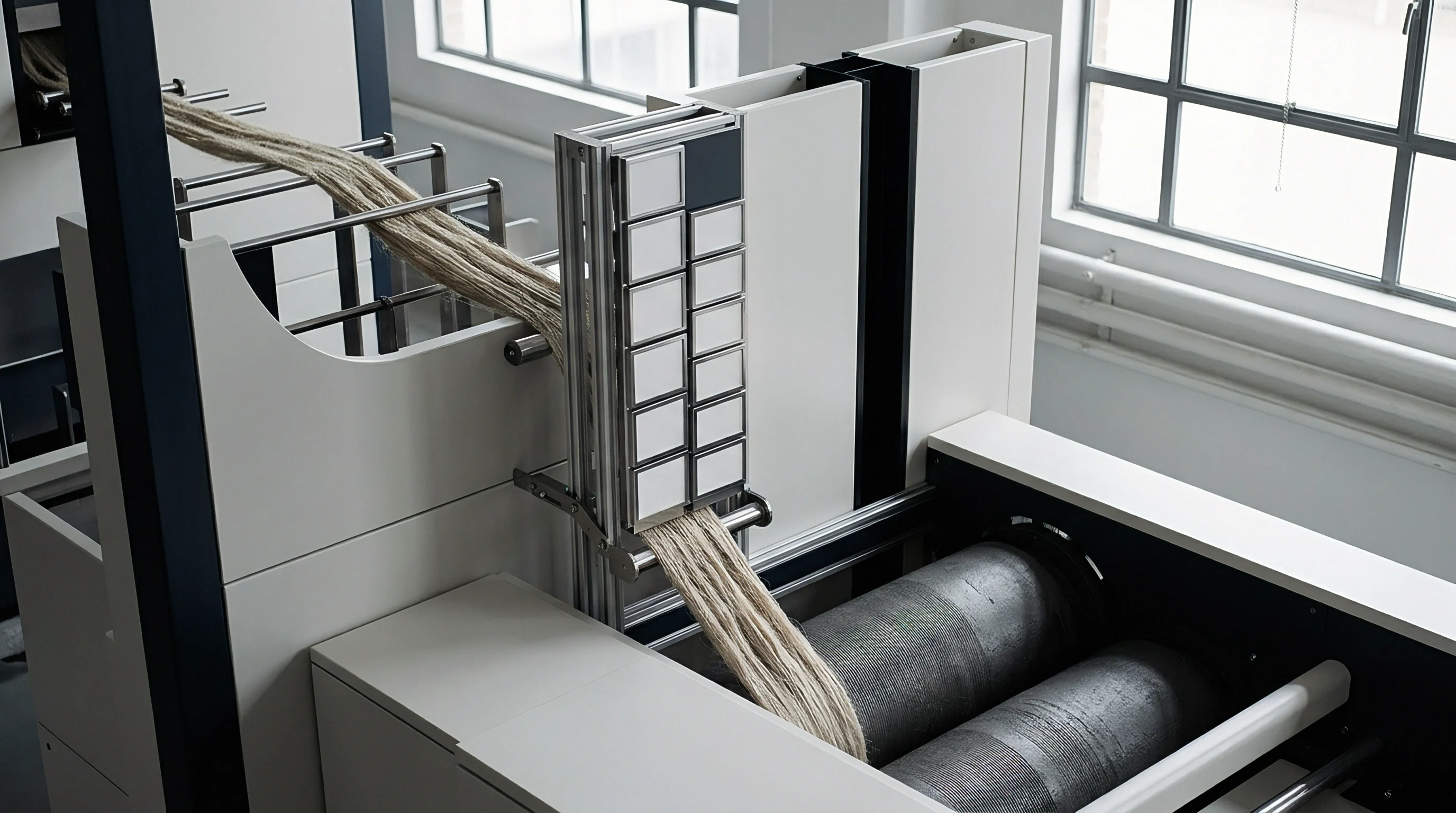
Can Water Volume Over-Saturation Degrade Splice Cohesion?
Over-saturation alters the thermodynamic drying phase following pneumatic consolidation. When liquid occupies more than fifteen percent of the total splice volume, rapid moisture evaporation cannot occur at ambient winding room conditions. The wet core remains swollen while outer fibers dry and shrink around it.
This differential drying creates radial tension gradients that force outer fiber wraps to buckle, breaking the friction seal before the yarn reaches the winding drum.
Setting up the fluid metering circuit requires a precise physical calibration sequence to maintain consistent volumetric discharge across long production runs:
- Purge compressed air supply lines to purge trapped oil condensates and solid particulate matter larger than five micrometers.
- Check the fluid dosing pump seals for wear, ensuring zero line pressure drop over a ten-minute static test.
- Measure single-shot liquid output using a micro-dispensing mass balance across fifty consecutive test fires.
- Adjust the injection solenoid open-time until fluid volume variance remains within plus or minus 0.5 microliters per actuation.
- Verify nozzle spray geometry using optical patternation to ensure complete mist coverage across the entire jointing chamber slot width.
Temperature fluctuations within the winding shed change liquid viscosity and surface energy, shifting droplet atomization dynamics over a twelve-hour shift. The precise threshold where liquid viscosity variations overcome pneumatic atomization efficiency remains unresolved in commercial winding room setups.


Raster

Optical and Displacement Metrology Systems
Quantifying micro-slippage within a spliced yarn segment requires measurement methods capable of resolving sub-micron displacements without applying physical load that alters joint geometry. Traditional mechanical extensometers rely on physical contact clamps that press against the yarn surface. These clamps flatten the circular cross-section, crushing the splice core and artificially elevating inter-fiber friction.
High-speed optical raster tracking and laser speckle interferometers measure surface deformation without touching the specimen.
Laser speckle displacement tracking illuminates the splice area with coherent monochromatic laser light. The random interference pattern reflected from the rough fiber surfaces forms a optical speckle field captured by high-frame-rate digital sensors. As tensile load stretches the spliced yarn, internal fiber sliding alters the spatial distribution of the speckle field.
Cross-correlation algorithms process consecutive raster images at rates up to 10,000 frames per second, yielding displacement maps with a spatial resolution finer than 0.5 micrometers.
Optical image analysis separates total splice elongation into two distinct components: true elastic strain of individual fiber elements and plastic sliding displacement between adjacent fibers. Tracking exposed fiber tail ends against the core matrix identifies the exact instant micro-slippage initiates, defining the true structural yield point of the join.
| Jointing Method | Retained Strength (%) | Slippage Distance at 10 N (mm) | Cross-Sectional Volume Increase (%) | Mass Variance (CV %) |
|---|---|---|---|---|
| Standard Mechanical Knot (Weaver) | 62.0 | 0.00 | 210.0 | 14.2 |
| Dry Pneumatic Splice | 54.5 | 1.85 | 55.0 | 6.8 |
| Water-Assisted Pneumatic Splice | 86.5 | 0.12 | 22.0 | 2.4 |
| Thermoplastic Adhesive Join | 91.0 | 0.02 | 85.0 | 11.5 |

Standardized Test Frameworks and Verification Limits
Standard tensile testing regimes designed for continuous yarns fail to capture localized micro-slippage dynamics within spliced sections. ISO 2062 specifies constant rate of extension parameters using gauge lengths of 250 or 500 millimeters. Over these length scales, elongation of the intact parent yarn masks micro-displacements occurring within a 25-millimeter splice zone.
Testing spliced yarn performance requires localized displacement monitoring focused directly on the intermingled region.
Qualification protocol mandates loading the spliced specimen to seventy percent of expected breaking load, holding static tension for sixty seconds, and recording plastic creep distance. Joins exhibiting micro-slippage exceeding 0.2 millimeters under static creep conditions suffer progressive structural degradation during continuous cyclic warp shedding.
Key parameters for evaluating splice stability under optical raster displacement metrology include:
- Intermingled Length Ratio defining the length of the mingled core relative to the total untwisted yarn transition zone.
- Surface Fiber Alignment Index measuring the average angular deviation of outer wrapping fibers relative to the longitudinal yarn axis.
- Localized Creep Velocity calculated as the micro-displacement rate in micrometers per second during constant-load hold phases.
- Volumetric Packing Factor determined through optical cross-sectional density distribution analysis across the widest splice segment.
Standard master purchase agreements in international yarn trade mandate that average retained tensile strength of spliced sections shall not fall below eighty percent of parent yarn strength, evaluated over a sample size of one hundred test cuts per yarn lot.
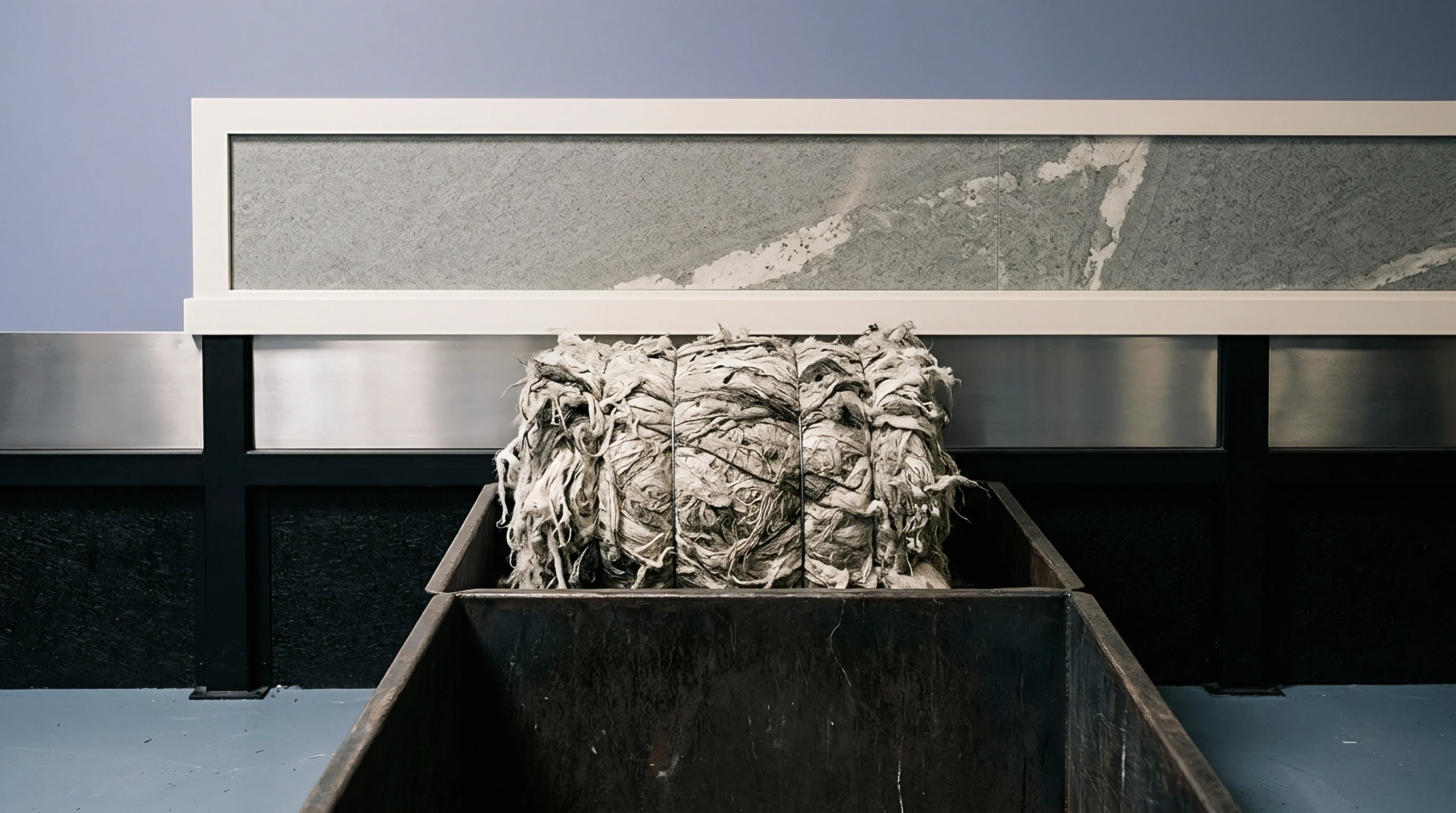

Travel

Passage through Loom Shed Components
During high-speed weaving, every warp thread travels through dropping wires, heddle eyes, and reed dents hundreds of times per minute. Spliced segments present structural discontinuities that alter thread-to-element contact dynamics. As a spliced node enters the eye of a steel heddle, the enlarged cross-section compresses laterally.
If the join possesses high flexural rigidity or loose surface loops, friction spikes dramatically as the node forces its way through the restricted opening.
Flax fibers exhibit low resistance to surface transverse shear. Repeated passage through fine reed dents at high air-jet or rapier insertion rates generates cyclic abrasion. In dry splices, this abrasion strips outer wrapping fibers away from the core, creating loose rings of fiber that slide backward along the yarn axis.
These bunched rings form small pills known as drop-outs that choke adjacent warp threads, triggering false loom stops or warp end breaks.
Loom shed friction experiments confirm that a water-assisted splice with a diameter ratio under 1.25 incurs eighty percent fewer reed passage abrasions than a dry splice with a ratio of 1.50.
Pneumatic joins prepared with water assistance demonstrate superior elastic recovery when subjected to transverse crushing forces inside the shed. Wet consolidation aligns outer fibers flat against the body of the yarn, lowering the dynamic friction coefficient against smooth metal drop wires and polished steel heddles.

Abrasive Friction and Cyclic Peak Tensions
Modern high-speed rapier looms operate at insertion speeds exceeding 500 picks per minute, generating sharp tension spikes during shed changing. Warp yarns experience peak dynamic tension pulses reaching up to 0.5 grams per denier within a duration of twenty milliseconds. Under these sudden stress bursts, splices with poor inter-fiber friction undergo immediate micro-slippage.
The cumulative effect of minor slippage increments across multiple shed cycles leads to progressive joint lengthening until the splice unravels completely.
Minimizing warp break frequency requires balancing splicing parameter adjustments with loom shed operational requirements:
- Heddle Eye Dimensioning matching the eye inner length to at least three times the nominal splice node diameter to prevent lateral binding.
- Shed Opening Timing delayed relative to insertion beat-up to reduce peak dynamic tension exerted on warps during high-speed shed motion.
- Warp Tension Leveling maintaining static beam tension within a tight five-percent band across the entire warp sheet width.
- Humidity Optimization maintaining loom shed relative humidity between sixty-five and seventy-five percent to retain moisture within bast fiber splices.
Warp splices that pass through tension rollers without structural failure will clear the reed smoothly provided the node diameter remains within strict physical limits.
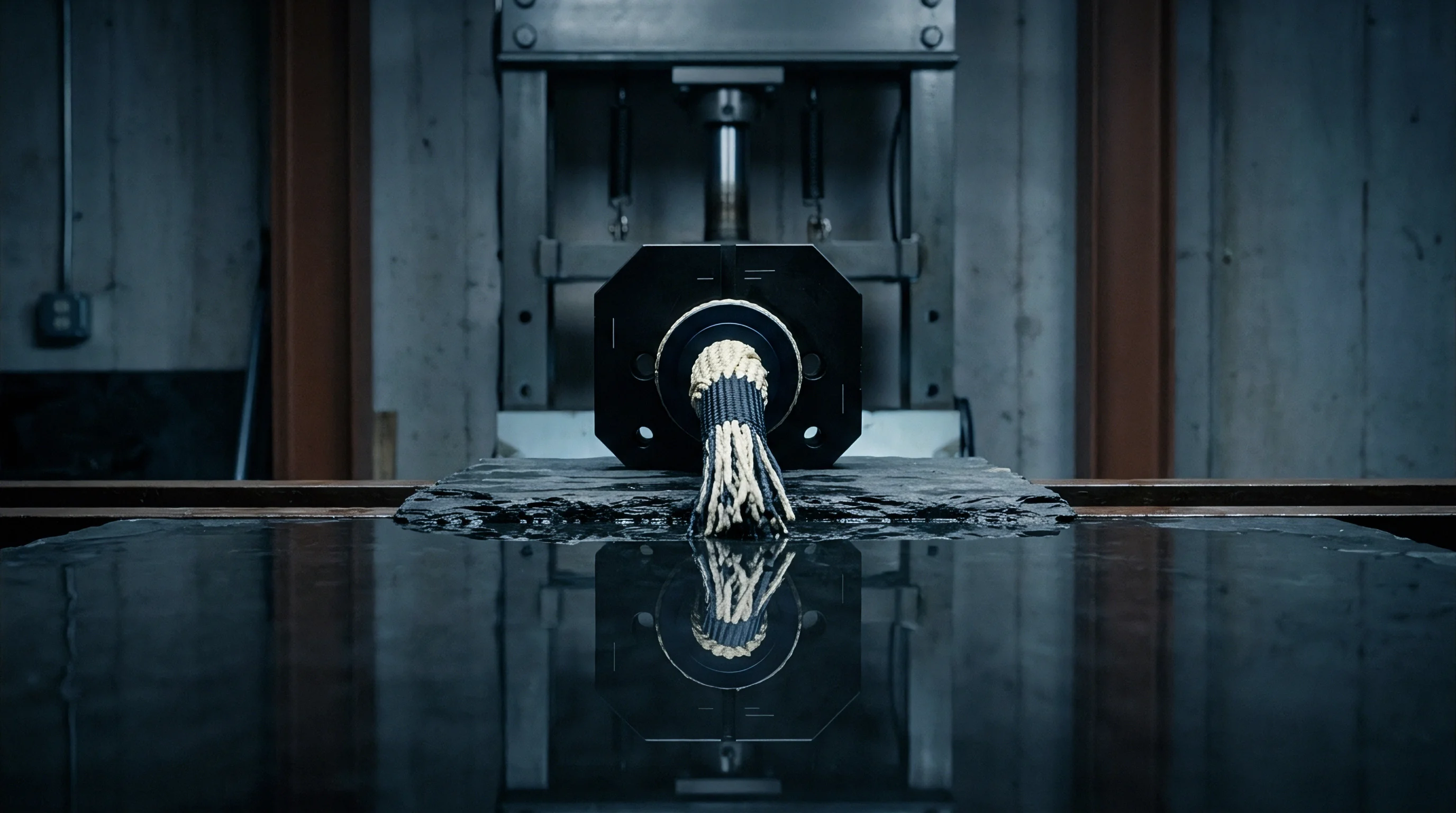

Margin
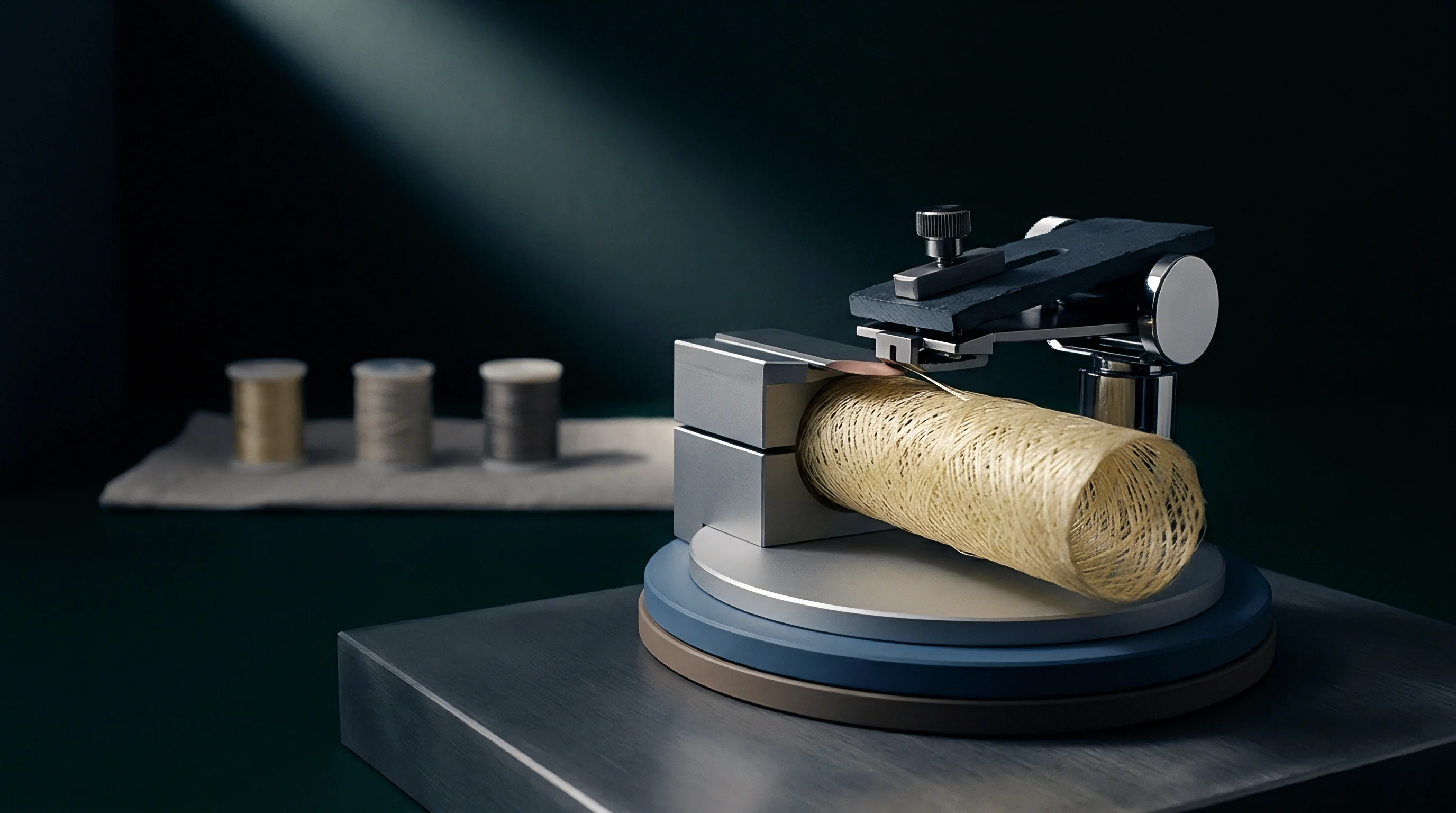
Production Downtime and Efficiency Loss Arithmetic
Unplanned loom stops caused by warp end failure directly erode weaving shed profitability. When a warp splice breaks during shedding, the loom stops instantly via drop wire contact. The average time required for a weaver to locate the broken end, thread it through the correct drop wire, heddle eye, and reed dent, and restart the machine ranges between two and four minutes depending on warp density and loom ergonomics.
Consider a high-speed weaving room operating 100 rapier looms at 85% planned efficiency, running pure linen fabric at 24 ends per centimeter across a reed width of 190 centimeters. Total warp ends per loom equal 4,560 threads. Spliced joins account for approximately 0.5% of the total warp length.
If poor splicing execution yields a failure rate of 3% across these joins, each loom experiences approximately 2.4 additional stops per shift directly attributable to splice pull-outs.
At an average downtime of three minutes per stop, 2.4 stops consume 7.2 minutes of loom time per machine shift. Across a 100-loom shed running three shifts daily, this downtime forfeits 36 loom-hours per day. Evaluated at a fixed loom-hour cost of 28.50 USD per hour, the direct financial loss reaches 1,026 USD per day, excluding the cost of repair labor and fabric quality defects created by stop marks.

Landed Cost Impact and Splicing Quality Metrics
Investing in automatic winding machines equipped with high-precision water-assisted pneumatic splicers increases initial capital expenditure and utility consumption. A twelve-head water injection unit adds maintenance overhead, fluid purification costs, and compressed air costs. However, calculating the total cost per finished meter demonstrates clear financial benefits from splice optimization.
| Splice Failure Rate (%) | Daily Stops per Loom | Loom Efficiency (%) | Daily Lost Loom Hours (100 Looms) | Direct Downtime Cost (USD/Day) | Landed Fabric Cost Overhead (USD/m) |
|---|---|---|---|---|---|
| 0.5 | 0.40 | 88.2 | 6.0 | 171.00 | 0.02 |
| 1.0 | 0.80 | 87.4 | 12.0 | 342.00 | 0.04 |
| 2.0 | 1.60 | 85.8 | 24.0 | 684.00 | 0.09 |
| 3.0 | 2.40 | 84.2 | 36.0 | 1026.00 | 0.14 |
| 5.0 | 4.00 | 81.0 | 60.0 | 1710.00 | 0.24 |
Optimizing water injection volume reduces the splice failure rate from 3.0% to 0.5%, recovering 30 loom hours daily per 100 looms. The resulting increase in fabric production reduces the landed cost per meter by 0.12 USD, fully amortizing the equipment upgrade within seven months of continuous operation.
Purchasing specifications for high-count linen warp yarns must specify minimum splicing criteria including retained strength, max node volume, and failure rate. Sourcing contracts should require yarn suppliers to provide certified electronic winding logs showing splicing performance data before releasing warp beams for shipment.