Physical Interaction
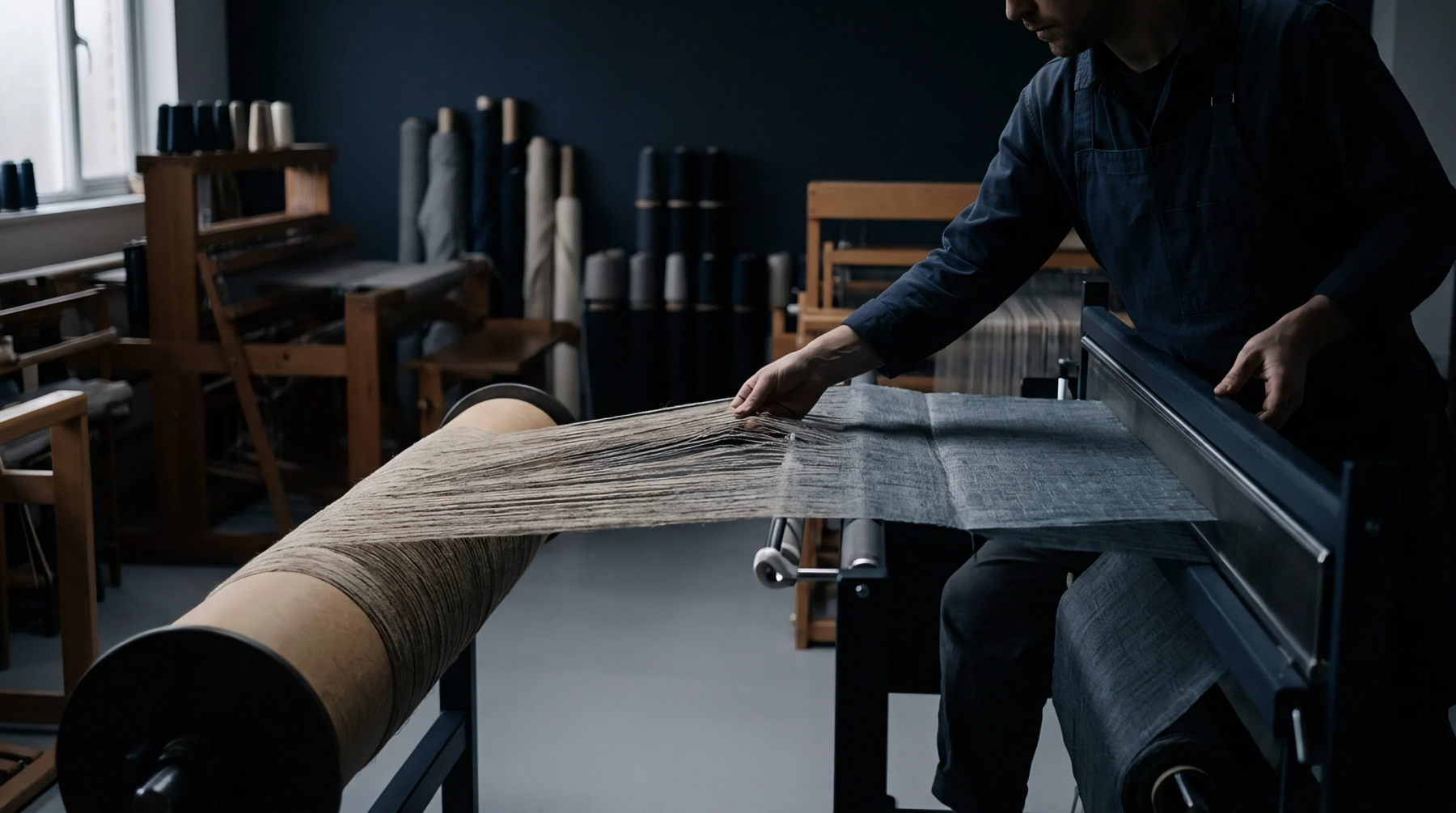
Entanglement of neighboring threads in the loom shed prevents the clear separation required for the weft to pass through. Occurring primarily when the yarn is hairy or the size is sticky, warp cling leads to defects such as floats and broken ends. The phenomenon is especially common in high-density linen weaves where the yarns are packed closely together.
Proper sizing and hairiness control are the most effective ways to mitigate this issue.
Shed Opening
Clean separation of the top and bottom warp layers is necessary for the shuttle or rapier to traverse the loom without catching. When warp cling occurs, some threads fail to move with the harness, creating a bridge that the weft carrier may strike. This impact can cause multiple yarn breaks and damage the reed.
Technicians often apply a surface lubricant to the warp to reduce the friction between adjacent yarns.
Weaving Error
Visual defects caused by clinging threads are a major reason for the rejection of finished linen cloth. These errors appear as irregular loops or skipped picks where the weft did not interlace correctly. Monitoring the loom for signs of clinging allows the weaver to adjust the shed timing or increase the warp tension.